GOOD DISPENSING 
PRACTICE 
“To know of something that is 
harmful to another person who 
does not know, and not telling, is 
unethical” 
Airene Barlin, RPh, MPH 
FDRO II
GOOD DISPENSING PRACTICE 
• ENSURES THAT THE RIGHT DRUG, IN 
THE RIGHT DOSAGE FORM INDICATED 
FOR THE PATIENT’S CONDITION, IS 
DELIVERED TO THE RIGHT PATIENT, 
IN THE PRESCRIBED DOSAGE AND 
QUANTITY WITH CLEAR 
INSTRUCTIONS AND IN A PACKAGE 
THAT MAINTAINTS THE POTENCY AND 
STABILITY OF THE DRUG
DISPENSING 
• Is an important part of pharmacy, in which 
the pharmacist or the pharmacy aide 
(under the direct supervision of the 
pharmacist) interprets the physician’s 
requirements on the prescription and 
accordingly supplies for the treatment of 
his patient/s.
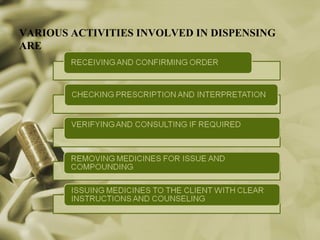
VARIOUS ACTIVITIES INVOLVED IN DISPENSING 
ARE
(1) DISPENSING ENVIRONMENT 
• A good dispensing environment ensures 
that dispensing is carried out accurately 
and efficiently. 
- this sections covers the following: 
1. Prescription counter- (ideally the 
prescription counter should:) 
> accessible to the patient 
> be clean, orderly, attractive and marked 
with an identifying sign or symbol which 
can be easily identified and seen from 
other parts of the pharmacy 
> have a waiting area for clients who wait 
for their prescription to be dispensed/filled
2. Waiting area 
• Can be provided 
what should an ideal waiting area 
provide: 
> comfortable chairs/place to sit (at least 
for the elderly/disabled/sick patients to 
rest) 
> current popular health magazines, and 
carefully material related to good health 
> pamphlets and posters related to public, 
family and other individual health problems
REQUIREMENTS OF A GOOD 
DISPENSING ENVIRONMENT 
The dispensing environment should: 
1.BE CLEAN 
2.BE ORGANIZED 
3.HAVE A SUFFICIENT SPACE 
4.TEMPERATURE AND HUMIDITY 
CONTROLLED 
5.NO LOUD MUSIC PLAYING, 
GOSSIPING,TALKING OR TELEVISION 
6.HAVE MEDICINES STORED IN AN 
ORGANIZED WAY ON SHELVES
“ A limited range of medicines 
will be used with greatest 
frequency, and these fast 
movers may be placed in the 
most accessible areas for 
speed and convenience of the 
dispensing staff or personnel”
BE CLEAN, GET ORGANIZED!! 
GIVE THE PHARMACY A 
PROFESSION LOOK
ADVANTAGE OF A GOOD 
DISPENSING ENVIRONMENT 
• Reduces dispensing error 
• Reduces fatigue among pharmacy 
staff 
• Enhances services 
• Improves the image of the pharmacy 
• Increases clientele 
• Increases speed 
• Creates a professional image
(2) HANDLING PRESCRIPTION 
• Prescription handling is a part of the 
professional relationship between the 
prescriber, the pharmacist and the patient, 
it is the pharmacist’s responsibility in this 
relationship to fulfill the medication needs 
of the patient 
2.1. Receiving the prescription- as clients 
come into the pharmacy, they must be 
made to feel attended to and comfortable 
2.2. Reading the prescription and checking 
for the completeness and corrections
- After receiving the prescription, 
it is important for the pharmacist 
to read the prescription to verify 
whether 
(A) LEGALITY 
1. it is legal and complete with 
respect to the various parts of 
the prescription, and therefore 
2. it can be dispensed, or not.
(B) LEGIBILITY 
- A brief examination of each 
prescription should be made 
immediately upon receiving it from 
the patient to ascertain the legibility 
of various parts of the prescription. 
- every prescription should be read 
and understood thoroughly before 
attempting to dispense it. 
- every word, abbreviation, has a 
meaning ( in case of doubt, consult 
another pharmacist or the 
prescriber)
“ NEVER DISPENSE GUESS 
WORK”
(C) COMPLETENESS AND CORRECTNESS 
- The prescription serves as a vehicle for 
communication from the licensed 
practitioner to the pharmacist about the 
pharmaceutical care of the patient 
DETAILS TO BE CHECKED 
1. Physician’s details 
2. Patient’s details 
3. Check the product details (includes) 
- Name of the product, dosage form, 
strength/potency of the medicine, total 
amount to be dispensed, dosage and 
direction for use, frequency of 
administration
INFORMATION/COUNSELLING TO BE 
PROVIDED TO THE PATIENT 
• LIST OF THINGS TO BE TOLD TO A PATIENT 
• What each medicine is for. 
• How to take each medicine, at what times, and how 
many/much, before or after food. 
• How to use certain devices. 
• The instructions to be given for each medicine. 
• The specific precautions to be taken with certain 
medicines. 
• What side effects to expect. What to do in case side 
effects are experienced. 
• What conditions should the medicines be stored under.
Thank you for your 
attention!

Good Dispensing Practice

  • 1.
    GOOD DISPENSING PRACTICE “To know of something that is harmful to another person who does not know, and not telling, is unethical” Airene Barlin, RPh, MPH FDRO II
  • 2.
    GOOD DISPENSING PRACTICE • ENSURES THAT THE RIGHT DRUG, IN THE RIGHT DOSAGE FORM INDICATED FOR THE PATIENT’S CONDITION, IS DELIVERED TO THE RIGHT PATIENT, IN THE PRESCRIBED DOSAGE AND QUANTITY WITH CLEAR INSTRUCTIONS AND IN A PACKAGE THAT MAINTAINTS THE POTENCY AND STABILITY OF THE DRUG
  • 3.
    DISPENSING • Isan important part of pharmacy, in which the pharmacist or the pharmacy aide (under the direct supervision of the pharmacist) interprets the physician’s requirements on the prescription and accordingly supplies for the treatment of his patient/s.
  • 4.
    VARIOUS ACTIVITIES INVOLVEDIN DISPENSING ARE
  • 5.
    (1) DISPENSING ENVIRONMENT • A good dispensing environment ensures that dispensing is carried out accurately and efficiently. - this sections covers the following: 1. Prescription counter- (ideally the prescription counter should:) > accessible to the patient > be clean, orderly, attractive and marked with an identifying sign or symbol which can be easily identified and seen from other parts of the pharmacy > have a waiting area for clients who wait for their prescription to be dispensed/filled
  • 6.
    2. Waiting area • Can be provided what should an ideal waiting area provide: > comfortable chairs/place to sit (at least for the elderly/disabled/sick patients to rest) > current popular health magazines, and carefully material related to good health > pamphlets and posters related to public, family and other individual health problems
  • 7.
    REQUIREMENTS OF AGOOD DISPENSING ENVIRONMENT The dispensing environment should: 1.BE CLEAN 2.BE ORGANIZED 3.HAVE A SUFFICIENT SPACE 4.TEMPERATURE AND HUMIDITY CONTROLLED 5.NO LOUD MUSIC PLAYING, GOSSIPING,TALKING OR TELEVISION 6.HAVE MEDICINES STORED IN AN ORGANIZED WAY ON SHELVES
  • 8.
    “ A limitedrange of medicines will be used with greatest frequency, and these fast movers may be placed in the most accessible areas for speed and convenience of the dispensing staff or personnel”
  • 9.
    BE CLEAN, GETORGANIZED!! GIVE THE PHARMACY A PROFESSION LOOK
  • 10.
    ADVANTAGE OF AGOOD DISPENSING ENVIRONMENT • Reduces dispensing error • Reduces fatigue among pharmacy staff • Enhances services • Improves the image of the pharmacy • Increases clientele • Increases speed • Creates a professional image
  • 11.
    (2) HANDLING PRESCRIPTION • Prescription handling is a part of the professional relationship between the prescriber, the pharmacist and the patient, it is the pharmacist’s responsibility in this relationship to fulfill the medication needs of the patient 2.1. Receiving the prescription- as clients come into the pharmacy, they must be made to feel attended to and comfortable 2.2. Reading the prescription and checking for the completeness and corrections
  • 12.
    - After receivingthe prescription, it is important for the pharmacist to read the prescription to verify whether (A) LEGALITY 1. it is legal and complete with respect to the various parts of the prescription, and therefore 2. it can be dispensed, or not.
  • 13.
    (B) LEGIBILITY -A brief examination of each prescription should be made immediately upon receiving it from the patient to ascertain the legibility of various parts of the prescription. - every prescription should be read and understood thoroughly before attempting to dispense it. - every word, abbreviation, has a meaning ( in case of doubt, consult another pharmacist or the prescriber)
  • 14.
    “ NEVER DISPENSEGUESS WORK”
  • 15.
    (C) COMPLETENESS ANDCORRECTNESS - The prescription serves as a vehicle for communication from the licensed practitioner to the pharmacist about the pharmaceutical care of the patient DETAILS TO BE CHECKED 1. Physician’s details 2. Patient’s details 3. Check the product details (includes) - Name of the product, dosage form, strength/potency of the medicine, total amount to be dispensed, dosage and direction for use, frequency of administration
  • 16.
    INFORMATION/COUNSELLING TO BE PROVIDED TO THE PATIENT • LIST OF THINGS TO BE TOLD TO A PATIENT • What each medicine is for. • How to take each medicine, at what times, and how many/much, before or after food. • How to use certain devices. • The instructions to be given for each medicine. • The specific precautions to be taken with certain medicines. • What side effects to expect. What to do in case side effects are experienced. • What conditions should the medicines be stored under.
  • 17.
    Thank you foryour attention!