Good Storage Practice 
Airene Barlin, RPh, MPH 
FDRO II
(5)GPP- STORAGE AND STOCK 
MANAGEMENT 
• The expiry periods of pharmaceutical 
products have meaning only if the 
products are stored under proper 
conditions, otherwise, products are 
likely to lose their potency before the 
actual date of expiry.
Every community pharmacy, however 
large or small, needs to store and manage 
its medicine stocks 
effectively. There must be systems to 
ensure 
• Secure storage. 
• Clean and correct environmental 
conditions during storage. 
• Accurate and effective record keeping. 
• Effective stock rotation and expiry 
monitoring. 
• Effective fire and theft prevention. 
• Effective rodent/ pest control
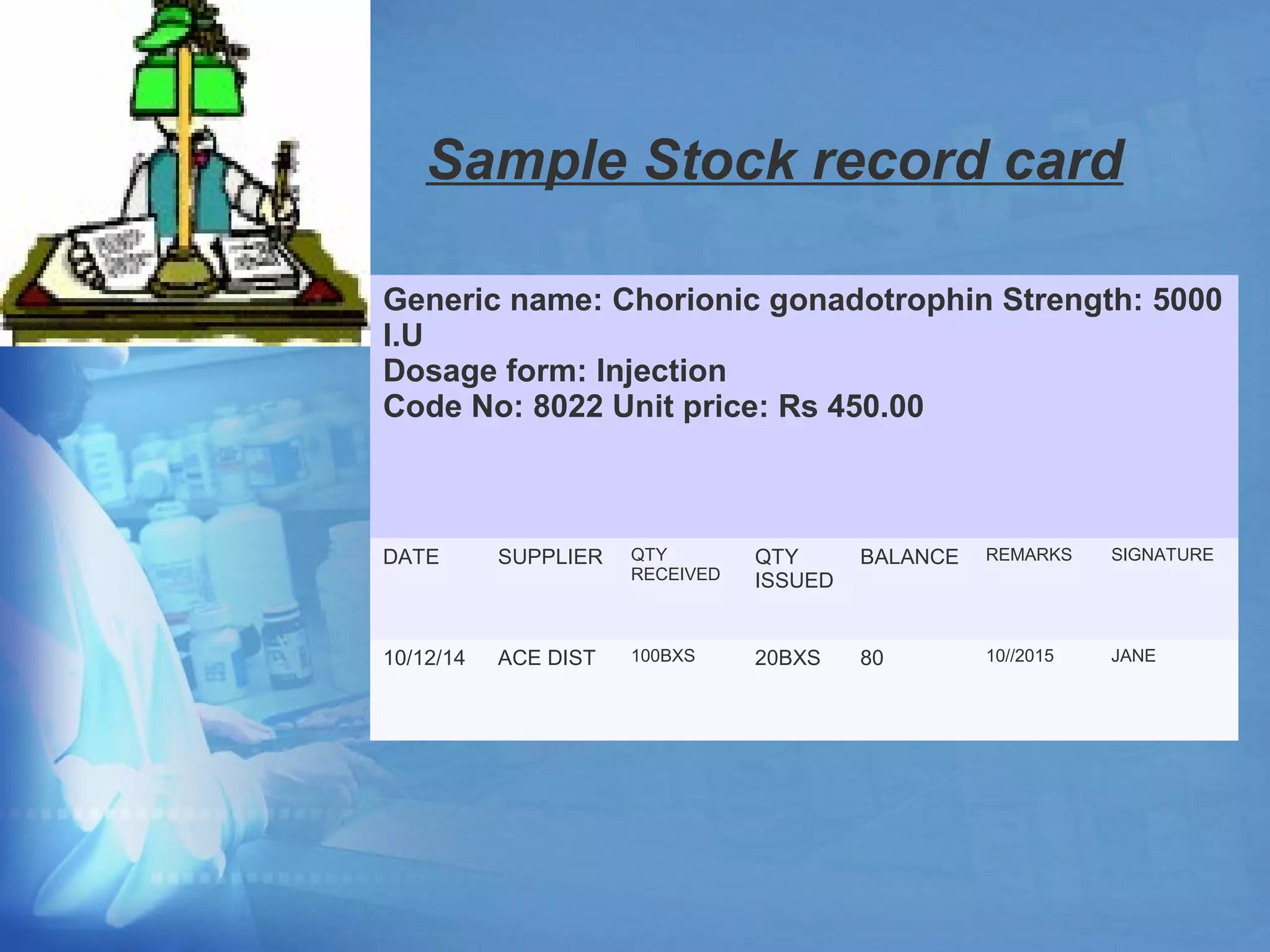
Sample Stock record card 
Generic name: Chorionic gonadotrophin Strength: 5000 
I.U 
Dosage form: Injection 
Code No: 8022 Unit price: Rs 450.00 
DATE SUPPLIER QTY 
RECEIVED 
QTY 
ISSUED 
BALANCE REMARKS SIGNATURE 
10/12/14 ACE DIST 100BXS 20BXS 80 10//2015 JANE
STORAGE-The 
need for proper storage 
• The storage of medicines and other 
products is an important requirement of 
Good Pharmacy Practice. 
Appropriate storage of medicines is 
essential – 
Ø To ensure that the potency is maintained. 
Ø To prevent 
deterioration/spoilage/degradation. 
Ø To ensure/maintain physical integrity. 
Ø To ascertain that the quality and safety is 
maintained throughout their shelf life.
Storage requirements need to be 
considered on 2 aspects : 
• A) Integrity Of Medicines: Medicines Should 
Be Stored In Such A Way So As To Maintain 
Their Integrity And 
Potency. 
• Maintain the right temperature required. 
• Protect from excessive humidity. 
• Keep medicines away from direct sunlight. 
• Protect from pests and rodents.
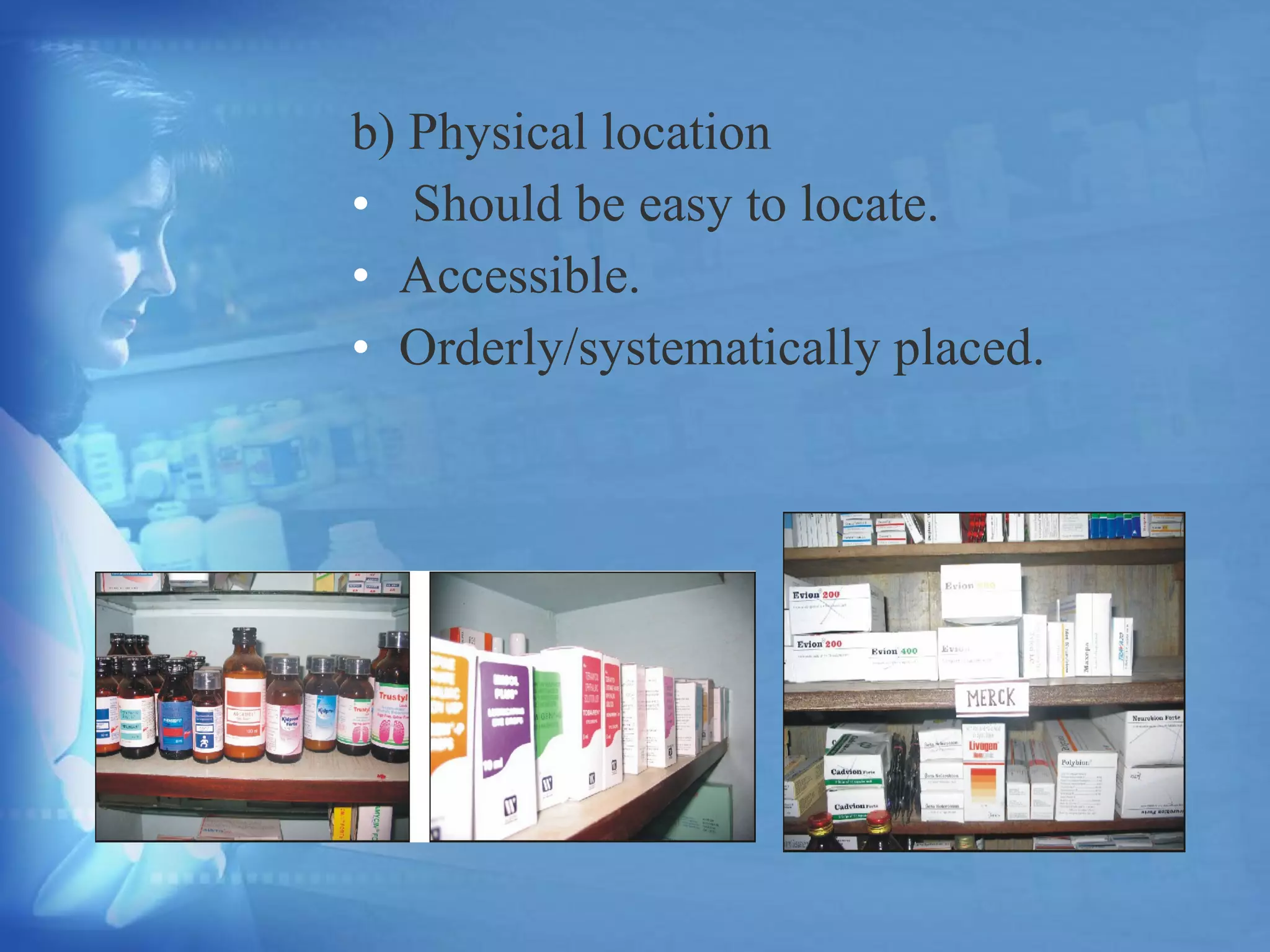
b) Physical location 
• Should be easy to locate. 
• Accessible. 
• Orderly/systematically placed.
• Storage according to 
temperatures is a must, no matter 
which pattern of storage is 
followed. Also, 
within a particular storage area, 
segregated storage may be 
maintained. In a refrigerator, for 
example, 
medicines may be stored in trays, 
racks and the freezer, according 
to the temperature required.
Whatever pattern of storage is selected, 
all the personnel should ensure that 
• The stocks are stored in an orderly 
manner. 
• The medicines are kept back in the same 
place from where they were removed. 
• All medicines are arranged neatly once 
in a while. 
• The personnel should be careful while 
storing the medicines. 
• They should not throw the medicines 
haphazardly.
DONT’S
• Direct storage of cartons on the floor 
should be avoided because, besides 
being an unhealthy practice, 
the contents may also be damaged by 
moisture 
DO NOT STORE 
MEDICINE 
CARTONS ON 
THE FLOOR !!
DON’T’S
• Store medicines preferably in shelves with 
glass shutters for visibility. 
• Closed shelves further prevent dust from 
going in, especially where most pharmacies 
are located along busy roads. 
• Some medicines have to be refrigerated or 
stored in a cool or cold place. Having a 
refrigerator or two(as per the need of the 
pharmacy) is essential to store such 
medicines at temperatures mentioned on the 
label
Refrigeration 
• All cold chain equipment should meet 
required standards. 
• Vaccines should not be stored on 
refrigerator door shelves as they are 
exposed to warmer temperatures each 
time the door is opened. Vaccines should 
always be stored on the middle shelves of 
the refrigerator. 
• Consumable products like juices, energy 
drinks, etc., should not be stored along 
with medicines in 
refrigerators. If required, they may be 
kept in a separate refrigerator.
Temperature/climatic 
conditions: 
• An air-conditioned environment where temperature 
can be controlled is recommended for 
• pharmacies. Air conditioning offers the option of 
setting the temperature as per requirements. 
• It is ideal to have an air conditioner to maintain the 
temperature below 25 C, as most medicines 
• require storage below this temperature. Secondly, this 
temperature is pleasing to both the staff and the 
• visiting customers, too. 
In the absence of an air conditioner, circulating fans 
may be used.
“YOU CAN BE A THERMOMETER. 
If you feel hot, your medicines probably too feel 
the same.”
Humidity or moisture control 
• Moisture or humidity can 
adversely affect the stability of 
medicines such as tablets, 
capsules, powders. 
• Gelatin capsules become soft, and 
swell on absorption of moisture 
• The presence of moisture may 
encourage the growth of 
microbes. It is therefore 
essential to control humidity.
• Calibrated thermometers and 
manometers can be used to detect 
temperature and humidity in the 
pharmacy. 
• Temperature charts should be available 
for ready reference. 
ABC PHARMACY TEMPERATURE CHART 
Area: DISPENSING AREA 
DATE TIME TEMP in ᵒC MONITORED BY
Storage conditions 
Storage conditions Specifications 
Cold Any temperature not 
exceeding 80C (Between2C 
and 8C) 
Cool Any temperature between 
8C and 25C 
Room temperature Temperature prevailing in a 
working area 
Warm Any temperature between 
30C and 40C 
Excessive heat Any temperature above 40C
Stability issues: 
Factors 
Likely Effects on drug 
Exposure to light Increased oxidation or 
photochemical degradation 
Exposure to air. Increased oxidation 
Loss of vapor. Loss of water or volatile 
solvents 
Access to microorganisms Increased contamination, 
growth, spoilage and 
possible harmful effects 
Access to moisture. Hydrolysis, damage to 
powder, tablets and 
capsules
(6) STANDARD OPERATING 
PROCEDURES 
- It is important that the Pharmacy should 
write out its own SOPs for the different 
activities in the pharmacy 
A SOP SPECIFIES IN WRITING: 
- WHAT should be done 
- WHEN it should be done 
- WHERE it should be done 
- By WHOM it should be done 
- SOPs is a useful tool for training of a new 
staff/recruit
Thank you

Good Storage Practice

  • 1.
    Good Storage Practice Airene Barlin, RPh, MPH FDRO II
  • 2.
    (5)GPP- STORAGE ANDSTOCK MANAGEMENT • The expiry periods of pharmaceutical products have meaning only if the products are stored under proper conditions, otherwise, products are likely to lose their potency before the actual date of expiry.
  • 3.
    Every community pharmacy,however large or small, needs to store and manage its medicine stocks effectively. There must be systems to ensure • Secure storage. • Clean and correct environmental conditions during storage. • Accurate and effective record keeping. • Effective stock rotation and expiry monitoring. • Effective fire and theft prevention. • Effective rodent/ pest control
  • 4.
    Sample Stock recordcard Generic name: Chorionic gonadotrophin Strength: 5000 I.U Dosage form: Injection Code No: 8022 Unit price: Rs 450.00 DATE SUPPLIER QTY RECEIVED QTY ISSUED BALANCE REMARKS SIGNATURE 10/12/14 ACE DIST 100BXS 20BXS 80 10//2015 JANE
  • 5.
    STORAGE-The need forproper storage • The storage of medicines and other products is an important requirement of Good Pharmacy Practice. Appropriate storage of medicines is essential – Ø To ensure that the potency is maintained. Ø To prevent deterioration/spoilage/degradation. Ø To ensure/maintain physical integrity. Ø To ascertain that the quality and safety is maintained throughout their shelf life.
  • 6.
    Storage requirements needto be considered on 2 aspects : • A) Integrity Of Medicines: Medicines Should Be Stored In Such A Way So As To Maintain Their Integrity And Potency. • Maintain the right temperature required. • Protect from excessive humidity. • Keep medicines away from direct sunlight. • Protect from pests and rodents.
  • 7.
    b) Physical location • Should be easy to locate. • Accessible. • Orderly/systematically placed.
  • 8.
    • Storage accordingto temperatures is a must, no matter which pattern of storage is followed. Also, within a particular storage area, segregated storage may be maintained. In a refrigerator, for example, medicines may be stored in trays, racks and the freezer, according to the temperature required.
  • 9.
    Whatever pattern ofstorage is selected, all the personnel should ensure that • The stocks are stored in an orderly manner. • The medicines are kept back in the same place from where they were removed. • All medicines are arranged neatly once in a while. • The personnel should be careful while storing the medicines. • They should not throw the medicines haphazardly.
  • 10.
  • 11.
    • Direct storageof cartons on the floor should be avoided because, besides being an unhealthy practice, the contents may also be damaged by moisture DO NOT STORE MEDICINE CARTONS ON THE FLOOR !!
  • 12.
  • 13.
    • Store medicinespreferably in shelves with glass shutters for visibility. • Closed shelves further prevent dust from going in, especially where most pharmacies are located along busy roads. • Some medicines have to be refrigerated or stored in a cool or cold place. Having a refrigerator or two(as per the need of the pharmacy) is essential to store such medicines at temperatures mentioned on the label
  • 14.
    Refrigeration • Allcold chain equipment should meet required standards. • Vaccines should not be stored on refrigerator door shelves as they are exposed to warmer temperatures each time the door is opened. Vaccines should always be stored on the middle shelves of the refrigerator. • Consumable products like juices, energy drinks, etc., should not be stored along with medicines in refrigerators. If required, they may be kept in a separate refrigerator.
  • 15.
    Temperature/climatic conditions: •An air-conditioned environment where temperature can be controlled is recommended for • pharmacies. Air conditioning offers the option of setting the temperature as per requirements. • It is ideal to have an air conditioner to maintain the temperature below 25 C, as most medicines • require storage below this temperature. Secondly, this temperature is pleasing to both the staff and the • visiting customers, too. In the absence of an air conditioner, circulating fans may be used.
  • 16.
    “YOU CAN BEA THERMOMETER. If you feel hot, your medicines probably too feel the same.”
  • 17.
    Humidity or moisturecontrol • Moisture or humidity can adversely affect the stability of medicines such as tablets, capsules, powders. • Gelatin capsules become soft, and swell on absorption of moisture • The presence of moisture may encourage the growth of microbes. It is therefore essential to control humidity.
  • 18.
    • Calibrated thermometersand manometers can be used to detect temperature and humidity in the pharmacy. • Temperature charts should be available for ready reference. ABC PHARMACY TEMPERATURE CHART Area: DISPENSING AREA DATE TIME TEMP in ᵒC MONITORED BY
  • 19.
    Storage conditions Storageconditions Specifications Cold Any temperature not exceeding 80C (Between2C and 8C) Cool Any temperature between 8C and 25C Room temperature Temperature prevailing in a working area Warm Any temperature between 30C and 40C Excessive heat Any temperature above 40C
  • 20.
    Stability issues: Factors Likely Effects on drug Exposure to light Increased oxidation or photochemical degradation Exposure to air. Increased oxidation Loss of vapor. Loss of water or volatile solvents Access to microorganisms Increased contamination, growth, spoilage and possible harmful effects Access to moisture. Hydrolysis, damage to powder, tablets and capsules
  • 21.
    (6) STANDARD OPERATING PROCEDURES - It is important that the Pharmacy should write out its own SOPs for the different activities in the pharmacy A SOP SPECIFIES IN WRITING: - WHAT should be done - WHEN it should be done - WHERE it should be done - By WHOM it should be done - SOPs is a useful tool for training of a new staff/recruit
  • 22.