DSD : Evaluation and management
Dr. Faheem
Fellow Pediatric Urology
IGICH Banglore
Prof. Narendrababu
Prof Pediatric Urology
IGICH Banglore
• Before the 7th week both XX and XY foetuses have an
identical reproductive anatomy.
• At 7 weeks testis and ovaries form
• foetuses with a Y chromosome------ testes
• foetuses with no Y chromosome …… ovaries
Disorders of sexual differentiation
Embrology
Disorders of sexual differentiation
The sex-determining region on the Y chromosome
(SRY) initiates the molecular events of testis formation
• The SOX9 results in sex reversal in XY individuals,
• Steroidogenic factor 1 (SF-1)
• DAX- 1 on the X chromosome
• The Wilms tumour (WT-1) gene is involved in both gonadal and renal development
• WT1
– WAGR
– DDS
– Fraisers Syndrome (46,XY DSD) gonadal dysgenesis, and renal failure
Disorders of sexual differentiation
Genes
Disorders of sexual differentiation
Algorithm of differentiation
• fusion of labioscrotal folds LSF
• Formation of the scrotum,
• Urethral plate tubularization, and
• development of the genital tubercle
into a penis
Disorders of sexual differentiation
Virilisation
DHT
• GT will become the clitoris and the
• Labioscrotal folds will form the labia majora and minora.
Disorders of sexual differentiation
Feminisation
• When the external genitalia do not have the typical anatomic
appearance of normal male or female genitalia
• Most of the cases present in the newborn period
Disorders of sexual differentiation
Definition
Disorders of sexual differentiation
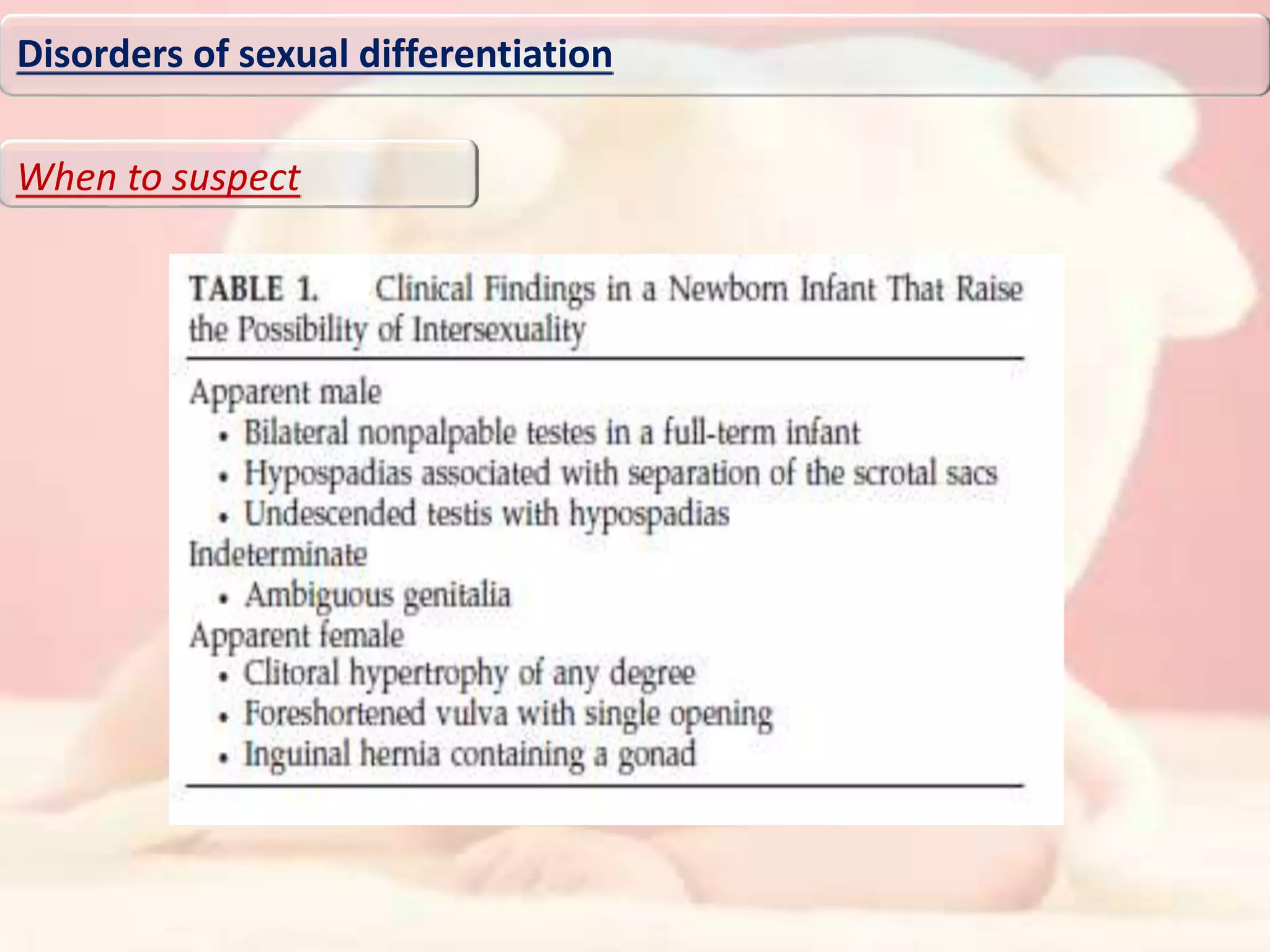
When to suspect
Disorders of sexual differentiation
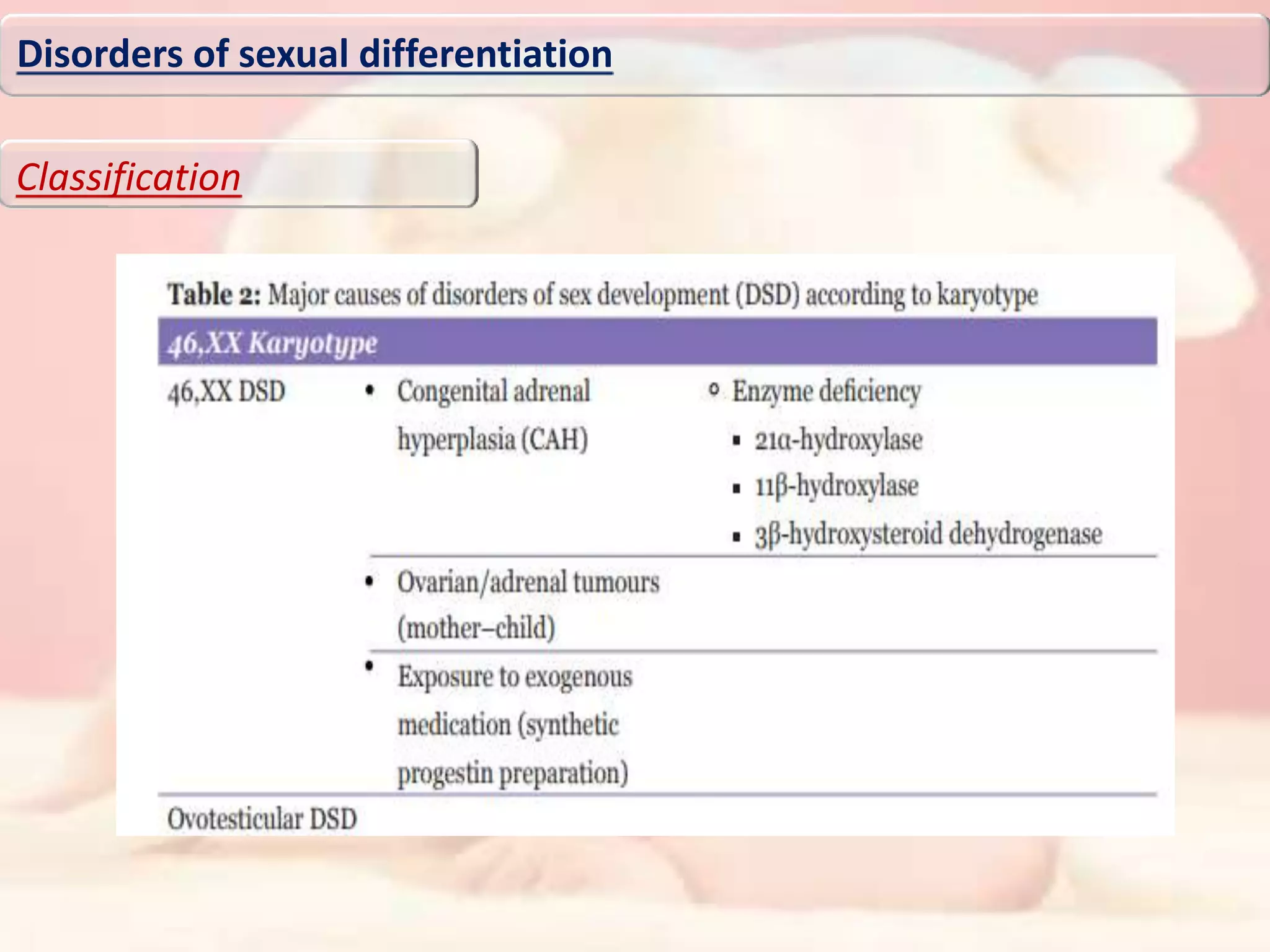
Classification
Disorders of sexual differentiation
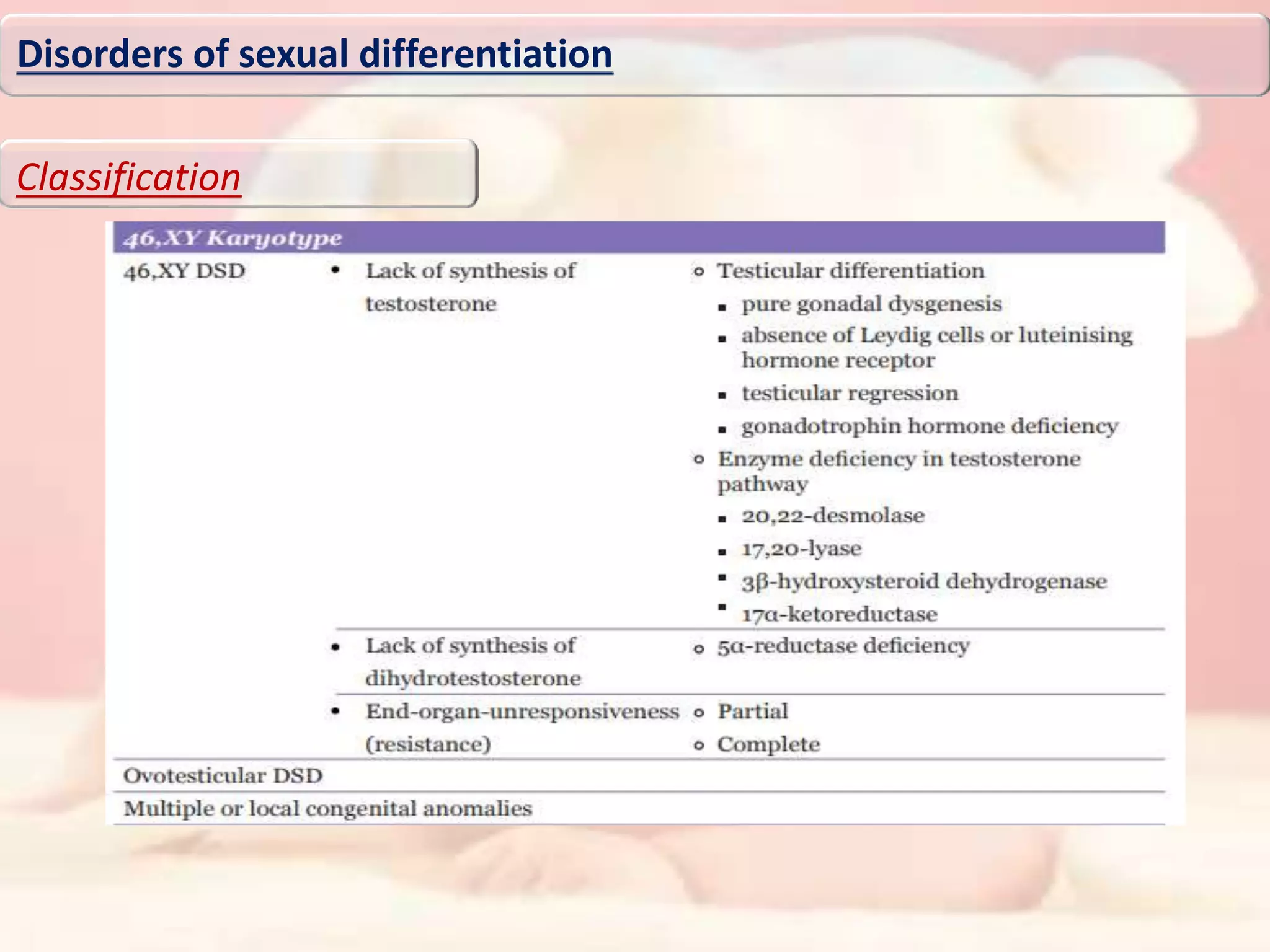
Classification
Disorders of sexual differentiation
Classification
Disorders of sexual differentiation
Congenital adrenal hyperplasia (inc; 1:10,000 to 1:20,000)
21-OH
95%
Disorders of sexual differentiation
Congenital adrenal hyperplasia (inc; 1:10,000 to 1:20,000)
Congenital adrenal hyperplasia
46XX DSD
(Incidence 1:10,000 to 1:20,000)
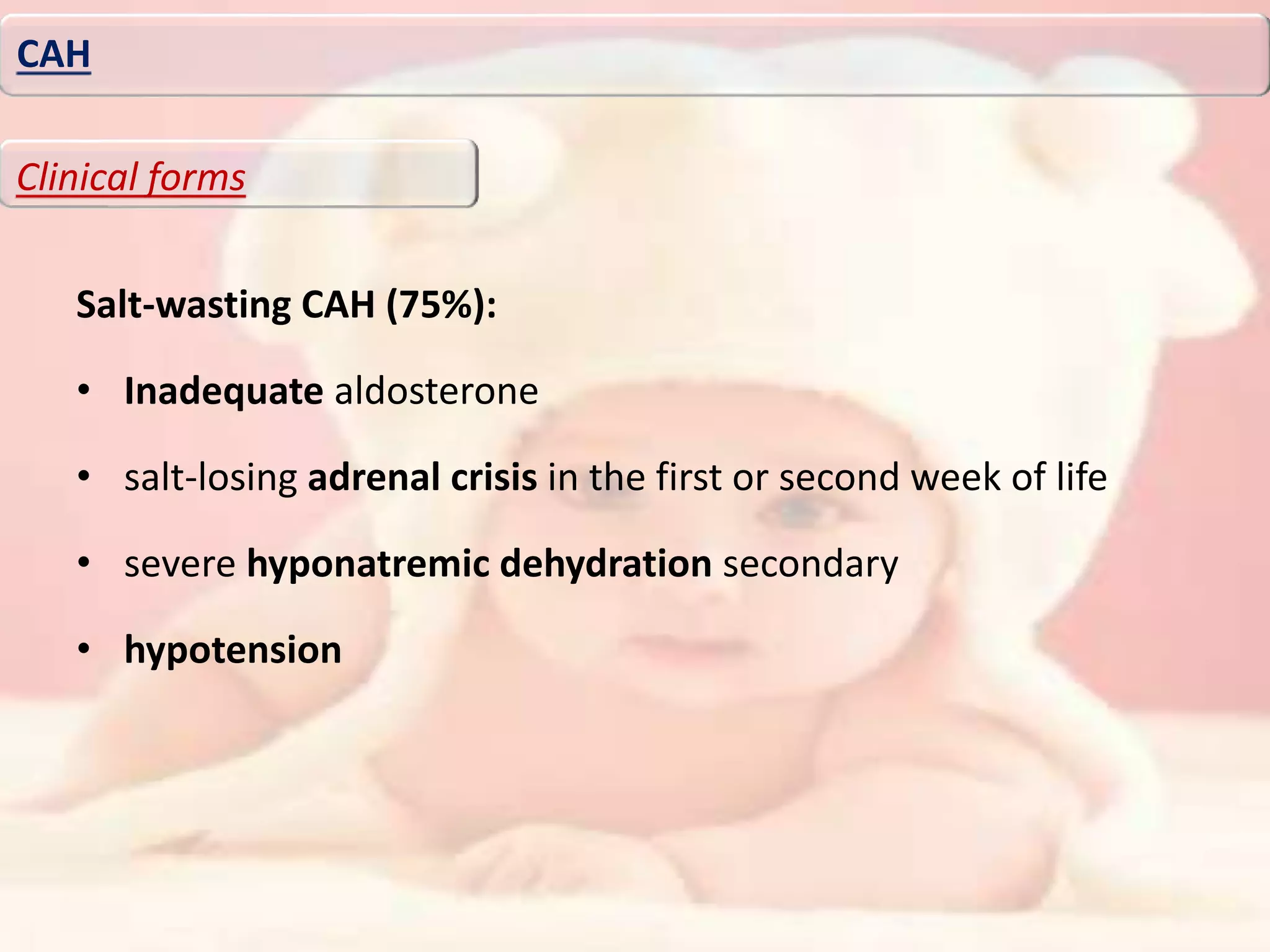
Salt-wasting CAH (75%):
• Inadequate aldosterone
• salt-losing adrenal crisis in the first or second week of life
• severe hyponatremic dehydration secondary
• hypotension
CAH
Clinical forms
• Simple virilizing form (25%):
– residual enzymatic activity is enough for MCD production
– Excess production of androgens
– masculinization in females -"ambiguous genitalia”
– males are usually normal at birth.
– Linear growth is accelerated, but epiphyses fuse early short stature.
CAH
Clinical forms
• Non-classical form:
– Produce normal amounts of cortisol and aldosterone at the expense of
mild-to-moderate overproduction of sex hormone precursors
– Mild, usually manifest as androgen excess later in life.
– Hirsutism(most common) Oligomenorrhea (54 %) ◦ Acne (33 %). ◦
Decreased fertility
CAH
Clinical forms
• In both males and females with SLV of CAH
– Dehydration progressive weight loss
– Hypotension
– Vomiting (mimicks Pyloric stenosis)
– Without therapy, death may rapidly ensue from hyperkalemia,
dehydration, and shock.
CAH
Clinical features
Addisonian crisis
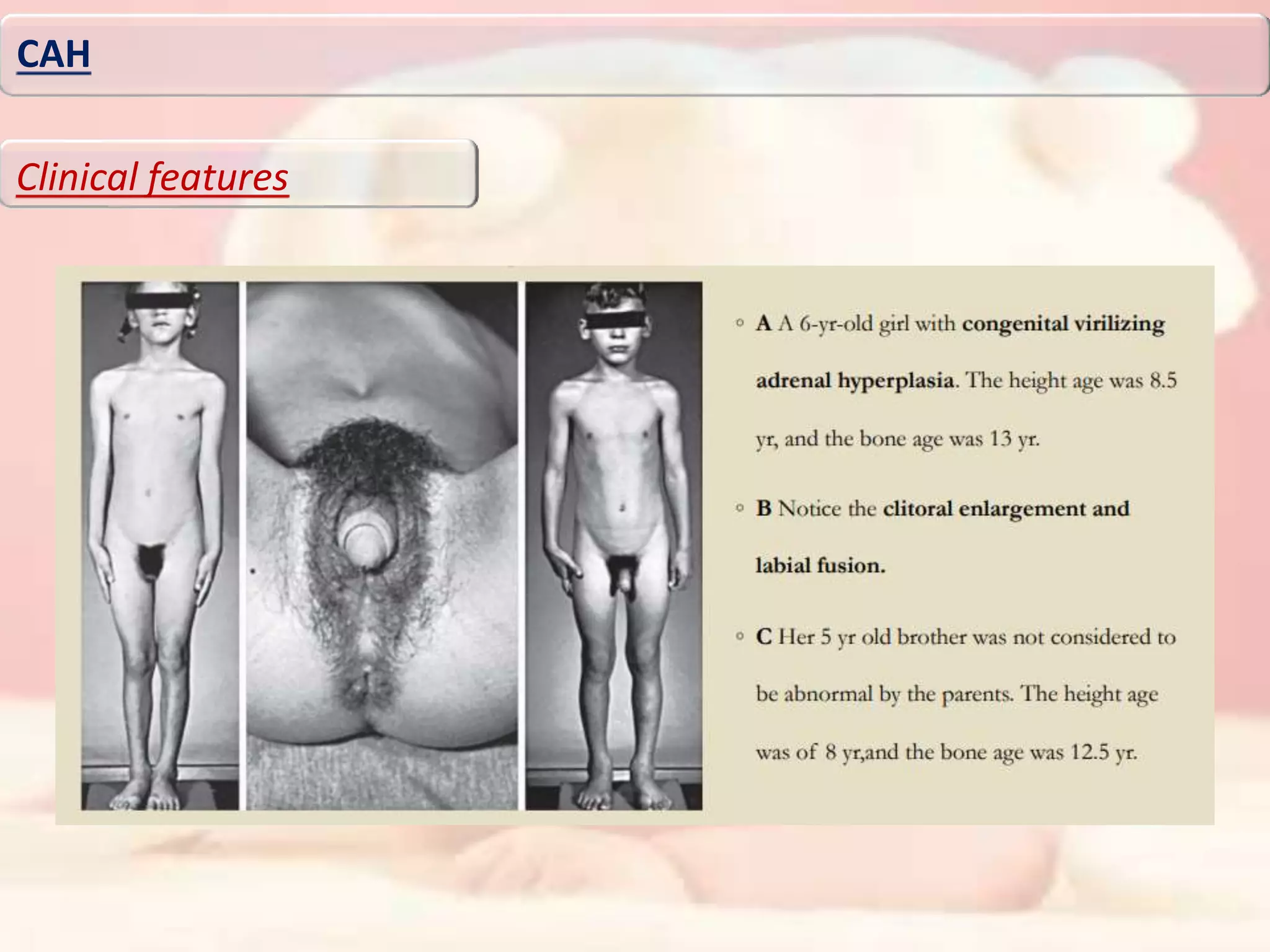
• In females
– Variable degree of masculinization at birth.
– Enlargement of the clitoris and
– Sometimes clitoris appears as hypospadiatic penis
– rarely, a fully masculinized urethra to the tip of glans
– Varying degrees of labial fusion
– Vagina and urethra open into a common urogenital sinus.
CAH
Clinical features
• Males
– isosexual precocity.
– normal at birth,
– signs of sexual and somatic precocity appear within the first 2 to 3
years of life.
– enlargement of the penis, scrotum, and prostate
– The musculature is well developed (“little Hercules”),
– bone age > chronologic age.
CAH
Clinical features
CAH
Clinical features
CAH
Clinical features
Disorders of sexual differentiation
Embrology
• ABG
• S electrolytes
• Cortisol
• ACTH
• 17-OHP
• Pelvic USG
• Karyotyping
CAH
Investigations
CAH
Embrology
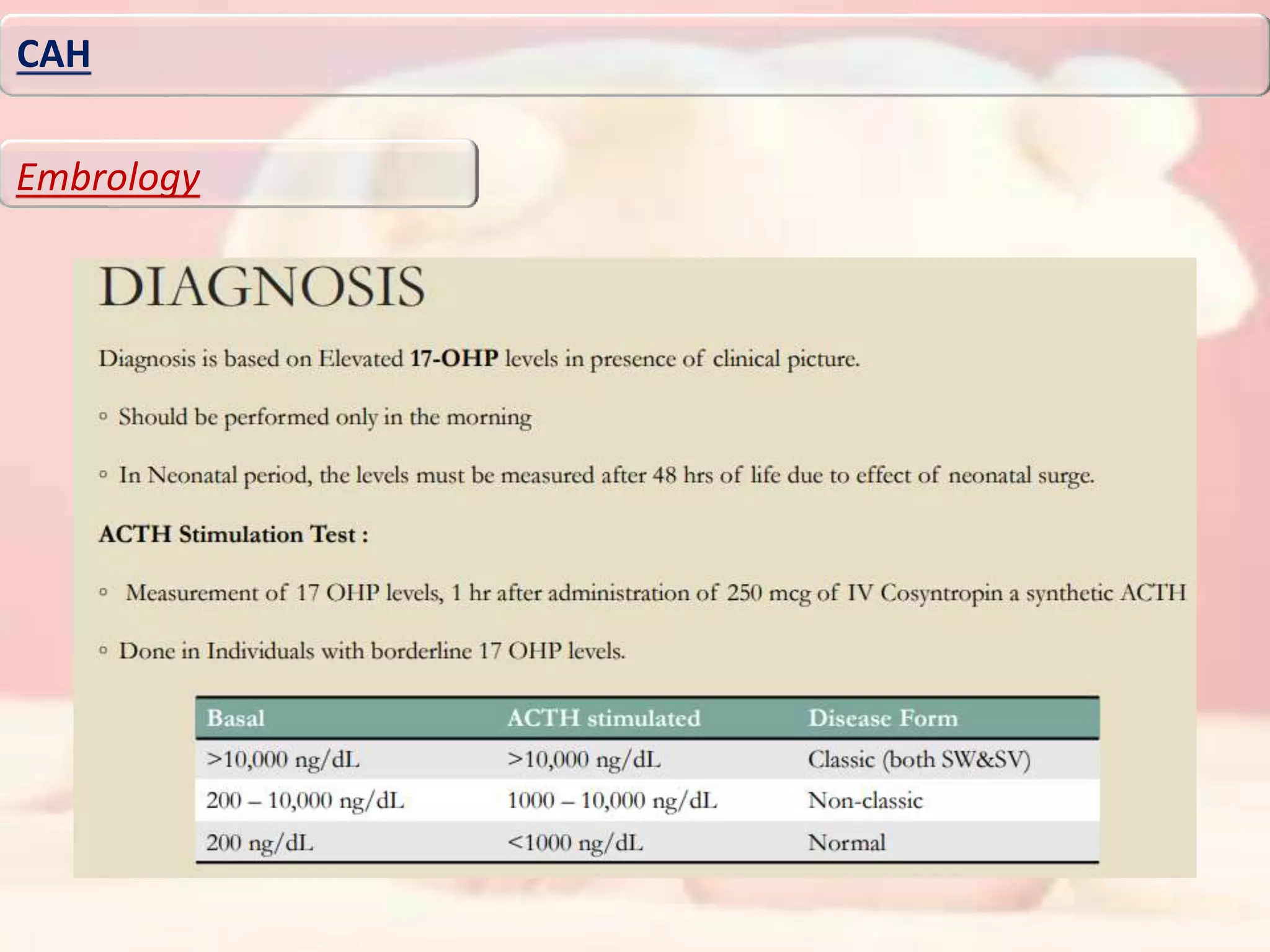
• Raised Urinary levels of 17-ketosteroids
• enlarged or “cerebriform”-appearing adrenal glands on
neonatal ultrasonography,
• Prenatal Diagnosis
– amniotic fluid for 17-hydroxyprogesterone at 16 to 17 weeks’
gestation
– HLA genotyping or by DNA analysis ( chorionic villus sampling at 9 to
11 weeks’ gestation)
CAH
Diagnosis
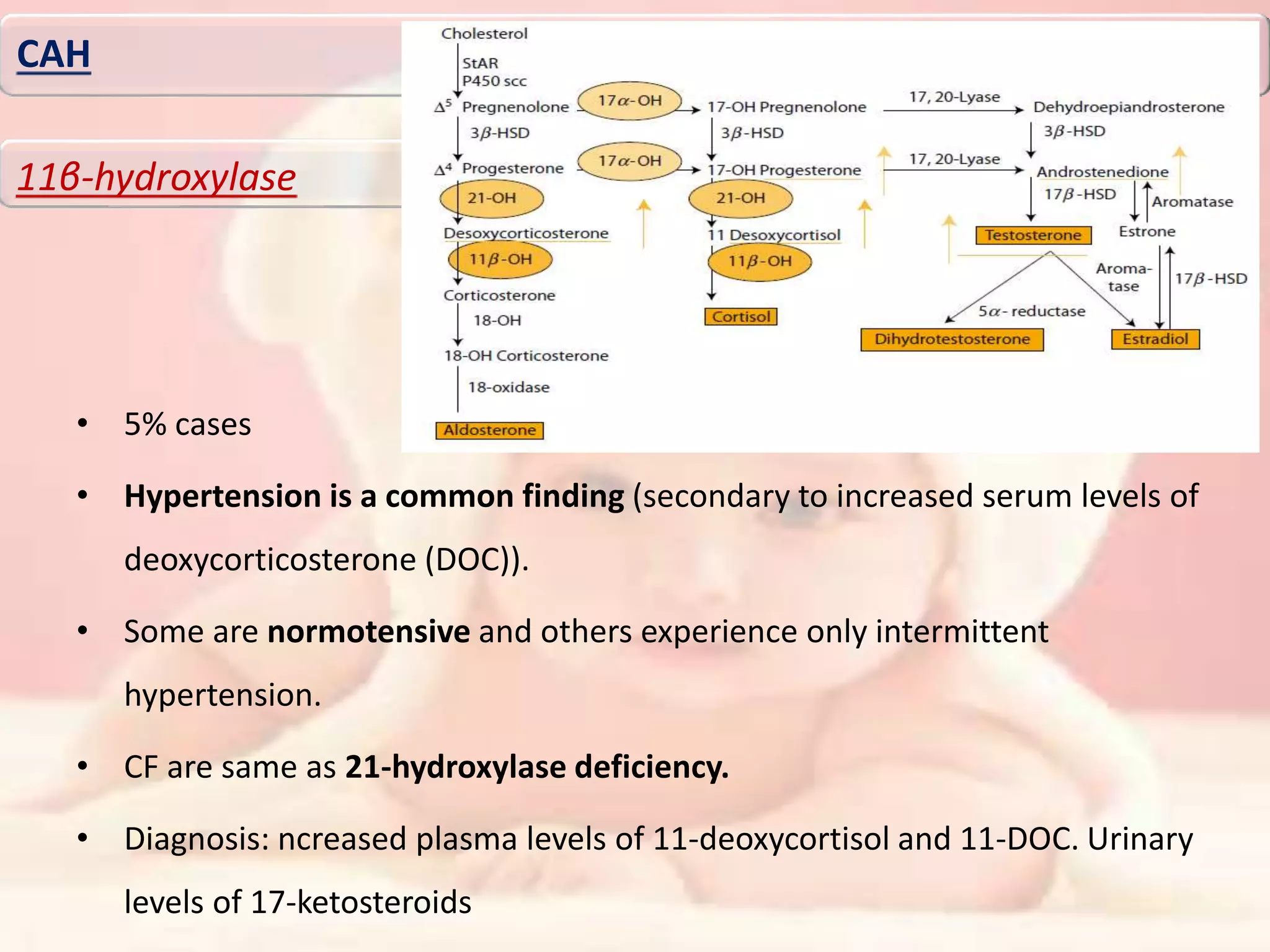
• 5% cases
• Hypertension is a common finding (secondary to increased serum levels of
deoxycorticosterone (DOC)).
• Some are normotensive and others experience only intermittent
hypertension.
• CF are same as 21-hydroxylase deficiency.
• Diagnosis: ncreased plasma levels of 11-deoxycortisol and 11-DOC. Urinary
levels of 17-ketosteroids
CAH
11β-hydroxylase
• The least common enzyme
deficiency
• affects the early steps in
steroid biosynthesis in both
adrenals and gonads
• Virilisation is accompanied
symptoms of aldosterone and
cortisol deficiency.
CAH
3β-hydroxysteroid dehydrogenase
The diagnosis is based increased serum levels of 17-hydroxypregnenolone
and dehydroepiandrosterone (DHEA).
CAH
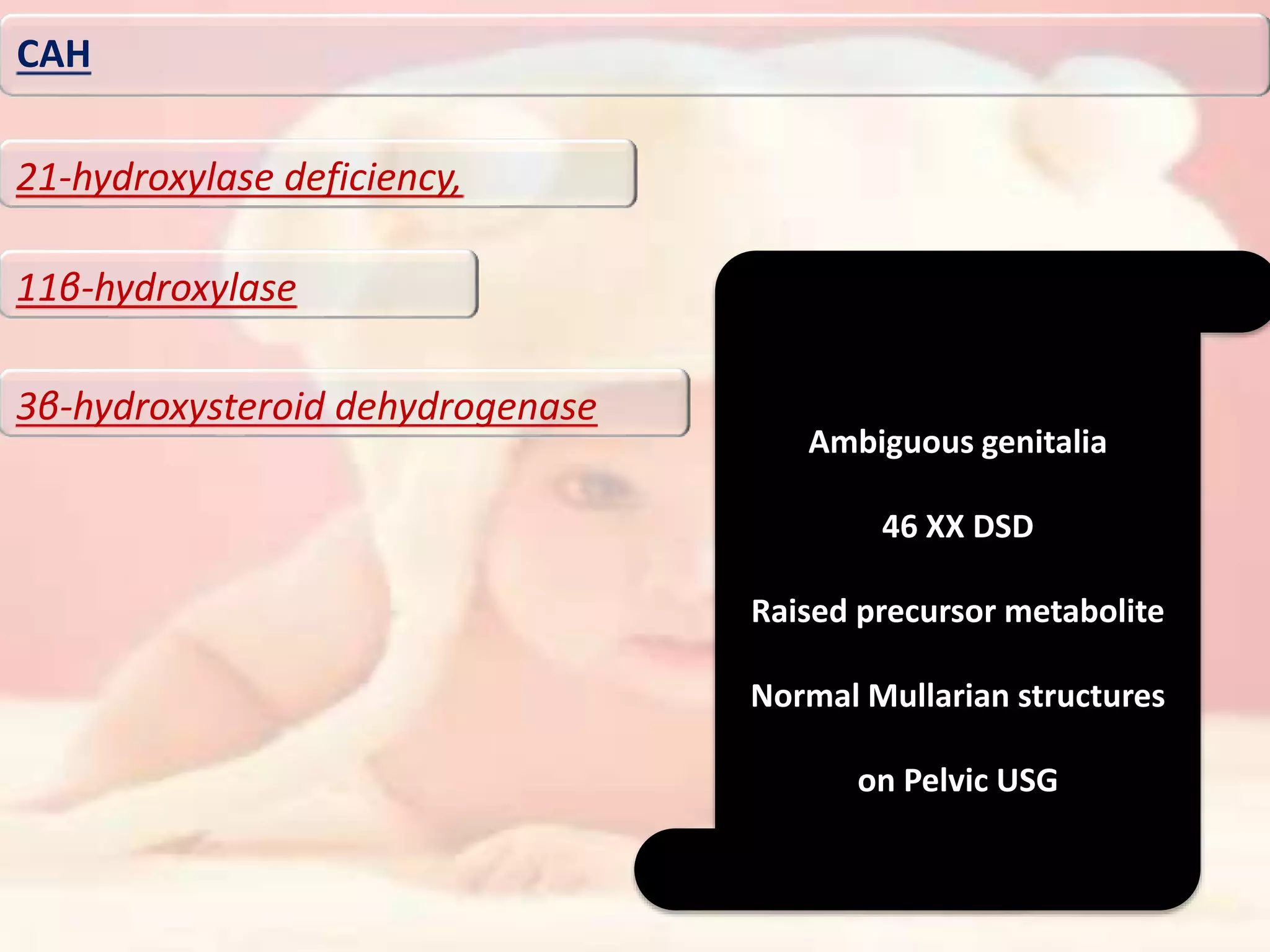
21-hydroxylase deficiency,
11β-hydroxylase
3β-hydroxysteroid dehydrogenase
Ambiguous genitalia
46 XX DSD
Raised precursor metabolite
Normal Mullarian structures
on Pelvic USG
• The karyotype varies
– 46,XX (60%),
– Mosaic 46,XX/XY (30%)
– 46,XY (10%).
• Very rare comprises (3-10% of the DSD pool)
• Rare as hens’ teeth
• The gonads are asymmetrical,
• ovary on one side, (usually the left)
• And an ovotestis on the other side, (usually the right)
Ovotesticular Sydrome
• OT is located anywhere from the abdomen to the scrotum.
• Amb G with both Wolffian and Mullerian duct derivatives are
seen
• Risk of neoplasia is 2.5- 5 %
• Phenotype is variable
• Gonadal biopsy is required for confirming diagnosis
Ovotesticular Sydrome
• Ovotestes are usually compartmentalized
• However, on rare occasions, an intermixture of these elements may occur.
• Testicular (presence of immature seminiferous tubules)
• ovarian tissue (presence of numerous primordial and/or maturing follicles)
Ovotestis
Disorders of sexual differentiation
46 XX DSD
21-hydroxylase
deficiency,
CAH
AssymetricalSymmetrical
OTS
11β-hydroxylase
3β-hydroxysteroid
dehydrogenase
• CAIS
• PAIS
• FARD
• PMDS
• MGD
Disorders of sexual differentiation
46 XY DSD
• 46,XY
• bilateral testes
• absence of mullerian derivatives.
• female-appearing external genitalia
• Normal appearing breasts
• Scanty pubic and axillary hair
• Primary amenorrhea
• Short and blind vagina
CAIS
Hanne Gaby
Vogue Supermodel AIS
CAIS doesn’t present with ambiguous gentalia
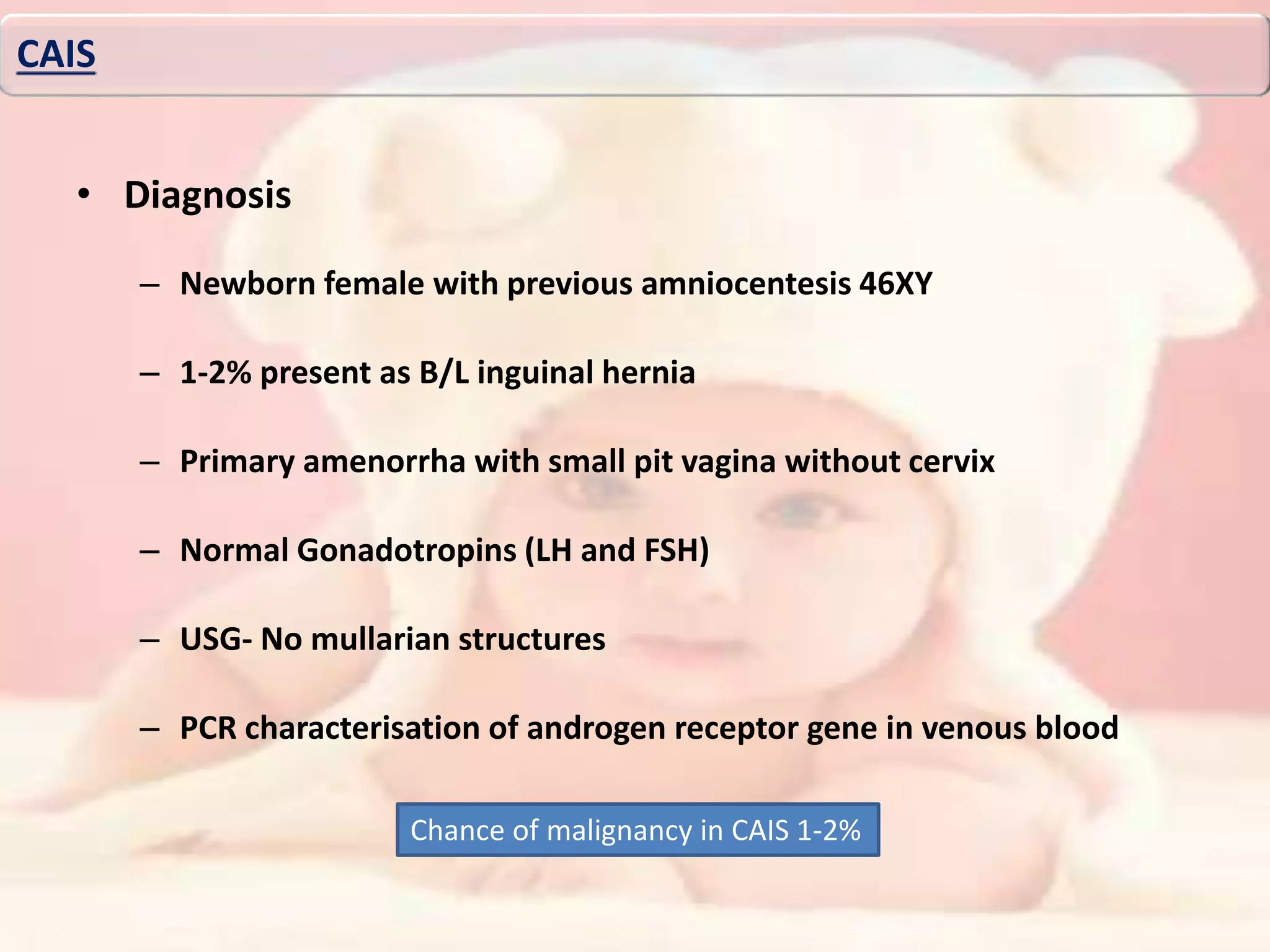
• Diagnosis
– Newborn female with previous amniocentesis 46XY
– 1-2% present as B/L inguinal hernia
– Primary amenorrha with small pit vagina without cervix
– Normal Gonadotropins (LH and FSH)
– USG- No mullarian structures
– PCR characterisation of androgen receptor gene in venous blood
CAIS
Chance of malignancy in CAIS 1-2%
• 46 XY DSD
• Male to female genotype (usually male)
• Perineoscrotal hypospadias,
• cryptorchidism,
• rudimentary wolffian duct structures, gynecomastia, and
azoospermis
PAIS
• Diagnosis
– PSH to small pit vagina without cervix
– Normal Gonadotropins (LH and FSH)
– USG- No mullarian structures
– PCR characterisation of androgen receptor gene in venous blood
PAIS
CAIS Vs PAIS
CAIS PAIS
46 XY 46 XY
Normal female genitalia Ambiguous gentalia
Normal Gonadotropins Normal Gonadotropins
PCR ARG ARG
Become models Don’t become models
Disorders of sexual differentiation
5a-Reductase Deficiency
• Neonates with a 46,XY karyotype
• normal female to markedly ambiguous genitalia (more
common)
• penoscrotal hypospadias
• Typically the phallus is quite small
• urogenital sinus is present,
• Testes and epididymis are present in labia
Disorders of sexual differentiation
5a-Reductase Deficiency
• FARD is also called “Penis at 12”
– partial masculinization occurs at puberty with an increase in muscle
mass,
– development of male body habitus,
– increase in phallic size
Disorders of sexual differentiation
5a-Reductase Deficiency
• they have elevated mean plasma testosterone but low DHT
levels.
• After hCG stimulation, the testosterone-to-DHT ratio
increases to greater than 20 : 1.
• Genital skin fibroblast cultures demonstrate diminished to
absent 5a- reductase activity
Disorders of sexual differentiation
5a-Reductase Deficiency
• 46,XY karyotype
• Normal male external genitalia
• but internal müllerian duct structures.
• Typically, these phenotypic males have
– unilateral or bilateral UDT
– bilateral fallopian tubes, a uterus, and an upper vagina draining into a
prostatic utricle.
Persistent Müllerian Duct Syndrome
• The condition is commonly diagnosed after müllerian tissue is
encountered during inguinal herniotomy or orchidopexy.
• PMDS is etiological factor in transverse testicular ectopia
(30% to 50% of cases)
• Some subjects have a defect in the gene for MIS
Persistent Müllerian Duct Syndrome
• 46,XY/45X0.
• MGD is the second most common cause of ambiguous
genitalia in a newborn
• The gonads are also asymmetrical, with a dysgenetic testis on
one side streak gonad on the other side
Mixed gonadal dysgenesis (MGD)
• Dysgenetic testis : disordered tubules,& abundant stroma
• streak gonad composed of ovarian stroma but with no
oocytes
Mixed gonadal dysgenesis (MGD)
• The phenotype is usually ambiguous.
• These patients have a tendency to a male phenotype with
hypospadias .
• The internal ducts vary according to the associated gonads.
• Fertility has not been reported in patients with MGD. The sex
• assignment varies,
Mixed gonadal dysgenesis (MGD)
• 46XY
• Complete gonadal dysgenesis (CGD) is characterized by
• bilateral streak gonads,
• normally developed Mullerian ducts, and
• hypergonadotropic hypogonadism (elevated gonadotropin
and decreased E levels)
Disorders of sexual differentiation
Complete gonadal dysgenesis
• Such individuals usually present with primary amenorrhea
and absence of secondary sexual characteristics.
• CDG resembles Turner syndrome, (But 46,XX or 46,XY)
Disorders of sexual differentiation
Complete gonadal dysgenesis
Disorders of sexual differentiation
3ß –Hydroxysteroid Dehydrogenase Deficiency
Disorders of sexual differentiation
3ß –Hydroxysteroid Dehydrogenase Deficiency
• Ambiguous genetalia with various degrees of incomplete Virilisation
• resulting from a block in testosterone biosynthesis,
• salt-wasting adrenal insufficiency resulting from impaired
synthesis of aldosterone and cortisol
• 46 XY male, Amb G and adrenal insufficiency
• increased levels of ß-hydroxysteroids is confirmative
• A 2 year-old boy presented with severe penoscrotal hypospadias .Physical
examination revealed right UDT with left gonad palpable in left hemi
scrotum and normal in size. No other physical abnormality was noted.
Ultrasound examination showed a heterogenous ovoid structure present
in the right inguinal region. Left gonad had homogenous echotexture.
Pelvic ultrasound examination showed no evidence of a uterus or ovaries.
The testosterone levels were measured both were in the normal range (3-
10ng/ml). Cytogenetic analysis performed on peripheral blood
lymphocytes revealed a 45,XX/46,XY karyotype.
Case Study
No 1
OTS. Gonadectomy with biopsy
• Three month old girl child presented to IGICH OPD with
history of bilateral inguinal hernia.
• Was planned for B/L herniotomy
• On Inguinal exploration B/L testes with vas were present
Case Study
No :2
Karyotype 46XY CAIS
• A 14 year old patient presented to IGICH OPD with severe
penoscrotal hypospadias with PST, SPL 3 cm
• Patient was initially rared as female child
• Rt testis in Scrotum, Lt testis Inguinal Canal
• Testosterone <200 ng/ml
• Testosterone : DHT <20
• 17OHP normal
• Patient has male voice but Gynecomastia is present
Case Study
Case No: 3
PAIS (ARG)
• A 16-year-old person, reared as female presented with complaints of genital ambiguity and
primary amenorrhoea along with lack of secondary sexual characters, Karyotype analysis revealed
46XY karyotype. There was no evidence of hypocortisolemia (cortisol 9.08 μg/dl,
adrenocorticotropic hormone [ACTH] 82.5 pg/ml) or elevated level of 17-OH-progesterone (0.16
ng/ml). Pooled luteinizing hormone (LH) was 11.79 mIU/ml and follicle-stimulating hormone (FSH)
was 66.37 mIU/ml. Serum estradiol level was 25 pg/ml (21-251). Basal and 72 h post beta-human
chorionic gonadotropin (hCG) levels of androstenedione and testosterone levels were done (basal
testosterone of 652 ng/dl and basal androstenedione of 1.17 ng/ml; 72 h post hCG testosterone of
896 ng/dl and androstenedione of 1.34 ng/ml). Magnetic resonance imaging (MRI) pelvis (with
ultrasonogrphy [USG] correlation) revealed uterus didelphys and bilateral ovarian-like structures.
Right sided gonads and adjacent tubal structures were visualized laparoscopically and removed.
Left sided gonads were not visualized and Mullerian remnants were adhered to sigmoid colon.
Case study
Case No;4
MGD
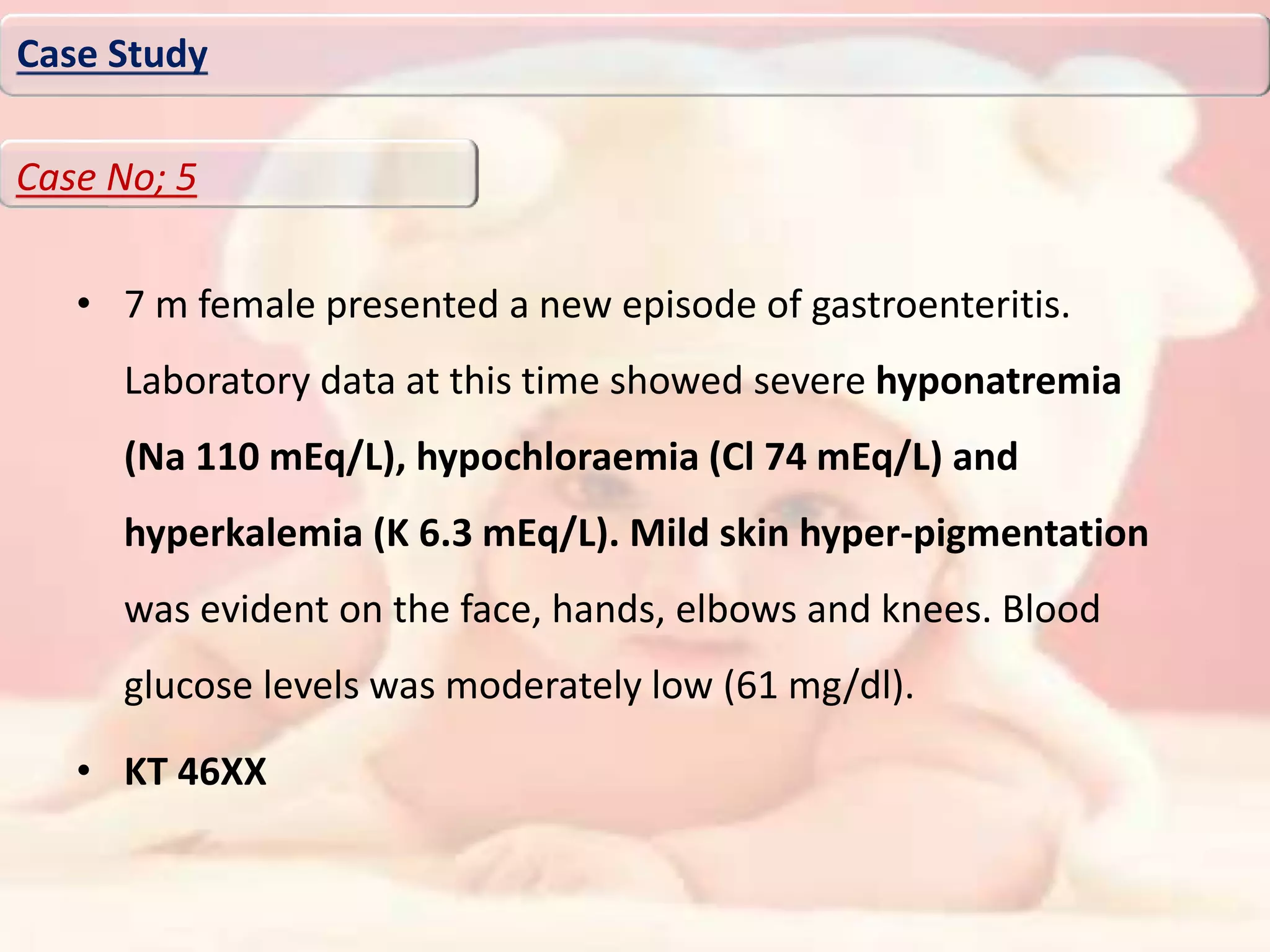
• 7 m female presented a new episode of gastroenteritis.
Laboratory data at this time showed severe hyponatremia
(Na 110 mEq/L), hypochloraemia (Cl 74 mEq/L) and
hyperkalemia (K 6.3 mEq/L). Mild skin hyper-pigmentation
was evident on the face, hands, elbows and knees. Blood
glucose levels was moderately low (61 mg/dl).
• KT 46XX
Case Study
Case No; 5
Case Study
Lipoid congenital adrenal
Hyperplasia (STAR) gene
mutation
• Proximal hypospadias with cryptorchidism and micropenis
• Distal Hypospadias with cryptorchidism
• Female genitalia with inguinal or labial mass
• FG with clitoromegaly (>9mm) and posterior labial fusion
Evaluation
Suspect
• Personal history •
– Parental consanguinity.
– Potential prenatal exposure to androgens, androgen antagonists or
other drugs
– Maternal virilization during pregnancy.
• Family history
– Family history of hypospadias, infertility, amenorrhoea or early
menopause, salt-losing or unexplained infant deaths.
Evaluation
History
• Palpation of the gonads along the inguinal canal (from the
labioscrotal fold to the abdomen).
• Assessment of
– hydration and
– blood pressure
– persistent jaundice accompanied by recurrent episodes of
hypoglycaemia (hypopituitarism with growth hormone and cortisol
deficiency)
Evaluation
Physical Examination
• Overall assessment
• Hyper pigmentation of the skin due ↑↑ ACTH
• Abdominal masses
• In adolescent evidence of hirsutism/ virilization
Tanner staging
Evaluation
Physical Examination
Evaluation
Physical Examination
Evaluation
Physical Examination
AAP2008
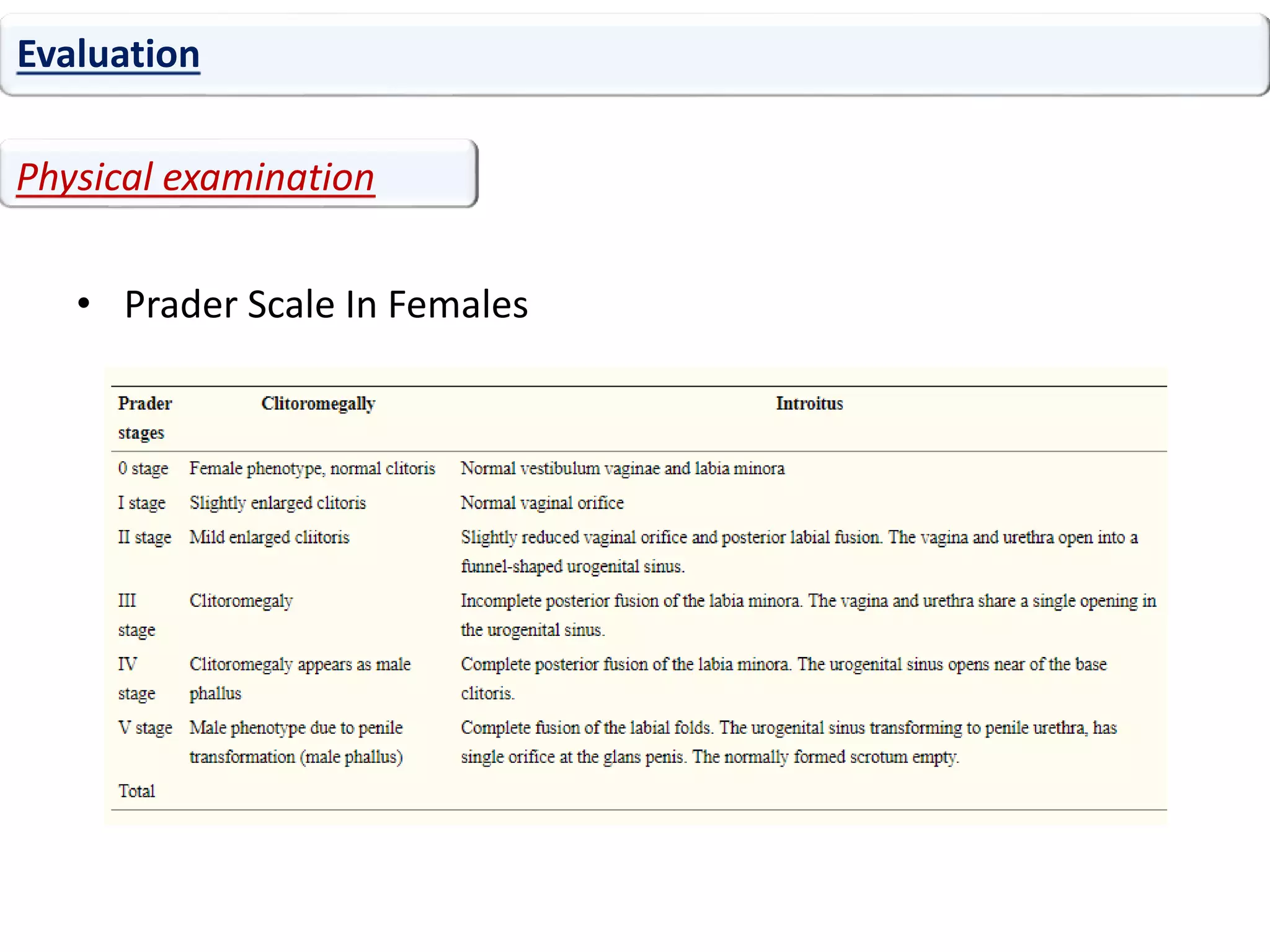
• Prader Scale In Females
Evaluation
Physical examination
• EMS <11 should be investigated for DSD
Evaluation
EMS Scale In males
• There are three fundamental tests
– Karyotype analysis (peripheral blood)
– Hormone evaluation from 48 h post birth
– Abdominal ultrasound
Evaluation
First-line diagnostic tests
Hormonal Evaluation
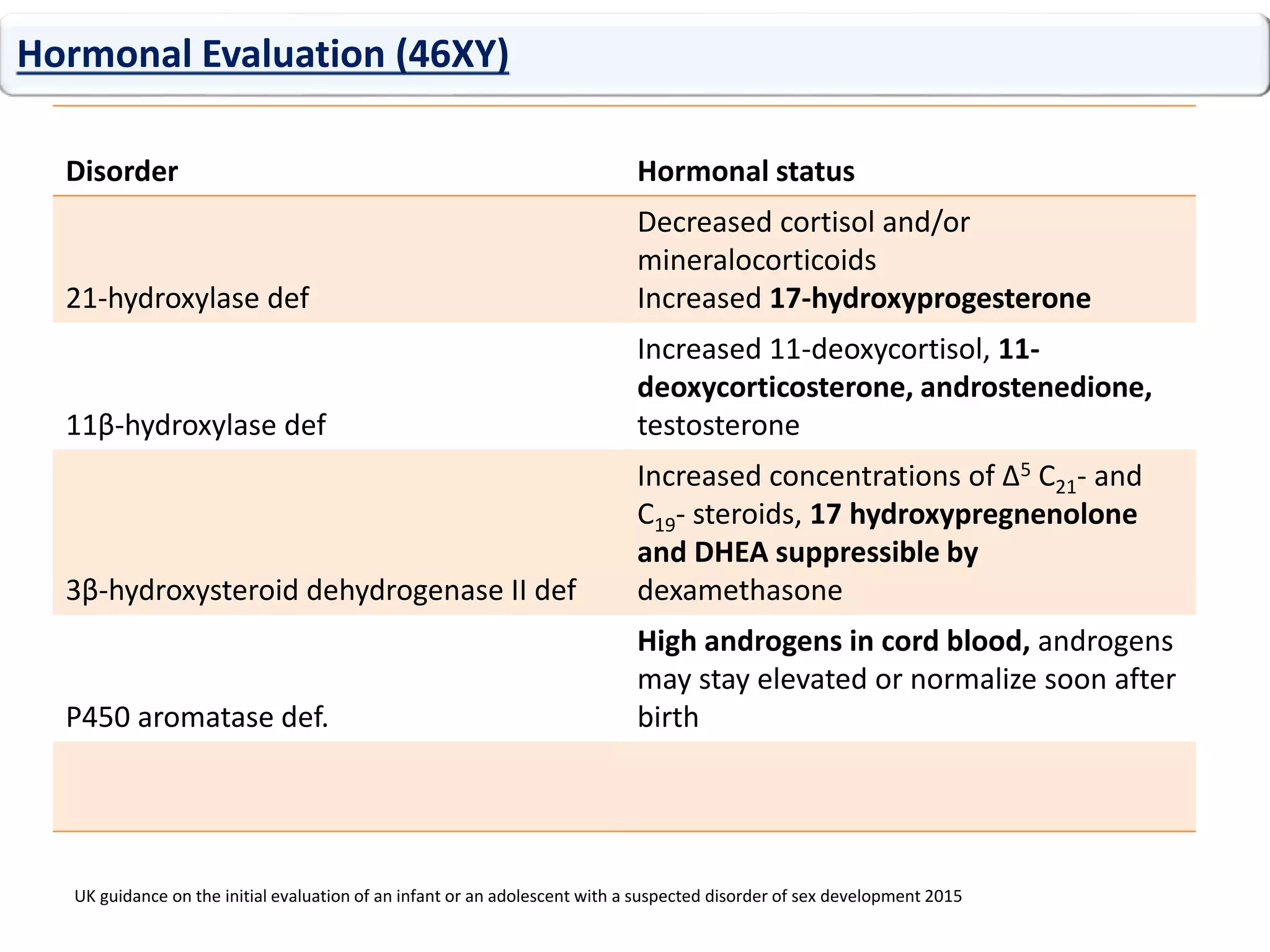
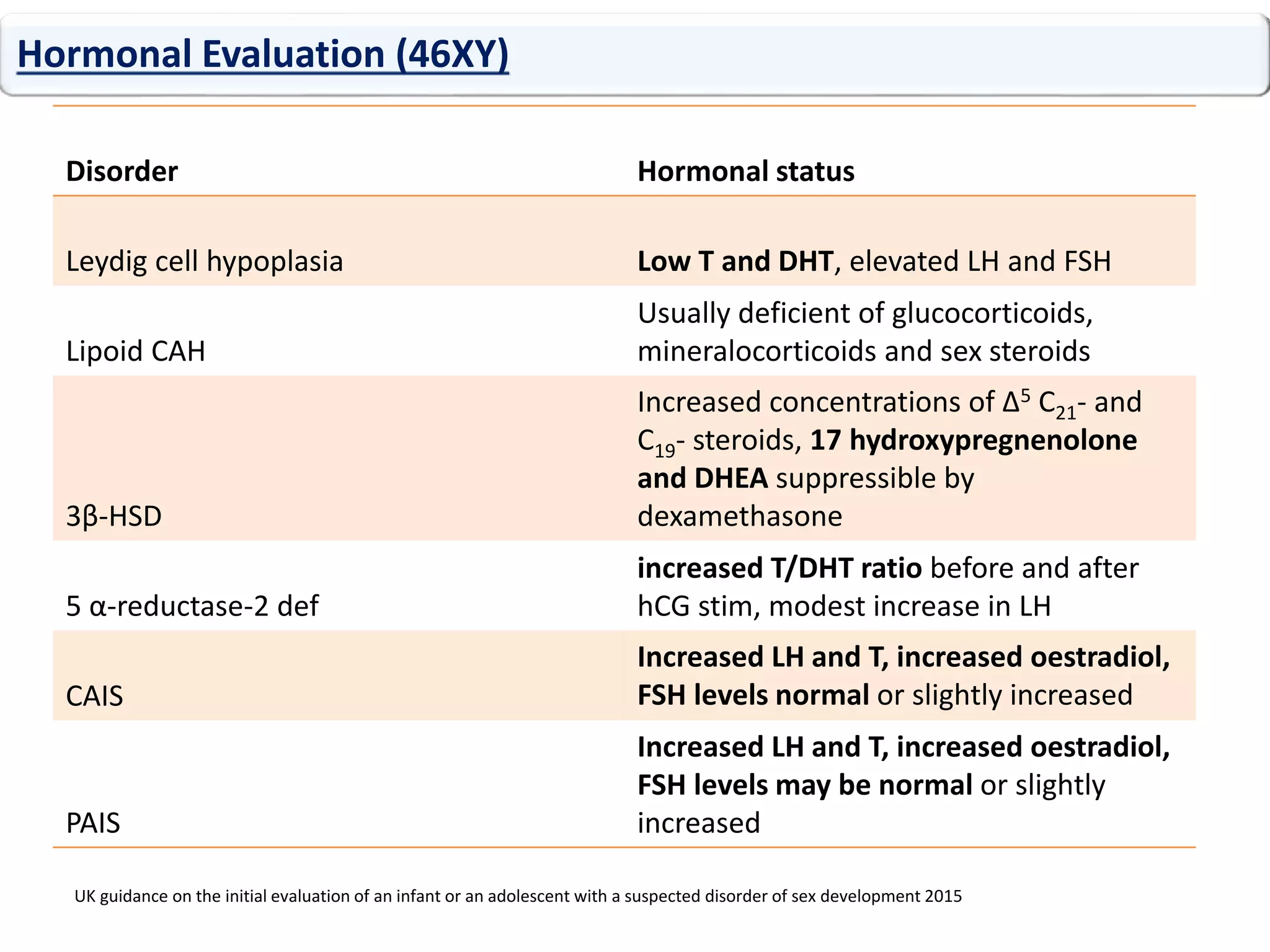
Hormonal Evaluation (46XY)
Disorder Hormonal status
21-hydroxylase def
Decreased cortisol and/or
mineralocorticoids
Increased 17-hydroxyprogesterone
11β-hydroxylase def
Increased 11-deoxycortisol, 11-
deoxycorticosterone, androstenedione,
testosterone
3β-hydroxysteroid dehydrogenase II def
Increased concentrations of Δ5 C21- and
C19- steroids, 17 hydroxypregnenolone
and DHEA suppressible by
dexamethasone
P450 aromatase def.
High androgens in cord blood, androgens
may stay elevated or normalize soon after
birth
UK guidance on the initial evaluation of an infant or an adolescent with a suspected disorder of sex development 2015
Hormonal Evaluation (46XY)
Disorder Hormonal status
Leydig cell hypoplasia Low T and DHT, elevated LH and FSH
Lipoid CAH
Usually deficient of glucocorticoids,
mineralocorticoids and sex steroids
3β-HSD
Increased concentrations of Δ5 C21- and
C19- steroids, 17 hydroxypregnenolone
and DHEA suppressible by
dexamethasone
5 α-reductase-2 def
increased T/DHT ratio before and after
hCG stim, modest increase in LH
CAIS
Increased LH and T, increased oestradiol,
FSH levels normal or slightly increased
PAIS
Increased LH and T, increased oestradiol,
FSH levels may be normal or slightly
increased
UK guidance on the initial evaluation of an infant or an adolescent with a suspected disorder of sex development 2015
• Indicator of testis (Sertoli Cells)
• Undetectable
– 46 XX CAH
– CGD
– PMDS due to AMH gene mutation
• Raised above male Related Ref. Range
– CAIS
– PAIS
– FARD
– Leydig Cell Hypoplasia
– Testosterone biosynthesis defect
Hormonal Evaluation
AMH
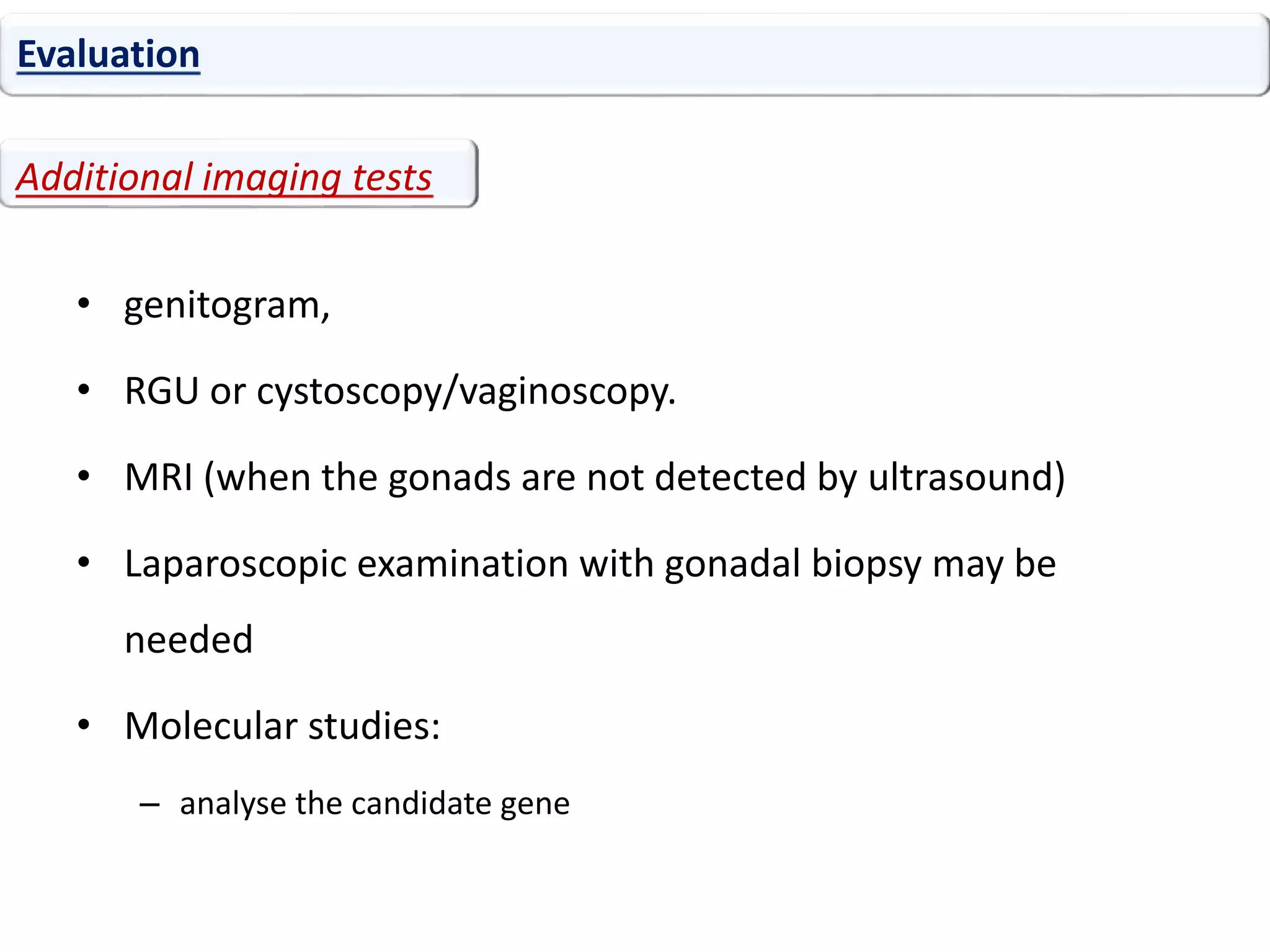
• genitogram,
• RGU or cystoscopy/vaginoscopy.
• MRI (when the gonads are not detected by ultrasound)
• Laparoscopic examination with gonadal biopsy may be
needed
• Molecular studies:
– analyse the candidate gene
Evaluation
Additional imaging tests
Evaluation
• It is at times very difficult to assign gender
• Haste should not be made in assigning gender
• Gender to be decided by team of doctors in consultation with
the parents
Gender Assigment
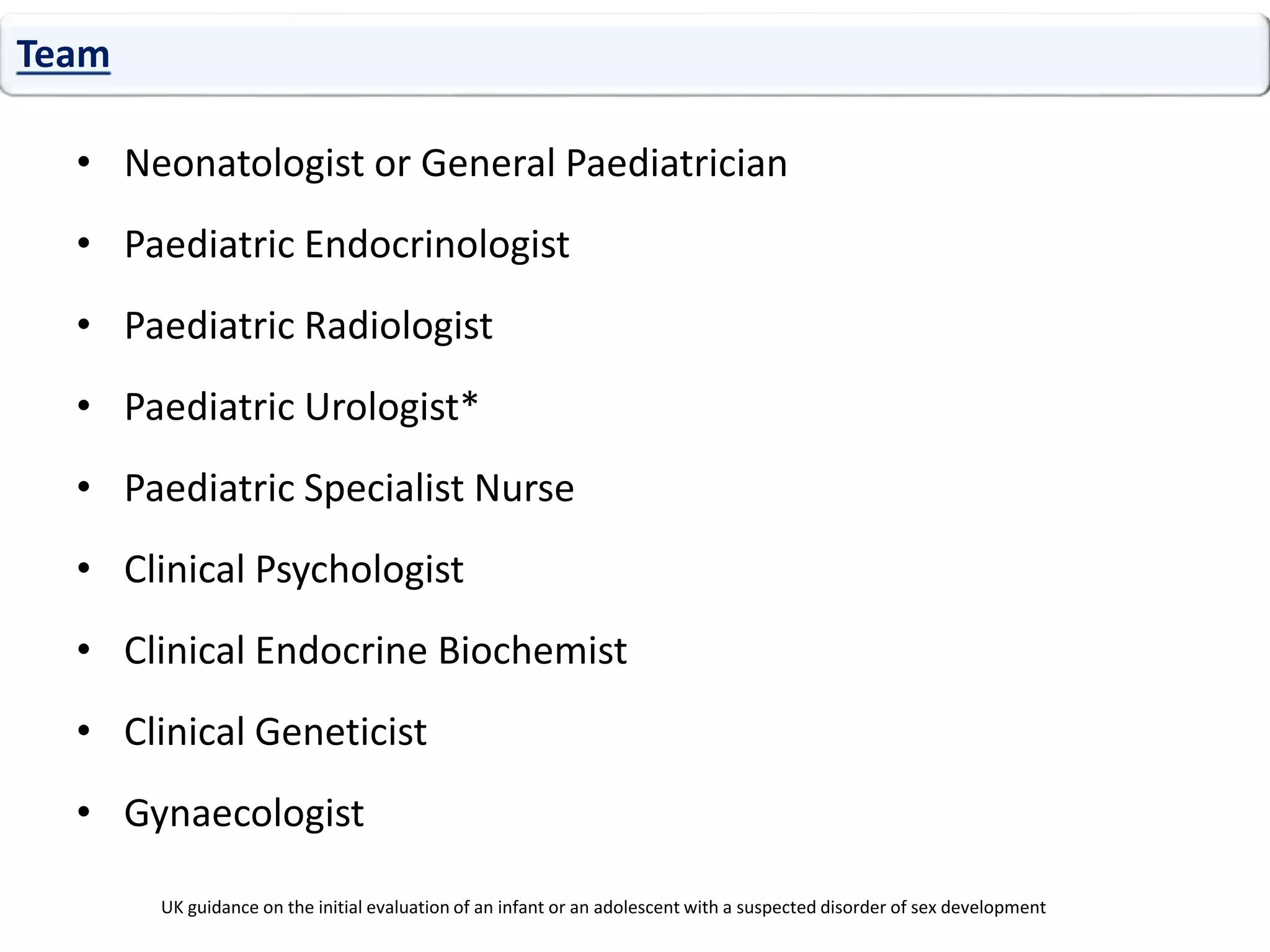
• Neonatologist or General Paediatrician
• Paediatric Endocrinologist
• Paediatric Radiologist
• Paediatric Urologist*
• Paediatric Specialist Nurse
• Clinical Psychologist
• Clinical Endocrine Biochemist
• Clinical Geneticist
• Gynaecologist
Team
UK guidance on the initial evaluation of an infant or an adolescent with a suspected disorder of sex development
• Explanation of the anatomy and results of imaging
• Explanation of pros and cons of reconstructive surgery
• Develop a plan for complex imaging (other than pelvic ultrasound)
and further assessment of the anatomy
• Perform procedures such as laparoscopy, biopsy, reconstructive
surgery and gonadectomy
• Organize timely and appropriate involvement of other members of
MDT
Paediatric Urologist*
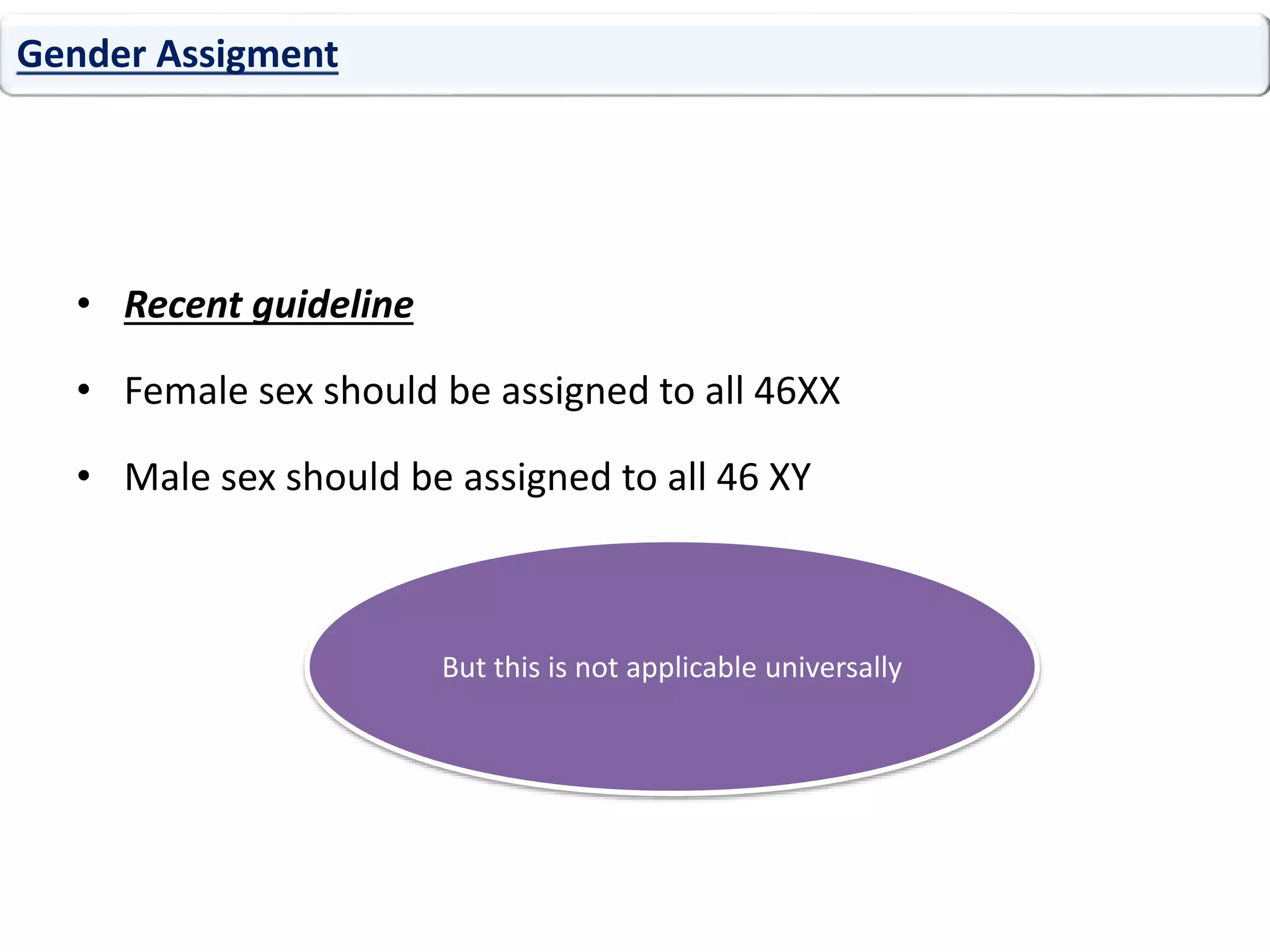
• Recent guideline
• Female sex should be assigned to all 46XX
• Male sex should be assigned to all 46 XY
Gender Assigment
But this is not applicable universally
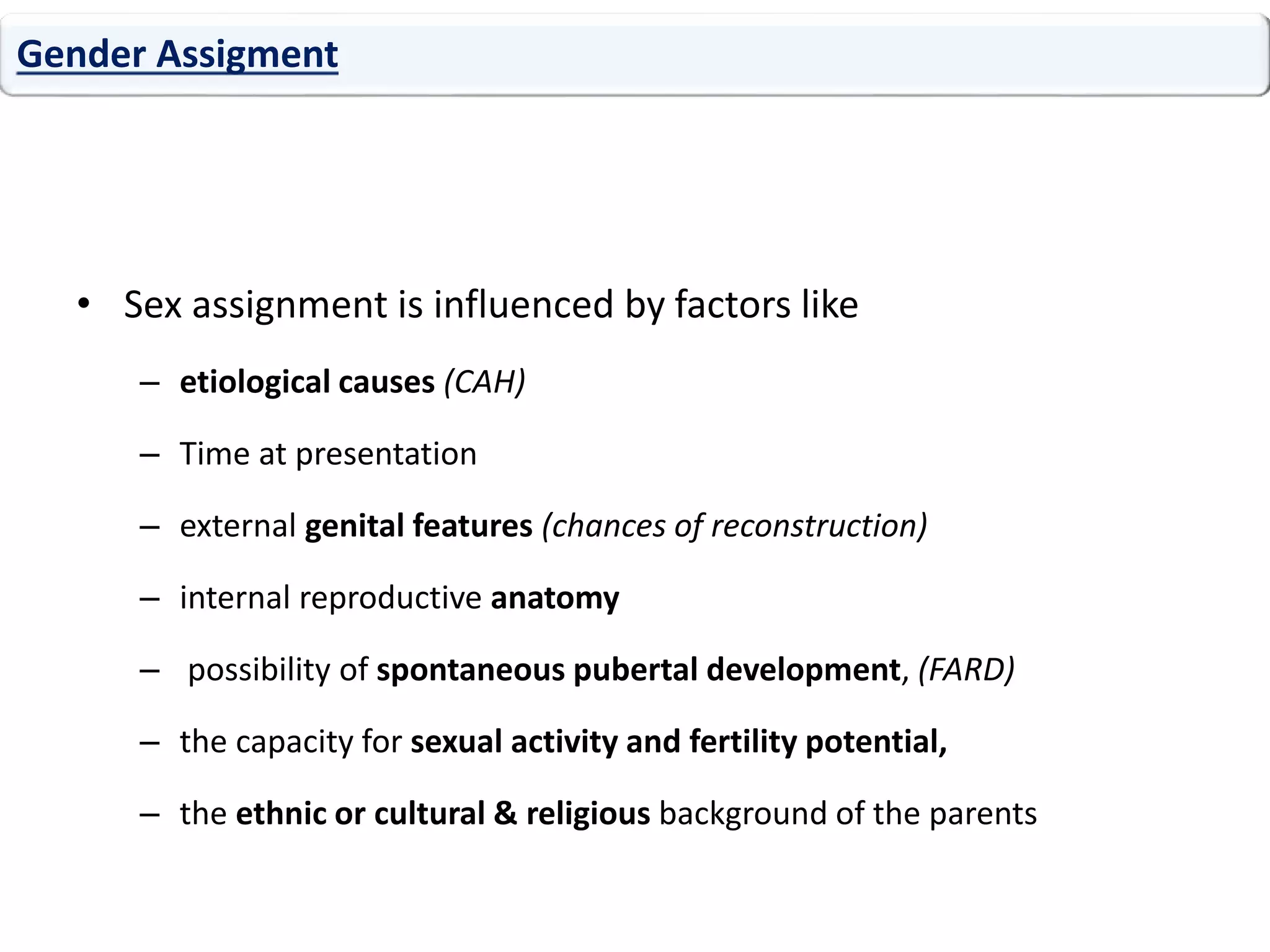
• Sex assignment is influenced by factors like
– etiological causes (CAH)
– Time at presentation
– external genital features (chances of reconstruction)
– internal reproductive anatomy
– possibility of spontaneous pubertal development, (FARD)
– the capacity for sexual activity and fertility potential,
– the ethnic or cultural & religious background of the parents
Gender Assigment
• Sex of rearing doesn’t only depend on diagnosis
• each patient should be evaluated and managed individually
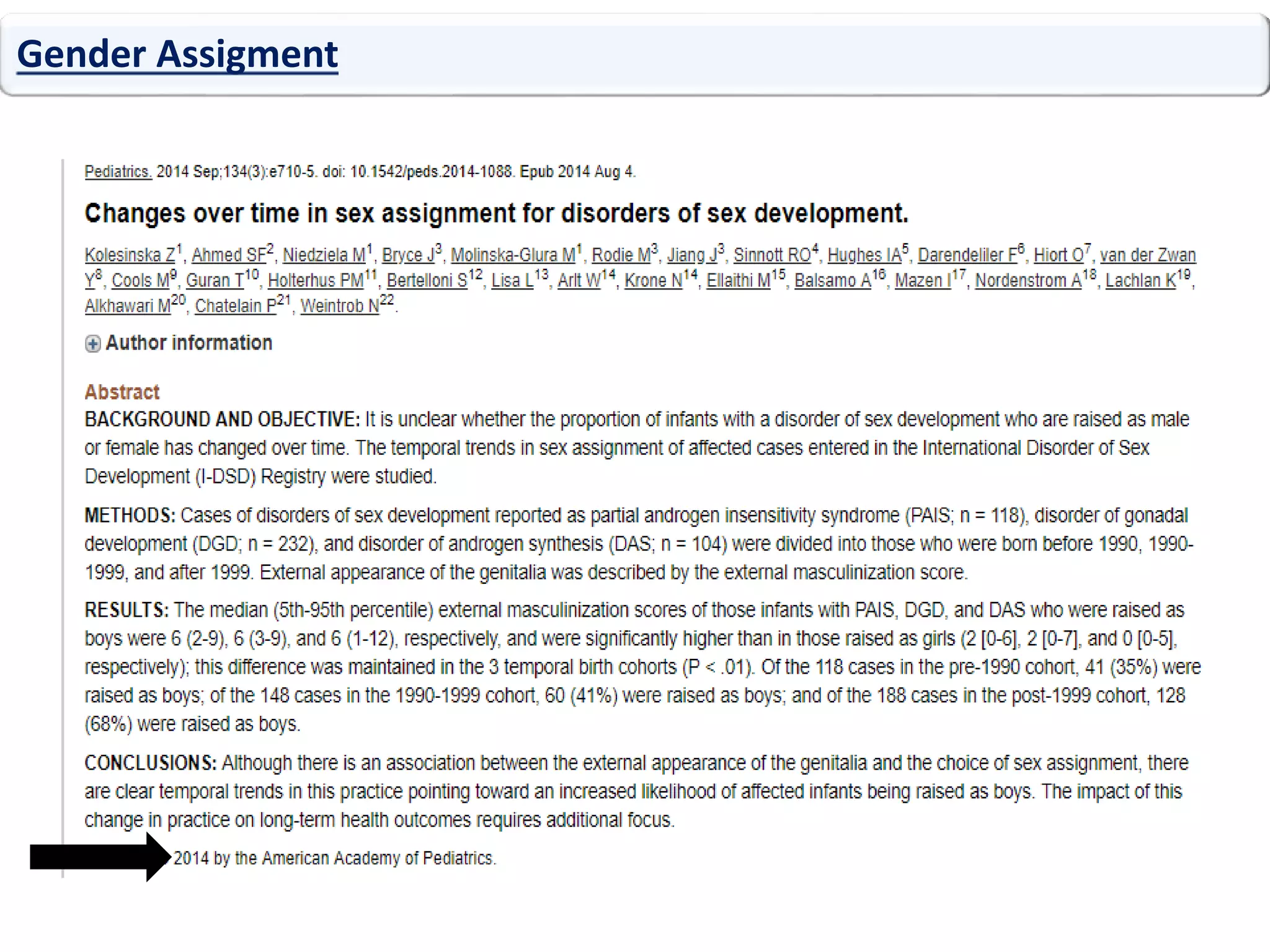
• There is a recent trend towards preferable male sex
assignment
Gender Assigment
Gender Assigment
Gender Assigment
in recent years elective surgery has been
deferred to allow the patient to
participate in decision-making in regard to
both gender assignment and surgical
intervention.
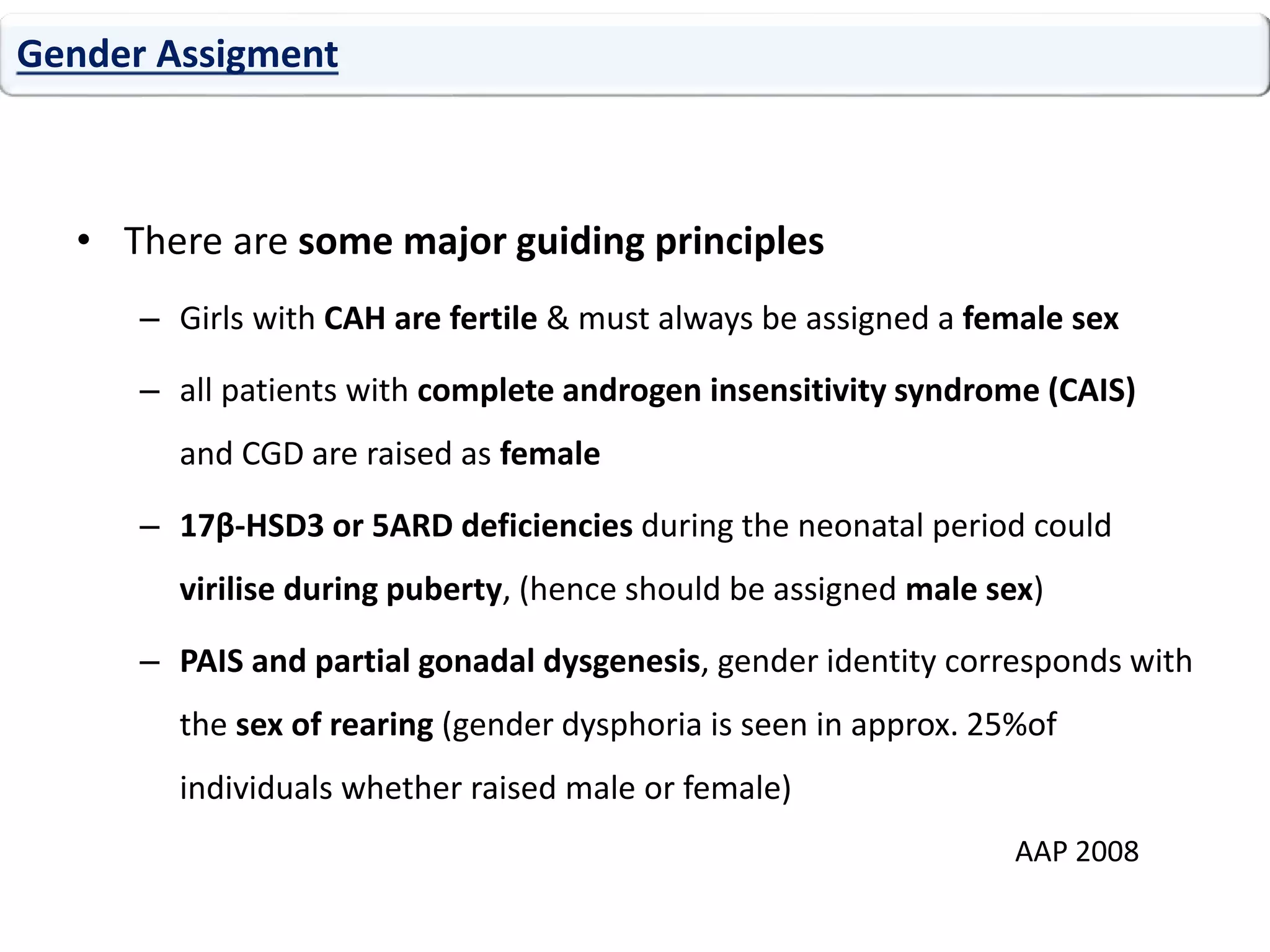
• There are some major guiding principles
– Girls with CAH are fertile & must always be assigned a female sex
– all patients with complete androgen insensitivity syndrome (CAIS)
and CGD are raised as female
– 17β-HSD3 or 5ARD deficiencies during the neonatal period could
virilise during puberty, (hence should be assigned male sex)
– PAIS and partial gonadal dysgenesis, gender identity corresponds with
the sex of rearing (gender dysphoria is seen in approx. 25%of
individuals whether raised male or female)
Gender Assigment
AAP 2008
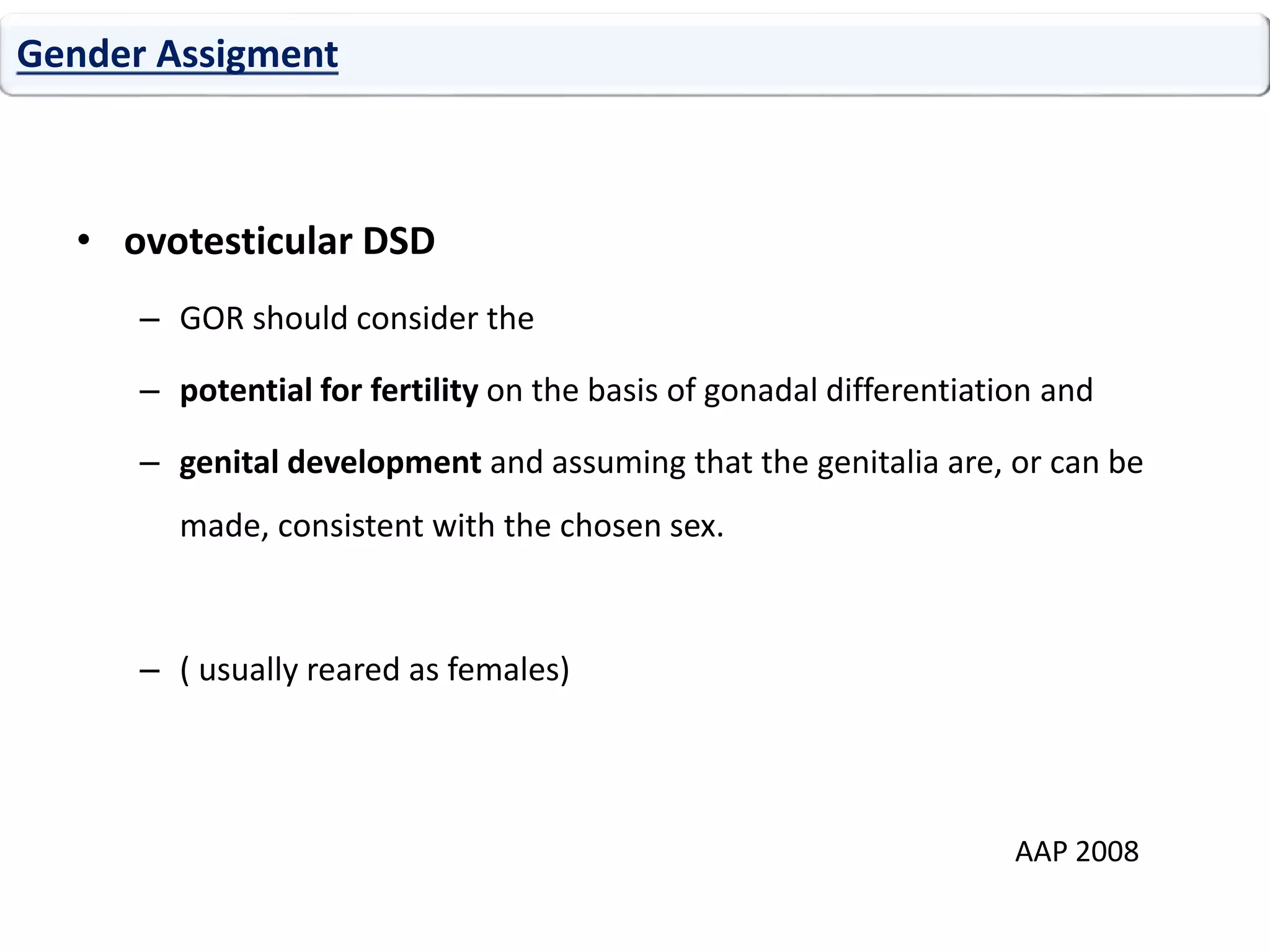
• ovotesticular DSD
– GOR should consider the
– potential for fertility on the basis of gonadal differentiation and
– genital development and assuming that the genitalia are, or can be
made, consistent with the chosen sex.
– ( usually reared as females)
Gender Assigment
AAP 2008
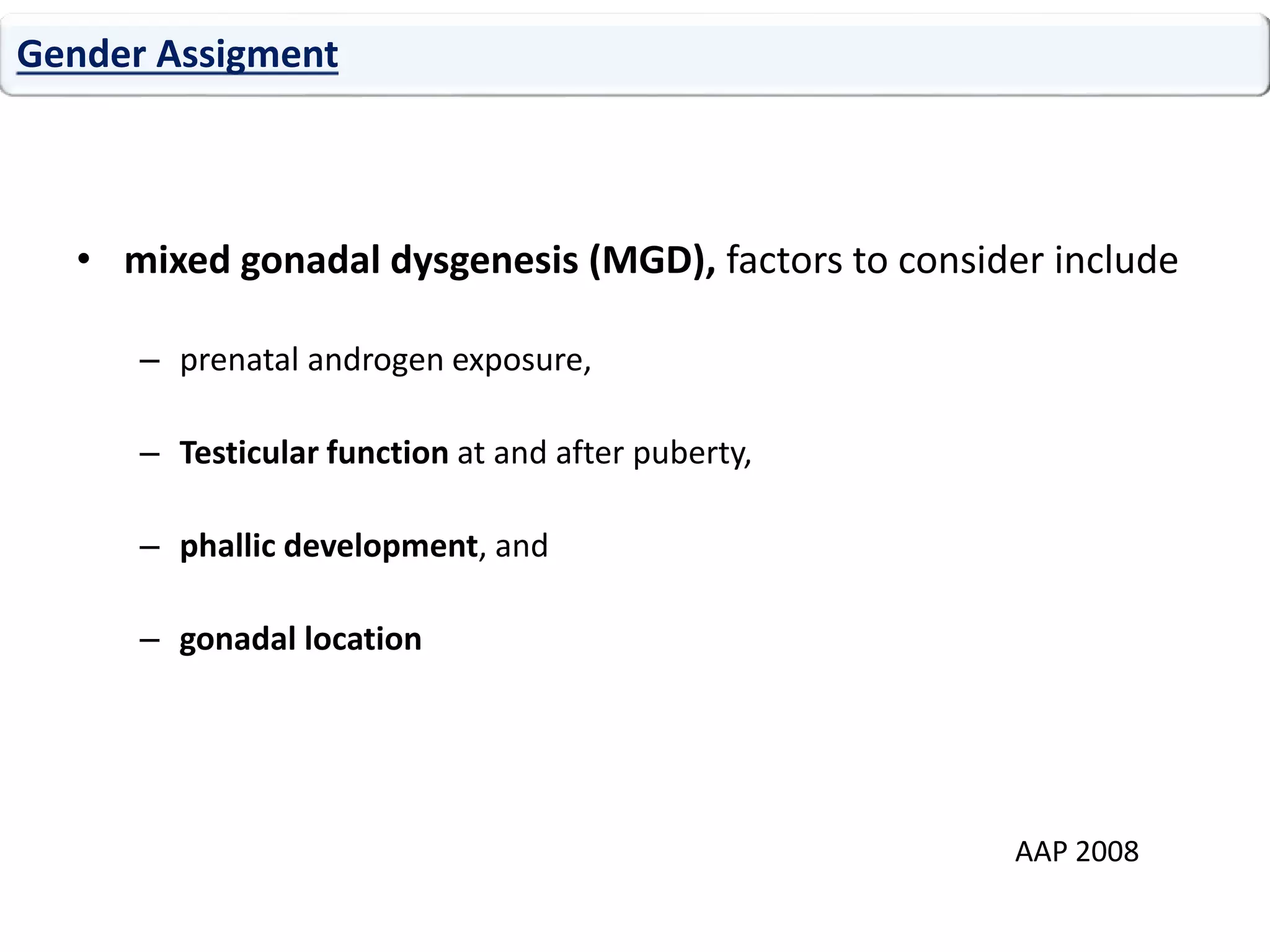
• mixed gonadal dysgenesis (MGD), factors to consider include
– prenatal androgen exposure,
– Testicular function at and after puberty,
– phallic development, and
– gonadal location
Gender Assigment
AAP 2008
• In cases which can not be fertile, gender assignment will
depend on
– The appearance of the external genitalia
– The potential for unambiguous appearance
– The potential for normal sexual functioning
Gender Assigment
AAP 2008
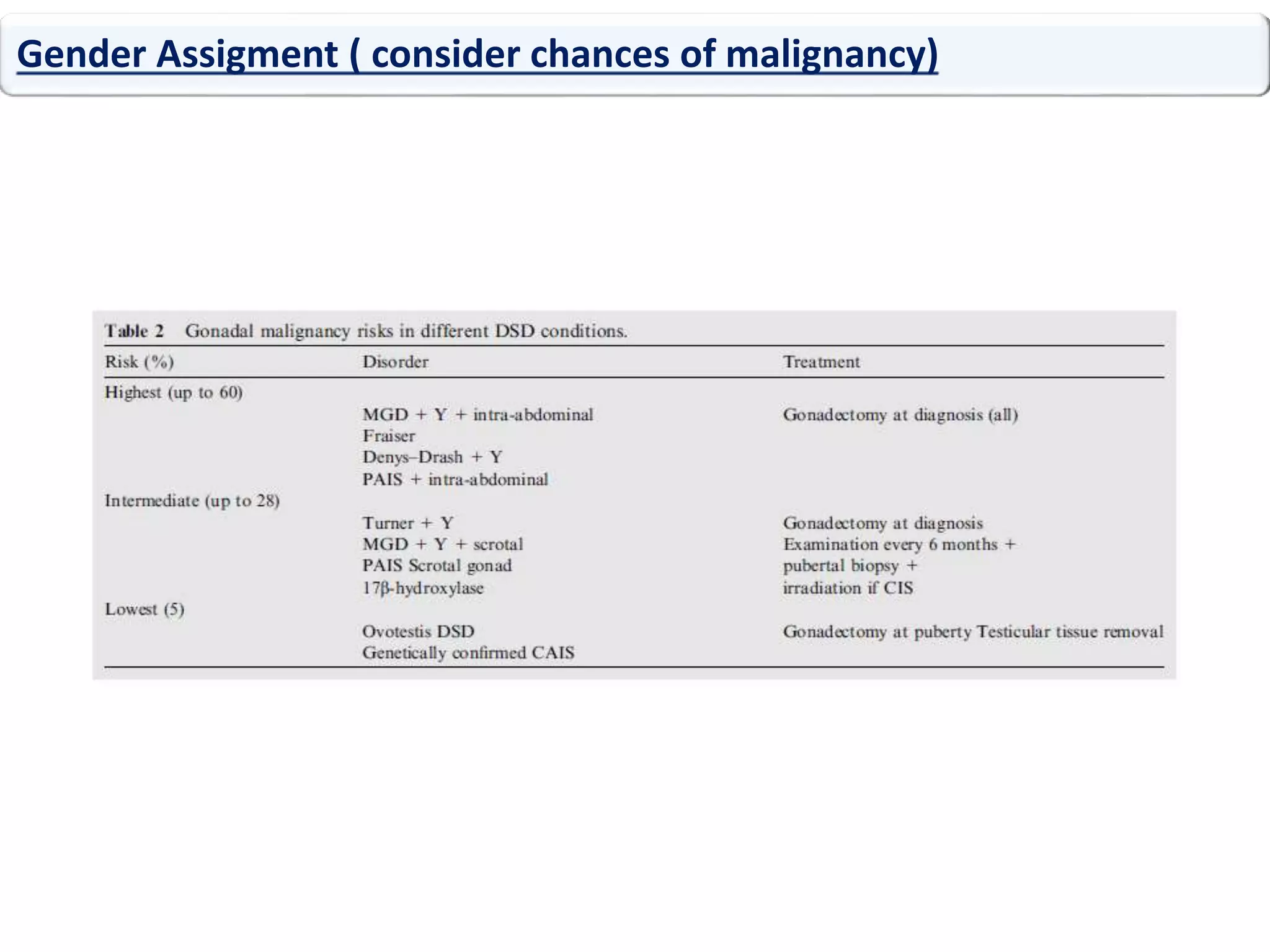
Gender Assigment ( consider chances of malignancy)
Gender Assigment (coran)
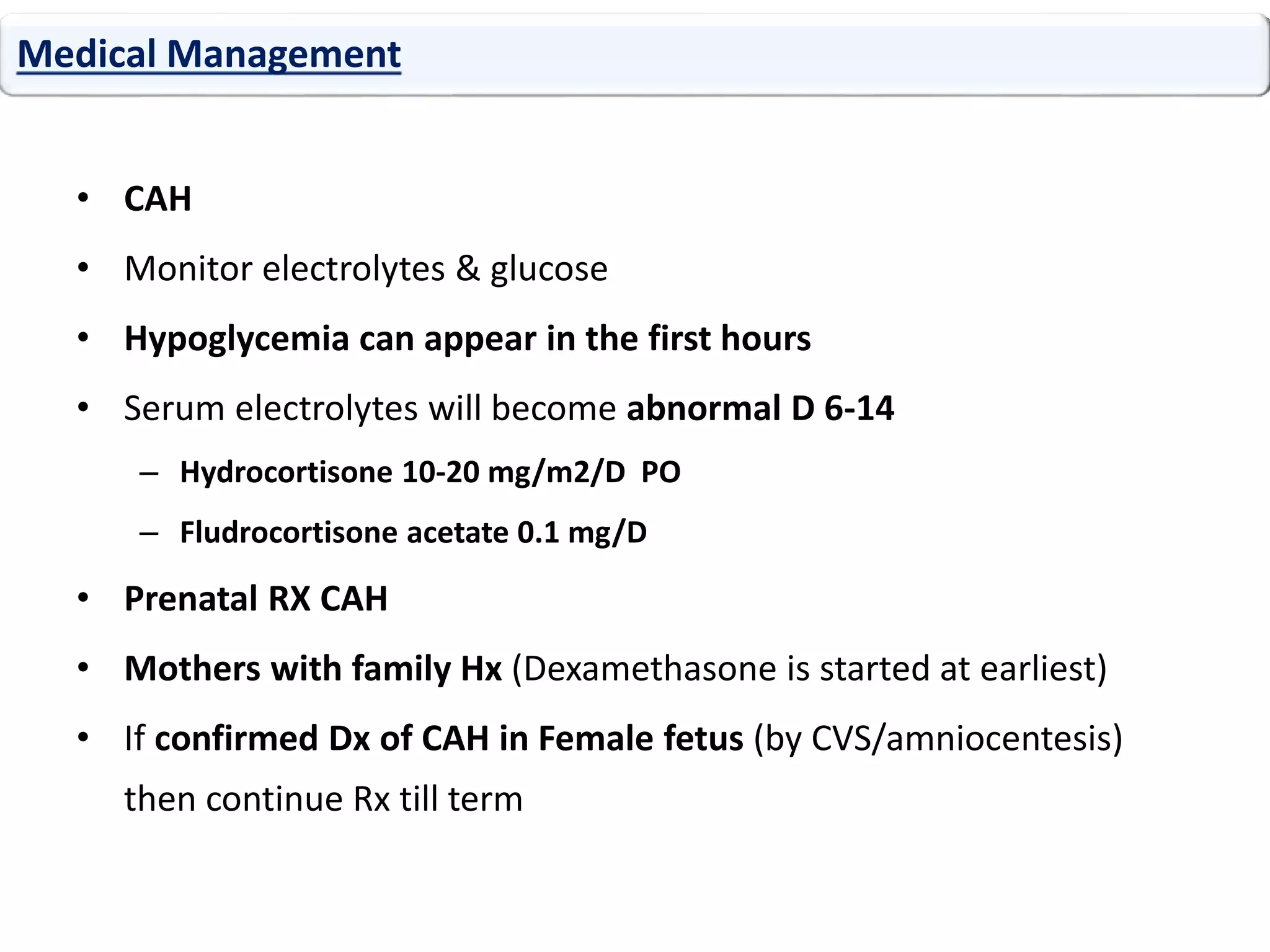
• CAH
• Monitor electrolytes & glucose
• Hypoglycemia can appear in the first hours
• Serum electrolytes will become abnormal D 6-14
– Hydrocortisone 10-20 mg/m2/D PO
– Fludrocortisone acetate 0.1 mg/D
• Prenatal RX CAH
• Mothers with family Hx (Dexamethasone is started at earliest)
• If confirmed Dx of CAH in Female fetus (by CVS/amniocentesis)
then continue Rx till term
Medical Management
• Sex steroid replacement therapy at puberty
• Testosterone enanthate 200-300 mg im/ Month:
– Male Pt with steroid enzyme def
– Male Pt with partial gonadal dysgenesis, low leydig cell Number
• Estrogen premarin 0.625 mg PO/D
• For one year . Then cyclic estrogen progesterone or OCP (if there is
uterus)
– Female Pt with enzyme def , 3β-OH –steroid dehydrogenase & 17-hydroxylase
– Female 46 XY ,partial gonadal dysgenesis, OTS
Medical Management
• For suspected CAH (salt-losing variety),
– D5 NS (dextrose in normal saline) and
– Hydocortisone(100 mg/m 2/day), with treatment modified after 24
hours, based on electrolyte correction;
– fludrocortisone (0.1mg po qd) is added,
– with a switch to table salt (2.5 grams po qd/given in 24-hr worth of
formula).
Medical Management (Emergency)
Medical Management
Coran
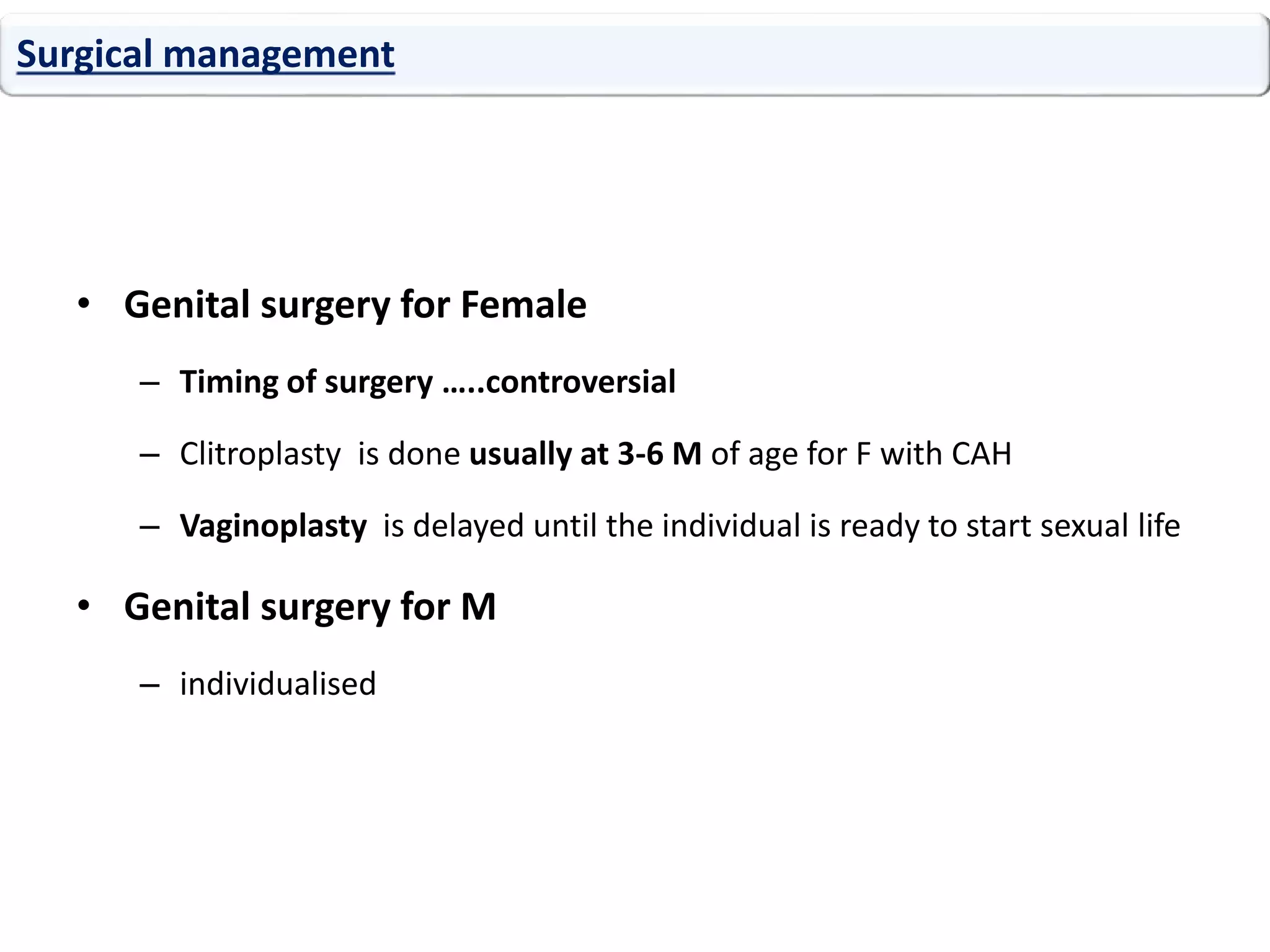
• Genital surgery for Female
– Timing of surgery …..controversial
– Clitroplasty is done usually at 3-6 M of age for F with CAH
– Vaginoplasty is delayed until the individual is ready to start sexual life
• Genital surgery for M
– individualised
Surgical management
• Decision of Sx should be taken after consulting MDT and
Family
• Where possible, the patient should be involved in the
decision-making process
• In cases where surgery is performed at early ages, mutilating
and irreversible procedures should be avoided.
Surgical management
• Surgery should only be considered in cases of severe virilization
(Prader III–V) and be performed in conjunction, when appropriate,
with repair of the common urogenital sinus.
• Emphasis is on functional outcome rather than a strictly cosmetic
appearance
• UGS should be operated early
– the beneficial effects of estrogen on tissue in early infancy, and
– the avoidance of potential complications from the connection
between the urinary tract and peritoneum via the Fallopian tubes
Surgical management
AAP2008
• An absent or inadequate vagina requires a vaginoplasty performed
in adolescence when the patient is psychologically motivated and a
full partner in the procedure.
• The testes in patients with CAIS (and those with PAIS, raised
female) should be removed at diagnosis
– to prevent malignancy
– psychological problems
– availability of estrogen-replacement therapy allows for the option of early
removal
Surgical management
• The streak gonad in a patient with MGD raised male should be
removed laparoscopically
• Bilateral gonadectomy is performed in early childhood in females
(bilateral streak gonads)
• A scrotal testis in patients with gonadal dysgenesis is at risk for
malignancy. Current recommendations are testicular biopsy at
puberty
• If Biopsy positive then sperm banking and gonadectomy
Surgical management
AAP2008
Surgical management
• Keeping the genital tubercle intact is recommended if it is not
too big (<2cm)
• delayed surgery is therefore favored by some because the
patient herself is involved in the decision process, although
there is not yet any published support for this option
Surgical management
drfaheemandrabi@gmail.com

Disorders of sexual differentiation

  • 1.
    DSD : Evaluationand management Dr. Faheem Fellow Pediatric Urology IGICH Banglore Prof. Narendrababu Prof Pediatric Urology IGICH Banglore
  • 2.
    • Before the7th week both XX and XY foetuses have an identical reproductive anatomy. • At 7 weeks testis and ovaries form • foetuses with a Y chromosome------ testes • foetuses with no Y chromosome …… ovaries Disorders of sexual differentiation Embrology
  • 3.
    Disorders of sexualdifferentiation The sex-determining region on the Y chromosome (SRY) initiates the molecular events of testis formation
  • 4.
    • The SOX9results in sex reversal in XY individuals, • Steroidogenic factor 1 (SF-1) • DAX- 1 on the X chromosome • The Wilms tumour (WT-1) gene is involved in both gonadal and renal development • WT1 – WAGR – DDS – Fraisers Syndrome (46,XY DSD) gonadal dysgenesis, and renal failure Disorders of sexual differentiation Genes
  • 5.
    Disorders of sexualdifferentiation Algorithm of differentiation
  • 6.
    • fusion oflabioscrotal folds LSF • Formation of the scrotum, • Urethral plate tubularization, and • development of the genital tubercle into a penis Disorders of sexual differentiation Virilisation DHT
  • 7.
    • GT willbecome the clitoris and the • Labioscrotal folds will form the labia majora and minora. Disorders of sexual differentiation Feminisation
  • 8.
    • When theexternal genitalia do not have the typical anatomic appearance of normal male or female genitalia • Most of the cases present in the newborn period Disorders of sexual differentiation Definition
  • 9.
    Disorders of sexualdifferentiation When to suspect
  • 10.
    Disorders of sexualdifferentiation Classification
  • 11.
    Disorders of sexualdifferentiation Classification
  • 12.
    Disorders of sexualdifferentiation Classification
  • 13.
    Disorders of sexualdifferentiation Congenital adrenal hyperplasia (inc; 1:10,000 to 1:20,000) 21-OH 95%
  • 14.
    Disorders of sexualdifferentiation Congenital adrenal hyperplasia (inc; 1:10,000 to 1:20,000)
  • 15.
    Congenital adrenal hyperplasia 46XXDSD (Incidence 1:10,000 to 1:20,000)
  • 16.
    Salt-wasting CAH (75%): •Inadequate aldosterone • salt-losing adrenal crisis in the first or second week of life • severe hyponatremic dehydration secondary • hypotension CAH Clinical forms
  • 17.
    • Simple virilizingform (25%): – residual enzymatic activity is enough for MCD production – Excess production of androgens – masculinization in females -"ambiguous genitalia” – males are usually normal at birth. – Linear growth is accelerated, but epiphyses fuse early short stature. CAH Clinical forms
  • 18.
    • Non-classical form: –Produce normal amounts of cortisol and aldosterone at the expense of mild-to-moderate overproduction of sex hormone precursors – Mild, usually manifest as androgen excess later in life. – Hirsutism(most common) Oligomenorrhea (54 %) ◦ Acne (33 %). ◦ Decreased fertility CAH Clinical forms
  • 19.
    • In bothmales and females with SLV of CAH – Dehydration progressive weight loss – Hypotension – Vomiting (mimicks Pyloric stenosis) – Without therapy, death may rapidly ensue from hyperkalemia, dehydration, and shock. CAH Clinical features Addisonian crisis
  • 20.
    • In females –Variable degree of masculinization at birth. – Enlargement of the clitoris and – Sometimes clitoris appears as hypospadiatic penis – rarely, a fully masculinized urethra to the tip of glans – Varying degrees of labial fusion – Vagina and urethra open into a common urogenital sinus. CAH Clinical features
  • 21.
    • Males – isosexualprecocity. – normal at birth, – signs of sexual and somatic precocity appear within the first 2 to 3 years of life. – enlargement of the penis, scrotum, and prostate – The musculature is well developed (“little Hercules”), – bone age > chronologic age. CAH Clinical features
  • 22.
  • 23.
  • 24.
    Disorders of sexualdifferentiation Embrology
  • 25.
    • ABG • Selectrolytes • Cortisol • ACTH • 17-OHP • Pelvic USG • Karyotyping CAH Investigations
  • 26.
  • 27.
    • Raised Urinarylevels of 17-ketosteroids • enlarged or “cerebriform”-appearing adrenal glands on neonatal ultrasonography, • Prenatal Diagnosis – amniotic fluid for 17-hydroxyprogesterone at 16 to 17 weeks’ gestation – HLA genotyping or by DNA analysis ( chorionic villus sampling at 9 to 11 weeks’ gestation) CAH Diagnosis
  • 28.
    • 5% cases •Hypertension is a common finding (secondary to increased serum levels of deoxycorticosterone (DOC)). • Some are normotensive and others experience only intermittent hypertension. • CF are same as 21-hydroxylase deficiency. • Diagnosis: ncreased plasma levels of 11-deoxycortisol and 11-DOC. Urinary levels of 17-ketosteroids CAH 11β-hydroxylase
  • 29.
    • The leastcommon enzyme deficiency • affects the early steps in steroid biosynthesis in both adrenals and gonads • Virilisation is accompanied symptoms of aldosterone and cortisol deficiency. CAH 3β-hydroxysteroid dehydrogenase The diagnosis is based increased serum levels of 17-hydroxypregnenolone and dehydroepiandrosterone (DHEA).
  • 30.
    CAH 21-hydroxylase deficiency, 11β-hydroxylase 3β-hydroxysteroid dehydrogenase Ambiguousgenitalia 46 XX DSD Raised precursor metabolite Normal Mullarian structures on Pelvic USG
  • 31.
    • The karyotypevaries – 46,XX (60%), – Mosaic 46,XX/XY (30%) – 46,XY (10%). • Very rare comprises (3-10% of the DSD pool) • Rare as hens’ teeth • The gonads are asymmetrical, • ovary on one side, (usually the left) • And an ovotestis on the other side, (usually the right) Ovotesticular Sydrome
  • 32.
    • OT islocated anywhere from the abdomen to the scrotum. • Amb G with both Wolffian and Mullerian duct derivatives are seen • Risk of neoplasia is 2.5- 5 % • Phenotype is variable • Gonadal biopsy is required for confirming diagnosis Ovotesticular Sydrome
  • 33.
    • Ovotestes areusually compartmentalized • However, on rare occasions, an intermixture of these elements may occur. • Testicular (presence of immature seminiferous tubules) • ovarian tissue (presence of numerous primordial and/or maturing follicles) Ovotestis
  • 34.
    Disorders of sexualdifferentiation 46 XX DSD 21-hydroxylase deficiency, CAH AssymetricalSymmetrical OTS 11β-hydroxylase 3β-hydroxysteroid dehydrogenase
  • 35.
    • CAIS • PAIS •FARD • PMDS • MGD Disorders of sexual differentiation 46 XY DSD
  • 36.
    • 46,XY • bilateraltestes • absence of mullerian derivatives. • female-appearing external genitalia • Normal appearing breasts • Scanty pubic and axillary hair • Primary amenorrhea • Short and blind vagina CAIS Hanne Gaby Vogue Supermodel AIS CAIS doesn’t present with ambiguous gentalia
  • 37.
    • Diagnosis – Newbornfemale with previous amniocentesis 46XY – 1-2% present as B/L inguinal hernia – Primary amenorrha with small pit vagina without cervix – Normal Gonadotropins (LH and FSH) – USG- No mullarian structures – PCR characterisation of androgen receptor gene in venous blood CAIS Chance of malignancy in CAIS 1-2%
  • 38.
    • 46 XYDSD • Male to female genotype (usually male) • Perineoscrotal hypospadias, • cryptorchidism, • rudimentary wolffian duct structures, gynecomastia, and azoospermis PAIS
  • 39.
    • Diagnosis – PSHto small pit vagina without cervix – Normal Gonadotropins (LH and FSH) – USG- No mullarian structures – PCR characterisation of androgen receptor gene in venous blood PAIS
  • 40.
    CAIS Vs PAIS CAISPAIS 46 XY 46 XY Normal female genitalia Ambiguous gentalia Normal Gonadotropins Normal Gonadotropins PCR ARG ARG Become models Don’t become models
  • 41.
    Disorders of sexualdifferentiation 5a-Reductase Deficiency
  • 42.
    • Neonates witha 46,XY karyotype • normal female to markedly ambiguous genitalia (more common) • penoscrotal hypospadias • Typically the phallus is quite small • urogenital sinus is present, • Testes and epididymis are present in labia Disorders of sexual differentiation 5a-Reductase Deficiency
  • 43.
    • FARD isalso called “Penis at 12” – partial masculinization occurs at puberty with an increase in muscle mass, – development of male body habitus, – increase in phallic size Disorders of sexual differentiation 5a-Reductase Deficiency
  • 44.
    • they haveelevated mean plasma testosterone but low DHT levels. • After hCG stimulation, the testosterone-to-DHT ratio increases to greater than 20 : 1. • Genital skin fibroblast cultures demonstrate diminished to absent 5a- reductase activity Disorders of sexual differentiation 5a-Reductase Deficiency
  • 45.
    • 46,XY karyotype •Normal male external genitalia • but internal müllerian duct structures. • Typically, these phenotypic males have – unilateral or bilateral UDT – bilateral fallopian tubes, a uterus, and an upper vagina draining into a prostatic utricle. Persistent Müllerian Duct Syndrome
  • 46.
    • The conditionis commonly diagnosed after müllerian tissue is encountered during inguinal herniotomy or orchidopexy. • PMDS is etiological factor in transverse testicular ectopia (30% to 50% of cases) • Some subjects have a defect in the gene for MIS Persistent Müllerian Duct Syndrome
  • 47.
    • 46,XY/45X0. • MGDis the second most common cause of ambiguous genitalia in a newborn • The gonads are also asymmetrical, with a dysgenetic testis on one side streak gonad on the other side Mixed gonadal dysgenesis (MGD)
  • 48.
  • 49.
    • Dysgenetic testis: disordered tubules,& abundant stroma • streak gonad composed of ovarian stroma but with no oocytes Mixed gonadal dysgenesis (MGD)
  • 50.
    • The phenotypeis usually ambiguous. • These patients have a tendency to a male phenotype with hypospadias . • The internal ducts vary according to the associated gonads. • Fertility has not been reported in patients with MGD. The sex • assignment varies, Mixed gonadal dysgenesis (MGD)
  • 51.
    • 46XY • Completegonadal dysgenesis (CGD) is characterized by • bilateral streak gonads, • normally developed Mullerian ducts, and • hypergonadotropic hypogonadism (elevated gonadotropin and decreased E levels) Disorders of sexual differentiation Complete gonadal dysgenesis
  • 52.
    • Such individualsusually present with primary amenorrhea and absence of secondary sexual characteristics. • CDG resembles Turner syndrome, (But 46,XX or 46,XY) Disorders of sexual differentiation Complete gonadal dysgenesis
  • 53.
    Disorders of sexualdifferentiation 3ß –Hydroxysteroid Dehydrogenase Deficiency
  • 54.
    Disorders of sexualdifferentiation 3ß –Hydroxysteroid Dehydrogenase Deficiency • Ambiguous genetalia with various degrees of incomplete Virilisation • resulting from a block in testosterone biosynthesis, • salt-wasting adrenal insufficiency resulting from impaired synthesis of aldosterone and cortisol • 46 XY male, Amb G and adrenal insufficiency • increased levels of ß-hydroxysteroids is confirmative
  • 56.
    • A 2year-old boy presented with severe penoscrotal hypospadias .Physical examination revealed right UDT with left gonad palpable in left hemi scrotum and normal in size. No other physical abnormality was noted. Ultrasound examination showed a heterogenous ovoid structure present in the right inguinal region. Left gonad had homogenous echotexture. Pelvic ultrasound examination showed no evidence of a uterus or ovaries. The testosterone levels were measured both were in the normal range (3- 10ng/ml). Cytogenetic analysis performed on peripheral blood lymphocytes revealed a 45,XX/46,XY karyotype. Case Study No 1 OTS. Gonadectomy with biopsy
  • 57.
    • Three monthold girl child presented to IGICH OPD with history of bilateral inguinal hernia. • Was planned for B/L herniotomy • On Inguinal exploration B/L testes with vas were present Case Study No :2 Karyotype 46XY CAIS
  • 58.
    • A 14year old patient presented to IGICH OPD with severe penoscrotal hypospadias with PST, SPL 3 cm • Patient was initially rared as female child • Rt testis in Scrotum, Lt testis Inguinal Canal • Testosterone <200 ng/ml • Testosterone : DHT <20 • 17OHP normal • Patient has male voice but Gynecomastia is present Case Study Case No: 3 PAIS (ARG)
  • 59.
    • A 16-year-oldperson, reared as female presented with complaints of genital ambiguity and primary amenorrhoea along with lack of secondary sexual characters, Karyotype analysis revealed 46XY karyotype. There was no evidence of hypocortisolemia (cortisol 9.08 μg/dl, adrenocorticotropic hormone [ACTH] 82.5 pg/ml) or elevated level of 17-OH-progesterone (0.16 ng/ml). Pooled luteinizing hormone (LH) was 11.79 mIU/ml and follicle-stimulating hormone (FSH) was 66.37 mIU/ml. Serum estradiol level was 25 pg/ml (21-251). Basal and 72 h post beta-human chorionic gonadotropin (hCG) levels of androstenedione and testosterone levels were done (basal testosterone of 652 ng/dl and basal androstenedione of 1.17 ng/ml; 72 h post hCG testosterone of 896 ng/dl and androstenedione of 1.34 ng/ml). Magnetic resonance imaging (MRI) pelvis (with ultrasonogrphy [USG] correlation) revealed uterus didelphys and bilateral ovarian-like structures. Right sided gonads and adjacent tubal structures were visualized laparoscopically and removed. Left sided gonads were not visualized and Mullerian remnants were adhered to sigmoid colon. Case study Case No;4 MGD
  • 60.
    • 7 mfemale presented a new episode of gastroenteritis. Laboratory data at this time showed severe hyponatremia (Na 110 mEq/L), hypochloraemia (Cl 74 mEq/L) and hyperkalemia (K 6.3 mEq/L). Mild skin hyper-pigmentation was evident on the face, hands, elbows and knees. Blood glucose levels was moderately low (61 mg/dl). • KT 46XX Case Study Case No; 5
  • 61.
    Case Study Lipoid congenitaladrenal Hyperplasia (STAR) gene mutation
  • 62.
    • Proximal hypospadiaswith cryptorchidism and micropenis • Distal Hypospadias with cryptorchidism • Female genitalia with inguinal or labial mass • FG with clitoromegaly (>9mm) and posterior labial fusion Evaluation Suspect
  • 63.
    • Personal history• – Parental consanguinity. – Potential prenatal exposure to androgens, androgen antagonists or other drugs – Maternal virilization during pregnancy. • Family history – Family history of hypospadias, infertility, amenorrhoea or early menopause, salt-losing or unexplained infant deaths. Evaluation History
  • 64.
    • Palpation ofthe gonads along the inguinal canal (from the labioscrotal fold to the abdomen). • Assessment of – hydration and – blood pressure – persistent jaundice accompanied by recurrent episodes of hypoglycaemia (hypopituitarism with growth hormone and cortisol deficiency) Evaluation Physical Examination
  • 65.
    • Overall assessment •Hyper pigmentation of the skin due ↑↑ ACTH • Abdominal masses • In adolescent evidence of hirsutism/ virilization Tanner staging Evaluation Physical Examination
  • 66.
  • 67.
  • 68.
    • Prader ScaleIn Females Evaluation Physical examination
  • 69.
    • EMS <11should be investigated for DSD Evaluation EMS Scale In males
  • 70.
    • There arethree fundamental tests – Karyotype analysis (peripheral blood) – Hormone evaluation from 48 h post birth – Abdominal ultrasound Evaluation First-line diagnostic tests
  • 71.
  • 72.
    Hormonal Evaluation (46XY) DisorderHormonal status 21-hydroxylase def Decreased cortisol and/or mineralocorticoids Increased 17-hydroxyprogesterone 11β-hydroxylase def Increased 11-deoxycortisol, 11- deoxycorticosterone, androstenedione, testosterone 3β-hydroxysteroid dehydrogenase II def Increased concentrations of Δ5 C21- and C19- steroids, 17 hydroxypregnenolone and DHEA suppressible by dexamethasone P450 aromatase def. High androgens in cord blood, androgens may stay elevated or normalize soon after birth UK guidance on the initial evaluation of an infant or an adolescent with a suspected disorder of sex development 2015
  • 73.
    Hormonal Evaluation (46XY) DisorderHormonal status Leydig cell hypoplasia Low T and DHT, elevated LH and FSH Lipoid CAH Usually deficient of glucocorticoids, mineralocorticoids and sex steroids 3β-HSD Increased concentrations of Δ5 C21- and C19- steroids, 17 hydroxypregnenolone and DHEA suppressible by dexamethasone 5 α-reductase-2 def increased T/DHT ratio before and after hCG stim, modest increase in LH CAIS Increased LH and T, increased oestradiol, FSH levels normal or slightly increased PAIS Increased LH and T, increased oestradiol, FSH levels may be normal or slightly increased UK guidance on the initial evaluation of an infant or an adolescent with a suspected disorder of sex development 2015
  • 74.
    • Indicator oftestis (Sertoli Cells) • Undetectable – 46 XX CAH – CGD – PMDS due to AMH gene mutation • Raised above male Related Ref. Range – CAIS – PAIS – FARD – Leydig Cell Hypoplasia – Testosterone biosynthesis defect Hormonal Evaluation AMH
  • 75.
    • genitogram, • RGUor cystoscopy/vaginoscopy. • MRI (when the gonads are not detected by ultrasound) • Laparoscopic examination with gonadal biopsy may be needed • Molecular studies: – analyse the candidate gene Evaluation Additional imaging tests
  • 76.
  • 77.
    • It isat times very difficult to assign gender • Haste should not be made in assigning gender • Gender to be decided by team of doctors in consultation with the parents Gender Assigment
  • 78.
    • Neonatologist orGeneral Paediatrician • Paediatric Endocrinologist • Paediatric Radiologist • Paediatric Urologist* • Paediatric Specialist Nurse • Clinical Psychologist • Clinical Endocrine Biochemist • Clinical Geneticist • Gynaecologist Team UK guidance on the initial evaluation of an infant or an adolescent with a suspected disorder of sex development
  • 79.
    • Explanation ofthe anatomy and results of imaging • Explanation of pros and cons of reconstructive surgery • Develop a plan for complex imaging (other than pelvic ultrasound) and further assessment of the anatomy • Perform procedures such as laparoscopy, biopsy, reconstructive surgery and gonadectomy • Organize timely and appropriate involvement of other members of MDT Paediatric Urologist*
  • 80.
    • Recent guideline •Female sex should be assigned to all 46XX • Male sex should be assigned to all 46 XY Gender Assigment But this is not applicable universally
  • 81.
    • Sex assignmentis influenced by factors like – etiological causes (CAH) – Time at presentation – external genital features (chances of reconstruction) – internal reproductive anatomy – possibility of spontaneous pubertal development, (FARD) – the capacity for sexual activity and fertility potential, – the ethnic or cultural & religious background of the parents Gender Assigment
  • 82.
    • Sex ofrearing doesn’t only depend on diagnosis • each patient should be evaluated and managed individually • There is a recent trend towards preferable male sex assignment Gender Assigment
  • 83.
  • 84.
    Gender Assigment in recentyears elective surgery has been deferred to allow the patient to participate in decision-making in regard to both gender assignment and surgical intervention.
  • 85.
    • There aresome major guiding principles – Girls with CAH are fertile & must always be assigned a female sex – all patients with complete androgen insensitivity syndrome (CAIS) and CGD are raised as female – 17β-HSD3 or 5ARD deficiencies during the neonatal period could virilise during puberty, (hence should be assigned male sex) – PAIS and partial gonadal dysgenesis, gender identity corresponds with the sex of rearing (gender dysphoria is seen in approx. 25%of individuals whether raised male or female) Gender Assigment AAP 2008
  • 86.
    • ovotesticular DSD –GOR should consider the – potential for fertility on the basis of gonadal differentiation and – genital development and assuming that the genitalia are, or can be made, consistent with the chosen sex. – ( usually reared as females) Gender Assigment AAP 2008
  • 87.
    • mixed gonadaldysgenesis (MGD), factors to consider include – prenatal androgen exposure, – Testicular function at and after puberty, – phallic development, and – gonadal location Gender Assigment AAP 2008
  • 88.
    • In caseswhich can not be fertile, gender assignment will depend on – The appearance of the external genitalia – The potential for unambiguous appearance – The potential for normal sexual functioning Gender Assigment AAP 2008
  • 89.
    Gender Assigment (consider chances of malignancy)
  • 90.
  • 91.
    • CAH • Monitorelectrolytes & glucose • Hypoglycemia can appear in the first hours • Serum electrolytes will become abnormal D 6-14 – Hydrocortisone 10-20 mg/m2/D PO – Fludrocortisone acetate 0.1 mg/D • Prenatal RX CAH • Mothers with family Hx (Dexamethasone is started at earliest) • If confirmed Dx of CAH in Female fetus (by CVS/amniocentesis) then continue Rx till term Medical Management
  • 92.
    • Sex steroidreplacement therapy at puberty • Testosterone enanthate 200-300 mg im/ Month: – Male Pt with steroid enzyme def – Male Pt with partial gonadal dysgenesis, low leydig cell Number • Estrogen premarin 0.625 mg PO/D • For one year . Then cyclic estrogen progesterone or OCP (if there is uterus) – Female Pt with enzyme def , 3β-OH –steroid dehydrogenase & 17-hydroxylase – Female 46 XY ,partial gonadal dysgenesis, OTS Medical Management
  • 93.
    • For suspectedCAH (salt-losing variety), – D5 NS (dextrose in normal saline) and – Hydocortisone(100 mg/m 2/day), with treatment modified after 24 hours, based on electrolyte correction; – fludrocortisone (0.1mg po qd) is added, – with a switch to table salt (2.5 grams po qd/given in 24-hr worth of formula). Medical Management (Emergency)
  • 94.
  • 95.
    • Genital surgeryfor Female – Timing of surgery …..controversial – Clitroplasty is done usually at 3-6 M of age for F with CAH – Vaginoplasty is delayed until the individual is ready to start sexual life • Genital surgery for M – individualised Surgical management
  • 96.
    • Decision ofSx should be taken after consulting MDT and Family • Where possible, the patient should be involved in the decision-making process • In cases where surgery is performed at early ages, mutilating and irreversible procedures should be avoided. Surgical management
  • 97.
    • Surgery shouldonly be considered in cases of severe virilization (Prader III–V) and be performed in conjunction, when appropriate, with repair of the common urogenital sinus. • Emphasis is on functional outcome rather than a strictly cosmetic appearance • UGS should be operated early – the beneficial effects of estrogen on tissue in early infancy, and – the avoidance of potential complications from the connection between the urinary tract and peritoneum via the Fallopian tubes Surgical management AAP2008
  • 98.
    • An absentor inadequate vagina requires a vaginoplasty performed in adolescence when the patient is psychologically motivated and a full partner in the procedure. • The testes in patients with CAIS (and those with PAIS, raised female) should be removed at diagnosis – to prevent malignancy – psychological problems – availability of estrogen-replacement therapy allows for the option of early removal Surgical management
  • 99.
    • The streakgonad in a patient with MGD raised male should be removed laparoscopically • Bilateral gonadectomy is performed in early childhood in females (bilateral streak gonads) • A scrotal testis in patients with gonadal dysgenesis is at risk for malignancy. Current recommendations are testicular biopsy at puberty • If Biopsy positive then sperm banking and gonadectomy Surgical management AAP2008
  • 100.
  • 101.
    • Keeping thegenital tubercle intact is recommended if it is not too big (<2cm) • delayed surgery is therefore favored by some because the patient herself is involved in the decision process, although there is not yet any published support for this option Surgical management
  • 102.