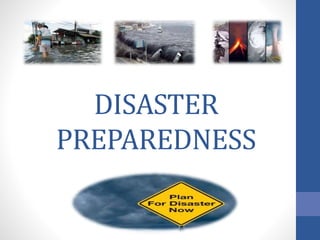
DISASTER
PREPAREDNESS
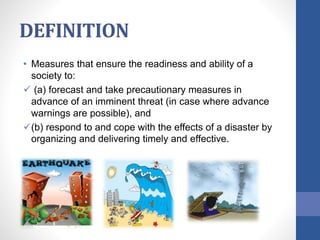
DEFINITION
• Measures that ensure the readiness and ability of a
society to:
 (a) forecast and take precautionary measures in
advance of an imminent threat (in case where advance
warnings are possible), and
(b) respond to and cope with the effects of a disaster by
organizing and delivering timely and effective.
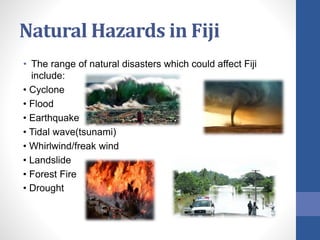
Natural Hazards in Fiji
• The range of natural disasters which could affect Fiji
include:
• Cyclone
• Flood
• Earthquake
• Tidal wave(tsunami)
• Whirlwind/freak wind
• Landslide
• Forest Fire
• Drought
AIM
Disaster preparedness therefore has two main aims:
• to help people to avoid impending disaster threats;
• and to put plans, resources and mechanisms in place
• to ensure that those who are affected receive adequate
assistance.
PURPOSE
• Safeguard and make available vital materials, supplies
and equipment to ensure the safety and recovery of
records from predictable disasters.
• Reduce the risk of disasters caused by human error,
deliberate destruction, and building or equipment
failures. Be better prepared to recover from a major
natural catastrophe.
WHY DO WE NEED DISASTER
PREPAREDNESS??
• Being prepared and understanding what to do will reduce
the fear, anxiety and losses that accompany most
disasters.
• You can also reduce the impact of emergencies and
disasters by making sure that your household's
economic and health needs are protected with adequate
insurance coverage.
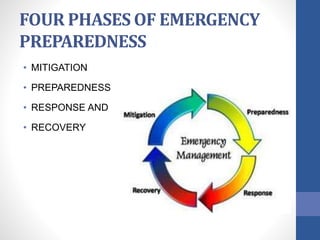
FOUR PHASES OF EMERGENCY
PREPAREDNESS
• MITIGATION
• PREPAREDNESS
• RESPONSE AND
• RECOVERY
(a) Mitigation and Wellness (Prevention)
• This phase encompasses actions to avoid an incident, to
intervene to stop an incident from occurring or to mitigate an
incident’s effects.
• It involves actions to protect lives and property and to defend
against attacks, and may include public health surveillance
and testing processes, immunizations, isolation or quarantine.
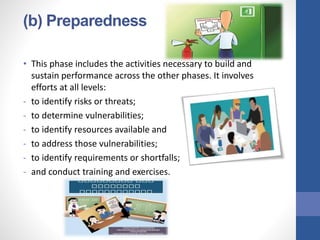
(b) Preparedness
• This phase includes the activities necessary to build and
sustain performance across the other phases. It involves
efforts at all levels:
- to identify risks or threats;
- to determine vulnerabilities;
- to identify resources available and
- to address those vulnerabilities;
- to identify requirements or shortfalls;
- and conduct training and exercises.
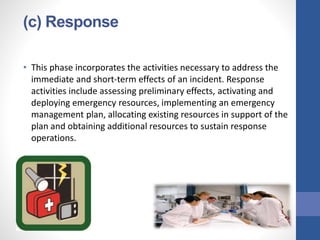
(c) Response
• This phase incorporates the activities necessary to address the
immediate and short-term effects of an incident. Response
activities include assessing preliminary effects, activating and
deploying emergency resources, implementing an emergency
management plan, allocating existing resources in support of the
plan and obtaining additional resources to sustain response
operations.
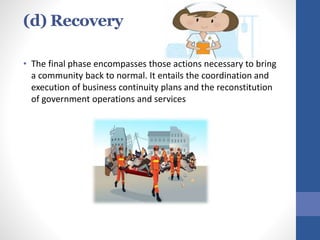
(d) Recovery
• The final phase encompasses those actions necessary to bring
a community back to normal. It entails the coordination and
execution of business continuity plans and the reconstitution
of government operations and services
7 Key Areas of a Hospital
Emergency Operations Plan
• For healthcare organizations, emergency preparedness
serves as a crucial component of its facility management
plan.
• Communications
• Resources and assets
• Safety and security
• Staff responsibilities
• Utilities
• Clinical support activities
1. Communication
• The Emergency Operations Plan should outline key
details for internal and external communication.
Internally, who will be involved in the communication
command center and be responsible for developing and
sharing messages with appropriate parties.
• The plan should also outline how you will communicate
with external agencies, from emergency response to
your vendors that provide essential supplies, like medical
gas and fuel for your generators.
2. Resources and Assets
• Understanding the resources and assets that you will
have available to you and your team during an
emergency serves as an important component of your
plan.
• Assets, such as emergency generators, and resources,
such as supplies like hazmat suits, should be identified
and counted within the plan
3. Safety and Security
• The plan should acknowledge safety and security
procedures in the event of an emergency for both
patients and safety.
• Within your Emergency Operations Plan, you should
outline how the hospital will coordinate with security
agencies like the police department or National Guard,
as well as how it will manage hazardous materials and
waste.
4. Staff Responsibilities
• Clear details of responsibilities during an emergency
situation will ensure that you are ready to respond the
instant something occurs.
• Knowing who will be in charge of informing your vendors,
as well as who will take charge of setting up a command
center, for instance, can ensure that you are able to act
quickly.
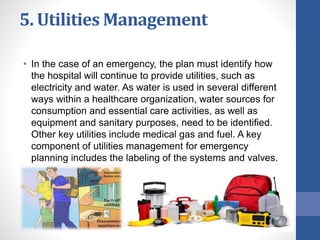
5. Utilities Management
• In the case of an emergency, the plan must identify how
the hospital will continue to provide utilities, such as
electricity and water. As water is used in several different
ways within a healthcare organization, water sources for
consumption and essential care activities, as well as
equipment and sanitary purposes, need to be identified.
Other key utilities include medical gas and fuel. A key
component of utilities management for emergency
planning includes the labeling of the systems and valves.
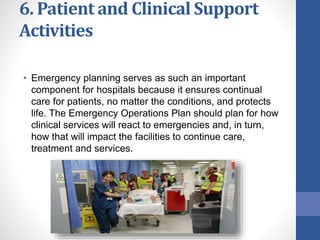
6. Patient and Clinical Support
Activities
• Emergency planning serves as such an important
component for hospitals because it ensures continual
care for patients, no matter the conditions, and protects
life. The Emergency Operations Plan should plan for how
clinical services will react to emergencies and, in turn,
how that will impact the facilities to continue care,
treatment and services.
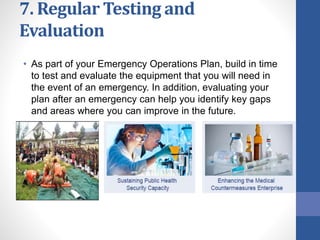
7. Regular Testing and
Evaluation
• As part of your Emergency Operations Plan, build in time
to test and evaluate the equipment that you will need in
the event of an emergency. In addition, evaluating your
plan after an emergency can help you identify key gaps
and areas where you can improve in the future.
Thank You For Listening??

Disaster Prepared Management

  • 1.
  • 2.
    DEFINITION • Measures thatensure the readiness and ability of a society to:  (a) forecast and take precautionary measures in advance of an imminent threat (in case where advance warnings are possible), and (b) respond to and cope with the effects of a disaster by organizing and delivering timely and effective.
  • 3.
    Natural Hazards inFiji • The range of natural disasters which could affect Fiji include: • Cyclone • Flood • Earthquake • Tidal wave(tsunami) • Whirlwind/freak wind • Landslide • Forest Fire • Drought
  • 4.
    AIM Disaster preparedness thereforehas two main aims: • to help people to avoid impending disaster threats; • and to put plans, resources and mechanisms in place • to ensure that those who are affected receive adequate assistance.
  • 5.
    PURPOSE • Safeguard andmake available vital materials, supplies and equipment to ensure the safety and recovery of records from predictable disasters. • Reduce the risk of disasters caused by human error, deliberate destruction, and building or equipment failures. Be better prepared to recover from a major natural catastrophe.
  • 6.
    WHY DO WENEED DISASTER PREPAREDNESS?? • Being prepared and understanding what to do will reduce the fear, anxiety and losses that accompany most disasters. • You can also reduce the impact of emergencies and disasters by making sure that your household's economic and health needs are protected with adequate insurance coverage.
  • 7.
    FOUR PHASES OFEMERGENCY PREPAREDNESS • MITIGATION • PREPAREDNESS • RESPONSE AND • RECOVERY
  • 8.
    (a) Mitigation andWellness (Prevention) • This phase encompasses actions to avoid an incident, to intervene to stop an incident from occurring or to mitigate an incident’s effects. • It involves actions to protect lives and property and to defend against attacks, and may include public health surveillance and testing processes, immunizations, isolation or quarantine.
  • 9.
    (b) Preparedness • Thisphase includes the activities necessary to build and sustain performance across the other phases. It involves efforts at all levels: - to identify risks or threats; - to determine vulnerabilities; - to identify resources available and - to address those vulnerabilities; - to identify requirements or shortfalls; - and conduct training and exercises.
  • 10.
    (c) Response • Thisphase incorporates the activities necessary to address the immediate and short-term effects of an incident. Response activities include assessing preliminary effects, activating and deploying emergency resources, implementing an emergency management plan, allocating existing resources in support of the plan and obtaining additional resources to sustain response operations.
  • 11.
    (d) Recovery • Thefinal phase encompasses those actions necessary to bring a community back to normal. It entails the coordination and execution of business continuity plans and the reconstitution of government operations and services
  • 12.
    7 Key Areasof a Hospital Emergency Operations Plan • For healthcare organizations, emergency preparedness serves as a crucial component of its facility management plan. • Communications • Resources and assets • Safety and security • Staff responsibilities • Utilities • Clinical support activities
  • 13.
    1. Communication • TheEmergency Operations Plan should outline key details for internal and external communication. Internally, who will be involved in the communication command center and be responsible for developing and sharing messages with appropriate parties. • The plan should also outline how you will communicate with external agencies, from emergency response to your vendors that provide essential supplies, like medical gas and fuel for your generators.
  • 14.
    2. Resources andAssets • Understanding the resources and assets that you will have available to you and your team during an emergency serves as an important component of your plan. • Assets, such as emergency generators, and resources, such as supplies like hazmat suits, should be identified and counted within the plan
  • 15.
    3. Safety andSecurity • The plan should acknowledge safety and security procedures in the event of an emergency for both patients and safety. • Within your Emergency Operations Plan, you should outline how the hospital will coordinate with security agencies like the police department or National Guard, as well as how it will manage hazardous materials and waste.
  • 16.
    4. Staff Responsibilities •Clear details of responsibilities during an emergency situation will ensure that you are ready to respond the instant something occurs. • Knowing who will be in charge of informing your vendors, as well as who will take charge of setting up a command center, for instance, can ensure that you are able to act quickly.
  • 17.
    5. Utilities Management •In the case of an emergency, the plan must identify how the hospital will continue to provide utilities, such as electricity and water. As water is used in several different ways within a healthcare organization, water sources for consumption and essential care activities, as well as equipment and sanitary purposes, need to be identified. Other key utilities include medical gas and fuel. A key component of utilities management for emergency planning includes the labeling of the systems and valves.
  • 18.
    6. Patient andClinical Support Activities • Emergency planning serves as such an important component for hospitals because it ensures continual care for patients, no matter the conditions, and protects life. The Emergency Operations Plan should plan for how clinical services will react to emergencies and, in turn, how that will impact the facilities to continue care, treatment and services.
  • 19.
    7. Regular Testingand Evaluation • As part of your Emergency Operations Plan, build in time to test and evaluate the equipment that you will need in the event of an emergency. In addition, evaluating your plan after an emergency can help you identify key gaps and areas where you can improve in the future.
  • 20.
    Thank You ForListening??