LEARNING OUTCOMES
At theEnd of this Lesson you will be able to:
• Pinpoint Why Emergency Preparedness
and Response is Important
• Name 3 ways to Identify potential
emergencies
• Map a sequence of steps for an
emergency preparedness procedure.
5.
• State criteriafor different levels of
emergencies
• Outline the contents of an emergency
response plan.
• List the benefits of emergency response
drills.
• Describe the steps in an incident
investigation
6.
• The WorldHealth Organization defines an
emergency as the state in which normal
procedures are interrupted, and immediate
measures (management) need to be taken
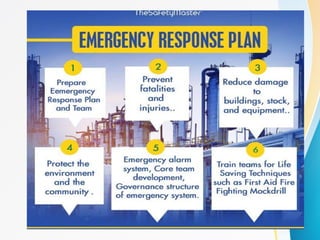
to prevent it from becoming a disaster,
which is even harder to recover from.
7.
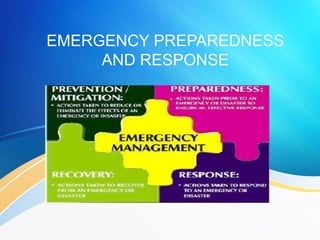
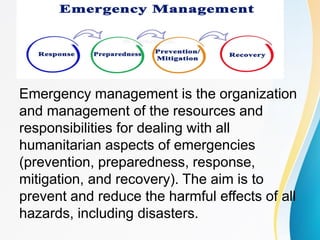
Emergency management isthe organization
and management of the resources and
responsibilities for dealing with all
humanitarian aspects of emergencies
(prevention, preparedness, response,
mitigation, and recovery). The aim is to
prevent and reduce the harmful effects of all
hazards, including disasters.
8.
Purposes of EmergencyPreparedness
and Response
• Minimize the risks of emergencies
occurring
• Identify potential emergency situations
• Develop, implement, and test plans to
respond promptly and effectively to
emergencies
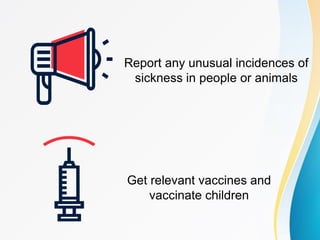
• Minimize the impact of emergencies on
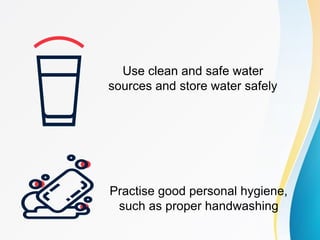
the environment
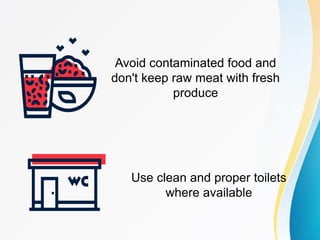
9.
ISO 14001 EmergencyPreparedness and
Response says:
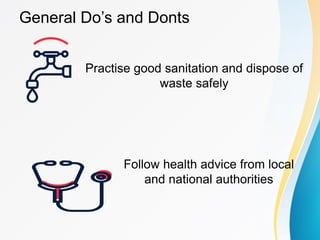
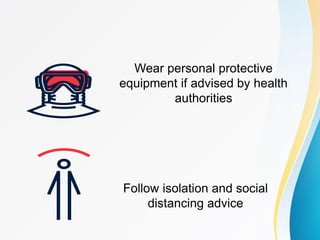
• The organization shall establish and
maintain procedures to identify potential
for and respond to accidents and
emergency situations, and for preventing
and mitigating the environmental impacts
that may be associated with them
10.
Ways to IdentifyPotential Emergencies
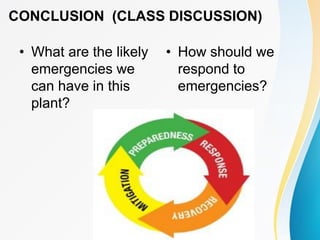
• Review incident reports for past five years
• Check statistics on incidents and
emergencies at other similar operations
• Review environmental aspects list for
potential emergencies under abnormal
operating conditions
• Gather a group of personnel representing
each function in the organization to
brainstorm possible incidents and
emergencies
11.
Potential Emergencies
• Fire,explosion
• Gas leak, spill
• Natural disasters - flood, extreme weather
• Tank, equipment structural failure
• Electric power or gas cut
• Crash, collision
• Sabotage, vandalism, terrorist attack, riot,
bomb threat, hostage incident
12.
Potential Hot Spots
•Hazardous waste storage
• Bulk oil and fuel tanks
• Process start-up and shut-down
• High pressure vessels
• Waste treatment facilities
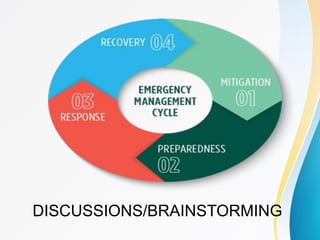
Mitigation (Prevention)
Mitigation istaking action now—before the
next disaster—to reduce human and
financial consequences later. It involves
analyzing risk, reducing risk, and insuring
against risk. Effective mitigation requires
that we all understand local risks, address
the hard choices, and invest in long-term
organization well-being. Mitigation is
achieved through regulations from federal
and local governments, land use and
building practices.
15.
Preparedness
Preparedness is acontinuous cycle of
planning, managing, organizing, training,
equipping, exercising, creating, monitoring,
evaluating and improving activities to ensure
effective coordination and the enhancement
of capabilities of concerned organizations to
prevent, protect against, respond to, recover
from, create resources and mitigate the
effects of natural disasters, acts of terrorism,
and other man-made disasters
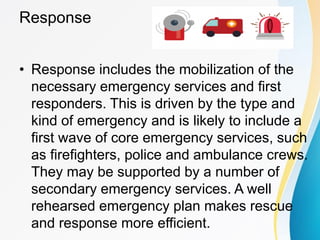
16.
Response
• Response includesthe mobilization of the
necessary emergency services and first
responders. This is driven by the type and
kind of emergency and is likely to include a
first wave of core emergency services, such
as firefighters, police and ambulance crews.
They may be supported by a number of
secondary emergency services. A well
rehearsed emergency plan makes rescue
and response more efficient.
17.
• Response actionstake place immediately
before, during, and after an event occurs.
The main goal is to save lives, and reduce
economic hardships. Response activities
will focus on the short-term, direct effects
that an incident has on the orization. First
responders may be assisted by
Organization Emergency Response
Teams (OERT). These teams are given
training in basic disaster response skills in
both classroom and real-world settings so
that they may assist as needed.
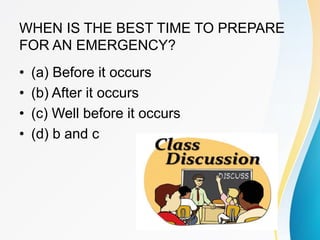
18.
WHEN IS THEBEST TIME TO PREPARE
FOR AN EMERGENCY?
• (a) Before it occurs
• (b) After it occurs
• (c) Well before it occurs
• (d) b and c
19.
Recovery
The aim ofrecovery is to restore the affected
area to its previous state. Recovery efforts
deal with issues and decisions that must be
made after immediate needs are met. It is
primarily concerned with actions that involve
rebuilding destroyed property, re-
employment, and the repair of essential
infrastructure. Efforts should be made to
“build back better,” with a goal to reduce
risks inherent in the company and
infrastructure.
20.
• Recovery canstart along side the
response effort, or begin later. The
recovery process can be short-term or
long-term depending on the incident, but
the main goal is to return the community to
normal.
22.
An emergency responseplan is a
documented series of steps an organization
will take during a critical event to ensure
employees’ safety and minimize the impact
on critical operations.
23.
Taking a proactiveapproach to emergency
response planning helps you ensure the
best possible outcomes for your people and
business and allows you to think holistically
about the situation and account for a
multitude of variables.
24.
• Emergency responseplans are meant to
help organizations address various
emergency situations that could affect
their organization,chemical spills, disease
outbreaks, and other hazards.
• The goal is to reduce or prevent human
injury and property damage during any
critical event by documenting the steps
that should be taken to ensure a timely
response tailored to each scenario.
25.
• It alsospecifies which staff members
should be part of the response team and
which first responders should be
contacted. Ideally, the outcome of
emergency planning is to protect a
company’s finances, operations, and
employees from harm.
26.
• The bestemergency response plans
include who to contact (and their contact
information), evacuation routes, how to act
during an emergency, how to mitigate risk
to your people and facilities, and detailed
communication procedures to follow
during and after a specific emergency
occurs. It’s important to create a plan that
accounts for building evacuations in case
of events like fires,
27.
How to Createan Emergency Response
Plan
Let us take a look at six critical steps every
organization should follow to create an
effective emergency response plan.
Each organization is unique, so you may
find that additional measures are warranted
for your specific business.
28.
Step #1: Performa risk assessment
The first step to creating an emergency
response plan is to conduct a
comprehensive risk assessment to identify
the types of events that may affect your
organization.
29.
• Leaders shouldinform employees of
potential emergencies that may occur near
where employees live or work or other
events that risk interrupting or halting
business operations—as well as any
actions employees should take.
30.
Specific event categoriesfor which you may
need to plan include:
• Pandemics and infectious
diseases (COVID-19, lassa fever,
cholera, ebola etc.)
• Facility emergencies (structure fires,
hazardous leaks or spills, etc.)
• Civil disturbances (protests,
demonstrations, riots, strikes, etc.)
31.
Step #2: Documentcontact information
• In the event of an emergency that could
cause physical harm to your employees,
the first call you should make is to your
local emergency responders. You should
have the numbers for emergency medical
services, the fire department, and police
department readily available.
32.
Step #3: Assignroles and responsibilities
• When an emergency occurs, employees
will look to their leaders for reassurance
and guidance. These same leaders should
be in charge of activating your emergency
response plan, answering important
questions, and ordering an evacuation if
needed.
33.
• While assigningroles, there are many
important considerations to acknowledge.
You want to make sure your response
team is reliable, present, and able to react
quickly in the face of an emergency.
34.
Step #4: Takestock of current
resources within your organization
• Regularly inspect dusty office, fire
extinguishers, alarm systems, or first aid
kits.
• These are critical components to any
emergency response plan and should be
examined regularly.
35.
Fire extinguishers
• TheNigerian Fire Service
recommends refilling reusable fire
extinguishers every 10 years and
replacing disposable ones every 12 years.
• Also, make sure you periodically remind
your employees about where the fire
extinguishers are located in the workplace.
36.
• Alarm systems
•At the very least, fire alarm systems
should be inspected annually. OSHA
recommends that non-supervised
employee alarm systems are tested every
two months.
37.
• First aidkit
• OSHA requires that “employers provide
medical and first aid supplies
commensurate with the hazards of the
workplace.” Since many items in a first aid
kit have expiration datee, or can become
damaged by frequent use, moisture, and
exposure to the air, it is important to
regularly review your first aid kit and
replace any medical supplies as needed.
38.
Step #5: Createan evacuation plan
• In many cases, evacuating the building or
premises is required during an emergency.
A good evacuation plan for your business
will include primary and secondary escape
routes. Clear signs should mark all the exit
routes and fire escapes. These exit routes
should be kept clear of furniture or other
objects that could impede a direct means
of egress for your employees.
39.
• Designate anassembly point for
employees to gather. Your response team
should be at the assembly point, collecting
a headcount and providing updates.
Ensure the escape routes and the
assembly area can accommodate the
expected number of employees who will
be evacuating.
40.
Step #6: Decidehow communication
will occur between employees and the
business.
• When developing your plan, it is essential
to consider how to notify employees of a
critical event, how the information will be
delivered and received, and how effective
communication channels will be at
reaching every employee in harm’s way.
41.
Emergency Preparedness and
Responseagainst Outbreaks
(Epidemic and Pandemic)
• 1 Asses and Plan
• Be aware that epidemic and pandemic
threats and transmission can occur
through air, water, food, vectors
(organisms, such as mosquitoes or ticks)
and/or the exchange of bodily fluids. Stay
informed on these threats through your
local and national health authorities.
42.
• Protect watersources, follow good
hygiene and sanitation, and vaccinate
children to keep them safe. Notify the
authorities immediately if you notice any
unusual incidences of sickness in people
or animals.
43.
• 2. ReduceRisk
• Safe drinking water is the most important
prevention measure for many diseases—
keep water clean with safe water storage
and purification practices. Practise good
personal hygiene and sanitation—
including learning how to wash your hands
properly with soap and clean water.
44.
• Keep foodclean and dispose of human
and animal waste safely. Follow social
distancing guidelines and other advice
from health authorities in your country.
45.
3. Prepare andRespond
Use personal protective equipment (PPE),
such as facemasks, when caring for sick
people and when advised to by health
authorities. Clean and disinfect surfaces in
your home. Prepare emergency supplies—
such as food, essential medicines and
hygiene items—if there is a chance you will
need to isolate in your home for an extended
period.
46.
• Learn howto recognize symptoms and
seek medical attention for anyone who
cannot be treated at home.
47.
General Do’s andDonts
Practise good sanitation and dispose of
waste safely
Follow health advice from local
and national authorities
Report any unusualincidences of
sickness in people or animals
Get relevant vaccines and
vaccinate children
50.
Use clean andsafe water
sources and store water safely
Practise good personal hygiene,
such as proper handwashing
51.
Avoid contaminated foodand
don't keep raw meat with fresh
produce
Use clean and proper toilets
where available
52.
• Advice onhow to protect yourself during
an epidemic or pandemic can differ
depending on how a disease is
transmitted (spread):
• Airborne diseases: transmitted through
the air via small droplets that a person
breathes in or that land on other people or
surfaces
53.
• Zoonotic
diseases:
diseases that
spreadfrom
animals to humans
• Vector-borne
diseases:
diseases spread by
living organisms
(such as
mosquitoes and
ticks), often by
bites
54.
• Food-borne
diseases: caused
byeating food
contaminated with
bacteria, viruses,
parasites or
chemical
substances
• Blood or body
fluid borne
diseases: spread
through
contaminated
blood or bodily
fluids
55.
CONCLUSION (CLASS DISCUSSION)
•What are the likely
emergencies we
can have in this
plant?
• How should we
respond to
emergencies?


![EMERGENCY_RESPONSE_AND_PREPAREDNESS[1].pptx](https://cdn.slidesharecdn.com/ss_thumbnails/emergencyresponseandpreparedness1-230615191706-0540bd5e-thumbnail.jpg?width=640&height=640&fit=bounds)

![JEMCO Mandatory 8-hrs OSH Seminar [for workers] - M5 by JCG.pptx](https://cdn.slidesharecdn.com/ss_thumbnails/jemcomandatory8-hrsoshseminarforworkers-m5byjcg-251023024122-ae2af7e8-thumbnail.jpg?width=640&height=640&fit=bounds)


