DISASTER MANAGEMENT
AN OVERVIEW
BY
BRIG. D.V.RAO, V.S.M., (Ret’d)
CENTRE FOR MANAGEMENT OF
ENVIRONMENT & DISASTERS
A. P.A.R.D.
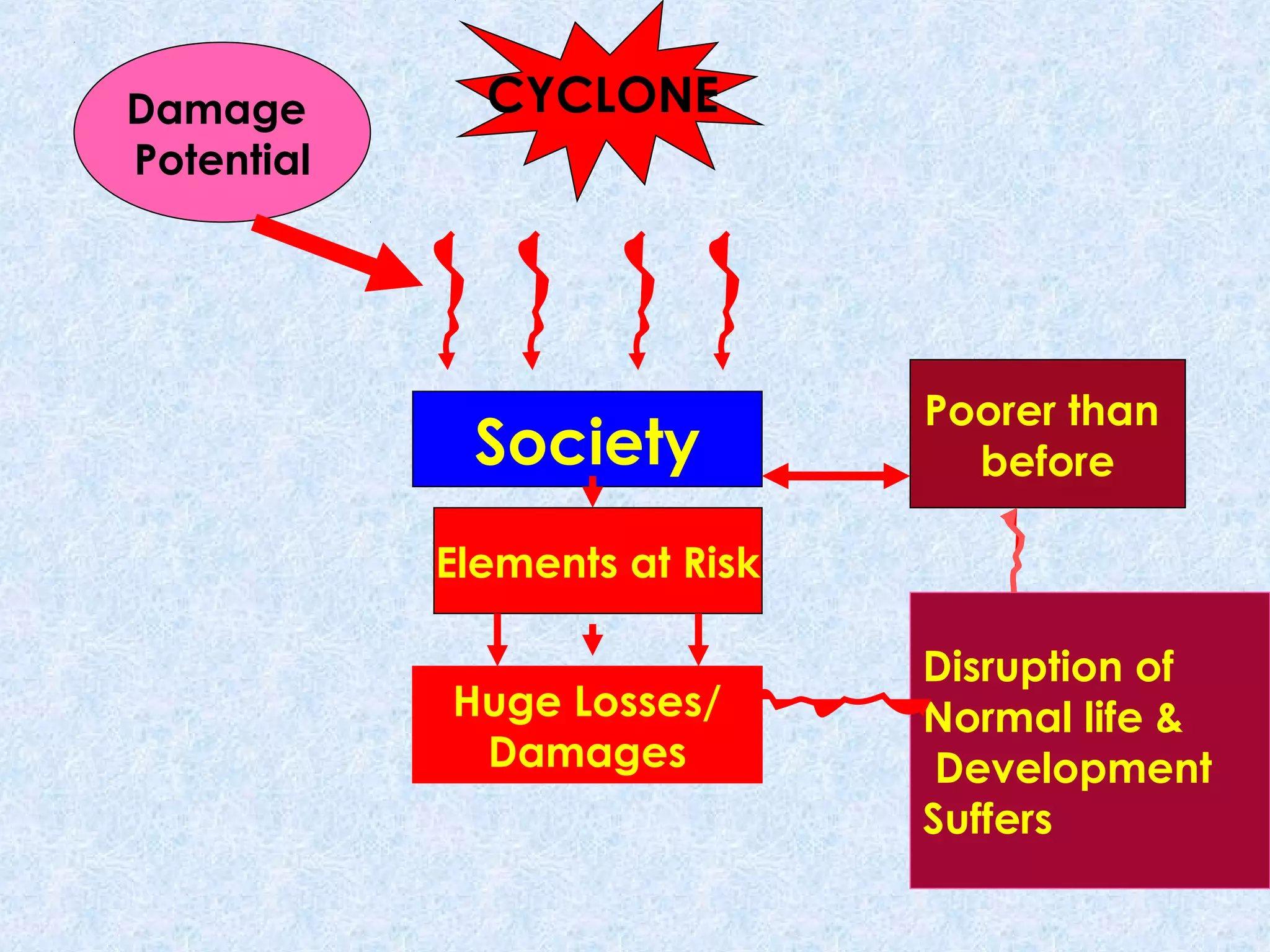
CYCLONEDamage
Potential
Society
Poorer than
before
Disruption of
Normal life &
Development
Suffers
Huge Losses/
Damages
Elements at Risk
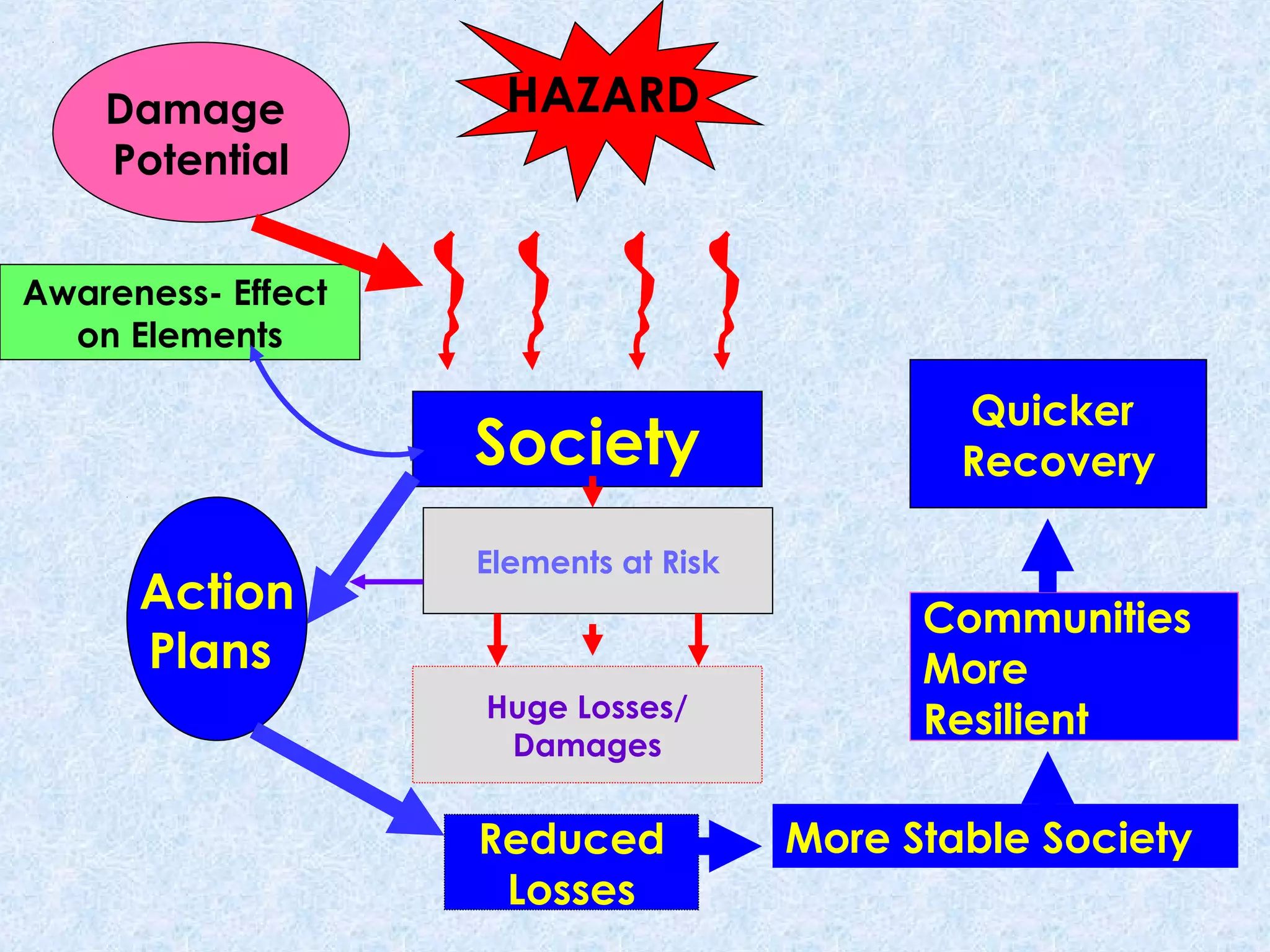
HAZARDDamage
Potential
Awareness- Effect
on Elements
Society
Quicker
Recovery
Action
Plans
Communities
More
ResilientHuge Losses/
Damages
Reduced
Losses
Elements at Risk
More Stable Society
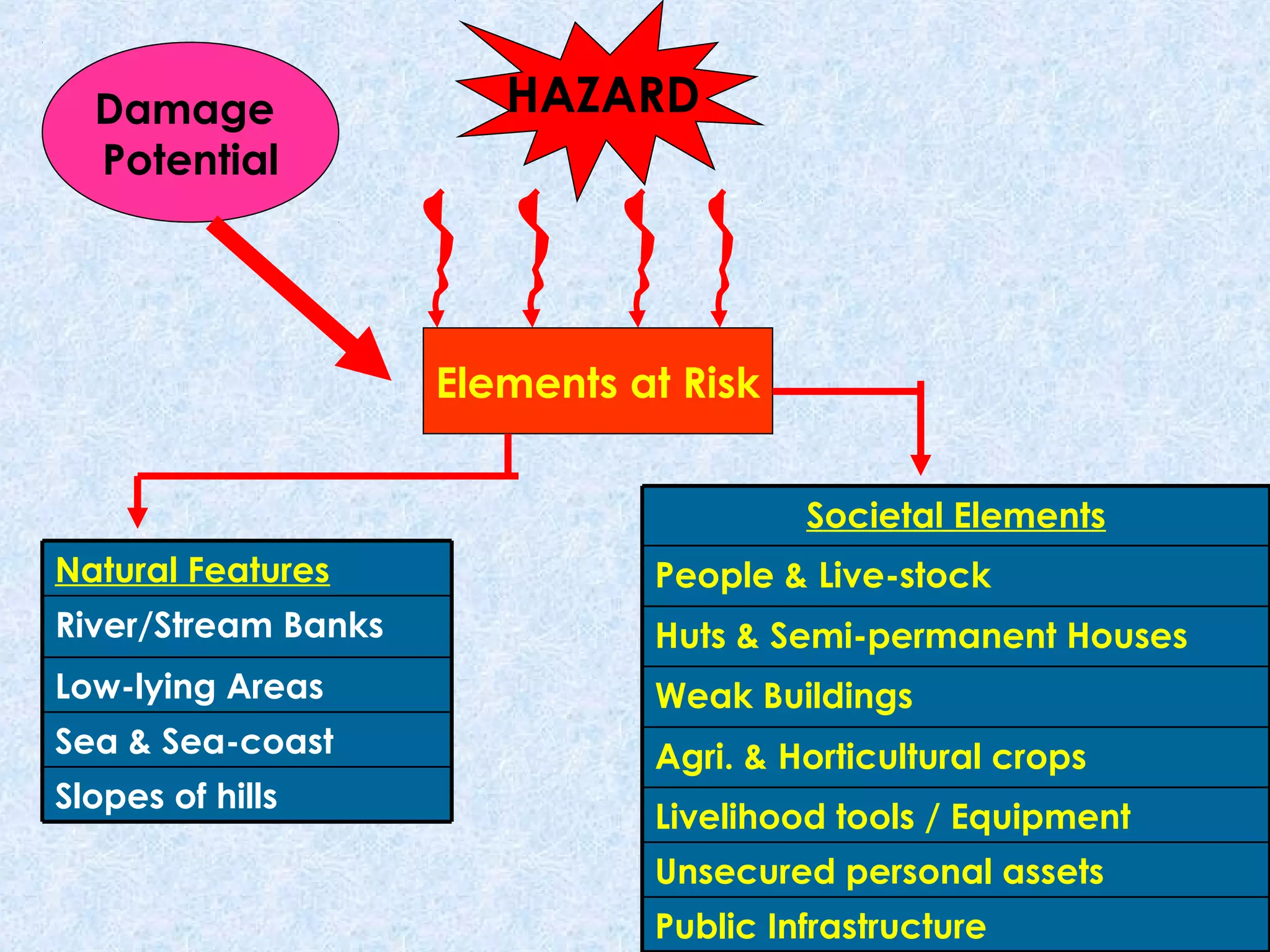
HAZARDDamage
Potential
Elements at Risk
Slopes of hills
Sea & Sea-coast
Low-lying Areas
River/Stream Banks
Natural Features
Unsecured personal assets
Livelihood tools / Equipment
Public Infrastructure
Agri. & Horticultural crops
Weak Buildings
Huts & Semi-permanent Houses
People & Live-stock
Societal Elements
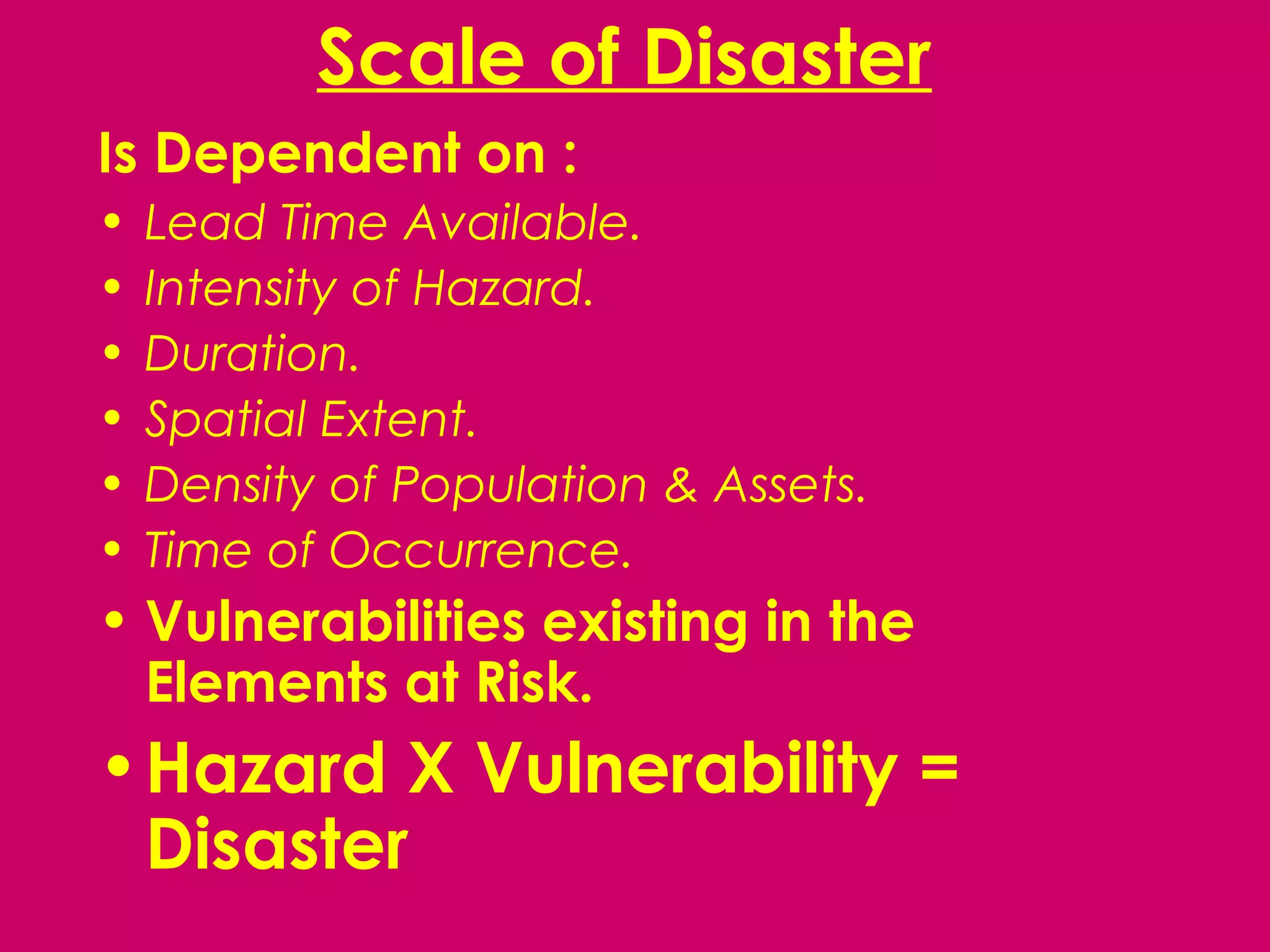
Scale of Disaster
Is Dependent on :
• Lead Time Available.
• Intensity of Hazard.
• Duration.
• Spatial Extent.
• Density of Population & Assets.
• Time of Occurrence.
• Vulnerabilities existing in the
Elements at Risk.
•Hazard X Vulnerability =
Disaster
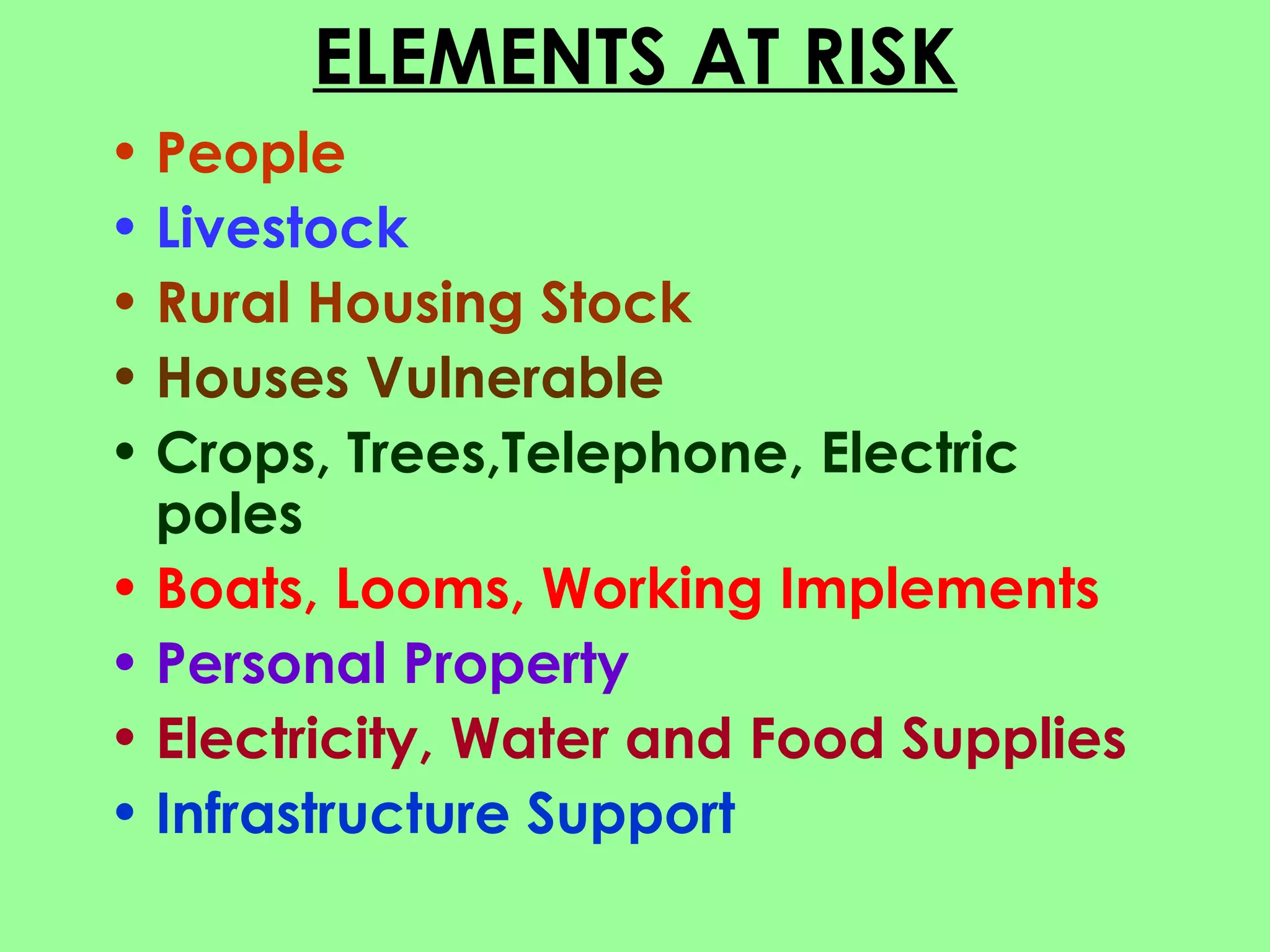
ELEMENTS AT RISK
• People
• Livestock
• Rural Housing Stock
• Houses Vulnerable
• Crops, Trees,Telephone, Electric
poles
• Boats, Looms, Working Implements
• Personal Property
• Electricity, Water and Food Supplies
• Infrastructure Support
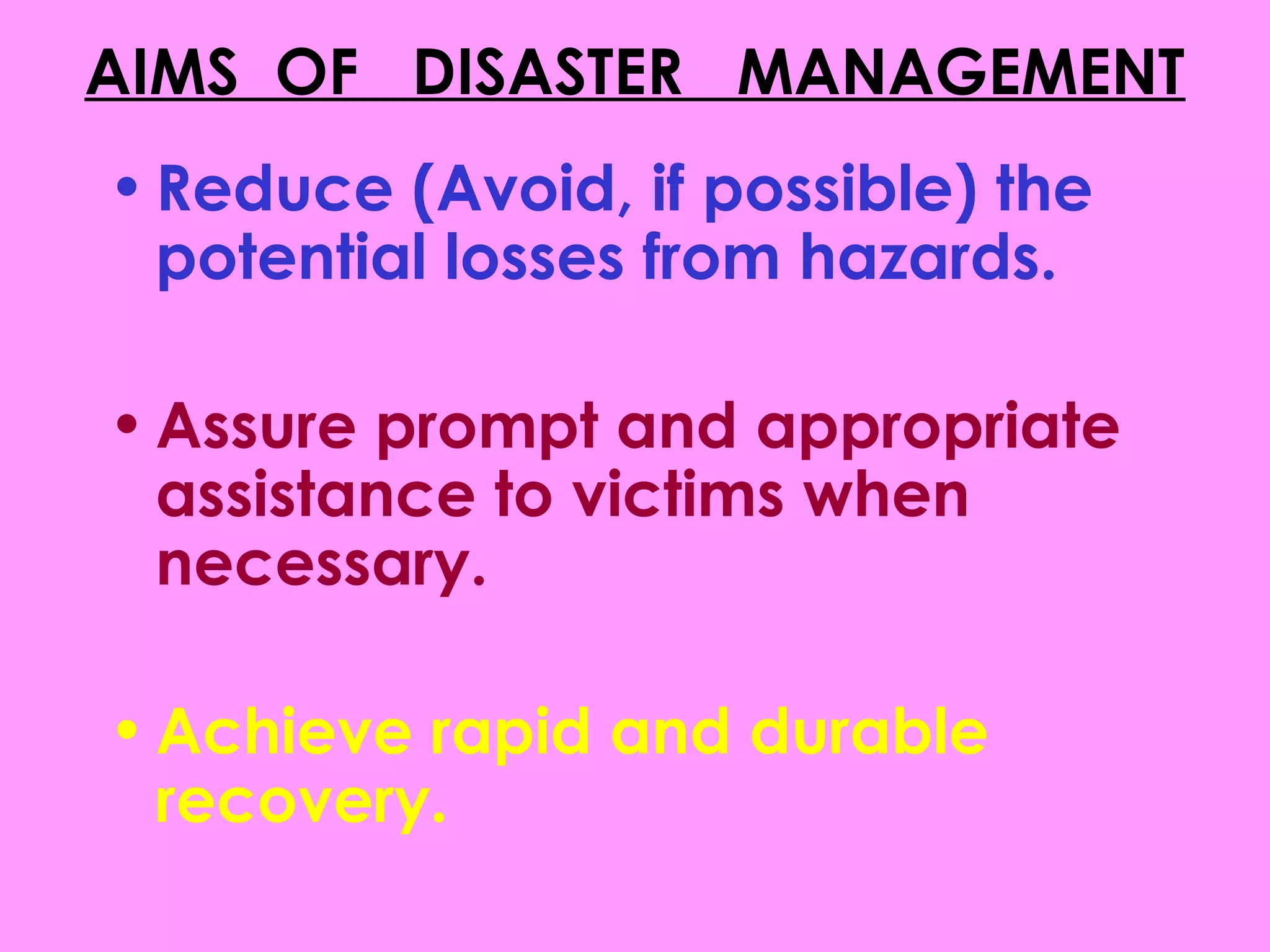
AIMS OF DISASTER MANAGEMENT
•Reduce (Avoid, if possible) the
potential losses from hazards.
•Assure prompt and appropriate
assistance to victims when
necessary.
•Achieve rapid and durable
recovery.
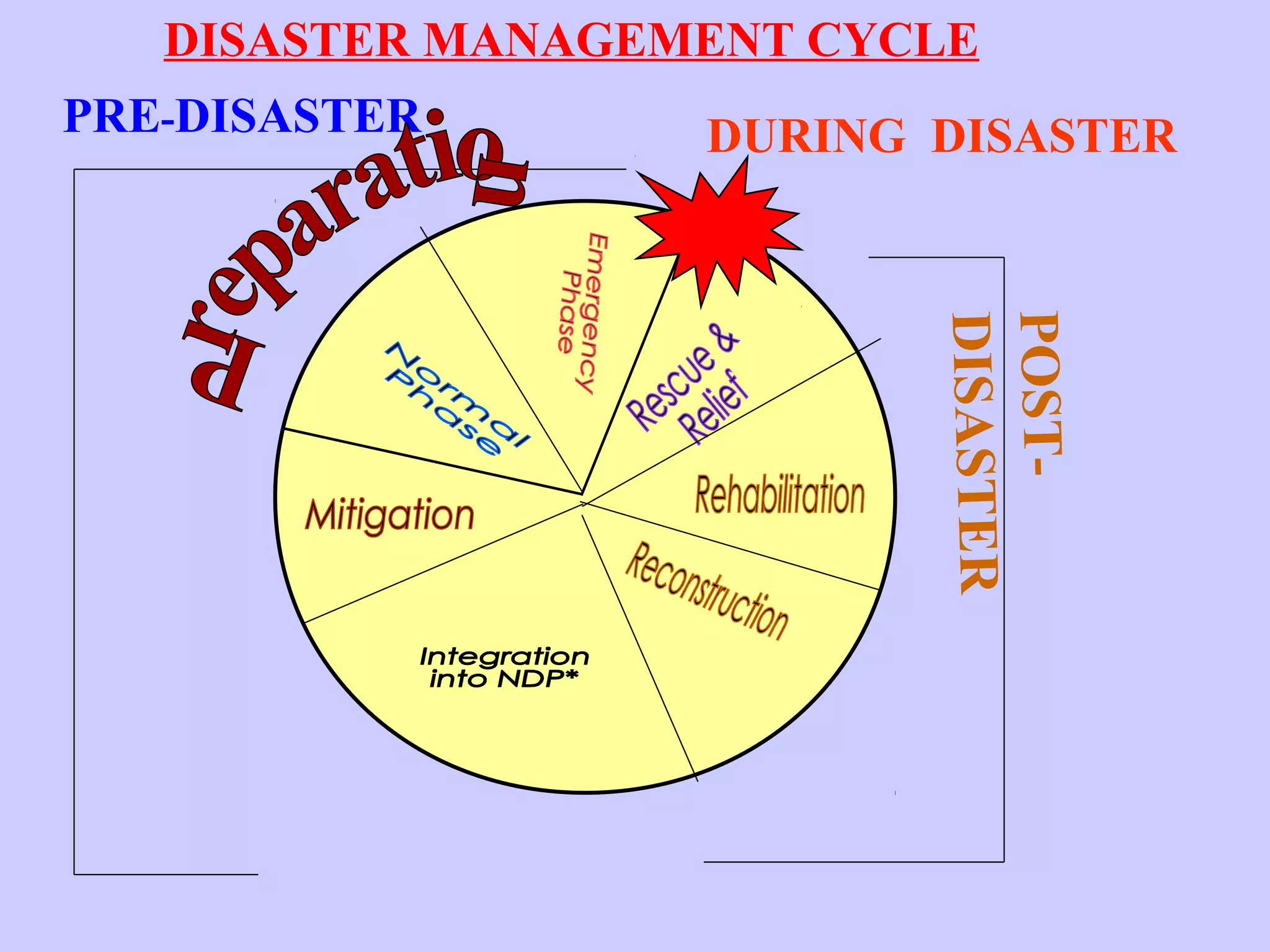
DURING DISASTER
DISASTER MANAGEMENT CYCLE
PRE-DISASTER
POST-
DISASTER
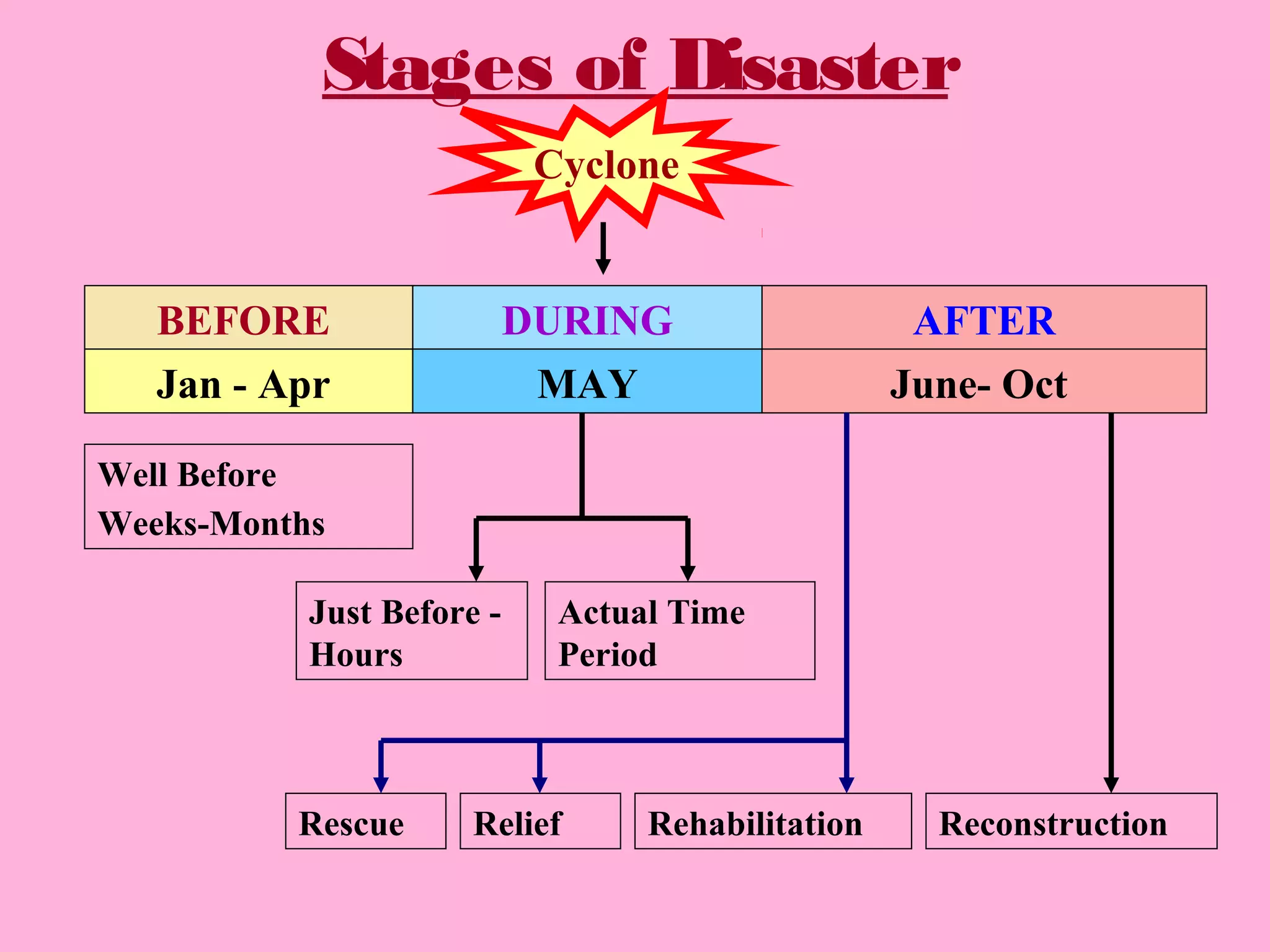
Stages of Disaster
Cyclone
Well Before
Weeks-Months
Just Before -
Hours
Actual Time
Period
Rescue RehabilitationRelief Reconstruction
BEFORE AFTERDURING
Jan - Apr MAY June- Oct
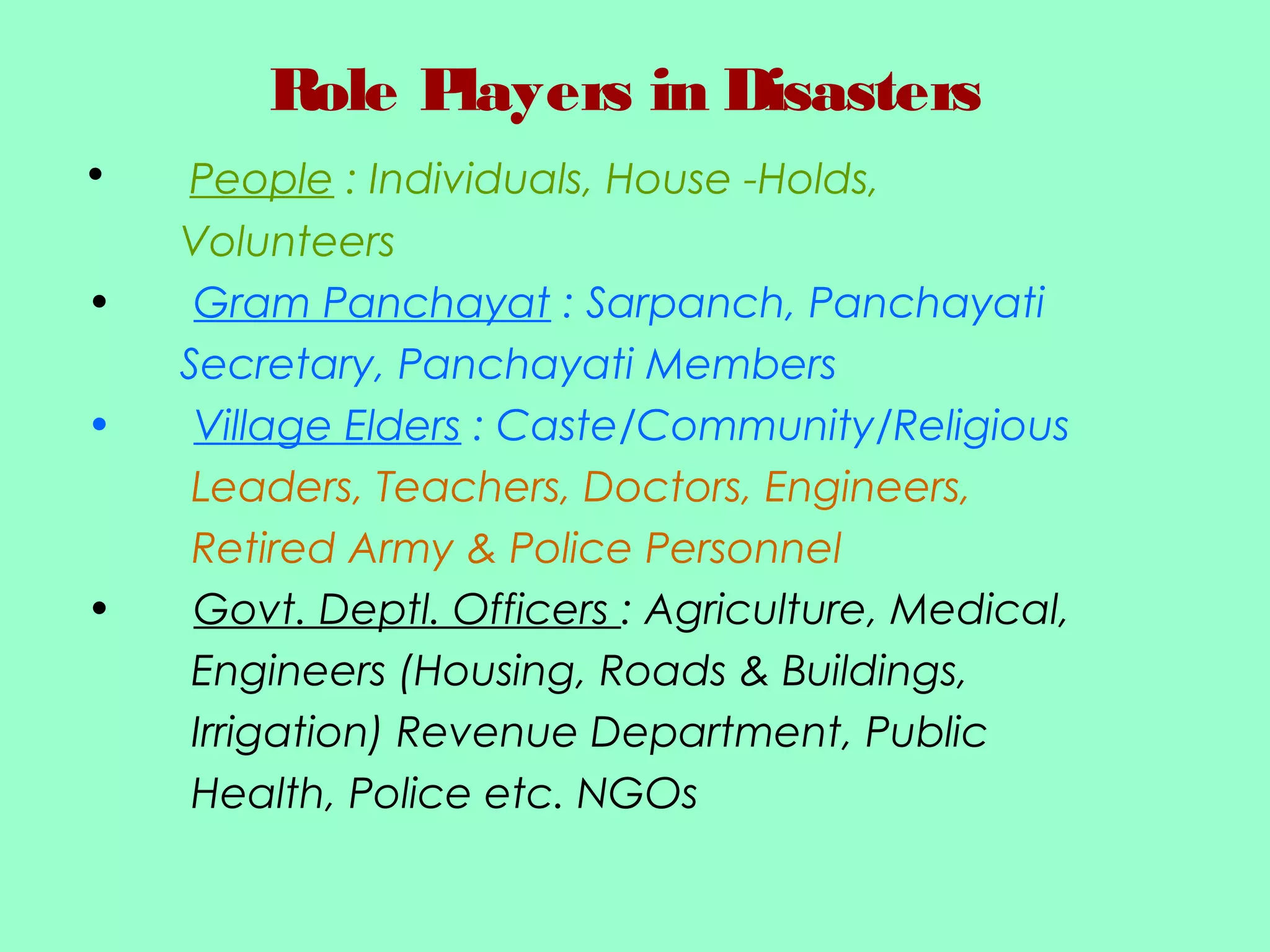
Role Players in Disasters
• People : Individuals, House -Holds,
Volunteers
• Gram Panchayat : Sarpanch, Panchayati
Secretary, Panchayati Members
• Village Elders : Caste/Community/Religious
Leaders, Teachers, Doctors, Engineers,
Retired Army & Police Personnel
• Govt. Deptl. Officers : Agriculture, Medical,
Engineers (Housing, Roads & Buildings,
Irrigation) Revenue Department, Public
Health, Police etc. NGOs
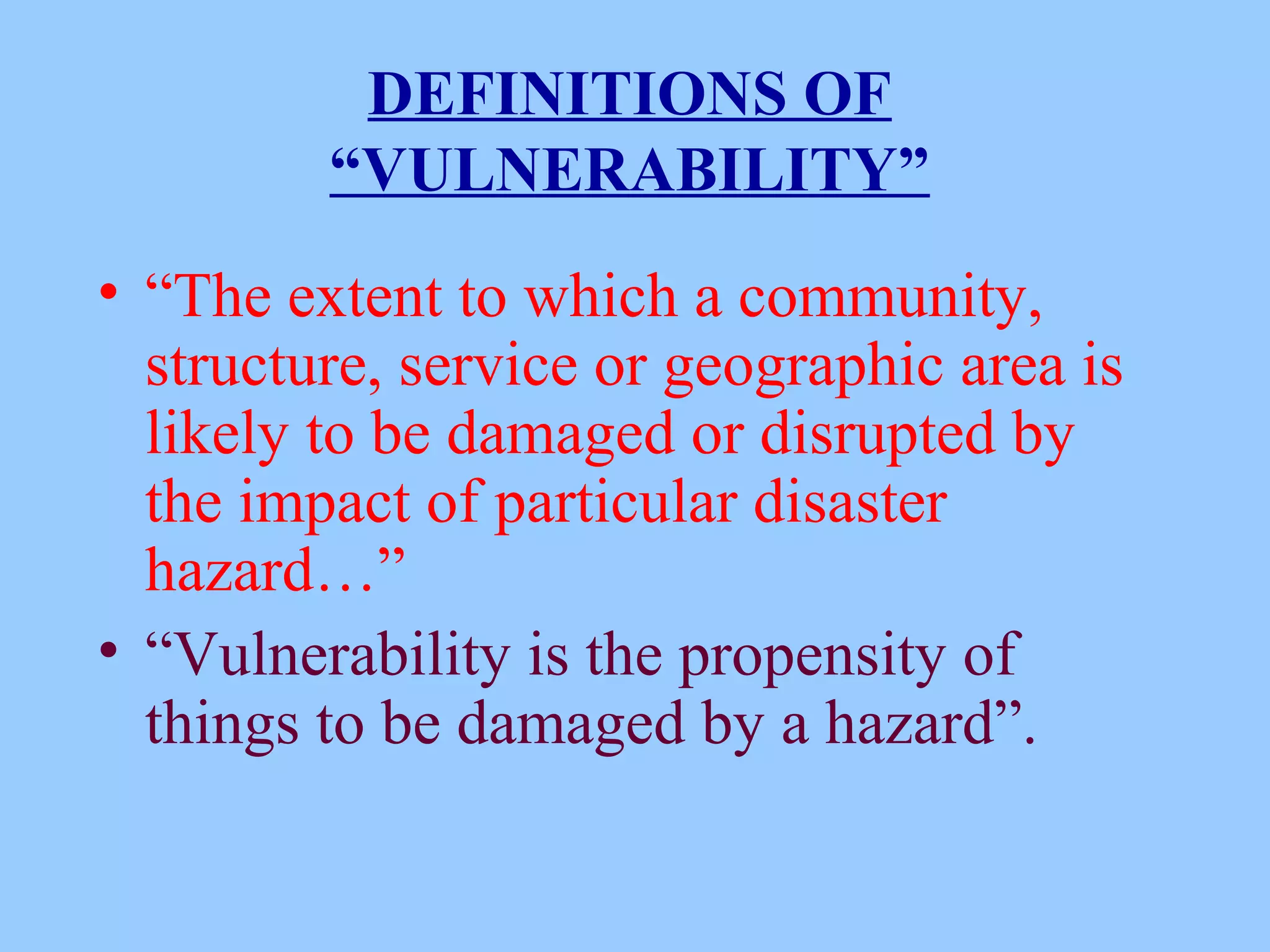
DEFINITIONS OF
“VULNERABILITY”
• “The extent to which a community,
structure, service or geographic area is
likely to be damaged or disrupted by
the impact of particular disaster
hazard…”
• “Vulnerability is the propensity of
things to be damaged by a hazard”.
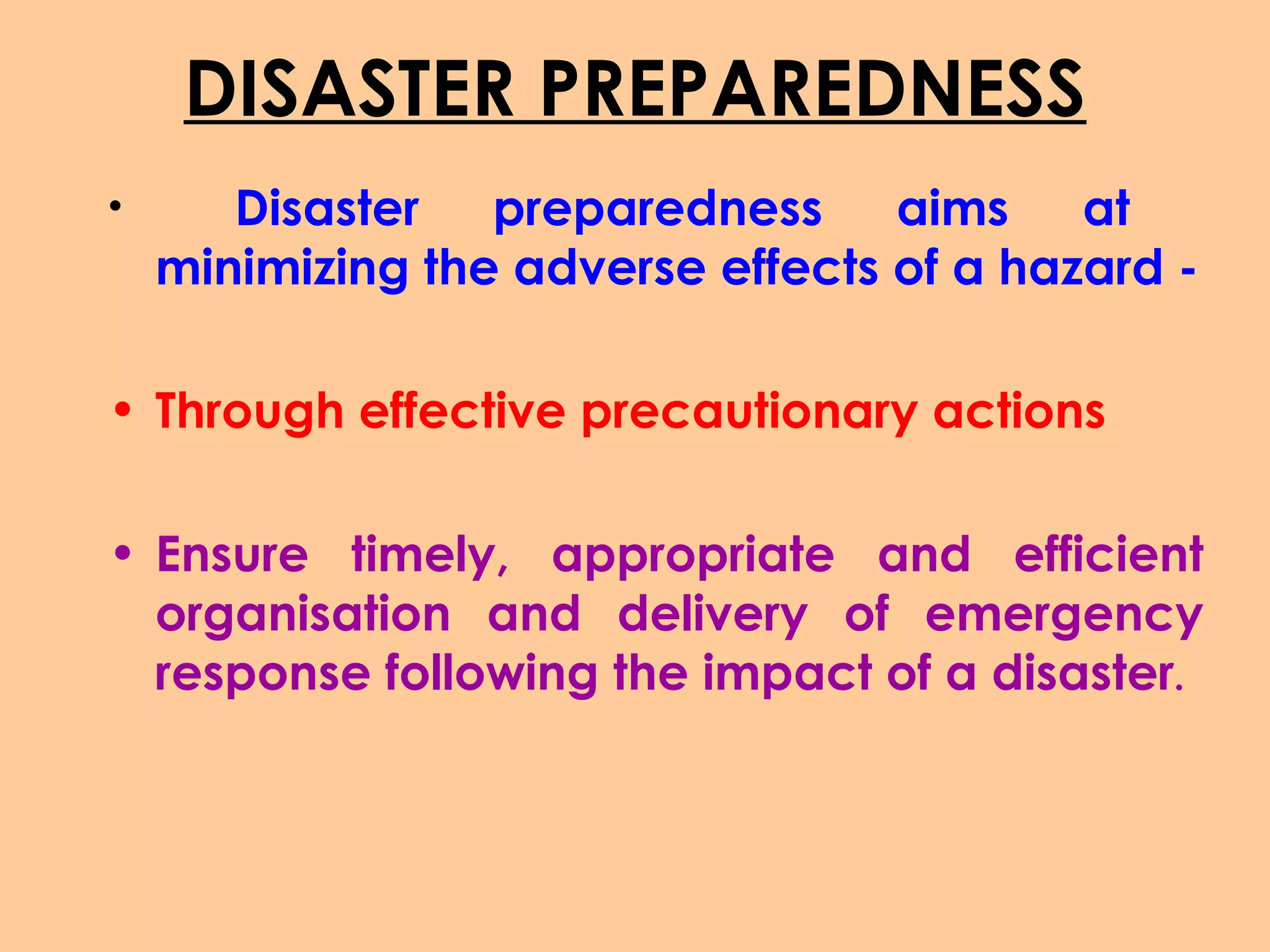
DISASTER PREPAREDNESS
• Disaster preparedness aims at
minimizing the adverse effects of a hazard -
• Through effective precautionary actions
• Ensure timely, appropriate and efficient
organisation and delivery of emergency
response following the impact of a disaster.
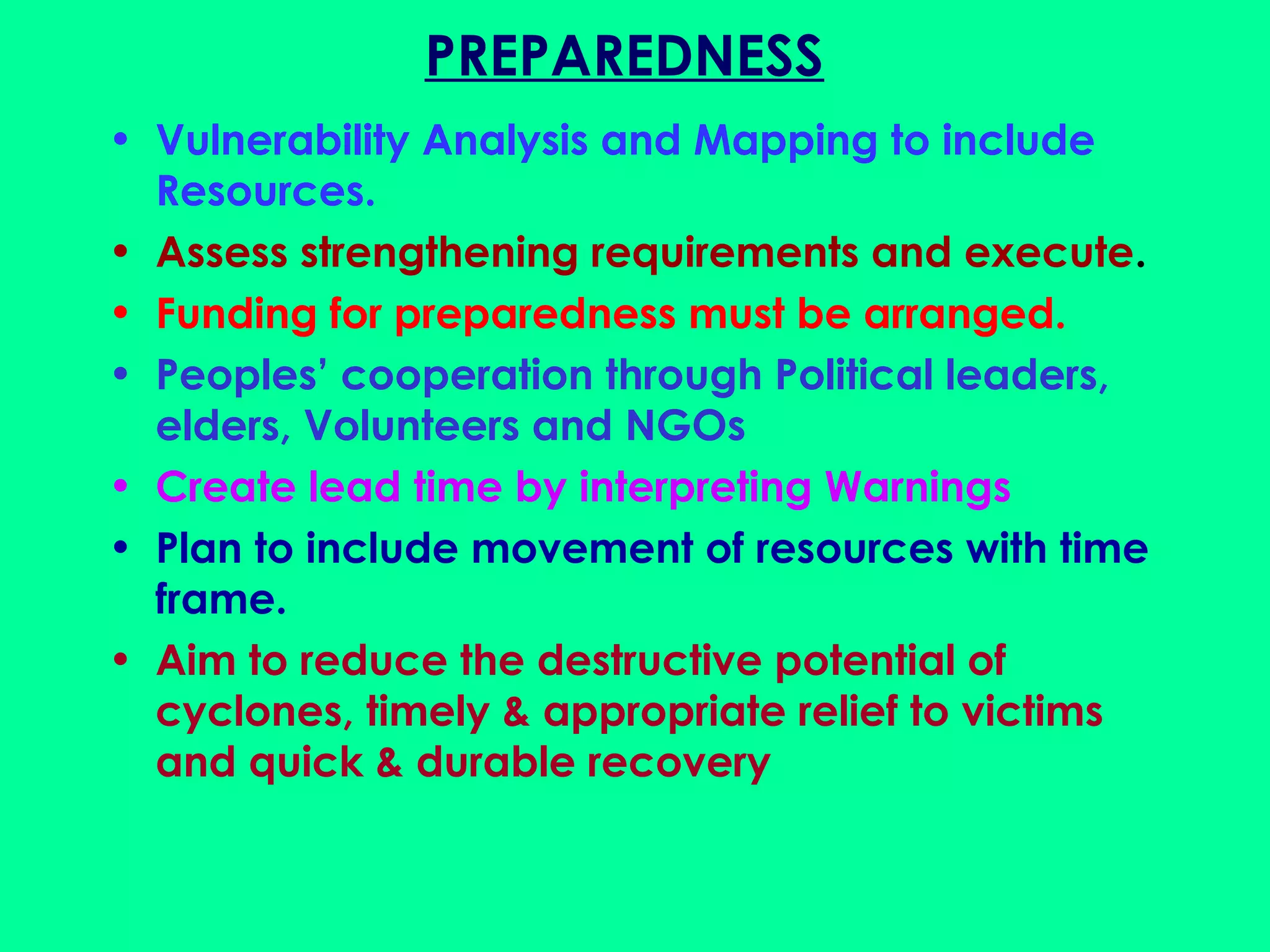
PREPAREDNESS
• Vulnerability Analysis and Mapping to include
Resources.
• Assess strengthening requirements and execute.
• Funding for preparedness must be arranged.
• Peoples’ cooperation through Political leaders,
elders, Volunteers and NGOs
• Create lead time by interpreting Warnings
• Plan to include movement of resources with time
frame.
• Aim to reduce the destructive potential of
cyclones, timely & appropriate relief to victims
and quick & durable recovery
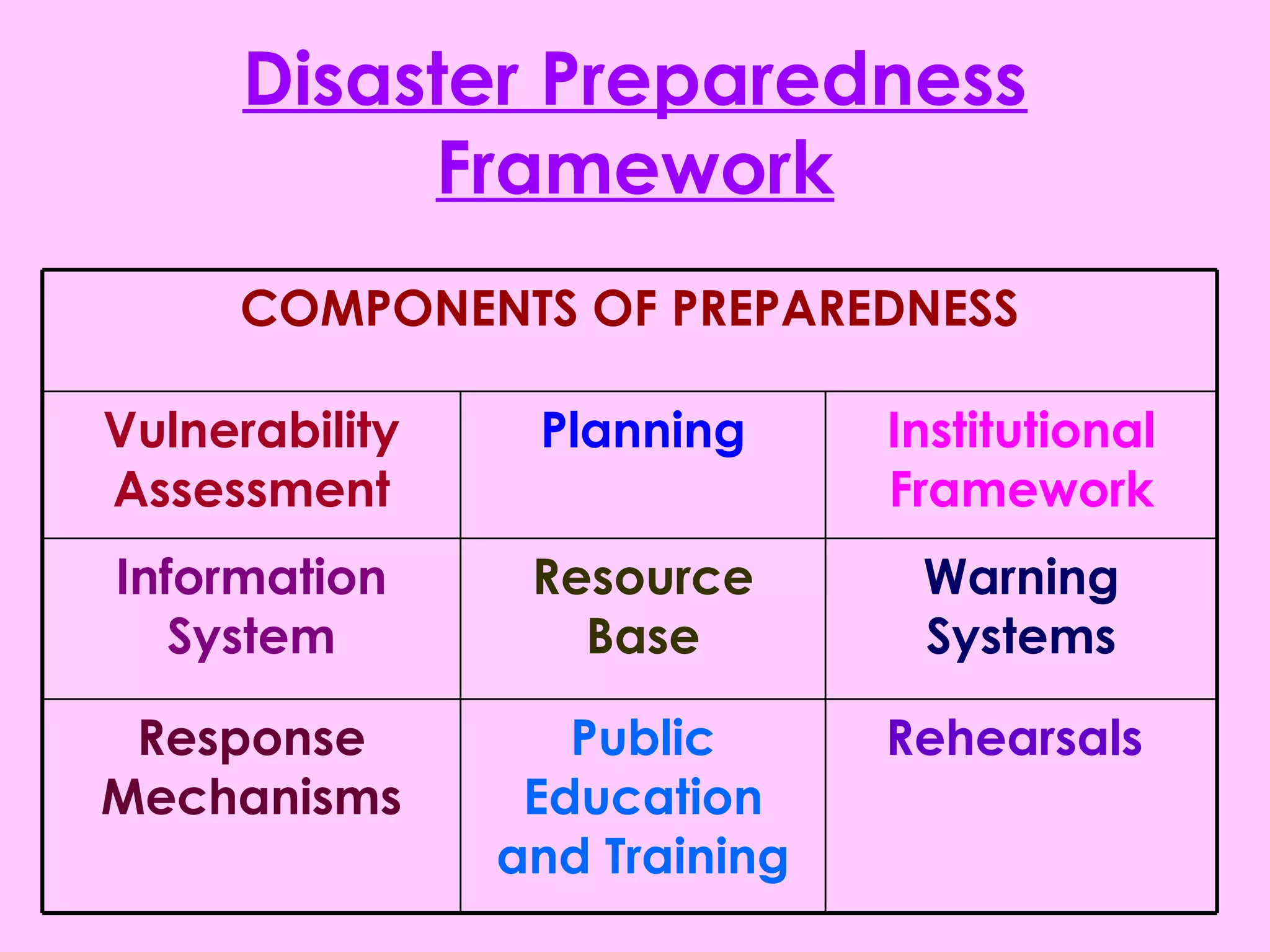
Disaster Preparedness
Framework
RehearsalsPublic
Education
and Training
Response
Mechanisms
Warning
Systems
Resource
Base
Information
System
Institutional
Framework
PlanningVulnerability
Assessment
COMPONENTS OF PREPAREDNESS
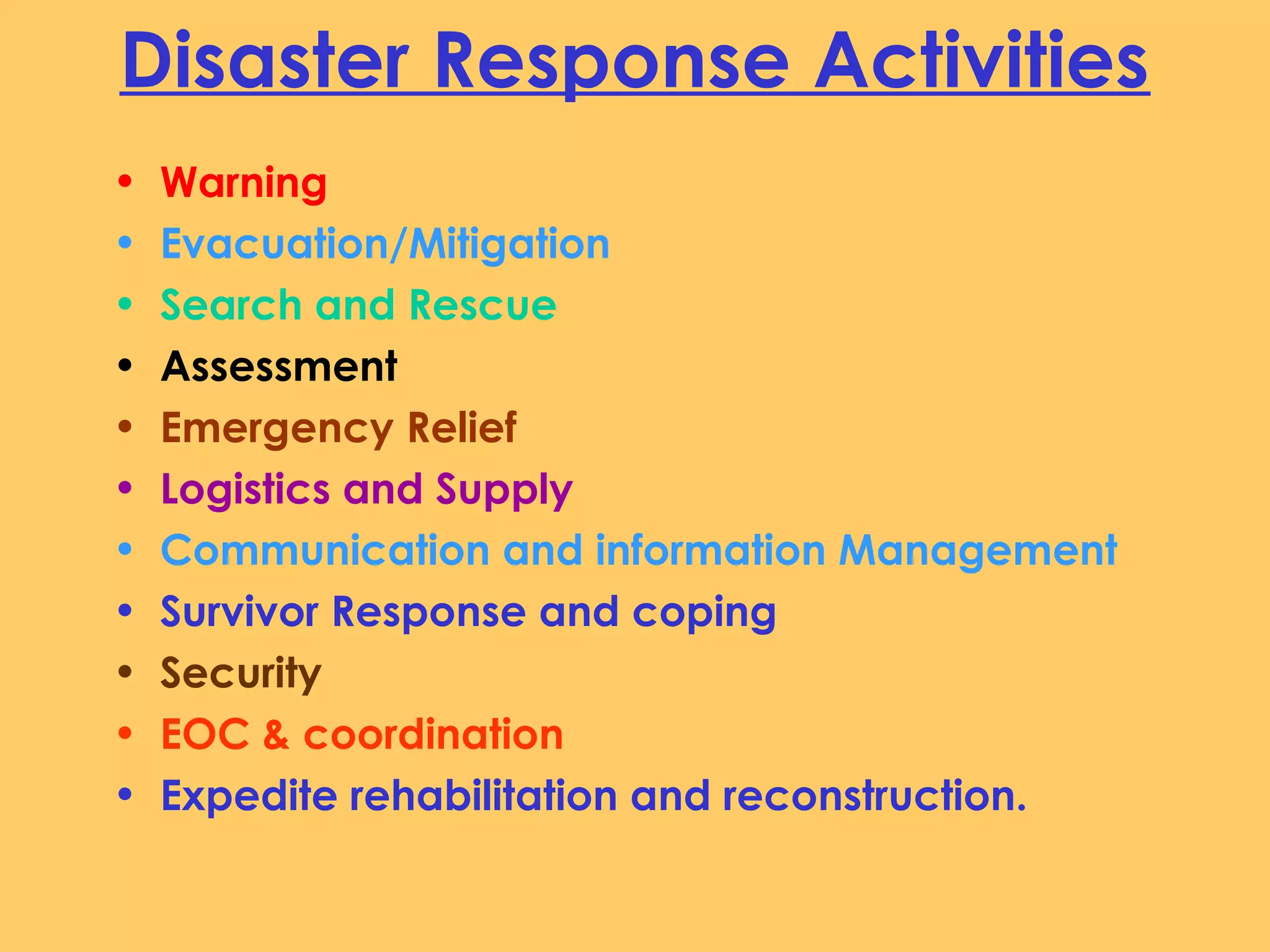
Disaster Response Activities
• Warning
• Evacuation/Mitigation
• Search and Rescue
• Assessment
• Emergency Relief
• Logistics and Supply
• Communication and information Management
• Survivor Response and coping
• Security
• EOC & coordination
• Expedite rehabilitation and reconstruction.
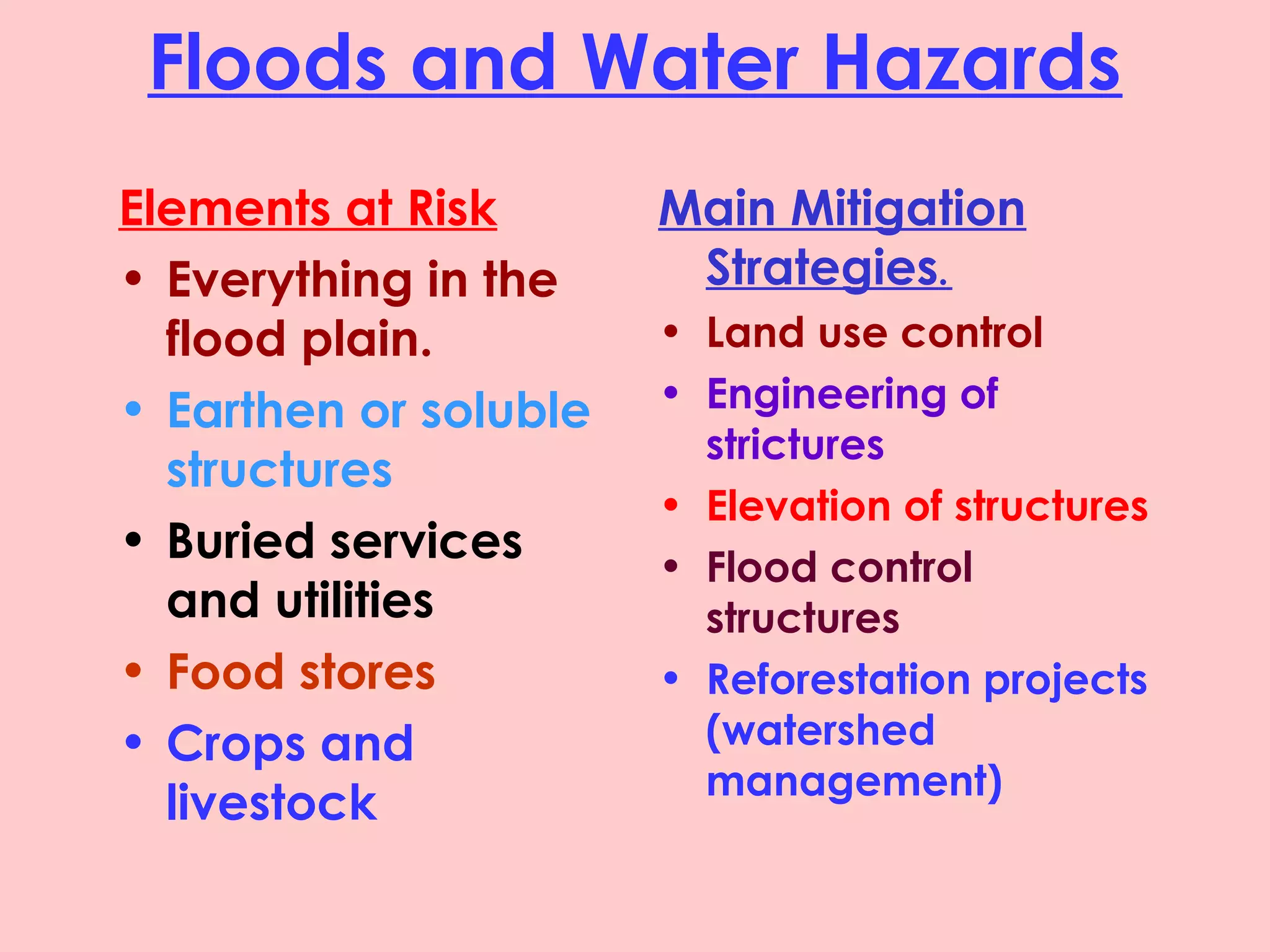
Floods and Water Hazards
Elements at Risk
• Everything in the
flood plain.
• Earthen or soluble
structures
• Buried services
and utilities
• Food stores
• Crops and
livestock
Main Mitigation
Strategies.
• Land use control
• Engineering of
strictures
• Elevation of structures
• Flood control
structures
• Reforestation projects
(watershed
management)
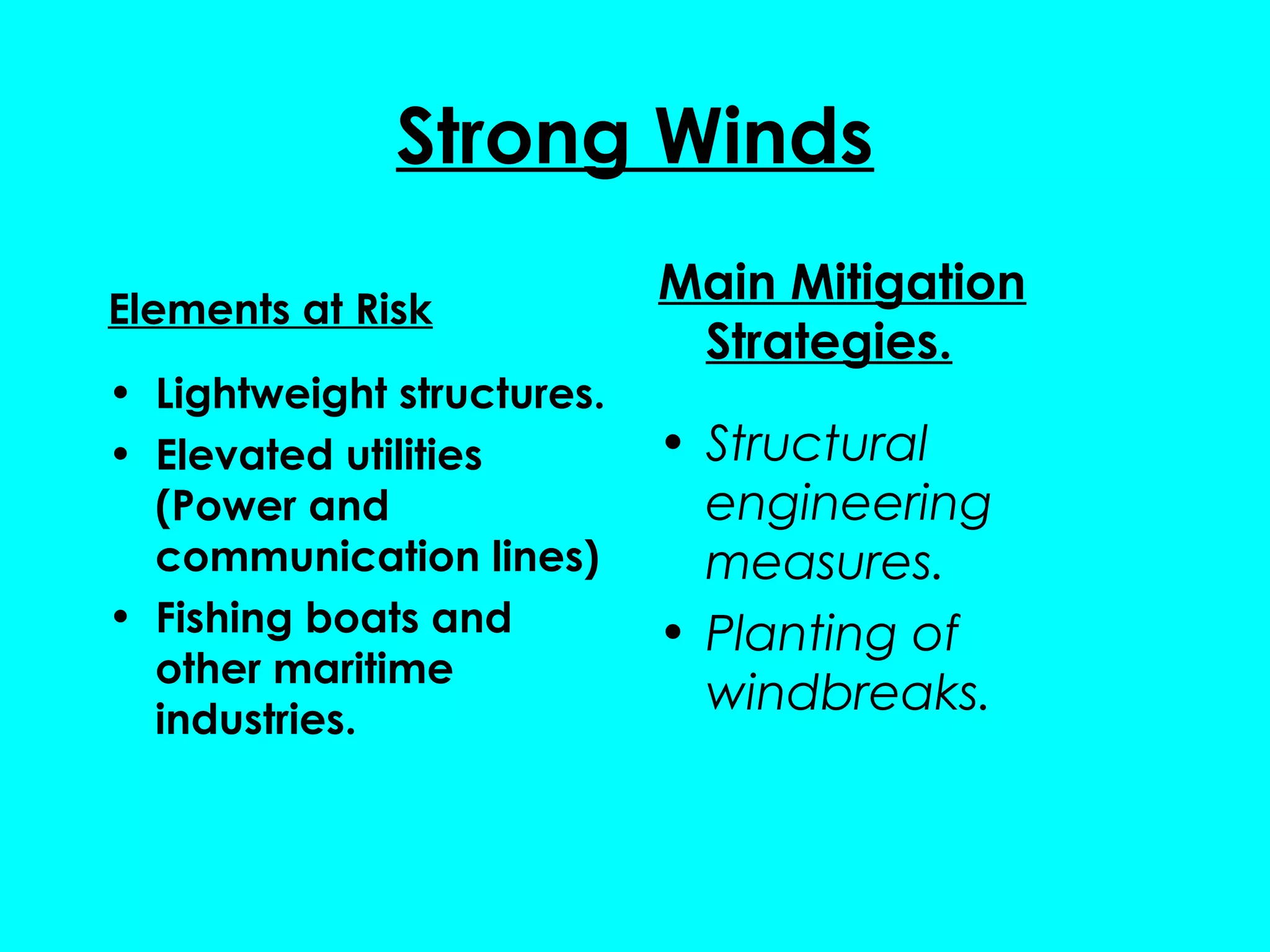
Strong Winds
Elements at Risk
• Lightweight structures.
• Elevated utilities
(Power and
communication lines)
• Fishing boats and
other maritime
industries.
Main Mitigation
Strategies.
• Structural
engineering
measures.
• Planting of
windbreaks.

Disaster overview

  • 1.
    DISASTER MANAGEMENT AN OVERVIEW BY BRIG.D.V.RAO, V.S.M., (Ret’d) CENTRE FOR MANAGEMENT OF ENVIRONMENT & DISASTERS A. P.A.R.D.
  • 2.
    CYCLONEDamage Potential Society Poorer than before Disruption of Normallife & Development Suffers Huge Losses/ Damages Elements at Risk
  • 3.
  • 4.
    HAZARDDamage Potential Elements at Risk Slopesof hills Sea & Sea-coast Low-lying Areas River/Stream Banks Natural Features Unsecured personal assets Livelihood tools / Equipment Public Infrastructure Agri. & Horticultural crops Weak Buildings Huts & Semi-permanent Houses People & Live-stock Societal Elements
  • 5.
    Scale of Disaster IsDependent on : • Lead Time Available. • Intensity of Hazard. • Duration. • Spatial Extent. • Density of Population & Assets. • Time of Occurrence. • Vulnerabilities existing in the Elements at Risk. •Hazard X Vulnerability = Disaster
  • 6.
    ELEMENTS AT RISK •People • Livestock • Rural Housing Stock • Houses Vulnerable • Crops, Trees,Telephone, Electric poles • Boats, Looms, Working Implements • Personal Property • Electricity, Water and Food Supplies • Infrastructure Support
  • 7.
    AIMS OF DISASTERMANAGEMENT •Reduce (Avoid, if possible) the potential losses from hazards. •Assure prompt and appropriate assistance to victims when necessary. •Achieve rapid and durable recovery.
  • 8.
    DURING DISASTER DISASTER MANAGEMENTCYCLE PRE-DISASTER POST- DISASTER
  • 9.
    Stages of Disaster Cyclone WellBefore Weeks-Months Just Before - Hours Actual Time Period Rescue RehabilitationRelief Reconstruction BEFORE AFTERDURING Jan - Apr MAY June- Oct
  • 10.
    Role Players inDisasters • People : Individuals, House -Holds, Volunteers • Gram Panchayat : Sarpanch, Panchayati Secretary, Panchayati Members • Village Elders : Caste/Community/Religious Leaders, Teachers, Doctors, Engineers, Retired Army & Police Personnel • Govt. Deptl. Officers : Agriculture, Medical, Engineers (Housing, Roads & Buildings, Irrigation) Revenue Department, Public Health, Police etc. NGOs
  • 11.
    DEFINITIONS OF “VULNERABILITY” • “Theextent to which a community, structure, service or geographic area is likely to be damaged or disrupted by the impact of particular disaster hazard…” • “Vulnerability is the propensity of things to be damaged by a hazard”.
  • 12.
    DISASTER PREPAREDNESS • Disasterpreparedness aims at minimizing the adverse effects of a hazard - • Through effective precautionary actions • Ensure timely, appropriate and efficient organisation and delivery of emergency response following the impact of a disaster.
  • 13.
    PREPAREDNESS • Vulnerability Analysisand Mapping to include Resources. • Assess strengthening requirements and execute. • Funding for preparedness must be arranged. • Peoples’ cooperation through Political leaders, elders, Volunteers and NGOs • Create lead time by interpreting Warnings • Plan to include movement of resources with time frame. • Aim to reduce the destructive potential of cyclones, timely & appropriate relief to victims and quick & durable recovery
  • 14.
  • 15.
    Disaster Response Activities •Warning • Evacuation/Mitigation • Search and Rescue • Assessment • Emergency Relief • Logistics and Supply • Communication and information Management • Survivor Response and coping • Security • EOC & coordination • Expedite rehabilitation and reconstruction.
  • 16.
    Floods and WaterHazards Elements at Risk • Everything in the flood plain. • Earthen or soluble structures • Buried services and utilities • Food stores • Crops and livestock Main Mitigation Strategies. • Land use control • Engineering of strictures • Elevation of structures • Flood control structures • Reforestation projects (watershed management)
  • 17.
    Strong Winds Elements atRisk • Lightweight structures. • Elevated utilities (Power and communication lines) • Fishing boats and other maritime industries. Main Mitigation Strategies. • Structural engineering measures. • Planting of windbreaks.

Editor's Notes

  • #3 If you look at the right half of the slide you will find that the damage potential in the hazard causes the damages to the society Life comes to a halt and the poorer sections of the society can never recover to the pre-disaster causes serious disruption to life of the society But with awareness and preparation through action plans the society suffers less damages and is thus a more stable society.to recover faster.
  • #4 If you look at the right half of the slide you will find that the damage potential in the hazard causes the damages to the society Life comes to a halt and the poorer sections of the society can never recover to the pre-disaster causes serious disruption to life of the society But with awareness and preparation through action plans the society suffers less damages and is thus a more stable society.to recover faster.
  • #5 If you look at the right half of the slide you will find that the damage potential in the hazard causes the damages to the society Life comes to a halt and the poorer sections of the society can never recover to the pre-disaster causes serious disruption to life of the society But with awareness and preparation through action plans the society suffers less damages and is thus a more stable society.to recover faster.