IndustriesIndustries
Concentration: Measurements andConcentration: Measurements and
TrendsTrends
Analysis of a firm’s competitive
environment requires identifying the key
elements of industry structure
Number and size distribution of firms
Seller concentration
Number of firms, size of firms
Market and Industry DefinitionMarket and Industry Definition
Product dimension
Geographic dimension
Cross price elasticity of demand
Cross price elasticity of supply
Geographic Market DefinitionGeographic Market Definition
Determines whether an increase in the
price of a product in one geographic
location significantly affects either
demand or suupy in another location
If so, both locations should be considered
same
Regional market
Market vs IndustryMarket vs Industry
Market:S&D
Industry – all products or enterprises
with large long run cross elasticities
either supply and demand should be
combined into a single industry.
Official SchemesOfficial Schemes
ISIC classification
NACE classification
Measures of ConcentrationMeasures of Concentration
Seller concentration: An indicator of the
number and size distribution of firms can
be measured at two levels:
◦ For all firms that form part of an economy
located within some specific geographic
boundary
◦ For all firms classified as members of some
industry or market again located within some
specific geographic boundary
Most Common measures of selerMost Common measures of seler
concentrationconcentration
N firm concentration ratio
The Herfindahl-Hirschman index
The Hannah-Kay index
The entropy coefficient
The variance of the log of firm sizes
GINI
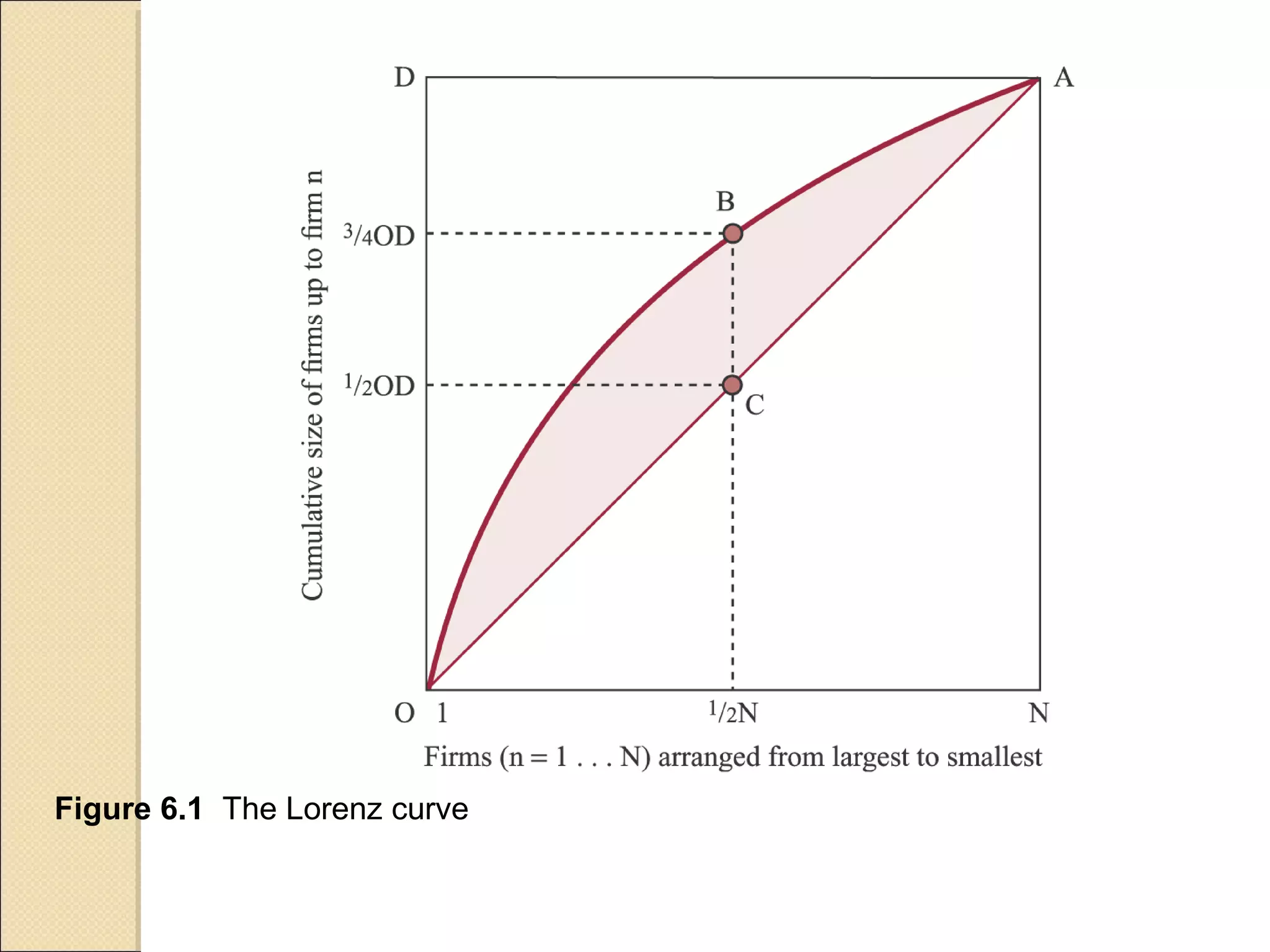
Figure 6.1  The Lorenz curve
Trends in Industry ConcentrationTrends in Industry Concentration
Table 6.14 and 6.15: Specialization in
European Manufacturing Sector
Pattern of specialization across
industrialized world:
◦ Europe: Specialize in traditional industries,
◦ Japan and US: Specialize in technology
oriented industries
ClustersClusters
Table 6.15
Industry cluster policies are a current
trend in planning for economic
development.
The focus of cluster policies is based on
the recognition that firms and industries
are interrelated.
The idea is that ties among firms within
clusters might be turned into competitive
advantage for the region.
Industry cluster policies are a current
trend in planning for economic
development.
The focus of cluster policies is based on
the recognition that firms and industries
are interrelated.
The idea is that ties among firms within
clusters might be turned into competitive
advantage for the region.
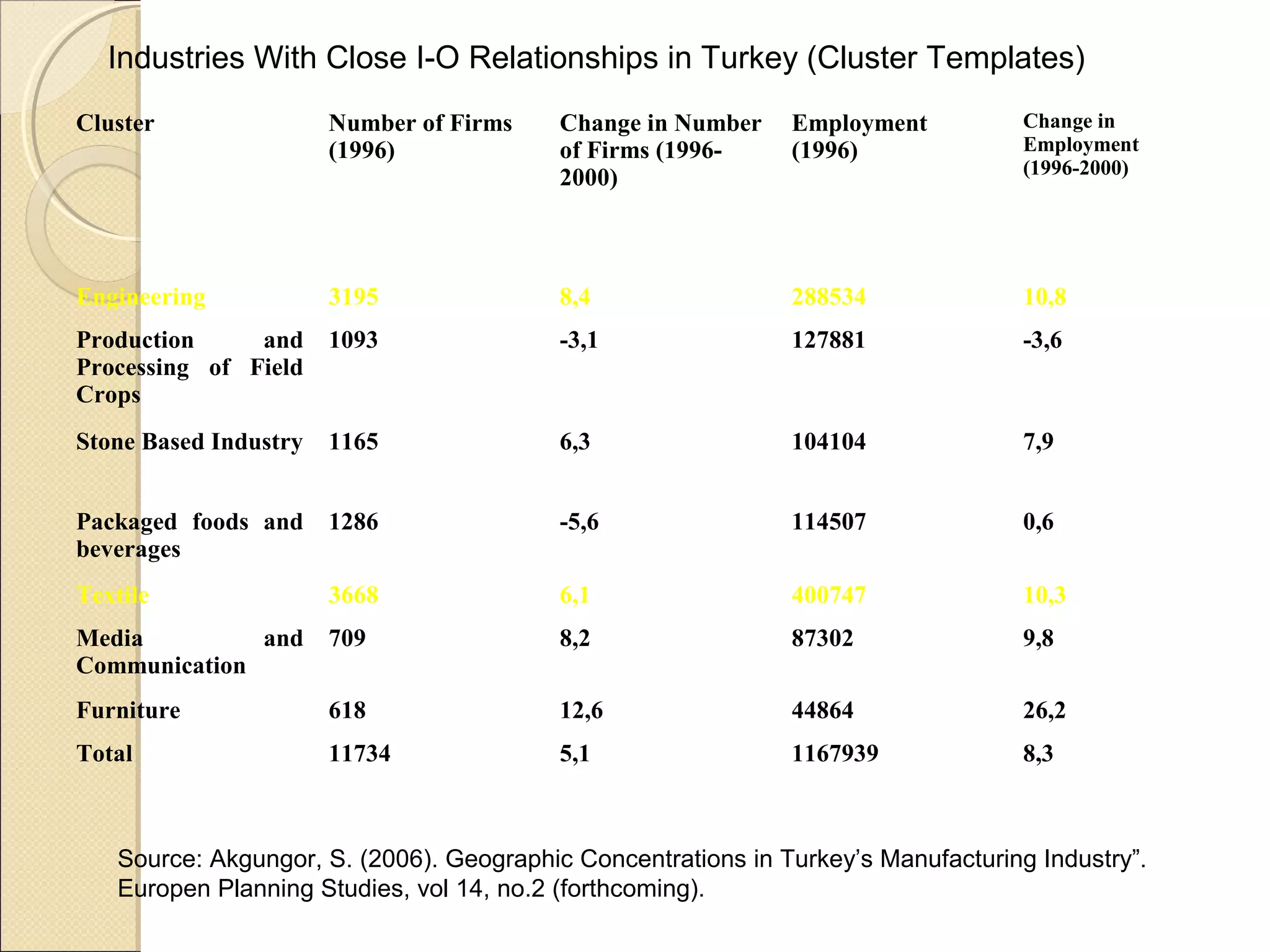
Cluster Number of Firms
(1996)
Change in Number
of Firms (1996-
2000)
Employment
(1996)
Change in
Employment
(1996-2000)
Engineering 3195 8,4 288534 10,8
Production and
Processing of Field
Crops
1093 -3,1 127881 -3,6
Stone Based Industry 1165 6,3 104104 7,9
Packaged foods and
beverages
1286 -5,6 114507 0,6
Textile 3668 6,1 400747 10,3
Media and
Communication
709 8,2 87302 9,8
Furniture 618 12,6 44864 26,2
Total 11734 5,1 1167939 8,3
Source: Akgungor, S. (2006). Geographic Concentrations in Turkey’s Manufacturing Industry”.
Europen Planning Studies, vol 14, no.2 (forthcoming).
Industries With Close I-O Relationships in Turkey (Cluster Templates)
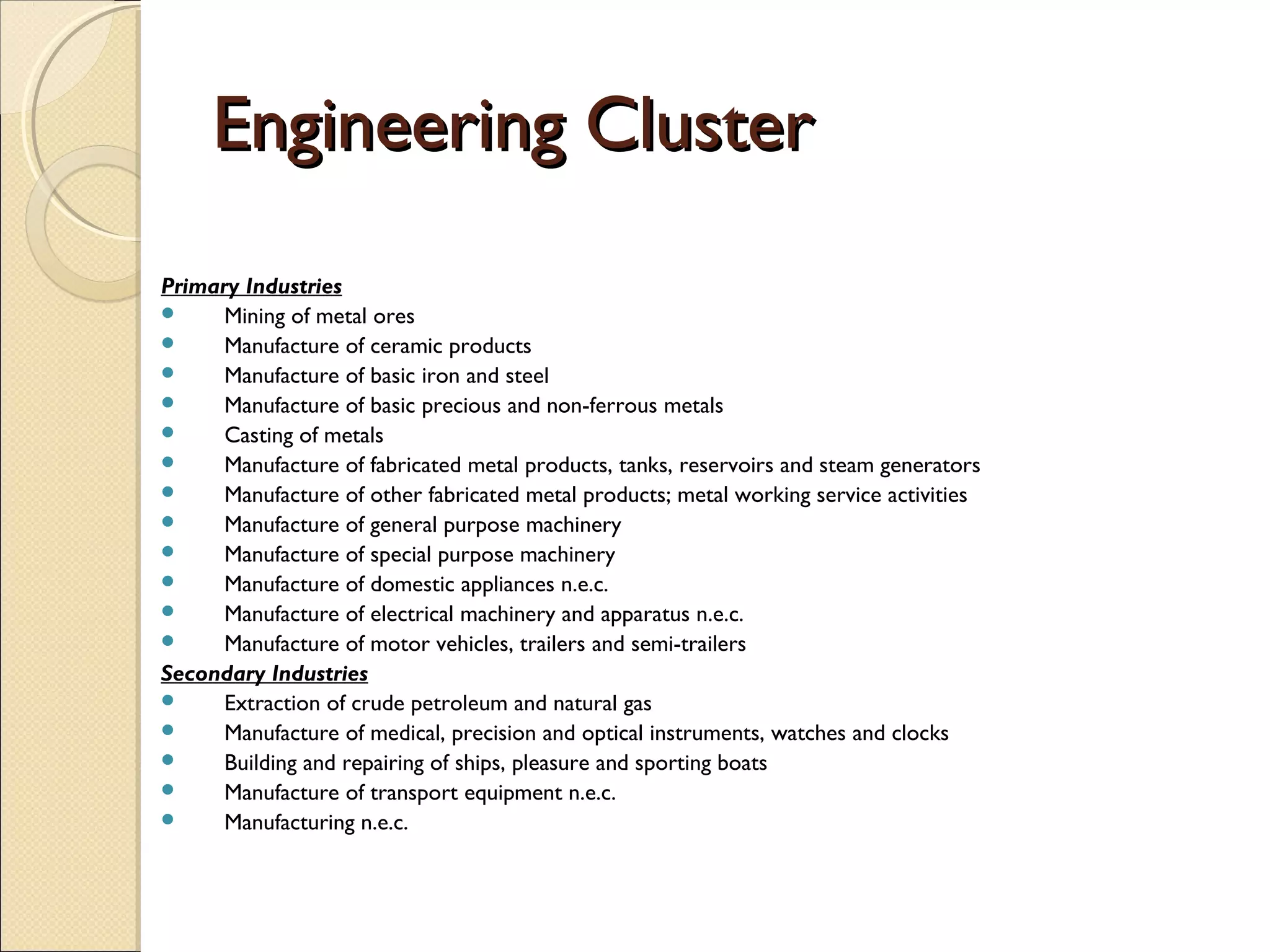
Engineering ClusterEngineering Cluster
Primary Industries
 Mining of metal ores
 Manufacture of ceramic products
 Manufacture of basic iron and steel
 Manufacture of basic precious and non-ferrous metals
 Casting of metals
 Manufacture of fabricated metal products, tanks, reservoirs and steam generators
 Manufacture of other fabricated metal products; metal working service activities
 Manufacture of general purpose machinery
 Manufacture of special purpose machinery
 Manufacture of domestic appliances n.e.c.
 Manufacture of electrical machinery and apparatus n.e.c.
 Manufacture of motor vehicles, trailers and semi-trailers
Secondary Industries
 Extraction of crude petroleum and natural gas
 Manufacture of medical, precision and optical instruments, watches and clocks
 Building and repairing of ships, pleasure and sporting boats
 Manufacture of transport equipment n.e.c.
 Manufacturing n.e.c.
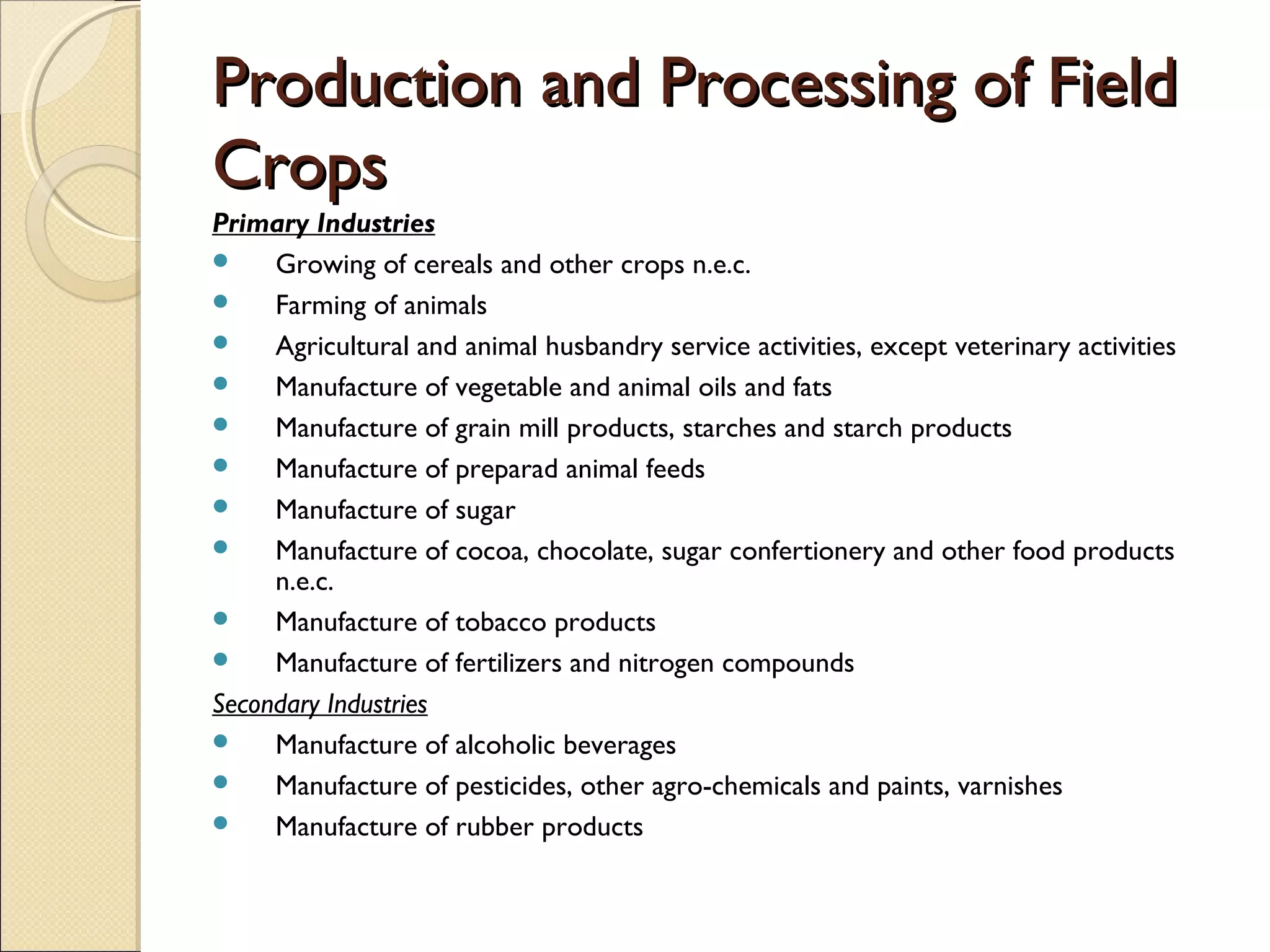
Production and Processing of FieldProduction and Processing of Field
CropsCrops
Primary Industries
 Growing of cereals and other crops n.e.c.
 Farming of animals
 Agricultural and animal husbandry service activities, except veterinary activities
 Manufacture of vegetable and animal oils and fats
 Manufacture of grain mill products, starches and starch products
 Manufacture of preparad animal feeds
 Manufacture of sugar
 Manufacture of cocoa, chocolate, sugar confertionery and other food products
n.e.c.
 Manufacture of tobacco products
 Manufacture of fertilizers and nitrogen compounds
Secondary Industries
 Manufacture of alcoholic beverages
 Manufacture of pesticides, other agro-chemicals and paints, varnishes
 Manufacture of rubber products
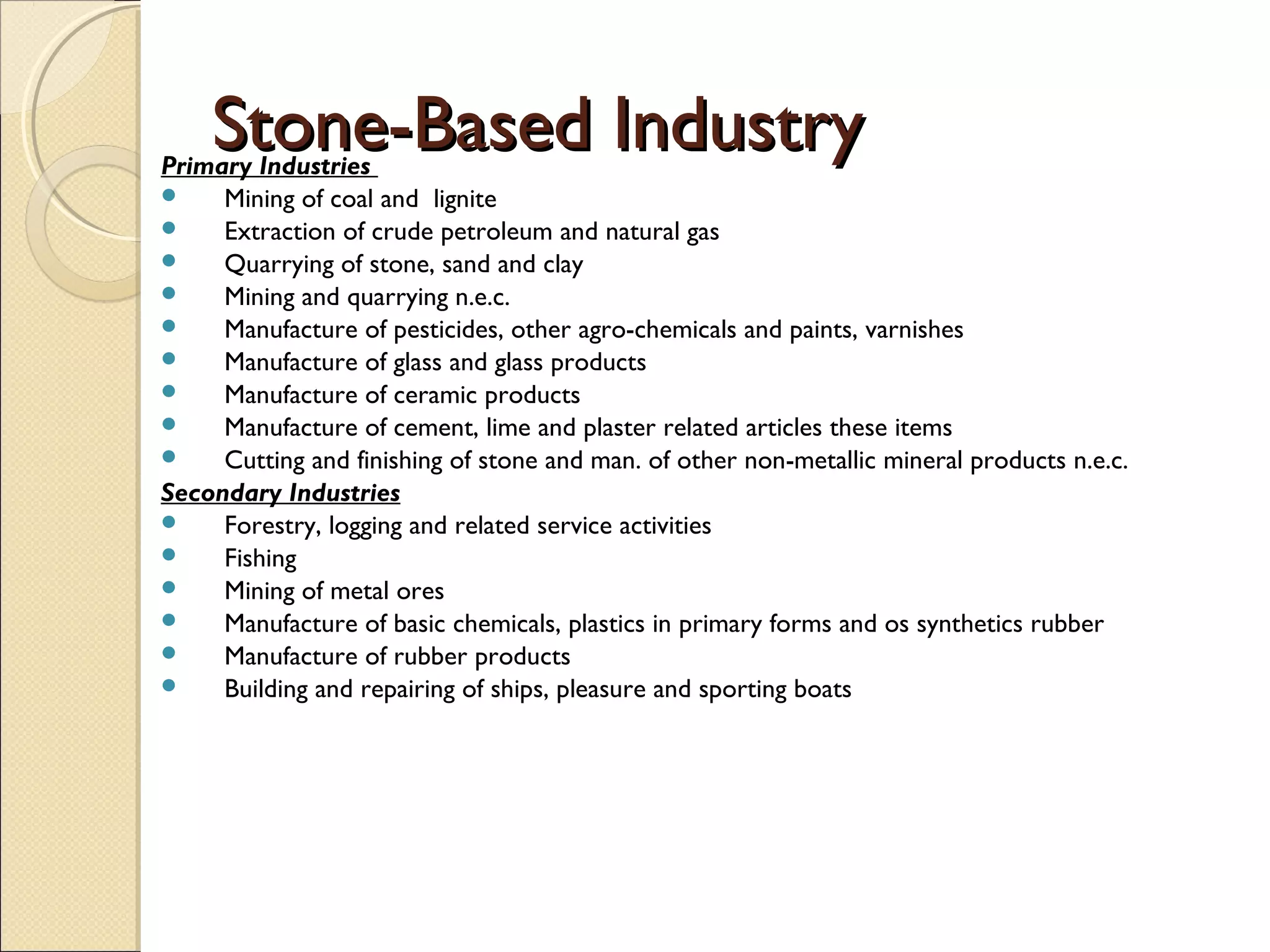
Stone-Based IndustryStone-Based IndustryPrimary Industries
 Mining of coal and lignite
 Extraction of crude petroleum and natural gas
 Quarrying of stone, sand and clay
 Mining and quarrying n.e.c.
 Manufacture of pesticides, other agro-chemicals and paints, varnishes
 Manufacture of glass and glass products
 Manufacture of ceramic products
 Manufacture of cement, lime and plaster related articles these items
 Cutting and finishing of stone and man. of other non-metallic mineral products n.e.c.
Secondary Industries
 Forestry, logging and related service activities
 Fishing
 Mining of metal ores
 Manufacture of basic chemicals, plastics in primary forms and os synthetics rubber
 Manufacture of rubber products
 Building and repairing of ships, pleasure and sporting boats
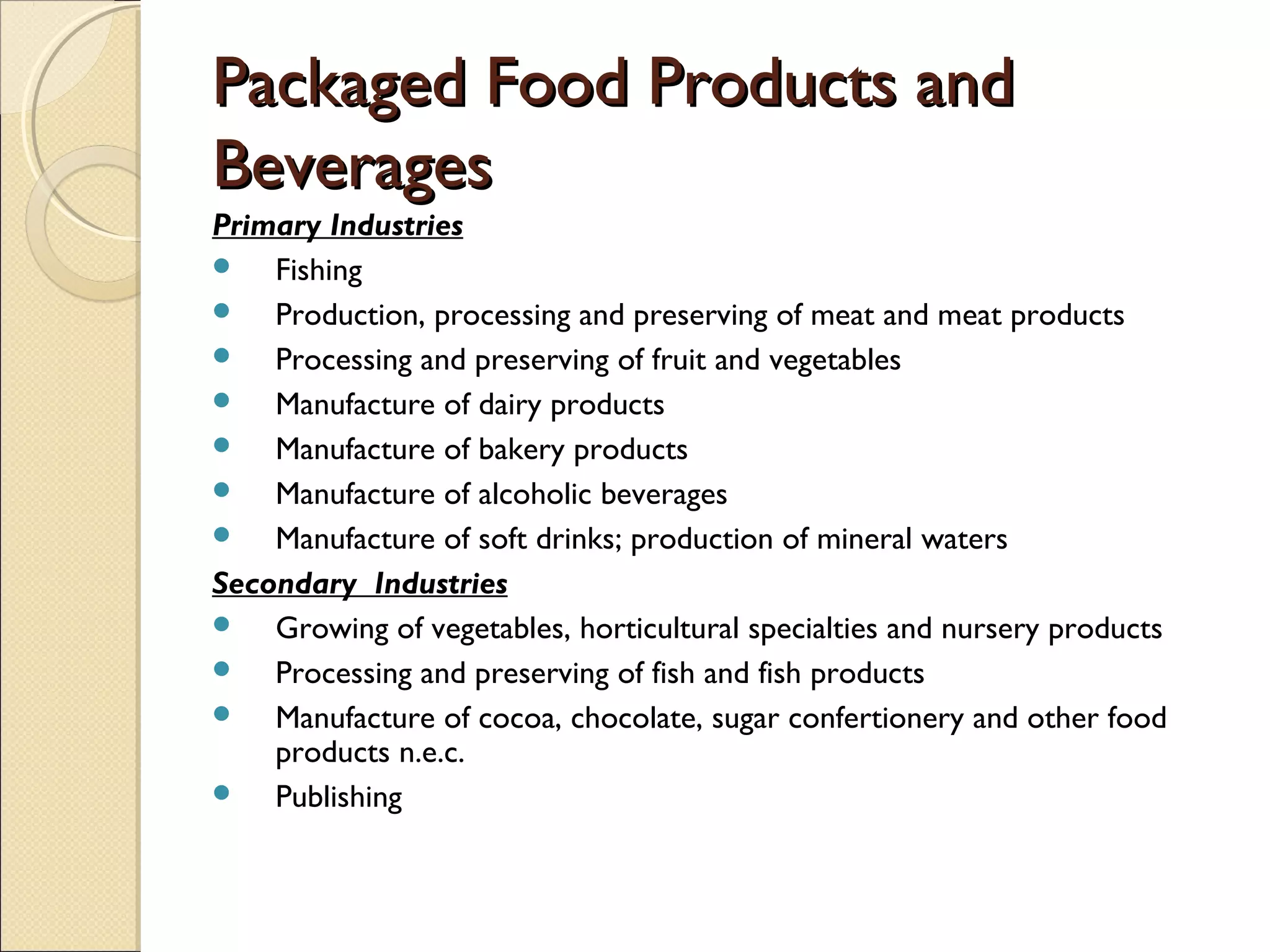
Packaged Food Products andPackaged Food Products and
BeveragesBeverages
Primary Industries
 Fishing
 Production, processing and preserving of meat and meat products
 Processing and preserving of fruit and vegetables
 Manufacture of dairy products
 Manufacture of bakery products
 Manufacture of alcoholic beverages
 Manufacture of soft drinks; production of mineral waters
Secondary Industries
 Growing of vegetables, horticultural specialties and nursery products
 Processing and preserving of fish and fish products
 Manufacture of cocoa, chocolate, sugar confertionery and other food
products n.e.c.
 Publishing
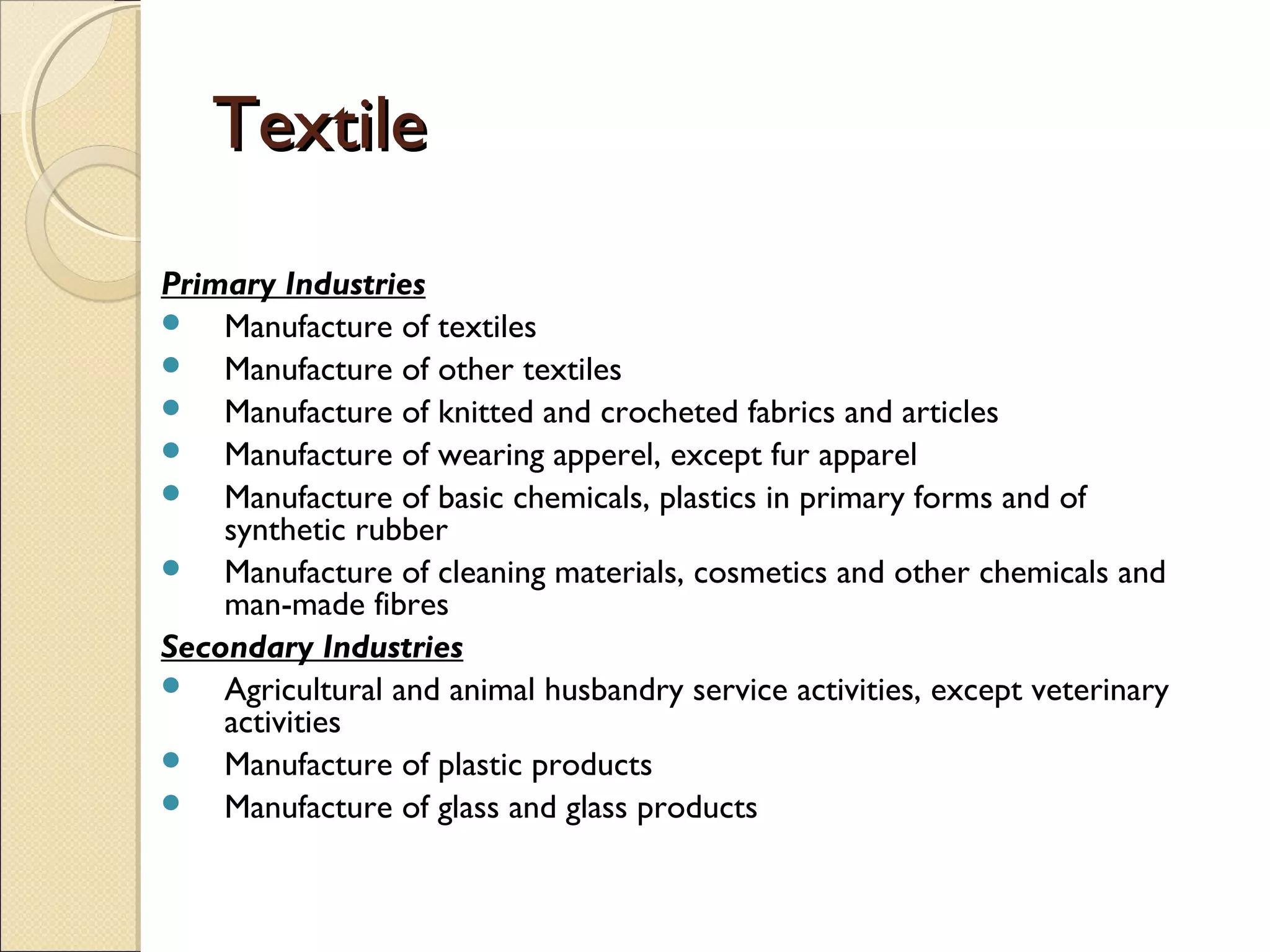
TextileTextile
Primary Industries
 Manufacture of textiles
 Manufacture of other textiles
 Manufacture of knitted and crocheted fabrics and articles
 Manufacture of wearing apperel, except fur apparel
 Manufacture of basic chemicals, plastics in primary forms and of
synthetic rubber
 Manufacture of cleaning materials, cosmetics and other chemicals and
man-made fibres
Secondary Industries
 Agricultural and animal husbandry service activities, except veterinary
activities
 Manufacture of plastic products
 Manufacture of glass and glass products
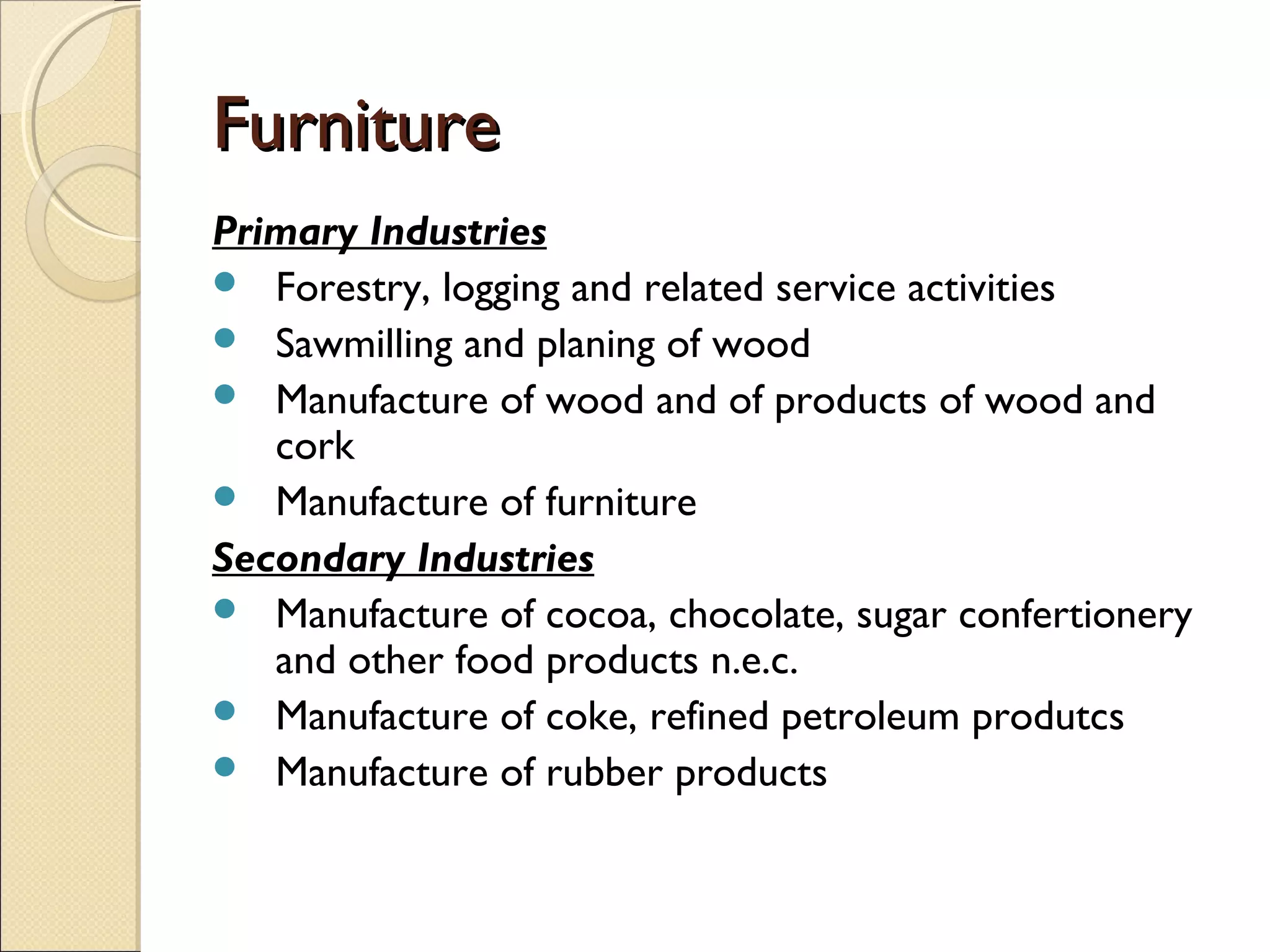
FurnitureFurniture
Primary Industries
 Forestry, logging and related service activities
 Sawmilling and planing of wood
 Manufacture of wood and of products of wood and
cork
 Manufacture of furniture
Secondary Industries
 Manufacture of cocoa, chocolate, sugar confertionery
and other food products n.e.c.
 Manufacture of coke, refined petroleum produtcs
 Manufacture of rubber products
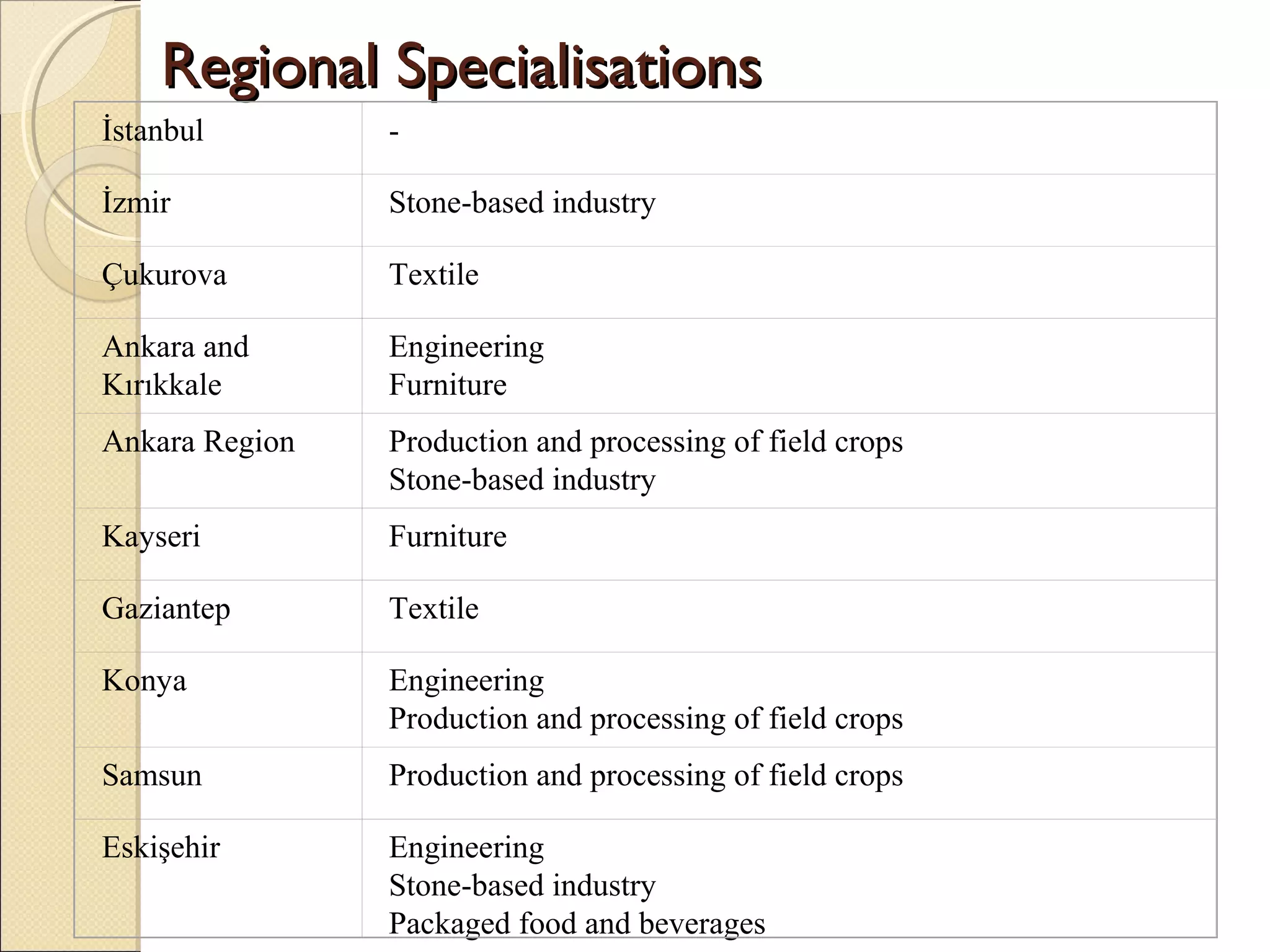
Regional SpecialisationsRegional Specialisations
İstanbul -
İzmir Stone-based industry
Çukurova Textile
Ankara and
Kırıkkale
Engineering
Furniture
Ankara Region Production and processing of field crops
Stone-based industry
Kayseri Furniture
Gaziantep Textile
Konya Engineering
Production and processing of field crops
Samsun Production and processing of field crops
Eskişehir Engineering
Stone-based industry
Packaged food and beverages
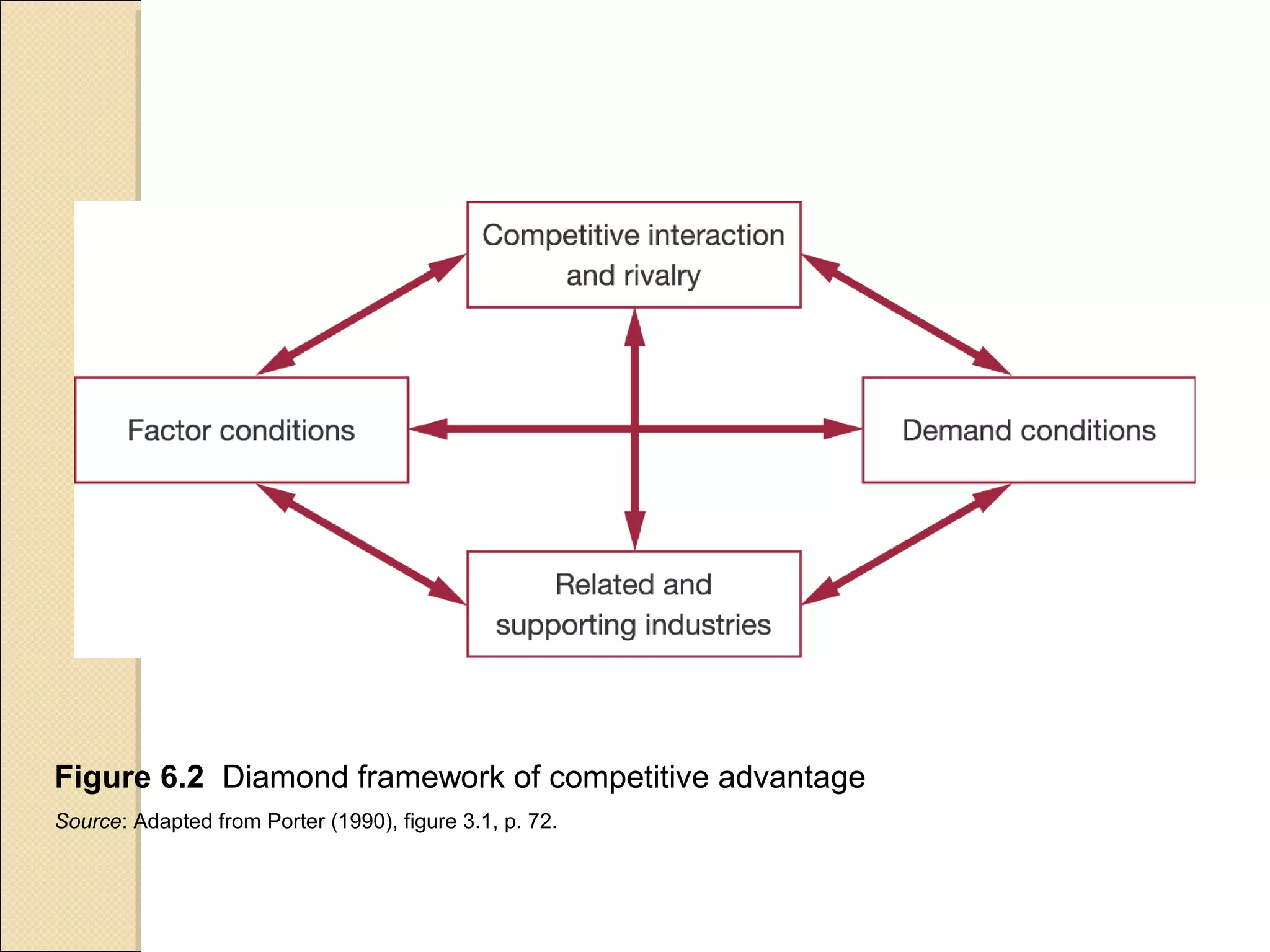
Figure 6.2  Diamond framework of competitive advantage
Source: Adapted from Porter (1990), figure 3.1, p. 72.
Prepares By:- Sanyam Gandotra
Class:-8th
B
Roll No.:-31

Industries of class 8th chapter.

  • 1.
  • 2.
    Concentration: Measurements andConcentration:Measurements and TrendsTrends Analysis of a firm’s competitive environment requires identifying the key elements of industry structure Number and size distribution of firms Seller concentration Number of firms, size of firms
  • 3.
    Market and IndustryDefinitionMarket and Industry Definition Product dimension Geographic dimension Cross price elasticity of demand Cross price elasticity of supply
  • 4.
    Geographic Market DefinitionGeographicMarket Definition Determines whether an increase in the price of a product in one geographic location significantly affects either demand or suupy in another location If so, both locations should be considered same Regional market
  • 5.
    Market vs IndustryMarketvs Industry Market:S&D Industry – all products or enterprises with large long run cross elasticities either supply and demand should be combined into a single industry.
  • 6.
    Official SchemesOfficial Schemes ISICclassification NACE classification
  • 7.
    Measures of ConcentrationMeasuresof Concentration Seller concentration: An indicator of the number and size distribution of firms can be measured at two levels: ◦ For all firms that form part of an economy located within some specific geographic boundary ◦ For all firms classified as members of some industry or market again located within some specific geographic boundary
  • 8.
    Most Common measuresof selerMost Common measures of seler concentrationconcentration N firm concentration ratio The Herfindahl-Hirschman index The Hannah-Kay index The entropy coefficient The variance of the log of firm sizes GINI
  • 9.
  • 10.
    Trends in IndustryConcentrationTrends in Industry Concentration Table 6.14 and 6.15: Specialization in European Manufacturing Sector Pattern of specialization across industrialized world: ◦ Europe: Specialize in traditional industries, ◦ Japan and US: Specialize in technology oriented industries
  • 11.
    ClustersClusters Table 6.15 Industry clusterpolicies are a current trend in planning for economic development. The focus of cluster policies is based on the recognition that firms and industries are interrelated. The idea is that ties among firms within clusters might be turned into competitive advantage for the region.
  • 12.
    Industry cluster policiesare a current trend in planning for economic development. The focus of cluster policies is based on the recognition that firms and industries are interrelated. The idea is that ties among firms within clusters might be turned into competitive advantage for the region.
  • 13.
    Cluster Number ofFirms (1996) Change in Number of Firms (1996- 2000) Employment (1996) Change in Employment (1996-2000) Engineering 3195 8,4 288534 10,8 Production and Processing of Field Crops 1093 -3,1 127881 -3,6 Stone Based Industry 1165 6,3 104104 7,9 Packaged foods and beverages 1286 -5,6 114507 0,6 Textile 3668 6,1 400747 10,3 Media and Communication 709 8,2 87302 9,8 Furniture 618 12,6 44864 26,2 Total 11734 5,1 1167939 8,3 Source: Akgungor, S. (2006). Geographic Concentrations in Turkey’s Manufacturing Industry”. Europen Planning Studies, vol 14, no.2 (forthcoming). Industries With Close I-O Relationships in Turkey (Cluster Templates)
  • 14.
    Engineering ClusterEngineering Cluster PrimaryIndustries  Mining of metal ores  Manufacture of ceramic products  Manufacture of basic iron and steel  Manufacture of basic precious and non-ferrous metals  Casting of metals  Manufacture of fabricated metal products, tanks, reservoirs and steam generators  Manufacture of other fabricated metal products; metal working service activities  Manufacture of general purpose machinery  Manufacture of special purpose machinery  Manufacture of domestic appliances n.e.c.  Manufacture of electrical machinery and apparatus n.e.c.  Manufacture of motor vehicles, trailers and semi-trailers Secondary Industries  Extraction of crude petroleum and natural gas  Manufacture of medical, precision and optical instruments, watches and clocks  Building and repairing of ships, pleasure and sporting boats  Manufacture of transport equipment n.e.c.  Manufacturing n.e.c.
  • 15.
    Production and Processingof FieldProduction and Processing of Field CropsCrops Primary Industries  Growing of cereals and other crops n.e.c.  Farming of animals  Agricultural and animal husbandry service activities, except veterinary activities  Manufacture of vegetable and animal oils and fats  Manufacture of grain mill products, starches and starch products  Manufacture of preparad animal feeds  Manufacture of sugar  Manufacture of cocoa, chocolate, sugar confertionery and other food products n.e.c.  Manufacture of tobacco products  Manufacture of fertilizers and nitrogen compounds Secondary Industries  Manufacture of alcoholic beverages  Manufacture of pesticides, other agro-chemicals and paints, varnishes  Manufacture of rubber products
  • 16.
    Stone-Based IndustryStone-Based IndustryPrimaryIndustries  Mining of coal and lignite  Extraction of crude petroleum and natural gas  Quarrying of stone, sand and clay  Mining and quarrying n.e.c.  Manufacture of pesticides, other agro-chemicals and paints, varnishes  Manufacture of glass and glass products  Manufacture of ceramic products  Manufacture of cement, lime and plaster related articles these items  Cutting and finishing of stone and man. of other non-metallic mineral products n.e.c. Secondary Industries  Forestry, logging and related service activities  Fishing  Mining of metal ores  Manufacture of basic chemicals, plastics in primary forms and os synthetics rubber  Manufacture of rubber products  Building and repairing of ships, pleasure and sporting boats
  • 17.
    Packaged Food ProductsandPackaged Food Products and BeveragesBeverages Primary Industries  Fishing  Production, processing and preserving of meat and meat products  Processing and preserving of fruit and vegetables  Manufacture of dairy products  Manufacture of bakery products  Manufacture of alcoholic beverages  Manufacture of soft drinks; production of mineral waters Secondary Industries  Growing of vegetables, horticultural specialties and nursery products  Processing and preserving of fish and fish products  Manufacture of cocoa, chocolate, sugar confertionery and other food products n.e.c.  Publishing
  • 18.
    TextileTextile Primary Industries  Manufactureof textiles  Manufacture of other textiles  Manufacture of knitted and crocheted fabrics and articles  Manufacture of wearing apperel, except fur apparel  Manufacture of basic chemicals, plastics in primary forms and of synthetic rubber  Manufacture of cleaning materials, cosmetics and other chemicals and man-made fibres Secondary Industries  Agricultural and animal husbandry service activities, except veterinary activities  Manufacture of plastic products  Manufacture of glass and glass products
  • 19.
    FurnitureFurniture Primary Industries  Forestry,logging and related service activities  Sawmilling and planing of wood  Manufacture of wood and of products of wood and cork  Manufacture of furniture Secondary Industries  Manufacture of cocoa, chocolate, sugar confertionery and other food products n.e.c.  Manufacture of coke, refined petroleum produtcs  Manufacture of rubber products
  • 20.
    Regional SpecialisationsRegional Specialisations İstanbul- İzmir Stone-based industry Çukurova Textile Ankara and Kırıkkale Engineering Furniture Ankara Region Production and processing of field crops Stone-based industry Kayseri Furniture Gaziantep Textile Konya Engineering Production and processing of field crops Samsun Production and processing of field crops Eskişehir Engineering Stone-based industry Packaged food and beverages
  • 21.
  • 22.
    Prepares By:- SanyamGandotra Class:-8th B Roll No.:-31