DISASTER MANAGEMENT
PART 1
Emergency Planning
Process
POST BASIC
ADVANCED EMERGENCY & TRAUMA CARE (AEMTC)
UPDATE JAN 2007
Aim
The aim of this lesson is to
understand the elements of the
hospital emergency planning
process.
Objectives
As a result of this session, participants should
be able to:
1. Explain the process of hospital emergency
planning.
2. List the steps of developing a hospital
disaster plan.
3. Differentiate between a planning process
and a plan.
Introduction
Hospital preparedness for emergencies must address
two basic types of emergencies:
• Where a hazard impact in the community causes
casualties to occur
• Emergencies which have occurred within or to the
hospital itself
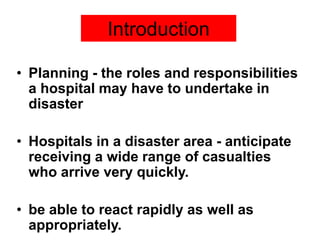
• Planning - the roles and responsibilities
a hospital may have to undertake in
disaster
• Hospitals in a disaster area - anticipate
receiving a wide range of casualties
who arrive very quickly.
• be able to react rapidly as well as
appropriately.
Introduction
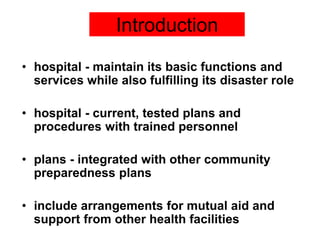
• hospital - maintain its basic functions and
services while also fulfilling its disaster role
• hospital - current, tested plans and
procedures with trained personnel
• plans - integrated with other community
preparedness plans
• include arrangements for mutual aid and
support from other health facilities
Introduction
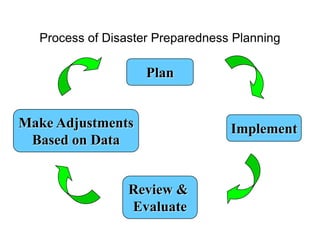
Process of Disaster Preparedness Planning
Plan
Implement
Review &
Evaluate
Make Adjustments
Based on Data
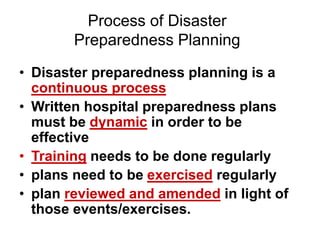
Process of Disaster
Preparedness Planning
• Disaster preparedness planning is a
continuous process
• Written hospital preparedness plans
must be dynamic in order to be
effective
• Training needs to be done regularly
• plans need to be exercised regularly
• plan reviewed and amended in light of
those events/exercises.
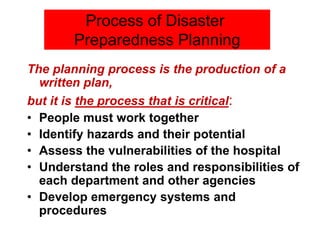
The planning process is the production of a
written plan,
but it is the process that is critical:
• People must work together
• Identify hazards and their potential
• Assess the vulnerabilities of the hospital
• Understand the roles and responsibilities of
each department and other agencies
• Develop emergency systems and
procedures
Process of Disaster
Preparedness Planning
The Planning Process
Step 1
Leadership resolves to plan
• The authority to develop an emergency
preparedness plan within the hospital should
be established
Step 2
Establish planning committee
• representatives of each hospital department
• representatives of the community health system
including public health and mental health
• external emergency services such as the ambulance
service, police and fire services.
The Planning Process
Step 3
Conduct hazard risk assessment
• analysis of hazards (internal and external to
the hospital)
• a detailed hospital vulnerability analysis to
determine the scope and priorities for
planning
• hazard risk assessment continues
throughout the planning process and
• constantly monitored and evaluated for any
changes
The Planning Process
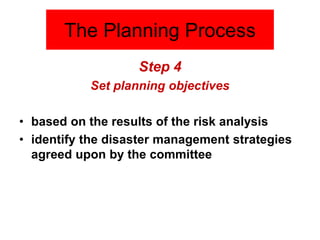
Step 4
Set planning objectives
• based on the results of the risk analysis
• identify the disaster management strategies
agreed upon by the committee
The Planning Process
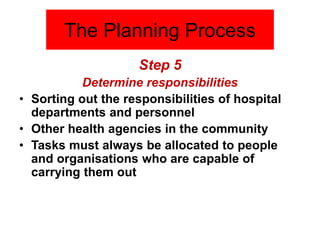
Step 5
Determine responsibilities
• Sorting out the responsibilities of hospital
departments and personnel
• Other health agencies in the community
• Tasks must always be allocated to people
and organisations who are capable of
carrying them out
The Planning Process
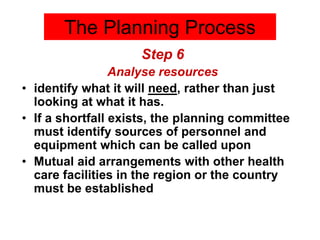
Step 6
Analyse resources
• identify what it will need, rather than just
looking at what it has.
• If a shortfall exists, the planning committee
must identify sources of personnel and
equipment which can be called upon
• Mutual aid arrangements with other health
care facilities in the region or the country
must be established
The Planning Process
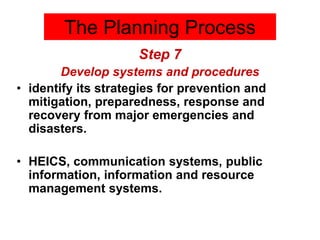
Step 7
Develop systems and procedures
• identify its strategies for prevention and
mitigation, preparedness, response and
recovery from major emergencies and
disasters.
• HEICS, communication systems, public
information, information and resource
management systems.
The Planning Process
Step 8
Write the plan
• The document must be distributed to all
who will use it, including outside
agencies.
• The document must be simple and
straightforward
– Or people won't read it or understand it.
The Planning Process
Steps 9 & 10
Train personnel - Test plans, personnel
and procedures
• vital part of emergency preparedness
• response activities will require
personnel to step outside their normal
day-to-day roles and responsibilities
• to take on tasks with which they are
less familiar and must be carried out in
a highly stressful environment
The Planning Process
Steps 9 & 10 (cont’d)
• personnel be trained and regularly tested in their
emergency management tasks
• Personnel need the opportunity to practice their
emergency management roles and responsibilities
“A plan which has not been tested and reviewed may be worse than
no plan at all - it can build a false sense of security in the hospital
about its level of preparedness”
The Planning Process
Steps 11 & 12
Review and amend the plan
• Plans - reviewed and updated on a regular
basis
• Every time the plan - or part of the plan - is
activated for an exercise or a real event, -
identify improvements needed
– to the plan, systems and procedures
– to the training of personnel
The Planning Process
Steps 11 & 12 (cont’d)
• planning is a process; it never stops
• The written plan is simply one outcome of the
planning process, but it's not an end point, just a
part of the planning process
• The written plan is a living document which must be
constantly tested, review and updated
The Planning Process
Thank You

DISASTER MANAGEMENT 6-Emergency planning process.ppt

  • 1.
    DISASTER MANAGEMENT PART 1 EmergencyPlanning Process POST BASIC ADVANCED EMERGENCY & TRAUMA CARE (AEMTC) UPDATE JAN 2007
  • 2.
    Aim The aim ofthis lesson is to understand the elements of the hospital emergency planning process.
  • 3.
    Objectives As a resultof this session, participants should be able to: 1. Explain the process of hospital emergency planning. 2. List the steps of developing a hospital disaster plan. 3. Differentiate between a planning process and a plan.
  • 4.
    Introduction Hospital preparedness foremergencies must address two basic types of emergencies: • Where a hazard impact in the community causes casualties to occur • Emergencies which have occurred within or to the hospital itself
  • 5.
    • Planning -the roles and responsibilities a hospital may have to undertake in disaster • Hospitals in a disaster area - anticipate receiving a wide range of casualties who arrive very quickly. • be able to react rapidly as well as appropriately. Introduction
  • 6.
    • hospital -maintain its basic functions and services while also fulfilling its disaster role • hospital - current, tested plans and procedures with trained personnel • plans - integrated with other community preparedness plans • include arrangements for mutual aid and support from other health facilities Introduction
  • 7.
    Process of DisasterPreparedness Planning Plan Implement Review & Evaluate Make Adjustments Based on Data
  • 8.
    Process of Disaster PreparednessPlanning • Disaster preparedness planning is a continuous process • Written hospital preparedness plans must be dynamic in order to be effective • Training needs to be done regularly • plans need to be exercised regularly • plan reviewed and amended in light of those events/exercises.
  • 9.
    The planning processis the production of a written plan, but it is the process that is critical: • People must work together • Identify hazards and their potential • Assess the vulnerabilities of the hospital • Understand the roles and responsibilities of each department and other agencies • Develop emergency systems and procedures Process of Disaster Preparedness Planning
  • 10.
    The Planning Process Step1 Leadership resolves to plan • The authority to develop an emergency preparedness plan within the hospital should be established
  • 11.
    Step 2 Establish planningcommittee • representatives of each hospital department • representatives of the community health system including public health and mental health • external emergency services such as the ambulance service, police and fire services. The Planning Process
  • 12.
    Step 3 Conduct hazardrisk assessment • analysis of hazards (internal and external to the hospital) • a detailed hospital vulnerability analysis to determine the scope and priorities for planning • hazard risk assessment continues throughout the planning process and • constantly monitored and evaluated for any changes The Planning Process
  • 13.
    Step 4 Set planningobjectives • based on the results of the risk analysis • identify the disaster management strategies agreed upon by the committee The Planning Process
  • 14.
    Step 5 Determine responsibilities •Sorting out the responsibilities of hospital departments and personnel • Other health agencies in the community • Tasks must always be allocated to people and organisations who are capable of carrying them out The Planning Process
  • 15.
    Step 6 Analyse resources •identify what it will need, rather than just looking at what it has. • If a shortfall exists, the planning committee must identify sources of personnel and equipment which can be called upon • Mutual aid arrangements with other health care facilities in the region or the country must be established The Planning Process
  • 16.
    Step 7 Develop systemsand procedures • identify its strategies for prevention and mitigation, preparedness, response and recovery from major emergencies and disasters. • HEICS, communication systems, public information, information and resource management systems. The Planning Process
  • 17.
    Step 8 Write theplan • The document must be distributed to all who will use it, including outside agencies. • The document must be simple and straightforward – Or people won't read it or understand it. The Planning Process
  • 18.
    Steps 9 &10 Train personnel - Test plans, personnel and procedures • vital part of emergency preparedness • response activities will require personnel to step outside their normal day-to-day roles and responsibilities • to take on tasks with which they are less familiar and must be carried out in a highly stressful environment The Planning Process
  • 19.
    Steps 9 &10 (cont’d) • personnel be trained and regularly tested in their emergency management tasks • Personnel need the opportunity to practice their emergency management roles and responsibilities “A plan which has not been tested and reviewed may be worse than no plan at all - it can build a false sense of security in the hospital about its level of preparedness” The Planning Process
  • 20.
    Steps 11 &12 Review and amend the plan • Plans - reviewed and updated on a regular basis • Every time the plan - or part of the plan - is activated for an exercise or a real event, - identify improvements needed – to the plan, systems and procedures – to the training of personnel The Planning Process
  • 21.
    Steps 11 &12 (cont’d) • planning is a process; it never stops • The written plan is simply one outcome of the planning process, but it's not an end point, just a part of the planning process • The written plan is a living document which must be constantly tested, review and updated The Planning Process
  • 22.