Directive Principles
of State Policy
Presented by Alka Shetkar
Content
• Background (in brief)
• What are DPSPs ?
• Fundamental rights and DPSPs(diff)
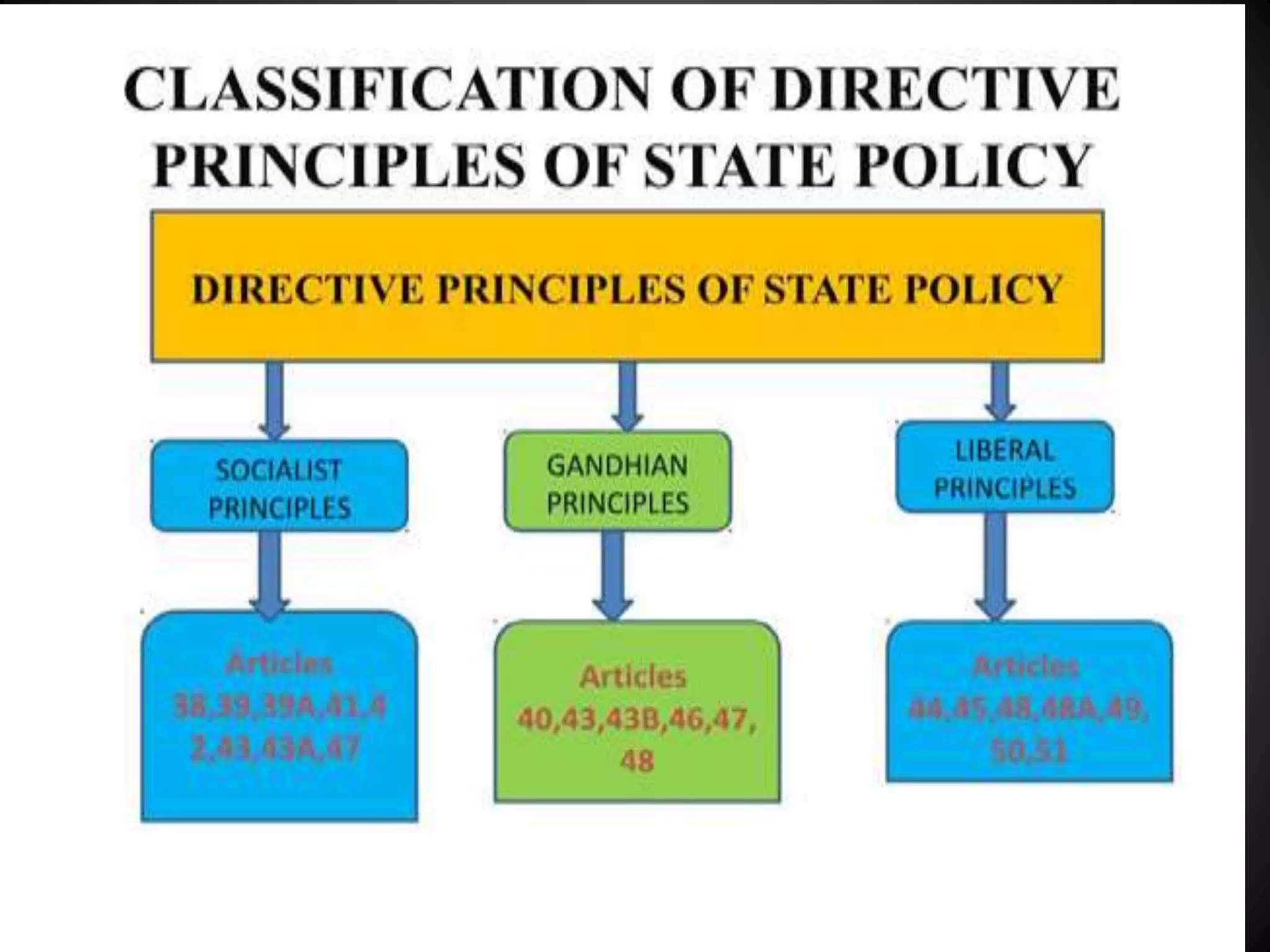
• Classification of DPSPs
• Amendments
• Criticism
Background
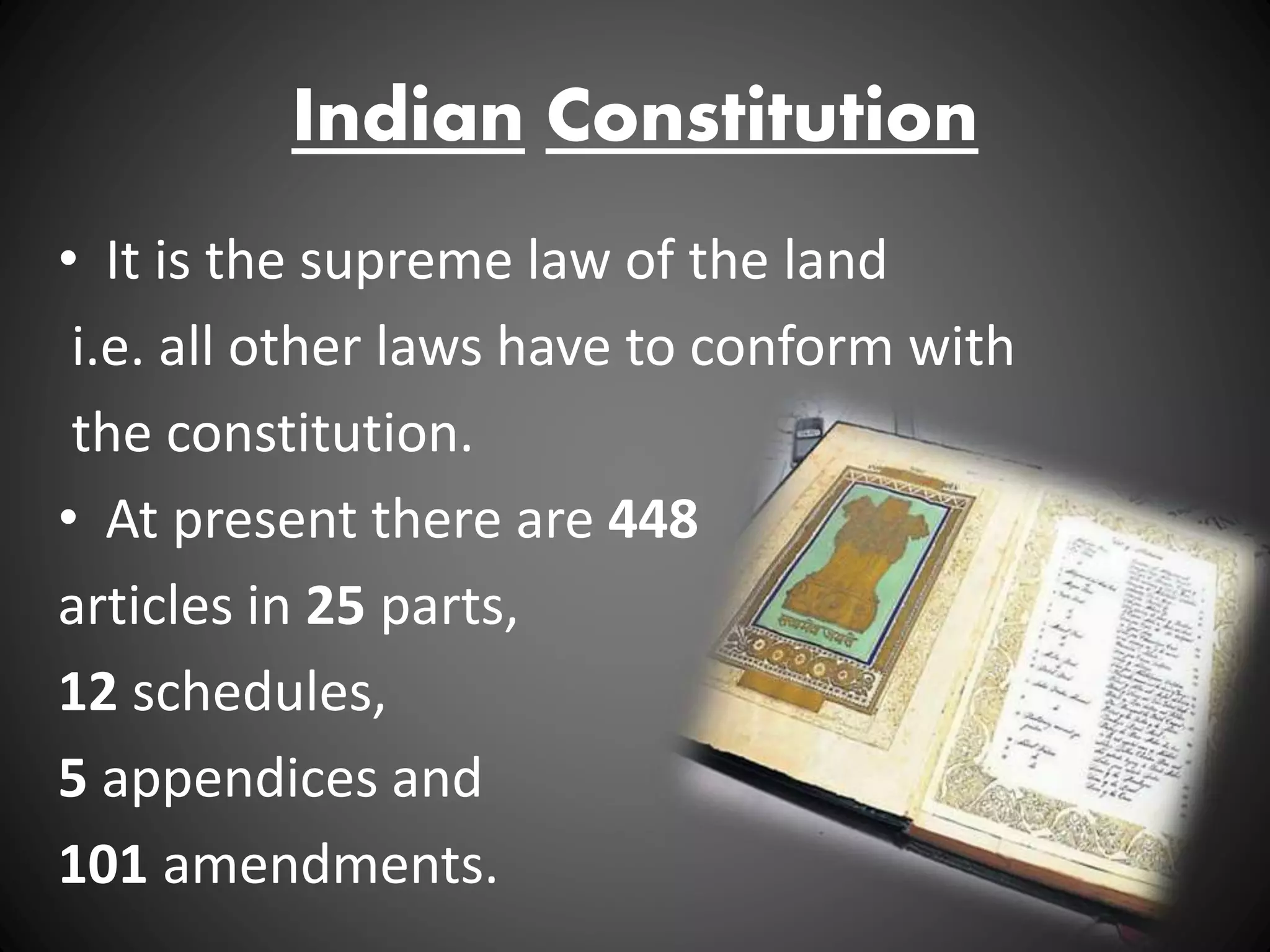
Indian Constitution
• It is the supreme law of the land
i.e. all other laws have to conform with
the constitution.
• At present there are 448
articles in 25 parts,
12 schedules,
5 appendices and
101 amendments.
What are DPSPs?
Directive + principle + state + policy
• These are the guidelines or principles; to be
kept in citation while framing laws and
policies. i.e. They are instructions to the
legislature and executive.
• The idea has been borrowed from the Ireland
Constitution, which had copied it from the
Spanish Constitution.
• DPSPs are enumerated in Part IV of the Indian
Constitution from Articles 36 to 51.
• Dr. Babasaheb Ambedkar described these
principles as novel features of the Indian
Constitution.
• The DPSPs along with the fundamental rights
contain the philosophy of the constitution and
is the soul of the constitution.
• The DPSPs are non-justiciable in nature, i.e.
they are not legally enforceable by the courts for
their violation.
• They promote the concept of welfare state, i.e.
they seek to establish economic, social and
political just in the country.
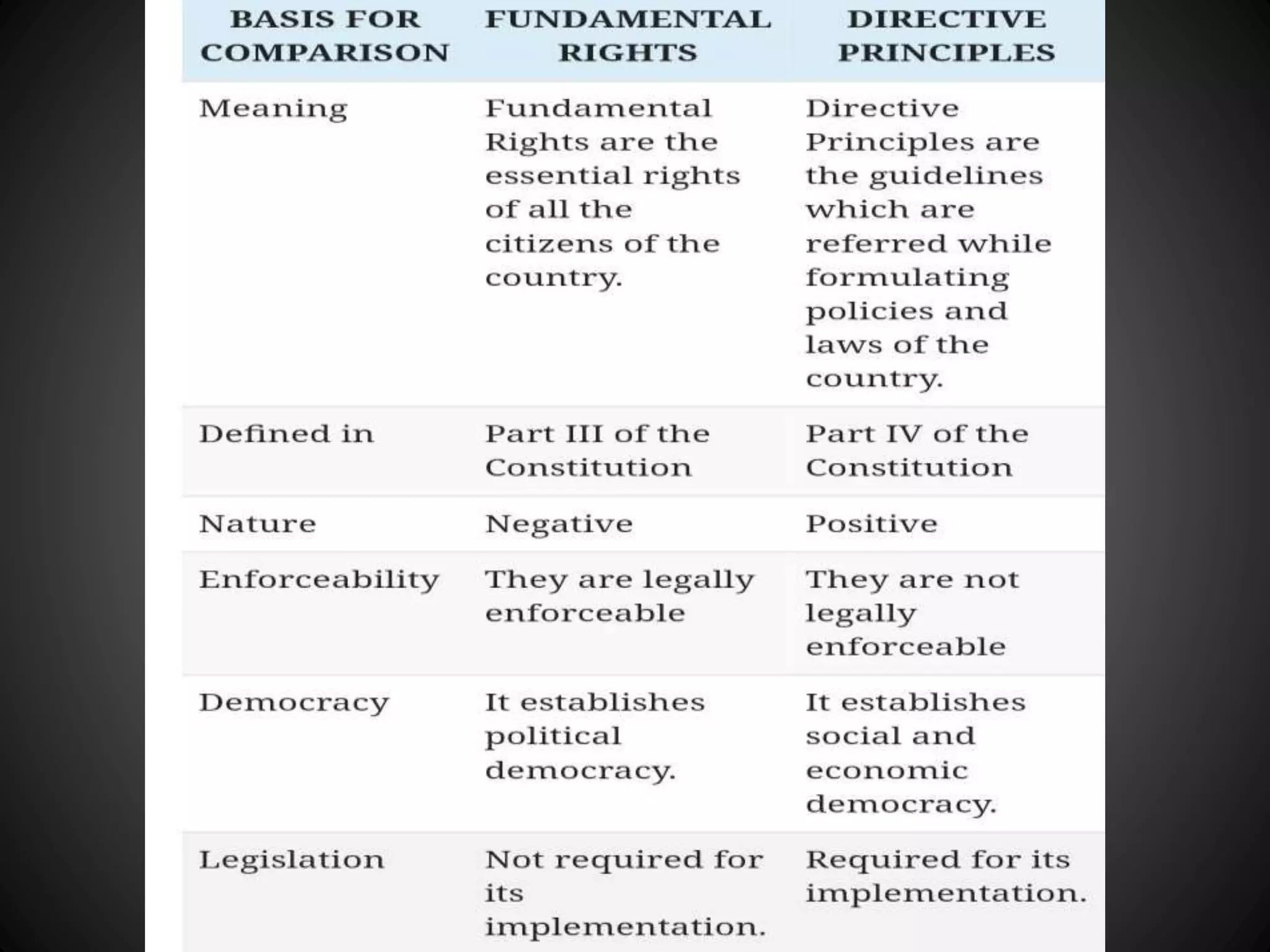
Difference between
fundamental rights and
DPSPs
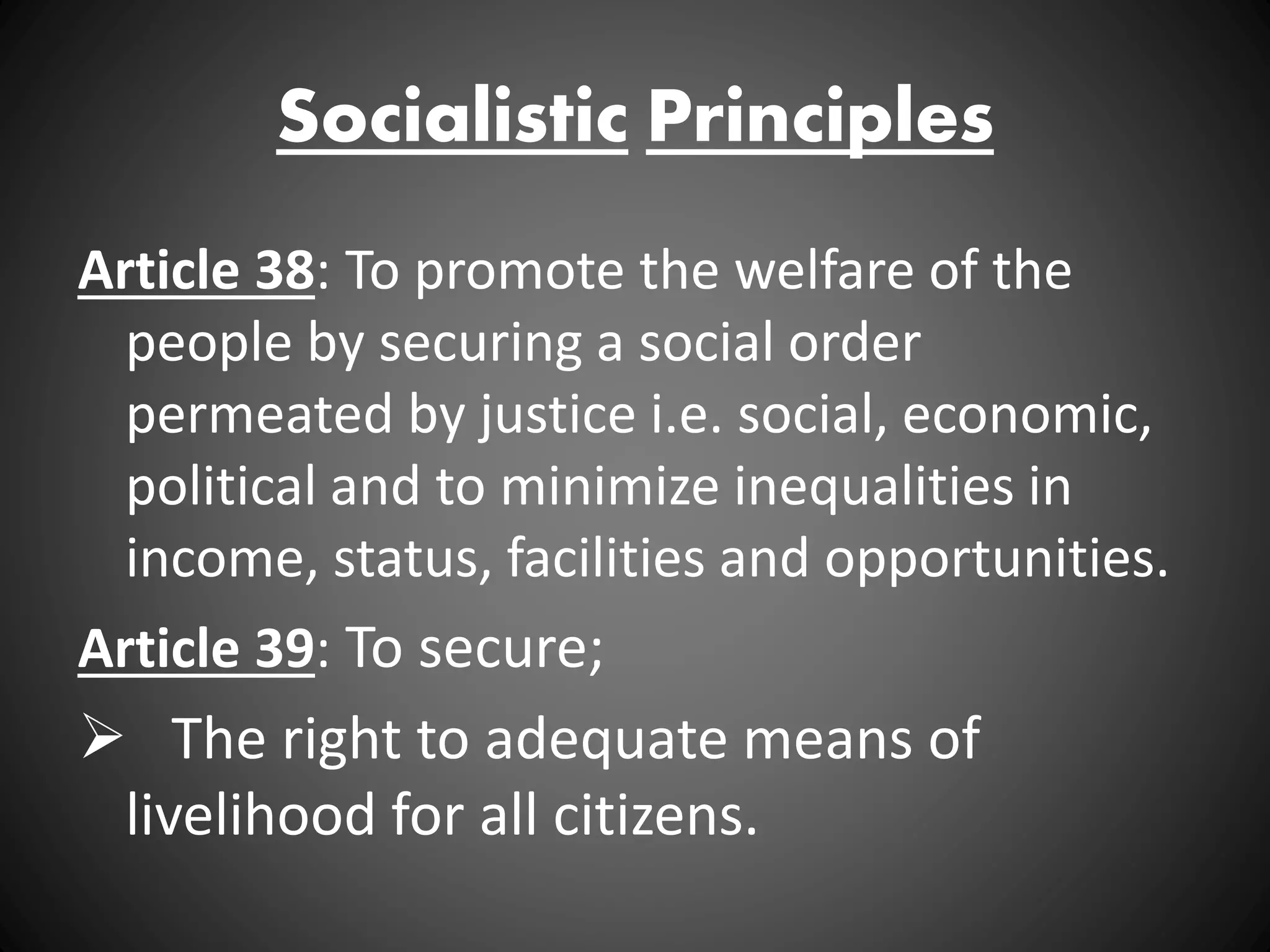
Socialistic Principles
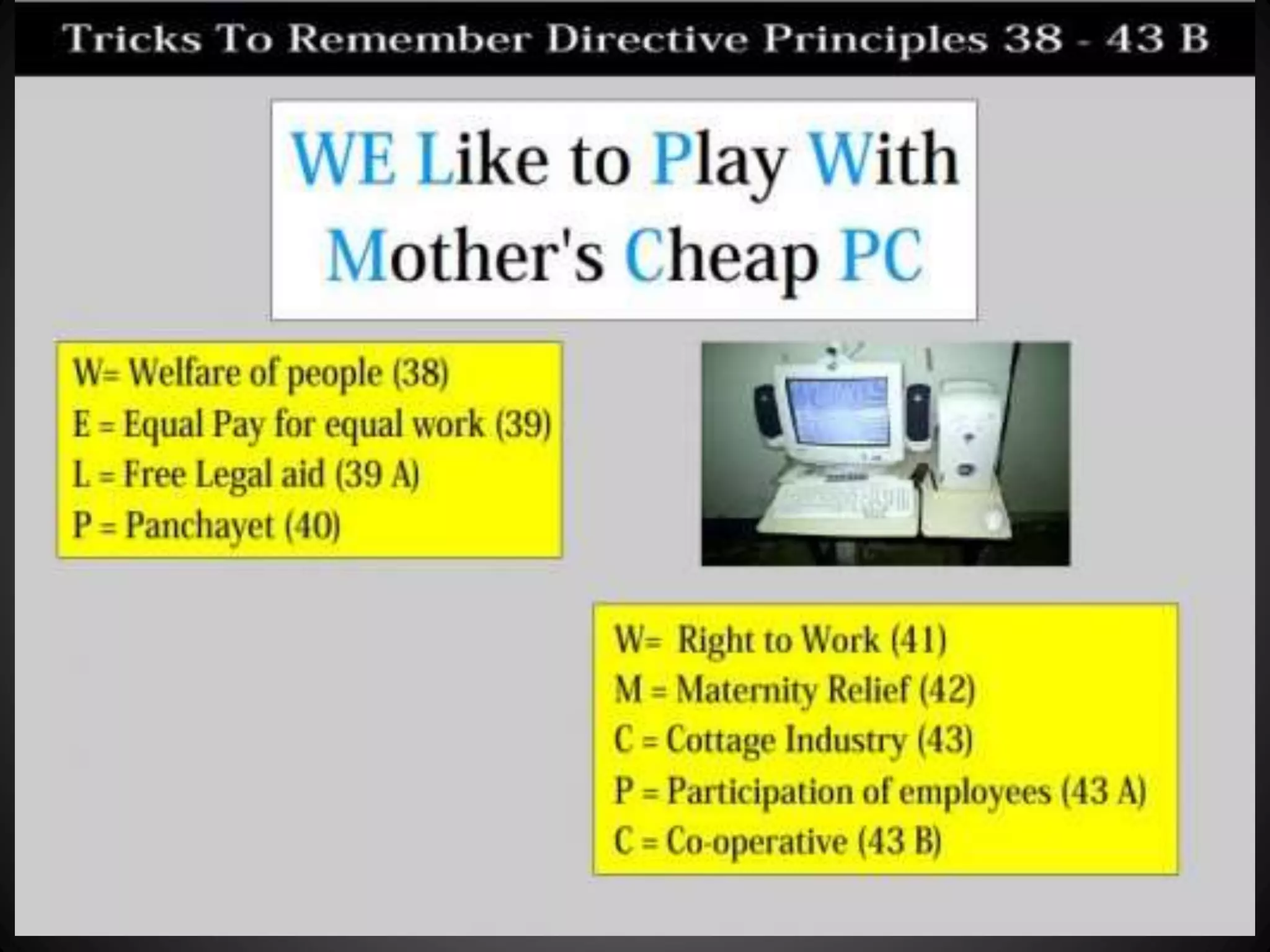
Article 38: To promote the welfare of the
people by securing a social order
permeated by justice i.e. social, economic,
political and to minimize inequalities in
income, status, facilities and opportunities.
Article 39: To secure;
 The right to adequate means of
livelihood for all citizens.
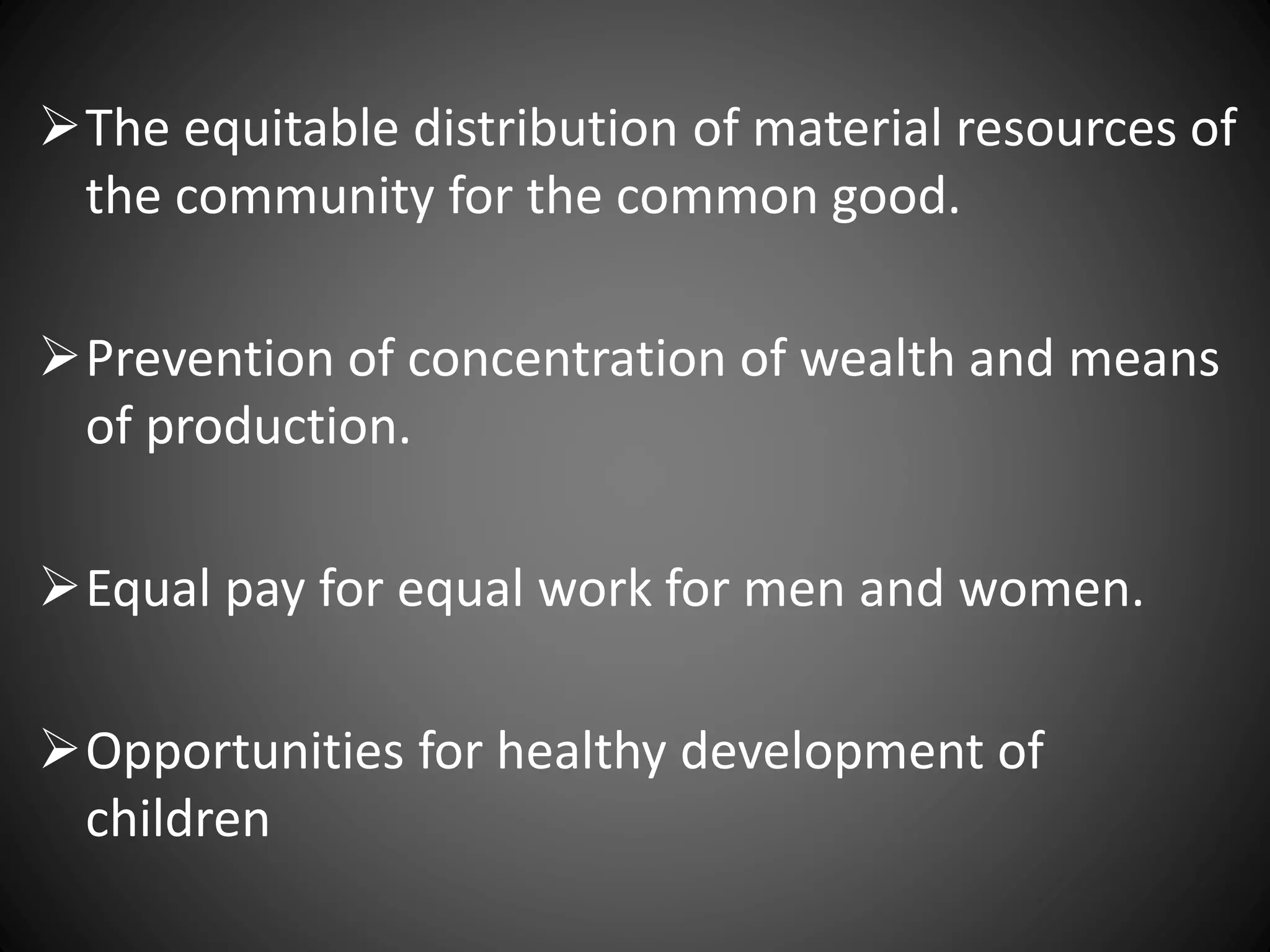
The equitable distribution of material resources of
the community for the common good.
Prevention of concentration of wealth and means
of production.
Equal pay for equal work for men and women.
Opportunities for healthy development of
children
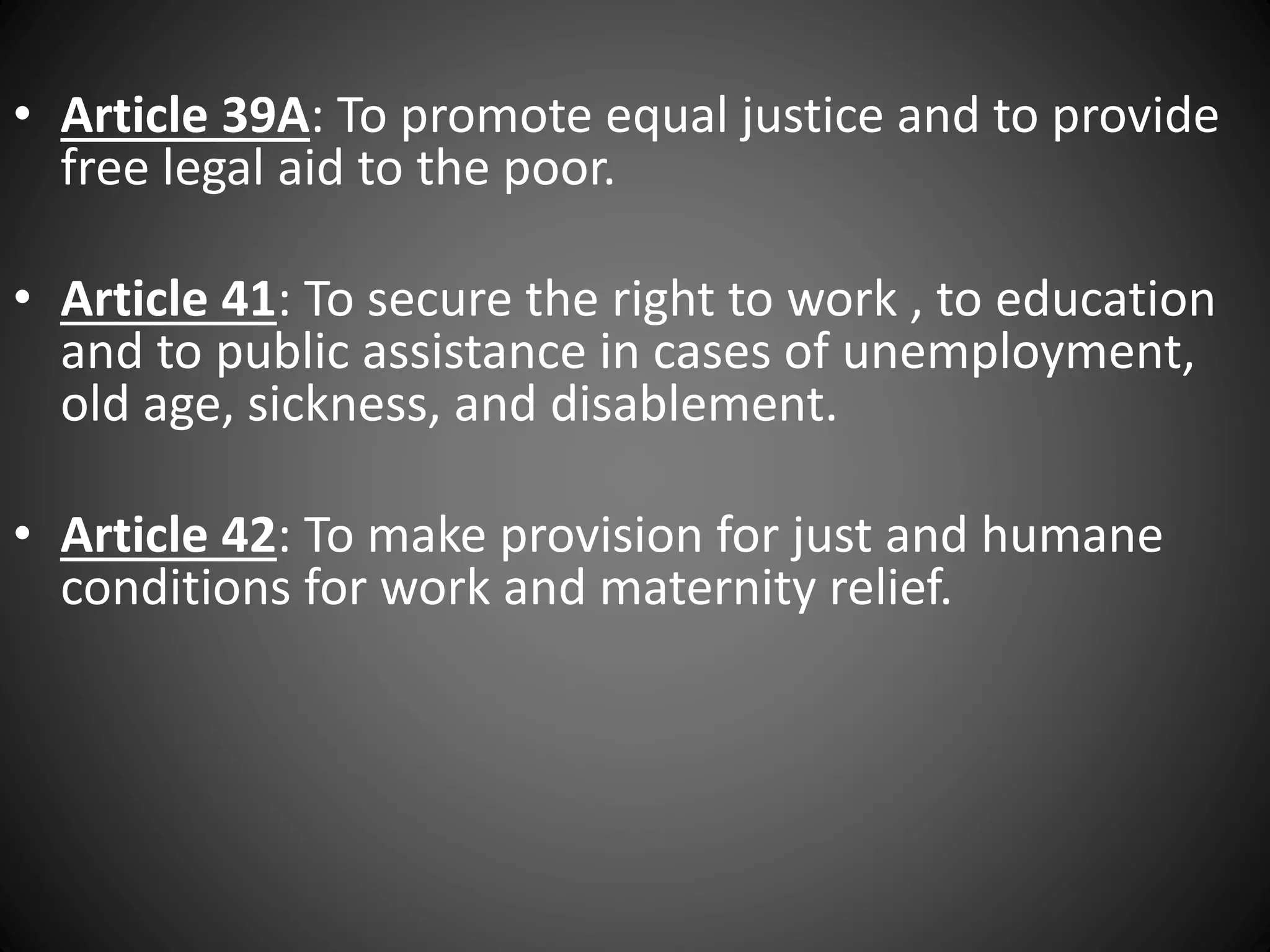
• Article 39A: To promote equal justice and to provide
free legal aid to the poor.
• Article 41: To secure the right to work , to education
and to public assistance in cases of unemployment,
old age, sickness, and disablement.
• Article 42: To make provision for just and humane
conditions for work and maternity relief.
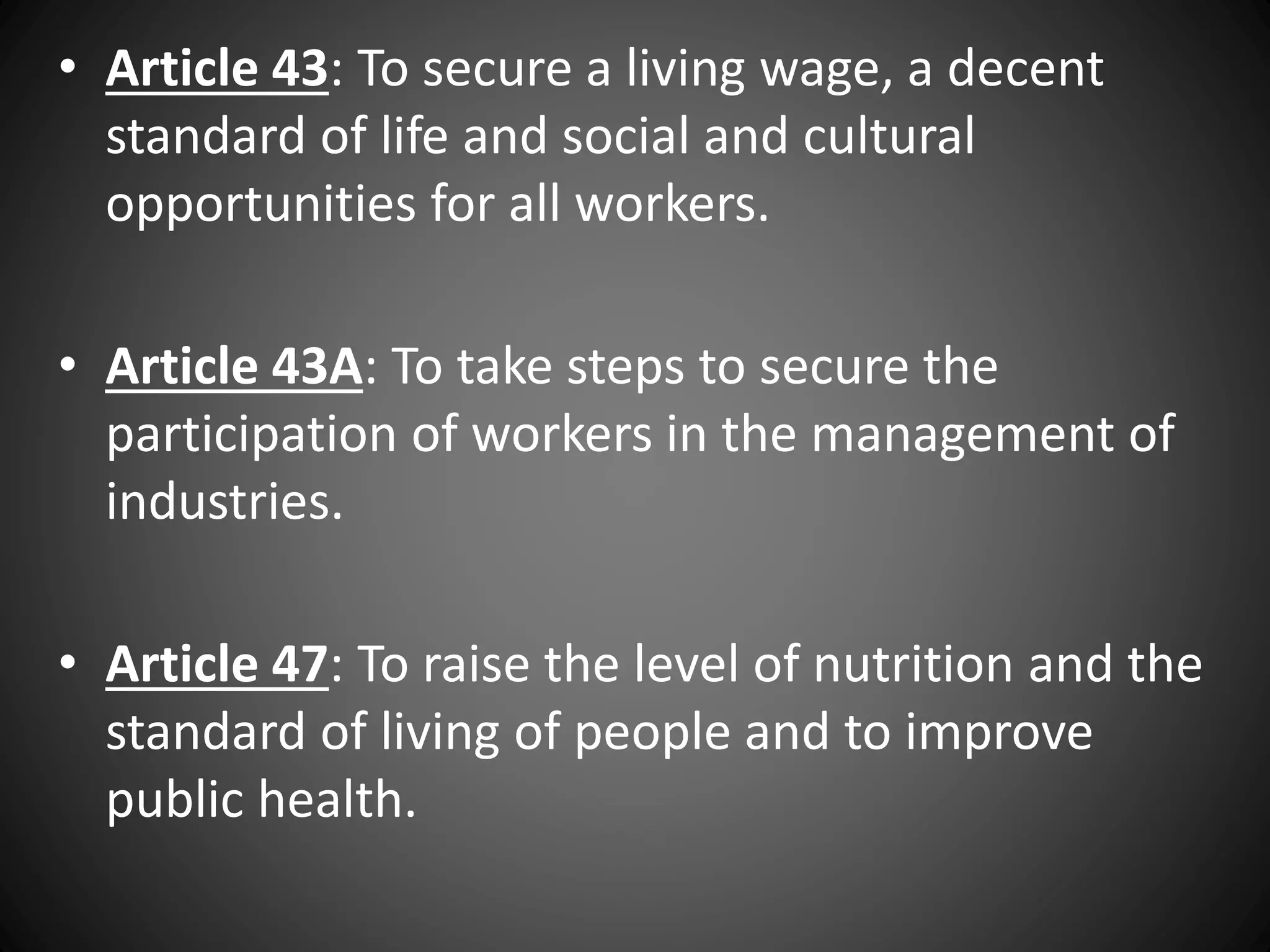
• Article 43: To secure a living wage, a decent
standard of life and social and cultural
opportunities for all workers.
• Article 43A: To take steps to secure the
participation of workers in the management of
industries.
• Article 47: To raise the level of nutrition and the
standard of living of people and to improve
public health.
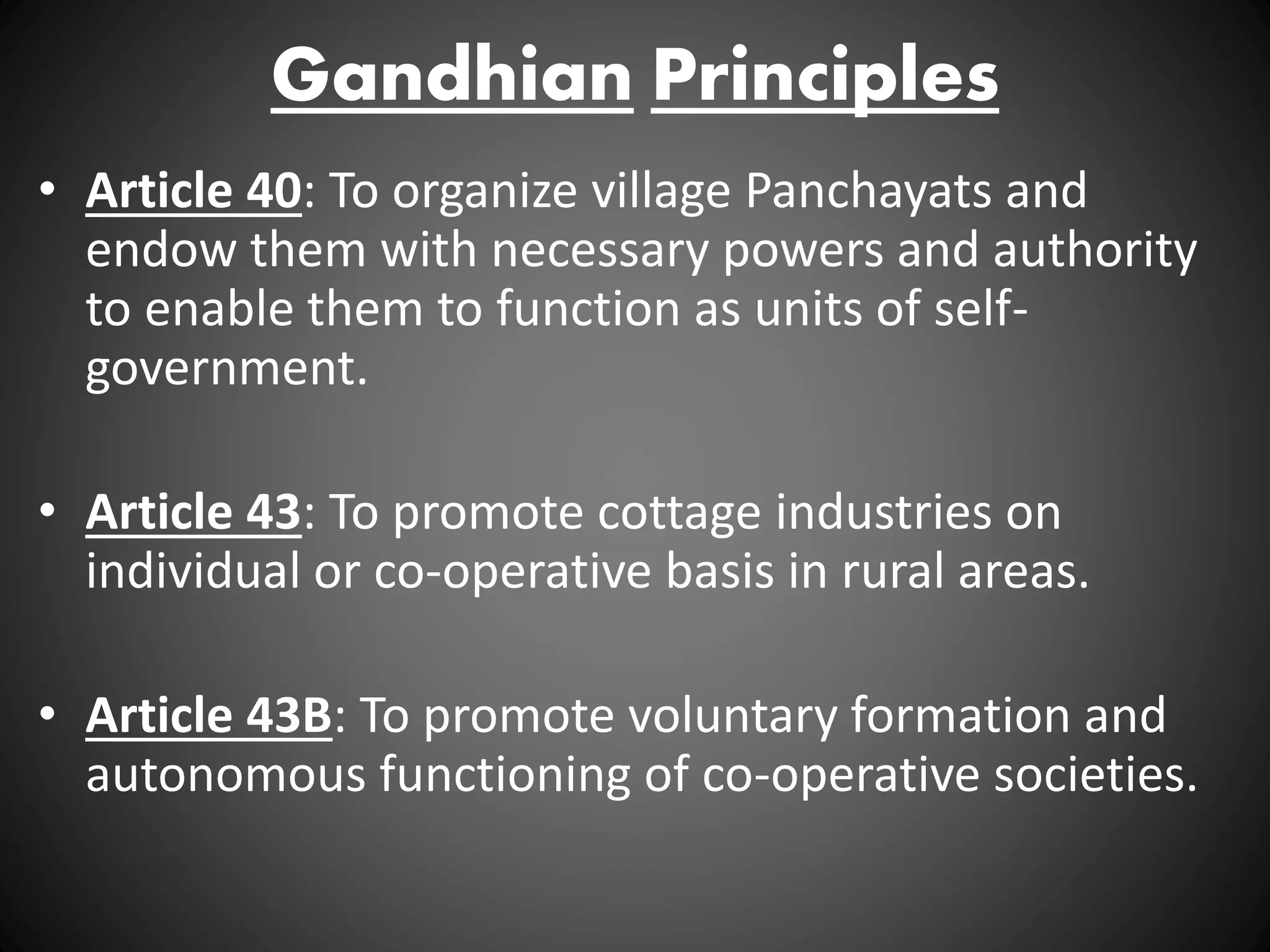
Gandhian Principles
• Article 40: To organize village Panchayats and
endow them with necessary powers and authority
to enable them to function as units of self-
government.
• Article 43: To promote cottage industries on
individual or co-operative basis in rural areas.
• Article 43B: To promote voluntary formation and
autonomous functioning of co-operative societies.
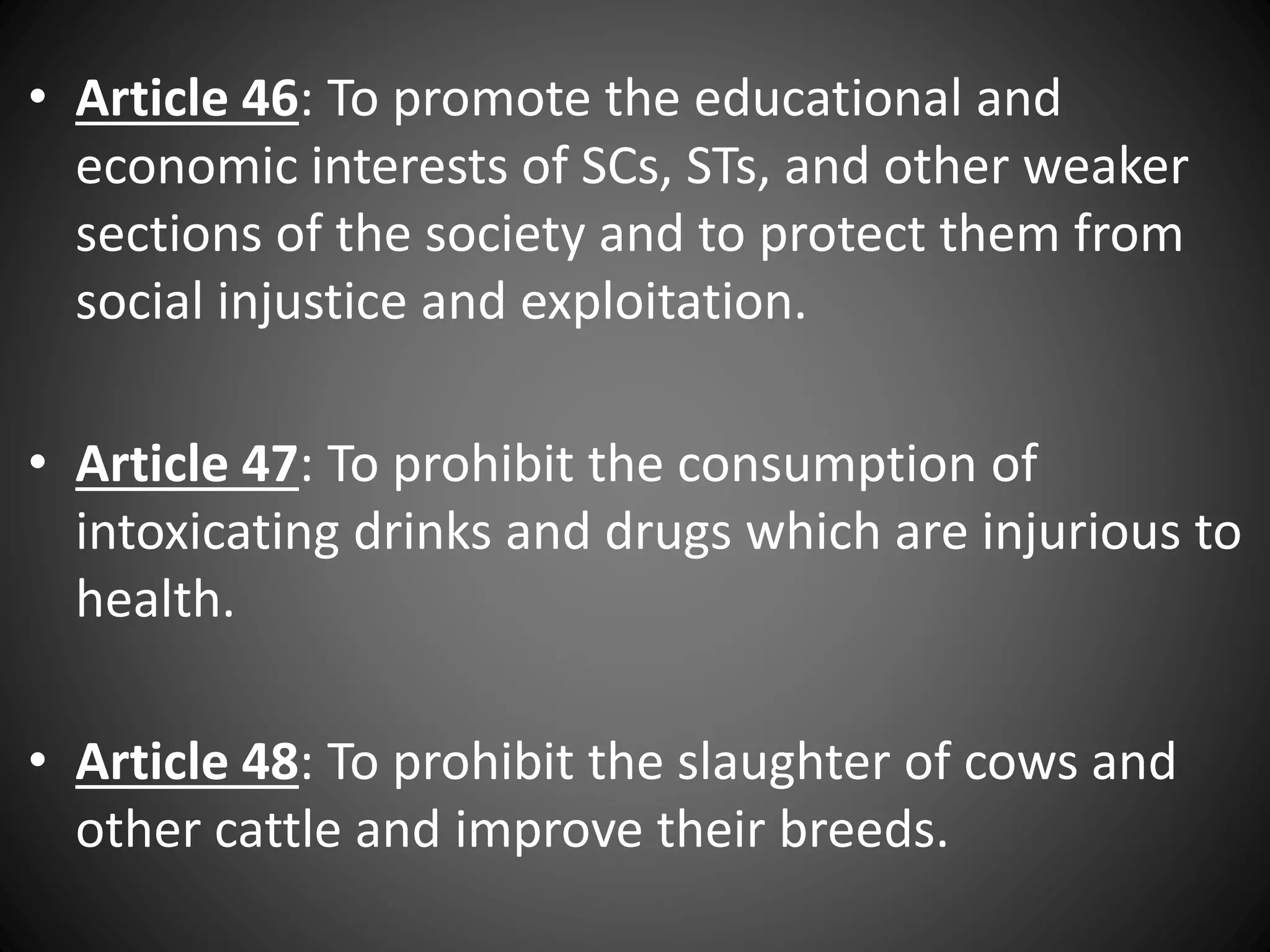
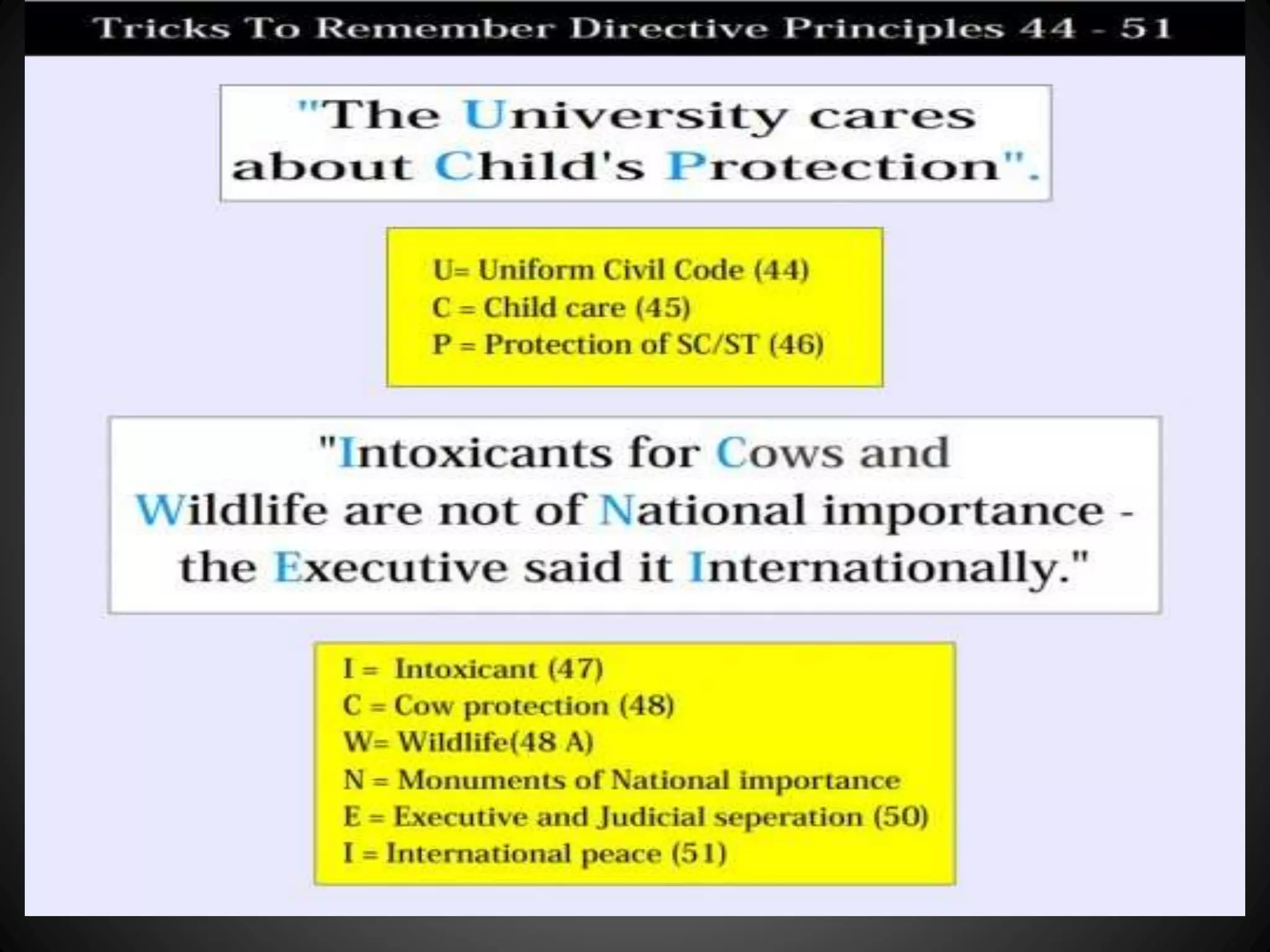
• Article 46: To promote the educational and
economic interests of SCs, STs, and other weaker
sections of the society and to protect them from
social injustice and exploitation.
• Article 47: To prohibit the consumption of
intoxicating drinks and drugs which are injurious to
health.
• Article 48: To prohibit the slaughter of cows and
other cattle and improve their breeds.
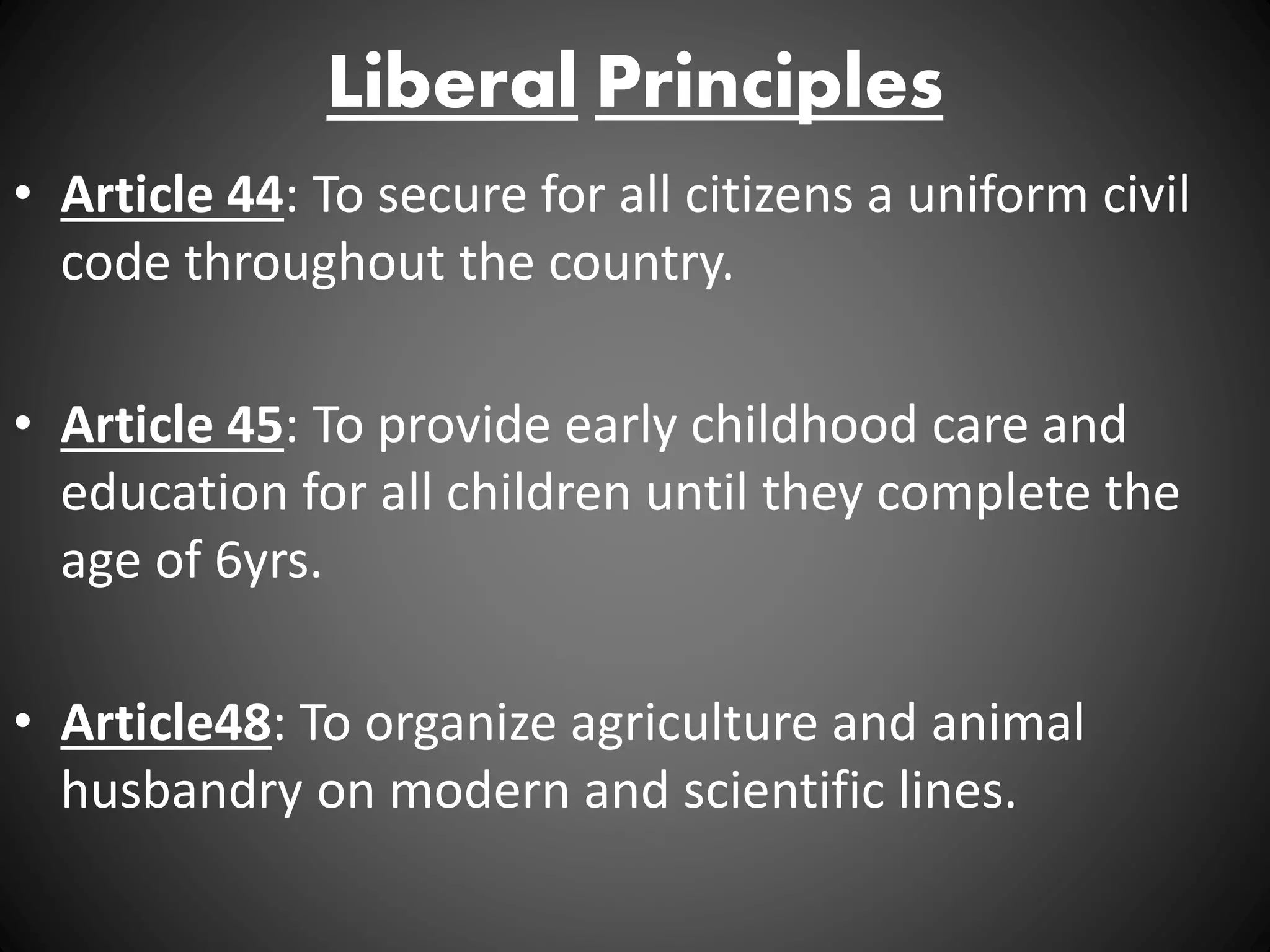
Liberal Principles
• Article 44: To secure for all citizens a uniform civil
code throughout the country.
• Article 45: To provide early childhood care and
education for all children until they complete the
age of 6yrs.
• Article48: To organize agriculture and animal
husbandry on modern and scientific lines.
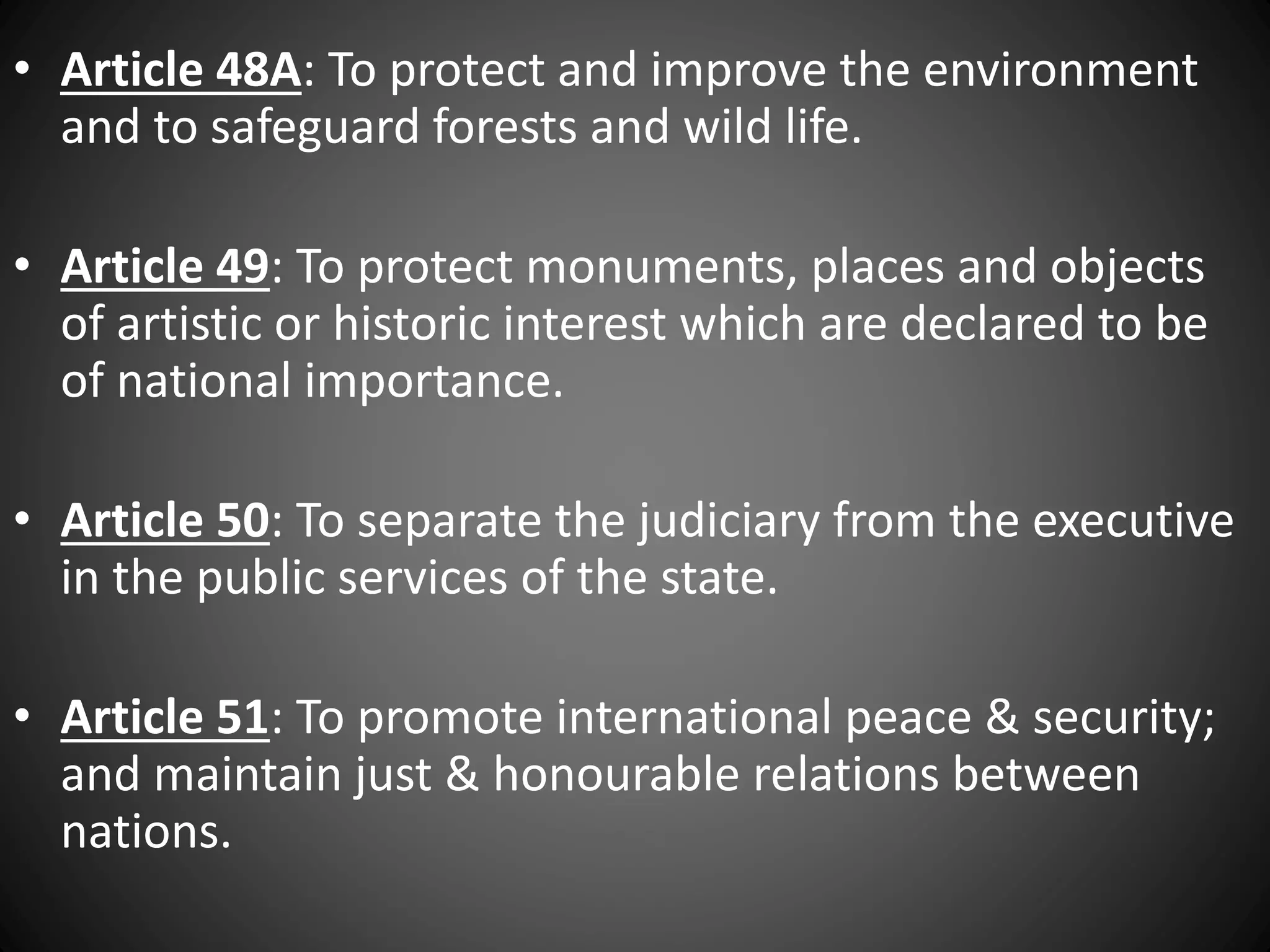
• Article 48A: To protect and improve the environment
and to safeguard forests and wild life.
• Article 49: To protect monuments, places and objects
of artistic or historic interest which are declared to be
of national importance.
• Article 50: To separate the judiciary from the executive
in the public services of the state.
• Article 51: To promote international peace & security;
and maintain just & honourable relations between
nations.
Amendments
• 42nd Amendment (1976) made four changes in
DPSPs; Article 39, 39A, 43A, 48A.
• 44th Amendment (1978)-article 38
• 86th Amendment (2002)-article 21A
• 97th Amendment (2011)-article 43B
Criticism
• Not Enforceable: Lack of legal force behind them is the
main ground of criticism.
• Illogically arranged: They are neither properly arranged
nor logically classified.
• Neither Practicable nor Sound: Their practicability and
soundness also has been challenged by some critics.
• Constitutional Conflict: Principles may lead to a conflict
between the President of India and the Prime Minister
on the one hand and between the Governor and the
State Chief Minister on the other hand.
Directive principles of state policy

Directive principles of state policy

  • 1.
    Directive Principles of StatePolicy Presented by Alka Shetkar
  • 2.
    Content • Background (inbrief) • What are DPSPs ? • Fundamental rights and DPSPs(diff) • Classification of DPSPs • Amendments • Criticism
  • 3.
  • 5.
    Indian Constitution • Itis the supreme law of the land i.e. all other laws have to conform with the constitution. • At present there are 448 articles in 25 parts, 12 schedules, 5 appendices and 101 amendments.
  • 6.
    What are DPSPs? Directive+ principle + state + policy • These are the guidelines or principles; to be kept in citation while framing laws and policies. i.e. They are instructions to the legislature and executive.
  • 7.
    • The ideahas been borrowed from the Ireland Constitution, which had copied it from the Spanish Constitution. • DPSPs are enumerated in Part IV of the Indian Constitution from Articles 36 to 51. • Dr. Babasaheb Ambedkar described these principles as novel features of the Indian Constitution.
  • 8.
    • The DPSPsalong with the fundamental rights contain the philosophy of the constitution and is the soul of the constitution. • The DPSPs are non-justiciable in nature, i.e. they are not legally enforceable by the courts for their violation. • They promote the concept of welfare state, i.e. they seek to establish economic, social and political just in the country.
  • 9.
  • 12.
    Socialistic Principles Article 38:To promote the welfare of the people by securing a social order permeated by justice i.e. social, economic, political and to minimize inequalities in income, status, facilities and opportunities. Article 39: To secure;  The right to adequate means of livelihood for all citizens.
  • 13.
    The equitable distributionof material resources of the community for the common good. Prevention of concentration of wealth and means of production. Equal pay for equal work for men and women. Opportunities for healthy development of children
  • 14.
    • Article 39A:To promote equal justice and to provide free legal aid to the poor. • Article 41: To secure the right to work , to education and to public assistance in cases of unemployment, old age, sickness, and disablement. • Article 42: To make provision for just and humane conditions for work and maternity relief.
  • 15.
    • Article 43:To secure a living wage, a decent standard of life and social and cultural opportunities for all workers. • Article 43A: To take steps to secure the participation of workers in the management of industries. • Article 47: To raise the level of nutrition and the standard of living of people and to improve public health.
  • 16.
    Gandhian Principles • Article40: To organize village Panchayats and endow them with necessary powers and authority to enable them to function as units of self- government. • Article 43: To promote cottage industries on individual or co-operative basis in rural areas. • Article 43B: To promote voluntary formation and autonomous functioning of co-operative societies.
  • 17.
    • Article 46:To promote the educational and economic interests of SCs, STs, and other weaker sections of the society and to protect them from social injustice and exploitation. • Article 47: To prohibit the consumption of intoxicating drinks and drugs which are injurious to health. • Article 48: To prohibit the slaughter of cows and other cattle and improve their breeds.
  • 18.
    Liberal Principles • Article44: To secure for all citizens a uniform civil code throughout the country. • Article 45: To provide early childhood care and education for all children until they complete the age of 6yrs. • Article48: To organize agriculture and animal husbandry on modern and scientific lines.
  • 19.
    • Article 48A:To protect and improve the environment and to safeguard forests and wild life. • Article 49: To protect monuments, places and objects of artistic or historic interest which are declared to be of national importance. • Article 50: To separate the judiciary from the executive in the public services of the state. • Article 51: To promote international peace & security; and maintain just & honourable relations between nations.
  • 22.
    Amendments • 42nd Amendment(1976) made four changes in DPSPs; Article 39, 39A, 43A, 48A. • 44th Amendment (1978)-article 38 • 86th Amendment (2002)-article 21A • 97th Amendment (2011)-article 43B
  • 23.
    Criticism • Not Enforceable:Lack of legal force behind them is the main ground of criticism. • Illogically arranged: They are neither properly arranged nor logically classified. • Neither Practicable nor Sound: Their practicability and soundness also has been challenged by some critics. • Constitutional Conflict: Principles may lead to a conflict between the President of India and the Prime Minister on the one hand and between the Governor and the State Chief Minister on the other hand.