Objectives:
1. Construction of DC motors (Brushed and
Brushless);
2. Working principle of DC motors (Brushed and
Brushless);
3. Different Types of DC motors and their
application.
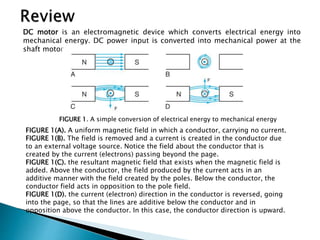
DC motor is an electromagnetic device which converts electrical energy into
mechanical energy. DC power input is converted into mechanical power at the
shaft motor.
FIGURE 1(A). A uniform magnetic field in which a conductor, carrying no current.
FIGURE 1(B). The field is removed and a current is created in the conductor due
to an external voltage source. Notice the field about the conductor that is
created by the current (electrons) passing beyond the page.
FIGURE 1(C). the resultant magnetic field that exists when the magnetic field is
added. Above the conductor, the field produced by the current acts in an
additive manner with the field created by the poles. Below the conductor, the
conductor field acts in opposition to the pole field.
FIGURE 1(D). the current (electron) direction in the conductor is reversed, going
into the page, so that the lines are additive below the conductor and in
opposition above the conductor. In this case, the conductor direction is upward.
FIGURE 1. A simple conversion of electrical energy to mechanical energy
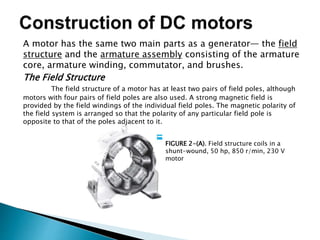
A motor has the same two main parts as a generator— the field
structure and the armature assembly consisting of the armature
core, armature winding, commutator, and brushes.
The Field Structure
The field structure of a motor has at least two pairs of field poles, although
motors with four pairs of field poles are also used. A strong magnetic field is
provided by the field windings of the individual field poles. The magnetic polarity of
the field system is arranged so that the polarity of any particular field pole is
opposite to that of the poles adjacent to it.
FIGURE 2-(A). Field structure coils in a
shunt-wound, 50 hp, 850 r/min, 230 V
motor
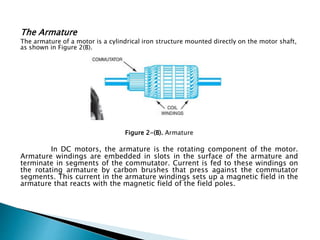
The Armature
The armature of a motor is a cylindrical iron structure mounted directly on the motor shaft,
as shown in Figure 2(B).
Figure 2-(B). Armature
In DC motors, the armature is the rotating component of the motor.
Armature windings are embedded in slots in the surface of the armature and
terminate in segments of the commutator. Current is fed to these windings on
the rotating armature by carbon brushes that press against the commutator
segments. This current in the armature windings sets up a magnetic field in the
armature that reacts with the magnetic field of the field poles.
FIGURE 3. Torque, or force direction, on a current-carrying conductor in a
magnetic field.
These magnetic effects are used to develop torque, which
causes the armature to turn (Figure 3). The commutator changes the
direction of the current in the armature conductors as they pass
across poles of opposite magnetic polarity. Continuous rotation in
one direction results from these reversals in the armature current.
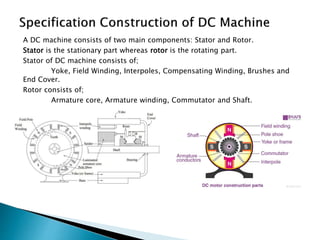
A DC machine consists of two main components: Stator and Rotor.
Stator is the stationary part whereas rotor is the rotating part.
Stator of DC machine consists of;
Yoke, Field Winding, Interpoles, Compensating Winding, Brushes and
End Cover.
Rotor consists of;
Armature core, Armature winding, Commutator and Shaft.
Armature or Rotor
 The armature of a DC motor is a cylinder of magnetic laminations that
are insulated from one another. The armature is perpendicular to the
axis of the cylinder. The armature is a rotating part that rotates on its
axis and is separated from the field coil by an air gap.
Field Coil or Stator
 A DC motor field coil is a non-moving part on which winding is wound
to produce a magnetic field. This electro-magnet has a cylindrical cavity
between its poles.
Commutator
 The primary function of a commutator is to supply electrical current to
the armature winding.
It is a cylindrical structure made up of wedge shaped segments of high
conductivity hard drawn copper segments stacked together but insulated
from each other using thin layer of mica. It is mounted on the shaft
Hard drawn copper is used to reduce wear and tear of commutator surface.
The segments are insulated from each other by 0.8 mm thick mica sheet.
 The commutator connects the rotating armature conductor to the
stationary external circuit through carbon brushes. It converts
alternating torque into unidirectional torque produced in the armature.
Brushes
 The brushes of a DC motor are made with graphite and carbon structure.
These brushes conduct electric current from the external circuit to the
rotating commutator. Hence, we come to understand that the commutator
and the brush unit are concerned with transmitting the power from the static
electrical circuit to the mechanically rotating region or the rotor.
Yoke
Yoke is the magnetic core of stator. It provides path for the pole flux Ø and
carries half of it. Apart from this, it provides mechanical support to the whole
machine. The Yoke of DC machine is not laminated as it carries stationary flux
and hence there is no eddy current. Iron core is used for the construction of
Yoke for small DC machine whereas Steel is used for large DC machine.
 Yoke serves two purposes, firstly it provides mechanical protection to the
outer parts of the machine secondly it provides a low reluctance path for the
magnetic flux.
 The outer frame of a dc machine. It is made up of cast iron or steel. It not
only provides mechanical strength to the whole assembly but also carries the
magnetic flux produced by the field winding.
Field Poles/ Poles and Pole Shoe:
Field pole consists of pole core and pole shoe. The pole core is made from the
cast steel or wrought iron laminations that are riveted together. Poles produce
the magnetic flux when the field winding is excited. These Field Poles are
welded or bolted to the Yoke. They carry field winding and pole shoes are
fastened to them. Pole shoes serve two purposes; (i) they support field coils and
(ii) spread out the flux in air gap uniformly.
The pole shoe of DC machine is laminated and fixed to the pole core. It is an
extended part of a pole. Due to its shape, the pole area is enlarged and more
flux can pass through the air gap to the armature.
Field Winding or Exciting Winding:
The coils around the poles are known as field (or exciting) coils and are
connected in series to form the field winding. Copper wire is used for the
construction of field coils. When the DC is passed through the field windings, it
magnetizes poles that produce magnetic flux.
Field coils are former wound and placed on each pole and are connected in
series. They are wound in such a way that, when energized, they form alternate
North and South poles.
Shaft:
Shaft of DC Motor is coupled to the load to transfer mechanical power. For DC
Generator, shaft is coupled to prime mover to convert mechanical input energy
into electrical output. Armature core, bearing, commutator etc. are mounted on
the Shaft.
Interpoles:
Interpoles are fixed to the Yoke in between the main poles of DC machine.
The interpole winding is made of copper and consists of few turns of thick wire.
This winding is connected in series with the armature winding.
Bearings:
The ball or roller bearings are fitted in the end housings. The friction between
stationary and rotating parts of the motor is reduced by bearing. Mostly high
carbon steel is used for making the bearings as it is a very hard material.
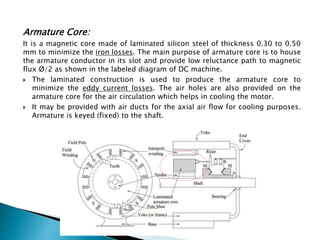
Armature Core:
It is a magnetic core made of laminated silicon steel of thickness 0.30 to 0.50
mm to minimize the iron losses. The main purpose of armature core is to house
the armature conductor in its slot and provide low reluctance path to magnetic
flux Ø/2 as shown in the labeled diagram of DC machine.
 The laminated construction is used to produce the armature core to
minimize the eddy current losses. The air holes are also provided on the
armature core for the air circulation which helps in cooling the motor.
 It may be provided with air ducts for the axial air flow for cooling purposes.
Armature is keyed (fixed) to the shaft.
Armature Winding:
Armature winding is made from copper. It consists of large number of insulated
coils having one or more than one turns. Theses coils are placed in the
armature core slots and connected appropriately in series and parallel
depending on the type of winding.
It is usually a former wound copper coil which rests in armature slots. The
armature conductors are insulated from each other and also from the armature
core.
Armature winding can be wound by one of the two methods; lap winding or
wave winding. Double layer lap or wave windings are generally used. A double
layer winding means that each armature slot will carry two different coils.
There are basically two types of winding: Lap Winding and Wave Winding.
Wave Winding: In wave winding, all the armature coils are connected in series
through commutator segments in such a way that the whole armature winding
is divided into two parallel paths.
Lap Winding: In lap winding the armature conductors are divided into the
groups equal to the number of poles of the motor. All the conductors in each
group are connected in series and all such groups are connected in parallel.
Therefore, in lap winding the number of parallel paths (A) is equal to the
number of poles (P).
Compensating Winding in DC Motor:
In some applications, like steel mills, rolling mills, etc. the motor
has to accelerate, decelerate, stop, reverse all in a matter of
seconds. Therefore, in these applications, the armature current
increase, decrease and reverse very frequently. It causes very
sudden changes in armature reaction. In such cases, the interpoles
are not sufficient to cure the armature reaction.
 To eliminate the armature reaction in such applications,
additional compensating windings are used. A compensating
winding is an auxiliary winding embedded in slots in the pole
faces of main poles.
 It is connected in series with the armature in a manner so that
the direction of current through the compensating conductors in
any pole face will be opposite to the direction of current through
the adjacent armature conductors as shown in Figure. It
produces the flux equal and opposite to the armature flux thus
completely neutralize the armature reaction.
 Since the addition of compensating winding increases the cost of
the motor considerably used only for machines designed for
unusual severe service.
A magnetic field arises in the air gap when the field coil of the DC motor is
energized. The created magnetic field is in the direction of the radii of the
armature. The magnetic field enters the armature from the North pole side of
the field coil and “exits” the armature from the field coil’s South pole side.
The conductors located on the other pole are subjected to a force of the same
intensity but in the opposite direction. These two opposing forces create
a torque that causes the motor armature to rotate.
When kept in a magnetic field, a current-carrying conductor gains torque and
develops a tendency to move. In short, when electric fields and magnetic fields
interact, a mechanical force arises. This is the principle on which the DC motors
work.
According to Faraday’s laws of electromagnetic induction, whenever a
conductor is placed in a varying magnetic field (OR a conductor is moved in a
magnetic field), an EMF (electromotive force) gets induced in the conductor. If
the conductor is provided with a closed path, the induced current will circulate
within the path. In a DC generator, field coils produce an electromagnetic field
and the armature conductors are rotated into the field. Thus, an
electromagnetically induced EMF is generated in the armature conductors. The
direction of induced current is given by Fleming’s right hand rule.
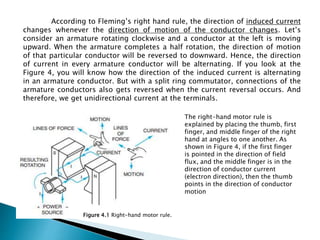
According to Fleming’s right hand rule, the direction of induced current
changes whenever the direction of motion of the conductor changes. Let’s
consider an armature rotating clockwise and a conductor at the left is moving
upward. When the armature completes a half rotation, the direction of motion
of that particular conductor will be reversed to downward. Hence, the direction
of current in every armature conductor will be alternating. If you look at the
Figure 4, you will know how the direction of the induced current is alternating
in an armature conductor. But with a split ring commutator, connections of the
armature conductors also gets reversed when the current reversal occurs. And
therefore, we get unidirectional current at the terminals.
The right-hand motor rule is
explained by placing the thumb, first
finger, and middle finger of the right
hand at angles to one another. As
shown in Figure 4, if the first finger
is pointed in the direction of field
flux, and the middle finger is in the
direction of conductor current
(electron direction), then the thumb
points in the direction of conductor
motion
Figure 4.1 Right-hand motor rule.
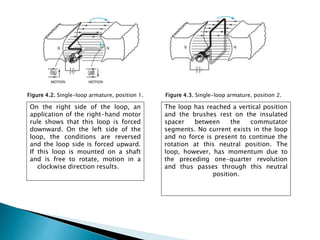
Figure 4.2. Single-loop armature, position 1. Figure 4.3. Single-loop armature, position 2.
On the right side of the loop, an
application of the right-hand motor
rule shows that this loop is forced
downward. On the left side of the
loop, the conditions are reversed
and the loop side is forced upward.
If this loop is mounted on a shaft
and is free to rotate, motion in a
clockwise direction results.
The loop has reached a vertical position
and the brushes rest on the insulated
spacer between the commutator
segments. No current exists in the loop
and no force is present to continue the
rotation at this neutral position. The
loop, however, has momentum due to
the preceding one-quarter revolution
and thus passes through this neutral
position.
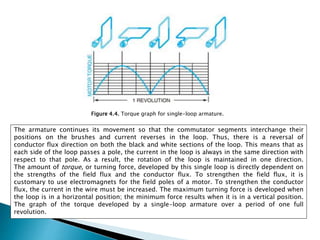
Figure 4.4. Torque graph for single-loop armature.
The armature continues its movement so that the commutator segments interchange their
positions on the brushes and current reverses in the loop. Thus, there is a reversal of
conductor flux direction on both the black and white sections of the loop. This means that as
each side of the loop passes a pole, the current in the loop is always in the same direction with
respect to that pole. As a result, the rotation of the loop is maintained in one direction.
The amount of torque, or turning force, developed by this single loop is directly dependent on
the strengths of the field flux and the conductor flux. To strengthen the field flux, it is
customary to use electromagnets for the field poles of a motor. To strengthen the conductor
flux, the current in the wire must be increased. The maximum turning force is developed when
the loop is in a horizontal position; the minimum force results when it is in a vertical position.
The graph of the torque developed by a single-loop armature over a period of one full
revolution.
DC motors have a wide range of applications ranging from electric shavers to
automobiles. To cater to this wide range of applications, they are classified into
different types based on the field winding connections to the armature as:
 Self Excited DC Motor
 Separately Excited DC Motor
Self Excited DC Motor
The field winding is connected either in series or parallel to the
armature winding. Based on this, the self-excited DC motor can further be
classified as:
 Shunt wound DC motor
 Series wound DC motor
 Compound wound DC motor
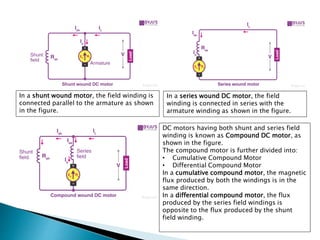
In a shunt wound motor, the field winding is
connected parallel to the armature as shown
in the figure.
In a series wound DC motor, the field
winding is connected in series with the
armature winding as shown in the figure.
DC motors having both shunt and series field
winding is known as Compound DC motor, as
shown in the figure.
The compound motor is further divided into:
• Cumulative Compound Motor
• Differential Compound Motor
In a cumulative compound motor, the magnetic
flux produced by both the windings is in the
same direction.
In a differential compound motor, the flux
produced by the series field windings is
opposite to the flux produced by the shunt
field winding.
Separately Excited DC Motor
In a separately excited DC motor, the field coils are energized from an
external source of DC supply as shown in the figure.
Shunt DC Motors
Owing to the fairly constant speed and medium starting torque of shunt DC motors,
they are used in the following applications:
 Centrifugal and reciprocating pumps
 Lathe machines
 Blowers and Fans
 Drilling machines
 Milling machines
 Machine tools
Series DC Motors
Owing to the high starting torque and variable speed of series DC motors, they are
used in the following applications:
 Conveyors
 Hoists, Elevators
 Cranes
 Electric Locomotives
Cumulative Compound DC motors
Owing to the high starting torque of cumulative compound DC motors, they are used
in the following applications:
 Shears
 Heavy Planers
 Rolling mills
 Elevators
 A brushless DC motor, also known as synchronous DC motor, unlike brushed
DC motors, do not have a commutator. The commutator in a brushless DC
motor is replaced by an electronic servomechanism (integrated
inverter/switching circuit is used to achieve unidirectional torque) that can
detect and adjust the angle of the rotor.
 A brushed DC motor features a commutator that reverses the current every
half cycle and creates single direction torque. While brushed DC motors
remain popular, many have been phased out for more efficient brushless
models in recent years.
Construction Of A BLDC Motor
Brushless DC electric motors also known as electronically commutated motors
(ECMs, EC motors).
Permanent magnets are mounted on the rotor of a BLDC motor, and the
stator is wound for a specific number of poles. Also, a control circuit is
connected to the stator winding.
Most of the times, the inverter/control circuit or controller is integrated into the
stator assembly. Also current-carrying conductors or armature windings are
located on the stator. They use electrical commutation to convert electrical
energy into mechanical energy.
The main design difference between a brushed and brushless motors is
the replacement of mechanical commutator with an electric switch circuit. A
BLDC Motor is a type of synchronous motor in the sense that the magnetic field
generated by the stator and the rotor revolve at the same frequency.
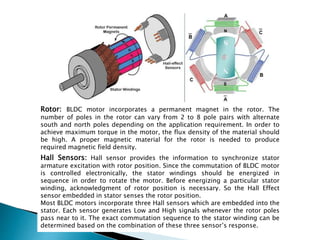
Rotor: BLDC motor incorporates a permanent magnet in the rotor. The
number of poles in the rotor can vary from 2 to 8 pole pairs with alternate
south and north poles depending on the application requirement. In order to
achieve maximum torque in the motor, the flux density of the material should
be high. A proper magnetic material for the rotor is needed to produce
required magnetic field density.
Hall Sensors: Hall sensor provides the information to synchronize stator
armature excitation with rotor position. Since the commutation of BLDC motor
is controlled electronically, the stator windings should be energized in
sequence in order to rotate the motor. Before energizing a particular stator
winding, acknowledgment of rotor position is necessary. So the Hall Effect
sensor embedded in stator senses the rotor position.
Most BLDC motors incorporate three Hall sensors which are embedded into the
stator. Each sensor generates Low and High signals whenever the rotor poles
pass near to it. The exact commutation sequence to the stator winding can be
determined based on the combination of these three sensor’s response.
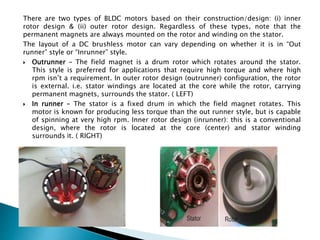
There are two types of BLDC motors based on their construction/design: (i) inner
rotor design & (ii) outer rotor design. Regardless of these types, note that the
permanent magnets are always mounted on the rotor and winding on the stator.
The layout of a DC brushless motor can vary depending on whether it is in “Out
runner” style or “Inrunner” style.
 Outrunner – The field magnet is a drum rotor which rotates around the stator.
This style is preferred for applications that require high torque and where high
rpm isn’t a requirement. In outer rotor design (outrunner) configuration, the rotor
is external. i.e. stator windings are located at the core while the rotor, carrying
permanent magnets, surrounds the stator. ( LEFT)
 In runner – The stator is a fixed drum in which the field magnet rotates. This
motor is known for producing less torque than the out runner style, but is capable
of spinning at very high rpm. Inner rotor design (inrunner): this is a conventional
design, where the rotor is located at the core (center) and stator winding
surrounds it. ( RIGHT)
How Does A BLDC Motor Work?
 Stator windings of a BLDC motor are connected to a control circuit (an
integrated switching circuit or inverter circuit). The control circuit energizes
proper winding at the proper time, in a pattern which rotates around the
stator. Permanent magnets on the rotor try to align with the energized
electromagnets of the stator, and as soon as it aligns, the next
electromagnets are energized. Thus, the rotor keeps running.
Inner rotor BLDC motor work Outer rotor BLDC motor work
 BLDC motor works on the principle similar to that of a Brushed DC motor. The
Lorentz force law which states that whenever a current carrying conductor placed
in a magnetic field it experiences a force. As a consequence of reaction force, the
magnet will experience an equal and opposite force. In the BLDC motor, the
current carrying conductor is stationary and the permanent magnet is moving.
 Stator windings of a BLDC motor are connected to a control circuit (an integrated
switching circuit). The control circuit energizes proper winding at proper time, in a
pattern which rotates around the stator.
 The rotor magnet tries to align with the energized electromagnet of the stator,
and as soon as it aligns, the next electromagnet is energized. Thus the rotor
keeps running. With the switching of windings as High and Low signals,
corresponding winding energized as North and South poles. The permanent
magnet rotor with North and South poles align with stator poles which causes the
motor to rotate.
 Commutator helps in achieving unidirectional torque in a typical dc motor.
Obviously, commutator and brush arrangement is eliminated in a brushless dc
motor. And an integrated inverter/switching circuit is used to achieve
unidirectional torque.
 That is why these motors are, sometimes, also referred as ‘electronically
commutated motors’.
 Brushes require frequent replacement due to mechanical wear, hence, a
brushed DC motor requires periodic maintenance. Also, as brushes transfer
current to the commutator, sparking occurs. Brushes limit the maximum
speed and the number of poles the armature can have. These all drawbacks
are removed in a brushless DC motor. An electronic control circuit is required
in a brushless DC motor for switching stator magnets to keep the motor
running. This makes a BLDC motor potentially less rugged.
 Advantages of BLDC motor over brushed motors are increased efficiency,
reliability, longer lifetime, no sparking and less noise, more torque per
weight, etc.
Brushless DC motors (BLDC) use for a wide variety of application
requirements such as varying loads, constant loads and positioning
applications in the fields of industrial control, automotive, aviation,
automation systems, health care equipment etc.
 Electric vehicles, hybrid vehicles, and electric bicycles
 Industrial robots, CNC machine tools, and simple belt driven systems
 Washing machines, compressors and dryers
 Fans, pumps and blowers.
 Consumer electronics – computer hard drives, small cooling fans, CD/DVD
players, etc. and also in modern appliances where quiet operation is desired
– such as washing machines, air conditioners, etc.
 They have a wide range of applications in many other areas including
robotics, industrial, motion control systems, etc.
References:
1. Kubala, Thomas. (2009). Electricity 1, Devices, Circuits, and Materials, Ninth Edition.
Delmar, Cengage Learning. 5 Maxwell Drive Clifton Park, NY 12065-2919 USA. ISBN-13:
978-1-4354-0072-6
2. Kubala, Thomas. (2013). Electricity 4, Devices, Circuits, and Materials, Ninth Edition.
Delmar, Cengage Learning. 5 Maxwell Drive Clifton Park, NY 12065-2919 USA. ISBN-13:
978-1-111-64675-2
3. https://electricalbaba.com/construction-dc-motor/
4. https://www.yourelectricalguide.com/2017/09/construction-of-dc-motor-
machine.html
5. https://byjus.com/physics/dc-motor/
6. https://www.electricaleasy.com/2022/09/construction-and-working-of-dc-
generator.html
7. https://robu.in/brushless-dc-motor-working-principle-construction-applications/
8. https://www.electricaltechnology.org/2016/05/bldc-brushless-dc-motor-construction-
working-principle
9. https://www.electricaleasy.com/2015/05/brushless-dc-bldc-motor
10. https://www.aarohies.com/construction-working-principle-of-bldc-motors/

DIRECT CURRENT (DC) Motors.pptx

  • 1.
    Objectives: 1. Construction ofDC motors (Brushed and Brushless); 2. Working principle of DC motors (Brushed and Brushless); 3. Different Types of DC motors and their application.
  • 2.
    DC motor isan electromagnetic device which converts electrical energy into mechanical energy. DC power input is converted into mechanical power at the shaft motor. FIGURE 1(A). A uniform magnetic field in which a conductor, carrying no current. FIGURE 1(B). The field is removed and a current is created in the conductor due to an external voltage source. Notice the field about the conductor that is created by the current (electrons) passing beyond the page. FIGURE 1(C). the resultant magnetic field that exists when the magnetic field is added. Above the conductor, the field produced by the current acts in an additive manner with the field created by the poles. Below the conductor, the conductor field acts in opposition to the pole field. FIGURE 1(D). the current (electron) direction in the conductor is reversed, going into the page, so that the lines are additive below the conductor and in opposition above the conductor. In this case, the conductor direction is upward. FIGURE 1. A simple conversion of electrical energy to mechanical energy
  • 3.
    A motor hasthe same two main parts as a generator— the field structure and the armature assembly consisting of the armature core, armature winding, commutator, and brushes. The Field Structure The field structure of a motor has at least two pairs of field poles, although motors with four pairs of field poles are also used. A strong magnetic field is provided by the field windings of the individual field poles. The magnetic polarity of the field system is arranged so that the polarity of any particular field pole is opposite to that of the poles adjacent to it. FIGURE 2-(A). Field structure coils in a shunt-wound, 50 hp, 850 r/min, 230 V motor
  • 4.
    The Armature The armatureof a motor is a cylindrical iron structure mounted directly on the motor shaft, as shown in Figure 2(B). Figure 2-(B). Armature In DC motors, the armature is the rotating component of the motor. Armature windings are embedded in slots in the surface of the armature and terminate in segments of the commutator. Current is fed to these windings on the rotating armature by carbon brushes that press against the commutator segments. This current in the armature windings sets up a magnetic field in the armature that reacts with the magnetic field of the field poles.
  • 5.
    FIGURE 3. Torque,or force direction, on a current-carrying conductor in a magnetic field. These magnetic effects are used to develop torque, which causes the armature to turn (Figure 3). The commutator changes the direction of the current in the armature conductors as they pass across poles of opposite magnetic polarity. Continuous rotation in one direction results from these reversals in the armature current.
  • 6.
    A DC machineconsists of two main components: Stator and Rotor. Stator is the stationary part whereas rotor is the rotating part. Stator of DC machine consists of; Yoke, Field Winding, Interpoles, Compensating Winding, Brushes and End Cover. Rotor consists of; Armature core, Armature winding, Commutator and Shaft.
  • 7.
    Armature or Rotor The armature of a DC motor is a cylinder of magnetic laminations that are insulated from one another. The armature is perpendicular to the axis of the cylinder. The armature is a rotating part that rotates on its axis and is separated from the field coil by an air gap. Field Coil or Stator  A DC motor field coil is a non-moving part on which winding is wound to produce a magnetic field. This electro-magnet has a cylindrical cavity between its poles. Commutator  The primary function of a commutator is to supply electrical current to the armature winding. It is a cylindrical structure made up of wedge shaped segments of high conductivity hard drawn copper segments stacked together but insulated from each other using thin layer of mica. It is mounted on the shaft Hard drawn copper is used to reduce wear and tear of commutator surface. The segments are insulated from each other by 0.8 mm thick mica sheet.  The commutator connects the rotating armature conductor to the stationary external circuit through carbon brushes. It converts alternating torque into unidirectional torque produced in the armature.
  • 8.
    Brushes  The brushesof a DC motor are made with graphite and carbon structure. These brushes conduct electric current from the external circuit to the rotating commutator. Hence, we come to understand that the commutator and the brush unit are concerned with transmitting the power from the static electrical circuit to the mechanically rotating region or the rotor. Yoke Yoke is the magnetic core of stator. It provides path for the pole flux Ø and carries half of it. Apart from this, it provides mechanical support to the whole machine. The Yoke of DC machine is not laminated as it carries stationary flux and hence there is no eddy current. Iron core is used for the construction of Yoke for small DC machine whereas Steel is used for large DC machine.  Yoke serves two purposes, firstly it provides mechanical protection to the outer parts of the machine secondly it provides a low reluctance path for the magnetic flux.  The outer frame of a dc machine. It is made up of cast iron or steel. It not only provides mechanical strength to the whole assembly but also carries the magnetic flux produced by the field winding.
  • 9.
    Field Poles/ Polesand Pole Shoe: Field pole consists of pole core and pole shoe. The pole core is made from the cast steel or wrought iron laminations that are riveted together. Poles produce the magnetic flux when the field winding is excited. These Field Poles are welded or bolted to the Yoke. They carry field winding and pole shoes are fastened to them. Pole shoes serve two purposes; (i) they support field coils and (ii) spread out the flux in air gap uniformly. The pole shoe of DC machine is laminated and fixed to the pole core. It is an extended part of a pole. Due to its shape, the pole area is enlarged and more flux can pass through the air gap to the armature. Field Winding or Exciting Winding: The coils around the poles are known as field (or exciting) coils and are connected in series to form the field winding. Copper wire is used for the construction of field coils. When the DC is passed through the field windings, it magnetizes poles that produce magnetic flux. Field coils are former wound and placed on each pole and are connected in series. They are wound in such a way that, when energized, they form alternate North and South poles.
  • 10.
    Shaft: Shaft of DCMotor is coupled to the load to transfer mechanical power. For DC Generator, shaft is coupled to prime mover to convert mechanical input energy into electrical output. Armature core, bearing, commutator etc. are mounted on the Shaft. Interpoles: Interpoles are fixed to the Yoke in between the main poles of DC machine. The interpole winding is made of copper and consists of few turns of thick wire. This winding is connected in series with the armature winding. Bearings: The ball or roller bearings are fitted in the end housings. The friction between stationary and rotating parts of the motor is reduced by bearing. Mostly high carbon steel is used for making the bearings as it is a very hard material.
  • 11.
    Armature Core: It isa magnetic core made of laminated silicon steel of thickness 0.30 to 0.50 mm to minimize the iron losses. The main purpose of armature core is to house the armature conductor in its slot and provide low reluctance path to magnetic flux Ø/2 as shown in the labeled diagram of DC machine.  The laminated construction is used to produce the armature core to minimize the eddy current losses. The air holes are also provided on the armature core for the air circulation which helps in cooling the motor.  It may be provided with air ducts for the axial air flow for cooling purposes. Armature is keyed (fixed) to the shaft.
  • 12.
    Armature Winding: Armature windingis made from copper. It consists of large number of insulated coils having one or more than one turns. Theses coils are placed in the armature core slots and connected appropriately in series and parallel depending on the type of winding. It is usually a former wound copper coil which rests in armature slots. The armature conductors are insulated from each other and also from the armature core. Armature winding can be wound by one of the two methods; lap winding or wave winding. Double layer lap or wave windings are generally used. A double layer winding means that each armature slot will carry two different coils. There are basically two types of winding: Lap Winding and Wave Winding. Wave Winding: In wave winding, all the armature coils are connected in series through commutator segments in such a way that the whole armature winding is divided into two parallel paths. Lap Winding: In lap winding the armature conductors are divided into the groups equal to the number of poles of the motor. All the conductors in each group are connected in series and all such groups are connected in parallel. Therefore, in lap winding the number of parallel paths (A) is equal to the number of poles (P).
  • 13.
    Compensating Winding inDC Motor: In some applications, like steel mills, rolling mills, etc. the motor has to accelerate, decelerate, stop, reverse all in a matter of seconds. Therefore, in these applications, the armature current increase, decrease and reverse very frequently. It causes very sudden changes in armature reaction. In such cases, the interpoles are not sufficient to cure the armature reaction.  To eliminate the armature reaction in such applications, additional compensating windings are used. A compensating winding is an auxiliary winding embedded in slots in the pole faces of main poles.  It is connected in series with the armature in a manner so that the direction of current through the compensating conductors in any pole face will be opposite to the direction of current through the adjacent armature conductors as shown in Figure. It produces the flux equal and opposite to the armature flux thus completely neutralize the armature reaction.  Since the addition of compensating winding increases the cost of the motor considerably used only for machines designed for unusual severe service.
  • 14.
    A magnetic fieldarises in the air gap when the field coil of the DC motor is energized. The created magnetic field is in the direction of the radii of the armature. The magnetic field enters the armature from the North pole side of the field coil and “exits” the armature from the field coil’s South pole side. The conductors located on the other pole are subjected to a force of the same intensity but in the opposite direction. These two opposing forces create a torque that causes the motor armature to rotate. When kept in a magnetic field, a current-carrying conductor gains torque and develops a tendency to move. In short, when electric fields and magnetic fields interact, a mechanical force arises. This is the principle on which the DC motors work.
  • 15.
    According to Faraday’slaws of electromagnetic induction, whenever a conductor is placed in a varying magnetic field (OR a conductor is moved in a magnetic field), an EMF (electromotive force) gets induced in the conductor. If the conductor is provided with a closed path, the induced current will circulate within the path. In a DC generator, field coils produce an electromagnetic field and the armature conductors are rotated into the field. Thus, an electromagnetically induced EMF is generated in the armature conductors. The direction of induced current is given by Fleming’s right hand rule.
  • 16.
    According to Fleming’sright hand rule, the direction of induced current changes whenever the direction of motion of the conductor changes. Let’s consider an armature rotating clockwise and a conductor at the left is moving upward. When the armature completes a half rotation, the direction of motion of that particular conductor will be reversed to downward. Hence, the direction of current in every armature conductor will be alternating. If you look at the Figure 4, you will know how the direction of the induced current is alternating in an armature conductor. But with a split ring commutator, connections of the armature conductors also gets reversed when the current reversal occurs. And therefore, we get unidirectional current at the terminals. The right-hand motor rule is explained by placing the thumb, first finger, and middle finger of the right hand at angles to one another. As shown in Figure 4, if the first finger is pointed in the direction of field flux, and the middle finger is in the direction of conductor current (electron direction), then the thumb points in the direction of conductor motion Figure 4.1 Right-hand motor rule.
  • 17.
    Figure 4.2. Single-looparmature, position 1. Figure 4.3. Single-loop armature, position 2. On the right side of the loop, an application of the right-hand motor rule shows that this loop is forced downward. On the left side of the loop, the conditions are reversed and the loop side is forced upward. If this loop is mounted on a shaft and is free to rotate, motion in a clockwise direction results. The loop has reached a vertical position and the brushes rest on the insulated spacer between the commutator segments. No current exists in the loop and no force is present to continue the rotation at this neutral position. The loop, however, has momentum due to the preceding one-quarter revolution and thus passes through this neutral position.
  • 18.
    Figure 4.4. Torquegraph for single-loop armature. The armature continues its movement so that the commutator segments interchange their positions on the brushes and current reverses in the loop. Thus, there is a reversal of conductor flux direction on both the black and white sections of the loop. This means that as each side of the loop passes a pole, the current in the loop is always in the same direction with respect to that pole. As a result, the rotation of the loop is maintained in one direction. The amount of torque, or turning force, developed by this single loop is directly dependent on the strengths of the field flux and the conductor flux. To strengthen the field flux, it is customary to use electromagnets for the field poles of a motor. To strengthen the conductor flux, the current in the wire must be increased. The maximum turning force is developed when the loop is in a horizontal position; the minimum force results when it is in a vertical position. The graph of the torque developed by a single-loop armature over a period of one full revolution.
  • 21.
    DC motors havea wide range of applications ranging from electric shavers to automobiles. To cater to this wide range of applications, they are classified into different types based on the field winding connections to the armature as:  Self Excited DC Motor  Separately Excited DC Motor Self Excited DC Motor The field winding is connected either in series or parallel to the armature winding. Based on this, the self-excited DC motor can further be classified as:  Shunt wound DC motor  Series wound DC motor  Compound wound DC motor
  • 22.
    In a shuntwound motor, the field winding is connected parallel to the armature as shown in the figure. In a series wound DC motor, the field winding is connected in series with the armature winding as shown in the figure. DC motors having both shunt and series field winding is known as Compound DC motor, as shown in the figure. The compound motor is further divided into: • Cumulative Compound Motor • Differential Compound Motor In a cumulative compound motor, the magnetic flux produced by both the windings is in the same direction. In a differential compound motor, the flux produced by the series field windings is opposite to the flux produced by the shunt field winding.
  • 23.
    Separately Excited DCMotor In a separately excited DC motor, the field coils are energized from an external source of DC supply as shown in the figure.
  • 24.
    Shunt DC Motors Owingto the fairly constant speed and medium starting torque of shunt DC motors, they are used in the following applications:  Centrifugal and reciprocating pumps  Lathe machines  Blowers and Fans  Drilling machines  Milling machines  Machine tools Series DC Motors Owing to the high starting torque and variable speed of series DC motors, they are used in the following applications:  Conveyors  Hoists, Elevators  Cranes  Electric Locomotives Cumulative Compound DC motors Owing to the high starting torque of cumulative compound DC motors, they are used in the following applications:  Shears  Heavy Planers  Rolling mills  Elevators
  • 25.
     A brushlessDC motor, also known as synchronous DC motor, unlike brushed DC motors, do not have a commutator. The commutator in a brushless DC motor is replaced by an electronic servomechanism (integrated inverter/switching circuit is used to achieve unidirectional torque) that can detect and adjust the angle of the rotor.  A brushed DC motor features a commutator that reverses the current every half cycle and creates single direction torque. While brushed DC motors remain popular, many have been phased out for more efficient brushless models in recent years.
  • 26.
    Construction Of ABLDC Motor Brushless DC electric motors also known as electronically commutated motors (ECMs, EC motors). Permanent magnets are mounted on the rotor of a BLDC motor, and the stator is wound for a specific number of poles. Also, a control circuit is connected to the stator winding. Most of the times, the inverter/control circuit or controller is integrated into the stator assembly. Also current-carrying conductors or armature windings are located on the stator. They use electrical commutation to convert electrical energy into mechanical energy. The main design difference between a brushed and brushless motors is the replacement of mechanical commutator with an electric switch circuit. A BLDC Motor is a type of synchronous motor in the sense that the magnetic field generated by the stator and the rotor revolve at the same frequency.
  • 27.
    Rotor: BLDC motorincorporates a permanent magnet in the rotor. The number of poles in the rotor can vary from 2 to 8 pole pairs with alternate south and north poles depending on the application requirement. In order to achieve maximum torque in the motor, the flux density of the material should be high. A proper magnetic material for the rotor is needed to produce required magnetic field density. Hall Sensors: Hall sensor provides the information to synchronize stator armature excitation with rotor position. Since the commutation of BLDC motor is controlled electronically, the stator windings should be energized in sequence in order to rotate the motor. Before energizing a particular stator winding, acknowledgment of rotor position is necessary. So the Hall Effect sensor embedded in stator senses the rotor position. Most BLDC motors incorporate three Hall sensors which are embedded into the stator. Each sensor generates Low and High signals whenever the rotor poles pass near to it. The exact commutation sequence to the stator winding can be determined based on the combination of these three sensor’s response.
  • 28.
    There are twotypes of BLDC motors based on their construction/design: (i) inner rotor design & (ii) outer rotor design. Regardless of these types, note that the permanent magnets are always mounted on the rotor and winding on the stator. The layout of a DC brushless motor can vary depending on whether it is in “Out runner” style or “Inrunner” style.  Outrunner – The field magnet is a drum rotor which rotates around the stator. This style is preferred for applications that require high torque and where high rpm isn’t a requirement. In outer rotor design (outrunner) configuration, the rotor is external. i.e. stator windings are located at the core while the rotor, carrying permanent magnets, surrounds the stator. ( LEFT)  In runner – The stator is a fixed drum in which the field magnet rotates. This motor is known for producing less torque than the out runner style, but is capable of spinning at very high rpm. Inner rotor design (inrunner): this is a conventional design, where the rotor is located at the core (center) and stator winding surrounds it. ( RIGHT)
  • 29.
    How Does ABLDC Motor Work?  Stator windings of a BLDC motor are connected to a control circuit (an integrated switching circuit or inverter circuit). The control circuit energizes proper winding at the proper time, in a pattern which rotates around the stator. Permanent magnets on the rotor try to align with the energized electromagnets of the stator, and as soon as it aligns, the next electromagnets are energized. Thus, the rotor keeps running. Inner rotor BLDC motor work Outer rotor BLDC motor work
  • 30.
     BLDC motorworks on the principle similar to that of a Brushed DC motor. The Lorentz force law which states that whenever a current carrying conductor placed in a magnetic field it experiences a force. As a consequence of reaction force, the magnet will experience an equal and opposite force. In the BLDC motor, the current carrying conductor is stationary and the permanent magnet is moving.  Stator windings of a BLDC motor are connected to a control circuit (an integrated switching circuit). The control circuit energizes proper winding at proper time, in a pattern which rotates around the stator.  The rotor magnet tries to align with the energized electromagnet of the stator, and as soon as it aligns, the next electromagnet is energized. Thus the rotor keeps running. With the switching of windings as High and Low signals, corresponding winding energized as North and South poles. The permanent magnet rotor with North and South poles align with stator poles which causes the motor to rotate.  Commutator helps in achieving unidirectional torque in a typical dc motor. Obviously, commutator and brush arrangement is eliminated in a brushless dc motor. And an integrated inverter/switching circuit is used to achieve unidirectional torque.  That is why these motors are, sometimes, also referred as ‘electronically commutated motors’.
  • 32.
     Brushes requirefrequent replacement due to mechanical wear, hence, a brushed DC motor requires periodic maintenance. Also, as brushes transfer current to the commutator, sparking occurs. Brushes limit the maximum speed and the number of poles the armature can have. These all drawbacks are removed in a brushless DC motor. An electronic control circuit is required in a brushless DC motor for switching stator magnets to keep the motor running. This makes a BLDC motor potentially less rugged.  Advantages of BLDC motor over brushed motors are increased efficiency, reliability, longer lifetime, no sparking and less noise, more torque per weight, etc.
  • 33.
    Brushless DC motors(BLDC) use for a wide variety of application requirements such as varying loads, constant loads and positioning applications in the fields of industrial control, automotive, aviation, automation systems, health care equipment etc.  Electric vehicles, hybrid vehicles, and electric bicycles  Industrial robots, CNC machine tools, and simple belt driven systems  Washing machines, compressors and dryers  Fans, pumps and blowers.  Consumer electronics – computer hard drives, small cooling fans, CD/DVD players, etc. and also in modern appliances where quiet operation is desired – such as washing machines, air conditioners, etc.  They have a wide range of applications in many other areas including robotics, industrial, motion control systems, etc.
  • 34.
    References: 1. Kubala, Thomas.(2009). Electricity 1, Devices, Circuits, and Materials, Ninth Edition. Delmar, Cengage Learning. 5 Maxwell Drive Clifton Park, NY 12065-2919 USA. ISBN-13: 978-1-4354-0072-6 2. Kubala, Thomas. (2013). Electricity 4, Devices, Circuits, and Materials, Ninth Edition. Delmar, Cengage Learning. 5 Maxwell Drive Clifton Park, NY 12065-2919 USA. ISBN-13: 978-1-111-64675-2 3. https://electricalbaba.com/construction-dc-motor/ 4. https://www.yourelectricalguide.com/2017/09/construction-of-dc-motor- machine.html 5. https://byjus.com/physics/dc-motor/ 6. https://www.electricaleasy.com/2022/09/construction-and-working-of-dc- generator.html 7. https://robu.in/brushless-dc-motor-working-principle-construction-applications/ 8. https://www.electricaltechnology.org/2016/05/bldc-brushless-dc-motor-construction- working-principle 9. https://www.electricaleasy.com/2015/05/brushless-dc-bldc-motor 10. https://www.aarohies.com/construction-working-principle-of-bldc-motors/