Introduction
 Heterocyclic compound
 Smallest cyclic organic Peroxide
 Contain one carbon and two oxygen atoms
 Molar mass is 46.03 g/mol.
 Highly unstable
 Mostly computational study
 Dioxirane derivatives are more stable
Structure
 Microwave analysis indicates bond
lengths as
1. C-H 1.090Å
2. C-O 1.388Å
3. O-O 1.516Å
 The O-O bond is very long and the reason for
instability of dioxirane.
Physical Properties
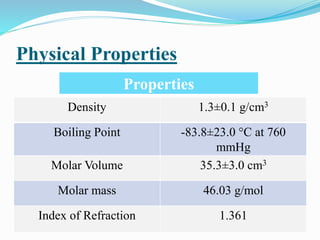
Density 1.3±0.1 g/cm3
Boiling Point -83.8±23.0 °C at 760
mmHg
Molar Volume 35.3±3.0 cm3
Molar mass 46.03 g/mol
Index of Refraction 1.361
Properties
Bayer Villiger Reaction
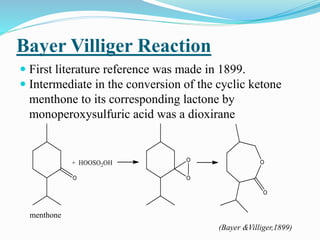
 First literature reference was made in 1899.
 Intermediate in the conversion of the cyclic ketone
menthone to its corresponding lactone by
monoperoxysulfuric acid was a dioxirane
menthone
(Bayer &Villiger,1899)
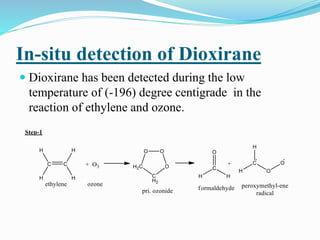
In-situ detection of Dioxirane
 Dioxirane has been detected during the low
temperature of (-196) degree centigrade in the
reaction of ethylene and ozone.
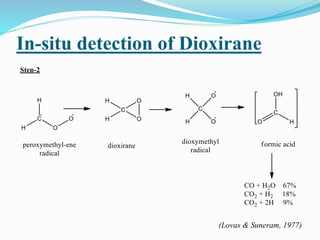
In-situ detection of Dioxirane
(Lovas & Suneram, 1977)
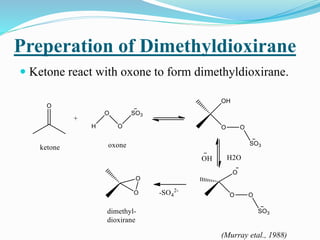
Preperation of Dimethyldioxirane
 Ketone react with oxone to form dimethyldioxirane.
(Murray etal., 1988)
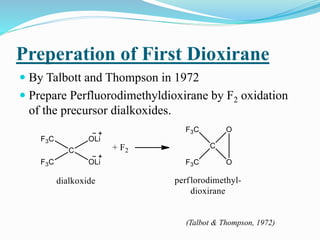
Preperation of First Dioxirane
 By Talbott and Thompson in 1972
 Prepare Perfluorodimethyldioxirane by F2 oxidation
of the precursor dialkoxides.
(Talbot & Thompson, 1972)
Perfluoro-dimethyldioxirane
 They isolated the dioxirane by low temperature gas
chromatography.
 Dioxiorane were pale yellow with max. Wavelength
of 306nm.
 Indication of dioxirane as a Pale Yellow colour is and
important aspect for laboratory point of view.
Most common reaction of dioxirane is 0-atom transfer,
particularly to unsaturated materials
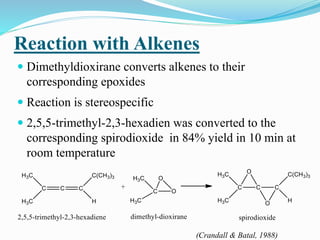
Reaction with Alkenes
 Dimethyldioxirane converts alkenes to their
corresponding epoxides
 Reaction is stereospecific
 2,5,5-trimethyl-2,3-hexadien was converted to the
corresponding spirodioxide in 84% yield in 10 min at
room temperature
(Crandall & Batal, 1988)
Reactions with Nitrogen
containing Compounds
 Solutions of dimethyldioxirane have been used to oxidize
primary amine to nitro compounds in a rapid and nearly
quantitative fashion
hydroxylamine
(Murray 1989)
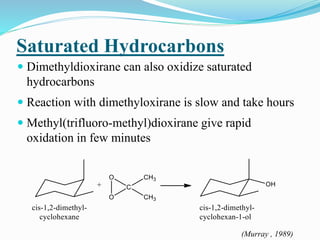
Saturated Hydrocarbons
 Dimethyldioxirane can also oxidize saturated
hydrocarbons
 Reaction with dimethyloxirane is slow and take hours
 Methyl(trifluoro-methyl)dioxirane give rapid
oxidation in few minutes
(Murray , 1989)
Pharmaceutical Applications
 Macrocyclic natural product, epothilones is an
antitumor agent with antimitotic activity that is more
effective than taxol
 Epithilones synthesis involves dimethyldioxirane oxidation.
(Wessjohann, 1997)
 Dimethyldioxirane generated in-situ from pyruvate
and oxone
 Act as oxidizing agent for disinfection
 Effective for distruction of various strains of bacteria,
fungi and bacterial endospores
(Wong et al., 2003)
Industrial applications
 Act as an oxidizing agent in organic synthesis
 Use in development of conventional laboratory plants
 Dimethyldioxirane is suitable for batch process
 Dimethyloxirane used to convert amines to nitro
compounds
 Dioxirane compounds are useful for bleaching fabrics
References
 Heffner, R. J., & Steltenkamp, R. J. (1996). U.S.
Patent No. 5,525,121. Washington, DC: U.S. Patent
and Trademark Office.
 Murray, R. W. (1989). Chemistry of dioxiranes. 12.
Dioxiranes. Chemical Reviews, 89(5), 1187-1201.
 Suenram, R. D., & Lovas, F. J. (1978). Dioxirane. Its
synthesis, microwave spectrum, structure, and dipole
moment. Journal of the American Chemical
Society, 100(16), 5117-5122.
Reference
 Wessjohann, L. (1997). Epothilones: Promising
Natural Products with Taxol‐Like
Activity. Angewandte Chemie International Edition in
English, 36(7), 715-718.
 Lovas, F. J., & Suenram, R. D. (1977). Identification
of dioxirane (H2COO) in ozone-olefin reactions via
microwave spectroscopy. Chemical Physics
Letters, 51(3), 453-456.
 Crandall. J. K.: Batal. D. J. J. Ore. Chem. 1988. 53.
1340.
Dioxirane

Dioxirane

  • 3.
    Introduction  Heterocyclic compound Smallest cyclic organic Peroxide  Contain one carbon and two oxygen atoms  Molar mass is 46.03 g/mol.  Highly unstable  Mostly computational study  Dioxirane derivatives are more stable
  • 4.
    Structure  Microwave analysisindicates bond lengths as 1. C-H 1.090Å 2. C-O 1.388Å 3. O-O 1.516Å  The O-O bond is very long and the reason for instability of dioxirane.
  • 5.
    Physical Properties Density 1.3±0.1g/cm3 Boiling Point -83.8±23.0 °C at 760 mmHg Molar Volume 35.3±3.0 cm3 Molar mass 46.03 g/mol Index of Refraction 1.361 Properties
  • 6.
    Bayer Villiger Reaction First literature reference was made in 1899.  Intermediate in the conversion of the cyclic ketone menthone to its corresponding lactone by monoperoxysulfuric acid was a dioxirane menthone (Bayer &Villiger,1899)
  • 7.
    In-situ detection ofDioxirane  Dioxirane has been detected during the low temperature of (-196) degree centigrade in the reaction of ethylene and ozone.
  • 8.
    In-situ detection ofDioxirane (Lovas & Suneram, 1977)
  • 9.
    Preperation of Dimethyldioxirane Ketone react with oxone to form dimethyldioxirane. (Murray etal., 1988)
  • 10.
    Preperation of FirstDioxirane  By Talbott and Thompson in 1972  Prepare Perfluorodimethyldioxirane by F2 oxidation of the precursor dialkoxides. (Talbot & Thompson, 1972)
  • 11.
    Perfluoro-dimethyldioxirane  They isolatedthe dioxirane by low temperature gas chromatography.  Dioxiorane were pale yellow with max. Wavelength of 306nm.  Indication of dioxirane as a Pale Yellow colour is and important aspect for laboratory point of view.
  • 12.
    Most common reactionof dioxirane is 0-atom transfer, particularly to unsaturated materials
  • 13.
    Reaction with Alkenes Dimethyldioxirane converts alkenes to their corresponding epoxides  Reaction is stereospecific  2,5,5-trimethyl-2,3-hexadien was converted to the corresponding spirodioxide in 84% yield in 10 min at room temperature (Crandall & Batal, 1988)
  • 14.
    Reactions with Nitrogen containingCompounds  Solutions of dimethyldioxirane have been used to oxidize primary amine to nitro compounds in a rapid and nearly quantitative fashion hydroxylamine (Murray 1989)
  • 15.
    Saturated Hydrocarbons  Dimethyldioxiranecan also oxidize saturated hydrocarbons  Reaction with dimethyloxirane is slow and take hours  Methyl(trifluoro-methyl)dioxirane give rapid oxidation in few minutes (Murray , 1989)
  • 16.
    Pharmaceutical Applications  Macrocyclicnatural product, epothilones is an antitumor agent with antimitotic activity that is more effective than taxol  Epithilones synthesis involves dimethyldioxirane oxidation. (Wessjohann, 1997)  Dimethyldioxirane generated in-situ from pyruvate and oxone  Act as oxidizing agent for disinfection  Effective for distruction of various strains of bacteria, fungi and bacterial endospores (Wong et al., 2003)
  • 17.
    Industrial applications  Actas an oxidizing agent in organic synthesis  Use in development of conventional laboratory plants  Dimethyldioxirane is suitable for batch process  Dimethyloxirane used to convert amines to nitro compounds  Dioxirane compounds are useful for bleaching fabrics
  • 18.
    References  Heffner, R.J., & Steltenkamp, R. J. (1996). U.S. Patent No. 5,525,121. Washington, DC: U.S. Patent and Trademark Office.  Murray, R. W. (1989). Chemistry of dioxiranes. 12. Dioxiranes. Chemical Reviews, 89(5), 1187-1201.  Suenram, R. D., & Lovas, F. J. (1978). Dioxirane. Its synthesis, microwave spectrum, structure, and dipole moment. Journal of the American Chemical Society, 100(16), 5117-5122.
  • 19.
    Reference  Wessjohann, L.(1997). Epothilones: Promising Natural Products with Taxol‐Like Activity. Angewandte Chemie International Edition in English, 36(7), 715-718.  Lovas, F. J., & Suenram, R. D. (1977). Identification of dioxirane (H2COO) in ozone-olefin reactions via microwave spectroscopy. Chemical Physics Letters, 51(3), 453-456.  Crandall. J. K.: Batal. D. J. J. Ore. Chem. 1988. 53. 1340.