Housekeeping   One thing you need to write down— http://21stcenturylearning.wikispaces.com
My community work
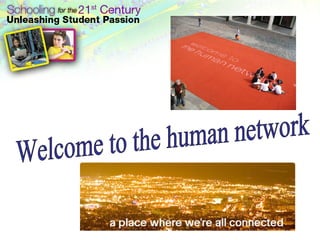
Welcome to the human network
Are you Ready for Leading in the 21st Century It isn’t just “coming”… it has arrived! And schools who aren’t redefining themselves, risk becoming irrelevant in preparing students for the future.
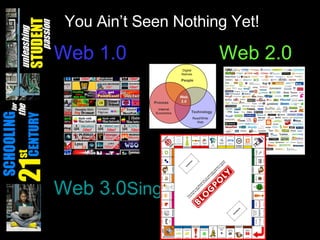
You Ain’t Seen Nothing Yet! Web 1.0   Web 2.0 Web 3.0 Singularity
By the year 2011 80% of all Fortune 500 companies will be using immersive worlds  –  Gartner Vice President Jackie Fenn
Trends that Drive the Need for  Change Trend 1  – Social and intellectual capital are the new economic values in the world economy. This new economy will be held together and advanced through the building of relationships. Unleashing and connecting the collective knowledge, ideas, and experiences of people creates and heightens value. Source : Journal of School Improvement, Volume 3, Issue 1, Spring  2002 http://www.decs.sa.gov.au/wallaradistrict/files/links/Ten_Trends_Educating_Child.pdf
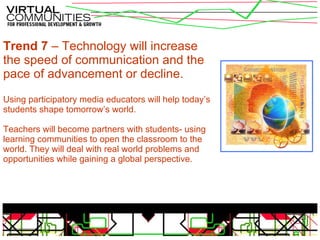
Trend 7  – Technology will increase the speed of communication and the pace of advancement or decline. Using participatory media educators will help today’s students shape tomorrow’s world. Teachers will become partners with students- using learning communities to open the classroom to the world. They will deal with real world problems and opportunities while gaining a global perspective.
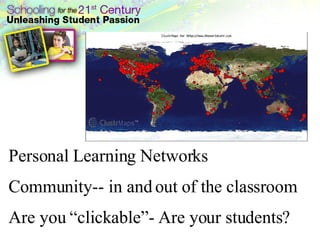
Personal Learning Networks Community-- in and out of the classroom Are you “clickable”- Are your students?
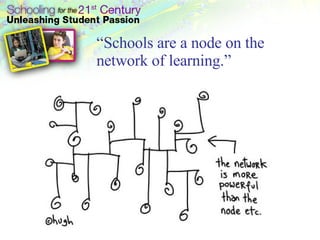
“ Schools are a node on the network of learning.”
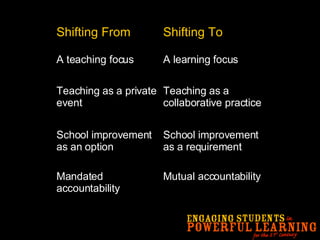
Mutual accountability Mandated accountability School improvement as a requirement School improvement as an option Teaching as a collaborative practice Teaching as a private event A learning focus A teaching focus Shifting To Shifting From
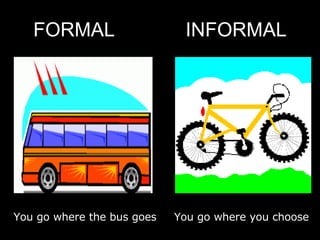
FORMAL  INFORMAL You go where the bus goes You go where you choose Jay Cross – Internet Time
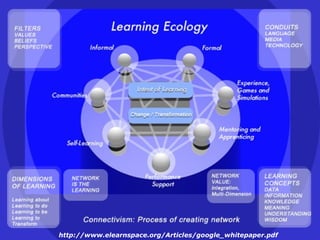
http://www.elearnspace.org/Articles/google_whitepaper.pdf
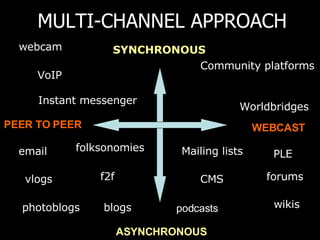
MULTI-CHANNEL APPROACH SYNCHRONOUS ASYNCHRONOUS PEER TO PEER WEBCAST Instant messenger forums f2f blogs photoblogs vlogs wikis folksonomies Conference rooms email Mailing lists CMS Community platforms VoIP webcam podcasts PLE Worldbridges
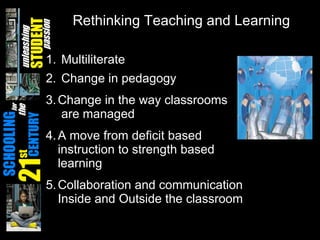
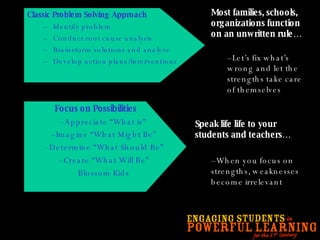
Rethinking Teaching and Learning Multiliterate Change in pedagogy   Change in the way classrooms  are managed A move from deficit based instruction to strength based learning Collaboration and communication Inside and Outside the classroom
 
Spending most of your time in your area of weakness—while it will improve your skills, perhaps to a level of “average”—will NOT produce excellence This approach does NOT tap into student motivation or lead to student engagement The biggest challenge facing us as educators: how to engage the hearts and minds of the learners
Learning to Change: Changing to Learn

Dimensions of Change

  • 1.
  • 2.
    Housekeeping One thing you need to write down— http://21stcenturylearning.wikispaces.com
  • 3.
  • 4.
    Welcome to thehuman network
  • 5.
    Are you Readyfor Leading in the 21st Century It isn’t just “coming”… it has arrived! And schools who aren’t redefining themselves, risk becoming irrelevant in preparing students for the future.
  • 6.
    You Ain’t SeenNothing Yet! Web 1.0 Web 2.0 Web 3.0 Singularity
  • 7.
    By the year2011 80% of all Fortune 500 companies will be using immersive worlds – Gartner Vice President Jackie Fenn
  • 8.
    Trends that Drivethe Need for Change Trend 1 – Social and intellectual capital are the new economic values in the world economy. This new economy will be held together and advanced through the building of relationships. Unleashing and connecting the collective knowledge, ideas, and experiences of people creates and heightens value. Source : Journal of School Improvement, Volume 3, Issue 1, Spring 2002 http://www.decs.sa.gov.au/wallaradistrict/files/links/Ten_Trends_Educating_Child.pdf
  • 9.
    Trend 7 – Technology will increase the speed of communication and the pace of advancement or decline. Using participatory media educators will help today’s students shape tomorrow’s world. Teachers will become partners with students- using learning communities to open the classroom to the world. They will deal with real world problems and opportunities while gaining a global perspective.
  • 10.
    Personal Learning NetworksCommunity-- in and out of the classroom Are you “clickable”- Are your students?
  • 11.
    “ Schools area node on the network of learning.”
  • 12.
    Mutual accountability Mandatedaccountability School improvement as a requirement School improvement as an option Teaching as a collaborative practice Teaching as a private event A learning focus A teaching focus Shifting To Shifting From
  • 13.
    FORMAL INFORMALYou go where the bus goes You go where you choose Jay Cross – Internet Time
  • 14.
  • 15.
    MULTI-CHANNEL APPROACH SYNCHRONOUSASYNCHRONOUS PEER TO PEER WEBCAST Instant messenger forums f2f blogs photoblogs vlogs wikis folksonomies Conference rooms email Mailing lists CMS Community platforms VoIP webcam podcasts PLE Worldbridges
  • 16.
    Rethinking Teaching andLearning Multiliterate Change in pedagogy Change in the way classrooms are managed A move from deficit based instruction to strength based learning Collaboration and communication Inside and Outside the classroom
  • 17.
  • 18.
    Spending most ofyour time in your area of weakness—while it will improve your skills, perhaps to a level of “average”—will NOT produce excellence This approach does NOT tap into student motivation or lead to student engagement The biggest challenge facing us as educators: how to engage the hearts and minds of the learners
  • 19.
    Learning to Change:Changing to Learn