HousekeepingPaperless handoutshttp://wiu.wiueacademy.org/Sheryl Nussbaum-Beach             Co-Founder & CEO                                              Powerful Learning Practice, LLChttp://plpnetwork.comsheryl@plpnetwork.comPresident21st Century Collaborative, LLChttp://21stcenturycollabrative.com
Driving QuestionsWhat are you doing to contextualize and mobilize what you are learning?How will you leverage, how will you enable your teachers or your students to leverage- collective intelligence?
Principle of the Path“Direction-not intention-determines our destination.” Andy StanleyAre your daily choices taking you and your learners in the direction you want to go?
.Lead LearnerNative American Proverb“He who learns from one who is learning, drinks from a flowing river.”Sarah Brown Wessling, 2010 National Teacher of the YearDescribes her classroom as a place where the teacher is the “lead learner” and “the classroom walls are boundless.”
Welcome to the human network
Everything 2.0 By the year 2011 80% of all Fortune 500 companies will be using immersive worlds – Gartner Vice President Jackie Fenn Libraries 2.0Management 2.0 Education 2.0Warfare 2.0Government 2.0Vatican 2.0Credit: Hugh MacLeod, gapingvoid
Are you Ready for Learning and Leading in the 21st Century?It isn’t just “coming”… it has arrived! And schools who aren’t redefining themselves, risk becoming irrelevant in preparing students for the future.
Web 1.0   Web 2.0   Web 3.0We are living in a new economy – powered by technology, fueled by information, and driven by knowledge.-- Futureworks: Trends and Challenges for Work in the 21st Century
By the year 2012 80% of all Fortune 500 companies will be using immersive worlds – Gartner Vice President Jackie Fenn
Shift in Learning = New PossibilitiesShift from emphasis on teaching…To an emphasis on co-learning
Knowledge CreationIt is estimated that 1.5 exabytes of unique new information will be generated worldwide this year.That’s estimated to be more than in the previous 5,000 years.
For students starting a four-year technical or higher education degree, this means that . . .half of what they learn in their first year of study will be outdated by their third year of study.
Source: enGauge 21st Century Skills
What about the world and society has changed since you went to school?What about students has changed since you went to school?What about schools has changed or not changed since you went to school?What should School 2.0 look like in order to meet the needs of the 21st Century learner?
Time TravelLewis Perelman, author of School's Out (1992). Perelman argues that schools are out of sync with technological change: ...the technological gap between the school environment and the "real world" is growing so wide, so fast that the classroom experience is on the way to becoming not merely unproductive but increasingly irrelevant to normal human existence (p.215). Seymour Papert (1993)In the wake of the startling growth of science and technology in our recent past, some areas of human activity have undergone megachange. Telecommunications, entertainment and transportation, as well as medicine, are among them. School is a notable example of an area that has not(p.2).
Mobile ComputingSmart PhonesThe mobile market has: 4 billion subscribers, three-fourths of whom live in developingcountries. Over a billion new phones are produced each year, and the fastest-growing sales segment belongs to smart phones —
Open ContentRelevance for Teaching, Learning & Creative ExpressionOpen content allows teachers to customize their courses quickly and inexpensively and keepup with emerging information and ideas.Communities of practice and learner groups that form around open content provide a sourceof support for independent or life-long learners.
Trend 1 – Social and intellectual capital are the new economic values in the world economy.This new economy will be held together and advanced through the building of relationships. Unleashing and connecting the collective knowledge, ideas, and experiences of people creates and heightens value.Source:Journal of School Improvement, Volume 3, Issue 1, Spring 2002http://www.decs.sa.gov.au/wallaradistrict/files/links/Ten_Trends_Educating_Child.pdf
“Schools are a node on the network of learning.”
Personal Learning NetworksCommunity-Dots On Your MapAre you “clickable”- Are your students?
Teacher 2.0The Emergent 21st Century TeacherTeacher 2.0Source: Mark Treadwell- http://www.i-learnt.com
FORMAL             INFORMALYou go where the bus goesYou go where you chooseJay Cross – Internet Time
http://www.elearnspace.org/Articles/google_whitepaper.pdf
MULTI-CHANNEL APPROACHwebcamSYNCHRONOUSCommunity platformsVoIPConference roomsInstant messengerWorldbridgesPEER TO PEERWEBCASTfolksonomiesMailing listsemailPLEf2fforumsvlogsCMSwikisblogsphotoblogspodcastsASYNCHRONOUS
What do we need to unlearn? Example:*I need to unlearn that classrooms are physical spaces.* I need to unlearn that learning is an event with a start and stop time to a lesson.The Empire Strikes Back:LUKE:  Master, moving stones around is one thing.  This is totallydifferent. YODA:  No!  No different!  Only different in your mind.  You must unlearn what you have learned.
What will be our legacy…Bertelsmann Foundation Report: The Impact of Media and Technology in Schools2 GroupsContent Area: Civil WarOne Group taught using Sage on the Stage methodologyOne Group taught using innovative applications of technology and project-based instructional modelsEnd of the Study, both groups given identical teacher-constructed tests of their knowledge of the Civil War.Question: Which group did better?
Answer…No significant test differences were found
However… One Year LaterStudents in the traditional group could recall almost nothing about the historical contentStudents in the traditional group defined history as: “the record of the facts of the past”Students in the digital group “displayed elaborate concepts and ideas that they had extended to other areas of history”Students in the digital group defined history as: “a process of interpreting the past from different perspectives”
Change is inevitable: Growth is OptionalChange produces tension- out of our comfort zone.“Creative tension- the force that comes into play at the moment we acknowledge our vision is at odds with the current reality.” Senge
Real Question is this:Are we willing to change- to risk change- to meet the needs of the precious folks we serve? Can you accept that Change (with a “big” C) is sometimes a messy process and that learning new things together is going to require some tolerance for ambiguity.
Last Generation

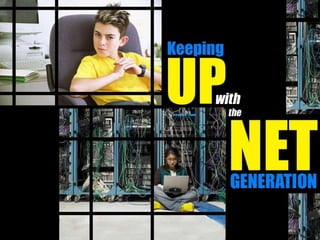
Keepingup wiu21

  • 2.
    HousekeepingPaperless handoutshttp://wiu.wiueacademy.org/Sheryl Nussbaum-Beach Co-Founder & CEO Powerful Learning Practice, LLChttp://plpnetwork.comsheryl@plpnetwork.comPresident21st Century Collaborative, LLChttp://21stcenturycollabrative.com
  • 3.
    Driving QuestionsWhat areyou doing to contextualize and mobilize what you are learning?How will you leverage, how will you enable your teachers or your students to leverage- collective intelligence?
  • 4.
    Principle of thePath“Direction-not intention-determines our destination.” Andy StanleyAre your daily choices taking you and your learners in the direction you want to go?
  • 5.
    .Lead LearnerNative AmericanProverb“He who learns from one who is learning, drinks from a flowing river.”Sarah Brown Wessling, 2010 National Teacher of the YearDescribes her classroom as a place where the teacher is the “lead learner” and “the classroom walls are boundless.”
  • 6.
    Welcome to thehuman network
  • 7.
    Everything 2.0 Bythe year 2011 80% of all Fortune 500 companies will be using immersive worlds – Gartner Vice President Jackie Fenn Libraries 2.0Management 2.0 Education 2.0Warfare 2.0Government 2.0Vatican 2.0Credit: Hugh MacLeod, gapingvoid
  • 8.
    Are you Readyfor Learning and Leading in the 21st Century?It isn’t just “coming”… it has arrived! And schools who aren’t redefining themselves, risk becoming irrelevant in preparing students for the future.
  • 9.
    Web 1.0 Web 2.0 Web 3.0We are living in a new economy – powered by technology, fueled by information, and driven by knowledge.-- Futureworks: Trends and Challenges for Work in the 21st Century
  • 10.
    By the year2012 80% of all Fortune 500 companies will be using immersive worlds – Gartner Vice President Jackie Fenn
  • 13.
    Shift in Learning= New PossibilitiesShift from emphasis on teaching…To an emphasis on co-learning
  • 14.
    Knowledge CreationIt isestimated that 1.5 exabytes of unique new information will be generated worldwide this year.That’s estimated to be more than in the previous 5,000 years.
  • 15.
    For students startinga four-year technical or higher education degree, this means that . . .half of what they learn in their first year of study will be outdated by their third year of study.
  • 18.
    Source: enGauge 21stCentury Skills
  • 19.
    What about theworld and society has changed since you went to school?What about students has changed since you went to school?What about schools has changed or not changed since you went to school?What should School 2.0 look like in order to meet the needs of the 21st Century learner?
  • 20.
    Time TravelLewis Perelman,author of School's Out (1992). Perelman argues that schools are out of sync with technological change: ...the technological gap between the school environment and the "real world" is growing so wide, so fast that the classroom experience is on the way to becoming not merely unproductive but increasingly irrelevant to normal human existence (p.215). Seymour Papert (1993)In the wake of the startling growth of science and technology in our recent past, some areas of human activity have undergone megachange. Telecommunications, entertainment and transportation, as well as medicine, are among them. School is a notable example of an area that has not(p.2).
  • 21.
    Mobile ComputingSmart PhonesThemobile market has: 4 billion subscribers, three-fourths of whom live in developingcountries. Over a billion new phones are produced each year, and the fastest-growing sales segment belongs to smart phones —
  • 22.
    Open ContentRelevance forTeaching, Learning & Creative ExpressionOpen content allows teachers to customize their courses quickly and inexpensively and keepup with emerging information and ideas.Communities of practice and learner groups that form around open content provide a sourceof support for independent or life-long learners.
  • 24.
    Trend 1 –Social and intellectual capital are the new economic values in the world economy.This new economy will be held together and advanced through the building of relationships. Unleashing and connecting the collective knowledge, ideas, and experiences of people creates and heightens value.Source:Journal of School Improvement, Volume 3, Issue 1, Spring 2002http://www.decs.sa.gov.au/wallaradistrict/files/links/Ten_Trends_Educating_Child.pdf
  • 25.
    “Schools are anode on the network of learning.”
  • 26.
    Personal Learning NetworksCommunity-DotsOn Your MapAre you “clickable”- Are your students?
  • 27.
    Teacher 2.0The Emergent21st Century TeacherTeacher 2.0Source: Mark Treadwell- http://www.i-learnt.com
  • 28.
    FORMAL INFORMALYou go where the bus goesYou go where you chooseJay Cross – Internet Time
  • 29.
  • 30.
    MULTI-CHANNEL APPROACHwebcamSYNCHRONOUSCommunity platformsVoIPConferenceroomsInstant messengerWorldbridgesPEER TO PEERWEBCASTfolksonomiesMailing listsemailPLEf2fforumsvlogsCMSwikisblogsphotoblogspodcastsASYNCHRONOUS
  • 31.
    What do weneed to unlearn? Example:*I need to unlearn that classrooms are physical spaces.* I need to unlearn that learning is an event with a start and stop time to a lesson.The Empire Strikes Back:LUKE:  Master, moving stones around is one thing.  This is totallydifferent. YODA:  No!  No different!  Only different in your mind.  You must unlearn what you have learned.
  • 32.
    What will beour legacy…Bertelsmann Foundation Report: The Impact of Media and Technology in Schools2 GroupsContent Area: Civil WarOne Group taught using Sage on the Stage methodologyOne Group taught using innovative applications of technology and project-based instructional modelsEnd of the Study, both groups given identical teacher-constructed tests of their knowledge of the Civil War.Question: Which group did better?
  • 33.
    Answer…No significant testdifferences were found
  • 34.
    However… One YearLaterStudents in the traditional group could recall almost nothing about the historical contentStudents in the traditional group defined history as: “the record of the facts of the past”Students in the digital group “displayed elaborate concepts and ideas that they had extended to other areas of history”Students in the digital group defined history as: “a process of interpreting the past from different perspectives”
  • 35.
    Change is inevitable:Growth is OptionalChange produces tension- out of our comfort zone.“Creative tension- the force that comes into play at the moment we acknowledge our vision is at odds with the current reality.” Senge
  • 36.
    Real Question isthis:Are we willing to change- to risk change- to meet the needs of the precious folks we serve? Can you accept that Change (with a “big” C) is sometimes a messy process and that learning new things together is going to require some tolerance for ambiguity.
  • 37.