Dimensional Stabilization of
Wood
Problems of Wood
• Hygroscopicity
• Dimensional instability
• Durability
• Mechano-sorptive properties
2
How to solve these problems?
• Use wood with high natural quality
• Availability
• Sustainability
• Use of wood preservatives
• Use of new technologies for wood treatment!!
3
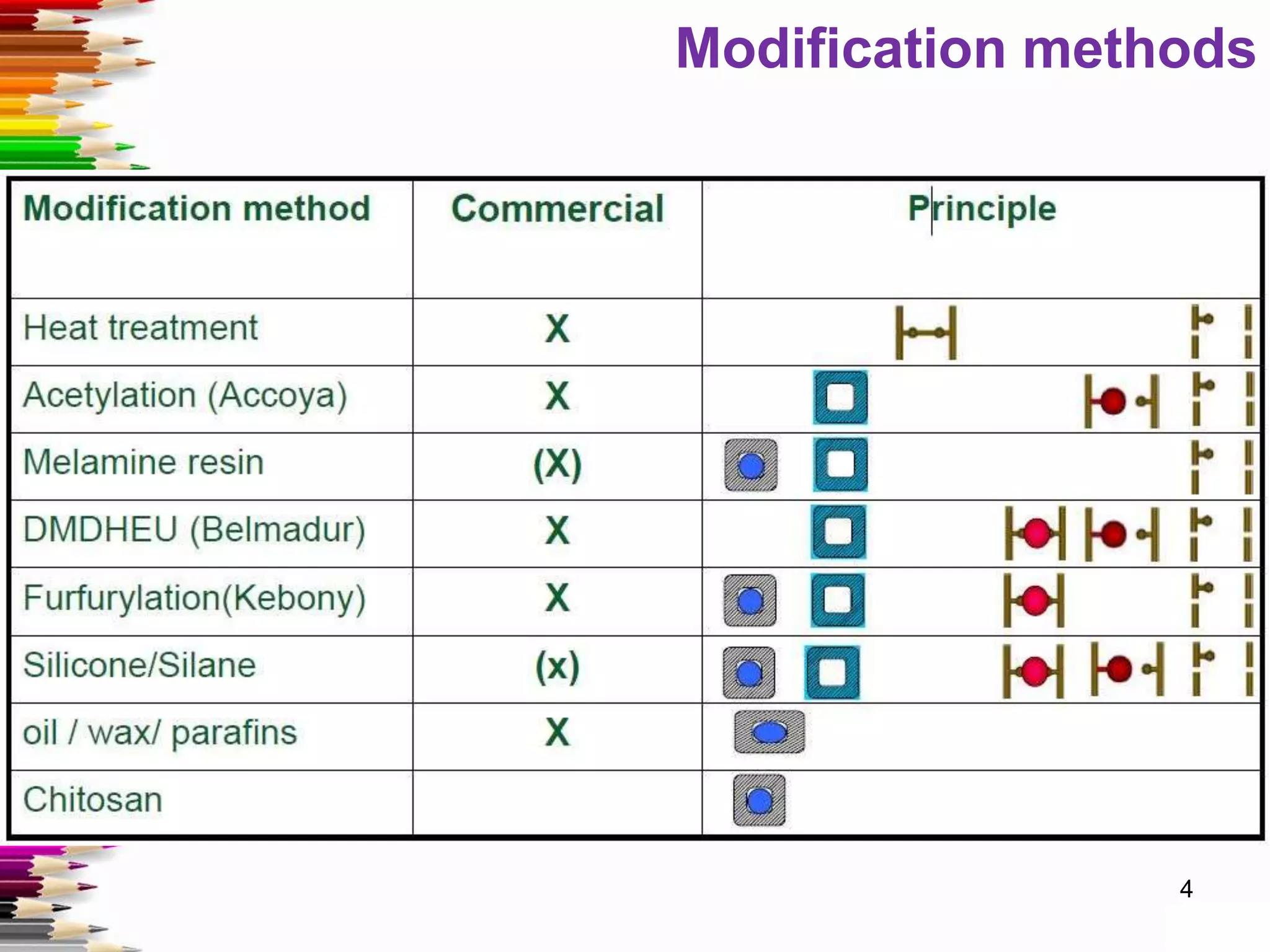
Modification methods
4
Thermal modification
The Plato process
• Hydro thermal treatment / hydro thermolysis (160-
190ºC 6-8 bar)
• Drying (10% MC)
• Curing (heating of the altered wood) (160-190ºC)
5
Thermal modification
Protected against burning
using steam as an inert gas
Staypak
1.25 to 1.40 g/cc
10 to 18 times hardness 6
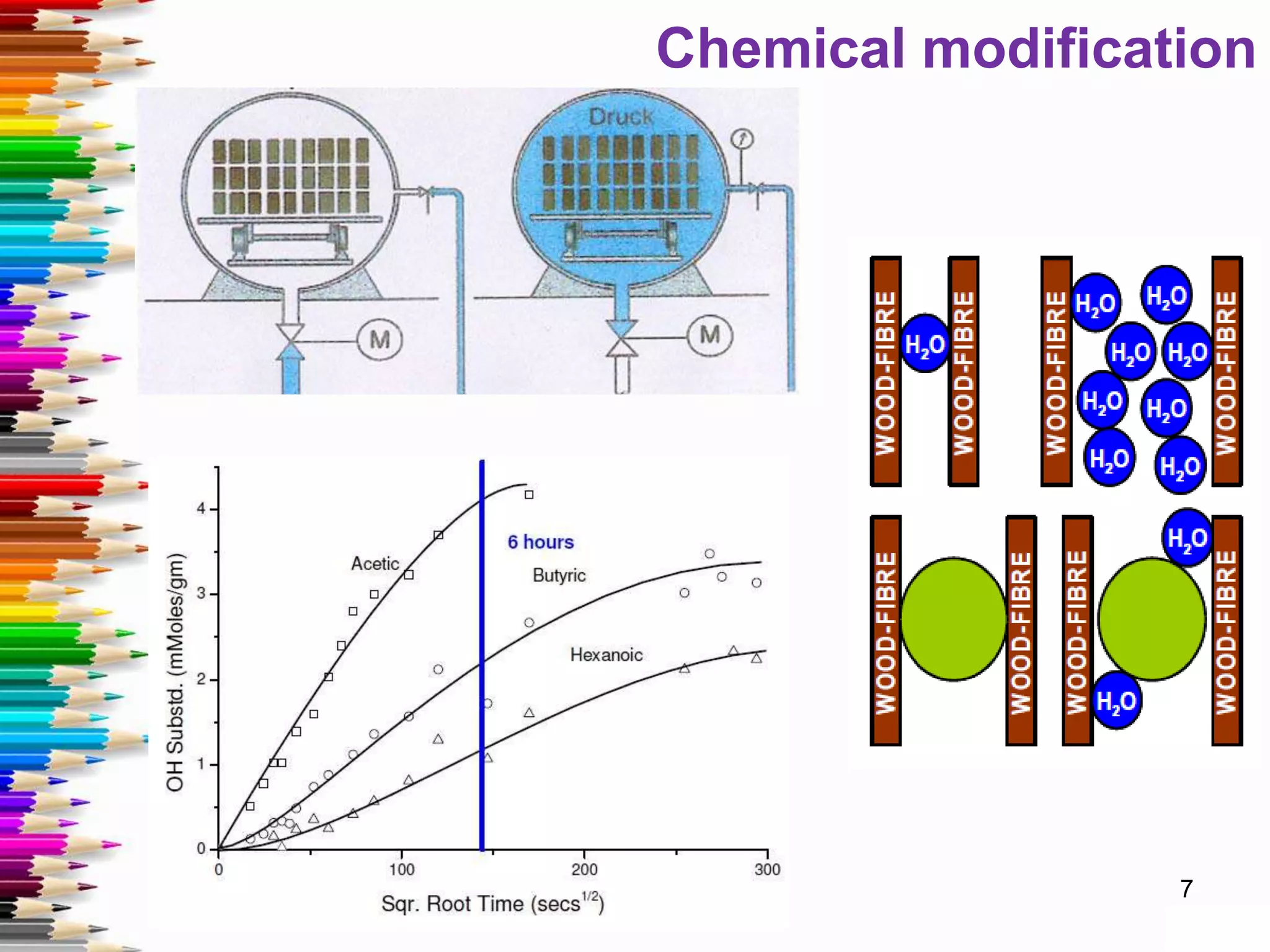
Chemical modification
7
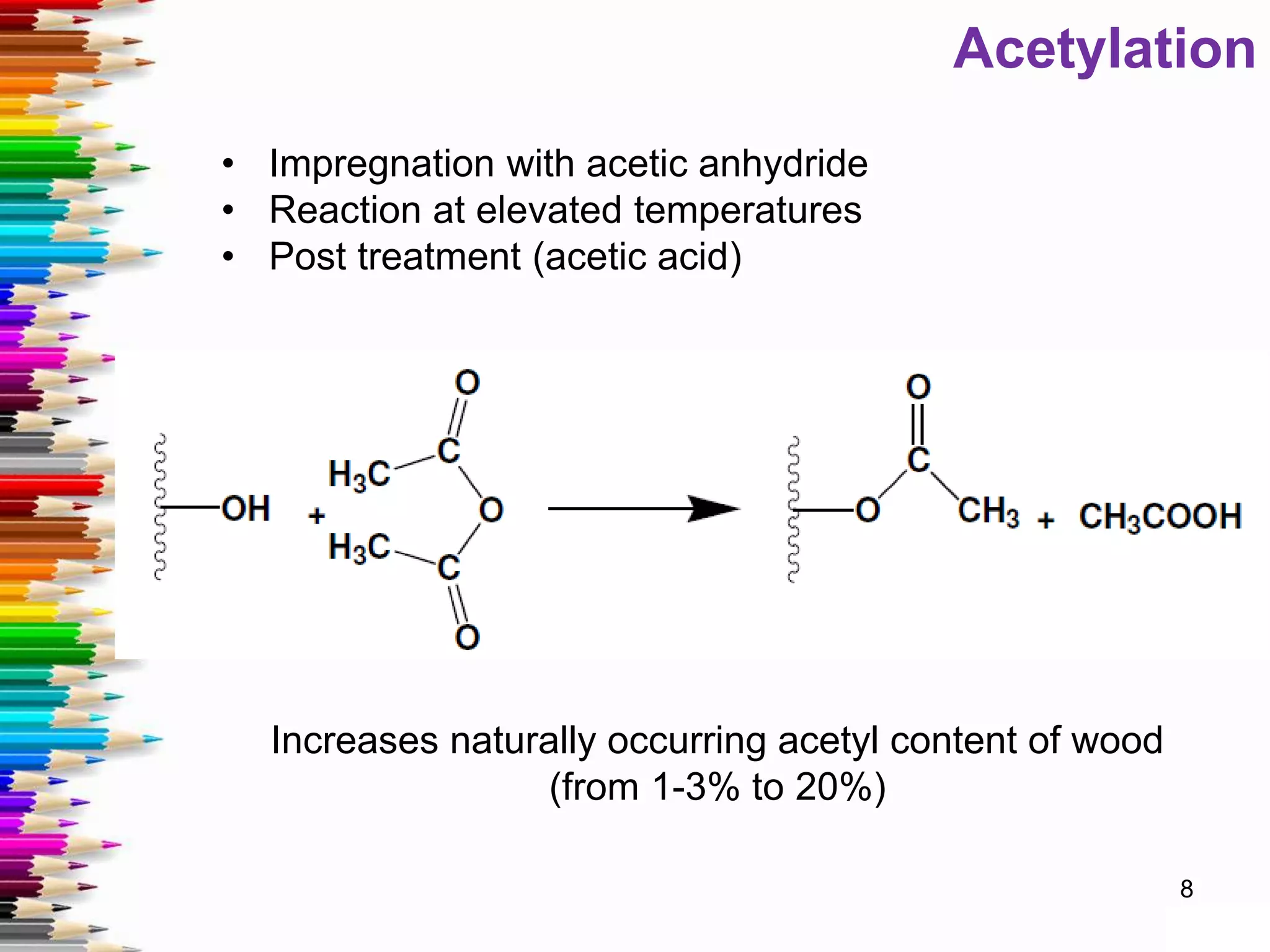
Acetylation
• Impregnation with acetic anhydride
• Reaction at elevated temperatures
• Post treatment (acetic acid)
Increases naturally occurring acetyl content of wood
(from 1-3% to 20%)
8
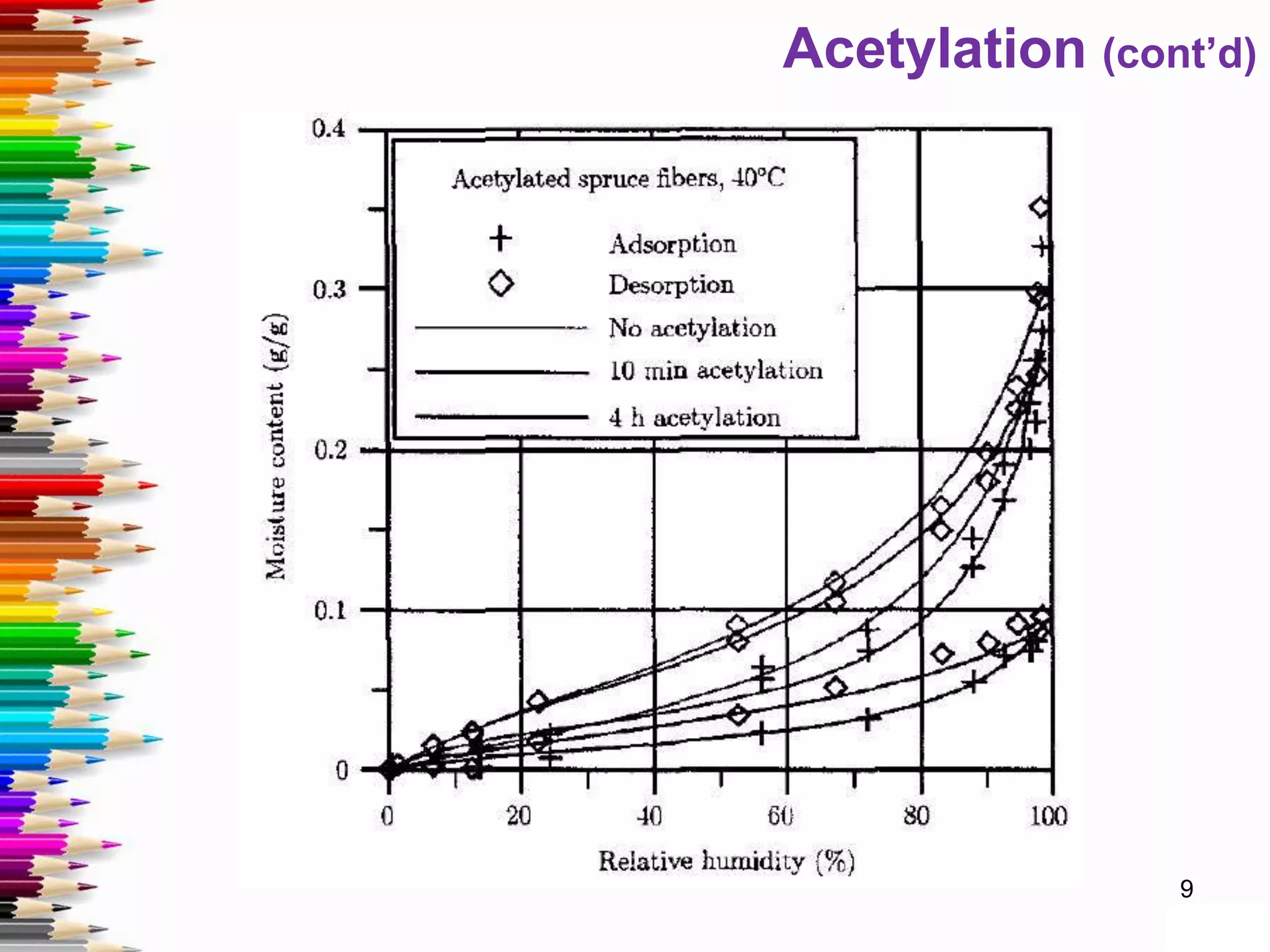
Acetylation (cont’d)
9
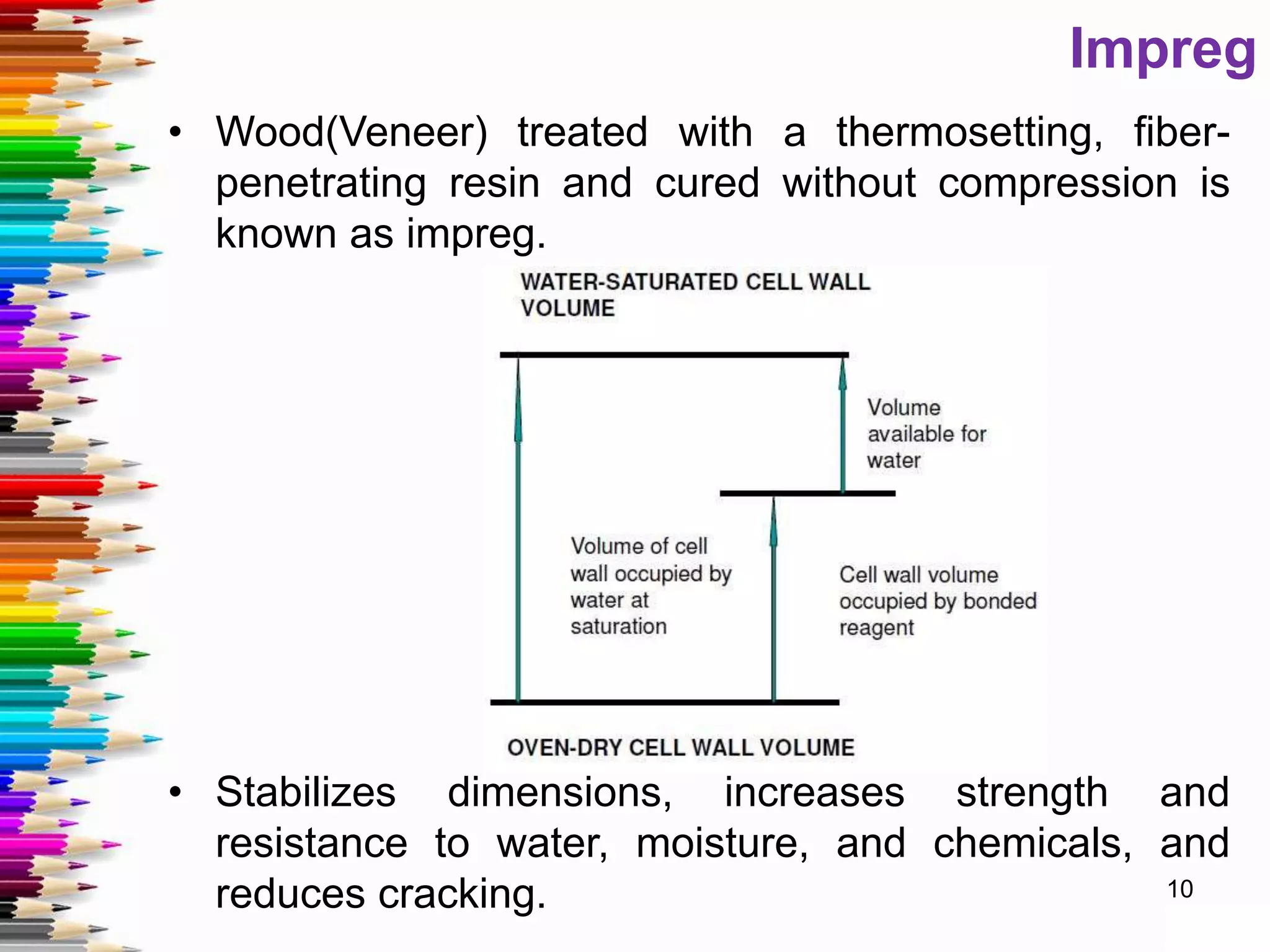
• Wood(Veneer) treated with a thermosetting, fiber-
penetrating resin and cured without compression is
known as impreg.
• Stabilizes dimensions, increases strength and
resistance to water, moisture, and chemicals, and
reduces cracking.
Impreg
10
• Green Wood
• Dry Wood
• 25-35%
Weight Gain
Soaking
• 1-2 Days
• For Uniform
Distribution of
the Resin
Nondrying
condition • Drying
(Moderate Temp)
• Curing
(Higher Temp)
Drying and
Curing
11
Impregnation Process
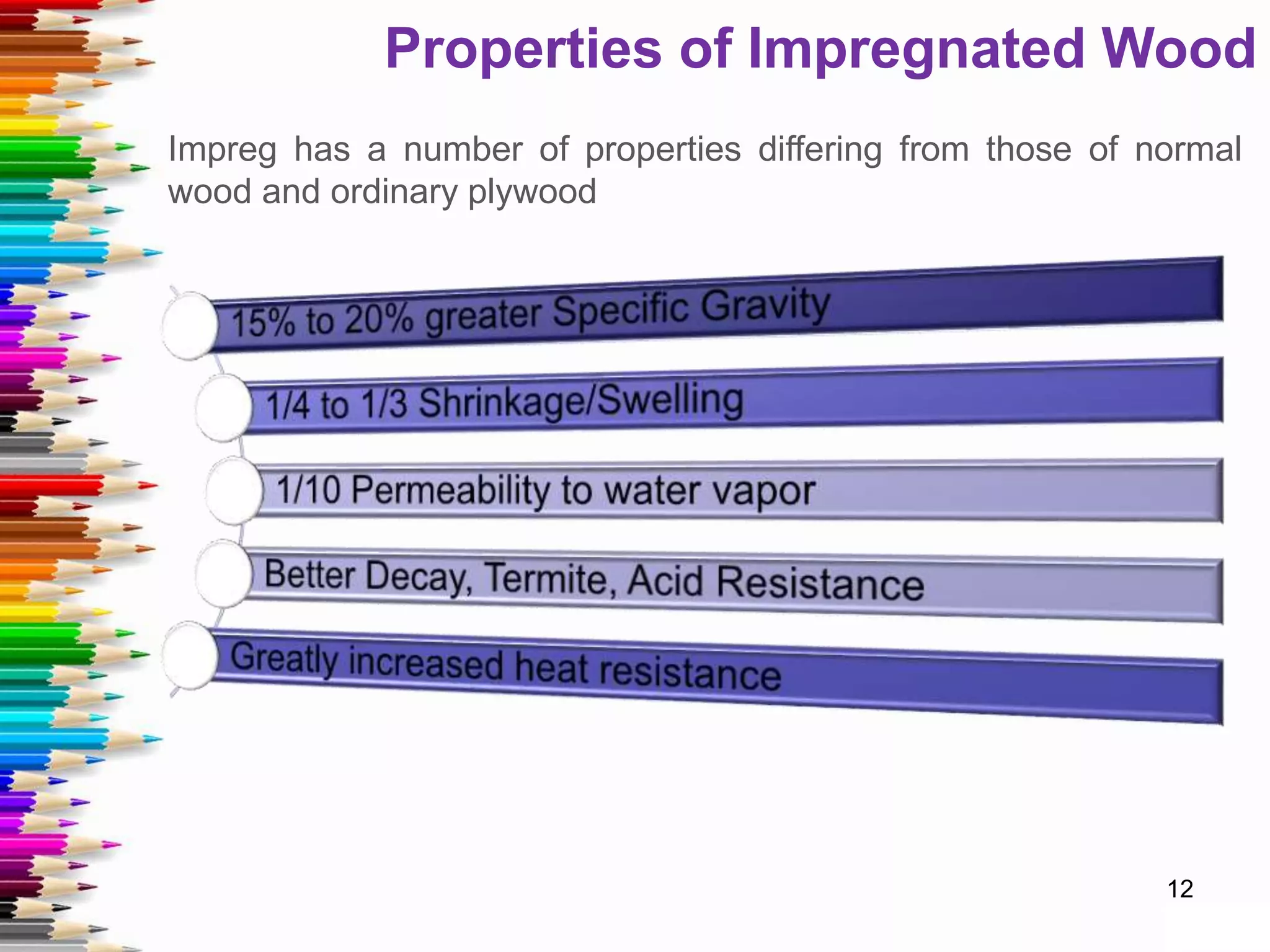
Impreg has a number of properties differing from those of normal
wood and ordinary plywood
12
Properties of Impregnated Wood
Similar to impreg except that it is compressed before
the resin is cured within the wood.
The resin-forming chemicals (usually phenol formaldehyde)
act as plasticizers
13
Compreg
• Green Wood
• Dry Wood
• 25-35%
Weight Gain
Soaking
• 1-2 Days
• For Uniform
Distribution of
the Resin
Nondrying
condition • Drying
(Moderate Temp)
• Curing
(Higher Temp)
Drying and
Curing
7-10 Mpa
14
Compreg: Process
15
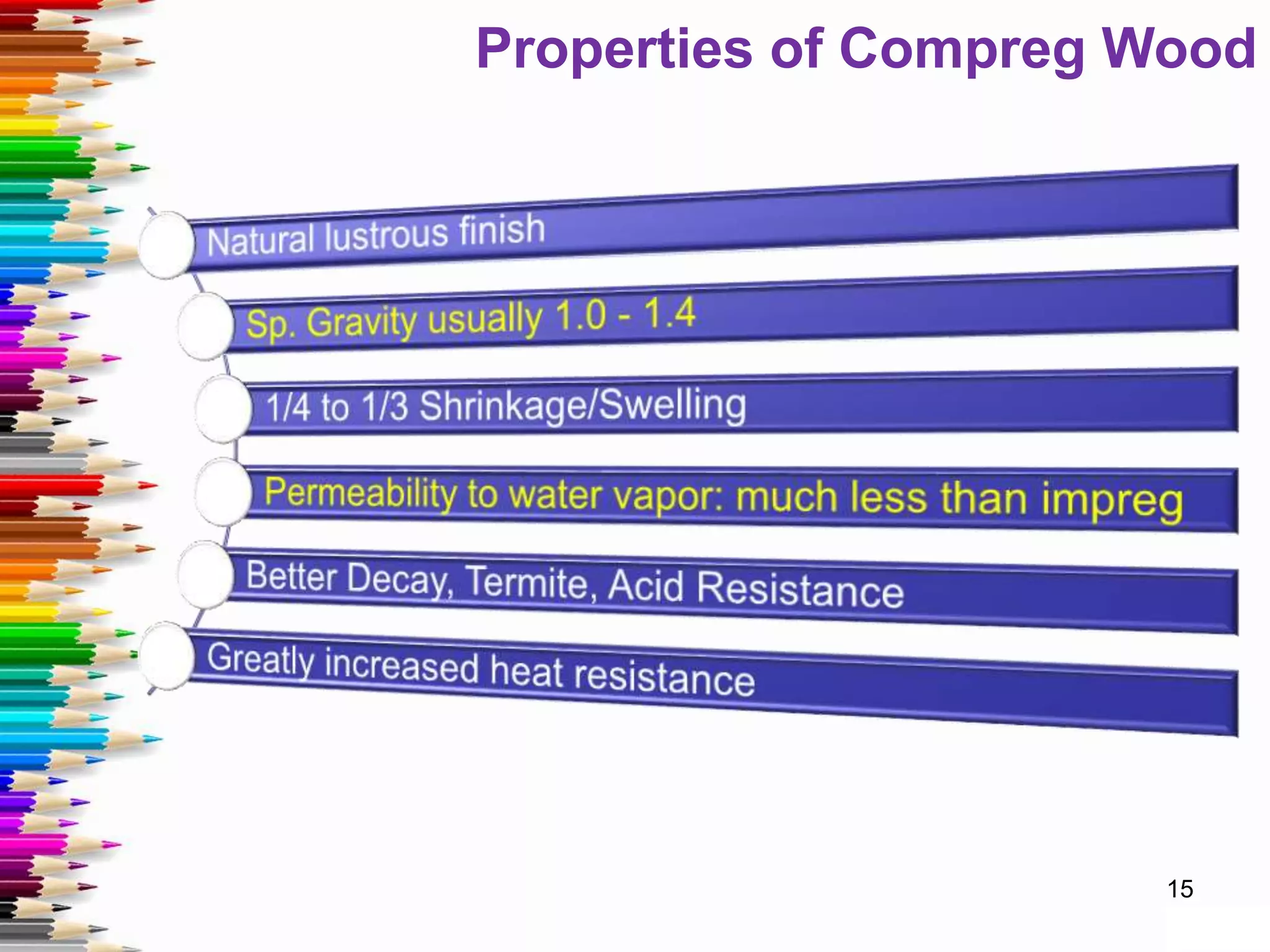
Properties of Compreg Wood
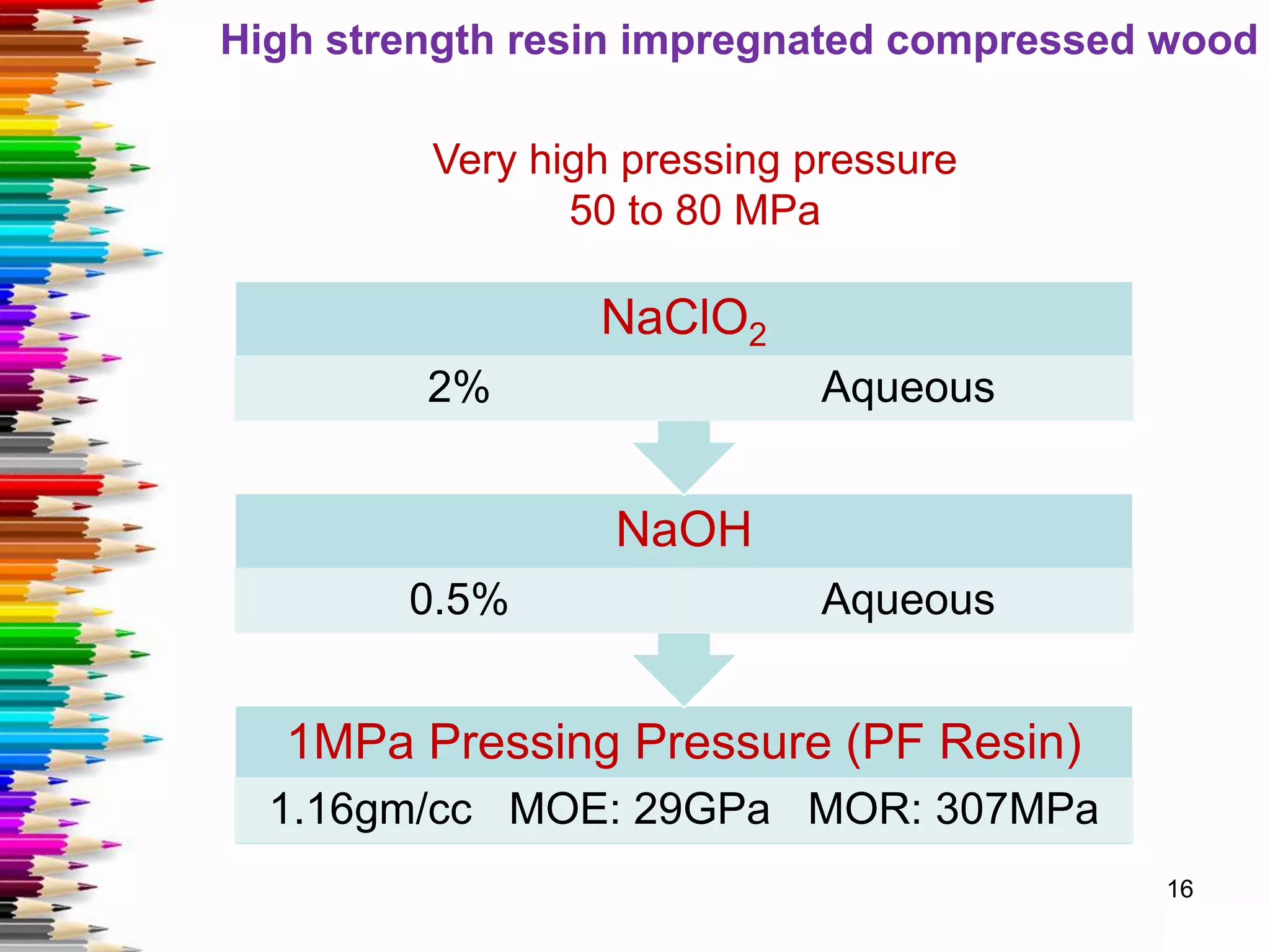
Very high pressing pressure
50 to 80 MPa
1MPa Pressing Pressure (PF Resin)
1.16gm/cc MOE: 29GPa MOR: 307MPa
NaOH
0.5% Aqueous
NaClO2
2% Aqueous
16
High strength resin impregnated compressed wood
17
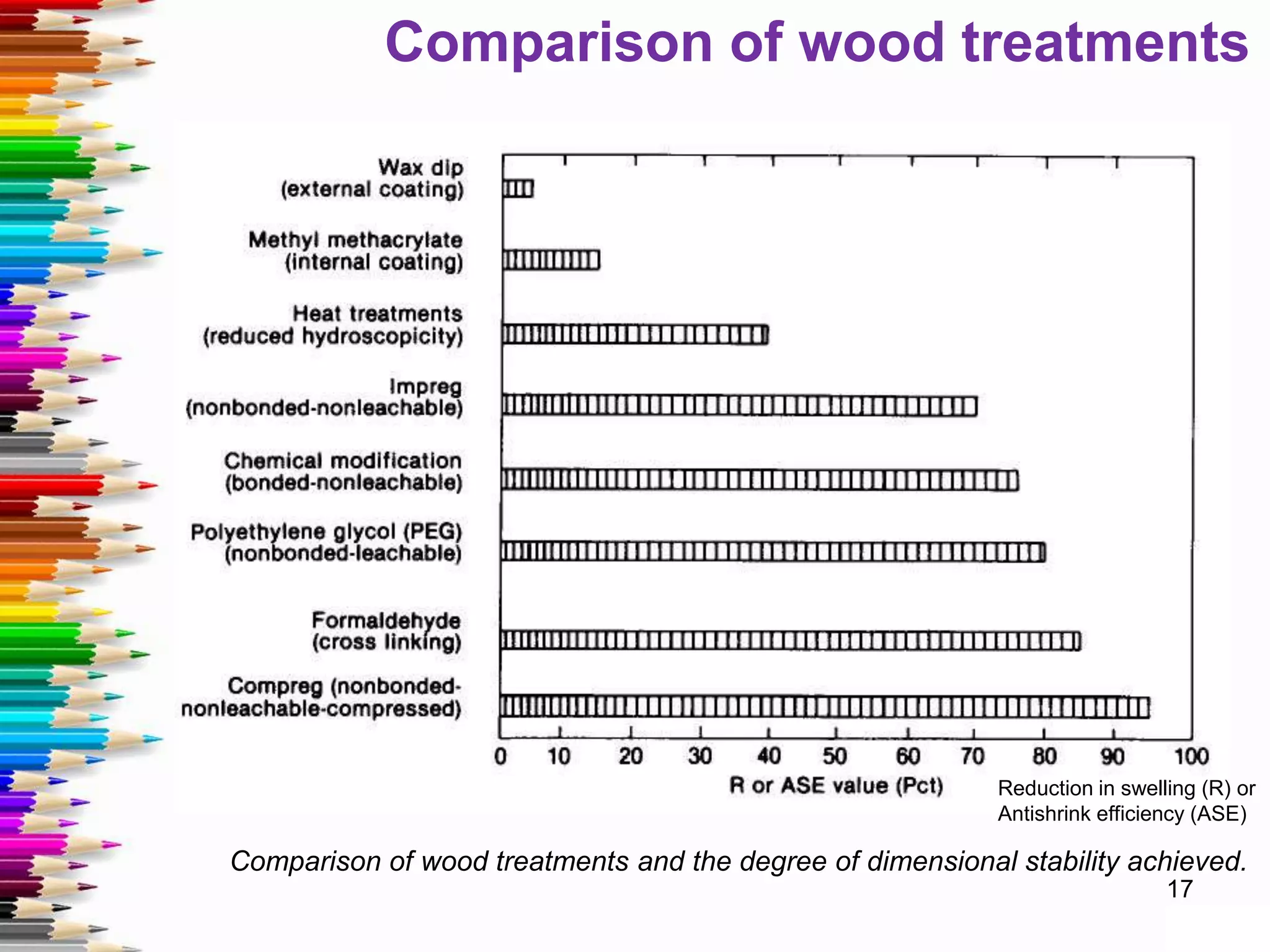
Comparison of wood treatments and the degree of dimensional stability achieved.
Comparison of wood treatments
Reduction in swelling (R) or
Antishrink efficiency (ASE)
18
19

Dimensional stabilization of wood

  • 1.
  • 2.
    Problems of Wood •Hygroscopicity • Dimensional instability • Durability • Mechano-sorptive properties 2
  • 3.
    How to solvethese problems? • Use wood with high natural quality • Availability • Sustainability • Use of wood preservatives • Use of new technologies for wood treatment!! 3
  • 4.
  • 5.
    Thermal modification The Platoprocess • Hydro thermal treatment / hydro thermolysis (160- 190ºC 6-8 bar) • Drying (10% MC) • Curing (heating of the altered wood) (160-190ºC) 5
  • 6.
    Thermal modification Protected againstburning using steam as an inert gas Staypak 1.25 to 1.40 g/cc 10 to 18 times hardness 6
  • 7.
  • 8.
    Acetylation • Impregnation withacetic anhydride • Reaction at elevated temperatures • Post treatment (acetic acid) Increases naturally occurring acetyl content of wood (from 1-3% to 20%) 8
  • 9.
  • 10.
    • Wood(Veneer) treatedwith a thermosetting, fiber- penetrating resin and cured without compression is known as impreg. • Stabilizes dimensions, increases strength and resistance to water, moisture, and chemicals, and reduces cracking. Impreg 10
  • 11.
    • Green Wood •Dry Wood • 25-35% Weight Gain Soaking • 1-2 Days • For Uniform Distribution of the Resin Nondrying condition • Drying (Moderate Temp) • Curing (Higher Temp) Drying and Curing 11 Impregnation Process
  • 12.
    Impreg has anumber of properties differing from those of normal wood and ordinary plywood 12 Properties of Impregnated Wood
  • 13.
    Similar to impregexcept that it is compressed before the resin is cured within the wood. The resin-forming chemicals (usually phenol formaldehyde) act as plasticizers 13 Compreg
  • 14.
    • Green Wood •Dry Wood • 25-35% Weight Gain Soaking • 1-2 Days • For Uniform Distribution of the Resin Nondrying condition • Drying (Moderate Temp) • Curing (Higher Temp) Drying and Curing 7-10 Mpa 14 Compreg: Process
  • 15.
  • 16.
    Very high pressingpressure 50 to 80 MPa 1MPa Pressing Pressure (PF Resin) 1.16gm/cc MOE: 29GPa MOR: 307MPa NaOH 0.5% Aqueous NaClO2 2% Aqueous 16 High strength resin impregnated compressed wood
  • 17.
    17 Comparison of woodtreatments and the degree of dimensional stability achieved. Comparison of wood treatments Reduction in swelling (R) or Antishrink efficiency (ASE)
  • 18.
  • 19.