Digital Strategy #DS
4
and strategy in a digital plan
objectives
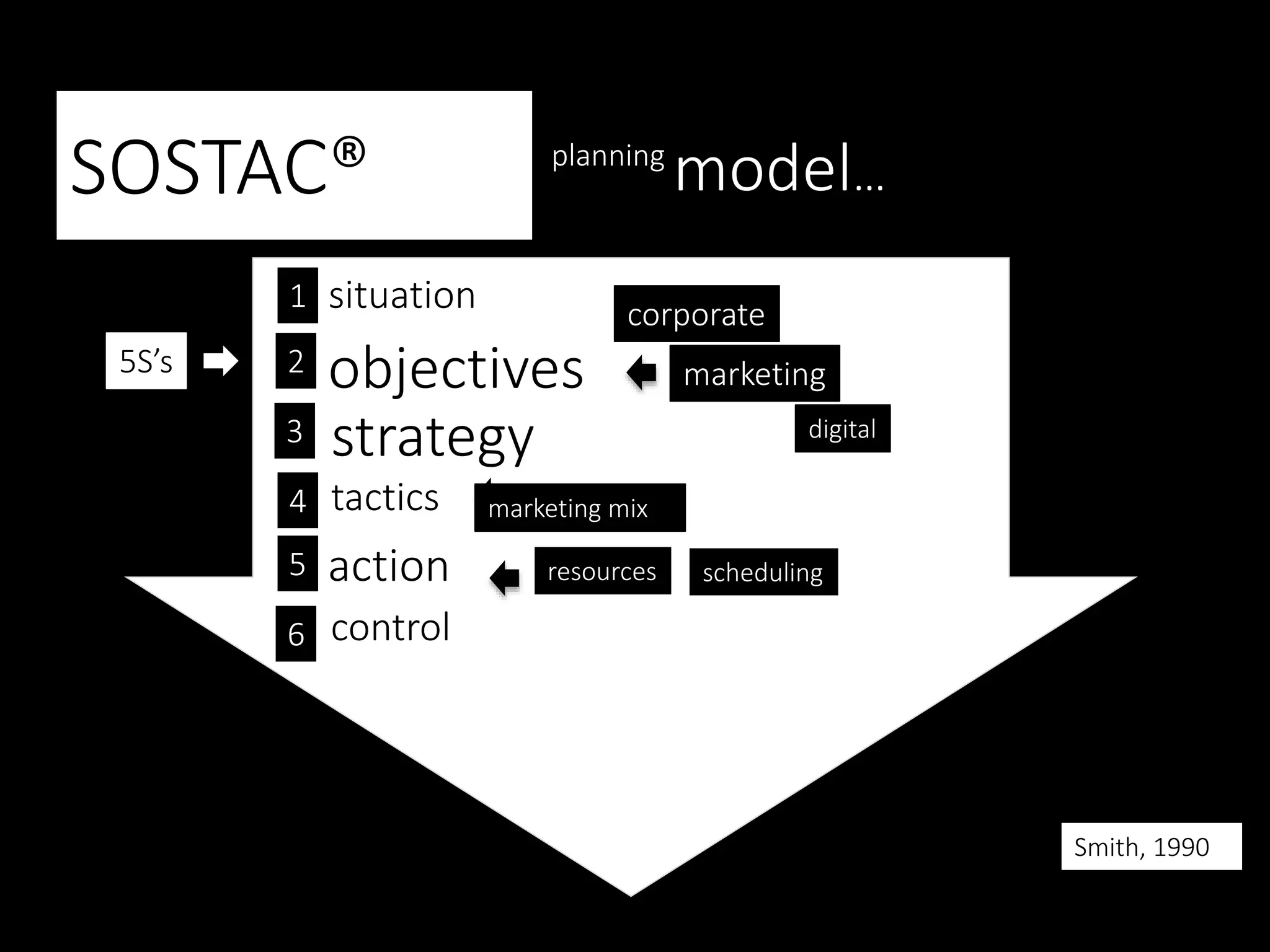
SOSTAC® planning
model…
1
2
3
4
5
6
situation
objectives
strategy
tactics
action
control
corporate
marketing
digital
resources scheduling
Smith, 1990
5S’s
marketing mix
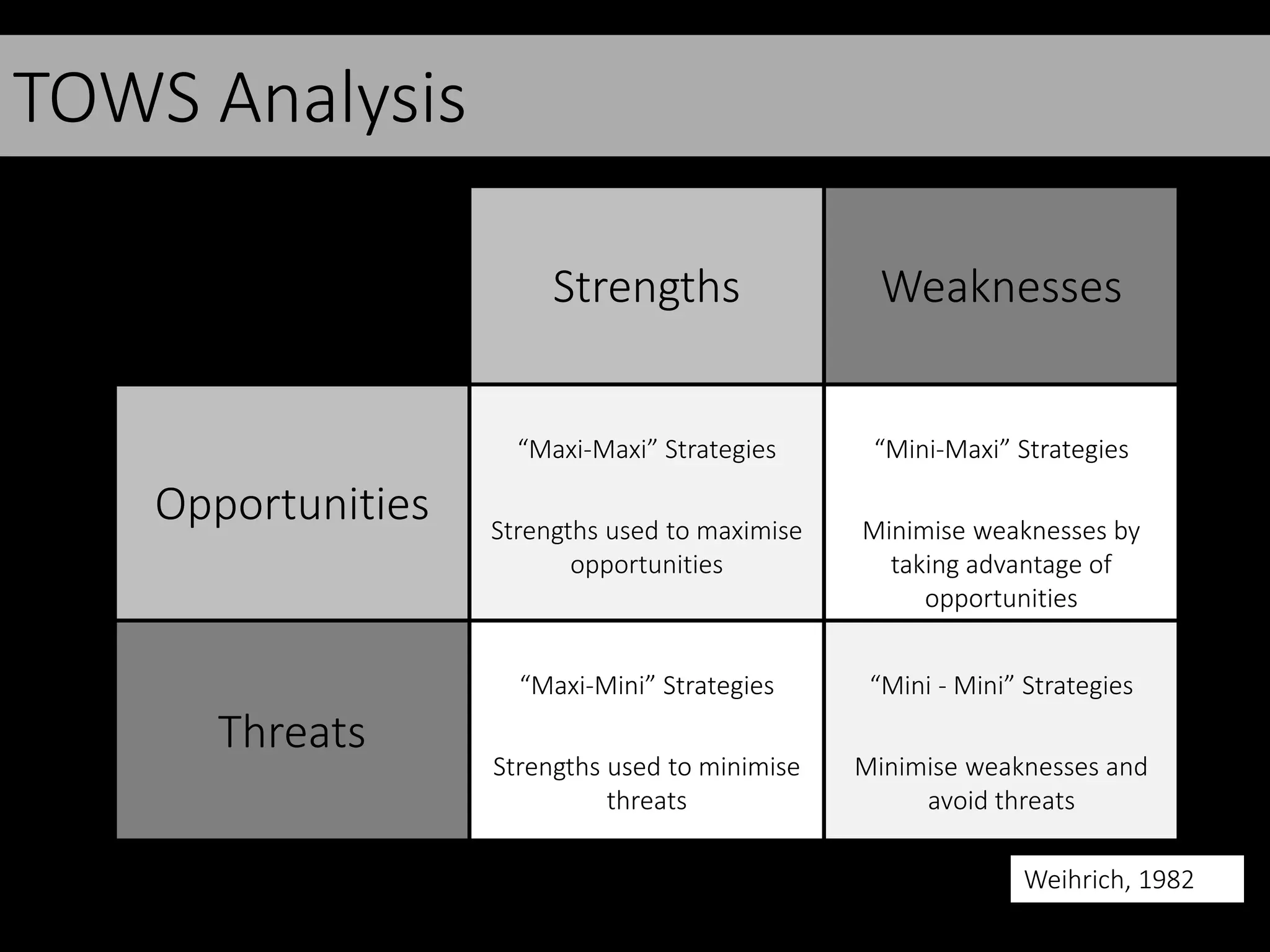
TOWS Analysis
Strengths Weaknesses
Opportunities
“Maxi-Maxi” Strategies
Strengths used to maximise
opportunities
“Mini-Maxi” Strategies
Minimise weaknesses by
taking advantage of
opportunities
Threats
“Maxi-Mini” Strategies
Strengths used to minimise
threats
“Mini - Mini” Strategies
Minimise weaknesses and
avoid threats
Weihrich, 1982
How to complete a TOWS…
How can we make the most of strengths and get around our weaknesses?
How can we capitalise on opportunities and minimise threats?
These are then considered in relation to each other…
…the surrounding boxes are populated with key findings from
the audit – and numbered
It is a simple tool used to generate strategic options or alternatives
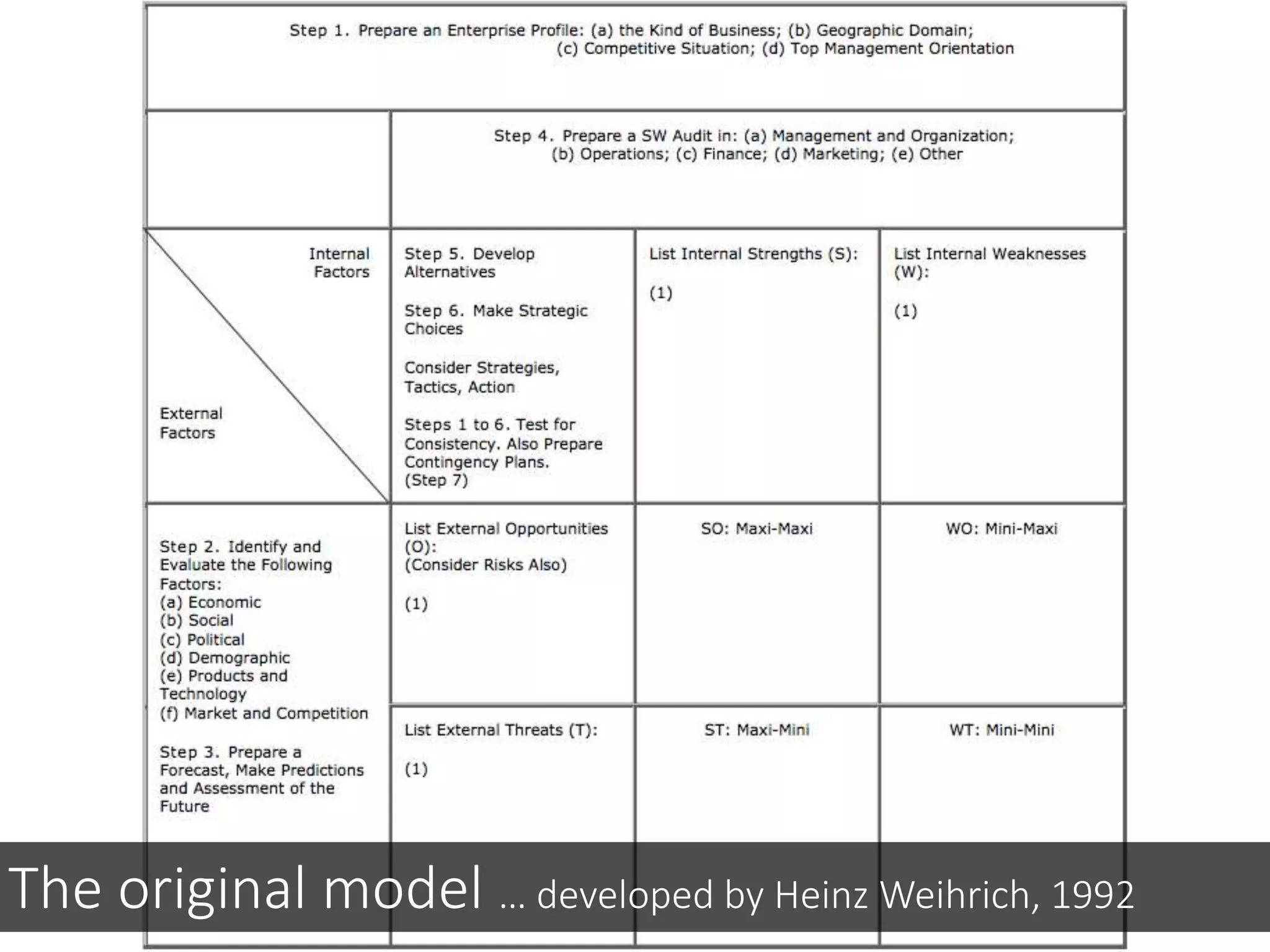
The original model … developed by Heinz Weihrich, 1992
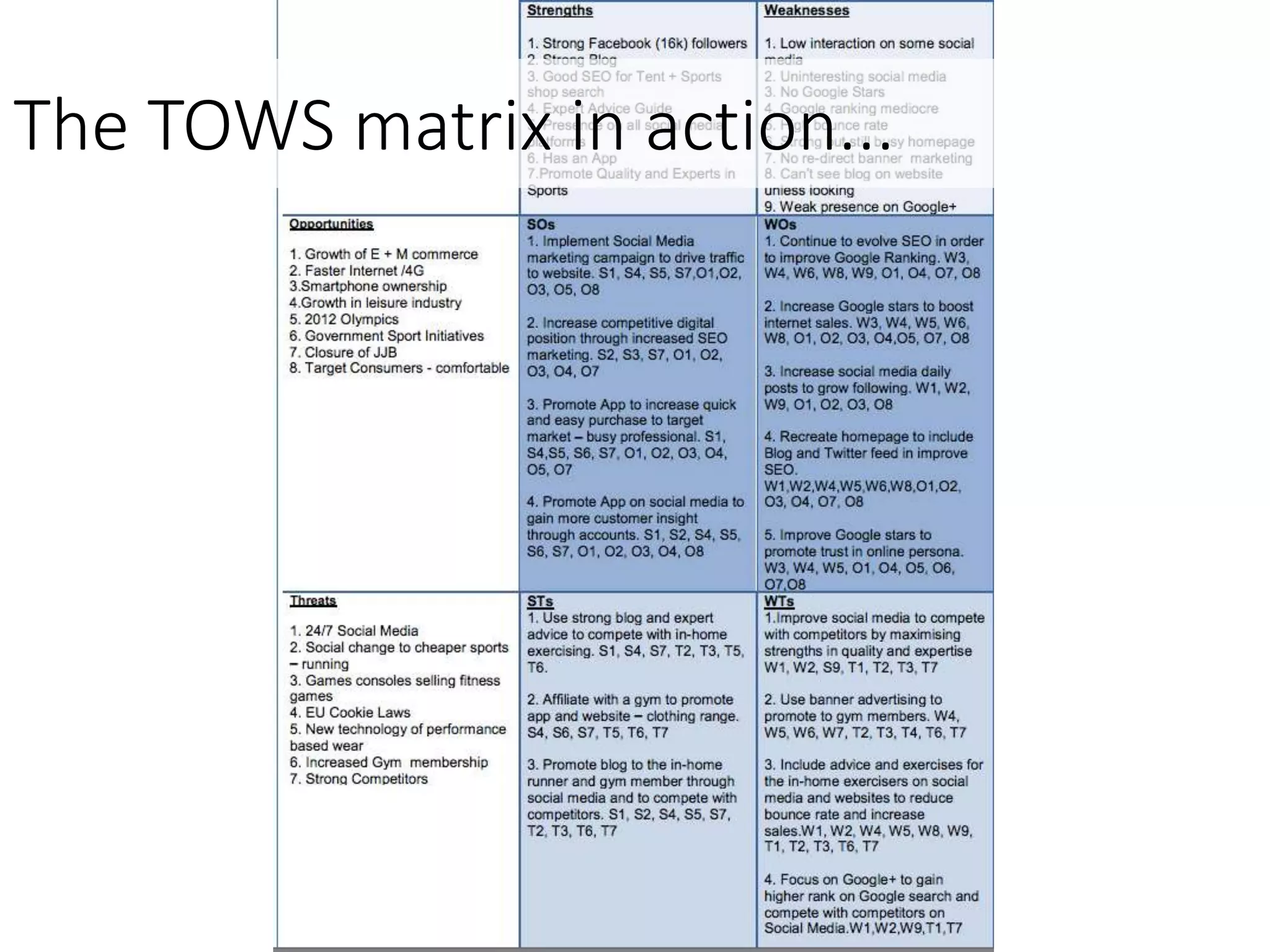
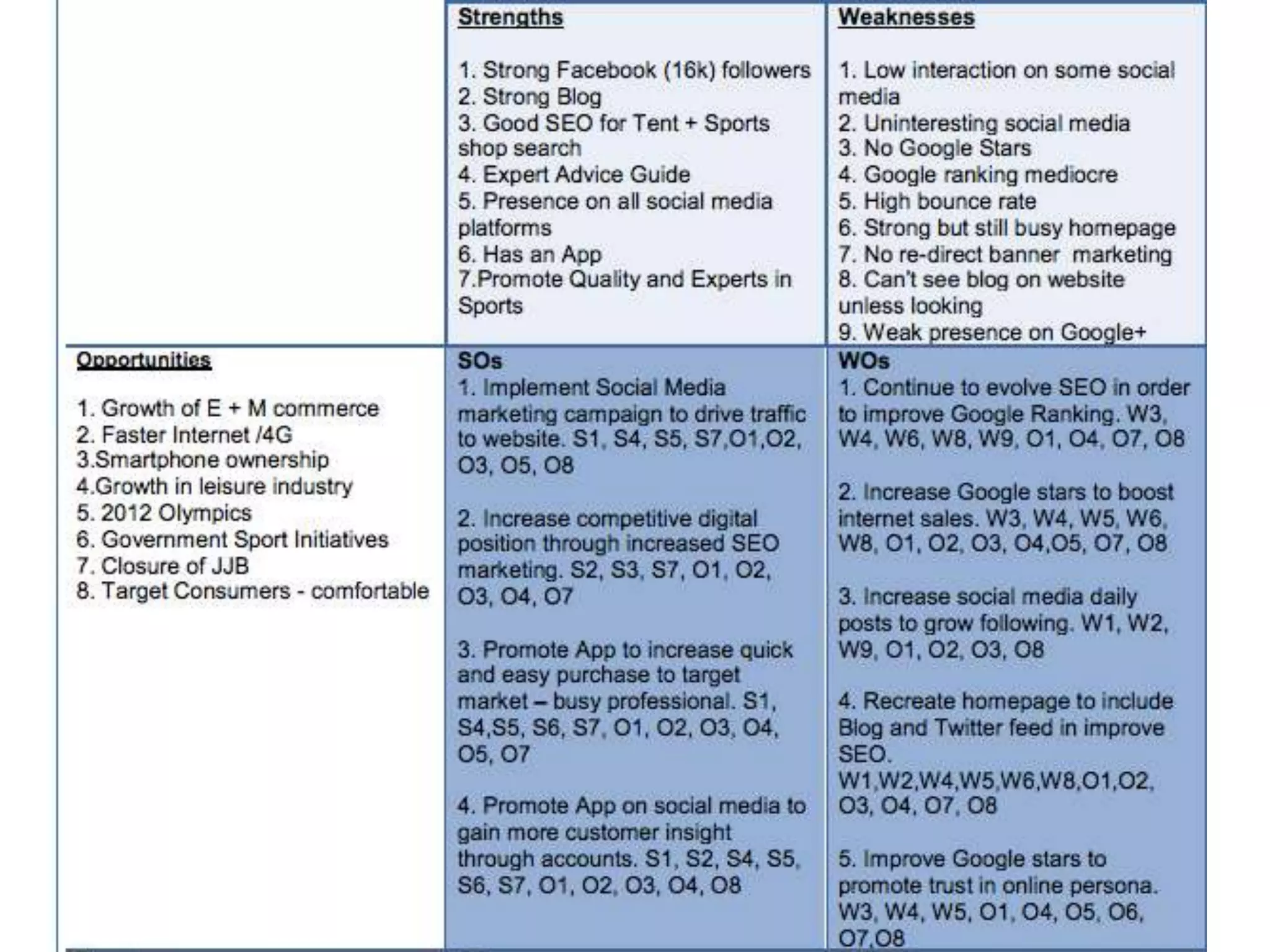
The TOWS matrix in action...
don’t over-complicate – it shouldn’t be a complicated process
It is there to help generate options and alternatives – it isn’t perfect
Make sure you show your thinking and make it work for you
Using the TOWS...
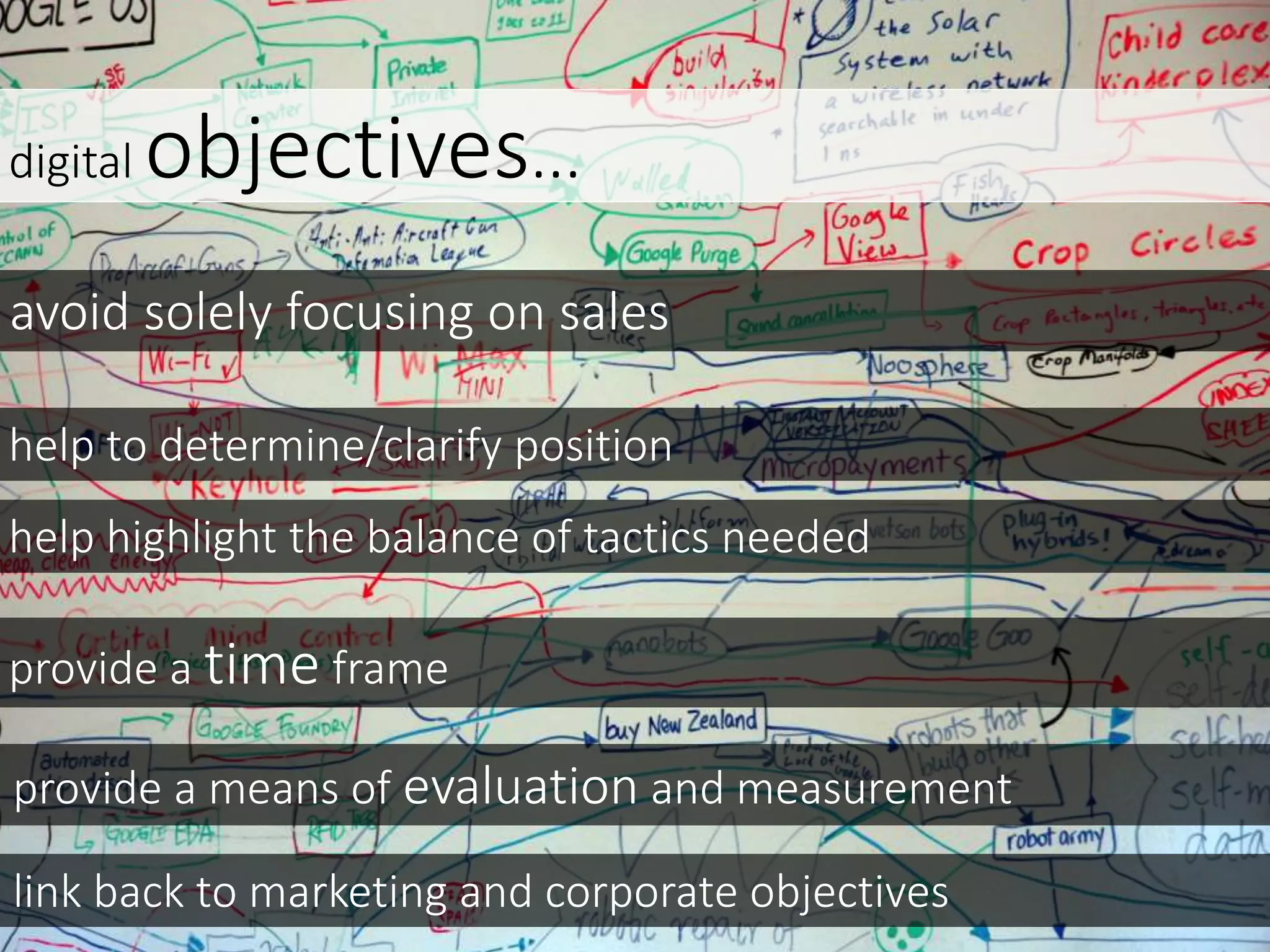
digital objectives...
avoid solely focusing on sales
help to determine/clarify position
help highlight the balance of tactics needed
provide a time frame
provide a means of evaluation and measurement
link back to marketing and corporate objectives
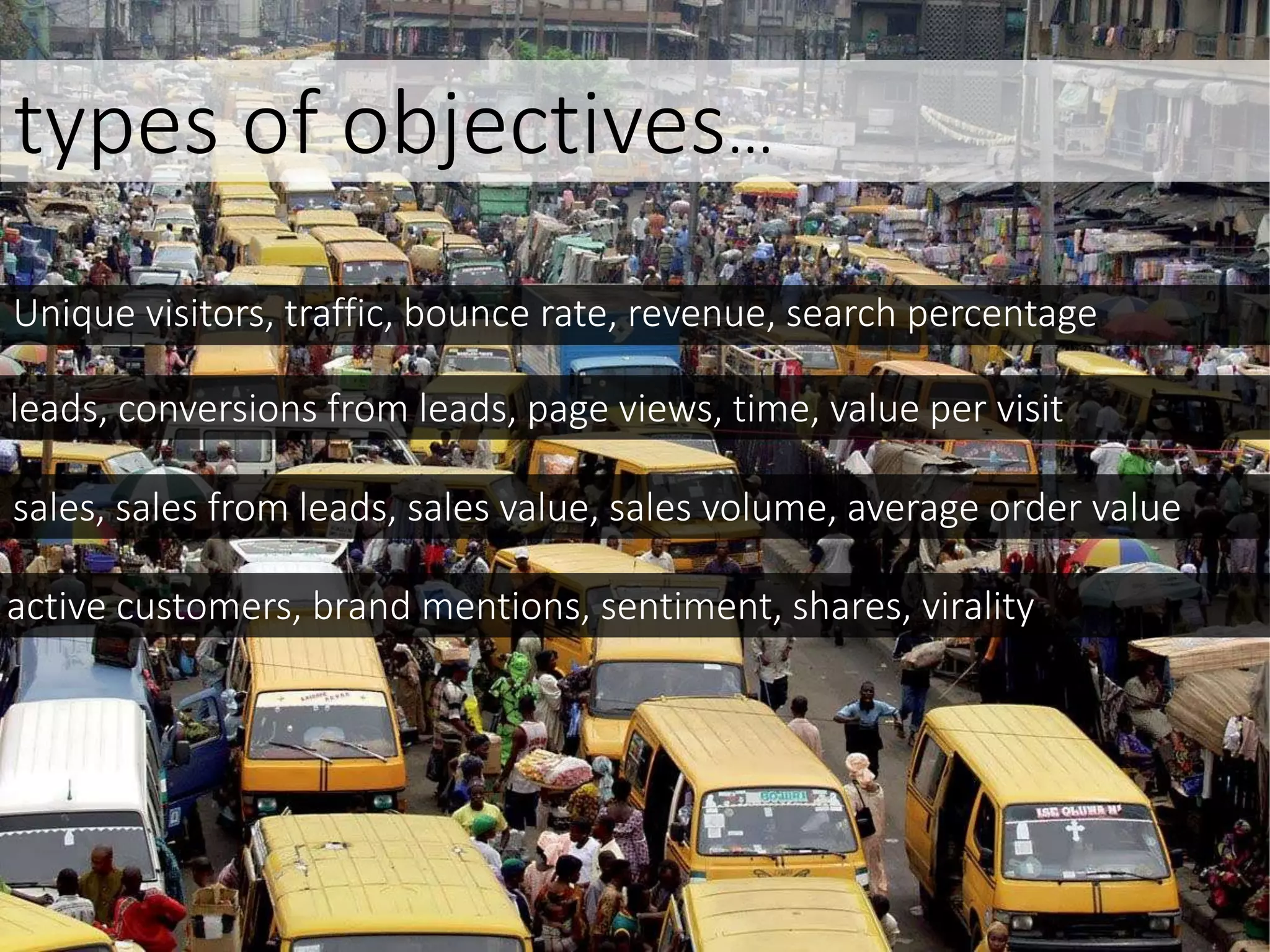
types of objectives…
Unique visitors, traffic, bounce rate, revenue, search percentage
leads, conversions from leads, page views, time, value per visit
sales, sales from leads, sales value, sales volume, average order value
active customers, brand mentions, sentiment, shares, virality
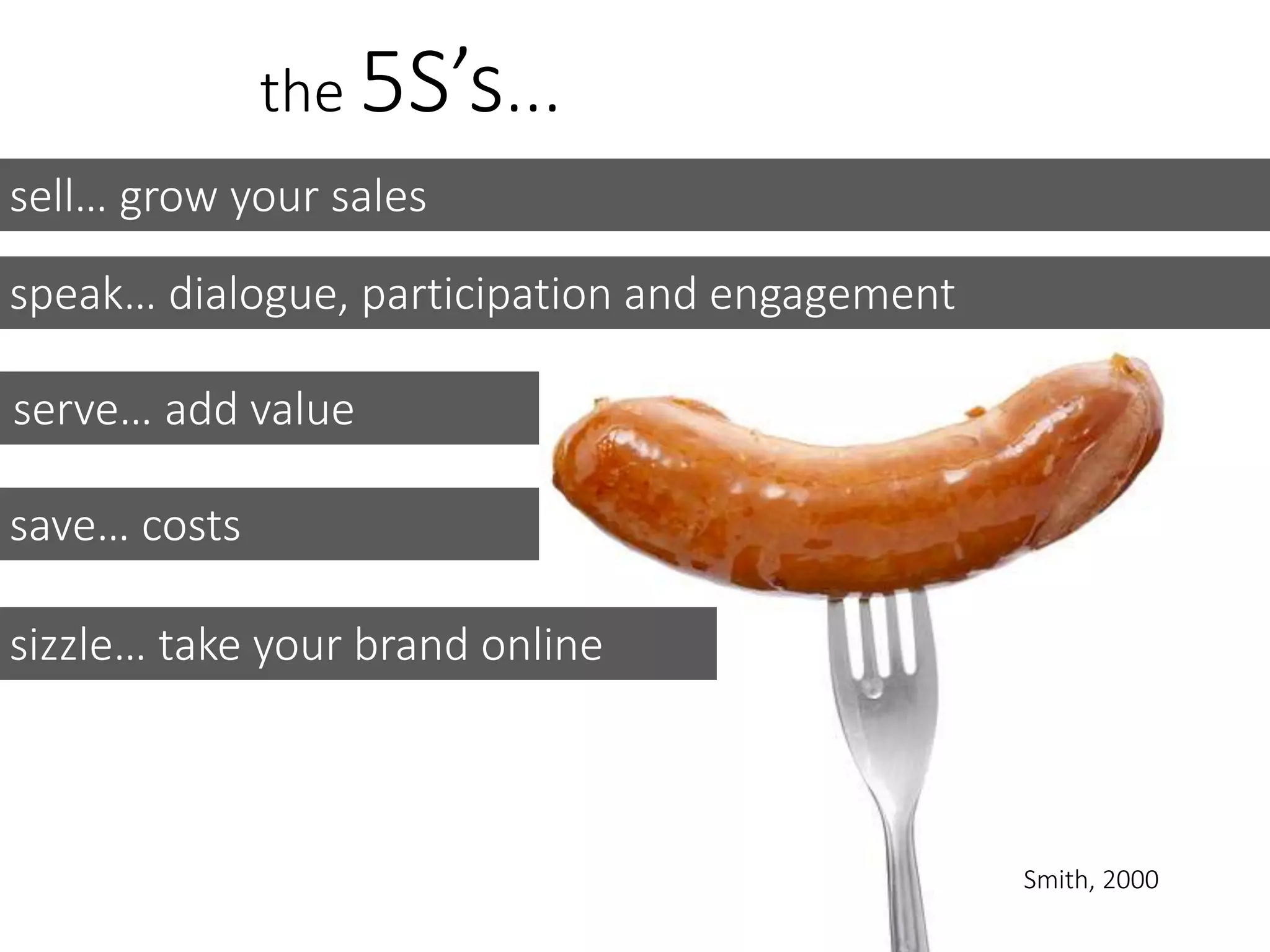
the 5S’s...
sell… grow your sales
speak… dialogue, participation and engagement
serve… add value
save… costs
sizzle… take your brand online
Smith, 2000
strategy… Segmentation
…can use ‘classic’ bases and variables for B2C and B2B
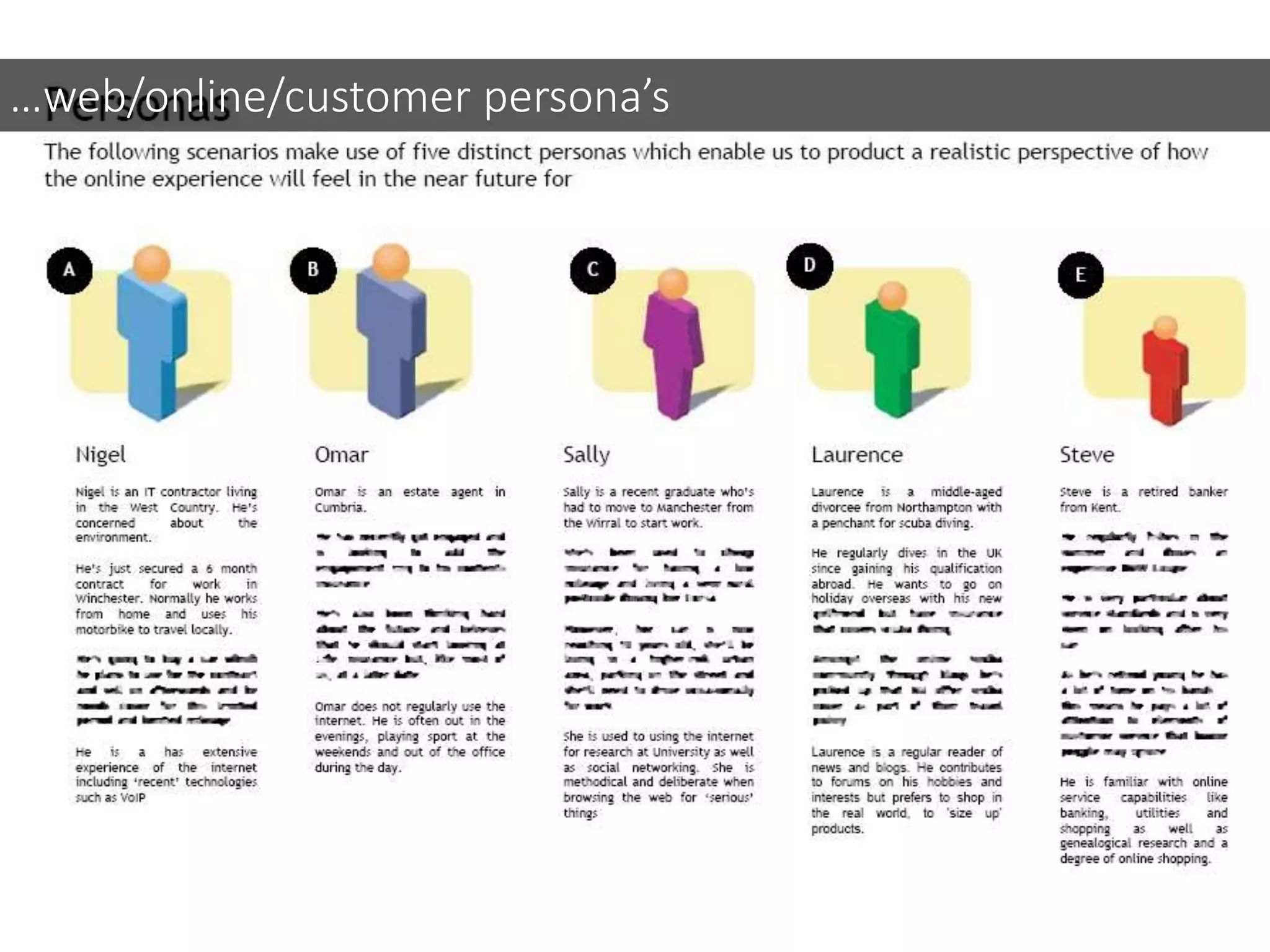
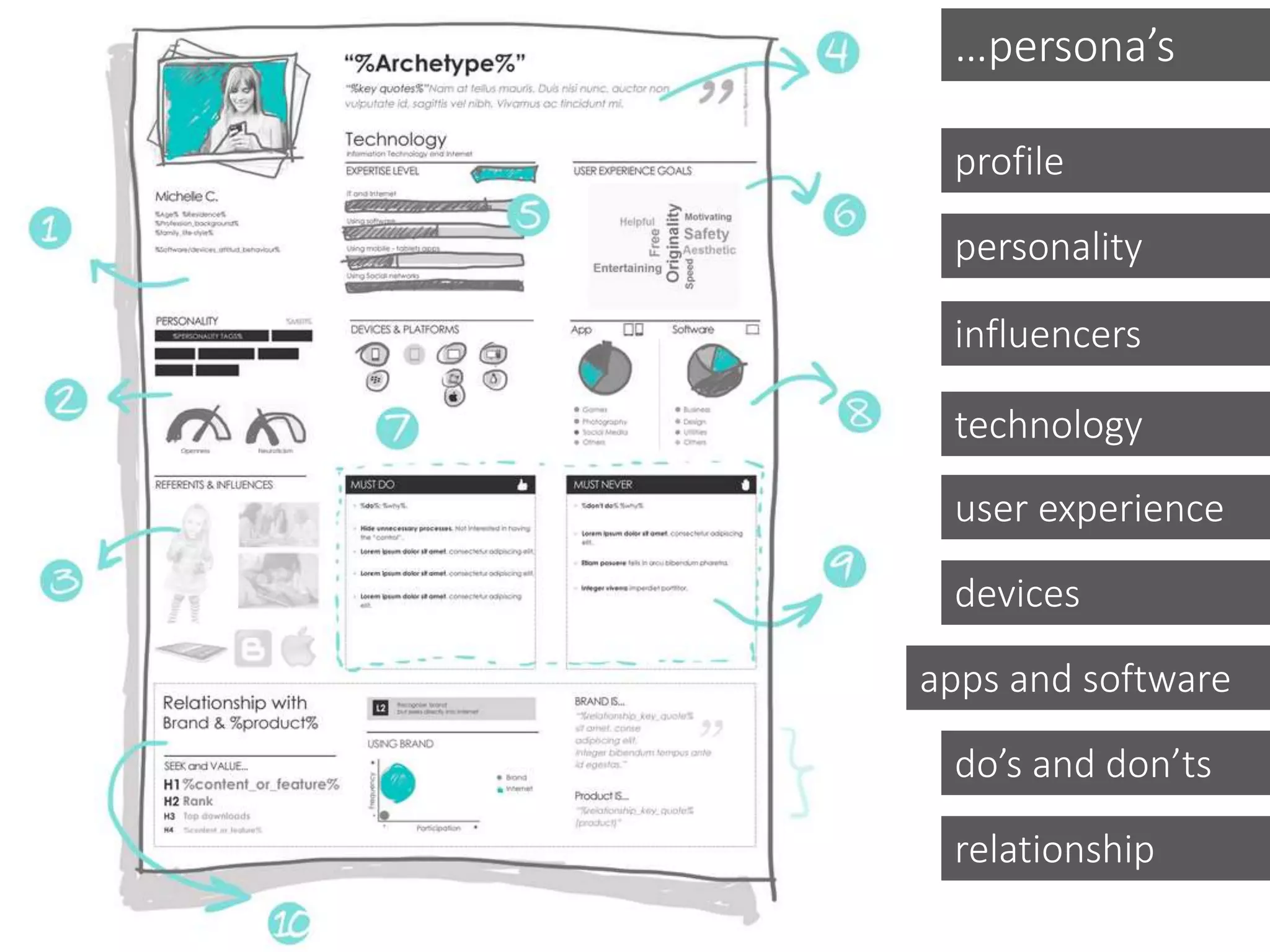
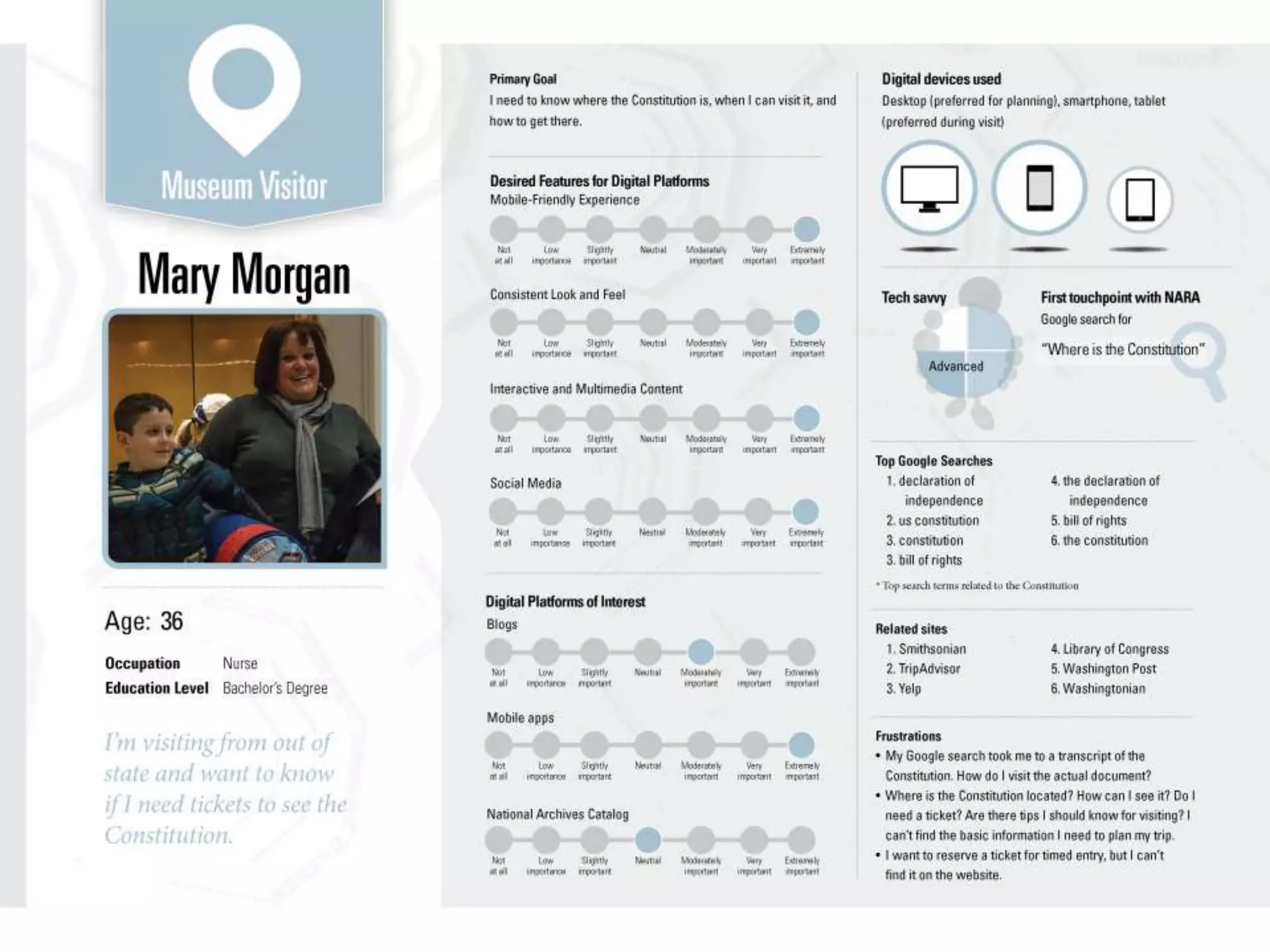
…often developed further as persona’s
online behaviour and digital media consumption is vital
…web/online/customer persona’s
…persona’s
profile
personality
influencers
technology
user experience
devices
apps and software
do’s and don’ts
relationship
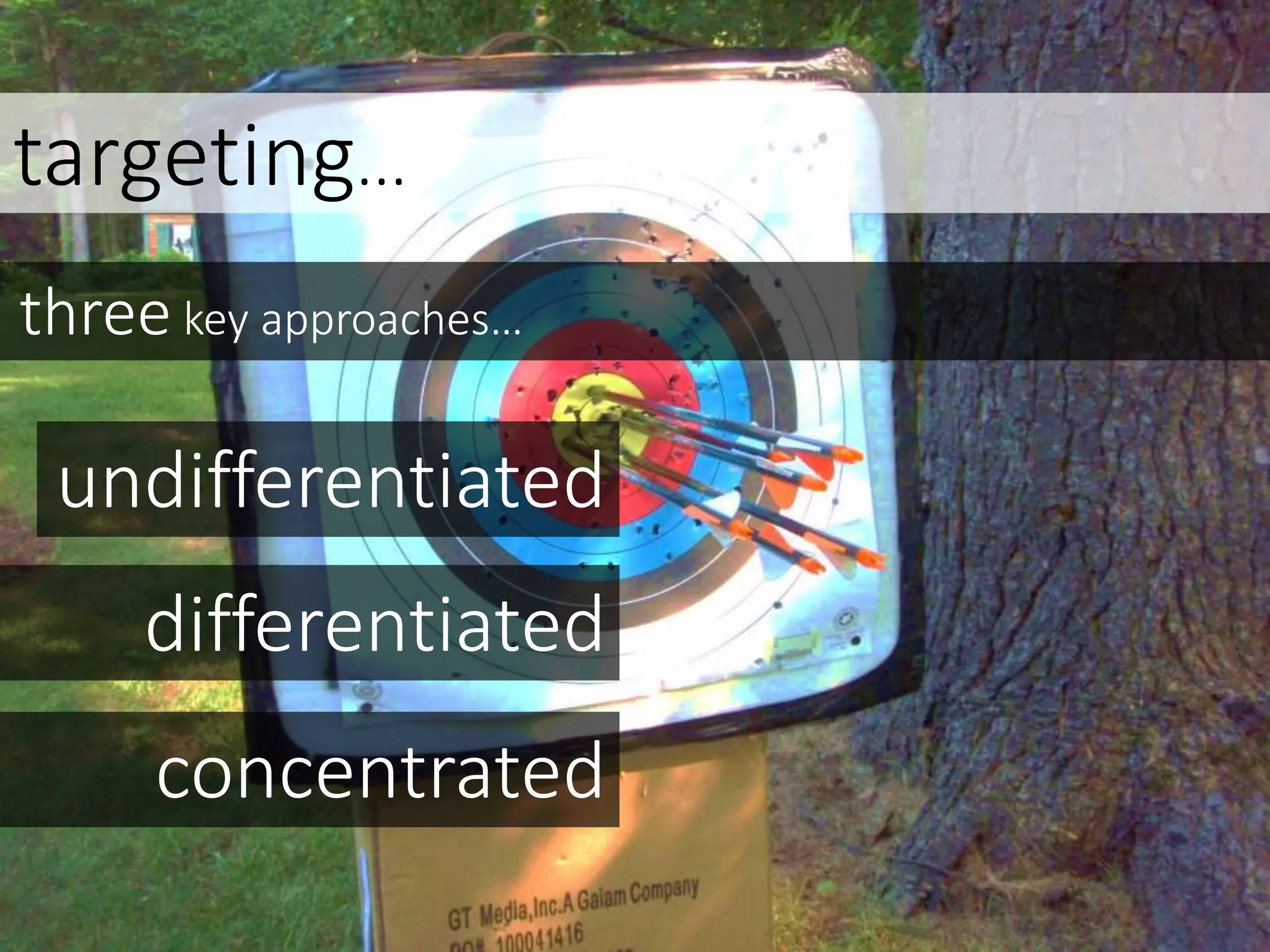
targeting...
three key approaches…
undifferentiated
differentiated
concentrated
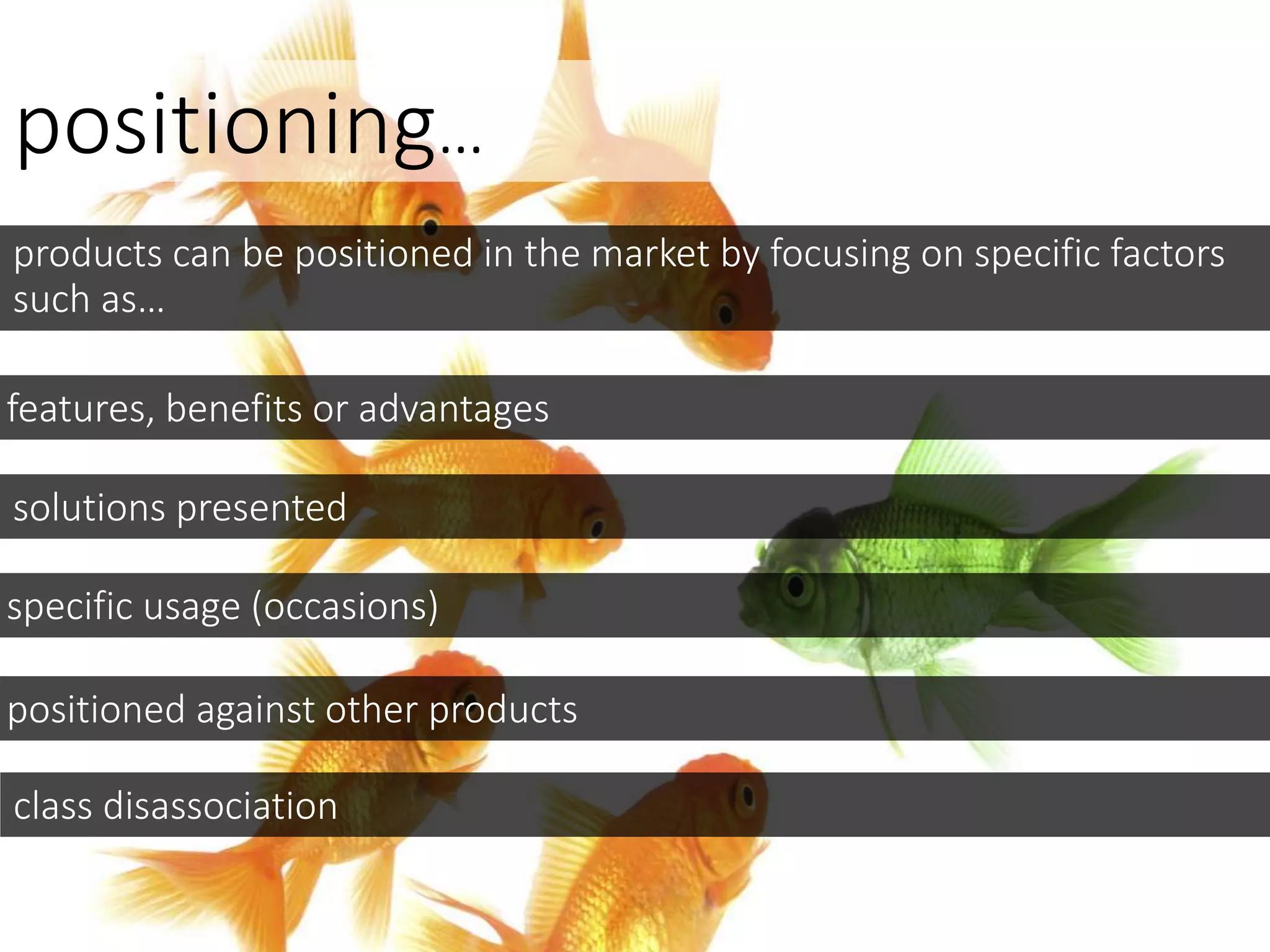
positioning…
products can be positioned in the market by focusing on specific factors
such as…
features, benefits or advantages
solutions presented
specific usage (occasions)
positioned against other products
class disassociation
strategy… OVP
closely tied to the brand position
the reasons why the customer will click, register, buy and share
the intrinsic benefits from the site, content, service and functionality
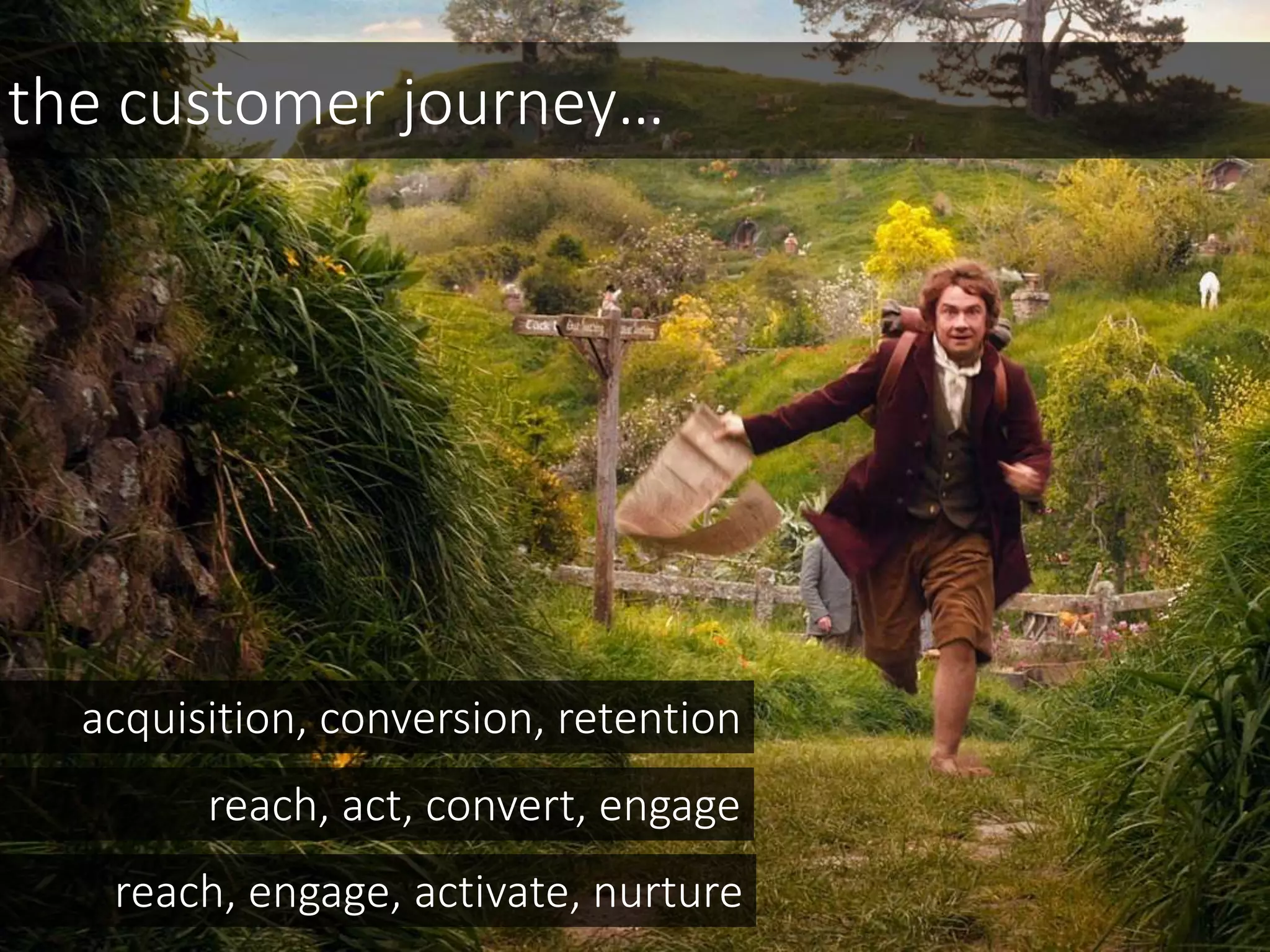
the customer journey…
acquisition, conversion, retention
reach, act, convert, engage
reach, engage, activate, nurture
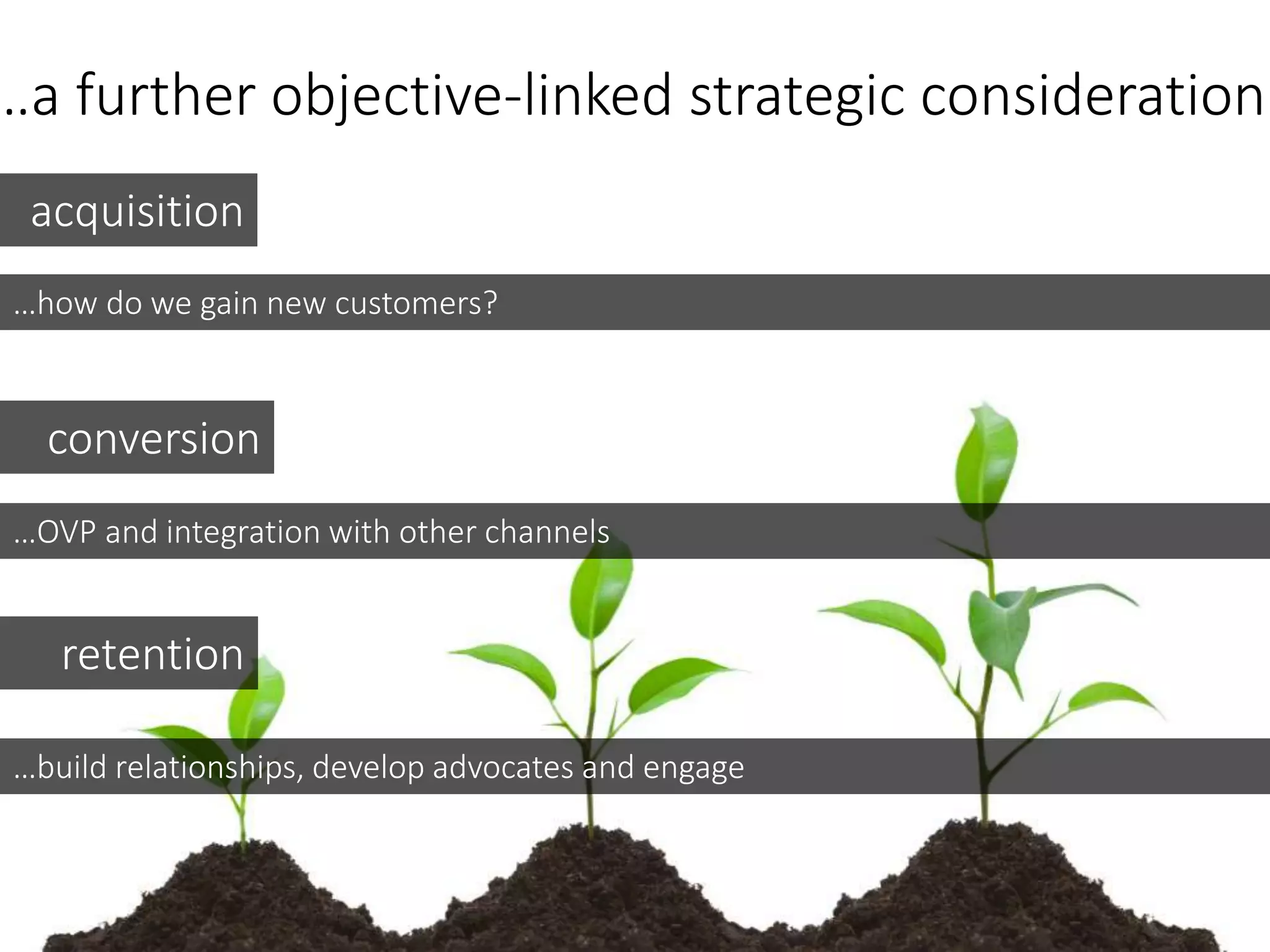
…a further objective-linked strategic consideration
acquisition
conversion
retention
…how do we gain new customers?
…OVP and integration with other channels
…build relationships, develop advocates and engage
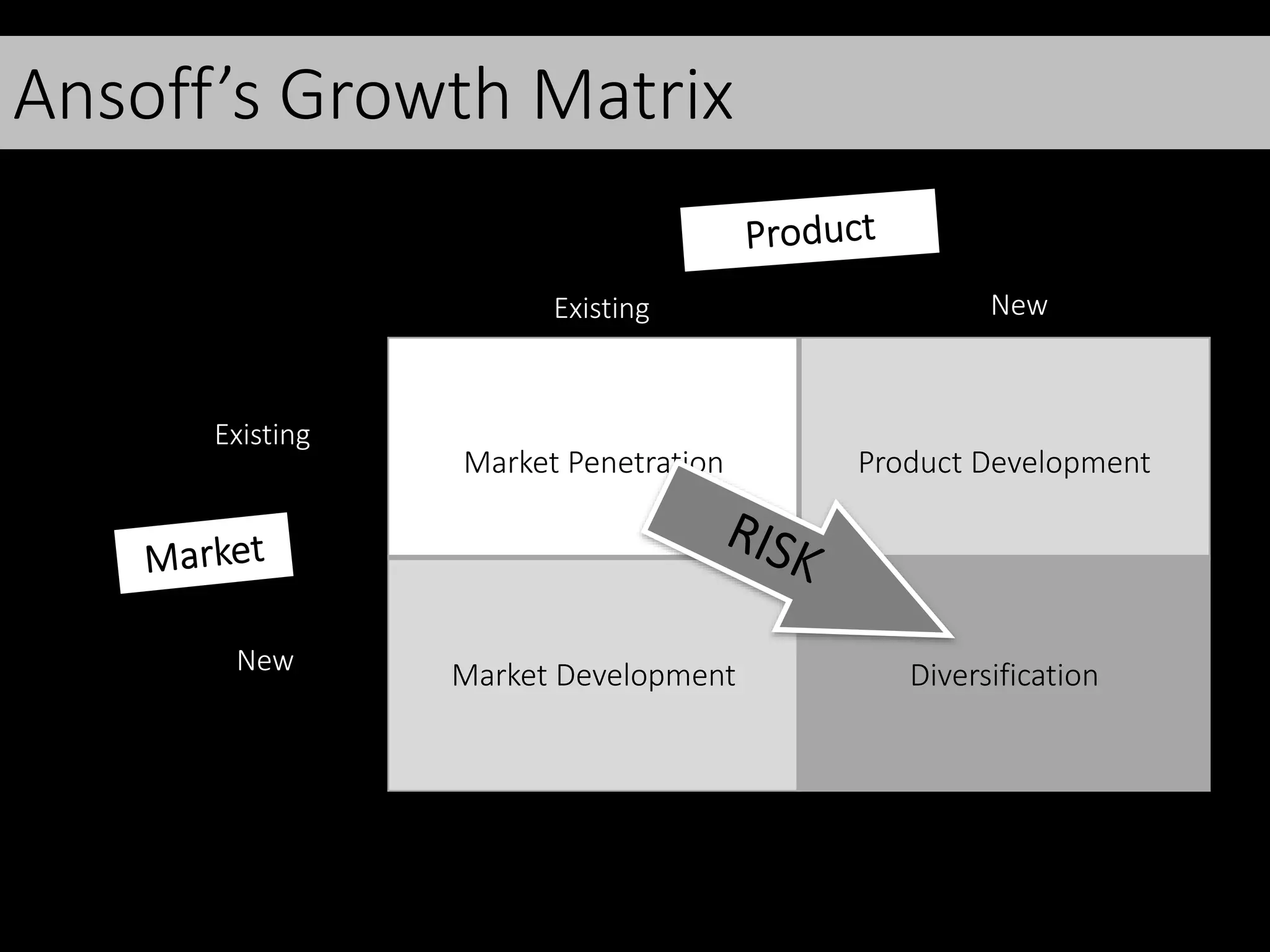
Ansoff’s Growth Matrix
Market Penetration Product Development
Market Development Diversification
Existing
Existing
New
New
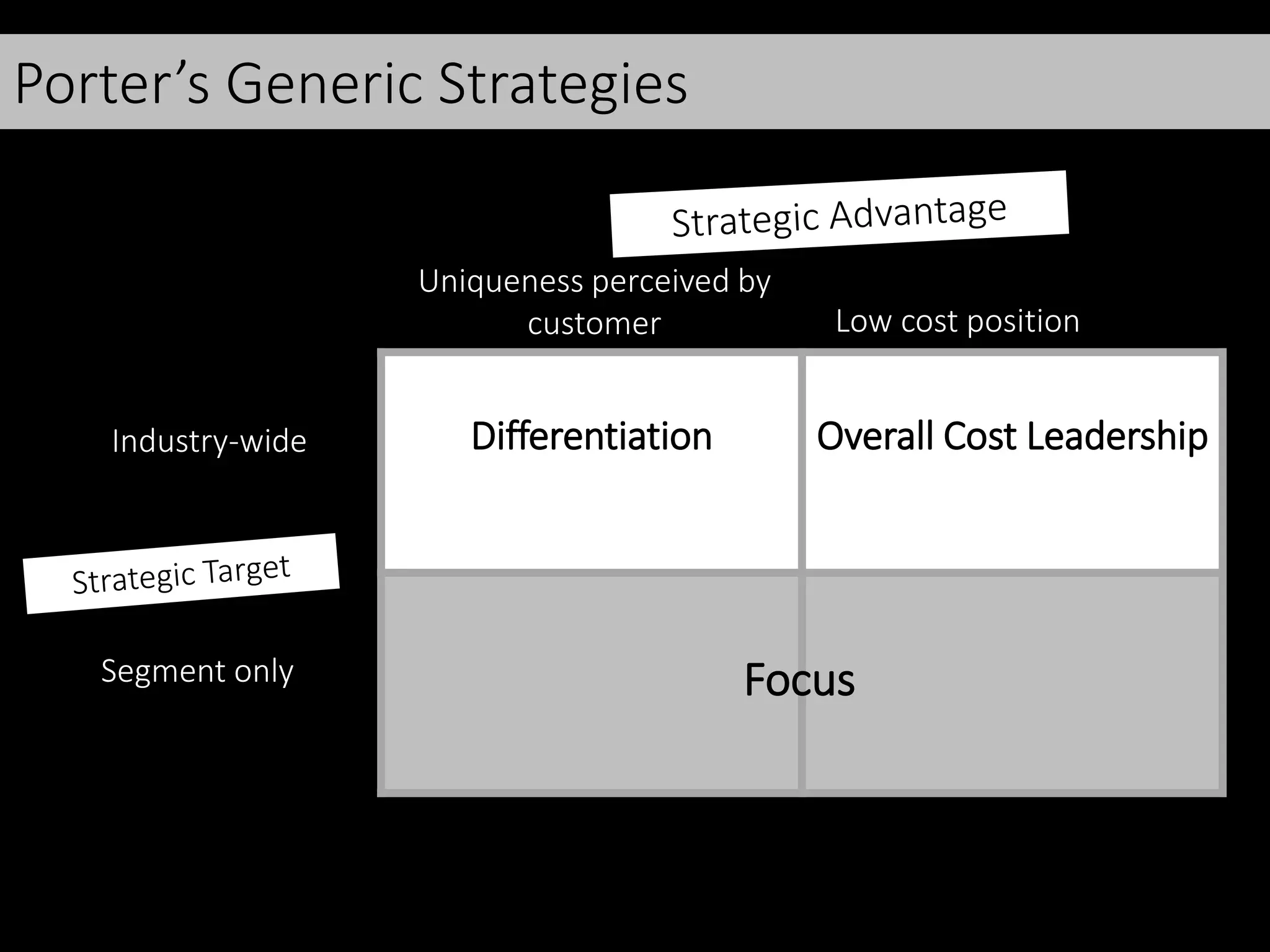
Porter’s Generic Strategies
Differentiation Overall Cost Leadership
Focus
Uniqueness perceived by
customer Low cost position
Industry-wide
Segment only
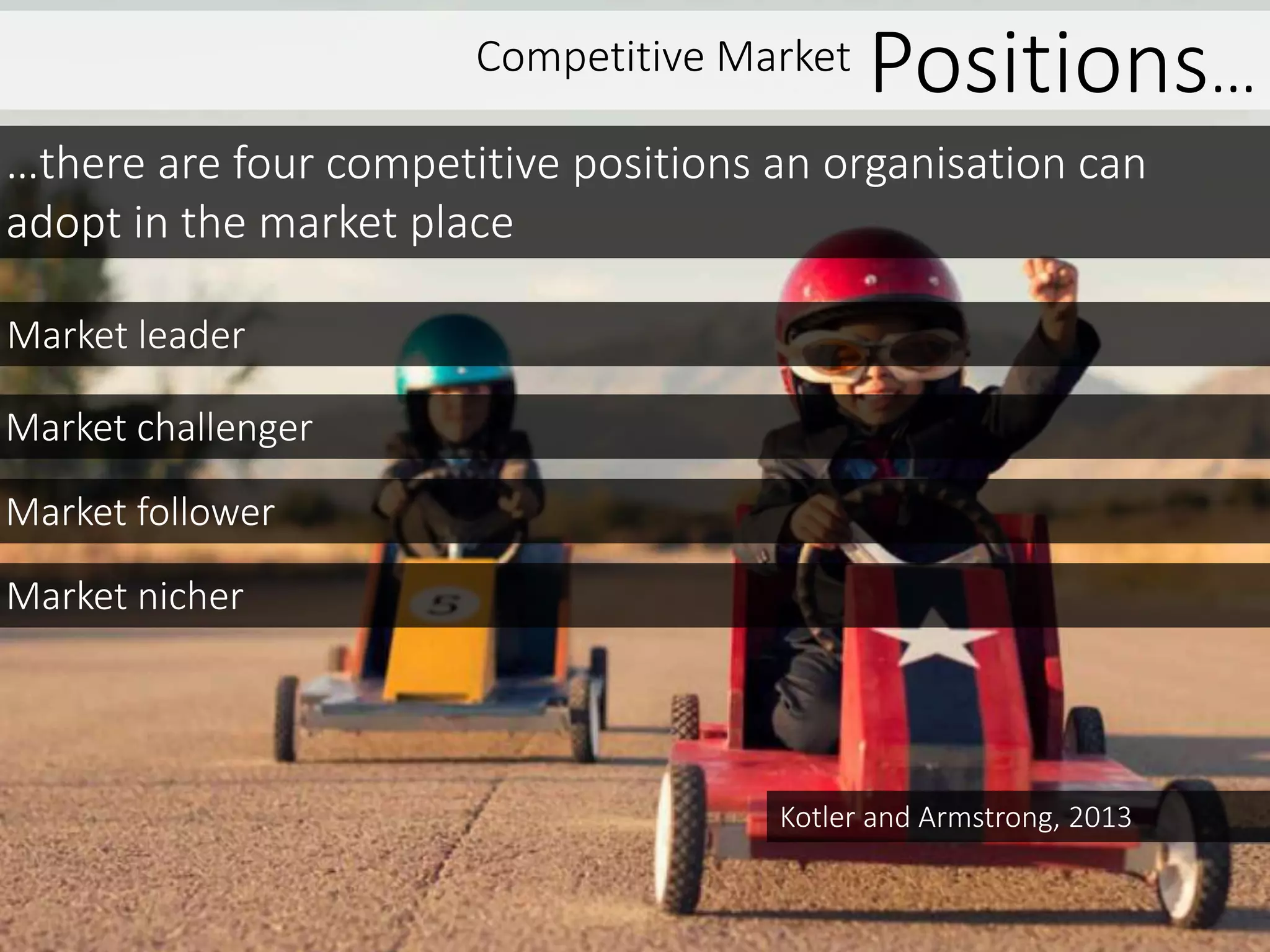
Competitive Market Positions…
Market challenger
Market follower
Market leader
…there are four competitive positions an organisation can
adopt in the market place
Kotler and Armstrong, 2013
Market nicher
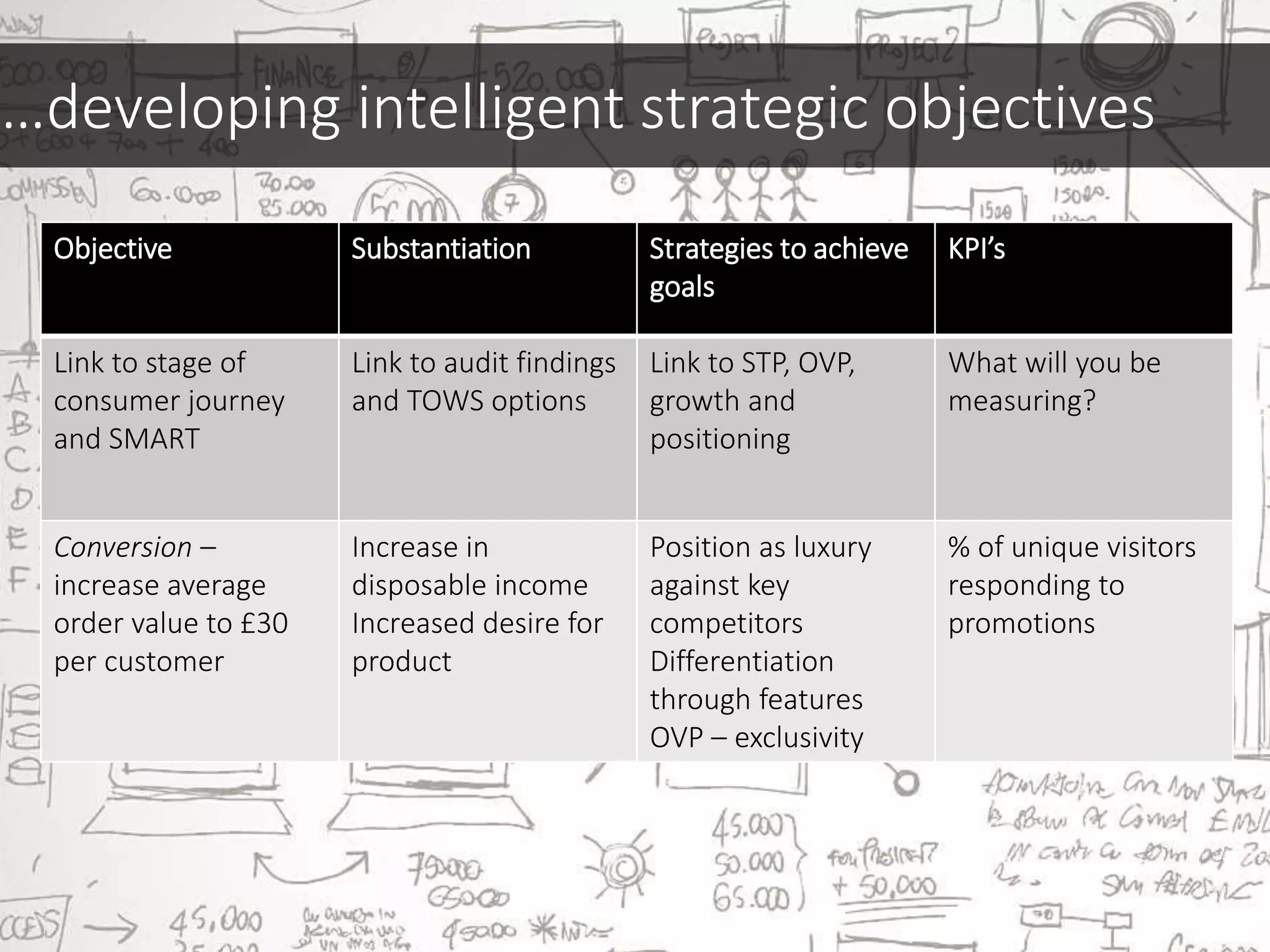
…developing intelligent strategic objectives
Objective Substantiation Strategies to achieve
goals
KPI’s
Link to stage of
consumer journey
and SMART
Link to audit findings
and TOWS options
Link to STP, OVP,
growth and
positioning
What will you be
measuring?
Conversion –
increase average
order value to £30
per customer
Increase in
disposable income
Increased desire for
product
Position as luxury
against key
competitors
Differentiation
through features
OVP – exclusivity
% of unique visitors
responding to
promotions
References and reading
Armstrong, G & Kotler, P. (2008) Marketing- An Introduction. 9th ed Pearson
Education: London
Dibb, S., Simkin, L., Pride, W.M. & Ferrell, O.C. (2012) Marketing: Concepts and
Strategies. 5th European ed. Houghton Mifflin: Abingdon
Ryan, D. and Jones, C. (2009) Understanding Digital Marketing: Marketing
Strategies for Engaging the Digital Generation London: Kogan Page
Wilson, M.S., Gilligan, C., (2005), Strategic Marketing Management,
CIM/Elsevier
http://www.smartinsights.com/digital-marketing-strategy/sostac-model/
http://www.smartinsights.com/digital-marketing-strategy/race-a-practical-
framework-to-improve-your-digital-marketing/
http://www.enterprisebucks.co.uk/wp-content/uploads/2014/09/digital-
marketing-plan-template-smart-insights1.pdf

Digital Strategy - Lecture Four...

  • 1.
    Digital Strategy #DS 4 andstrategy in a digital plan objectives
  • 2.
  • 3.
    TOWS Analysis Strengths Weaknesses Opportunities “Maxi-Maxi”Strategies Strengths used to maximise opportunities “Mini-Maxi” Strategies Minimise weaknesses by taking advantage of opportunities Threats “Maxi-Mini” Strategies Strengths used to minimise threats “Mini - Mini” Strategies Minimise weaknesses and avoid threats Weihrich, 1982
  • 4.
    How to completea TOWS… How can we make the most of strengths and get around our weaknesses? How can we capitalise on opportunities and minimise threats? These are then considered in relation to each other… …the surrounding boxes are populated with key findings from the audit – and numbered It is a simple tool used to generate strategic options or alternatives
  • 5.
    The original model… developed by Heinz Weihrich, 1992
  • 6.
    The TOWS matrixin action...
  • 8.
    don’t over-complicate –it shouldn’t be a complicated process It is there to help generate options and alternatives – it isn’t perfect Make sure you show your thinking and make it work for you Using the TOWS...
  • 9.
    digital objectives... avoid solelyfocusing on sales help to determine/clarify position help highlight the balance of tactics needed provide a time frame provide a means of evaluation and measurement link back to marketing and corporate objectives
  • 10.
    types of objectives… Uniquevisitors, traffic, bounce rate, revenue, search percentage leads, conversions from leads, page views, time, value per visit sales, sales from leads, sales value, sales volume, average order value active customers, brand mentions, sentiment, shares, virality
  • 11.
    the 5S’s... sell… growyour sales speak… dialogue, participation and engagement serve… add value save… costs sizzle… take your brand online Smith, 2000
  • 12.
    strategy… Segmentation …can use‘classic’ bases and variables for B2C and B2B …often developed further as persona’s online behaviour and digital media consumption is vital
  • 13.
  • 14.
  • 16.
  • 17.
    positioning… products can bepositioned in the market by focusing on specific factors such as… features, benefits or advantages solutions presented specific usage (occasions) positioned against other products class disassociation
  • 18.
    strategy… OVP closely tiedto the brand position the reasons why the customer will click, register, buy and share the intrinsic benefits from the site, content, service and functionality
  • 24.
    the customer journey… acquisition,conversion, retention reach, act, convert, engage reach, engage, activate, nurture
  • 25.
    …a further objective-linkedstrategic consideration acquisition conversion retention …how do we gain new customers? …OVP and integration with other channels …build relationships, develop advocates and engage
  • 26.
    Ansoff’s Growth Matrix MarketPenetration Product Development Market Development Diversification Existing Existing New New
  • 27.
    Porter’s Generic Strategies DifferentiationOverall Cost Leadership Focus Uniqueness perceived by customer Low cost position Industry-wide Segment only
  • 28.
    Competitive Market Positions… Marketchallenger Market follower Market leader …there are four competitive positions an organisation can adopt in the market place Kotler and Armstrong, 2013 Market nicher
  • 29.
    …developing intelligent strategicobjectives Objective Substantiation Strategies to achieve goals KPI’s Link to stage of consumer journey and SMART Link to audit findings and TOWS options Link to STP, OVP, growth and positioning What will you be measuring? Conversion – increase average order value to £30 per customer Increase in disposable income Increased desire for product Position as luxury against key competitors Differentiation through features OVP – exclusivity % of unique visitors responding to promotions
  • 30.
    References and reading Armstrong,G & Kotler, P. (2008) Marketing- An Introduction. 9th ed Pearson Education: London Dibb, S., Simkin, L., Pride, W.M. & Ferrell, O.C. (2012) Marketing: Concepts and Strategies. 5th European ed. Houghton Mifflin: Abingdon Ryan, D. and Jones, C. (2009) Understanding Digital Marketing: Marketing Strategies for Engaging the Digital Generation London: Kogan Page Wilson, M.S., Gilligan, C., (2005), Strategic Marketing Management, CIM/Elsevier http://www.smartinsights.com/digital-marketing-strategy/sostac-model/ http://www.smartinsights.com/digital-marketing-strategy/race-a-practical- framework-to-improve-your-digital-marketing/ http://www.enterprisebucks.co.uk/wp-content/uploads/2014/09/digital- marketing-plan-template-smart-insights1.pdf