Digital Literacy in Practice: 
Making Change Happen 
NetworkED: Technology in Education 
Josie Fraser 22 October 2014
Building Schools for the Future 
• Approximately £340 million capital build 
programme 
• 23 secondary school sites - including 
Secondary Behavioural Support Service, SEN, 
Children’s Hospital School 
• 20,000 learner places – all building works 
completed by 2015
Digital Literacy 
…equipping staff & learners with the skills 
to not only take advantage of the 
information & opportunities offered by 
technology, but to take an active role in 
shaping & creating those opportunities - 
social, educational, political, civic, & 
economic.
Key Questions 
#DigiLitLeic 
What does digital literacy look like in practice? 
What are the current strengths and gaps across 
city schools? 
How can we best support staff in developing 
digital literacy skills and confidence?
DigiLit Leicester Project 
• 2 year Knowledge Exchange Project 
• Leicester City Council, De Montfort University and 23 
Leicester BSF schools 
• Lucy Atkins – Research Associate 
• Josie Fraser – Leicester City Council 
• Richard Hall – De Montfort University 
Developing secondary school staff digital literacy, through 
the implementation of a self-evaluation framework.
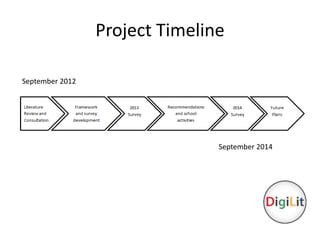
Project Timeline 
September 2012 
September 2014
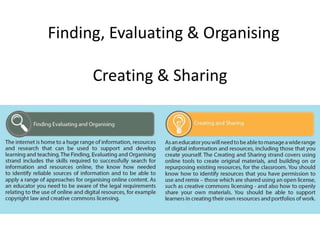
Finding, Evaluating & Organising 
Creating & Sharing
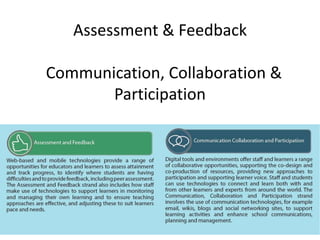
Assessment & Feedback 
Communication, Collaboration & 
Participation
e-Safety & Online Identity 
Technology Supported Professional 
Development
Levels 
• Entry 
• Core 
• Developer 
• Pioneer
Project Activities 
Activities report captures work between January 
2013 and April 2014 – projects can be 
characterised as: 
• Activities designed and managed by the DigiLit 
Leicester team 
• Activities which were proposed and designed 
by the schools
Activities post on LCC SchoolTech
Activity lessons 
• Ambition relating to project opportunities is 
high 
• Schools often need or would welcome 
additional support 
• Pressures on staff time 
• Significant activities relating to the project 
focus have taken place across the schools
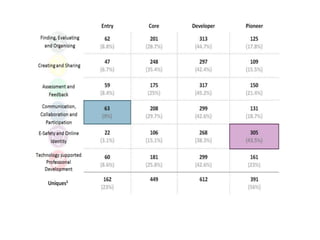
43.5%
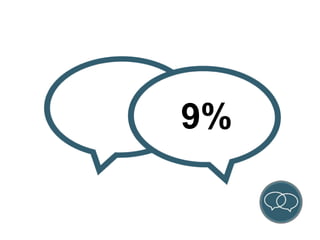
9%
Digital Literacy CPD Priorities 
• Share & promote Pioneer practice 
• Support Entry-level staff 
• Facilitate self-directed staff development 
• Contextualise e-safety guidance & work 
• Increase knowledge and use of Open 
Educational Resources (OERs)
Open Educational Resources 
Guidance for Schools
Project Impact 
• Shared understanding of digital literacy situated in 
practice 
• Engagement with all schools 
• Significant cultural change 
• Digital literacy strategy and implementation plan 
within the University 
• Comparative analysis shows that a statistically 
significant change in staff confidence has occurred 
• Open & Connected Learning
thank you! 
@josiefraser
Project Reports and Links 
Initial Project Report (outlining the secondary school digital literacy 
framework and including all of the survey content), June 2013 
2013 Survey Results , October 2013 
Defining a self-evaluation digital literacy framework for secondary 
educators: the DigiLit Leicester Project – Research in Learning 
Technology, April 2014 
Project Activities Report, May 2014 
2014 Survey Results, September 2014 
www.digilitleic.com

Digital Literacy in Practice

  • 2.
    Digital Literacy inPractice: Making Change Happen NetworkED: Technology in Education Josie Fraser 22 October 2014
  • 3.
    Building Schools forthe Future • Approximately £340 million capital build programme • 23 secondary school sites - including Secondary Behavioural Support Service, SEN, Children’s Hospital School • 20,000 learner places – all building works completed by 2015
  • 4.
    Digital Literacy …equippingstaff & learners with the skills to not only take advantage of the information & opportunities offered by technology, but to take an active role in shaping & creating those opportunities - social, educational, political, civic, & economic.
  • 5.
    Key Questions #DigiLitLeic What does digital literacy look like in practice? What are the current strengths and gaps across city schools? How can we best support staff in developing digital literacy skills and confidence?
  • 6.
    DigiLit Leicester Project • 2 year Knowledge Exchange Project • Leicester City Council, De Montfort University and 23 Leicester BSF schools • Lucy Atkins – Research Associate • Josie Fraser – Leicester City Council • Richard Hall – De Montfort University Developing secondary school staff digital literacy, through the implementation of a self-evaluation framework.
  • 7.
    Project Timeline September2012 September 2014
  • 9.
    Finding, Evaluating &Organising Creating & Sharing
  • 10.
    Assessment & Feedback Communication, Collaboration & Participation
  • 11.
    e-Safety & OnlineIdentity Technology Supported Professional Development
  • 12.
    Levels • Entry • Core • Developer • Pioneer
  • 13.
    Project Activities Activitiesreport captures work between January 2013 and April 2014 – projects can be characterised as: • Activities designed and managed by the DigiLit Leicester team • Activities which were proposed and designed by the schools
  • 14.
    Activities post onLCC SchoolTech
  • 15.
    Activity lessons •Ambition relating to project opportunities is high • Schools often need or would welcome additional support • Pressures on staff time • Significant activities relating to the project focus have taken place across the schools
  • 20.
  • 21.
  • 22.
    Digital Literacy CPDPriorities • Share & promote Pioneer practice • Support Entry-level staff • Facilitate self-directed staff development • Contextualise e-safety guidance & work • Increase knowledge and use of Open Educational Resources (OERs)
  • 23.
    Open Educational Resources Guidance for Schools
  • 24.
    Project Impact •Shared understanding of digital literacy situated in practice • Engagement with all schools • Significant cultural change • Digital literacy strategy and implementation plan within the University • Comparative analysis shows that a statistically significant change in staff confidence has occurred • Open & Connected Learning
  • 25.
  • 26.
    Project Reports andLinks Initial Project Report (outlining the secondary school digital literacy framework and including all of the survey content), June 2013 2013 Survey Results , October 2013 Defining a self-evaluation digital literacy framework for secondary educators: the DigiLit Leicester Project – Research in Learning Technology, April 2014 Project Activities Report, May 2014 2014 Survey Results, September 2014 www.digilitleic.com

Editor's Notes

  • #9 All project resources, findings and output can be found at: http://www.digilitleic.com/
  • #10 http://www.digilitleic.com/?p=328
  • #13 http://www.digilitleic.com/?p=328
  • #17 2014 digital literacy school staff survey findings and recommendations: http://www.digilitleic.com/?p=542
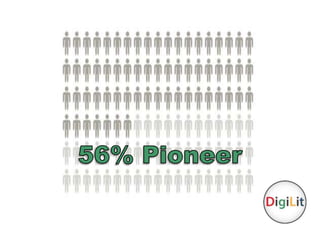
  • #18 2014 digital literacy school staff survey findings and recommendations: http://www.digilitleic.com/?p=542 Sharing and promoting Pioneer practice Fifty-six per cent of staff across the city who participated in the survey, classified their skills and confidence at the Pioneer level in one or more areas.   Pioneer level staff can be characterised as having high levels of confidence across a wide range of tools and approaches for the use of technology to support learning and teaching.   In order to score at Pioneer level, staff are actively supporting their peers – either through the creation of support materials, the design and delivery of training, or the provision of informal support.
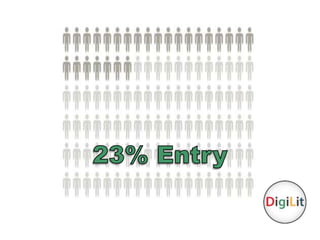
  • #19 2014 digital literacy school staff survey findings and recommendations: http://www.digilitleic.com/?p=542 Twenty-three per cent of staff across the city who participated in the survey, classified their skills and confidence at Entry-level in one or more areas.   Staff who fall within this level are unlikely to have had many opportunities to experiment or engage with technology in the school context. The Core level in the framework relates to the project's baseline of knowledge, skills and practice in the context of secondary education.  
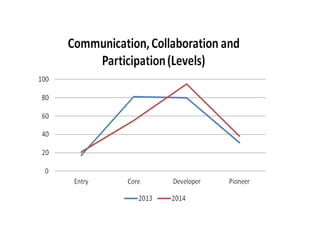
  • #20 Comparison highlights. 2014 digital literacy school staff survey findings and recommendations: http://www.digilitleic.com/?p=542 The comparison of data from the 2013 and 2014 surveys demonstrates the DigiLit Leicester project approach and work has had a positive impact over the last year, with the largest area of progression being from staff who previously identified at Core level. Less progress is shown at Entry level, particularly within Assessment and Feedback and Communication, Collaboration and Participation, indicating that activities which provide greater support and specifically focusing on staff who are interested in beginning to use technology to support their practice is required. Recommendation: Provide supported opportunities and resources specifically designed for and accessible by Entry level staff, particularly in relation to Assessment and Feedback and Communication, Collaboration and Participation. Twenty-one per cent of returning participants noted an increase in their skills and confidence. Comparison data indicates that the project approach (the framework, reflective survey tool, centrally supported activities linked to strand areas, and support for school based, practitioner led activities), has been particularly successful with respect to supporting staff working at Core levels.
  • #21 Staff rate their skills and confidence highest in the area of E-Safety and Online Identity, with 81.8 per cent placing themselves in the Developer and Pioneer levels.  
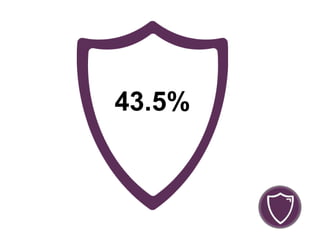
  • #22 Staff rated their skills and confidence the lowest in Communication, Collaboration and Participation, with 38.7 per cent placing themselves at the Entry and Core levels.   This suggests that e-safety education is being managed within a context of restriction and limits on access to certain technologies and digital environments. This approach can be characterised as protected by restrictions and, whilst effective, has been identified as potentially limiting to online opportunities, including the development of digital literacy (Helsper et al. 2013).
  • #24 In Creating and Sharing, 42.1 per cent of staff rated their skills and confidence within the Entry and Core levels of the framework. In line with last year, staff comments informed us that they were unfamiliar with Open Educational Resources (OERs), and Open Licencing. The DigiLit Leicester Project has a commitment to Open Education and the production of Open Educational Resources, to ensure best value, maximum impact of our work, and support connected and collaborative learning practices. The project is currently working on Entry level materials for staff in this area, as well as guidance for school leaders. This work will support staff across the city in understanding and making use of Open Licensing, and creating and sharing their own Open Educational Resources. Recommendation: Provide Entry level advice and guidance for school staff in relation to open licences and the discovery, use, development and creation of Open Educational Resources.
  • #25 The project represents a culture change for both Leicester City Council and the wider schools sector, serving as an exemplar both nationally and internationally. All 23 BSF schools have engaged with the project. The DigiLit team has led on six events and projects, and 21 school-led projects have been undertaken to date. Partnership with De Montfort University, through a Knowledge Exchange Project, is supporting a new digital literacy strategy and implementation plan within the University. The project has raised awareness of potential practices and creating a shared understanding. Analysis comparing the survey data from 2013 and 2014 shows that a statistically significant change in staff confidence has occurred. Levels achieved increased in five of the six key areas (excluding E-Safety and Online Identity).