CYBERBULLYING Josie Fraser Educational Technologist
 
Approaching Cyberbullying Consultation methodology:  Safe to Learn: embedding anti-bullying work in school Understanding how technology has changed  Securing online safety through awareness and education Producing practical and accessible advice
Understanding Cyberbullying What is Cyberbullying &  how common is it ? “ the use of information communications technology (ICT), particularly mobile phones and the internet, deliberately to upset someone else”
How common is cyberbullying? 1.1.5  There have been some studies looking at the extent of cyberbullying amongst children and young people: Research carried out for the Anti-Bullying Alliance (ABA) by Goldsmiths, for example, found that 22 per cent of 11— to16-year-olds had been a victim of cyberbullying1. The MSN  cyberbullying report (20 06) found that 11 per cent of UK teens had experienced cyberbullying.  Noret and River's four-year study on bullying (2007) found that 15 per cent of the 11,227 children surveyed had received nasty or aggressive texts and emails, and demonstrated a year-on-year increase in the number of children who are being bullied using new technology. Research conducted as part of the DCSF cyberbullying information campaign found that 34 per cent of 12— to 15-year-olds reported having been cyberbullied. Qualitative evidence gathered by NASUWT through a survey of teachers has demonstrated that cyberbullying affects the working lives of staff and impacts severely on staff motivation, job satisfaction and teaching practice. 1.1.6  Although there is variation in the figures,  all the research indicates that cyberbullying is a feature of many young people's lives . There is also concern that the level of cyberbullying is increasing. Cyberbullying Stats & Research
Introducing the Technology Mobile Phones IM and VoIP Chatrooms and message boards Email Webcams Social Networking sites Video-hosting sites Gaming sites, consoles and virtual worlds
Forms that Cyberbullying can take Threats and intimidation Harassment or stalking Vilification/defamation Ostracising/peer rejection/exclusion Identity theft, unauthorised access and impersonation Publicly posting, sending or forwarding personal or private information or images Manipulation -  Tech Abuse in Teen Relationships
How is Cyberbullying Different? 24/7 and invasion of personal space Audience  Anonymity Profile of bully and target Evidence
Preventing Cyberbullying Taking a whole-school community approach : Understanding and talking about cyberbullying  Updating Existing Policies and Practices Making reporting cyberbullying easier Promoting the positive use of technology Evaluating the impact of prevention activities
A whole-school community approach Shared understanding & definition  Cyberbullying can affect everyone Coordinating responsibility
Understanding & talking about cyberbullying Promoting awareness, keeping bullying a live issue Publicising sanctions Providing information about out of school support
Updating existing policies and practices New technologies, new practices - for example video hosting sites - asking students!  Logging incidents Acceptable use policies
Make reporting easier Review and publicise existing routes Explore new routes  Signpost external routes
Promote the positive use of technology Importance of teachers awareness of good examples & can act as good role models - Or even better, can support their students in modeling good practice!
Evaluating the impact Surveying, student & parent satisfaction  Celebrate success & innovation
Responding to Cyberbullying Cyberbullying is a form of bullying Support for the person being bullied Investigation Working with the bully and applying sanctions
Cyberbullying is a form of bullying Cyberbullying is about behavior and harm - primarily a disciplinary and pastoral issue  Drawing on existing anti-bullying and behavioral policies Awareness of differences
Support for the person being bullied Emotional & cultural support Online empowerment Containing the incident
Investigation Preserve evidence Identifying the bully
Working with the bully and sanctions Appropriate and proportionate sanctions Unintentional cyberbullying Cyberbullying as retaliation
Resources The guidance Overview document Online campaign Cyberbullying film and teacher support materials Digizen
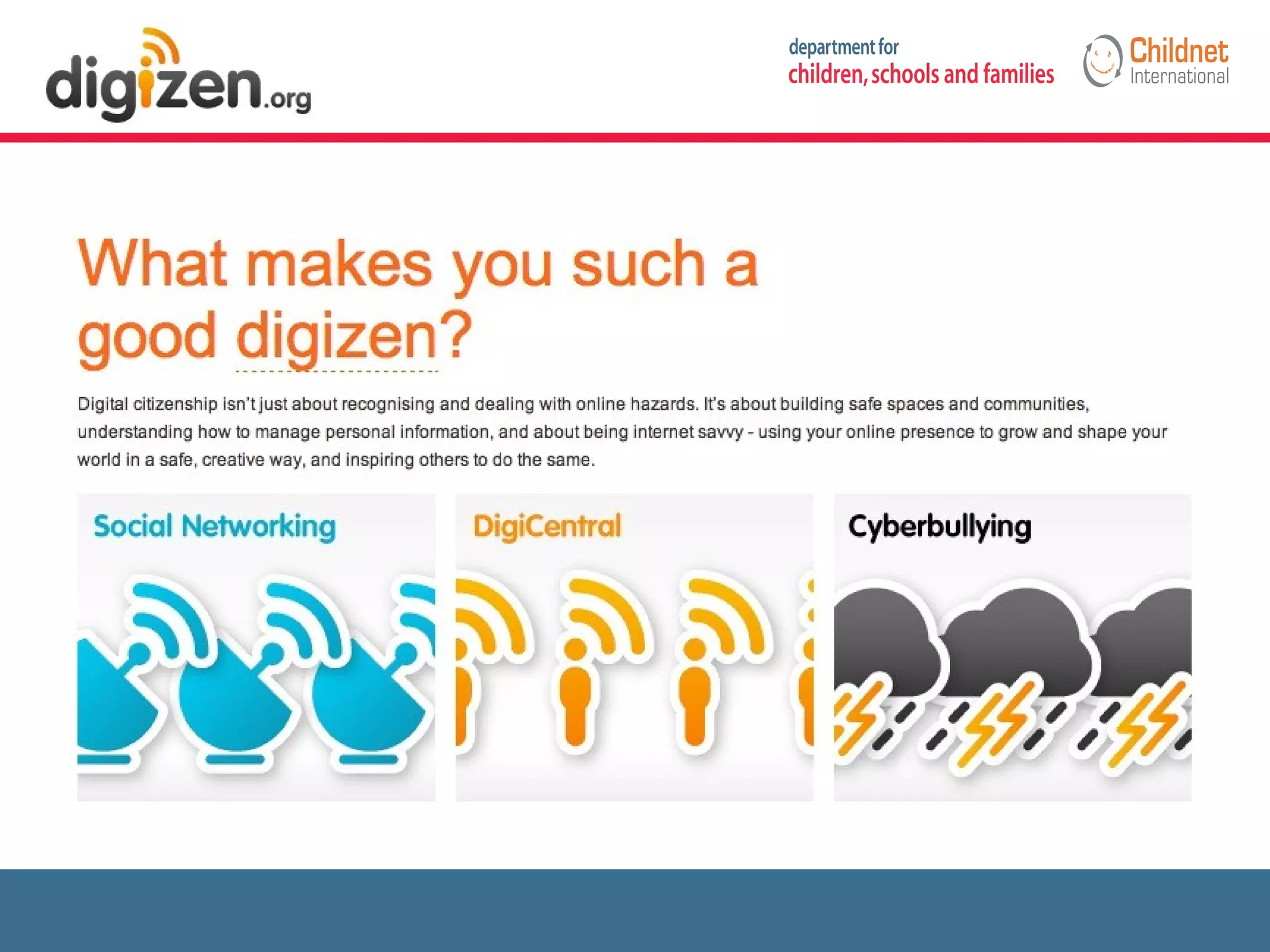
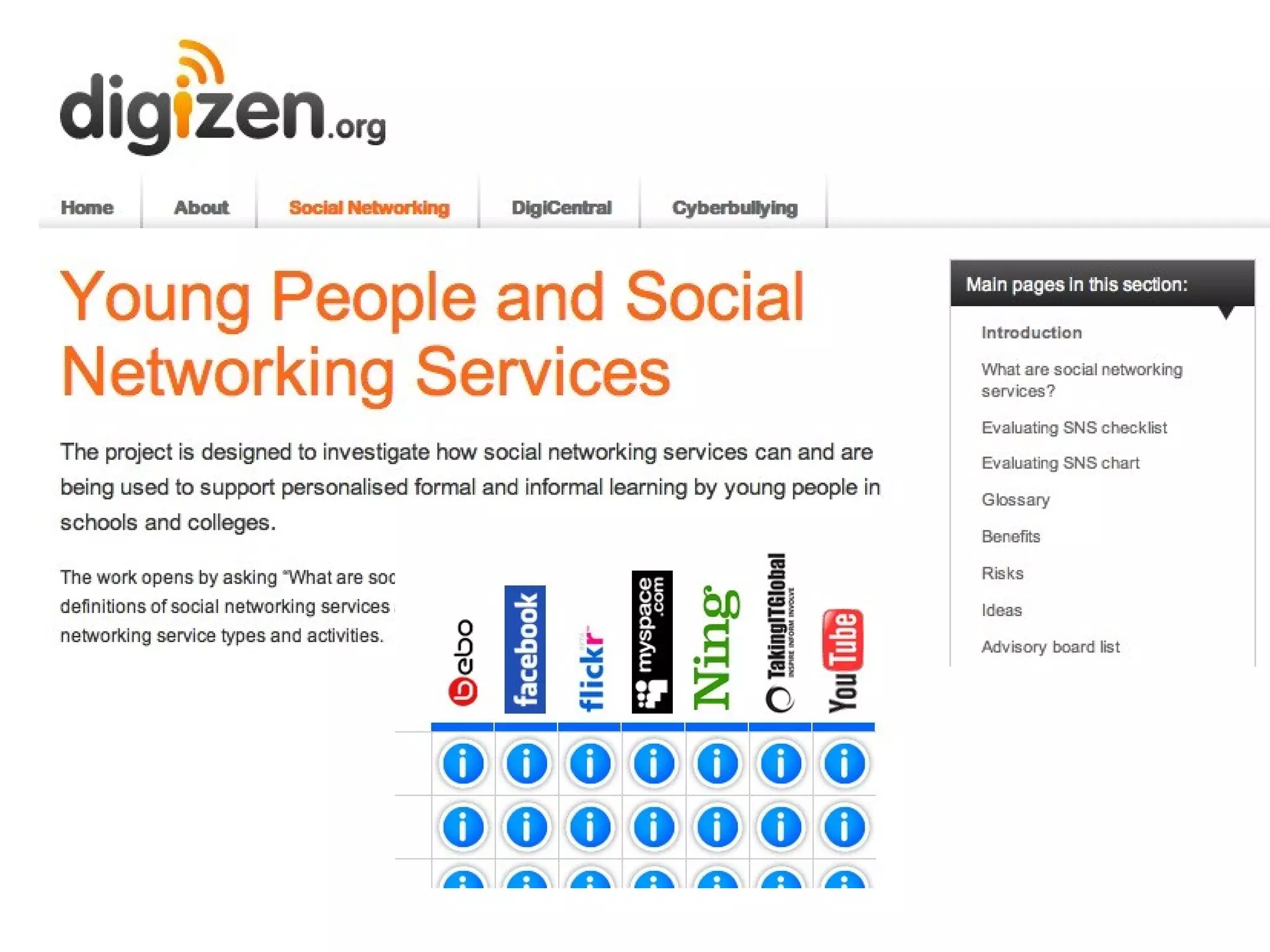
Digizen
 
 
Thank you!  Josie Fraser [email_address]

Cyberbullying Presentation 2008

  • 1.
    CYBERBULLYING Josie FraserEducational Technologist
  • 2.
  • 3.
    Approaching Cyberbullying Consultationmethodology: Safe to Learn: embedding anti-bullying work in school Understanding how technology has changed Securing online safety through awareness and education Producing practical and accessible advice
  • 4.
    Understanding Cyberbullying Whatis Cyberbullying & how common is it ? “ the use of information communications technology (ICT), particularly mobile phones and the internet, deliberately to upset someone else”
  • 5.
    How common iscyberbullying? 1.1.5 There have been some studies looking at the extent of cyberbullying amongst children and young people: Research carried out for the Anti-Bullying Alliance (ABA) by Goldsmiths, for example, found that 22 per cent of 11— to16-year-olds had been a victim of cyberbullying1. The MSN cyberbullying report (20 06) found that 11 per cent of UK teens had experienced cyberbullying. Noret and River's four-year study on bullying (2007) found that 15 per cent of the 11,227 children surveyed had received nasty or aggressive texts and emails, and demonstrated a year-on-year increase in the number of children who are being bullied using new technology. Research conducted as part of the DCSF cyberbullying information campaign found that 34 per cent of 12— to 15-year-olds reported having been cyberbullied. Qualitative evidence gathered by NASUWT through a survey of teachers has demonstrated that cyberbullying affects the working lives of staff and impacts severely on staff motivation, job satisfaction and teaching practice. 1.1.6 Although there is variation in the figures, all the research indicates that cyberbullying is a feature of many young people's lives . There is also concern that the level of cyberbullying is increasing. Cyberbullying Stats & Research
  • 6.
    Introducing the TechnologyMobile Phones IM and VoIP Chatrooms and message boards Email Webcams Social Networking sites Video-hosting sites Gaming sites, consoles and virtual worlds
  • 7.
    Forms that Cyberbullyingcan take Threats and intimidation Harassment or stalking Vilification/defamation Ostracising/peer rejection/exclusion Identity theft, unauthorised access and impersonation Publicly posting, sending or forwarding personal or private information or images Manipulation - Tech Abuse in Teen Relationships
  • 8.
    How is CyberbullyingDifferent? 24/7 and invasion of personal space Audience Anonymity Profile of bully and target Evidence
  • 9.
    Preventing Cyberbullying Takinga whole-school community approach : Understanding and talking about cyberbullying Updating Existing Policies and Practices Making reporting cyberbullying easier Promoting the positive use of technology Evaluating the impact of prevention activities
  • 10.
    A whole-school communityapproach Shared understanding & definition Cyberbullying can affect everyone Coordinating responsibility
  • 11.
    Understanding & talkingabout cyberbullying Promoting awareness, keeping bullying a live issue Publicising sanctions Providing information about out of school support
  • 12.
    Updating existing policiesand practices New technologies, new practices - for example video hosting sites - asking students! Logging incidents Acceptable use policies
  • 13.
    Make reporting easierReview and publicise existing routes Explore new routes Signpost external routes
  • 14.
    Promote the positiveuse of technology Importance of teachers awareness of good examples & can act as good role models - Or even better, can support their students in modeling good practice!
  • 15.
    Evaluating the impactSurveying, student & parent satisfaction Celebrate success & innovation
  • 16.
    Responding to CyberbullyingCyberbullying is a form of bullying Support for the person being bullied Investigation Working with the bully and applying sanctions
  • 17.
    Cyberbullying is aform of bullying Cyberbullying is about behavior and harm - primarily a disciplinary and pastoral issue Drawing on existing anti-bullying and behavioral policies Awareness of differences
  • 18.
    Support for theperson being bullied Emotional & cultural support Online empowerment Containing the incident
  • 19.
    Investigation Preserve evidenceIdentifying the bully
  • 20.
    Working with thebully and sanctions Appropriate and proportionate sanctions Unintentional cyberbullying Cyberbullying as retaliation
  • 21.
    Resources The guidanceOverview document Online campaign Cyberbullying film and teacher support materials Digizen
  • 22.
  • 23.
  • 24.
  • 25.
    Thank you! Josie Fraser [email_address]