Digital Citizen/Digital Access
1
‘Capturing the voice of the child’
A co-design approach to developing calmer
classrooms
Dr Debbie Holley, Centre for Excellence in Learning,
Bournemouth University
dholley@bournemouth.ac.uk (@debbieholley1)
Dr Philip Howlett, Department of Education
Anglia Ruskin University
philip.howlett@anglia.ac.uk
Dr Nick Rudman,
Maylandsea Primary School
Digital Citizen/Digital Access
2
Talk Structure
 UK Schools Policy
• Complex policies and options
 Case Study
• Maylandsea primary school Essex
• Co-design workshop with children
 Emerging Themes
• Behavior Management
 Conclusions
 Questions - suggestions
Digital Citizen/Digital Access
3
UK Policy Framework
 Policy landscape (England ages 5 – 11)
• New national curriculum
• Changes to the types of schools : academies and free
schools.
• Aim to increase opportunities for school autonomy and
develop a culture of self-improvement
• Schools have to develop their own professional
development or buy into schemes or courses
 Teacher trainee experience
• Training days are didactic with limited support outside the
delivery.
• Lack of development with regard to support to manage
classroom behaviour
Digital Citizen/Digital Access
4
Maylandsea Primary School
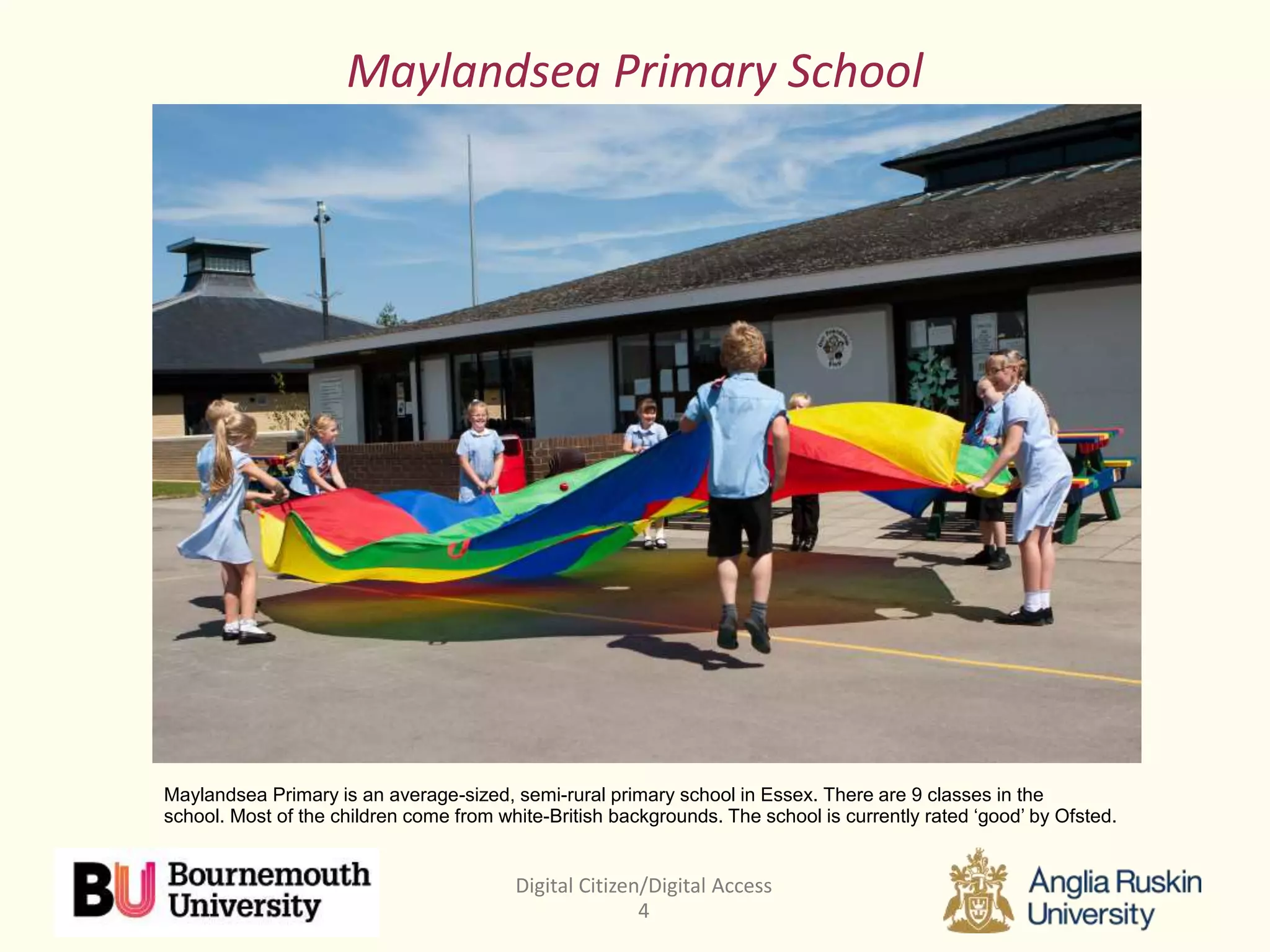
Maylandsea Primary is an average-sized, semi-rural primary school in Essex. There are 9 classes in the
school. Most of the children come from white-British backgrounds. The school is currently rated ‘good’ by Ofsted.
Digital Citizen/Digital Access
5
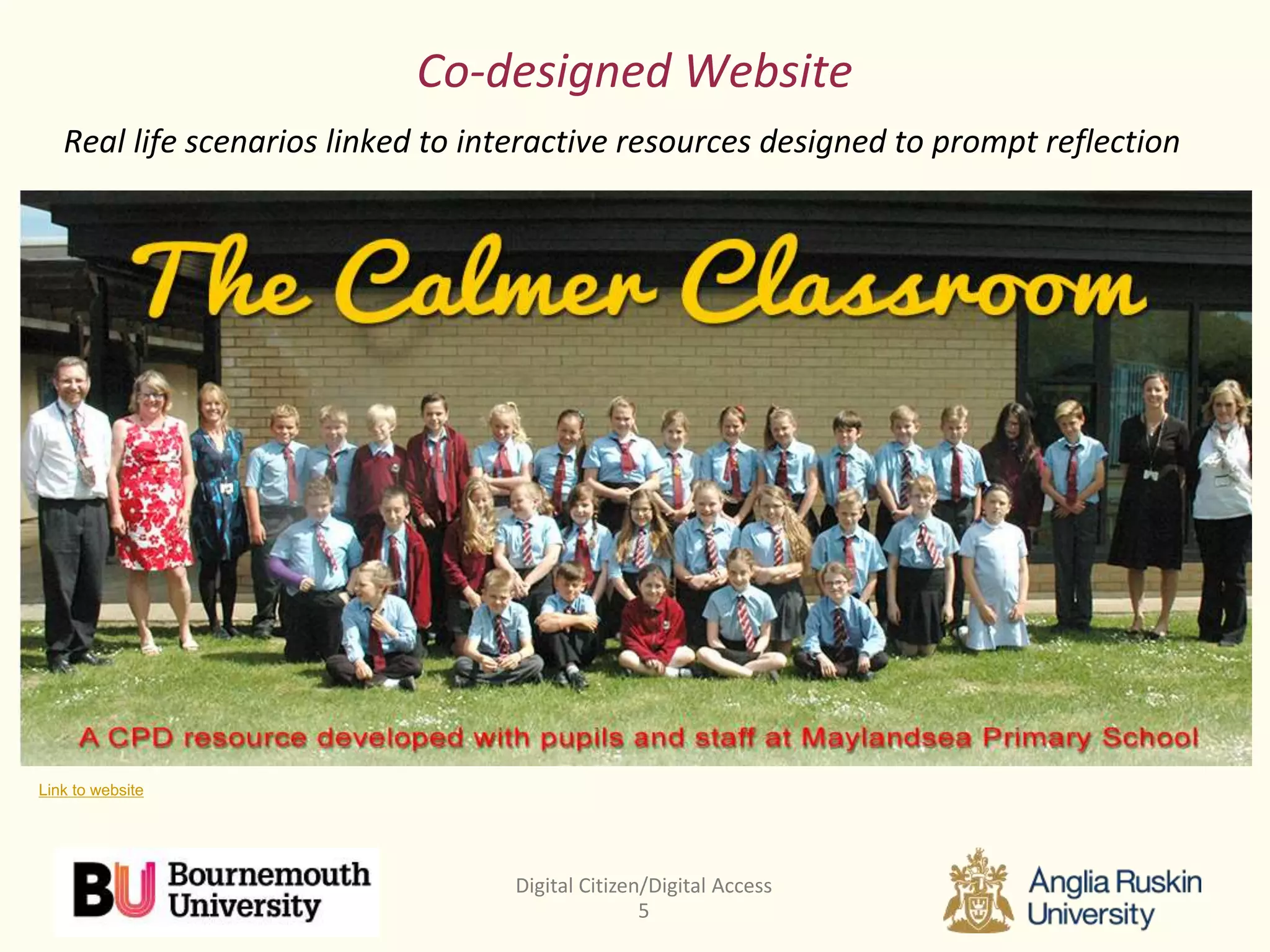
Co-designed Website
Real life scenarios linked to interactive resources designed to prompt reflection
 (insert web site image and link)
Link to website
Digital Citizen/Digital Access
6
Co-Design workshop
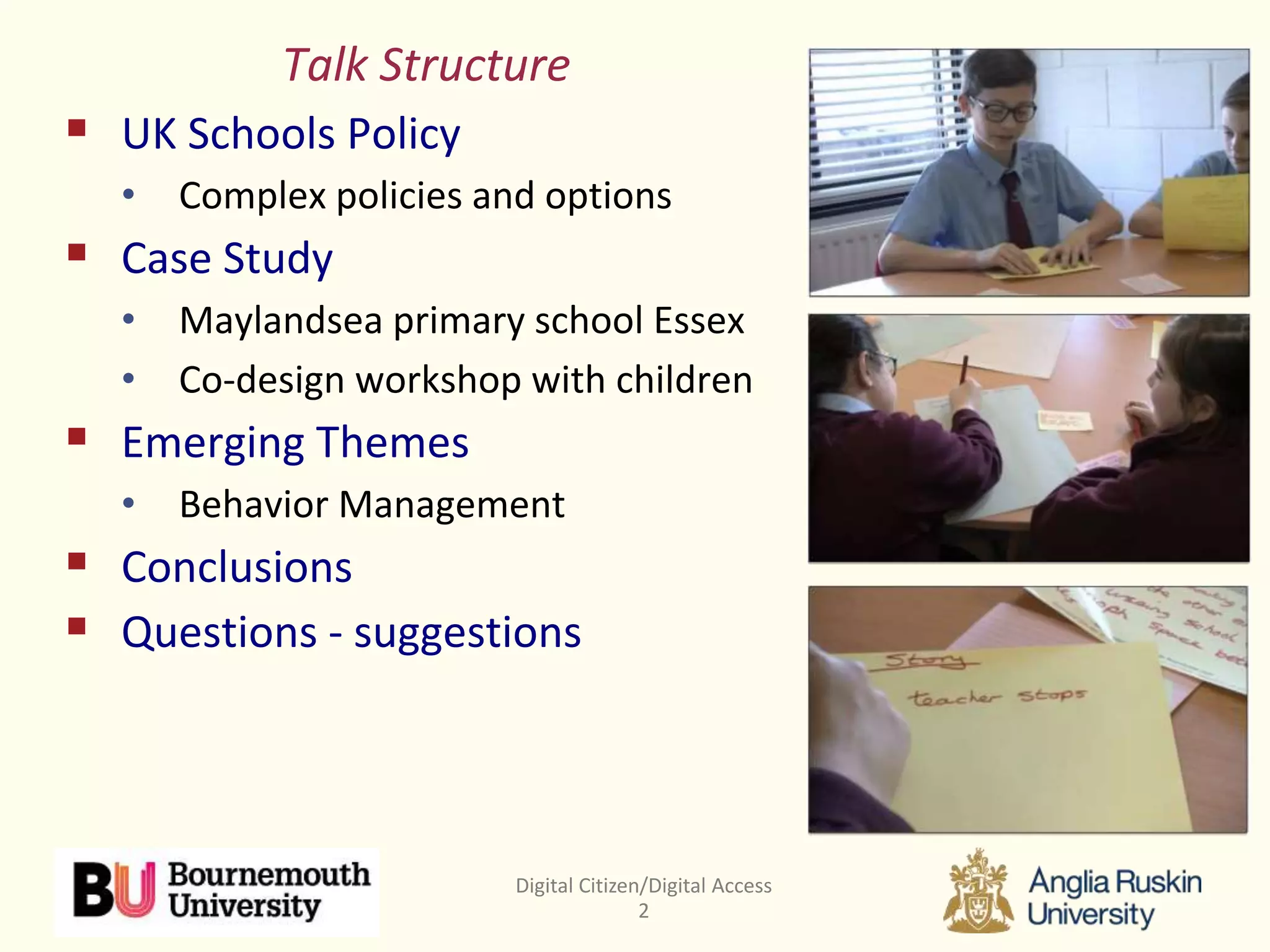
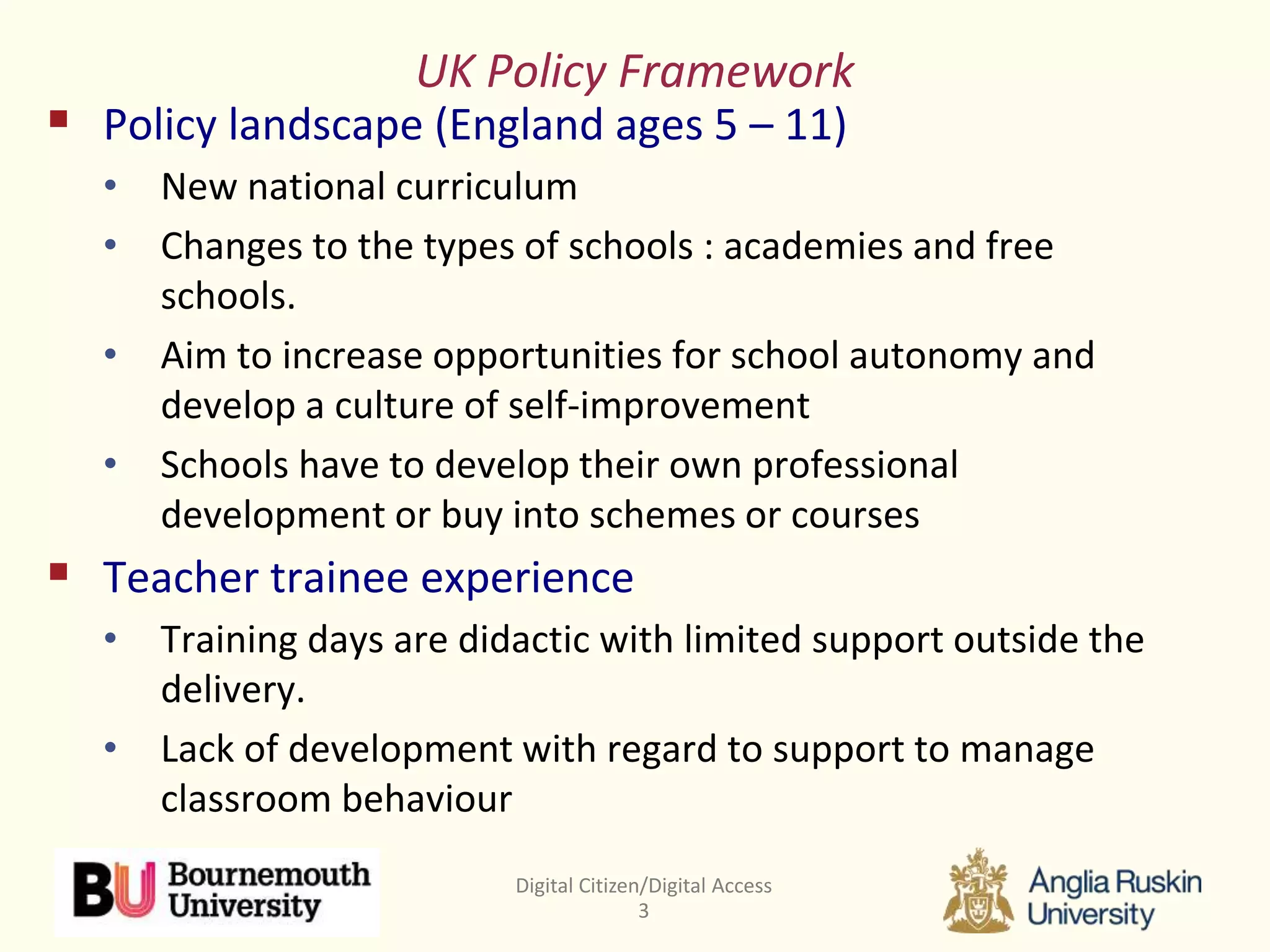
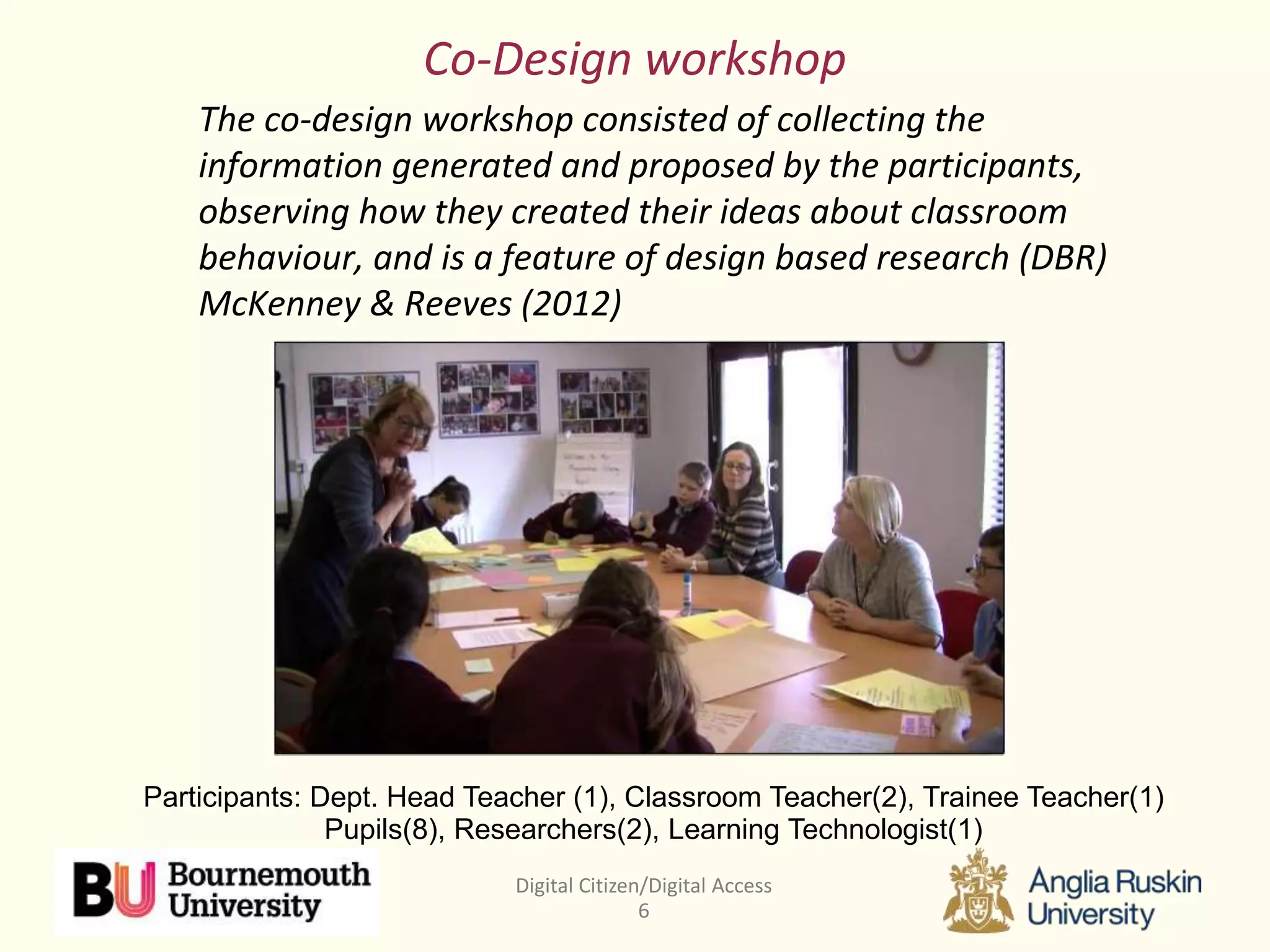
The co-design workshop consisted of collecting the
information generated and proposed by the participants,
observing how they created their ideas about classroom
behaviour, and is a feature of design based research (DBR)
McKenney & Reeves (2012)
Participants: Dept. Head Teacher (1), Classroom Teacher(2), Trainee Teacher(1)
Pupils(8), Researchers(2), Learning Technologist(1)
Digital Citizen/Digital Access
7
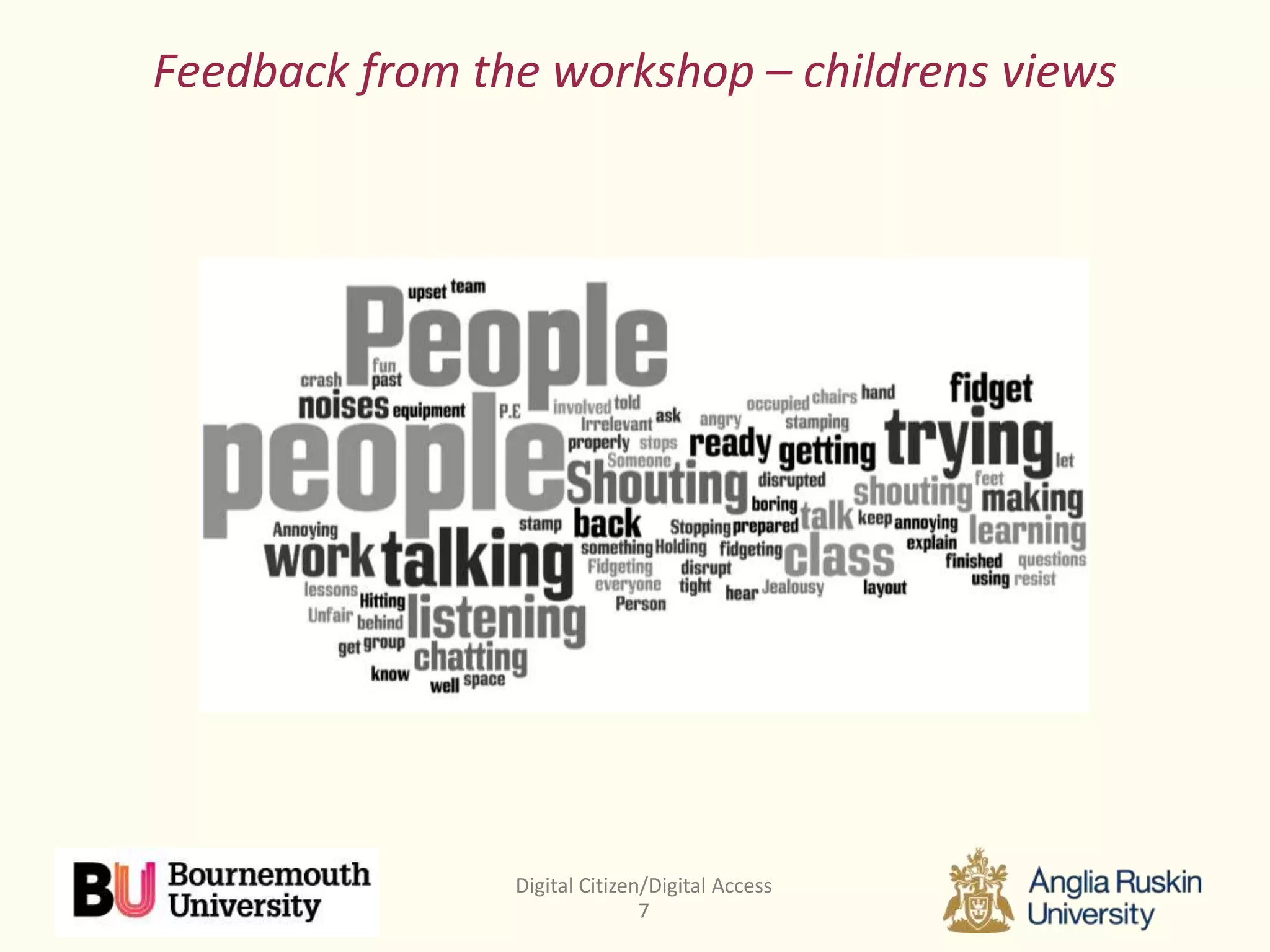
Feedback from the workshop – childrens views
Digital Citizen/Digital Access
8
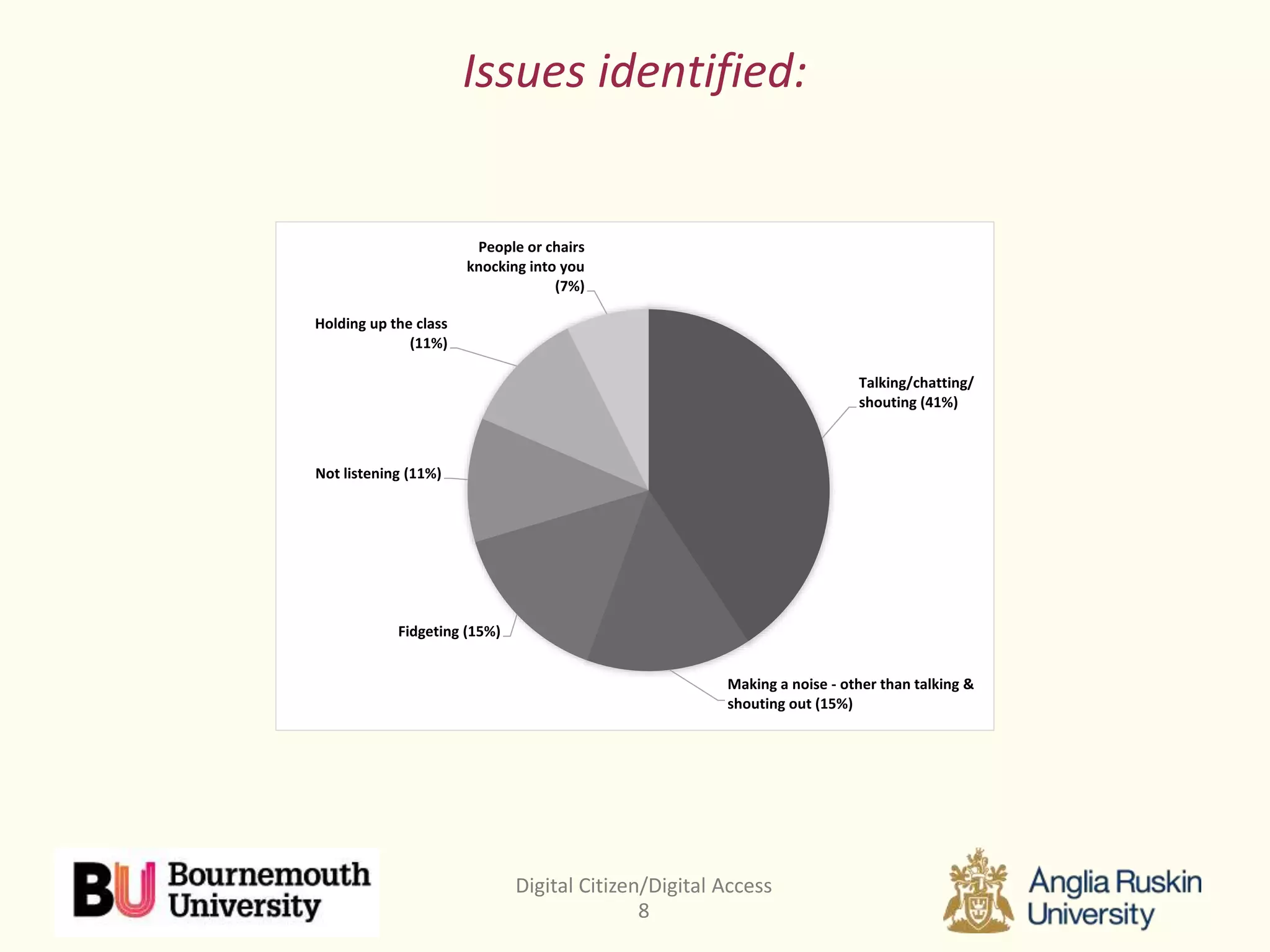
Issues identified:
Talking/chatting/
shouting (41%)
Making a noise - other than talking &
shouting out (15%)
Fidgeting (15%)
Not listening (11%)
Holding up the class
(11%)
People or chairs
knocking into you
(7%)
Digital Citizen/Digital Access
9
Questions – Comments – Suggestions

Digital citizen2015 Capturing the Voice of the Child

  • 1.
    Digital Citizen/Digital Access 1 ‘Capturingthe voice of the child’ A co-design approach to developing calmer classrooms Dr Debbie Holley, Centre for Excellence in Learning, Bournemouth University dholley@bournemouth.ac.uk (@debbieholley1) Dr Philip Howlett, Department of Education Anglia Ruskin University philip.howlett@anglia.ac.uk Dr Nick Rudman, Maylandsea Primary School
  • 2.
    Digital Citizen/Digital Access 2 TalkStructure  UK Schools Policy • Complex policies and options  Case Study • Maylandsea primary school Essex • Co-design workshop with children  Emerging Themes • Behavior Management  Conclusions  Questions - suggestions
  • 3.
    Digital Citizen/Digital Access 3 UKPolicy Framework  Policy landscape (England ages 5 – 11) • New national curriculum • Changes to the types of schools : academies and free schools. • Aim to increase opportunities for school autonomy and develop a culture of self-improvement • Schools have to develop their own professional development or buy into schemes or courses  Teacher trainee experience • Training days are didactic with limited support outside the delivery. • Lack of development with regard to support to manage classroom behaviour
  • 4.
    Digital Citizen/Digital Access 4 MaylandseaPrimary School Maylandsea Primary is an average-sized, semi-rural primary school in Essex. There are 9 classes in the school. Most of the children come from white-British backgrounds. The school is currently rated ‘good’ by Ofsted.
  • 5.
    Digital Citizen/Digital Access 5 Co-designedWebsite Real life scenarios linked to interactive resources designed to prompt reflection  (insert web site image and link) Link to website
  • 6.
    Digital Citizen/Digital Access 6 Co-Designworkshop The co-design workshop consisted of collecting the information generated and proposed by the participants, observing how they created their ideas about classroom behaviour, and is a feature of design based research (DBR) McKenney & Reeves (2012) Participants: Dept. Head Teacher (1), Classroom Teacher(2), Trainee Teacher(1) Pupils(8), Researchers(2), Learning Technologist(1)
  • 7.
    Digital Citizen/Digital Access 7 Feedbackfrom the workshop – childrens views
  • 8.
    Digital Citizen/Digital Access 8 Issuesidentified: Talking/chatting/ shouting (41%) Making a noise - other than talking & shouting out (15%) Fidgeting (15%) Not listening (11%) Holding up the class (11%) People or chairs knocking into you (7%)
  • 9.
    Digital Citizen/Digital Access 9 Questions– Comments – Suggestions