D I G E S T I V ES Y S T E MbyBeatriz
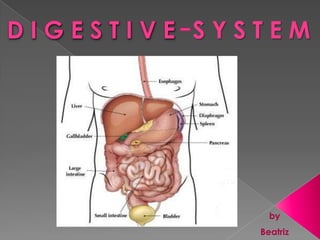
The digestive system is also known as thegastrointestinal (GI) system.Main functions of the digestive system:Digesting foodAbsorbing nutrientsEliminate waste
FUNCTION    The digestive system begins breaking down food through mechanical and chemical digestion.  After being digested, nutrient molecules are absorb into the body and enter the blood stream.  Any food not digested or absorbed is eliminated as solid waste.
ORGANSCOLONESOPHAGUSGALLBLADDERLIVERORAL CAVITYPANCREAS
PHARYNX
SALIVARY GLANDS
SMALL INTESTINE
STOMACH
When does the digestion begins?Digestion begins in the mouth.  The saliva contains digestive enzymes to break down carbohydrates  and slippery lubricants to make food easy to swallow.
ORAL  CAVITYTaste buds is found on the surface of the tongue, can distinguish the bitter, sweet, sour, and salty flavors in our food.       Hanging down from the posterior edge of the palate (roof of the mouth) is the uvula which provide the speech production and help to help to prevent food from entering the lungs.
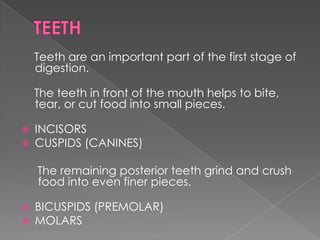
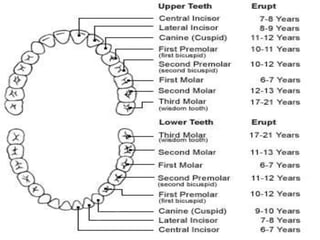
TEETH    Teeth are an important part of the first stage of digestion.     The teeth in front of the mouth helps to bite, tear, or cut food into small pieces.INCISORSCUSPIDS (CANINES)     The remaining posterior teeth grind and crush     food into even finer pieces.BICUSPIDS (PREMOLAR)MOLARS
PHARYNX      When food is swallowed, it enters the oropharynx and then the  laryngopharynx.The epiglottis is a cartilaginous flap that folds down to cover the larynx and trachea, preventing food from entering the respiratory tract and instead continues into the esophagus.
ESOPHAGUSThe esophagus is a muscular tube of about 10 inches long in adults.      Food entering the esophagus is carried through the thoracic cavity and diaphragm and into de abdominal cavity where it enters the stomach.
STOMACH    It is a J-shaped muscular organ that acts as a bag or sac to collect and churn food with digestive juices, is composed of three partsFUNDUS (upper region)BODY (main portion)ANTRUM (lower region)
Rugae: Foldings in the lining of the stomachWhen the stomach fills with food the rugae stretch out and disappear.Hydrochloric acid is secreted by glands in the mucous membrane lining of the stomach.Foods mixes with hydrochloric acid and other gastricjuices to form a liquid mixture called chyme. Food is propelled along the esophagus by wavelike muscular  contractions called peristalsis.

Digestive system presen.08

  • 1.
    D I GE S T I V ES Y S T E MbyBeatriz
  • 2.
    The digestive systemis also known as thegastrointestinal (GI) system.Main functions of the digestive system:Digesting foodAbsorbing nutrientsEliminate waste
  • 3.
    FUNCTION The digestive system begins breaking down food through mechanical and chemical digestion. After being digested, nutrient molecules are absorb into the body and enter the blood stream. Any food not digested or absorbed is eliminated as solid waste.
  • 4.
  • 5.
  • 6.
  • 7.
  • 8.
  • 9.
    When does thedigestion begins?Digestion begins in the mouth. The saliva contains digestive enzymes to break down carbohydrates and slippery lubricants to make food easy to swallow.
  • 10.
    ORAL CAVITYTastebuds is found on the surface of the tongue, can distinguish the bitter, sweet, sour, and salty flavors in our food. Hanging down from the posterior edge of the palate (roof of the mouth) is the uvula which provide the speech production and help to help to prevent food from entering the lungs.
  • 11.
    TEETH Teeth are an important part of the first stage of digestion. The teeth in front of the mouth helps to bite, tear, or cut food into small pieces.INCISORSCUSPIDS (CANINES) The remaining posterior teeth grind and crush food into even finer pieces.BICUSPIDS (PREMOLAR)MOLARS
  • 13.
    PHARYNX When food is swallowed, it enters the oropharynx and then the laryngopharynx.The epiglottis is a cartilaginous flap that folds down to cover the larynx and trachea, preventing food from entering the respiratory tract and instead continues into the esophagus.
  • 14.
    ESOPHAGUSThe esophagus isa muscular tube of about 10 inches long in adults. Food entering the esophagus is carried through the thoracic cavity and diaphragm and into de abdominal cavity where it enters the stomach.
  • 15.
    STOMACH It is a J-shaped muscular organ that acts as a bag or sac to collect and churn food with digestive juices, is composed of three partsFUNDUS (upper region)BODY (main portion)ANTRUM (lower region)
  • 16.
    Rugae: Foldings inthe lining of the stomachWhen the stomach fills with food the rugae stretch out and disappear.Hydrochloric acid is secreted by glands in the mucous membrane lining of the stomach.Foods mixes with hydrochloric acid and other gastricjuices to form a liquid mixture called chyme. Food is propelled along the esophagus by wavelike muscular contractions called peristalsis.