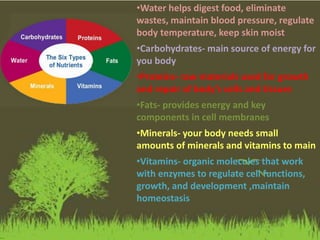
•Water helps digest food, eliminate
wastes, maintain blood pressure, regulate
body temperature, keep skin moist
•Carbohydrates- main source of energy for
you body
•Proteins- raw materials used for growth
and repair of body’s cells and tissues
•Fats- provides energy and key
components in cell membranes
•Minerals- your body needs small
amounts of minerals and vitamins to main
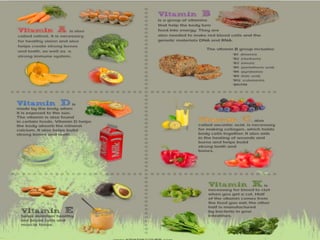
•Vitamins- organic molecules that work
with enzymes to regulate cell functions,
growth, and development ,maintain
homeostasis
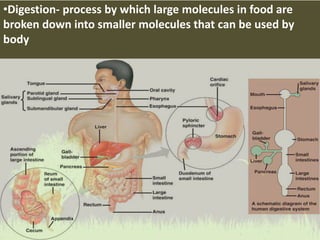
•Digestion- process by which large molecules in food are
broken down into smaller molecules that can be used by
body
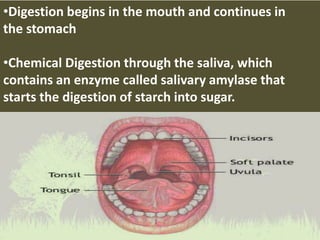
•Digestion begins in the mouth and continues in
the stomach
•Chemical Digestion through the saliva, which
contains an enzyme called salivary amylase that
starts the digestion of starch into sugar.
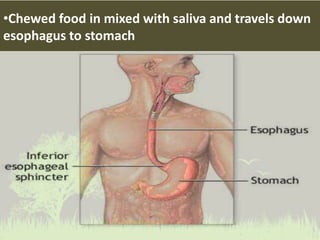
•Chewed food in mixed with saliva and travels down
esophagus to stomach
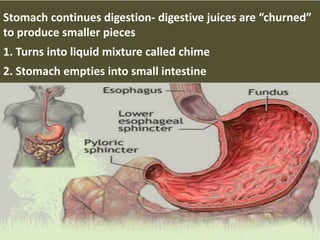
Stomach continues digestion- digestive juices are “churned”
to produce smaller pieces
1. Turns into liquid mixture called chime
2. Stomach empties into small intestine
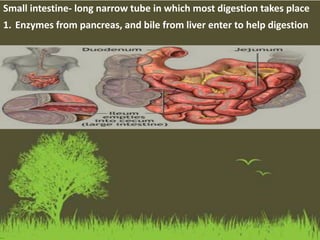
Small intestine- long narrow tube in which most digestion takes place
1. Enzymes from pancreas, and bile from liver enter to help digestion
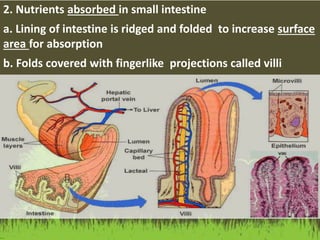
2. Nutrients absorbed in small intestine
a. Lining of intestine is ridged and folded to increase surface
area for absorption
b. Folds covered with fingerlike projections called villi
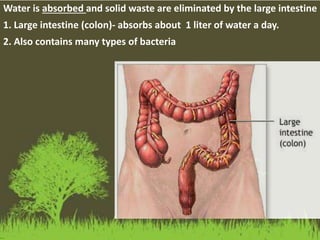
Water is absorbed and solid waste are eliminated by the large intestine
1. Large intestine (colon)- absorbs about 1 liter of water a day.
2. Also contains many types of bacteria
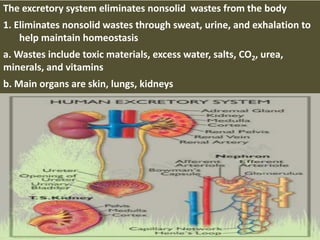
The excretory system eliminates nonsolid wastes from the body
1. Eliminates nonsolid wastes through sweat, urine, and exhalation to
help maintain homeostasis
a. Wastes include toxic materials, excess water, salts, CO2, urea,
minerals, and vitamins
b. Main organs are skin, lungs, kidneys
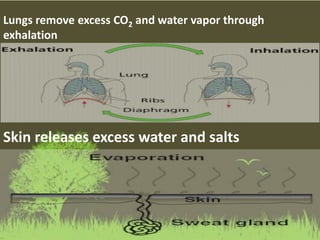
Lungs remove excess CO2 and water vapor through
exhalation
Skin releases excess water and salts
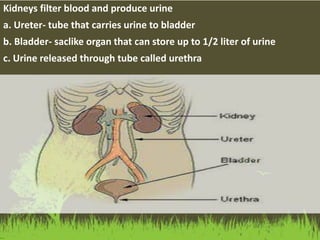
Kidneys filter blood and produce urine
a. Ureter- tube that carries urine to bladder
b. Bladder- saclike organ that can store up to 1/2 liter of urine
c. Urine released through tube called urethra
• The kidneys help to maintain homeostasis.
(3 basic functions)
1. Remove waste products from blood such as those produced from
digestion and cellular respiration
2. Help to maintain electrolyte, pH, and fluid balances in body
3. Release hormones that help keep bones healthy, produce red blood
cells, and regulate blood pressure
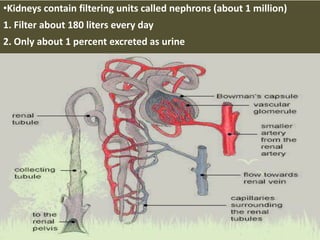
•Kidneys contain filtering units called nephrons (about 1 million)
1. Filter about 180 liters every day
2. Only about 1 percent excreted as urine
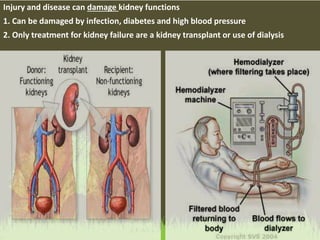
Injury and disease can damage kidney functions
1. Can be damaged by infection, diabetes and high blood pressure
2. Only treatment for kidney failure are a kidney transplant or use of dialysis
The End

Digestive and excretory system

  • 2.
    •Water helps digestfood, eliminate wastes, maintain blood pressure, regulate body temperature, keep skin moist •Carbohydrates- main source of energy for you body •Proteins- raw materials used for growth and repair of body’s cells and tissues •Fats- provides energy and key components in cell membranes •Minerals- your body needs small amounts of minerals and vitamins to main •Vitamins- organic molecules that work with enzymes to regulate cell functions, growth, and development ,maintain homeostasis
  • 4.
    •Digestion- process bywhich large molecules in food are broken down into smaller molecules that can be used by body
  • 5.
    •Digestion begins inthe mouth and continues in the stomach •Chemical Digestion through the saliva, which contains an enzyme called salivary amylase that starts the digestion of starch into sugar.
  • 6.
    •Chewed food inmixed with saliva and travels down esophagus to stomach
  • 7.
    Stomach continues digestion-digestive juices are “churned” to produce smaller pieces 1. Turns into liquid mixture called chime 2. Stomach empties into small intestine
  • 8.
    Small intestine- longnarrow tube in which most digestion takes place 1. Enzymes from pancreas, and bile from liver enter to help digestion
  • 9.
    2. Nutrients absorbedin small intestine a. Lining of intestine is ridged and folded to increase surface area for absorption b. Folds covered with fingerlike projections called villi
  • 10.
    Water is absorbedand solid waste are eliminated by the large intestine 1. Large intestine (colon)- absorbs about 1 liter of water a day. 2. Also contains many types of bacteria
  • 11.
    The excretory systemeliminates nonsolid wastes from the body 1. Eliminates nonsolid wastes through sweat, urine, and exhalation to help maintain homeostasis a. Wastes include toxic materials, excess water, salts, CO2, urea, minerals, and vitamins b. Main organs are skin, lungs, kidneys
  • 12.
    Lungs remove excessCO2 and water vapor through exhalation Skin releases excess water and salts
  • 13.
    Kidneys filter bloodand produce urine a. Ureter- tube that carries urine to bladder b. Bladder- saclike organ that can store up to 1/2 liter of urine c. Urine released through tube called urethra
  • 14.
    • The kidneyshelp to maintain homeostasis. (3 basic functions) 1. Remove waste products from blood such as those produced from digestion and cellular respiration 2. Help to maintain electrolyte, pH, and fluid balances in body 3. Release hormones that help keep bones healthy, produce red blood cells, and regulate blood pressure
  • 15.
    •Kidneys contain filteringunits called nephrons (about 1 million) 1. Filter about 180 liters every day 2. Only about 1 percent excreted as urine
  • 16.
    Injury and diseasecan damage kidney functions 1. Can be damaged by infection, diabetes and high blood pressure 2. Only treatment for kidney failure are a kidney transplant or use of dialysis
  • 17.