Introduction
The digestive system is used to breakdown food into
nutrients which then pass into the circulatory system
and are taken to where they are needed in the body.
 Phases include:
1. Ingestion
2. Movement
3. Mechanical and Chemical Digestion
4. Absorption
5. Elimination(egestion)
Phases of Digestion
Digestion
 Mechanical(physical)
chew, tear, grind, mash and mix
 Chemical
Enzymatic reactions etc.
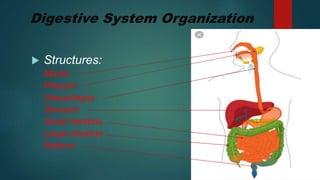
Digestive System Organization
 Structures:
Mouth
Pharynx
Oesophagus
Stomach
Small intestine
Large intestine
Rectum
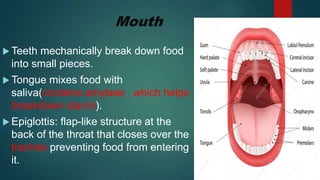
Mouth
 Teeth mechanically break down food
into small pieces.
 Tongue mixes food with
saliva(contains amylase , which helps
breakdown starch).
 Epiglottis: flap-like structure at the
back of the throat that closes over the
trachea preventing food from entering
it.
Oesophagus
 Approximately 20cm long.
 Functions:
Secreting mucus and moving food from
the throat to the stomach using muscle
movement called peristalsis.
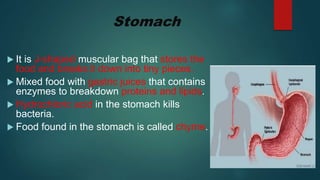
Stomach
 It is J-shaped muscular bag that stores the
food and breaks it down into tiny pieces.
 Mixed food with gastric juices that contains
enzymes to breakdown proteins and lipids.
 Hydrochloric acid in the stomach kills
bacteria.
 Food found in the stomach is called chyme.
Small Intestine
 Small intestines are roughly 7 meters long.
 Lining of intestine walls has finger-like
projections called villi, to increase surface
area.
 The villi are covered in microvilli which
furthered increase surface are for
absorption.
 Nutrients from the food pass into the
bloodstream through the walls of the small
intestine.
 Secretes digestive enzymes.
 Absorbs:
80% ingested water
Vitamins
Carbohydrates
Proteins
Lipids
Large Intestine
 About 1.5 meters long.
 Absorbs nutrients left behind by the small
intestines.
 The end of the large intestine is the
rectum(short term storage which hold
feces before it is expelled).
Accessory Organs- The Glands
 Not part of the path of ingested food, but play
critical role in digestion.
 Includes: Liver, gall bladder, and pancreas.
Functions:
1. Bacterial digestion and fermentation of
carbohydrates.
2. Absorbs additional water.
3. Concentrates wastes.
Liver
 Directly affects digestion by producing
bile.
Bile aids in the digestion of fat.
Filters out toxins and waste including
drug, alcohol and poisons.
Gall Bladder
 Stores bile from the liver,
releases it in to the small
intestine.
 Fatty diets can cause the
formation of gallstones.
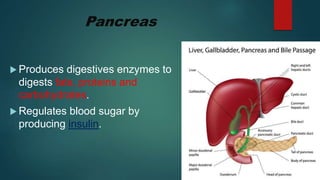
Pancreas
 Produces digestives enzymes to
digests fats, proteins and
carbohydrates.
 Regulates blood sugar by
producing insulin.
Effects of Exercises on
Digestive System
1. Improve blood flow
2. Relieve stress
3. Regulate weight
4. Speed up metabolism
5. Increase breathing and heart rate
Exercises to Improve Digestion
 Walking(20 to 30 minutes daily)
 Cycling
 Sit-ups
 Push-ups
 Deep Breathing
 Sports
 Yoga
Thank you

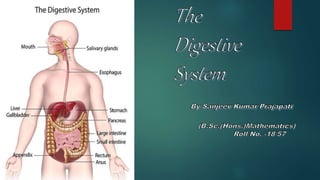
Human Digestive System

  • 2.
    Introduction The digestive systemis used to breakdown food into nutrients which then pass into the circulatory system and are taken to where they are needed in the body.
  • 3.
     Phases include: 1.Ingestion 2. Movement 3. Mechanical and Chemical Digestion 4. Absorption 5. Elimination(egestion) Phases of Digestion
  • 4.
    Digestion  Mechanical(physical) chew, tear,grind, mash and mix  Chemical Enzymatic reactions etc.
  • 5.
    Digestive System Organization Structures: Mouth Pharynx Oesophagus Stomach Small intestine Large intestine Rectum
  • 6.
    Mouth  Teeth mechanicallybreak down food into small pieces.  Tongue mixes food with saliva(contains amylase , which helps breakdown starch).  Epiglottis: flap-like structure at the back of the throat that closes over the trachea preventing food from entering it.
  • 7.
    Oesophagus  Approximately 20cmlong.  Functions: Secreting mucus and moving food from the throat to the stomach using muscle movement called peristalsis.
  • 8.
    Stomach  It isJ-shaped muscular bag that stores the food and breaks it down into tiny pieces.  Mixed food with gastric juices that contains enzymes to breakdown proteins and lipids.  Hydrochloric acid in the stomach kills bacteria.  Food found in the stomach is called chyme.
  • 9.
    Small Intestine  Smallintestines are roughly 7 meters long.  Lining of intestine walls has finger-like projections called villi, to increase surface area.  The villi are covered in microvilli which furthered increase surface are for absorption.
  • 10.
     Nutrients fromthe food pass into the bloodstream through the walls of the small intestine.  Secretes digestive enzymes.  Absorbs: 80% ingested water Vitamins Carbohydrates Proteins Lipids
  • 11.
    Large Intestine  About1.5 meters long.  Absorbs nutrients left behind by the small intestines.  The end of the large intestine is the rectum(short term storage which hold feces before it is expelled).
  • 12.
    Accessory Organs- TheGlands  Not part of the path of ingested food, but play critical role in digestion.  Includes: Liver, gall bladder, and pancreas.
  • 13.
    Functions: 1. Bacterial digestionand fermentation of carbohydrates. 2. Absorbs additional water. 3. Concentrates wastes.
  • 14.
    Liver  Directly affectsdigestion by producing bile. Bile aids in the digestion of fat. Filters out toxins and waste including drug, alcohol and poisons.
  • 15.
    Gall Bladder  Storesbile from the liver, releases it in to the small intestine.  Fatty diets can cause the formation of gallstones.
  • 16.
    Pancreas  Produces digestivesenzymes to digests fats, proteins and carbohydrates.  Regulates blood sugar by producing insulin.
  • 17.
    Effects of Exerciseson Digestive System 1. Improve blood flow 2. Relieve stress 3. Regulate weight 4. Speed up metabolism 5. Increase breathing and heart rate
  • 18.
    Exercises to ImproveDigestion  Walking(20 to 30 minutes daily)  Cycling  Sit-ups  Push-ups  Deep Breathing  Sports  Yoga
  • 19.