Chapter 3
DIGESTION &
ABSORPTION
Digestion
• Digestion – The process of changing food
into simple components which the body
can absorb
• Digestive tract or Gastrointestinal tract-
where digestion & absorption take place
• Mouth->esophagus->stomach->small
intestine->large intestine
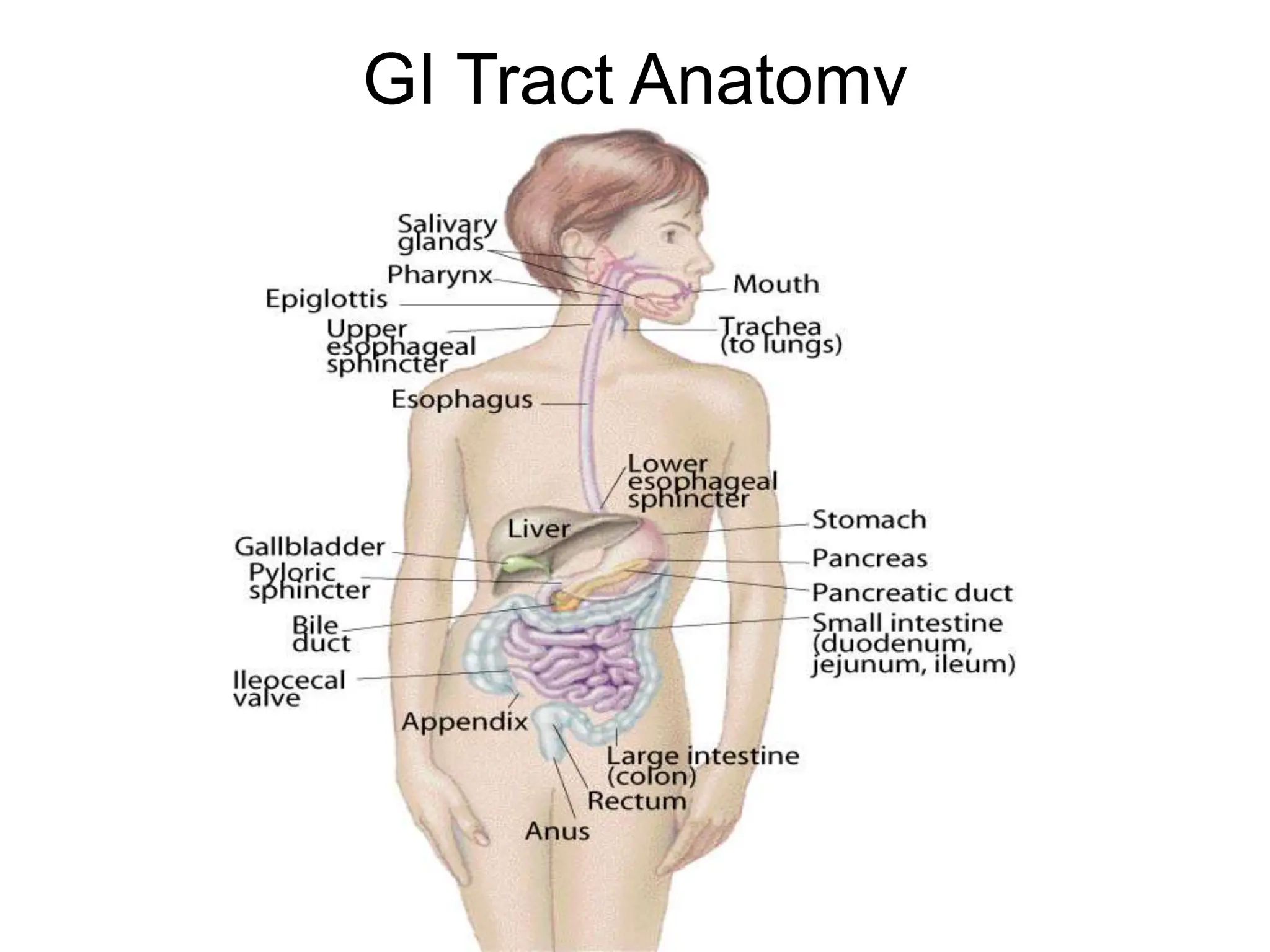
GI Tract Anatomy
Digestion
• Mouth – ingestion of food; chewing
(mastication) & swallowing
1. Bolus – portion of food swallowed
at one time
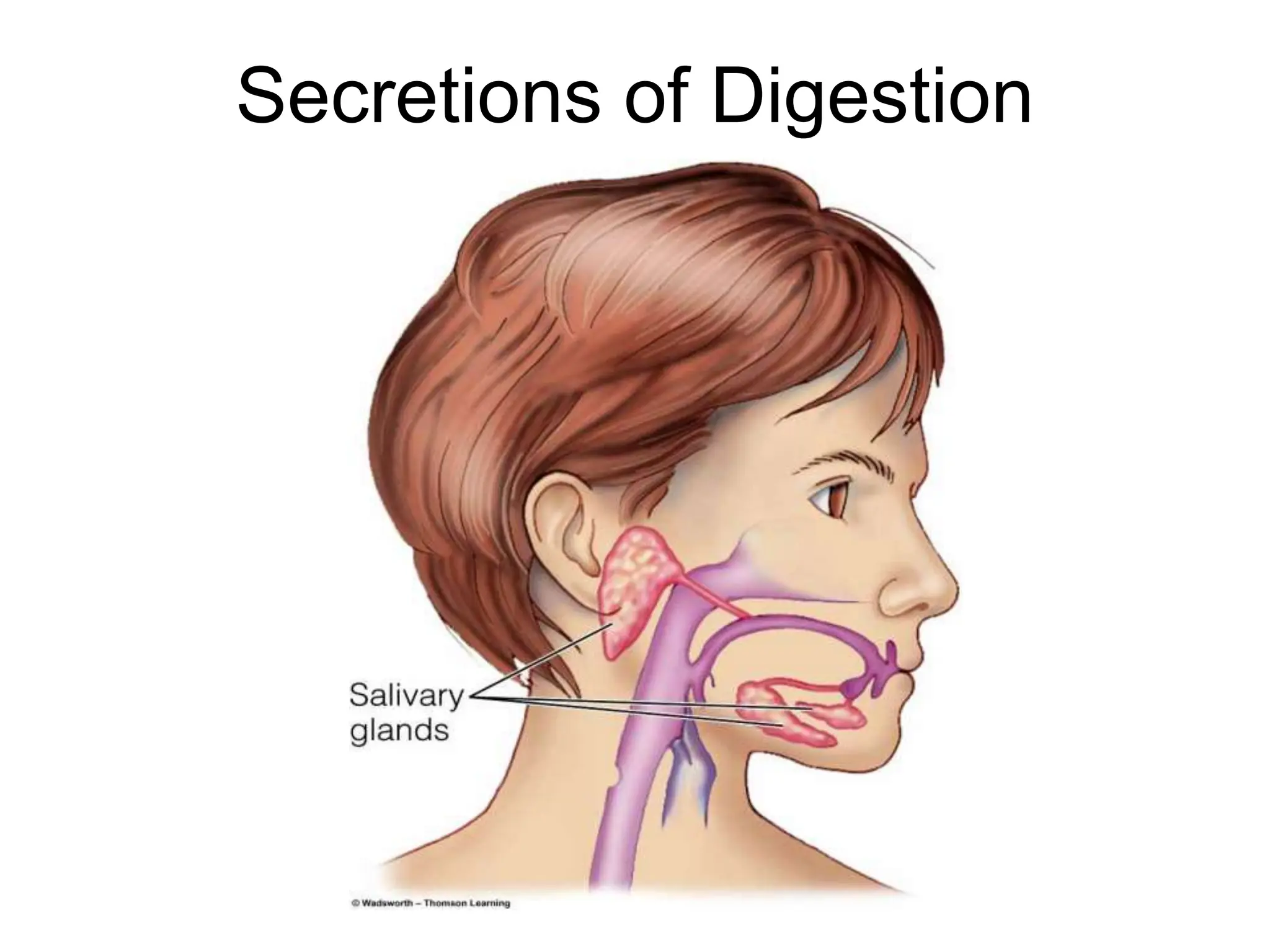
2. Saliva - water, salts, enzymes,
mucus secreted by salivary glands
to:
a. Moisten food & aids swallowing
b. Begins carbohydrate digestion
Secretions of Digestion
Digestion
• Esophagus – connects mouth to stomach
1. Epiglottis – closes airway
2. Bolus moved along by peristalsis
3. Cardiac sphincter – keeps food from
backing up into esophagus
Digestion
• Stomach – collecting & churning
1. Gastric glands secrete: gastric juice
(water, enzymes, hydrochloric acid) that
kills most bacteria and begins protein
digestion and mucus to protect lining
2. Chyme – semi-liquid mass of partially
digested food
3. Pyloric sphincter – regulates passage
of chyme into small intestine
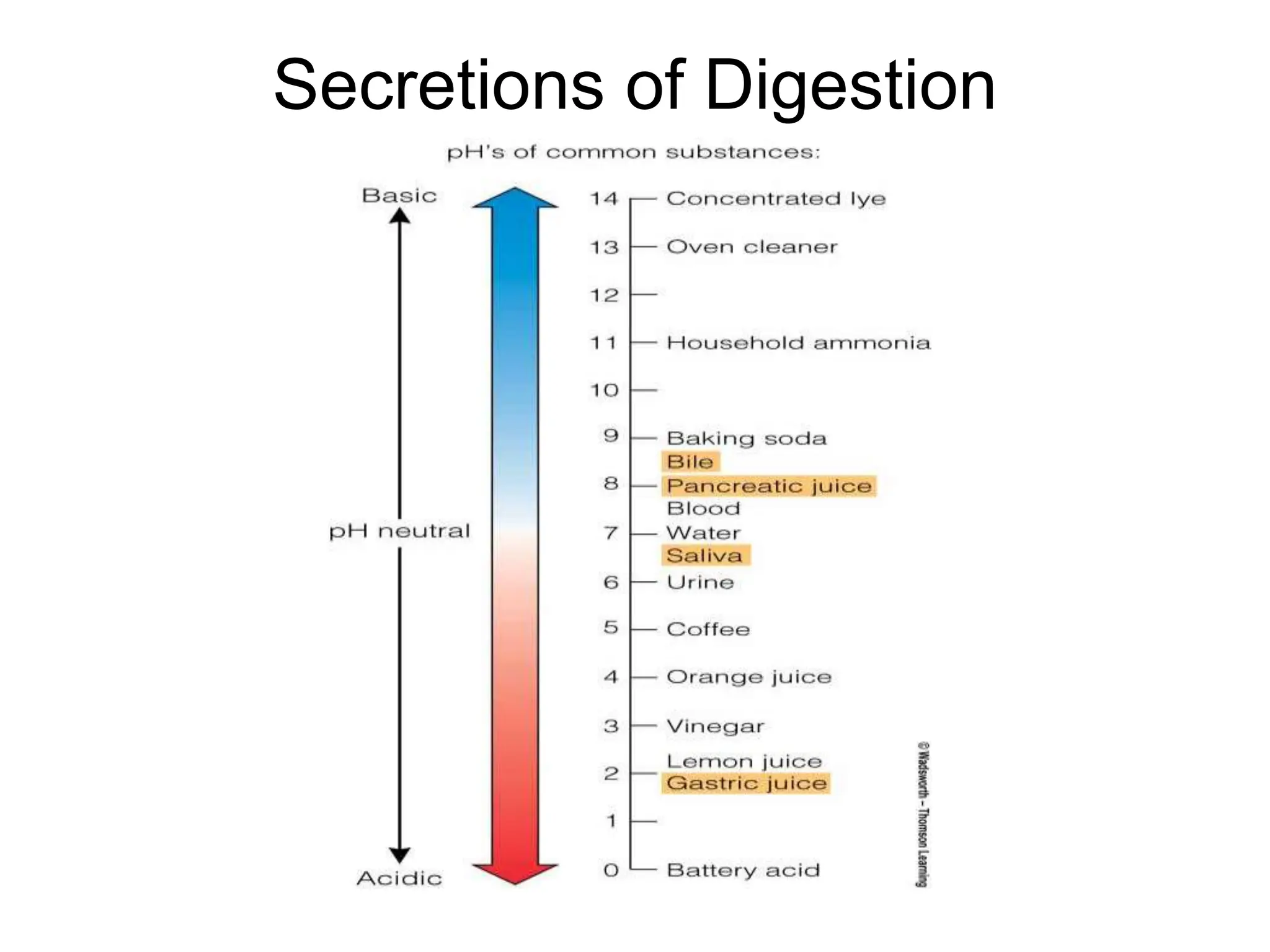
Secretions of Digestion
Digestion
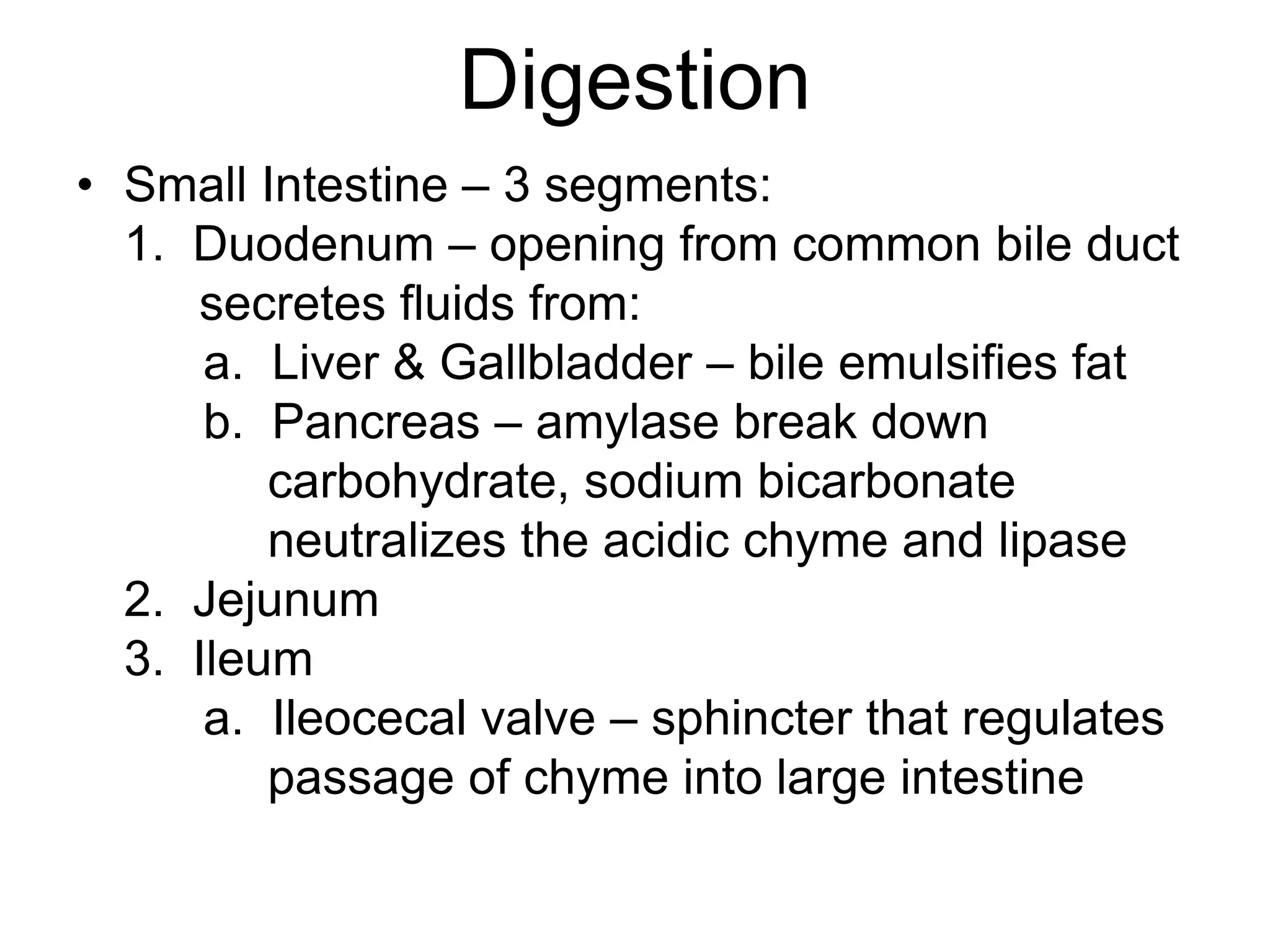
• Small Intestine – 3 segments:
1. Duodenum – opening from common bile duct
secretes fluids from:
a. Liver & Gallbladder – bile emulsifies fat
b. Pancreas – amylase break down
carbohydrate, sodium bicarbonate
neutralizes the acidic chyme and lipase
2. Jejunum
3. Ileum
a. Ileocecal valve – sphincter that regulates
passage of chyme into large intestine
Digestion
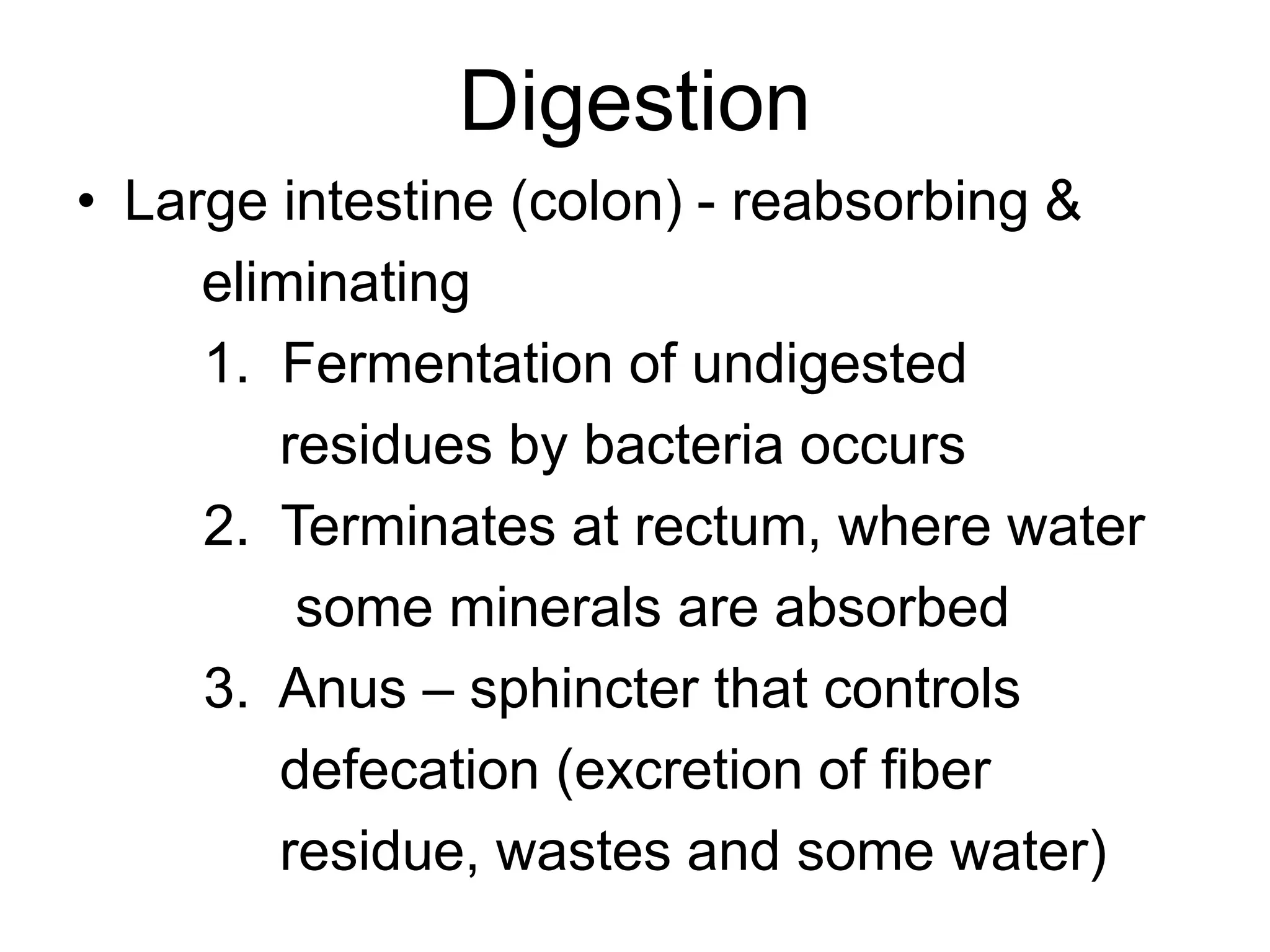
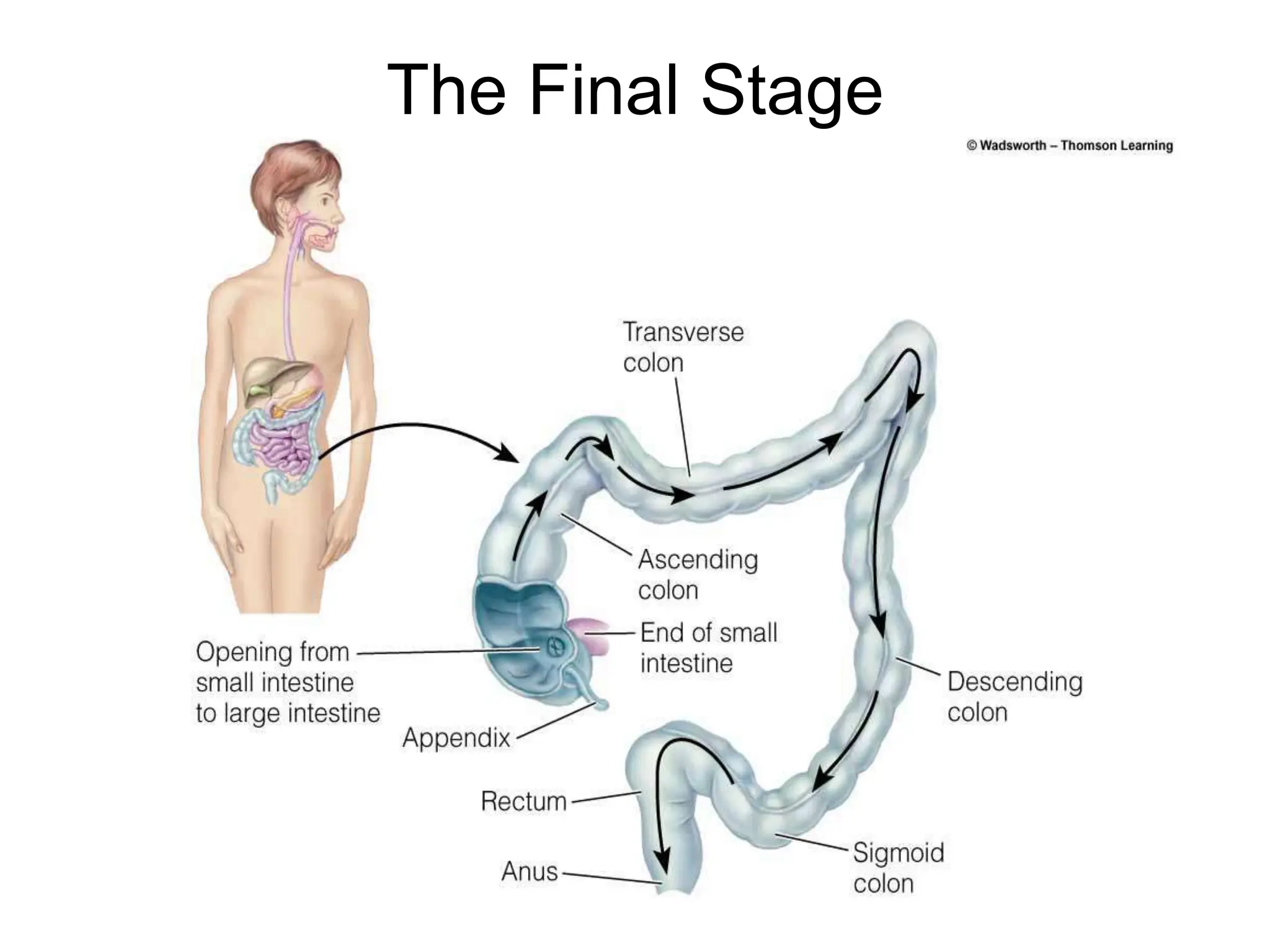
• Large intestine (colon) - reabsorbing &
eliminating
1. Fermentation of undigested
residues by bacteria occurs
2. Terminates at rectum, where water
some minerals are absorbed
3. Anus – sphincter that controls
defecation (excretion of fiber
residue, wastes and some water)
The Final Stage
Digestion
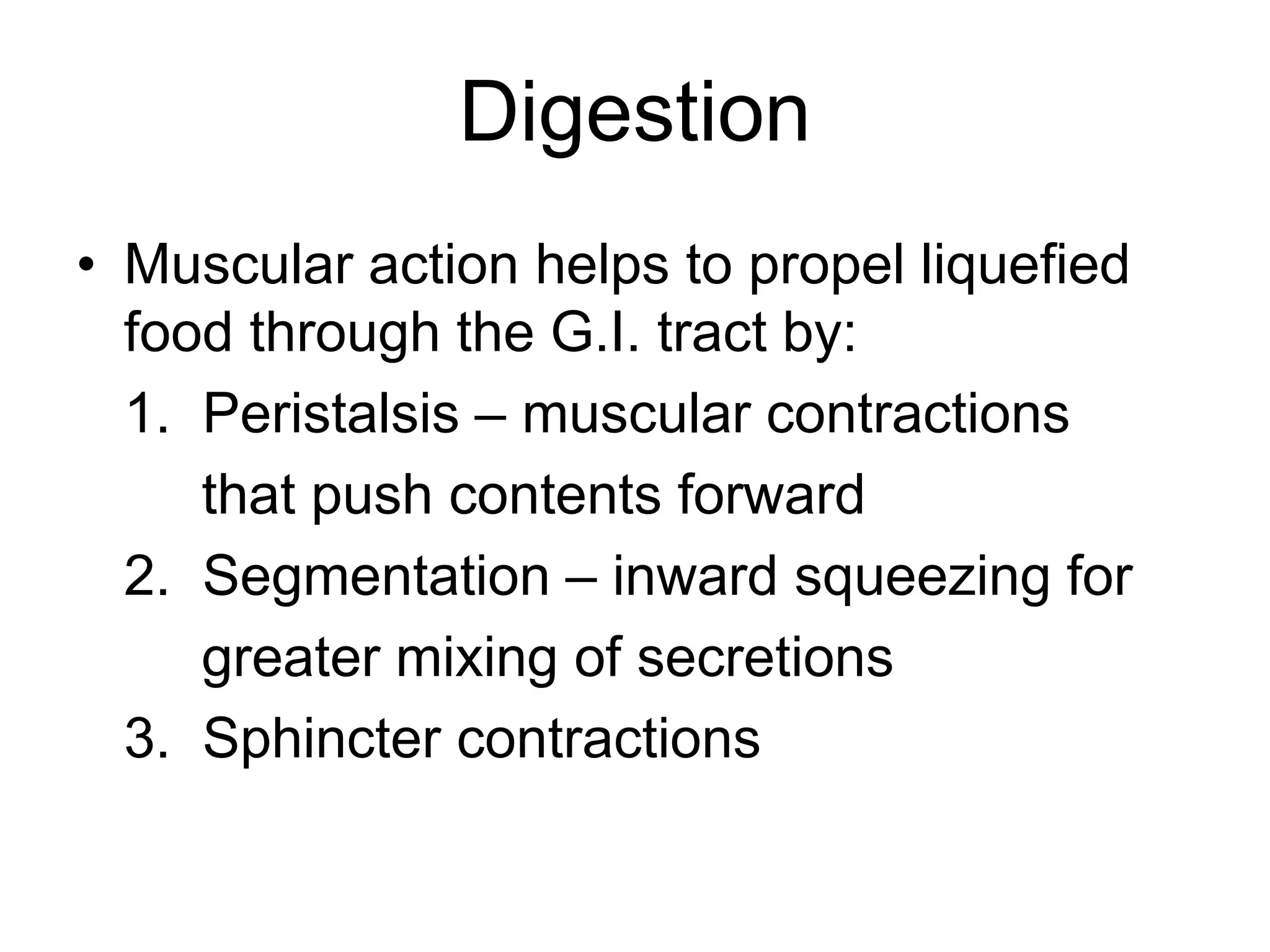
• Muscular action helps to propel liquefied
food through the G.I. tract by:
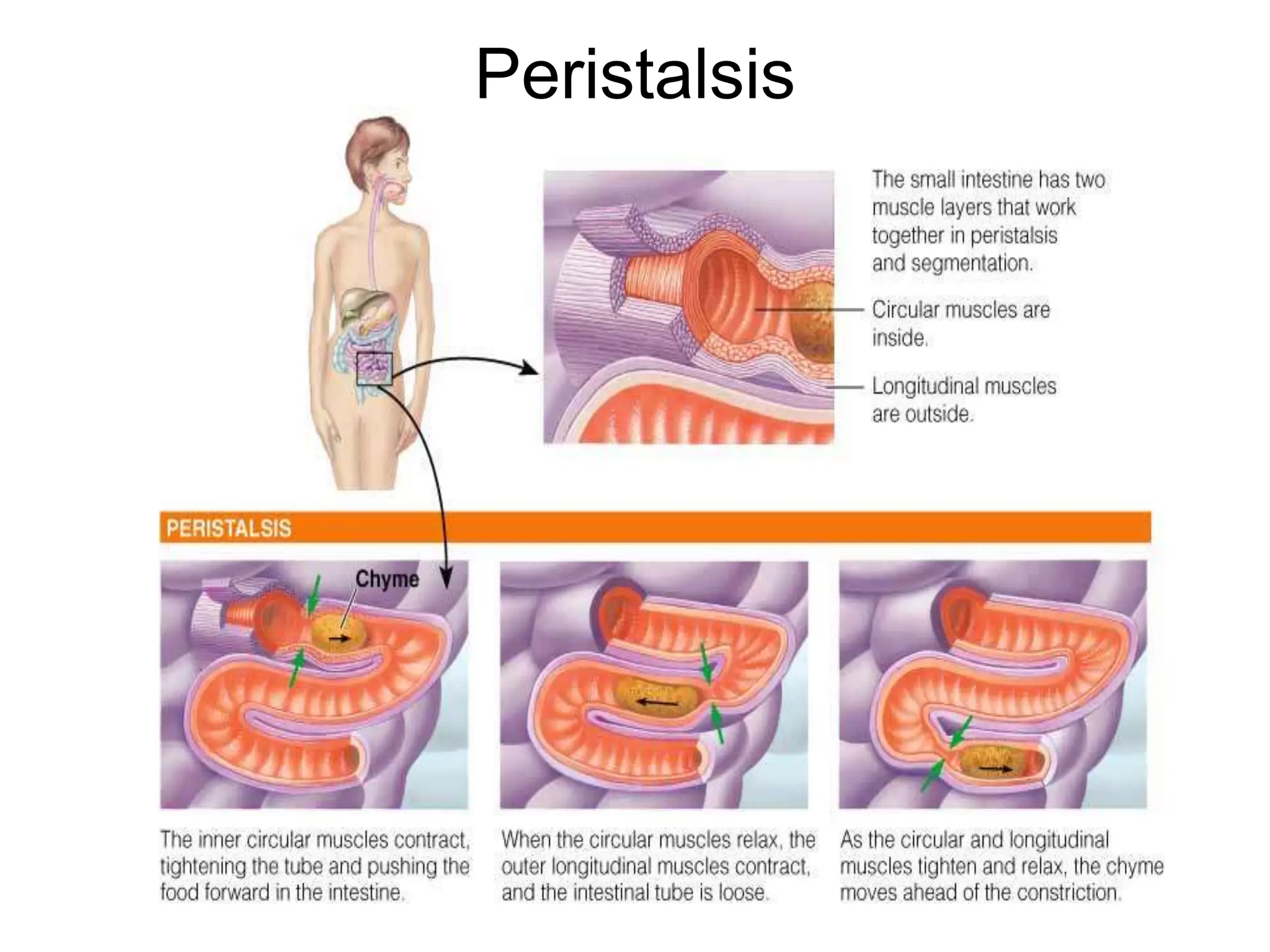
1. Peristalsis – muscular contractions
that push contents forward
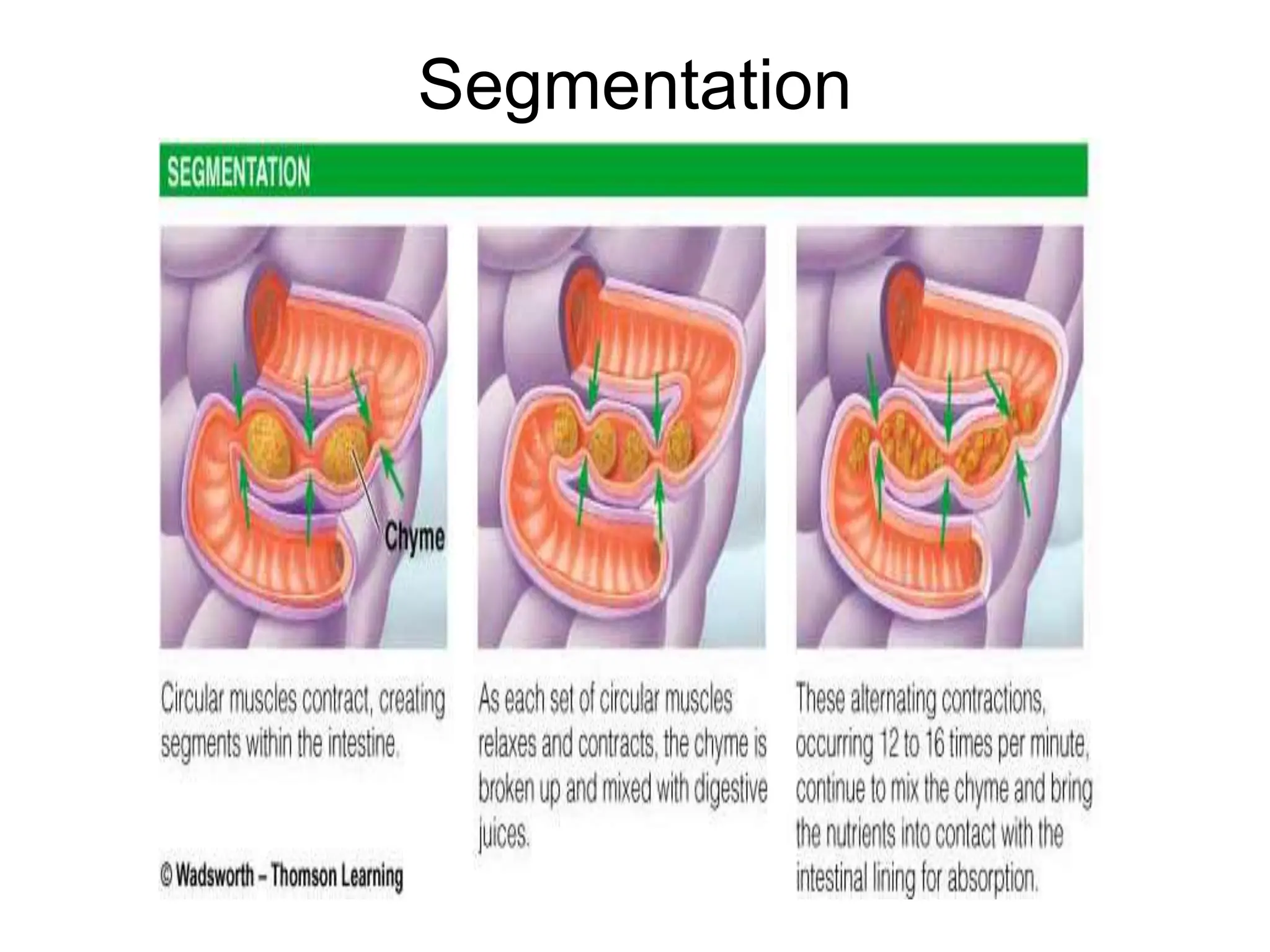
2. Segmentation – inward squeezing for
greater mixing of secretions
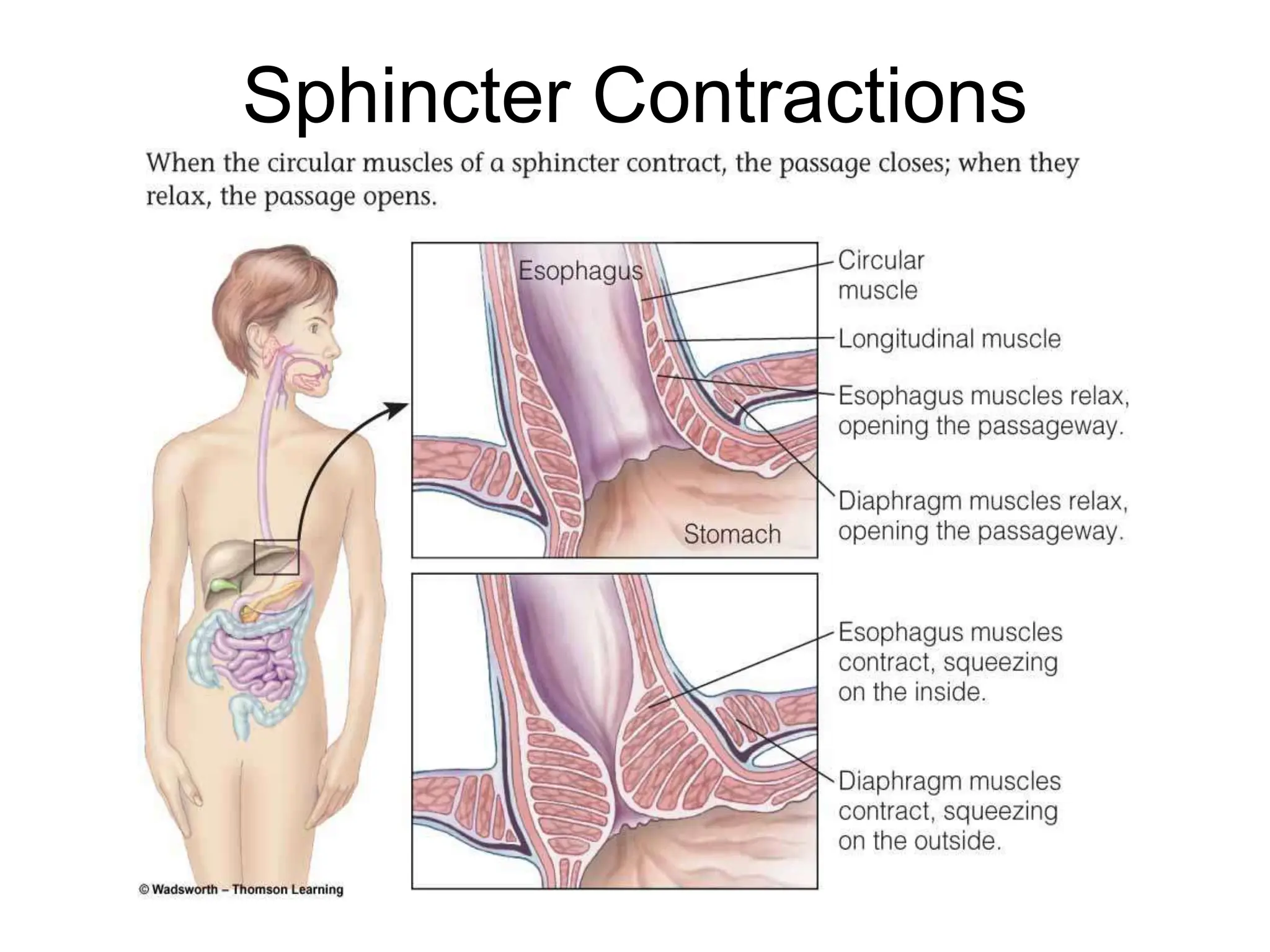
3. Sphincter contractions
Peristalsis
Segmentation
Sphincter Contractions
Absorption & Transport
• End-products of digestion:
1. CHO >>> Monosaccharides
2. Fats >>> Glycerol + fatty acids
3. Proteins >>> Amino acids
4. Vitamins, minerals & water – no
digestion
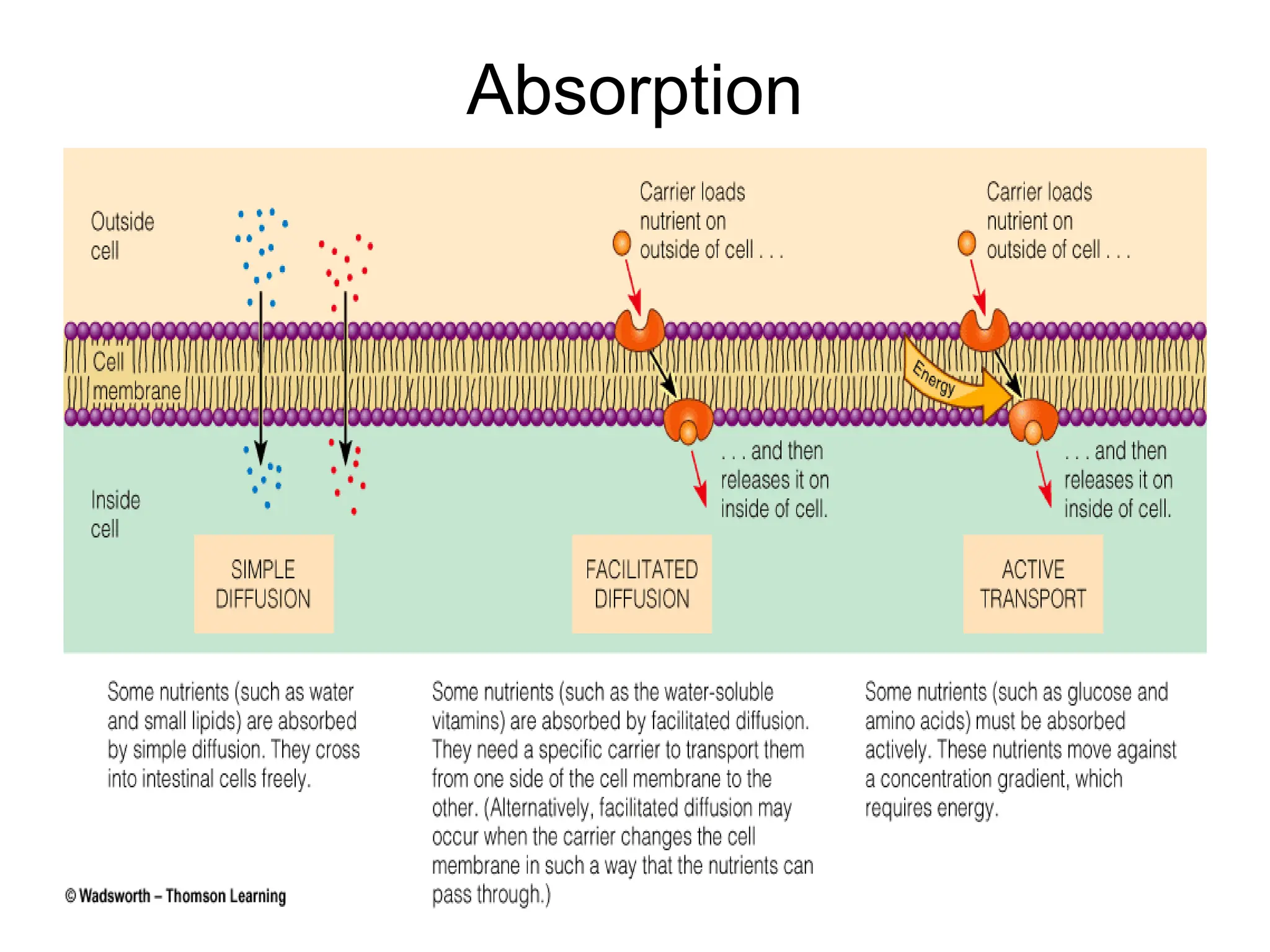
Absorption
Absorption & Transport
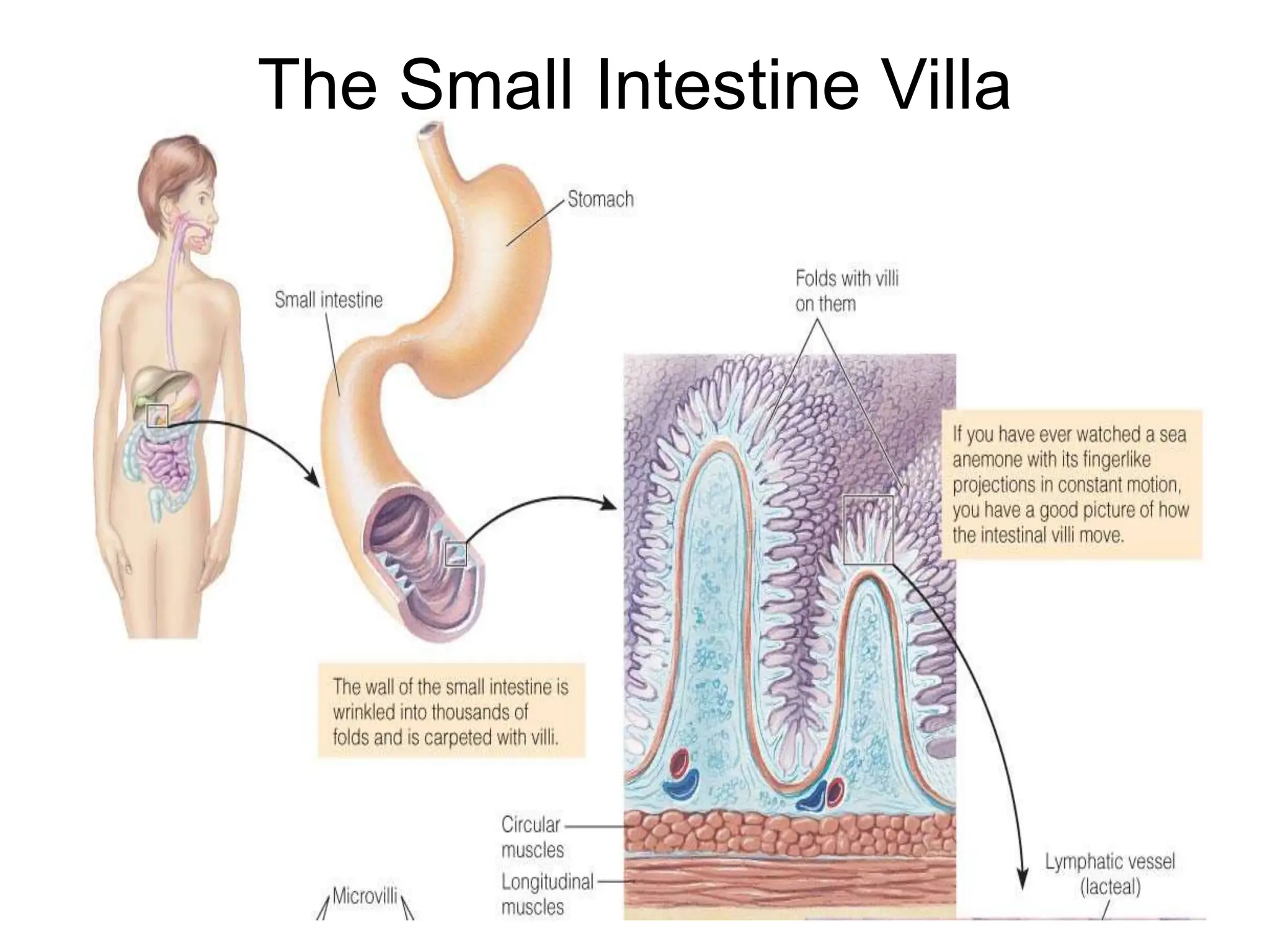
• Absorption occurs in the small intestine
1. Wall of small intestine covered
with 100s of folds
2. Each fold covered with 1000s of
villi
3. Each villi contains 100s of microvilli
The Small Intestine Villa
Absorption & Transport
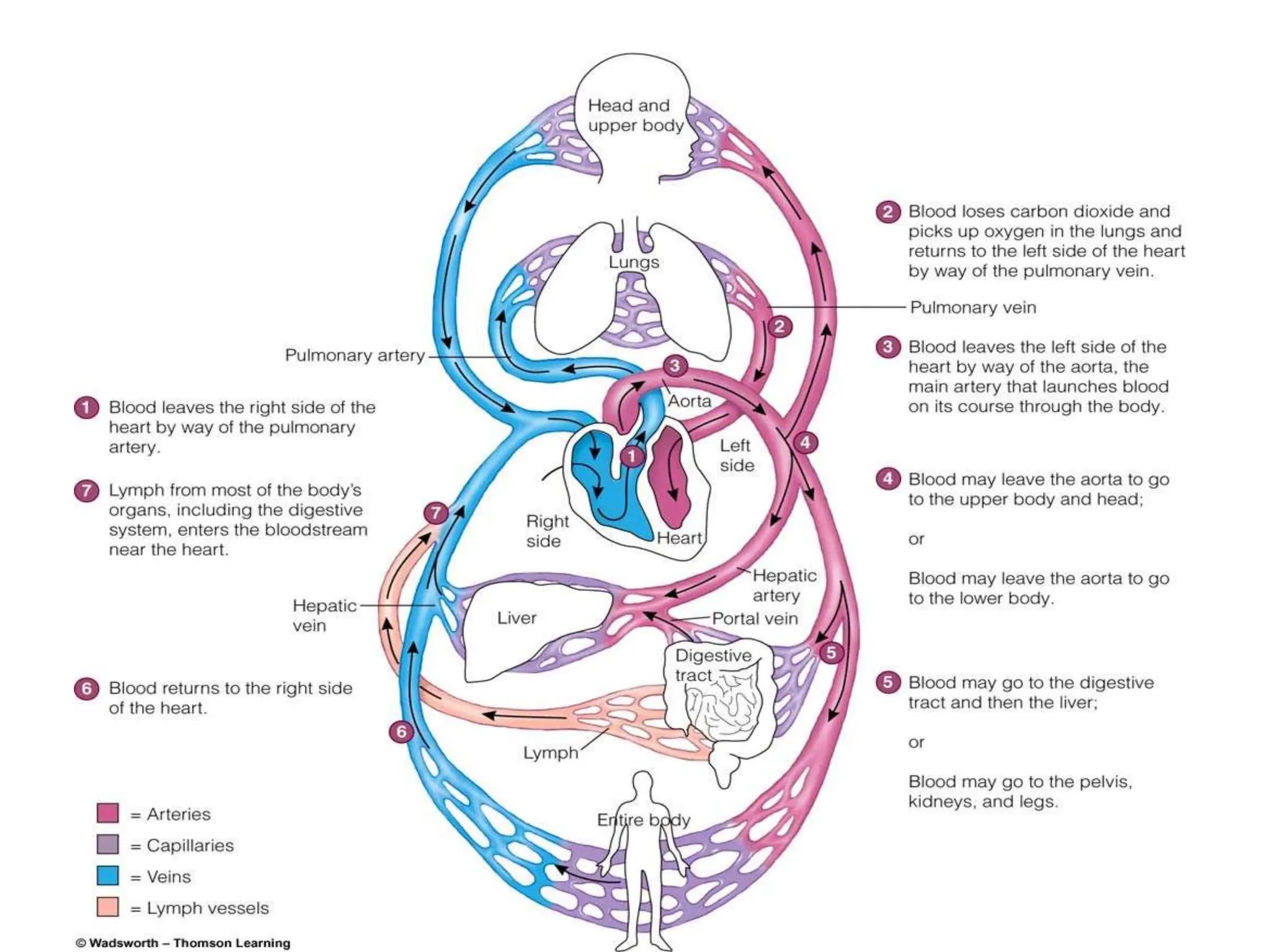
• Absorbed nutrients enter either the:
1. Vascular system – water-soluble
nutrients (monosaccharides, amino
acids, water-soluble vitamins,
minerals, water) enter the blood via
the portal vein for transport to the
liver
Absorption & Transport
2. Lymph system – fat-soluble nutrients
(lipids, fat-soluble vitamins) enter here,
eventually entering the blood near the
heart
3. Transport of lipids – since fats are insoluble in
water, they must be packaged for transport as
lipoproteins (triglyceride, phospholipid, protein,
cholesterol)
Absorption & Transport
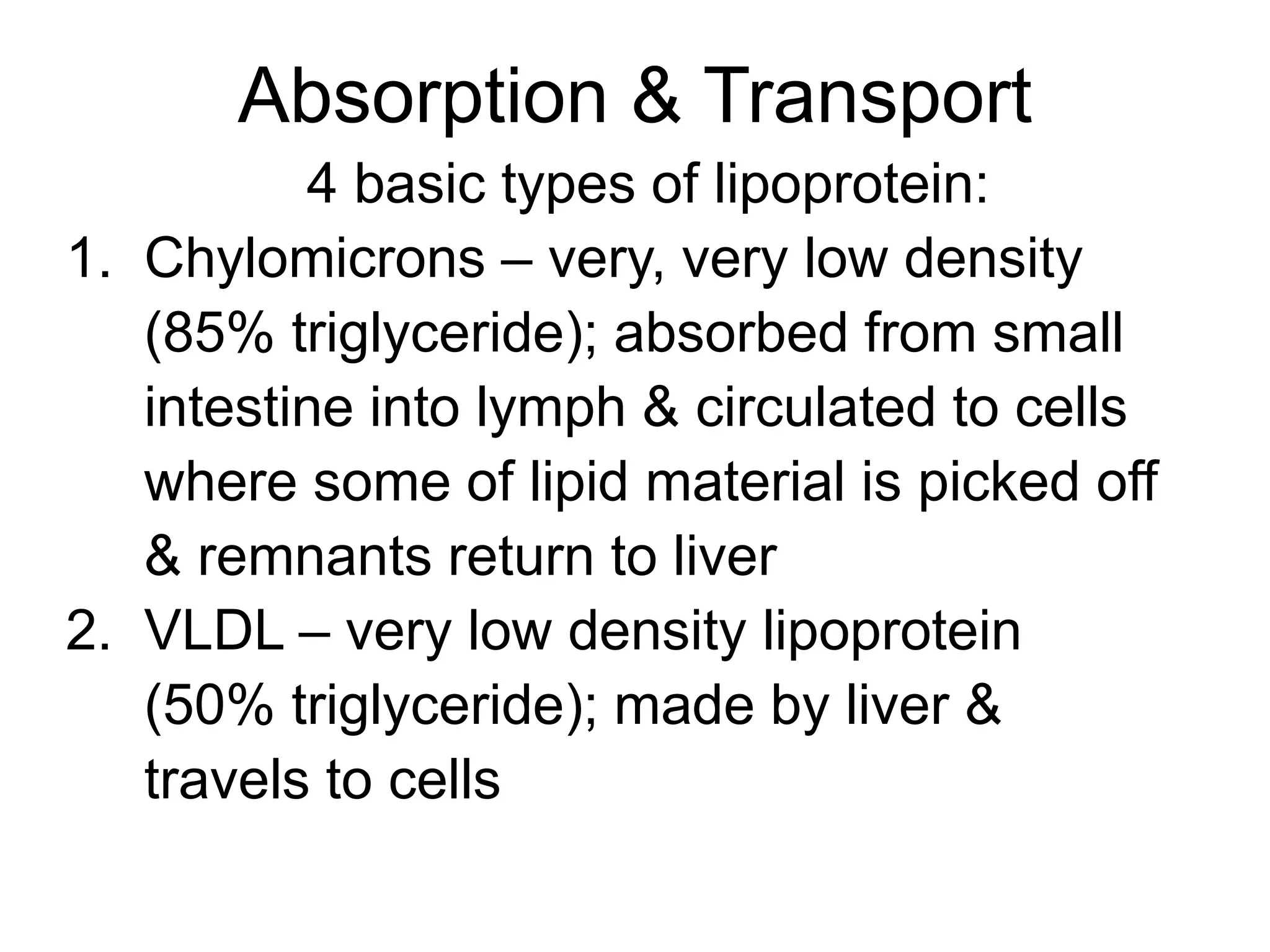
4 basic types of lipoprotein:
1. Chylomicrons – very, very low density
(85% triglyceride); absorbed from small
intestine into lymph & circulated to cells
where some of lipid material is picked off
& remnants return to liver
2. VLDL – very low density lipoprotein
(50% triglyceride); made by liver &
travels to cells
Absorption & Transport
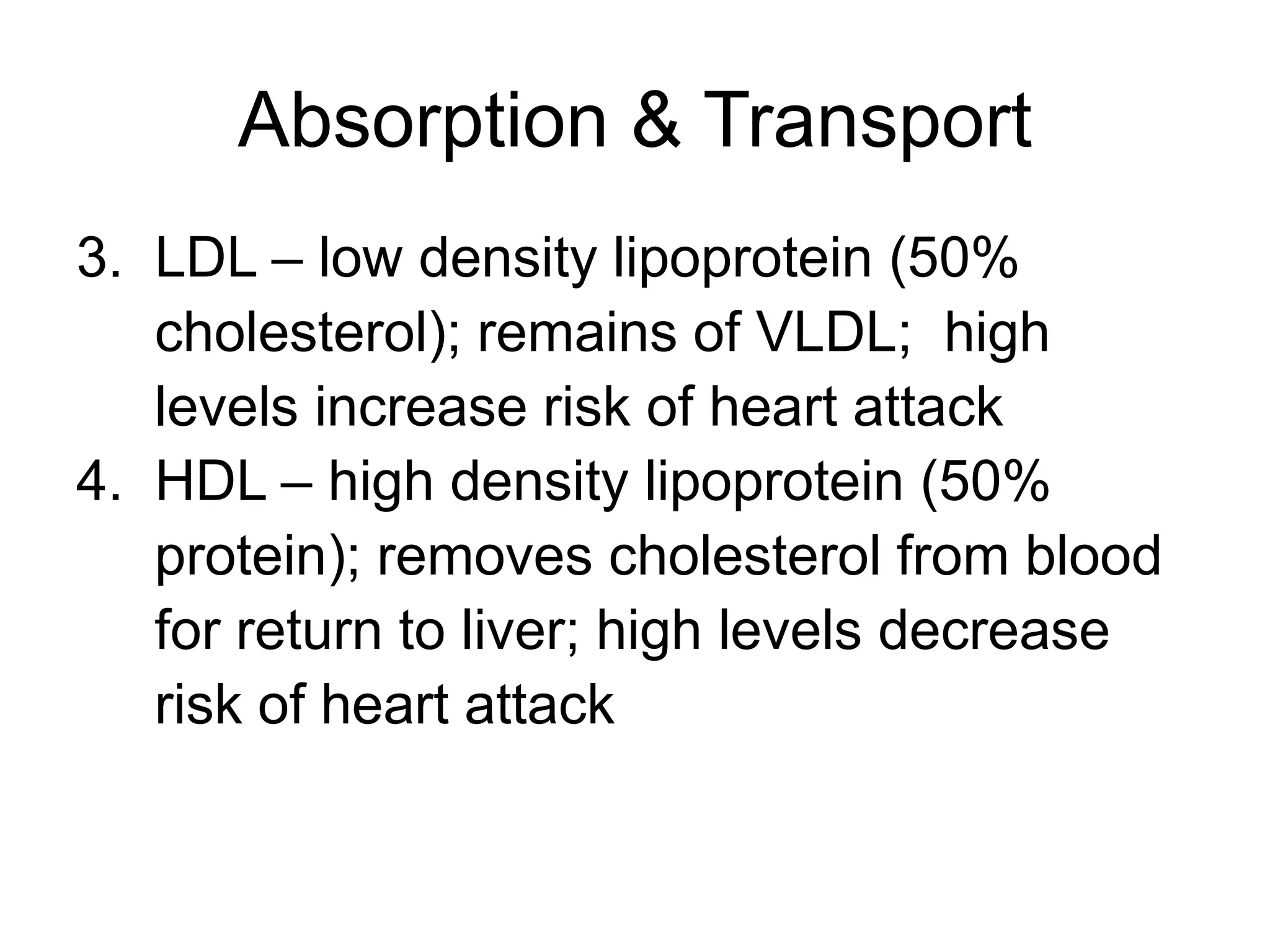
3. LDL – low density lipoprotein (50%
cholesterol); remains of VLDL; high
levels increase risk of heart attack
4. HDL – high density lipoprotein (50%
protein); removes cholesterol from blood
for return to liver; high levels decrease
risk of heart attack
Upper GI Problems
Dysphagia – difficulty swallowing with
tendency to choke/aspirate
1. Foods that are soft texture & smooth
consistency critical to avoid aspiration
(i.e. pudding consistency or pureed)
2. Thickened liquids using commercial
thickeners are easier to swallow
3. Tube feeding into duodenum may be
indicated
Upper GI Problems
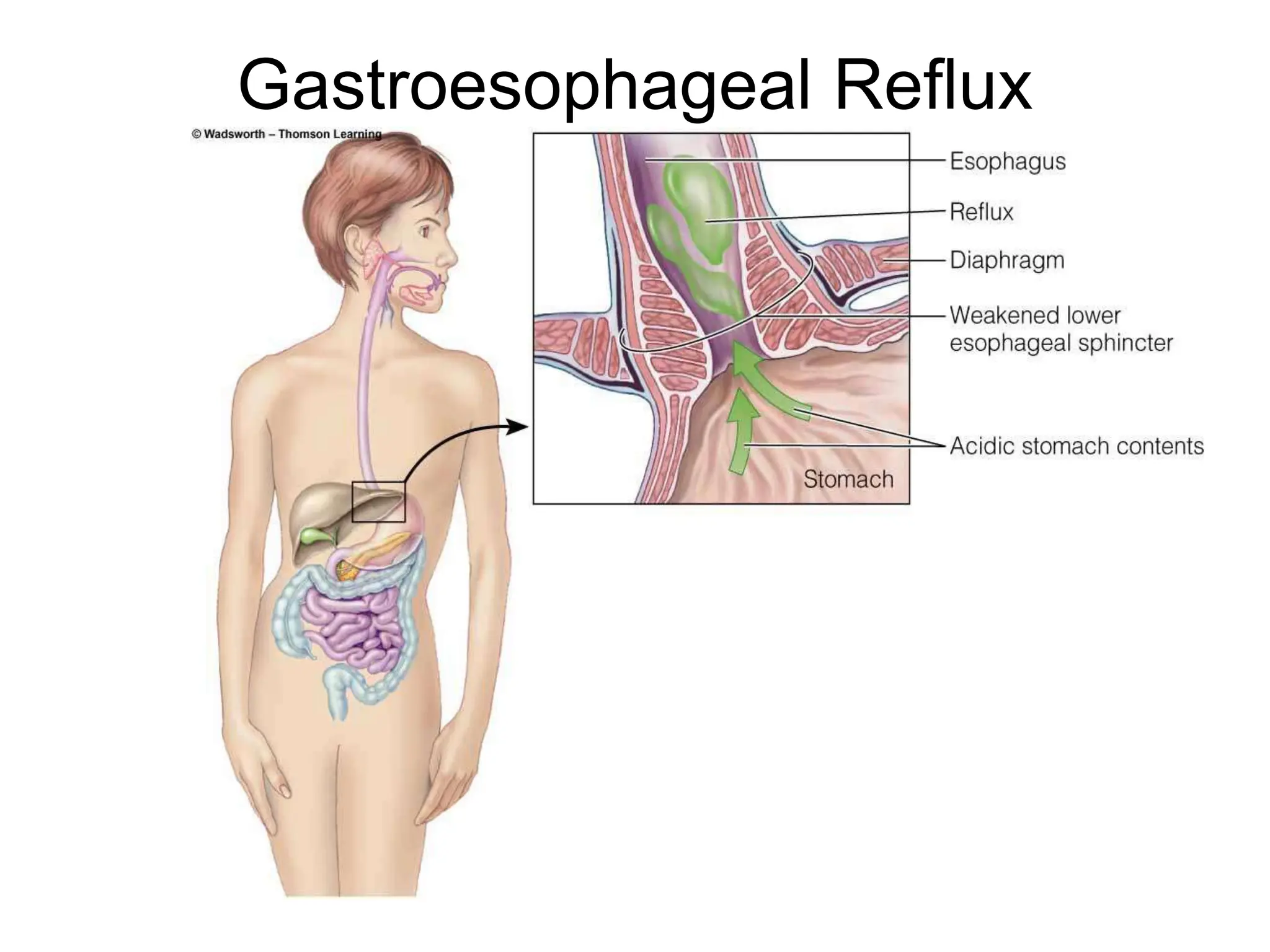
Reflux esophagitis (“heartburn”) which often
occurs due to a hiatal hernia and
Gastritis (inflammation of stomach lining) and
Peptic Ulcers (erosions of the lining of stomach or
duodenum) require a bland diet to reduce
gastric secretions and eliminate foods that
cause pain or discomfort
1. Avoid chocolate, garlic/onions, caffeine,
spicy & fatty foods, mint, alcohol
2. Small meals with fluids between meals
3. Antacids & acid controllers
Gastroesophageal Reflux
Digestive Problems
Delayed Gastric Emptying – may be delayed
temporarily following surgery or chronically
due to Diabetes Mellitus
1. Low fiber, low fat speeds gastric emptying
& prevents bezoars that may form a
blockage
Constipation – prevent with a high fiber diet and
treat by drinking plenty of fluids including prune
juice, get regular exercise & add laxatives
(hydrophilic colloids), as needed
Digestive Problems
Diarrhea/dehydration – treat underlying
cause and replace fluids & electrolytes to
prevent dehydration
1. Mild cases use juices, sports drinks,
caffeine-free sodas, tea, broth, oral
rehydration formulas (e.g. Pedialyte)
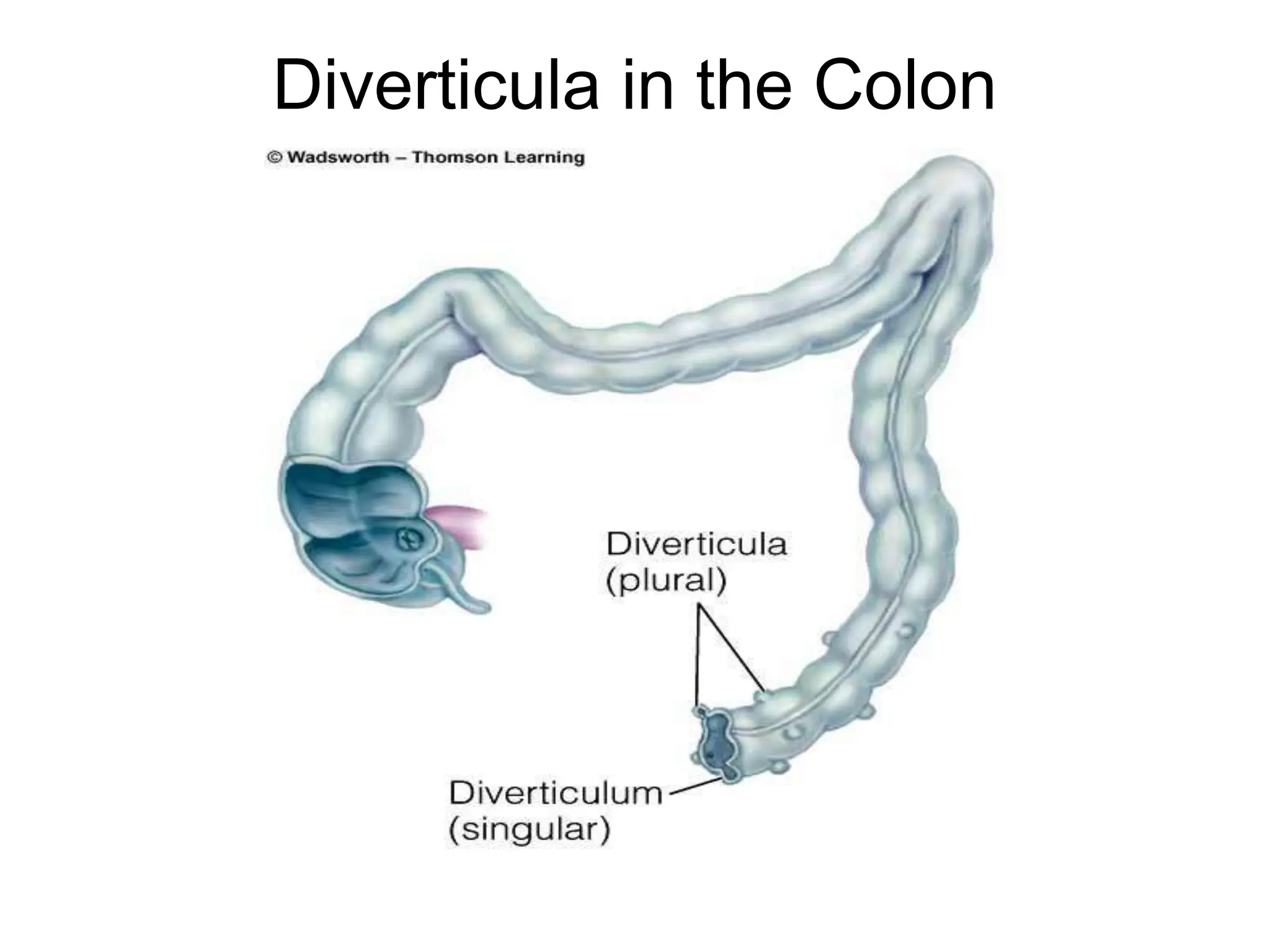
Diverticular Disease
1. Avoid nuts, seeds, hulls (e.g. okra,
strawberries, popcorn) which may
get trapped & cause diverticulitis
Diverticula in the Colon
Malabsorption Syndromes
Dumping Syndrome
Carbohydrate malabsorption that occurs due to
removal of pyloric sphincter from partial
gastrectomy causing osmotic diarrhea
1. Symptoms include weakness, dizziness,
rapid heartbeat, diarrhea, abdominal pain
2. Avoid concentrated sweets, drink fluids
between meals, eat small, frequent meals
Malabsorption Syndromes
Lactose Intolerance
Carbohydrate malabsorption due to a lack of
the enzyme lactase that splits lactose into
glucose + galactose
1. Incidence assoc. with aging, certain ethnic
groups, and G.I. disease or surgery
2. Symptoms include cramping, distention,
diarrhea after consuming products containing
milk or lactose
3. Lactose-Restricted Diet or enzyme tablets &
treated milk are also available
Malabsorption Syndromes
Fat Malabsorption – caused by disorders of the
stomach, intestine, pancreas & liver
1. Steatorrhea (fatty, loose, foamy, foul
smelling stools) with subsequent loss of
energy, essential fatty acids, and fat-soluble
vitamins
2. Limit fat intake to 35-40 gms/day
3. Supplementation with fat-soluble vitamins
(water-miscible forms available)
4. Enzyme replacement to aid digestion
& absorption
Malabsorption Syndromes
Pancreatitis – inflammation of the pancreas,
resulting in impaired digestion/absorption
1. Symptoms include severe abdominal pain,
and nausea & vomiting
2. Initially, N.P.O. (nothing by mouth) to rest
the pancreas using I.V. fluids to maintain
fluid & electrolyte balance
3. Avoiding alcohol is imperative as diet
progresses
4. Chronic pancreatitis may lead maldigestion
of fats, chronic abdominal pain, weight loss
& diabetes
Malabsorption Syndromes
Cystic Fibrosis – hereditary disease
characterized by thick mucus affecting many
body organs, including lungs & pancreas, and
abnormally high electrolyte concentration in
sweat
1. Energy & nutrient needs 120-150% of normal
2. Fat needed to meet high energy needs so
enzyme replacements used to control
steatorrhea
3. Liberal use of fluids & salt
Malabsorption Syndromes
Celiac Disease (Gluten-sensitive enteropathy) –
sensitivity to gliadin, part of the protein gluten,
found in wheat, rye, barley & oats
1. Symptoms include weight loss, diarrhea,
fatigue, anemia (iron, folate, Vit. B12),
generalized malabsorption, bone disease
2. Avoiding foods containing gluten requires
reading labels!

digestion & absorption of vitamins and mineral's

  • 1.
  • 2.
    Digestion • Digestion –The process of changing food into simple components which the body can absorb • Digestive tract or Gastrointestinal tract- where digestion & absorption take place • Mouth->esophagus->stomach->small intestine->large intestine
  • 3.
  • 4.
    Digestion • Mouth –ingestion of food; chewing (mastication) & swallowing 1. Bolus – portion of food swallowed at one time 2. Saliva - water, salts, enzymes, mucus secreted by salivary glands to: a. Moisten food & aids swallowing b. Begins carbohydrate digestion
  • 5.
  • 6.
    Digestion • Esophagus –connects mouth to stomach 1. Epiglottis – closes airway 2. Bolus moved along by peristalsis 3. Cardiac sphincter – keeps food from backing up into esophagus
  • 7.
    Digestion • Stomach –collecting & churning 1. Gastric glands secrete: gastric juice (water, enzymes, hydrochloric acid) that kills most bacteria and begins protein digestion and mucus to protect lining 2. Chyme – semi-liquid mass of partially digested food 3. Pyloric sphincter – regulates passage of chyme into small intestine
  • 8.
  • 9.
    Digestion • Small Intestine– 3 segments: 1. Duodenum – opening from common bile duct secretes fluids from: a. Liver & Gallbladder – bile emulsifies fat b. Pancreas – amylase break down carbohydrate, sodium bicarbonate neutralizes the acidic chyme and lipase 2. Jejunum 3. Ileum a. Ileocecal valve – sphincter that regulates passage of chyme into large intestine
  • 10.
    Digestion • Large intestine(colon) - reabsorbing & eliminating 1. Fermentation of undigested residues by bacteria occurs 2. Terminates at rectum, where water some minerals are absorbed 3. Anus – sphincter that controls defecation (excretion of fiber residue, wastes and some water)
  • 11.
  • 12.
    Digestion • Muscular actionhelps to propel liquefied food through the G.I. tract by: 1. Peristalsis – muscular contractions that push contents forward 2. Segmentation – inward squeezing for greater mixing of secretions 3. Sphincter contractions
  • 13.
  • 14.
  • 15.
  • 16.
    Absorption & Transport •End-products of digestion: 1. CHO >>> Monosaccharides 2. Fats >>> Glycerol + fatty acids 3. Proteins >>> Amino acids 4. Vitamins, minerals & water – no digestion
  • 17.
  • 18.
    Absorption & Transport •Absorption occurs in the small intestine 1. Wall of small intestine covered with 100s of folds 2. Each fold covered with 1000s of villi 3. Each villi contains 100s of microvilli
  • 19.
  • 20.
    Absorption & Transport •Absorbed nutrients enter either the: 1. Vascular system – water-soluble nutrients (monosaccharides, amino acids, water-soluble vitamins, minerals, water) enter the blood via the portal vein for transport to the liver
  • 21.
    Absorption & Transport 2.Lymph system – fat-soluble nutrients (lipids, fat-soluble vitamins) enter here, eventually entering the blood near the heart 3. Transport of lipids – since fats are insoluble in water, they must be packaged for transport as lipoproteins (triglyceride, phospholipid, protein, cholesterol)
  • 23.
    Absorption & Transport 4basic types of lipoprotein: 1. Chylomicrons – very, very low density (85% triglyceride); absorbed from small intestine into lymph & circulated to cells where some of lipid material is picked off & remnants return to liver 2. VLDL – very low density lipoprotein (50% triglyceride); made by liver & travels to cells
  • 24.
    Absorption & Transport 3.LDL – low density lipoprotein (50% cholesterol); remains of VLDL; high levels increase risk of heart attack 4. HDL – high density lipoprotein (50% protein); removes cholesterol from blood for return to liver; high levels decrease risk of heart attack
  • 25.
    Upper GI Problems Dysphagia– difficulty swallowing with tendency to choke/aspirate 1. Foods that are soft texture & smooth consistency critical to avoid aspiration (i.e. pudding consistency or pureed) 2. Thickened liquids using commercial thickeners are easier to swallow 3. Tube feeding into duodenum may be indicated
  • 26.
    Upper GI Problems Refluxesophagitis (“heartburn”) which often occurs due to a hiatal hernia and Gastritis (inflammation of stomach lining) and Peptic Ulcers (erosions of the lining of stomach or duodenum) require a bland diet to reduce gastric secretions and eliminate foods that cause pain or discomfort 1. Avoid chocolate, garlic/onions, caffeine, spicy & fatty foods, mint, alcohol 2. Small meals with fluids between meals 3. Antacids & acid controllers
  • 27.
  • 28.
    Digestive Problems Delayed GastricEmptying – may be delayed temporarily following surgery or chronically due to Diabetes Mellitus 1. Low fiber, low fat speeds gastric emptying & prevents bezoars that may form a blockage Constipation – prevent with a high fiber diet and treat by drinking plenty of fluids including prune juice, get regular exercise & add laxatives (hydrophilic colloids), as needed
  • 29.
    Digestive Problems Diarrhea/dehydration –treat underlying cause and replace fluids & electrolytes to prevent dehydration 1. Mild cases use juices, sports drinks, caffeine-free sodas, tea, broth, oral rehydration formulas (e.g. Pedialyte) Diverticular Disease 1. Avoid nuts, seeds, hulls (e.g. okra, strawberries, popcorn) which may get trapped & cause diverticulitis
  • 30.
  • 31.
    Malabsorption Syndromes Dumping Syndrome Carbohydratemalabsorption that occurs due to removal of pyloric sphincter from partial gastrectomy causing osmotic diarrhea 1. Symptoms include weakness, dizziness, rapid heartbeat, diarrhea, abdominal pain 2. Avoid concentrated sweets, drink fluids between meals, eat small, frequent meals
  • 32.
    Malabsorption Syndromes Lactose Intolerance Carbohydratemalabsorption due to a lack of the enzyme lactase that splits lactose into glucose + galactose 1. Incidence assoc. with aging, certain ethnic groups, and G.I. disease or surgery 2. Symptoms include cramping, distention, diarrhea after consuming products containing milk or lactose 3. Lactose-Restricted Diet or enzyme tablets & treated milk are also available
  • 33.
    Malabsorption Syndromes Fat Malabsorption– caused by disorders of the stomach, intestine, pancreas & liver 1. Steatorrhea (fatty, loose, foamy, foul smelling stools) with subsequent loss of energy, essential fatty acids, and fat-soluble vitamins 2. Limit fat intake to 35-40 gms/day 3. Supplementation with fat-soluble vitamins (water-miscible forms available) 4. Enzyme replacement to aid digestion & absorption
  • 34.
    Malabsorption Syndromes Pancreatitis –inflammation of the pancreas, resulting in impaired digestion/absorption 1. Symptoms include severe abdominal pain, and nausea & vomiting 2. Initially, N.P.O. (nothing by mouth) to rest the pancreas using I.V. fluids to maintain fluid & electrolyte balance 3. Avoiding alcohol is imperative as diet progresses 4. Chronic pancreatitis may lead maldigestion of fats, chronic abdominal pain, weight loss & diabetes
  • 35.
    Malabsorption Syndromes Cystic Fibrosis– hereditary disease characterized by thick mucus affecting many body organs, including lungs & pancreas, and abnormally high electrolyte concentration in sweat 1. Energy & nutrient needs 120-150% of normal 2. Fat needed to meet high energy needs so enzyme replacements used to control steatorrhea 3. Liberal use of fluids & salt
  • 36.
    Malabsorption Syndromes Celiac Disease(Gluten-sensitive enteropathy) – sensitivity to gliadin, part of the protein gluten, found in wheat, rye, barley & oats 1. Symptoms include weight loss, diarrhea, fatigue, anemia (iron, folate, Vit. B12), generalized malabsorption, bone disease 2. Avoiding foods containing gluten requires reading labels!