Alireza Ghorbani Sharif,MD
Interventional Electrophysiologist
Tehran Arrhythmia Clinic
January 2018
Difficult CS Lead
Implantations
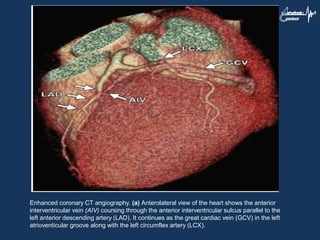
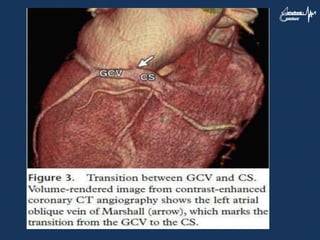
Enhanced coronary CT angiography. (a) Anterolateral view of the heart shows the anterior
interventricular vein (AIV) coursing through the anterior interventricular sulcus parallel to the
left anterior descending artery (LAD). It continues as the great cardiac vein (GCV) in the left
atrioventicular groove along with the left circumflex artery (LCX).
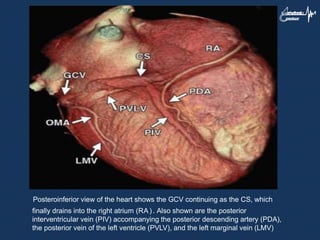
Posteroinferior view of the heart shows the GCV continuing as the CS, which
finally drains into the right atrium (RA). Also shown are the posterior
interventricular vein (PIV) accompanying the posterior descending artery (PDA),
the posterior vein of the left ventricle (PVLV), and the left marginal vein (LMV)
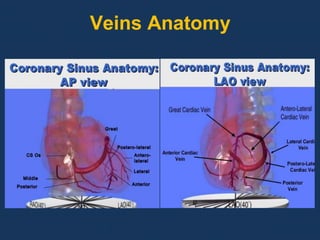
Veins Anatomy
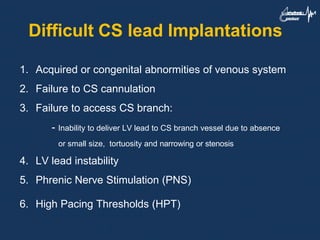
Difficult CS lead Implantations
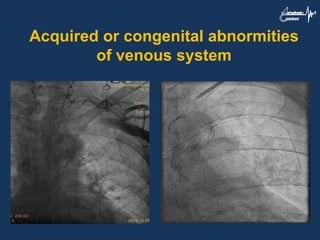
1. Acquired or congenital abnormities of venous system
2. Failure to CS cannulation
3. Failure to access CS branch:
- Inability to deliver LV lead to CS branch vessel due to absence
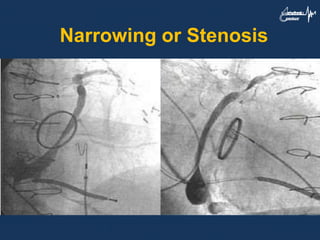
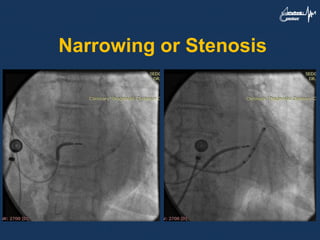
or small size, tortuosity and narrowing or stenosis
4. LV lead instability
5. Phrenic Nerve Stimulation (PNS)
6. High Pacing Thresholds (HPT)
Acquired or congenital
abnormities of venous system
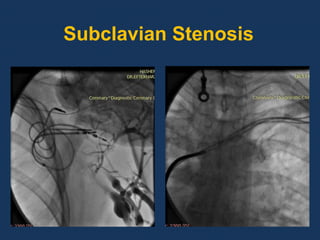
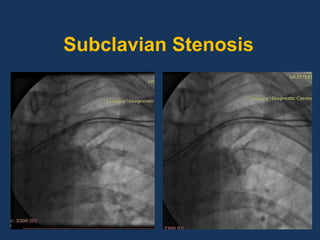
• Obstruction of left subclavian vein
• Persistent left SVC
Acquired or congenital abnormities
of venous system
Subclavian Stenosis
Subclavian Stenosis
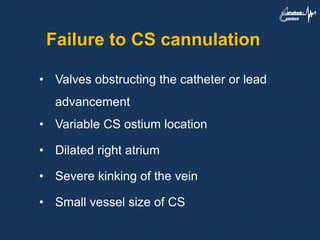
Failure to CS cannulation
• Valves obstructing the catheter or lead
advancement
• Variable CS ostium location
• Dilated right atrium
• Severe kinking of the vein
• Small vessel size of CS
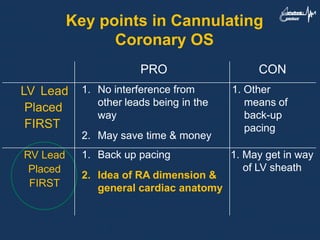
Key points in Cannulating
Coronary OS
PRO CON
LV Lead
Placed
FIRST
1. No interference from
other leads being in the
way
2. May save time & money
1. Other
means of
back-up
pacing
RV Lead
Placed
FIRST
1. Back up pacing
2. Idea of RA dimension &
general cardiac anatomy
1. May get in way
of LV sheath
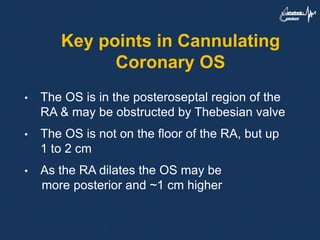
Key points in Cannulating
Coronary OS
• The OS is in the posteroseptal region of the
RA & may be obstructed by Thebesian valve
• The OS is not on the floor of the RA, but up
1 to 2 cm
• As the RA dilates the OS may be
more posterior and ~1 cm higher
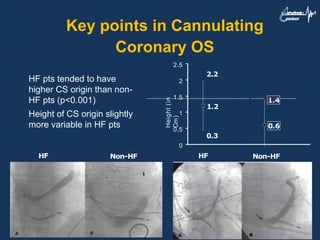
Key points in Cannulating
Coronary OS
HF pts tended to have
higher CS origin than non-
HF pts (p<0.001)
Height of CS origin slightly
more variable in HF pts
1.2
0.6
2.2
1.4
0.3
0
0.5
1
1.5
2
2.5
HF Non-HF
Height(in
Cm)
HF Non-HF
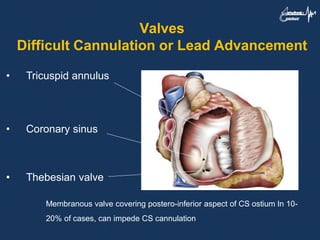
• Tricuspid annulus
• Coronary sinus
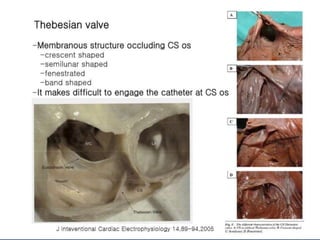
• Thebesian valve
Membranous valve covering postero-inferior aspect of CS ostium In 10-
20% of cases, can impede CS cannulation
Valves
Difficult Cannulation or Lead Advancement
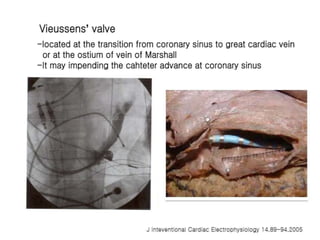
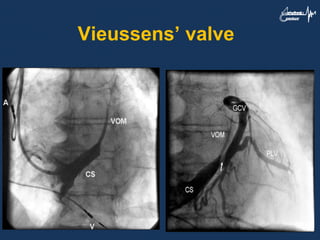
Vieussens’ valve
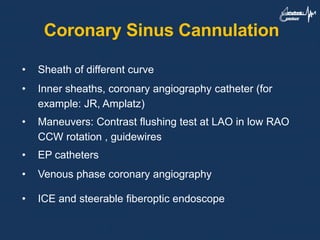
Coronary Sinus Cannulation
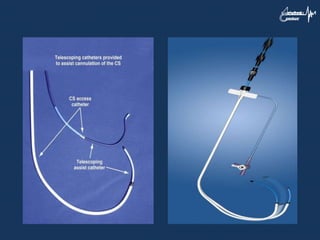
• Sheath of different curve
• Inner sheaths, coronary angiography catheter (for
example: JR, Amplatz)
• Maneuvers: Contrast flushing test at LAO in low RAO
CCW rotation , guidewires
• EP catheters
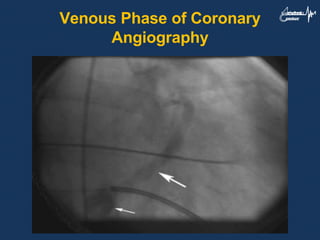
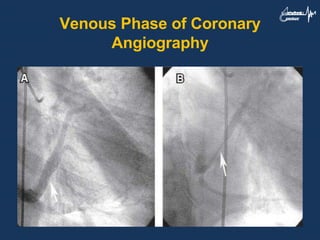
• Venous phase coronary angiography
• ICE and steerable fiberoptic endoscope
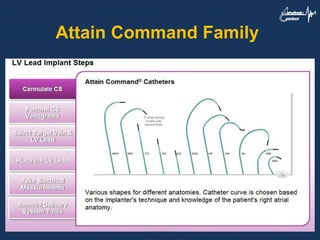
Attain Command Family
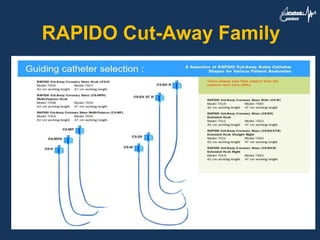
RAPIDO Cut-Away Family
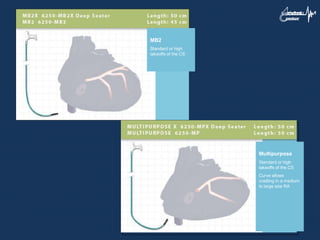
MB2
Standard or high
takeoffs of the CS
Multipurpose
Standard or high
takeoffs of the CS
Curve allows
cradling in a medium
to large size RA
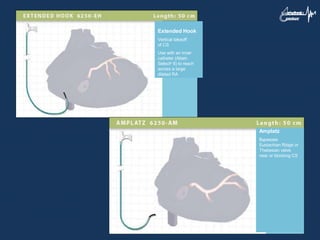
Extended Hook
Vertical takeoff
of CS
Use with an inner
catheter (Attain
Select® II) to reach
across a large
dilated RA
Amplatz
Bypasses
Eustachian Ridge or
Thebesian valve
near or blocking CS
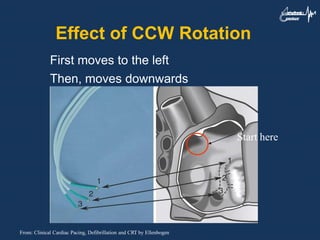
Effect of CCW Rotation
First moves to the left
Then, moves downwards
Start here
From: Clinical Cardiac Pacing, Defibrillation and CRT by Ellenbogen
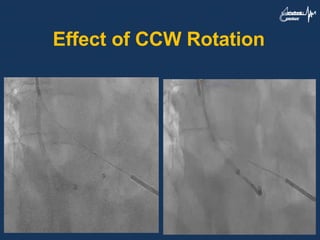
Effect of CCW Rotation
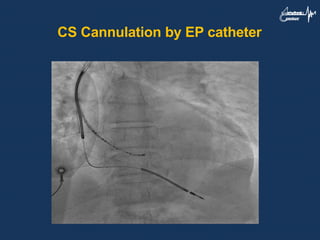
CS Cannulation by EP catheter
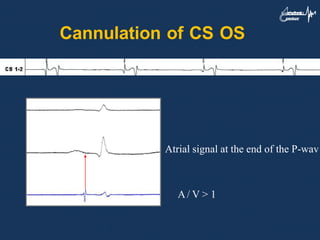
Cannulation of CS OS
IEGM to confirm position
A/ V > 1
Atrial signal at the end of the P-wav
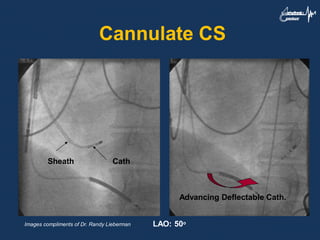
Cannulate CS
Advancing Deflectable Cath.
CathSheath
LAO: 50oImages compliments of Dr. Randy Lieberman
Venous Phase of Coronary
Angiography
Venous Phase of Coronary
Angiography
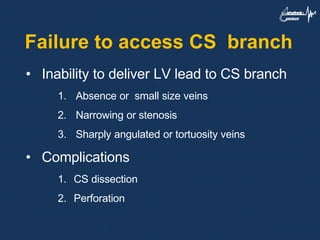
Failure to access CS branch
• Inability to deliver LV lead to CS branch
1. Absence or small size veins
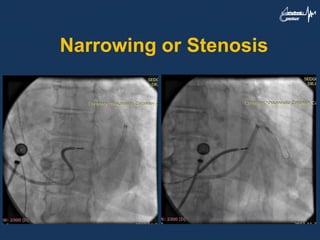
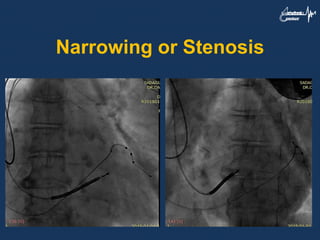
2. Narrowing or stenosis
3. Sharply angulated or tortuosity veins
• Complications
1. CS dissection
2. Perforation
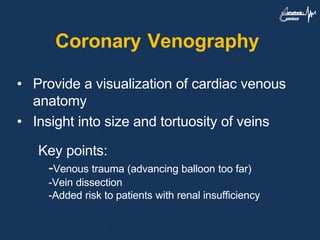
Coronary Venography
• Provide a visualization of cardiac venous
anatomy
• Insight into size and tortuosity of veins
Key points:
-Venous trauma (advancing balloon too far)
-Vein dissection
-Added risk to patients with renal insufficiency
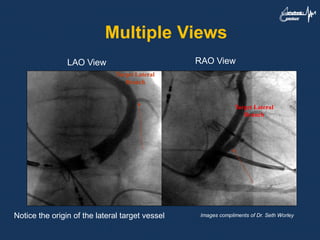
Multiple Views
Notice the origin of the lateral target vessel
LAO View RAO View
Images compliments of Dr. Seth Worley
Target Lateral
Branch
Target Lateral
Branch
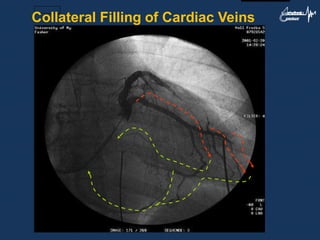
Collateral Filling of Cardiac Veins
Narrowing or Stenosis
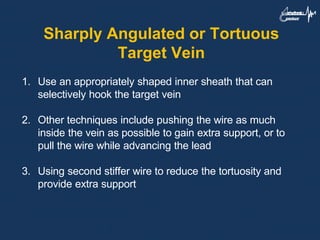
Sharply Angulated or Tortuous
Target Vein
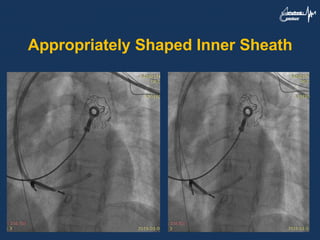
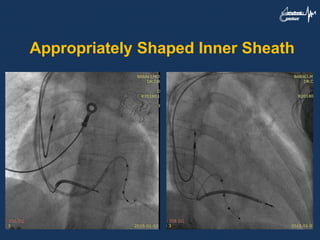
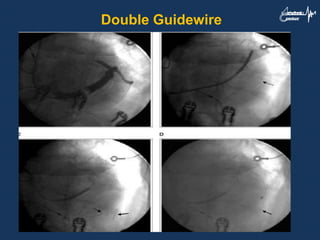
1. Use an appropriately shaped inner sheath that can
selectively hook the target vein
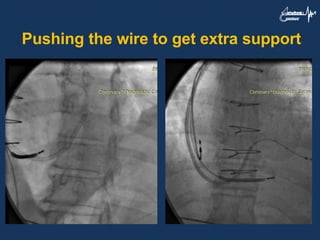
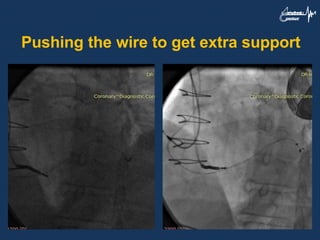
2. Other techniques include pushing the wire as much
inside the vein as possible to gain extra support, or to
pull the wire while advancing the lead
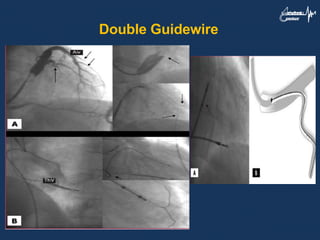
3. Using second stiffer wire to reduce the tortuosity and
provide extra support
Appropriately Shaped Inner Sheath
Pushing the wire to get extra support
Double Guidewire
Double Guidewire
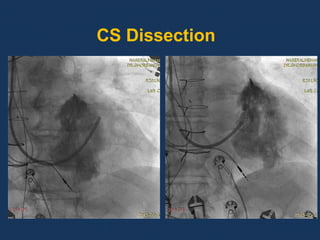
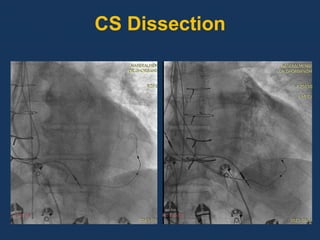
CS Dissection
• Contak CD study: perforation or dissection of the
coronary sinus in 1.6 -1.8%
• Management:
• Surgical approach
• Delay the LV lead implantation after 2 weeks
• Select another cardiac vein
CS Dissection
CS Dissection
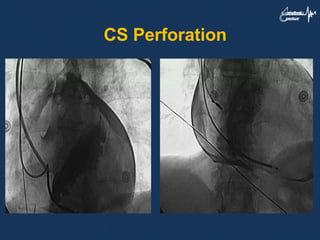
CS Perforation
LV lead instability
• Macro-disloaction, micro-dislocation rate is
described to be 10%
• We usually use two techniques to stabilize
the lead
1. Retained stylet or guidewire technique for
anchoring LV lead
2. Coronary sinus side branch stenting
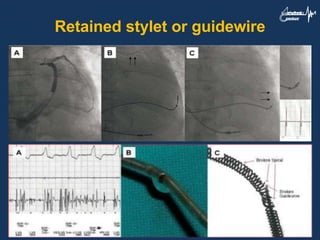
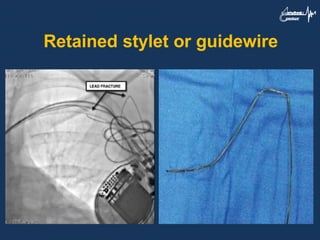
Retained stylet or guidewire
• Guidewires are prone to fracture
• Stylets are stiffer than guidewires, there is no reason
to believe that there no fracture by stylet
• Difficulty in lead extraction
• The permanent stylet technique should be the last
resort
Retained stylet or guidewire
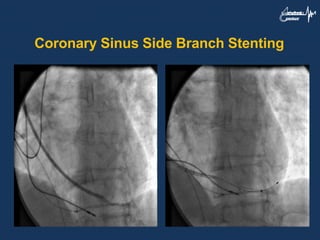
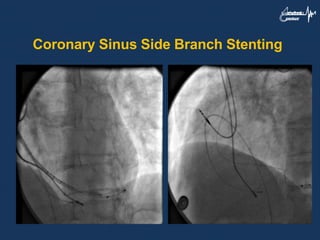
Coronary Sinus Side Branch Stenting
• Coronary sinus side branch stenting is
a good technique to stabilize the LV
lead position
• But may cause injury to the lead
insulation
Coronary Sinus Side Branch Stenting
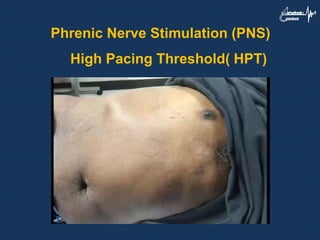
Phrenic Nerve Stimulation (PNS)
High Pacing Threshold( HPT)
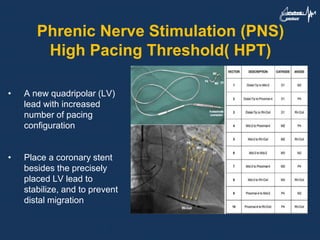
Phrenic Nerve Stimulation (PNS)
High Pacing Threshold( HPT)
• A new quadripolar (LV)
lead with increased
number of pacing
configuration
• Place a coronary stent
besides the precisely
placed LV lead to
stabilize, and to prevent
distal migration
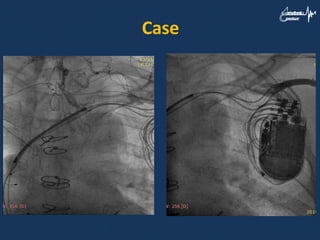
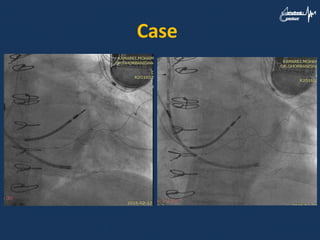
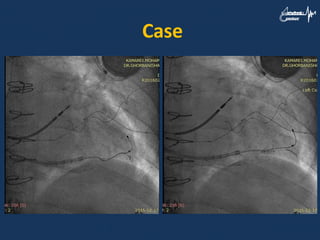
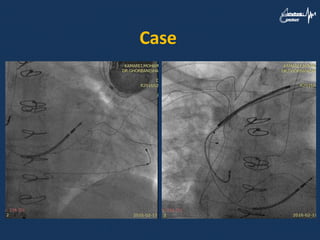
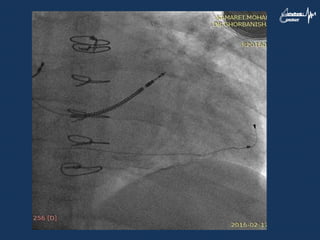
Case
• A 73 yr man was a case of ischemic
cardiomyopathy with VT and LBBB
• CRT-D was done successfully and there was
improvement his heart failure
• There was LV lead dislocation after two yeras
Case
Case
Case
Case
Tehran Arrhythmia Center
WWW.IranEP.org
info@IranEP.org

Difficult Coronary Sinus Lead Implantation

  • 1.
    Alireza Ghorbani Sharif,MD InterventionalElectrophysiologist Tehran Arrhythmia Clinic January 2018 Difficult CS Lead Implantations
  • 2.
    Enhanced coronary CTangiography. (a) Anterolateral view of the heart shows the anterior interventricular vein (AIV) coursing through the anterior interventricular sulcus parallel to the left anterior descending artery (LAD). It continues as the great cardiac vein (GCV) in the left atrioventicular groove along with the left circumflex artery (LCX).
  • 3.
    Posteroinferior view ofthe heart shows the GCV continuing as the CS, which finally drains into the right atrium (RA). Also shown are the posterior interventricular vein (PIV) accompanying the posterior descending artery (PDA), the posterior vein of the left ventricle (PVLV), and the left marginal vein (LMV)
  • 5.
  • 6.
    Difficult CS leadImplantations 1. Acquired or congenital abnormities of venous system 2. Failure to CS cannulation 3. Failure to access CS branch: - Inability to deliver LV lead to CS branch vessel due to absence or small size, tortuosity and narrowing or stenosis 4. LV lead instability 5. Phrenic Nerve Stimulation (PNS) 6. High Pacing Thresholds (HPT)
  • 7.
    Acquired or congenital abnormitiesof venous system • Obstruction of left subclavian vein • Persistent left SVC
  • 8.
    Acquired or congenitalabnormities of venous system
  • 9.
  • 10.
  • 11.
    Failure to CScannulation • Valves obstructing the catheter or lead advancement • Variable CS ostium location • Dilated right atrium • Severe kinking of the vein • Small vessel size of CS
  • 12.
    Key points inCannulating Coronary OS PRO CON LV Lead Placed FIRST 1. No interference from other leads being in the way 2. May save time & money 1. Other means of back-up pacing RV Lead Placed FIRST 1. Back up pacing 2. Idea of RA dimension & general cardiac anatomy 1. May get in way of LV sheath
  • 13.
    Key points inCannulating Coronary OS • The OS is in the posteroseptal region of the RA & may be obstructed by Thebesian valve • The OS is not on the floor of the RA, but up 1 to 2 cm • As the RA dilates the OS may be more posterior and ~1 cm higher
  • 14.
    Key points inCannulating Coronary OS HF pts tended to have higher CS origin than non- HF pts (p<0.001) Height of CS origin slightly more variable in HF pts 1.2 0.6 2.2 1.4 0.3 0 0.5 1 1.5 2 2.5 HF Non-HF Height(in Cm) HF Non-HF
  • 15.
    • Tricuspid annulus •Coronary sinus • Thebesian valve Membranous valve covering postero-inferior aspect of CS ostium In 10- 20% of cases, can impede CS cannulation Valves Difficult Cannulation or Lead Advancement
  • 18.
  • 19.
    Coronary Sinus Cannulation •Sheath of different curve • Inner sheaths, coronary angiography catheter (for example: JR, Amplatz) • Maneuvers: Contrast flushing test at LAO in low RAO CCW rotation , guidewires • EP catheters • Venous phase coronary angiography • ICE and steerable fiberoptic endoscope
  • 20.
  • 21.
  • 23.
    MB2 Standard or high takeoffsof the CS Multipurpose Standard or high takeoffs of the CS Curve allows cradling in a medium to large size RA
  • 24.
    Extended Hook Vertical takeoff ofCS Use with an inner catheter (Attain Select® II) to reach across a large dilated RA Amplatz Bypasses Eustachian Ridge or Thebesian valve near or blocking CS
  • 25.
    Effect of CCWRotation First moves to the left Then, moves downwards Start here From: Clinical Cardiac Pacing, Defibrillation and CRT by Ellenbogen
  • 26.
    Effect of CCWRotation
  • 27.
    CS Cannulation byEP catheter
  • 28.
    Cannulation of CSOS IEGM to confirm position A/ V > 1 Atrial signal at the end of the P-wav
  • 29.
    Cannulate CS Advancing DeflectableCath. CathSheath LAO: 50oImages compliments of Dr. Randy Lieberman
  • 30.
    Venous Phase ofCoronary Angiography
  • 31.
    Venous Phase ofCoronary Angiography
  • 33.
    Failure to accessCS branch • Inability to deliver LV lead to CS branch 1. Absence or small size veins 2. Narrowing or stenosis 3. Sharply angulated or tortuosity veins • Complications 1. CS dissection 2. Perforation
  • 34.
    Coronary Venography • Providea visualization of cardiac venous anatomy • Insight into size and tortuosity of veins Key points: -Venous trauma (advancing balloon too far) -Vein dissection -Added risk to patients with renal insufficiency
  • 35.
    Multiple Views Notice theorigin of the lateral target vessel LAO View RAO View Images compliments of Dr. Seth Worley Target Lateral Branch Target Lateral Branch
  • 36.
    Collateral Filling ofCardiac Veins
  • 37.
  • 38.
  • 39.
  • 40.
  • 41.
    Sharply Angulated orTortuous Target Vein 1. Use an appropriately shaped inner sheath that can selectively hook the target vein 2. Other techniques include pushing the wire as much inside the vein as possible to gain extra support, or to pull the wire while advancing the lead 3. Using second stiffer wire to reduce the tortuosity and provide extra support
  • 42.
  • 43.
  • 44.
    Pushing the wireto get extra support
  • 45.
    Pushing the wireto get extra support
  • 46.
  • 47.
  • 48.
    CS Dissection • ContakCD study: perforation or dissection of the coronary sinus in 1.6 -1.8% • Management: • Surgical approach • Delay the LV lead implantation after 2 weeks • Select another cardiac vein
  • 49.
  • 50.
  • 51.
  • 52.
    LV lead instability •Macro-disloaction, micro-dislocation rate is described to be 10% • We usually use two techniques to stabilize the lead 1. Retained stylet or guidewire technique for anchoring LV lead 2. Coronary sinus side branch stenting
  • 53.
    Retained stylet orguidewire • Guidewires are prone to fracture • Stylets are stiffer than guidewires, there is no reason to believe that there no fracture by stylet • Difficulty in lead extraction • The permanent stylet technique should be the last resort
  • 54.
  • 55.
  • 56.
    Coronary Sinus SideBranch Stenting • Coronary sinus side branch stenting is a good technique to stabilize the LV lead position • But may cause injury to the lead insulation
  • 57.
    Coronary Sinus SideBranch Stenting
  • 58.
    Coronary Sinus SideBranch Stenting
  • 59.
    Phrenic Nerve Stimulation(PNS) High Pacing Threshold( HPT)
  • 60.
    Phrenic Nerve Stimulation(PNS) High Pacing Threshold( HPT) • A new quadripolar (LV) lead with increased number of pacing configuration • Place a coronary stent besides the precisely placed LV lead to stabilize, and to prevent distal migration
  • 61.
    Case • A 73yr man was a case of ischemic cardiomyopathy with VT and LBBB • CRT-D was done successfully and there was improvement his heart failure • There was LV lead dislocation after two yeras
  • 62.
  • 63.
  • 64.
  • 65.
  • 67.