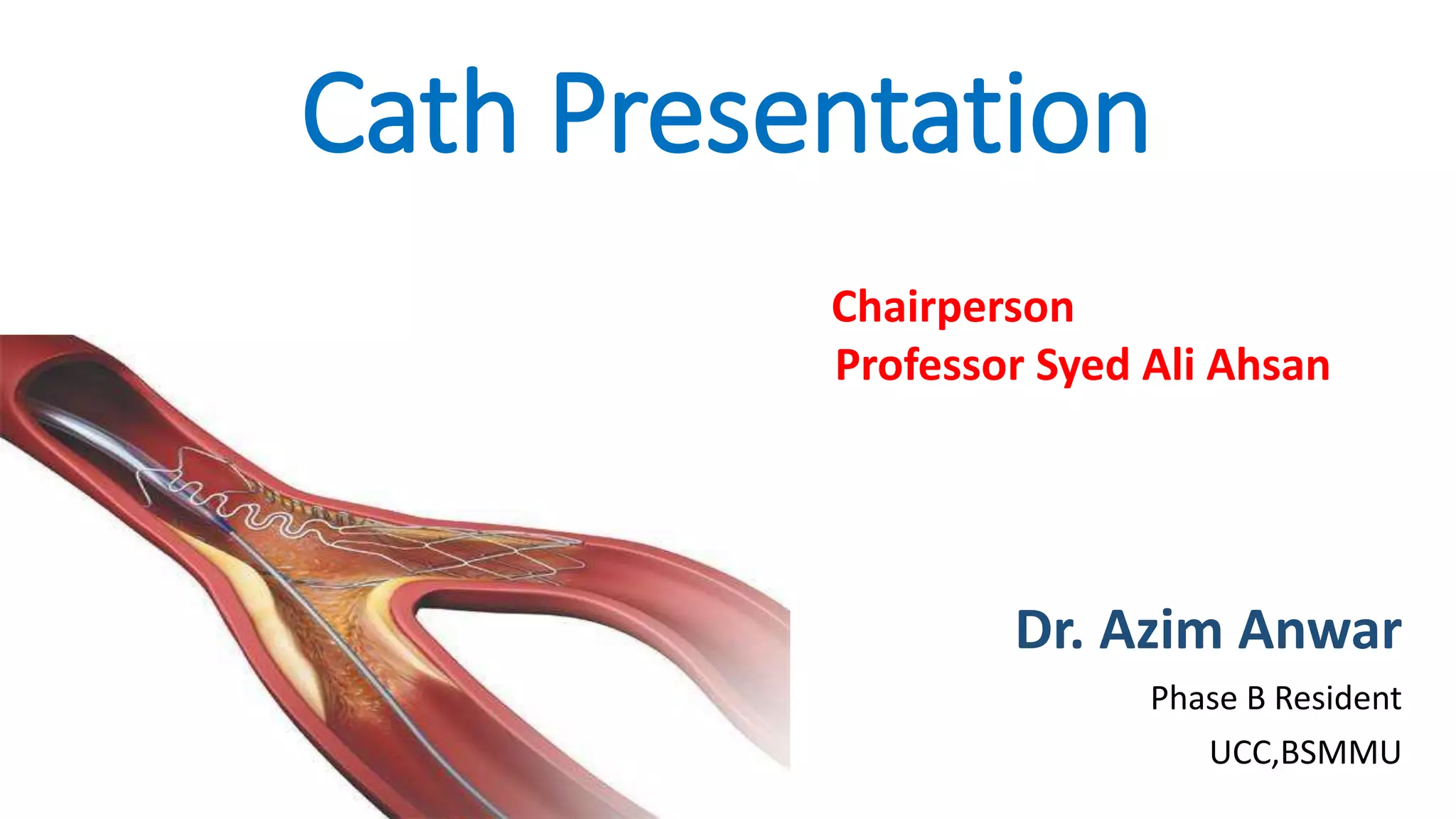
Cath Presentation
Dr. Azim Anwar
Phase B Resident
UCC,BSMMU
Chairperson
Prof Professor Syed Ali Ahsan
• Afsar Ali, 45Y
• Chest Pain, SOB- 2 days
• Prev H/O- PCI to LAD, LCX >> 2012
• DM, HTN
• 110/80 mmhg, 97bpm, Soft HS1
• ECG: ST-T changes in V1-V6
• Trop I: 4ng/ml >> 12 ng/ml
•Diagnosis: NSTEMI with DM with HTN
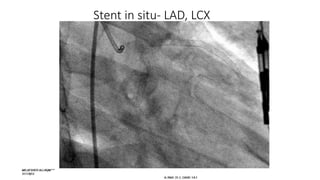
Stent in situ- LAD, LCX
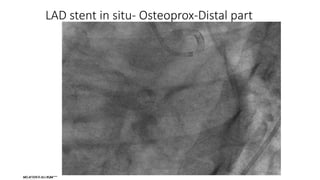
LAD stent in situ- Osteoprox-Distal part
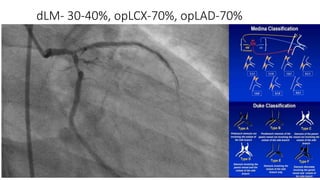
dLM- 30-40%, opLCX-70%, opLAD-70%
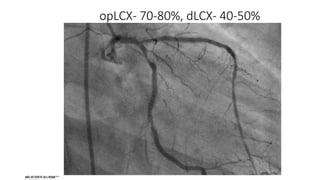
opLCX- 70-80%, dLCX- 40-50%
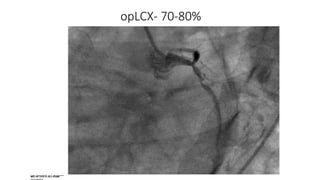
opLCX- 70-80%
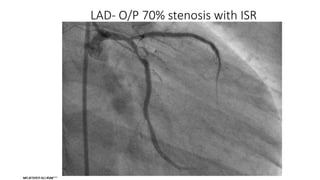
LAD- O/P 70% stenosis with ISR
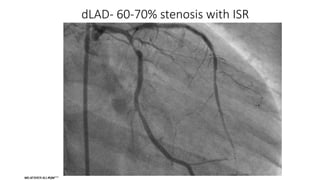
dLAD- 60-70% stenosis with ISR
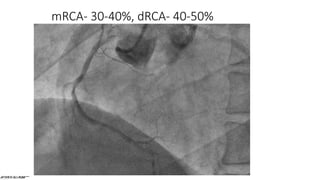
mRCA- 30-40%, dRCA- 40-50%
Consideration. . . .
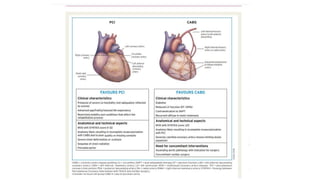
1.Revascularisation / OMT ?
2. PCI / CABG ??
3. Technique ???
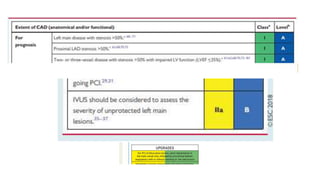
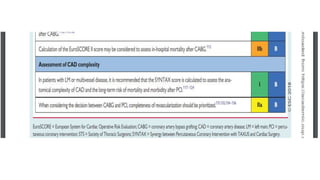
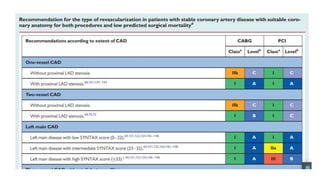
4. What about the guidelines ????
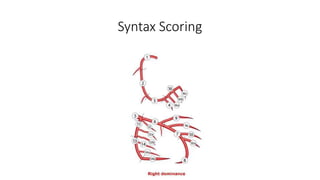
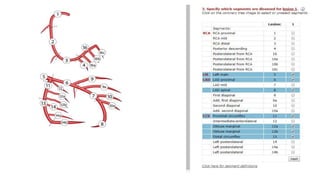
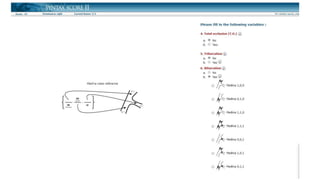
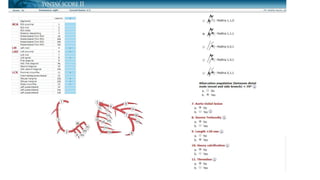
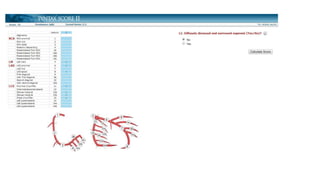
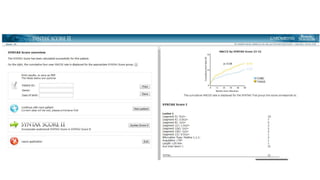
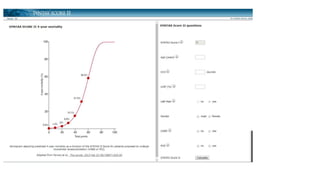
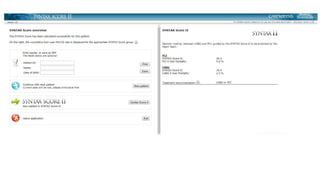
Syntax Scoring
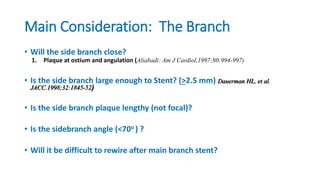
Main Consideration: The Branch
• Will the side branch close?
1. Plaque at ostium and angulation (Aliabadi: Am J Cardiol,1997;80:994-997)
• Is the side branch large enough to Stent? (>2.5 mm) Dauerman HL, et al.
JACC.1998;32:1845-52)
• Is the side branch plaque lengthy (not focal)?
• Is the sidebranch angle (<70o ) ?
• Will it be difficult to rewire after main branch stent?
Stenting strategy in bifurcation
lesions—one or two stents?
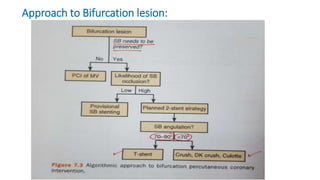
Approach to Bifurcation lesion:
Important Notes
• Wiring starts with the most difficult branch.
• The second wire is inserted into the easier branch by limited
rotation manoeuvres to avoid wire wrap.
• Predilatation of the SB does reduce the risk of SB compromise after
MV stenting and also relieves ischemia in the SB territory.
• The diameter of the stent should be selected according to the distal
MB (not the proximal MB) in order to avoid excess carina shifting.
• The proximal part of the stent prior to the bifurcation may be
dilated with a short 0.5 mm bigger balloon. This is called “POT
technique”.
• The 7F or 8F guide catheters are preferred to reduce friction among
the hardware and allow easy manipulation
• IVUS should be used to choose the optimal stent size and to assess
the adequate stent deployment or requirement for post dilatation
of the stents.
Jailed guide wire
• A nonhydrophilic guide wire should be used.
• During deployment of the stent which jails the guide wire (jailing
stent), nominal pressure should be used so that retrieval of the jailed
wire is easier.
• The guide catheter should be pulled back into the aorta before
removing the jailed wire.
• In case the “jailed wire” cannot be pulled back easily, a balloon can be
advanced over the jailed wire.
Final kissing balloon inflation
• Using noncompliant balloon is an essential step to optimize
results.
• Balloon pressures during FKI should be nominal
IVUS guidance for bifurcation lesion PCI
• Selection of appropriate stent size and length
• Guiding the most appropriate technique
• Optimal expantion of stent avoiding stent under-
expansion, malapposition, incomplete lesion coverage
& overstretch of stent diameter
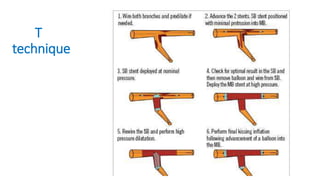
T
technique
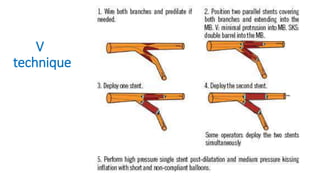
V
technique
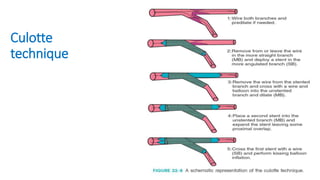
Culotte
technique
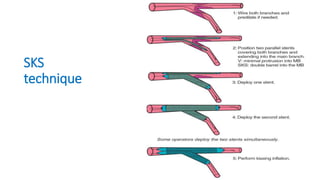
SKS
technique
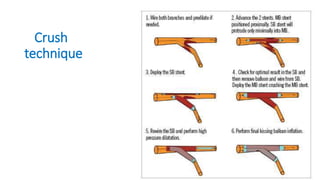
Crush technique
• Classic Crush
• Mini Crush
• Double Kissing Crush (DK Crush)
• Reverse Crush
Crush
technique
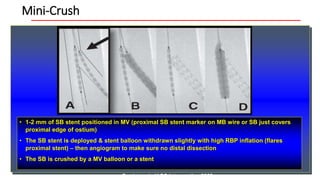
Mini-Crush
• 1-2 mm of SB stent positioned in MV (proximal SB stent marker on MB wire or SB just covers
proximal edge of ostium)
• The SB stent is deployed & stent balloon withdrawn slightly with high RBP inflation (flares
proximal stent) – then angiogram to make sure no distal dissection
• The SB is crushed by a MV balloon or a stent
Ormiston J, JACC Intervention 2008
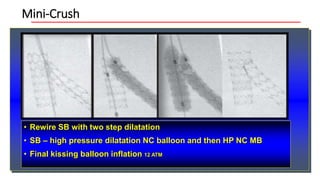
Mini-Crush
• Rewire SB with two step dilatation
• SB – high pressure dilatation NC balloon and then HP NC MB
• Final kissing balloon inflation 12 ATM
Ormiston J, JACC Intervention 2008
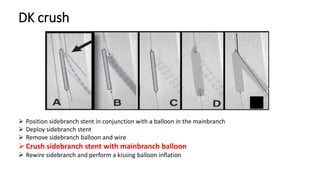
DK crush
 Position sidebranch stent in conjunction with a balloon in the mainbranch
 Deploy sidebranch stent
 Remove sidebranch balloon and wire
Crush sidebranch stent with mainbranch balloon
 Rewire sidebranch and perform a kissing balloon inflation
DK crush
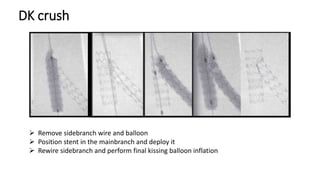
 Remove sidebranch wire and balloon
 Position stent in the mainbranch and deploy it
 Rewire sidebranch and perform final kissing balloon inflation
Unsatisfactory result
• More than 75% residual stenosis
• Dissection in SB
• TIMI flow grade less than 3 in a SB more than 2.5 mm diameter
• Fractional flow reserve less than 0.75
• Persistent intraprocedural angina or electrocardiogram (ECG)
changes
Summary
• Bifurcations remain a challenge for PCI
• Provisional stenting preferred when possible
• Double wire when in doubt
• Final kiss provides better results
• Dedicated stents are a nice concept but have not improved
results when available

Bifurction PCI- In A Nutshell.pptx

  • 1.
    Cath Presentation Dr. AzimAnwar Phase B Resident UCC,BSMMU Chairperson Prof Professor Syed Ali Ahsan
  • 2.
    • Afsar Ali,45Y • Chest Pain, SOB- 2 days • Prev H/O- PCI to LAD, LCX >> 2012 • DM, HTN • 110/80 mmhg, 97bpm, Soft HS1 • ECG: ST-T changes in V1-V6 • Trop I: 4ng/ml >> 12 ng/ml •Diagnosis: NSTEMI with DM with HTN
  • 3.
  • 4.
    LAD stent insitu- Osteoprox-Distal part
  • 5.
  • 6.
  • 7.
  • 8.
    LAD- O/P 70%stenosis with ISR
  • 9.
  • 10.
  • 12.
    Consideration. . .. 1.Revascularisation / OMT ? 2. PCI / CABG ?? 3. Technique ??? 4. What about the guidelines ????
  • 16.
  • 26.
    Main Consideration: TheBranch • Will the side branch close? 1. Plaque at ostium and angulation (Aliabadi: Am J Cardiol,1997;80:994-997) • Is the side branch large enough to Stent? (>2.5 mm) Dauerman HL, et al. JACC.1998;32:1845-52) • Is the side branch plaque lengthy (not focal)? • Is the sidebranch angle (<70o ) ? • Will it be difficult to rewire after main branch stent?
  • 27.
    Stenting strategy inbifurcation lesions—one or two stents?
  • 28.
  • 29.
    Important Notes • Wiringstarts with the most difficult branch. • The second wire is inserted into the easier branch by limited rotation manoeuvres to avoid wire wrap. • Predilatation of the SB does reduce the risk of SB compromise after MV stenting and also relieves ischemia in the SB territory. • The diameter of the stent should be selected according to the distal MB (not the proximal MB) in order to avoid excess carina shifting.
  • 30.
    • The proximalpart of the stent prior to the bifurcation may be dilated with a short 0.5 mm bigger balloon. This is called “POT technique”. • The 7F or 8F guide catheters are preferred to reduce friction among the hardware and allow easy manipulation • IVUS should be used to choose the optimal stent size and to assess the adequate stent deployment or requirement for post dilatation of the stents.
  • 31.
    Jailed guide wire •A nonhydrophilic guide wire should be used. • During deployment of the stent which jails the guide wire (jailing stent), nominal pressure should be used so that retrieval of the jailed wire is easier. • The guide catheter should be pulled back into the aorta before removing the jailed wire. • In case the “jailed wire” cannot be pulled back easily, a balloon can be advanced over the jailed wire.
  • 32.
    Final kissing ballooninflation • Using noncompliant balloon is an essential step to optimize results. • Balloon pressures during FKI should be nominal
  • 33.
    IVUS guidance forbifurcation lesion PCI • Selection of appropriate stent size and length • Guiding the most appropriate technique • Optimal expantion of stent avoiding stent under- expansion, malapposition, incomplete lesion coverage & overstretch of stent diameter
  • 34.
  • 35.
  • 36.
  • 37.
  • 38.
    Crush technique • ClassicCrush • Mini Crush • Double Kissing Crush (DK Crush) • Reverse Crush
  • 39.
  • 40.
    Mini-Crush • 1-2 mmof SB stent positioned in MV (proximal SB stent marker on MB wire or SB just covers proximal edge of ostium) • The SB stent is deployed & stent balloon withdrawn slightly with high RBP inflation (flares proximal stent) – then angiogram to make sure no distal dissection • The SB is crushed by a MV balloon or a stent Ormiston J, JACC Intervention 2008
  • 41.
    Mini-Crush • Rewire SBwith two step dilatation • SB – high pressure dilatation NC balloon and then HP NC MB • Final kissing balloon inflation 12 ATM Ormiston J, JACC Intervention 2008
  • 42.
    DK crush  Positionsidebranch stent in conjunction with a balloon in the mainbranch  Deploy sidebranch stent  Remove sidebranch balloon and wire Crush sidebranch stent with mainbranch balloon  Rewire sidebranch and perform a kissing balloon inflation
  • 43.
    DK crush  Removesidebranch wire and balloon  Position stent in the mainbranch and deploy it  Rewire sidebranch and perform final kissing balloon inflation
  • 44.
    Unsatisfactory result • Morethan 75% residual stenosis • Dissection in SB • TIMI flow grade less than 3 in a SB more than 2.5 mm diameter • Fractional flow reserve less than 0.75 • Persistent intraprocedural angina or electrocardiogram (ECG) changes
  • 45.
    Summary • Bifurcations remaina challenge for PCI • Provisional stenting preferred when possible • Double wire when in doubt • Final kiss provides better results • Dedicated stents are a nice concept but have not improved results when available