Download to read offline
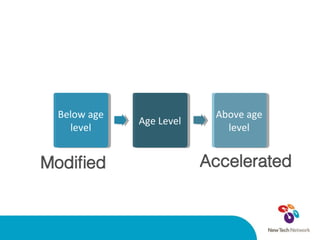
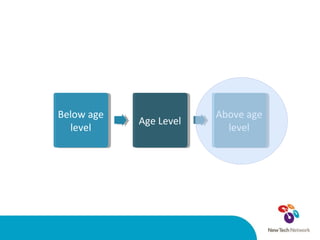
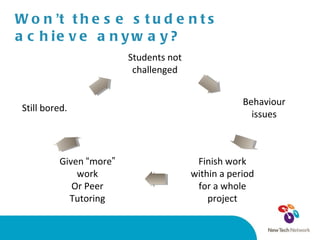

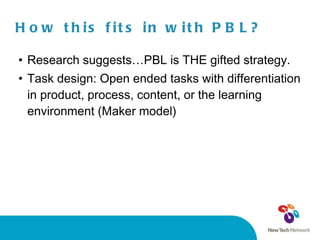
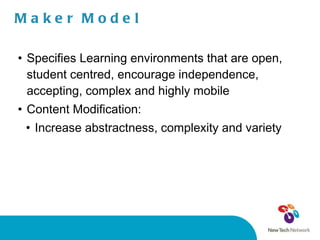
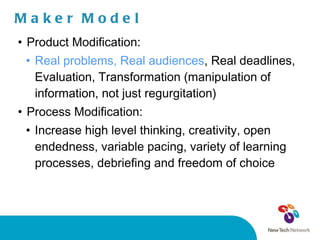
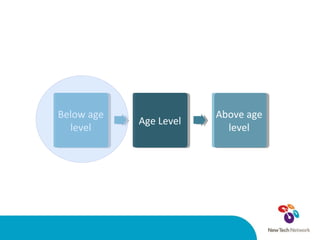
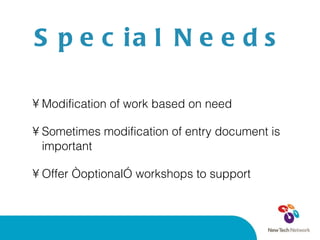
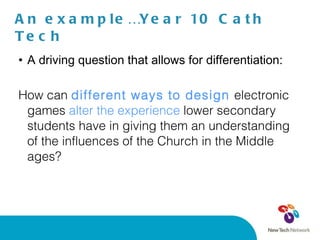
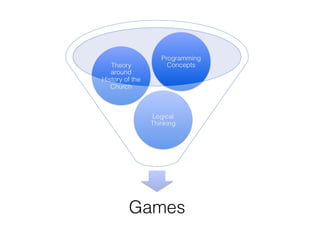
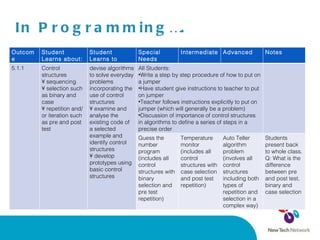
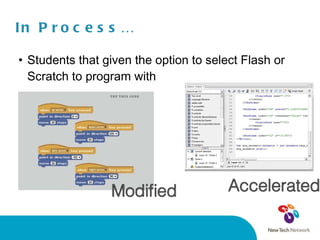
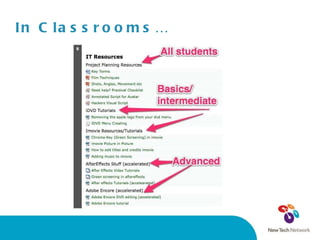
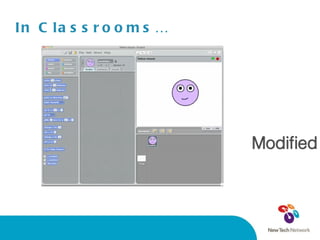
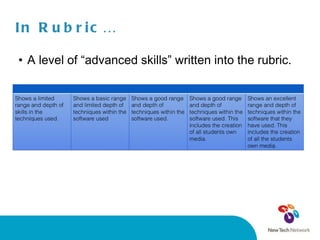


The document discusses differentiation strategies for students of varying ability levels in the classroom. It suggests using pre-tests or elicitation activities to determine each student's level, then differentiating the content, process, product, or learning environment. Specifically, it recommends differentiating through modifying tasks to be more complex/abstract, products to solve real problems for real audiences, and processes to incorporate more high-level thinking. Modifying entry documents or offering optional workshops can support special needs students. An example task on designing electronic games allows for differentiation in programming, classrooms, and rubrics.


