TECHNIQUES OF
RELAXATION
-by Syed Usaid Ahmed
Introduction to Jacobsen Relaxation
•
Jacobsen relaxation is a progressive muscle
relaxation technique developed by Edmund
Jacobson. It involves tensing and relaxing muscle
groups to achieve deep relaxation. It is a valuable
tool for managing stress, anxiety, and insomnia.
Physiological Benefits of Jacobsen Relaxation
• Jacobsen relaxation can reduce muscle tension, decrease heart rate and blood
pressure, and promote feelings of calm and well-being. It also helps alleviate
symptoms of anxiety, depression, and chronic pain.
• 1) Reduced muscle tension : By consciously tensing and releasing muscle
groups, you learn to identify and alleviate muscle tension, reducing overall
stress and discomfort.
• 2)Improved sleep quality : Regular practice of Jacobsen relaxation can promote
deeper sleep, reduce sleep disturbances, and improve overall sleep quality.
• 3) Enhanced mood Regulation : By calming the nervous system and reducing
stress, Jacobsen relaxation can improve mood, alleviate anxiety, and promote
feelings of peace and well-being.
• 4) Increased self- awareness : The process of focusing on your body and its
sensations helps cultivate a greater awareness of your physical and emotional
state.
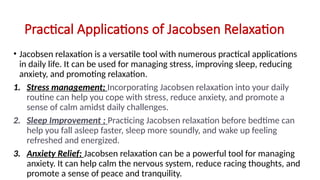
Practical Applications of Jacobsen Relaxation
• Jacobsen relaxation is a versatile tool with numerous practical applications
in daily life. It can be used for managing stress, improving sleep, reducing
anxiety, and promoting relaxation.
1. Stress management; Incorporating Jacobsen relaxation into your daily
routine can help you cope with stress, reduce anxiety, and promote a
sense of calm amidst daily challenges.
2. Sleep Improvement ; Practicing Jacobsen relaxation before bedtime can
help you fall asleep faster, sleep more soundly, and wake up feeling
refreshed and energized.
3. Anxiety Relief; Jacobsen relaxation can be a powerful tool for managing
anxiety. It can help calm the nervous system, reduce racing thoughts, and
promote a sense of peace and tranquility.
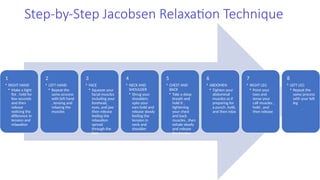
Step-by-Step Jacobsen Relaxation Technique
1
• RIGHT HAND
• Make a tight
fist , hold for
few seconds
and then
release
noticing the
difference in
tension and
relaxation
2
• LEFT HAND
• Repeat the
same process
with left hand
, tensing and
relaxing the
muscles
3
• FACE
• Squeeze your
facial muscles
including your
forehead,
eyes, and jaw
then release
feeling the
relaxation
spread
through the
face
4
• NECK AND
SHOULDER
• Shrug your
shoulders
upto your
ears hold and
release slowly
feeling the
tension in
neck and
shoulder
5
• CHEST AND
BACK
• Take a deep
breath and
hold it ,
tightening
your chest
and back
muscles , then
exhale slowly
and release
the tension
6
• ABDOMEN
• Tighten your
abdominal
muscles as if
preparing for
a punch ,hold,
and then relax
7
• RIGHT LEG
• Point your
toes and
tense your
calf muscles ,
hold , and
then release
8
• LEFT LEG
• Repeat the
same process
with your left
leg
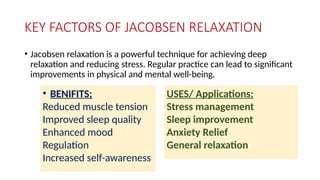
KEY FACTORS OF JACOBSEN RELAXATION
• Jacobsen relaxation is a powerful technique for achieving deep
relaxation and reducing stress. Regular practice can lead to significant
improvements in physical and mental well-being.
• BENIFITS;
Reduced muscle tension
Improved sleep quality
Enhanced mood
Regulation
Increased self-awareness
USES/ Applications;
Stress management
Sleep improvement
Anxiety Relief
General relaxation
The Mitchell Relaxation Technique
•The Mitchell Relaxation Technique is a simple yet
effective method for reducing stress and promoting
relaxation. It involves a series of controlled breathing
exercises combined with progressive muscle
relaxation.
The Science Behind the Technique
• The Mitchell Relaxation Technique works by activating the
parasympathetic nervous system, which helps to calm the body and
mind. It uses controlled breathing to slow the heart rate and reduce
muscle tension.
1. SLOWED HEART RATE : The controlled breathing helps regulate the
heart rate, slowing it down and reducing stress-induced tachycardia.
2. REDUCED MUSCLE TENSION : The progressive muscle relaxation
technique focuses on consciously tightening and releasing different
muscle groups, relieving tension and promoting relaxation.
3. Calming the mind : By focusing on breathing and bodily
sensations, the technique helps to quiet racing thoughts and
reduce mental stress.
4. Improved sleep : Regular practice can promote relaxation and
help individuals achieve better sleep quality.
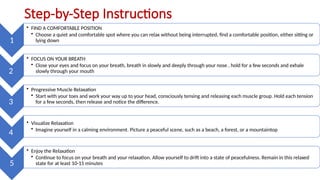
Step-by-Step Instructions
1
• FIND A COMFORTABLE POSITION
• Choose a quiet and comfortable spot where you can relax without being interrupted, find a comfortable position, either sitting or
lying down
2
• FOCUS ON YOUR BREATH
• Close your eyes and focus on your breath, breath in slowly and deeply through your nose , hold for a few seconds and exhale
slowly through your mouth
3
• Progressive Muscle Relaxation
• Start with your toes and work your way up to your head, consciously tensing and releasing each muscle group. Hold each tension
for a few seconds, then release and notice the difference.
4
• Visualize Relaxation
• Imagine yourself in a calming environment. Picture a peaceful scene, such as a beach, a forest, or a mountaintop
5
• Enjoy the Relaxation
• Continue to focus on your breath and your relaxation. Allow yourself to drift into a state of peacefulness. Remain in this relaxed
state for at least 10-15 minutes
Benefits of the Mitchell Relaxation Technique
• practice of the Mitchell Relaxation Technique can lead to various
benefits for both mental and physical well-being.
1. Stress Relief ; Reduces stress levels, improves mood, and promotes
a sense of calm.
2. Improved Sleep ; Enhances sleep quality by promoting relaxation
and reducing anxiety.
3. Increased focus ; Improves concentration and cognitive function by
reducing mental clutter and promoting clarity.
Different Techniques of Relaxation Therapy

Different Techniques of Relaxation Therapy

  • 1.
  • 2.
    Introduction to JacobsenRelaxation • Jacobsen relaxation is a progressive muscle relaxation technique developed by Edmund Jacobson. It involves tensing and relaxing muscle groups to achieve deep relaxation. It is a valuable tool for managing stress, anxiety, and insomnia.
  • 3.
    Physiological Benefits ofJacobsen Relaxation • Jacobsen relaxation can reduce muscle tension, decrease heart rate and blood pressure, and promote feelings of calm and well-being. It also helps alleviate symptoms of anxiety, depression, and chronic pain. • 1) Reduced muscle tension : By consciously tensing and releasing muscle groups, you learn to identify and alleviate muscle tension, reducing overall stress and discomfort. • 2)Improved sleep quality : Regular practice of Jacobsen relaxation can promote deeper sleep, reduce sleep disturbances, and improve overall sleep quality.
  • 4.
    • 3) Enhancedmood Regulation : By calming the nervous system and reducing stress, Jacobsen relaxation can improve mood, alleviate anxiety, and promote feelings of peace and well-being. • 4) Increased self- awareness : The process of focusing on your body and its sensations helps cultivate a greater awareness of your physical and emotional state.
  • 5.
    Practical Applications ofJacobsen Relaxation • Jacobsen relaxation is a versatile tool with numerous practical applications in daily life. It can be used for managing stress, improving sleep, reducing anxiety, and promoting relaxation. 1. Stress management; Incorporating Jacobsen relaxation into your daily routine can help you cope with stress, reduce anxiety, and promote a sense of calm amidst daily challenges. 2. Sleep Improvement ; Practicing Jacobsen relaxation before bedtime can help you fall asleep faster, sleep more soundly, and wake up feeling refreshed and energized. 3. Anxiety Relief; Jacobsen relaxation can be a powerful tool for managing anxiety. It can help calm the nervous system, reduce racing thoughts, and promote a sense of peace and tranquility.
  • 6.
    Step-by-Step Jacobsen RelaxationTechnique 1 • RIGHT HAND • Make a tight fist , hold for few seconds and then release noticing the difference in tension and relaxation 2 • LEFT HAND • Repeat the same process with left hand , tensing and relaxing the muscles 3 • FACE • Squeeze your facial muscles including your forehead, eyes, and jaw then release feeling the relaxation spread through the face 4 • NECK AND SHOULDER • Shrug your shoulders upto your ears hold and release slowly feeling the tension in neck and shoulder 5 • CHEST AND BACK • Take a deep breath and hold it , tightening your chest and back muscles , then exhale slowly and release the tension 6 • ABDOMEN • Tighten your abdominal muscles as if preparing for a punch ,hold, and then relax 7 • RIGHT LEG • Point your toes and tense your calf muscles , hold , and then release 8 • LEFT LEG • Repeat the same process with your left leg
  • 7.
    KEY FACTORS OFJACOBSEN RELAXATION • Jacobsen relaxation is a powerful technique for achieving deep relaxation and reducing stress. Regular practice can lead to significant improvements in physical and mental well-being. • BENIFITS; Reduced muscle tension Improved sleep quality Enhanced mood Regulation Increased self-awareness USES/ Applications; Stress management Sleep improvement Anxiety Relief General relaxation
  • 8.
    The Mitchell RelaxationTechnique •The Mitchell Relaxation Technique is a simple yet effective method for reducing stress and promoting relaxation. It involves a series of controlled breathing exercises combined with progressive muscle relaxation.
  • 9.
    The Science Behindthe Technique • The Mitchell Relaxation Technique works by activating the parasympathetic nervous system, which helps to calm the body and mind. It uses controlled breathing to slow the heart rate and reduce muscle tension. 1. SLOWED HEART RATE : The controlled breathing helps regulate the heart rate, slowing it down and reducing stress-induced tachycardia. 2. REDUCED MUSCLE TENSION : The progressive muscle relaxation technique focuses on consciously tightening and releasing different muscle groups, relieving tension and promoting relaxation.
  • 10.
    3. Calming themind : By focusing on breathing and bodily sensations, the technique helps to quiet racing thoughts and reduce mental stress. 4. Improved sleep : Regular practice can promote relaxation and help individuals achieve better sleep quality.
  • 11.
    Step-by-Step Instructions 1 • FINDA COMFORTABLE POSITION • Choose a quiet and comfortable spot where you can relax without being interrupted, find a comfortable position, either sitting or lying down 2 • FOCUS ON YOUR BREATH • Close your eyes and focus on your breath, breath in slowly and deeply through your nose , hold for a few seconds and exhale slowly through your mouth 3 • Progressive Muscle Relaxation • Start with your toes and work your way up to your head, consciously tensing and releasing each muscle group. Hold each tension for a few seconds, then release and notice the difference. 4 • Visualize Relaxation • Imagine yourself in a calming environment. Picture a peaceful scene, such as a beach, a forest, or a mountaintop 5 • Enjoy the Relaxation • Continue to focus on your breath and your relaxation. Allow yourself to drift into a state of peacefulness. Remain in this relaxed state for at least 10-15 minutes
  • 12.
    Benefits of theMitchell Relaxation Technique • practice of the Mitchell Relaxation Technique can lead to various benefits for both mental and physical well-being. 1. Stress Relief ; Reduces stress levels, improves mood, and promotes a sense of calm. 2. Improved Sleep ; Enhances sleep quality by promoting relaxation and reducing anxiety. 3. Increased focus ; Improves concentration and cognitive function by reducing mental clutter and promoting clarity.