03
02
04
Occupational
Hazards and Risks
Hazards
03
02
04
• are potential and
possible situations that
may put one's health,
well-being, or life in
danger. They do not
only affect the worker,
but may also put other
people at risk.
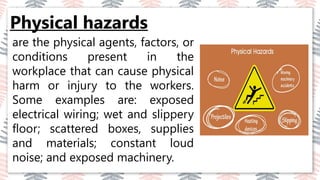
Physical hazards
03
02
04
are the physical agents, factors, or
conditions present in the
workplace that can cause physical
harm or injury to the workers.
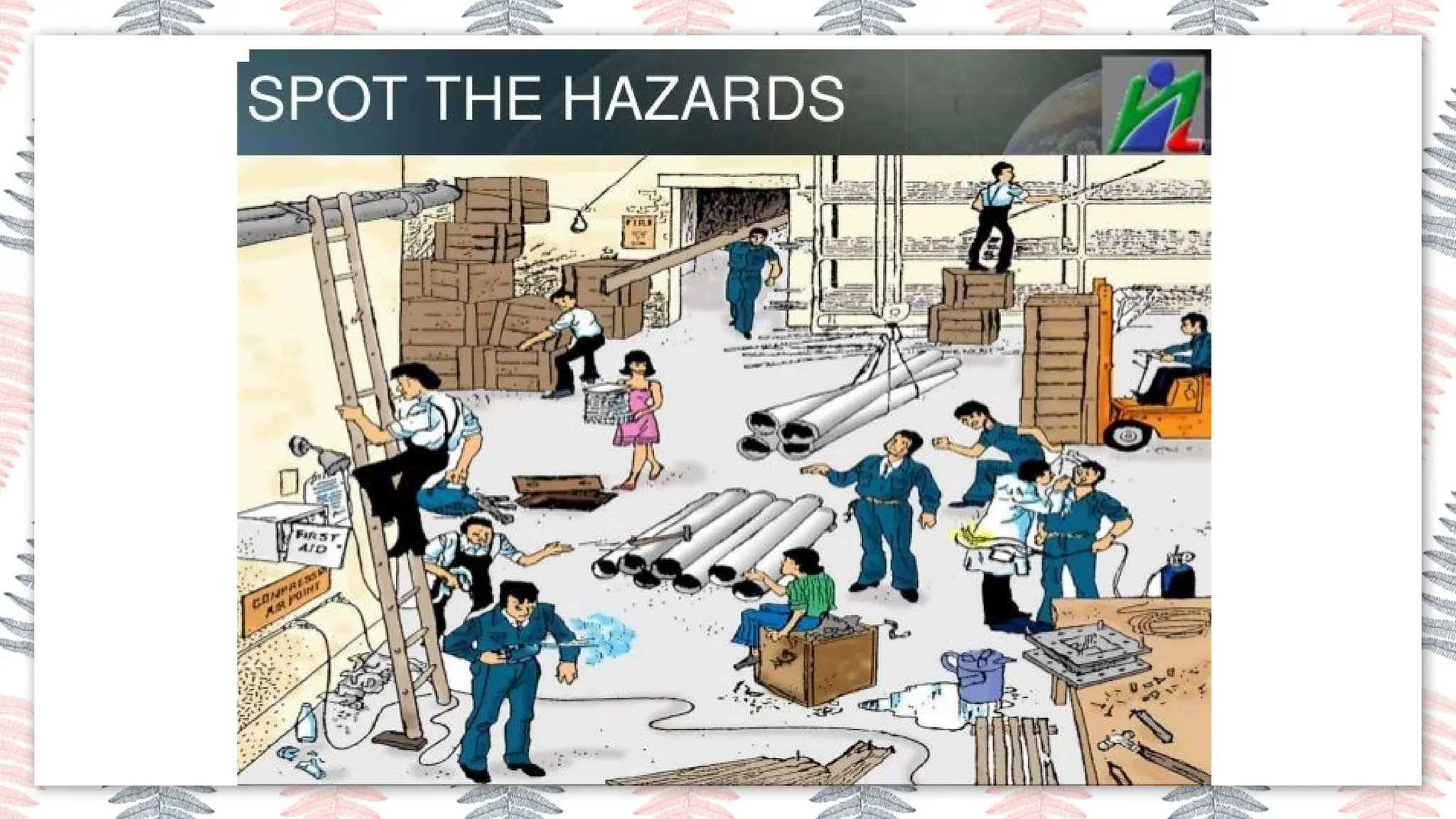
Some examples are: exposed
electrical wiring; wet and slippery
floor; scattered boxes, supplies
and materials; constant loud
noise; and exposed machinery.
03
02
04
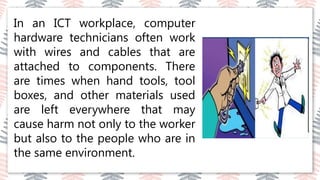
In an ICT workplace, computer
hardware technicians often work
with wires and cables that are
attached to components. There
are times when hand tools, tool
boxes, and other materials used
are left everywhere that may
cause harm not only to the worker
but also to the people who are in
the same environment.t.
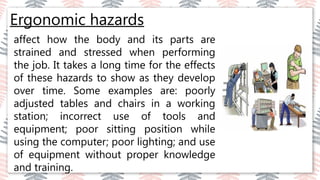
Ergonomic hazards
03
02
04
affect how the body and its parts are
strained and stressed when performing
the job. It takes a long time for the effects
of these hazards to show as they develop
over time. Some examples are: poorly
adjusted tables and chairs in a working
station; incorrect use of tools and
equipment; poor sitting position while
using the computer; poor lighting; and use
of equipment without proper knowledge
and training.
Chemical hazards
03
02
04
• refer to any form of chemicals present in the work
environment that are potentially toxic or irritating to
the body systems. Some examples are: exposed
cleaning agents; poisonous gases, such as carbon
monoxide and other similar gases; flammable
chemicals, such as kerosene and gasoline; inkjet
printer cartridges or laser printer toner cartridges;
keyboard cleaning chemicals; and dirt and dust
removers and other cleaning solvents.
Biological hazards
03
02
04
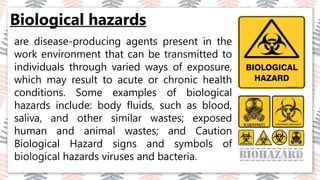
are disease-producing agents present in the
work environment that can be transmitted to
individuals through varied ways of exposure,
which may result to acute or chronic health
conditions. Some examples of biological
hazards include: body fluids, such as blood,
saliva, and other similar wastes; exposed
human and animal wastes; and Caution
Biological Hazard signs and symbols of
biological hazards viruses and bacteria.
Environmental hazards
03
02
04
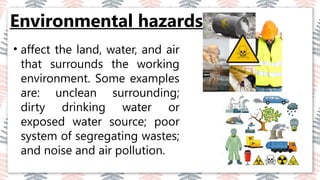
• affect the land, water, and air
that surrounds the working
environment. Some examples
are: unclean surrounding;
dirty drinking water or
exposed water source; poor
system of segregating wastes;
and noise and air pollution.
Occupational
Safety and Health
(OSH) Standard
03
02
04
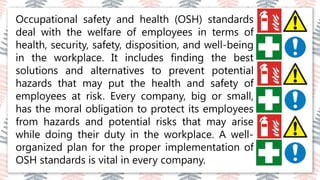
Occupational safety and health (OSH) standards
deal with the welfare of employees in terms of
health, security, safety, disposition, and well-being
in the workplace. It includes finding the best
solutions and alternatives to prevent potential
hazards that may put the health and safety of
employees at risk. Every company, big or small,
has the moral obligation to protect its employees
from hazards and potential risks that may arise
while doing their duty in the workplace. A well-
organized plan for the proper implementation of
OSH standards is vital in every company.
Occupational Hazards
03
02
04
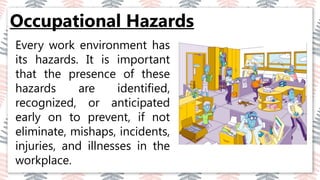
Every work environment has
its hazards. It is important
that the presence of these
hazards are identified,
recognized, or anticipated
early on to prevent, if not
eliminate, mishaps, incidents,
injuries, and illnesses in the
workplace.
03
02
04
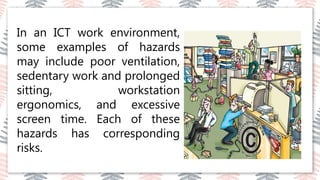
In an ICT work environment,
some examples of hazards
may include poor ventilation,
sedentary work and prolonged
sitting, workstation
ergonomics, and excessive
screen time. Each of these
hazards has corresponding
risks.
Occupational Risks
03
02
04
Risks are the results of
what may happen to
people who are exposed to
different hazards. Possible
risks in the workplace
include:
03
02
04
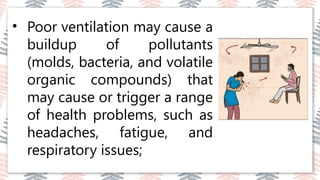
• Poor ventilation may cause a
buildup of pollutants
(molds, bacteria, and volatile
organic compounds) that
may cause or trigger a range
of health problems, such as
headaches, fatigue, and
respiratory issues;
03
02
04
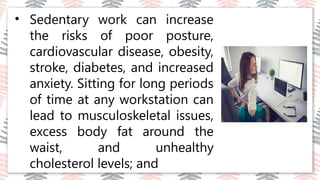
• Sedentary work can increase
the risks of poor posture,
cardiovascular disease, obesity,
stroke, diabetes, and increased
anxiety. Sitting for long periods
of time at any workstation can
lead to musculoskeletal issues,
excess body fat around the
waist, and unhealthy
cholesterol levels; and
03
02
04
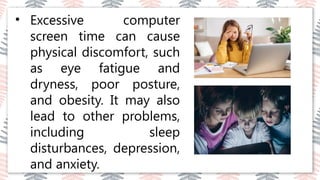
• Excessive computer
screen time can cause
physical discomfort, such
as eye fatigue and
dryness, poor posture,
and obesity. It may also
lead to other problems,
including sleep
disturbances, depression,
and anxiety.
Controlling Hazards in the Workplace and
Managing OSH
03
02
04
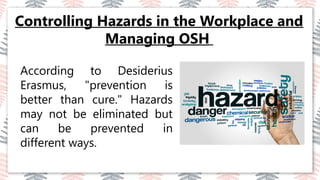
According to Desiderius
Erasmus, "prevention is
better than cure." Hazards
may not be eliminated but
can be prevented in
different ways.
03
02
04
Below are some of the ways in controlling
hazards in the workplace:
1. Recognize and prioritize the potential hazard.
Which hazards are more prone to great risks?
Which hazards can still be prevented? Aside from
the employees, who else may be potential
victims of these hazards?
03
02
04
2. Analyze and evaluate the risk. What are
the risks that may arise from these
hazards? How can these risks be managed
to minimize their effects?
03
02
04
3. Make a plan. What are the best
solutions or measures that can be
implemented? What are the possible ways
to prevent hazards if they cannot be
eliminated? What are the alternative
solutions?
Enter title
03
02
04
THANK YOU
Standing on high and learn to lay down the body Windy will understand muzzled some
clothes Standing on high and learn to lay down

DIFFERENT HAZARDS IN THE ICT ENVIRONMENT.pptx

  • 1.
  • 2.
  • 3.
    Hazards 03 02 04 • are potentialand possible situations that may put one's health, well-being, or life in danger. They do not only affect the worker, but may also put other people at risk.
  • 4.
    Physical hazards 03 02 04 are thephysical agents, factors, or conditions present in the workplace that can cause physical harm or injury to the workers. Some examples are: exposed electrical wiring; wet and slippery floor; scattered boxes, supplies and materials; constant loud noise; and exposed machinery.
  • 5.
    03 02 04 In an ICTworkplace, computer hardware technicians often work with wires and cables that are attached to components. There are times when hand tools, tool boxes, and other materials used are left everywhere that may cause harm not only to the worker but also to the people who are in the same environment.t.
  • 6.
    Ergonomic hazards 03 02 04 affect howthe body and its parts are strained and stressed when performing the job. It takes a long time for the effects of these hazards to show as they develop over time. Some examples are: poorly adjusted tables and chairs in a working station; incorrect use of tools and equipment; poor sitting position while using the computer; poor lighting; and use of equipment without proper knowledge and training.
  • 7.
    Chemical hazards 03 02 04 • referto any form of chemicals present in the work environment that are potentially toxic or irritating to the body systems. Some examples are: exposed cleaning agents; poisonous gases, such as carbon monoxide and other similar gases; flammable chemicals, such as kerosene and gasoline; inkjet printer cartridges or laser printer toner cartridges; keyboard cleaning chemicals; and dirt and dust removers and other cleaning solvents.
  • 8.
    Biological hazards 03 02 04 are disease-producingagents present in the work environment that can be transmitted to individuals through varied ways of exposure, which may result to acute or chronic health conditions. Some examples of biological hazards include: body fluids, such as blood, saliva, and other similar wastes; exposed human and animal wastes; and Caution Biological Hazard signs and symbols of biological hazards viruses and bacteria.
  • 9.
    Environmental hazards 03 02 04 • affectthe land, water, and air that surrounds the working environment. Some examples are: unclean surrounding; dirty drinking water or exposed water source; poor system of segregating wastes; and noise and air pollution.
  • 10.
  • 11.
    03 02 04 Occupational safety andhealth (OSH) standards deal with the welfare of employees in terms of health, security, safety, disposition, and well-being in the workplace. It includes finding the best solutions and alternatives to prevent potential hazards that may put the health and safety of employees at risk. Every company, big or small, has the moral obligation to protect its employees from hazards and potential risks that may arise while doing their duty in the workplace. A well- organized plan for the proper implementation of OSH standards is vital in every company.
  • 12.
    Occupational Hazards 03 02 04 Every workenvironment has its hazards. It is important that the presence of these hazards are identified, recognized, or anticipated early on to prevent, if not eliminate, mishaps, incidents, injuries, and illnesses in the workplace.
  • 13.
    03 02 04 In an ICTwork environment, some examples of hazards may include poor ventilation, sedentary work and prolonged sitting, workstation ergonomics, and excessive screen time. Each of these hazards has corresponding risks.
  • 14.
    Occupational Risks 03 02 04 Risks arethe results of what may happen to people who are exposed to different hazards. Possible risks in the workplace include:
  • 15.
    03 02 04 • Poor ventilationmay cause a buildup of pollutants (molds, bacteria, and volatile organic compounds) that may cause or trigger a range of health problems, such as headaches, fatigue, and respiratory issues;
  • 16.
    03 02 04 • Sedentary workcan increase the risks of poor posture, cardiovascular disease, obesity, stroke, diabetes, and increased anxiety. Sitting for long periods of time at any workstation can lead to musculoskeletal issues, excess body fat around the waist, and unhealthy cholesterol levels; and
  • 17.
    03 02 04 • Excessive computer screentime can cause physical discomfort, such as eye fatigue and dryness, poor posture, and obesity. It may also lead to other problems, including sleep disturbances, depression, and anxiety.
  • 18.
    Controlling Hazards inthe Workplace and Managing OSH 03 02 04 According to Desiderius Erasmus, "prevention is better than cure." Hazards may not be eliminated but can be prevented in different ways.
  • 19.
    03 02 04 Below are someof the ways in controlling hazards in the workplace: 1. Recognize and prioritize the potential hazard. Which hazards are more prone to great risks? Which hazards can still be prevented? Aside from the employees, who else may be potential victims of these hazards?
  • 20.
    03 02 04 2. Analyze andevaluate the risk. What are the risks that may arise from these hazards? How can these risks be managed to minimize their effects?
  • 21.
    03 02 04 3. Make aplan. What are the best solutions or measures that can be implemented? What are the possible ways to prevent hazards if they cannot be eliminated? What are the alternative solutions?
  • 22.
  • 23.
    THANK YOU Standing onhigh and learn to lay down the body Windy will understand muzzled some clothes Standing on high and learn to lay down