Week 1 for notes
https://tinyurl.com/ICTG7notes
Learning Objectives
At the end of the lesson, the learners shall be able to:
1. discuss the qualities of successful entrepreneurs.
2. identify famous successful entrepreneurs locally and
internationally; and
3. create a graphic organizer of the different qualities of
successful Filipino entrepreneurs.
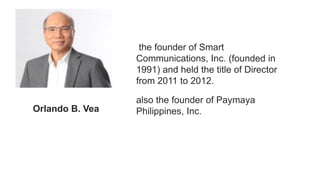
the founder of Smart
Communications, Inc. (founded in
1991) and held the title of Director
from 2011 to 2012.
also the founder of Paymaya
Philippines, Inc.
Orlando B. Vea
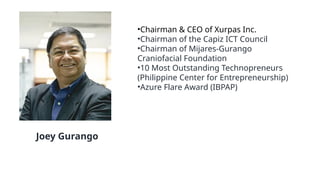
•Chairman & CEO of Xurpas Inc.
•Chairman of the Capiz ICT Council
•Chairman of Mijares-Gurango
Craniofacial Foundation
•10 Most Outstanding Technopreneurs
(Philippine Center for Entrepreneurship)
•Azure Flare Award (IBPAP)
Joey Gurango
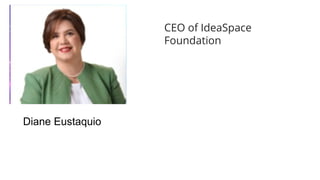
Diane Eustaquio
CEO of IdeaSpace
Foundation
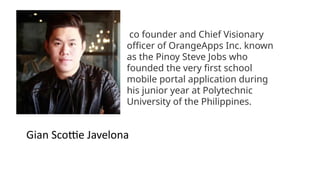
co founder and Chief Visionary
officer of OrangeApps Inc. known
as the Pinoy Steve Jobs who
founded the very first school
mobile portal application during
his junior year at Polytechnic
University of the Philippines.
Gian Scottie Javelona
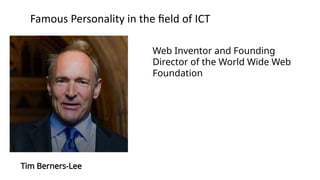
Famous Personality in the field of ICT
Web Inventor and Founding
Director of the World Wide Web
Foundation
Tim Berners-Lee
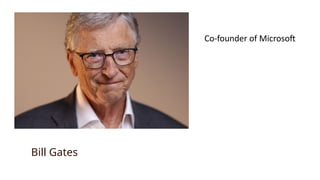
Bill Gates
Co-founder of Microsoft
Steve Jobs
co-founding the technology
company Apple Inc.
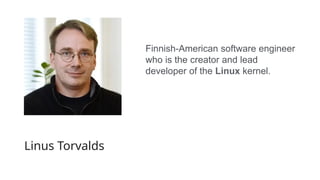
Linus Torvalds
Finnish-American software engineer
who is the creator and lead
developer of the Linux kernel.
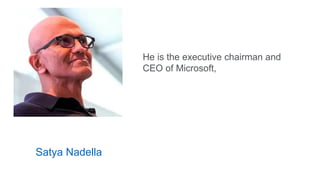
Satya Nadella
He is the executive chairman and
CEO of Microsoft,
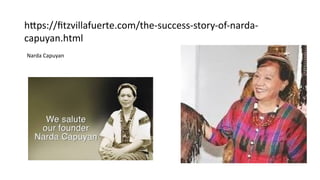
Narda Capuyan
https://fitzvillafuerte.com/the-success-story-of-narda-
capuyan.html
• Entrepreneurship- Starting and running a business by taking risks to
make a profit.
• Entrepreneur- Someone who starts their own business and takes risks
to create something new.
• Creativity- Thinking of new and original ideas or solutions.
• Risk-taking- Being brave enough to try new things, even if they might
not work out.
• Open-mindedness- Being open to new ideas and willing to learn from
others.
• Passion- Having a strong love and excitement for something, like
running a business.
Unlocking Content Vocabulary
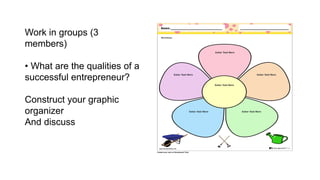
Work in groups (3
members)
• What are the qualities of a
successful entrepreneur?
Construct your graphic
organizer
And discuss
List of Qualities of a
successful
entrepreneur
Description of Qualities of a successful
entrepreneur
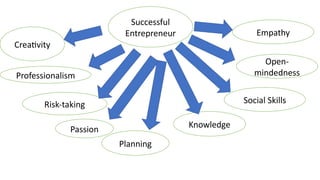
Successful
Entrepreneur
Creativity
Professionalism
Planning
Social Skills
Risk-taking
Passion
Knowledge
Open-
mindedness
Empathy
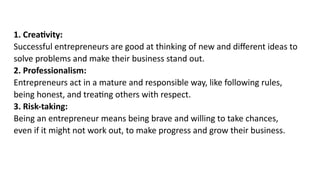
1. Creativity:
Successful entrepreneurs are good at thinking of new and different ideas to
solve problems and make their business stand out.
2. Professionalism:
Entrepreneurs act in a mature and responsible way, like following rules,
being honest, and treating others with respect.
3. Risk-taking:
Being an entrepreneur means being brave and willing to take chances,
even if it might not work out, to make progress and grow their business.
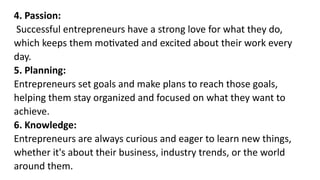
4. Passion:
Successful entrepreneurs have a strong love for what they do,
which keeps them motivated and excited about their work every
day.
5. Planning:
Entrepreneurs set goals and make plans to reach those goals,
helping them stay organized and focused on what they want to
achieve.
6. Knowledge:
Entrepreneurs are always curious and eager to learn new things,
whether it's about their business, industry trends, or the world
around them.
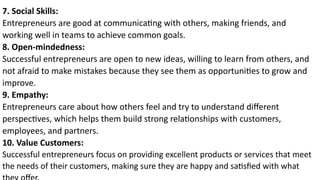
7. Social Skills:
Entrepreneurs are good at communicating with others, making friends, and
working well in teams to achieve common goals.
8. Open-mindedness:
Successful entrepreneurs are open to new ideas, willing to learn from others, and
not afraid to make mistakes because they see them as opportunities to grow and
improve.
9. Empathy:
Entrepreneurs care about how others feel and try to understand different
perspectives, which helps them build strong relationships with customers,
employees, and partners.
10. Value Customers:
Successful entrepreneurs focus on providing excellent products or services that meet
the needs of their customers, making sure they are happy and satisfied with what
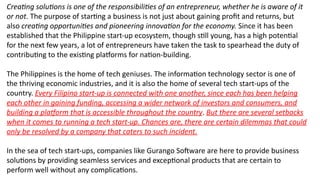
Creating solutions is one of the responsibilities of an entrepreneur, whether he is aware of it
or not. The purpose of starting a business is not just about gaining profit and returns, but
also creating opportunities and pioneering innovation for the economy. Since it has been
established that the Philippine start-up ecosystem, though still young, has a high potential
for the next few years, a lot of entrepreneurs have taken the task to spearhead the duty of
contributing to the existing platforms for nation-building.
The Philippines is the home of tech geniuses. The information technology sector is one of
the thriving economic industries, and it is also the home of several tech start-ups of the
country. Every Filipino start-up is connected with one another, since each has been helping
each other in gaining funding, accessing a wider network of investors and consumers, and
building a platform that is accessible throughout the country. But there are several setbacks
when it comes to running a tech start-up. Chances are, there are certain dilemmas that could
only be resolved by a company that caters to such incident.
In the sea of tech start-ups, companies like Gurango Software are here to provide business
solutions by providing seamless services and exceptional products that are certain to
perform well without any complications.
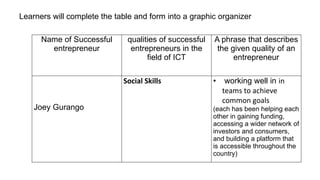
Learners will complete the table and form into a graphic organizer
Name of Successful
entrepreneur
qualities of successful
entrepreneurs in the
field of ICT
A phrase that describes
the given quality of an
entrepreneur
Joey Gurango
Social Skills • working well in in
teams to achieve
common goals
(each has been helping each
other in gaining funding,
accessing a wider network of
investors and consumers,
and building a platform that
is accessible throughout the
country)
https://tinyurl.com/ICTg7wk2
Week 2 for notes
OHS or Occupational Health and Safety refer to the legislation, policies,
procedures, and activities that aim to protect the health, safety, and welfare of
all people at the workplace.
What is OHS or Occupational Health and Safety and 5S?
5S is a method of organizing a workspace to make it safe,
efficient and effective. The goal of 5S is to create a clean,
uncluttered environment that allows people to do their jobs
without wasting time, while also lowering the risk of injury.
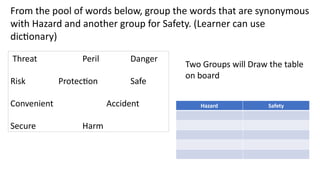
From the pool of words below, group the words that are synonymous
with Hazard and another group for Safety. (Learner can use
dictionary)
Threat Peril Danger
Risk Protection Safe
Convenient Accident
Secure Harm
Hazard Safety
Two Groups will Draw the table
on board
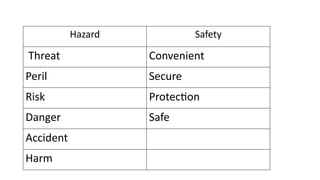
Hazard Safety
Threat Convenient
Peril Secure
Risk Protection
Danger Safe
Accident
Harm
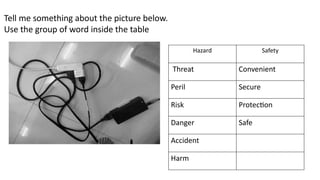
Tell me something about the picture below.
Use the group of word inside the table
Hazard Safety
Threat Convenient
Peril Secure
Risk Protection
Danger Safe
Accident
Harm
Learners will be grouped and search and discuss
the following (QR code will be given):
a. Difference of hazard and risk
b. Hazards in ICT Environments
c. 5s in Organizing ICT Environments
d. Benefits of 5S Methodology
a. Difference of hazard and risk
b. Hazards in ICT Environments
c. 5s in Organizing ICT Environments
d. Benefits of 5S Methodology
a.Difference of hazard and risk
A hazard is anything that could hurt you or someone
else while risk is the possibility that a hazard will
harm someone.
Examples of workplace hazards include:
• frayed electrical cords (could result in electrical shock)
• boxes stacked precariously (they could fall on someone)
• noisy machinery (could result in damage to your hearing)
1. Physical Hazards- cables running across the floor, slippery floor.
2. Mechanical Hazards- computer chassis
3. Chemical Hazards- display cleaning chemicals, keyboard cleaning chemicals,
compressed gas dirt and dust removers, and many cleaning solvents.
4. Electric Shock Hazard- Inside computers and electronic equipment
5.CRT Monitor High Voltage Hazard- open CRT monitors
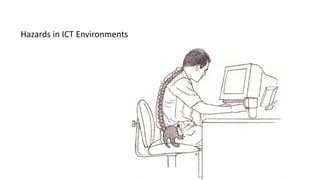
Hazards in ICT Environments
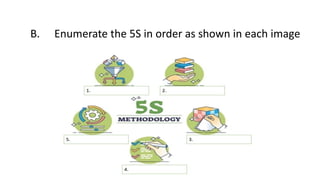
5s in Organizing ICT Environments:
1. Seiri - Sorting/Putting things in order
(Remove/discard what is not needed so that there are fewer hazards and less
clutter to interfere with work. Only keep what is needed.)
2. Seiton - Orderliness/Proper Arrangement
(Place things in such a way that they can be easily reached whenever they are
needed. There must be a place for everything, and everything must be in its
place.")
3. Seiso - Clean/cleanliness.
(Keep workplace and things clean and polished; no trash or dirt in the workplace)
4. Seiketsu - Standardize/Purity
(Maintain cleanliness after cleaning, consistently- perpetual cleaning. Such
cleaning is part of everyone’s work.)
5. Shitsuke - Sustaining/discipline/commitment (Maintain standards and keep the
facility in safe and efficient order day after day, year after year.)
Benefits of 5S Methodology:
The 5S methodology provides numerous benefits to organizations
that adopt it.
Some of the benefits include:
1. Improved productivity
2. Reduced waste
3. Enhanced safety
4. Increased employee satisfaction
5. Improved customer satisfaction
6. Improved quality
7. Reduced costs
Hazards in ICT Environments
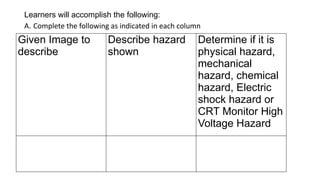
Learners will accomplish the following:
A. Complete the following as indicated in each column
Given Image to
describe
Describe hazard
shown
Determine if it is
physical hazard,
mechanical
hazard, chemical
hazard, Electric
shock hazard or
CRT Monitor High
Voltage Hazard
B. Enumerate the 5S in order as shown in each image

MATATAG Curriculum TLE Grade 7 Quarter 1

  • 1.
    Week 1 fornotes https://tinyurl.com/ICTG7notes
  • 3.
    Learning Objectives At theend of the lesson, the learners shall be able to: 1. discuss the qualities of successful entrepreneurs. 2. identify famous successful entrepreneurs locally and internationally; and 3. create a graphic organizer of the different qualities of successful Filipino entrepreneurs.
  • 5.
    the founder ofSmart Communications, Inc. (founded in 1991) and held the title of Director from 2011 to 2012. also the founder of Paymaya Philippines, Inc. Orlando B. Vea
  • 6.
    •Chairman & CEOof Xurpas Inc. •Chairman of the Capiz ICT Council •Chairman of Mijares-Gurango Craniofacial Foundation •10 Most Outstanding Technopreneurs (Philippine Center for Entrepreneurship) •Azure Flare Award (IBPAP) Joey Gurango
  • 7.
    Diane Eustaquio CEO ofIdeaSpace Foundation
  • 8.
    co founder andChief Visionary officer of OrangeApps Inc. known as the Pinoy Steve Jobs who founded the very first school mobile portal application during his junior year at Polytechnic University of the Philippines. Gian Scottie Javelona
  • 9.
    Famous Personality inthe field of ICT Web Inventor and Founding Director of the World Wide Web Foundation Tim Berners-Lee
  • 10.
  • 11.
    Steve Jobs co-founding thetechnology company Apple Inc.
  • 12.
    Linus Torvalds Finnish-American softwareengineer who is the creator and lead developer of the Linux kernel.
  • 13.
    Satya Nadella He isthe executive chairman and CEO of Microsoft,
  • 14.
  • 15.
    • Entrepreneurship- Startingand running a business by taking risks to make a profit. • Entrepreneur- Someone who starts their own business and takes risks to create something new. • Creativity- Thinking of new and original ideas or solutions. • Risk-taking- Being brave enough to try new things, even if they might not work out. • Open-mindedness- Being open to new ideas and willing to learn from others. • Passion- Having a strong love and excitement for something, like running a business. Unlocking Content Vocabulary
  • 16.
    Work in groups(3 members) • What are the qualities of a successful entrepreneur? Construct your graphic organizer And discuss
  • 17.
    List of Qualitiesof a successful entrepreneur Description of Qualities of a successful entrepreneur
  • 18.
  • 19.
    1. Creativity: Successful entrepreneursare good at thinking of new and different ideas to solve problems and make their business stand out. 2. Professionalism: Entrepreneurs act in a mature and responsible way, like following rules, being honest, and treating others with respect. 3. Risk-taking: Being an entrepreneur means being brave and willing to take chances, even if it might not work out, to make progress and grow their business.
  • 20.
    4. Passion: Successful entrepreneurshave a strong love for what they do, which keeps them motivated and excited about their work every day. 5. Planning: Entrepreneurs set goals and make plans to reach those goals, helping them stay organized and focused on what they want to achieve. 6. Knowledge: Entrepreneurs are always curious and eager to learn new things, whether it's about their business, industry trends, or the world around them.
  • 21.
    7. Social Skills: Entrepreneursare good at communicating with others, making friends, and working well in teams to achieve common goals. 8. Open-mindedness: Successful entrepreneurs are open to new ideas, willing to learn from others, and not afraid to make mistakes because they see them as opportunities to grow and improve. 9. Empathy: Entrepreneurs care about how others feel and try to understand different perspectives, which helps them build strong relationships with customers, employees, and partners. 10. Value Customers: Successful entrepreneurs focus on providing excellent products or services that meet the needs of their customers, making sure they are happy and satisfied with what
  • 22.
    Creating solutions isone of the responsibilities of an entrepreneur, whether he is aware of it or not. The purpose of starting a business is not just about gaining profit and returns, but also creating opportunities and pioneering innovation for the economy. Since it has been established that the Philippine start-up ecosystem, though still young, has a high potential for the next few years, a lot of entrepreneurs have taken the task to spearhead the duty of contributing to the existing platforms for nation-building. The Philippines is the home of tech geniuses. The information technology sector is one of the thriving economic industries, and it is also the home of several tech start-ups of the country. Every Filipino start-up is connected with one another, since each has been helping each other in gaining funding, accessing a wider network of investors and consumers, and building a platform that is accessible throughout the country. But there are several setbacks when it comes to running a tech start-up. Chances are, there are certain dilemmas that could only be resolved by a company that caters to such incident. In the sea of tech start-ups, companies like Gurango Software are here to provide business solutions by providing seamless services and exceptional products that are certain to perform well without any complications.
  • 23.
    Learners will completethe table and form into a graphic organizer Name of Successful entrepreneur qualities of successful entrepreneurs in the field of ICT A phrase that describes the given quality of an entrepreneur Joey Gurango Social Skills • working well in in teams to achieve common goals (each has been helping each other in gaining funding, accessing a wider network of investors and consumers, and building a platform that is accessible throughout the country)
  • 24.
  • 25.
    OHS or OccupationalHealth and Safety refer to the legislation, policies, procedures, and activities that aim to protect the health, safety, and welfare of all people at the workplace. What is OHS or Occupational Health and Safety and 5S? 5S is a method of organizing a workspace to make it safe, efficient and effective. The goal of 5S is to create a clean, uncluttered environment that allows people to do their jobs without wasting time, while also lowering the risk of injury.
  • 26.
    From the poolof words below, group the words that are synonymous with Hazard and another group for Safety. (Learner can use dictionary) Threat Peril Danger Risk Protection Safe Convenient Accident Secure Harm Hazard Safety Two Groups will Draw the table on board
  • 27.
    Hazard Safety Threat Convenient PerilSecure Risk Protection Danger Safe Accident Harm
  • 28.
    Tell me somethingabout the picture below. Use the group of word inside the table Hazard Safety Threat Convenient Peril Secure Risk Protection Danger Safe Accident Harm
  • 29.
    Learners will begrouped and search and discuss the following (QR code will be given): a. Difference of hazard and risk b. Hazards in ICT Environments c. 5s in Organizing ICT Environments d. Benefits of 5S Methodology
  • 30.
    a. Difference ofhazard and risk b. Hazards in ICT Environments
  • 31.
    c. 5s inOrganizing ICT Environments d. Benefits of 5S Methodology
  • 32.
    a.Difference of hazardand risk A hazard is anything that could hurt you or someone else while risk is the possibility that a hazard will harm someone. Examples of workplace hazards include: • frayed electrical cords (could result in electrical shock) • boxes stacked precariously (they could fall on someone) • noisy machinery (could result in damage to your hearing)
  • 33.
    1. Physical Hazards-cables running across the floor, slippery floor. 2. Mechanical Hazards- computer chassis 3. Chemical Hazards- display cleaning chemicals, keyboard cleaning chemicals, compressed gas dirt and dust removers, and many cleaning solvents. 4. Electric Shock Hazard- Inside computers and electronic equipment 5.CRT Monitor High Voltage Hazard- open CRT monitors Hazards in ICT Environments
  • 34.
    5s in OrganizingICT Environments: 1. Seiri - Sorting/Putting things in order (Remove/discard what is not needed so that there are fewer hazards and less clutter to interfere with work. Only keep what is needed.) 2. Seiton - Orderliness/Proper Arrangement (Place things in such a way that they can be easily reached whenever they are needed. There must be a place for everything, and everything must be in its place.") 3. Seiso - Clean/cleanliness. (Keep workplace and things clean and polished; no trash or dirt in the workplace) 4. Seiketsu - Standardize/Purity (Maintain cleanliness after cleaning, consistently- perpetual cleaning. Such cleaning is part of everyone’s work.) 5. Shitsuke - Sustaining/discipline/commitment (Maintain standards and keep the facility in safe and efficient order day after day, year after year.)
  • 35.
    Benefits of 5SMethodology: The 5S methodology provides numerous benefits to organizations that adopt it. Some of the benefits include: 1. Improved productivity 2. Reduced waste 3. Enhanced safety 4. Increased employee satisfaction 5. Improved customer satisfaction 6. Improved quality 7. Reduced costs
  • 36.
    Hazards in ICTEnvironments
  • 37.
    Learners will accomplishthe following: A. Complete the following as indicated in each column Given Image to describe Describe hazard shown Determine if it is physical hazard, mechanical hazard, chemical hazard, Electric shock hazard or CRT Monitor High Voltage Hazard
  • 38.
    B. Enumerate the5S in order as shown in each image

Editor's Notes

  • #30 A hazard is anything that could hurt you or someone else while risk is the possibility that a hazard will harm someone. 1. Physical Hazards- cables running across the floor, slippery floor. 2. Mechanical Hazards- computer chassis 3. Chemical Hazards- display cleaning chemicals, keyboard cleaning chemicals, compressed gas dirt and dust removers, and many cleaning solvents. 4. Electric Shock Hazard- Inside computers and electronic equipment 5.CRT Monitor High Voltage Hazard- open CRT monitors
  • #31 5s in Organizing ICT Environments: 1. Seiri - Sorting/Putting things in order 2. Seiton - Orderliness/Proper Arrangement 3. Seiso - Clean/cleanliness. 4. Seiketsu - Standardize/Purity 5. Shitsuke - Sustaining/discipline/commitment Benefits of 5S Methodology: The 5S methodology provides numerous benefits to organizations that adopt it. Some of the benefits include: 1. Improved productivity 2. Reduced waste 3. Enhanced safety 4. Increased employee satisfaction 5. Improved customer satisfaction 6. Improved quality 7. Reduced costs