Hazard and Risk
MARK LENARD M. DIMAQUILING
ADMINISTRATIVE SUPPORT STAFF
OBJECTIVES
1. Define Hazard and Risk;
2. Appreciate the importance of following Occupational Health an
Safety.
Hazard
• Hazard- is anything that may cause harm to an individual,
such as chemicals, electricity, open drawers, and inadequate
ventilation. Is a term used to describe something that has
the potential to cause harm.
Risk
Risk- Is the chance or probability that a person will be
harmed or experience an adverse health effect if
exposed to a hazard
Types of Hazard
Hazards common in Nursing Homes or Day care:
1. Physical Hazards- are the most normal occurrences in
workplaces. They are usually easy to detect, however, very
often are neglected because people are too accustomed to
them.
Common physical hazards are heat, noise, weather, pressure,
radiation like laser and X-rays, electricity, energy and vibration
Types of Hazard
2.Biological hazards- come from working with animals, people
or infectious materials. This is, therefore, one of the most
common hazards that a caregiver faces.
These are caused by organisms such as viruses, bacteria, fungi
and parasites.
● Common examples of biological hazards are contaminated
wastes and bloody fluids contaminated by different
pathogens.
Types of Hazard
3.Chemical hazards- are present when a worker is exposed to
any chemical preparation in the workplace in any form (solid,
liquid or gas).
● Common examples of chemical hazards may include
disinfectants, antiseptics, detergents, cleaners ,anesthetic
gases, chemicals used in laboratories and drugs
administered to patients if not properly handled.
Types of Hazard
4.Ergonomic hazards- occur when a caregiver’s nature of work,
body position and working conditions put pressure on his/her
body. These are caused by anatomical, physiological, and
psychological demands of workers.
● Common examples of ergonomic hazards are poor lighting,
frequent lifting, repetitive movement, poor posture,
improperly adjusted workstations and extreme temperature.
Types of Hazard
5.Psychological hazards- is any hazard that affects the mental
well being, or mental health of a worker and may have physical
effects.
Common examples of psychological hazards fatigue and
hours of work, technological changes, stress, bullying and
harassment, workplace violence and abuse, working alone, and
unreasonable expectations from patients, clients and superiors.
Types of Hazard
6.Safety hazards- These are caused by inadequate and
insufficient machine guards, unsafe workplace conditions and
unsafe work practices.
● Common examples of safety hazards are spills on the
floors, unguarded machinery, working from heights,
confined spaces, frayed cords and improper wiring and
other machine related hazards.
Effects of Workplace Hazard
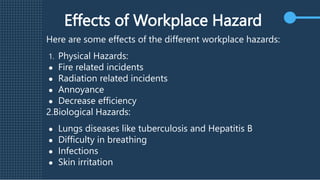
Here are some effects of the different workplace hazards:
1. Physical Hazards:
● Fire related incidents
● Radiation related incidents
● Annoyance
● Decrease efficiency
2.Biological Hazards:
● Lungs diseases like tuberculosis and Hepatitis B
● Difficulty in breathing
● Infections
● Skin irritation
Effects of Workplace Hazard
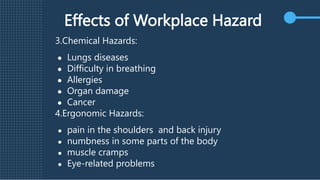
3.Chemical Hazards:
● Lungs diseases
● Difficulty in breathing
● Allergies
● Organ damage
● Cancer
4.Ergonomic Hazards:
● pain in the shoulders and back injury
● numbness in some parts of the body
● muscle cramps
● Eye-related problems
Effects of Workplace Hazard
5.Psychological Hazards:
● Depression
● Anxiety and Frustration
● Loss of confidence
● Loss of concentration at work
● Suicide
6.Safety Hazards:
● Trip hazard related injuries like head injuries and fracture
● Mechanical related injuries like amputation and avulsion
● Major Injuries like coma and electrocution
● Death
Occupational Health and Safety
• Is the campaign and maintenance of the well-being of
workers in every occupation.
• It talks about providing a safe working environment to
achieve an injury-free workplace and a healthy atmosphere
that protects every worker against illness.
• As an effect, it may also protect co-workers, family members,
clients, and other members of the community who are
affected by the workplace environment.
Thank you for Listening

SCHOOL HAZARD AND RISK.pptxadadadadadada

  • 1.
    Hazard and Risk MARKLENARD M. DIMAQUILING ADMINISTRATIVE SUPPORT STAFF
  • 2.
    OBJECTIVES 1. Define Hazardand Risk; 2. Appreciate the importance of following Occupational Health an Safety.
  • 3.
    Hazard • Hazard- isanything that may cause harm to an individual, such as chemicals, electricity, open drawers, and inadequate ventilation. Is a term used to describe something that has the potential to cause harm.
  • 4.
    Risk Risk- Is thechance or probability that a person will be harmed or experience an adverse health effect if exposed to a hazard
  • 5.
    Types of Hazard Hazardscommon in Nursing Homes or Day care: 1. Physical Hazards- are the most normal occurrences in workplaces. They are usually easy to detect, however, very often are neglected because people are too accustomed to them. Common physical hazards are heat, noise, weather, pressure, radiation like laser and X-rays, electricity, energy and vibration
  • 6.
    Types of Hazard 2.Biologicalhazards- come from working with animals, people or infectious materials. This is, therefore, one of the most common hazards that a caregiver faces. These are caused by organisms such as viruses, bacteria, fungi and parasites. ● Common examples of biological hazards are contaminated wastes and bloody fluids contaminated by different pathogens.
  • 7.
    Types of Hazard 3.Chemicalhazards- are present when a worker is exposed to any chemical preparation in the workplace in any form (solid, liquid or gas). ● Common examples of chemical hazards may include disinfectants, antiseptics, detergents, cleaners ,anesthetic gases, chemicals used in laboratories and drugs administered to patients if not properly handled.
  • 8.
    Types of Hazard 4.Ergonomichazards- occur when a caregiver’s nature of work, body position and working conditions put pressure on his/her body. These are caused by anatomical, physiological, and psychological demands of workers. ● Common examples of ergonomic hazards are poor lighting, frequent lifting, repetitive movement, poor posture, improperly adjusted workstations and extreme temperature.
  • 9.
    Types of Hazard 5.Psychologicalhazards- is any hazard that affects the mental well being, or mental health of a worker and may have physical effects. Common examples of psychological hazards fatigue and hours of work, technological changes, stress, bullying and harassment, workplace violence and abuse, working alone, and unreasonable expectations from patients, clients and superiors.
  • 10.
    Types of Hazard 6.Safetyhazards- These are caused by inadequate and insufficient machine guards, unsafe workplace conditions and unsafe work practices. ● Common examples of safety hazards are spills on the floors, unguarded machinery, working from heights, confined spaces, frayed cords and improper wiring and other machine related hazards.
  • 11.
    Effects of WorkplaceHazard Here are some effects of the different workplace hazards: 1. Physical Hazards: ● Fire related incidents ● Radiation related incidents ● Annoyance ● Decrease efficiency 2.Biological Hazards: ● Lungs diseases like tuberculosis and Hepatitis B ● Difficulty in breathing ● Infections ● Skin irritation
  • 12.
    Effects of WorkplaceHazard 3.Chemical Hazards: ● Lungs diseases ● Difficulty in breathing ● Allergies ● Organ damage ● Cancer 4.Ergonomic Hazards: ● pain in the shoulders and back injury ● numbness in some parts of the body ● muscle cramps ● Eye-related problems
  • 13.
    Effects of WorkplaceHazard 5.Psychological Hazards: ● Depression ● Anxiety and Frustration ● Loss of confidence ● Loss of concentration at work ● Suicide 6.Safety Hazards: ● Trip hazard related injuries like head injuries and fracture ● Mechanical related injuries like amputation and avulsion ● Major Injuries like coma and electrocution ● Death
  • 14.
    Occupational Health andSafety • Is the campaign and maintenance of the well-being of workers in every occupation. • It talks about providing a safe working environment to achieve an injury-free workplace and a healthy atmosphere that protects every worker against illness. • As an effect, it may also protect co-workers, family members, clients, and other members of the community who are affected by the workplace environment.
  • 15.
    Thank you forListening