DIAGNOSIS IN CASEWORK :
:
.
Process of Social Casework
 INTRODUCTION :
 According to Mary Richmond (1917), there are three
process of social casework practice: social
investigation or psycho-social study, diagnosis, and
treatment. These three phases are divided into 5
stages -
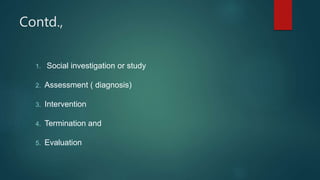
Contd.,
1. Social investigation or study
2. Assessment ( diagnosis)
3. Intervention
4. Termination and
5. Evaluation
DIAGNOSIS IN CASEWORK ( DIAGNOSIS PROCESS) :
 WHAT IS DIAGNOSIS IN SOCIAL CASEWORK PRACTICE?
 Diagnosis comes under the assessment
 The second major process in the practice of social casework
is ‘diagnosis’ on the basis of information collected through the
first process of psycho-social study.
Contd.,
 Diagnosis (assessment) is the attempt to arrive at an exact
definition as far as possible of the social situation and
personality of a given client. ( here social worker try to
understand the social situation of the client and personality-
related behavior, attitude, and feeling during diagnosis
process )
 It is a search for the cause of the problem which brings the
client to the social worker for help.
Contd.,
 The social case worker forms an opinion about the
problem or difficulty faced by the client after carefully
studying his situation or condition, as well as about
the nature of help required by him.
 The caseworker understands etiology ( cause , origin
) of the problem of the client .
Contd.,
 Perlman has termed this function of problem-solving
through the application of social casework process
as ‘ thinking through the facts ‘ - a thinking in which
an attempt is made to understand and evaluate the
problem of the client and a plan of treatment is
formulated. He called function as ‘’ diagnosis process
‘’
Diagnostic product
 Whatever evaluation is done, After the identification
of the problem areas and the factors relating
to them, the attempts are made towards possible
solution is termed diagnosis product.
Content of social diagnosis
 The content of social diagnosis (assessment) in casework
process falls into the triangular pattern. It consists of:
1. The nature of the problem brought and the goals
sought by the client, in relationship to
2. The nature of the person who bears the problem (his social
and psychological situation and functioning) and who seeks
needs) help with his problem, in relation to;
 3. The nature and purpose of the agency and the kind
of help it can offer and/or make available.
Types of Diagnosis
 Perlman has further explained the various aspect of
contents of the diagnosis ( three types of diagnosis ) as
follows
 1. Dynamic diagnosis: The current issues -
 2. Clinical diagnosis: the case worker attempts to classify the
client by nature of his sickness/problem , according to nature
of the problem classify the client whether he is a AIDS patient or
malaria
Contd.,
 3. Etiological diagnosis: The history of the problem
 Etiological diagnosis is concerned with the explanation of the
beginning of the life history of the problem of the client,
basically the
problem that lies in the client’s personality make up or
functioning.
Conclusion .,
 I have discussed the introduction of the social casework
process,
 concept of diagnosis,
 diagnostic product,
 content of diagnosis
 Types of diagnosis
Thank you

DIAGNOSIS IN CASEWORK - Copy.pptx

  • 1.
  • 2.
    Process of SocialCasework  INTRODUCTION :  According to Mary Richmond (1917), there are three process of social casework practice: social investigation or psycho-social study, diagnosis, and treatment. These three phases are divided into 5 stages -
  • 3.
    Contd., 1. Social investigationor study 2. Assessment ( diagnosis) 3. Intervention 4. Termination and 5. Evaluation
  • 4.
    DIAGNOSIS IN CASEWORK( DIAGNOSIS PROCESS) :  WHAT IS DIAGNOSIS IN SOCIAL CASEWORK PRACTICE?  Diagnosis comes under the assessment  The second major process in the practice of social casework is ‘diagnosis’ on the basis of information collected through the first process of psycho-social study.
  • 5.
    Contd.,  Diagnosis (assessment)is the attempt to arrive at an exact definition as far as possible of the social situation and personality of a given client. ( here social worker try to understand the social situation of the client and personality- related behavior, attitude, and feeling during diagnosis process )  It is a search for the cause of the problem which brings the client to the social worker for help.
  • 6.
    Contd.,  The socialcase worker forms an opinion about the problem or difficulty faced by the client after carefully studying his situation or condition, as well as about the nature of help required by him.  The caseworker understands etiology ( cause , origin ) of the problem of the client .
  • 7.
    Contd.,  Perlman hastermed this function of problem-solving through the application of social casework process as ‘ thinking through the facts ‘ - a thinking in which an attempt is made to understand and evaluate the problem of the client and a plan of treatment is formulated. He called function as ‘’ diagnosis process ‘’
  • 8.
    Diagnostic product  Whateverevaluation is done, After the identification of the problem areas and the factors relating to them, the attempts are made towards possible solution is termed diagnosis product.
  • 9.
    Content of socialdiagnosis  The content of social diagnosis (assessment) in casework process falls into the triangular pattern. It consists of: 1. The nature of the problem brought and the goals sought by the client, in relationship to 2. The nature of the person who bears the problem (his social and psychological situation and functioning) and who seeks needs) help with his problem, in relation to;  3. The nature and purpose of the agency and the kind of help it can offer and/or make available.
  • 10.
    Types of Diagnosis Perlman has further explained the various aspect of contents of the diagnosis ( three types of diagnosis ) as follows  1. Dynamic diagnosis: The current issues -  2. Clinical diagnosis: the case worker attempts to classify the client by nature of his sickness/problem , according to nature of the problem classify the client whether he is a AIDS patient or malaria
  • 11.
    Contd.,  3. Etiologicaldiagnosis: The history of the problem  Etiological diagnosis is concerned with the explanation of the beginning of the life history of the problem of the client, basically the problem that lies in the client’s personality make up or functioning.
  • 12.
    Conclusion .,  Ihave discussed the introduction of the social casework process,  concept of diagnosis,  diagnostic product,  content of diagnosis  Types of diagnosis Thank you