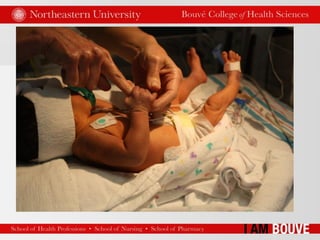
Developmental Care: Past, Present, Future
Carole Kenner, PhD, RNC-NIC, FAAN
Dean/Professor School of Nursing
Associate Dean Bouvé College of Health Sciences
President, Council of International Neonatal Nurses
Boston, MA, USA
Objectives
 Discuss the past, present, and future of developmental care
 Describe the goals of developmental care
Individualized, Family-Centered Developmental Care
(IFDC)
 Framework for providing care to support positive
neurodevelopment of the infant and emotional support of family
What is Developmental Care
 An awareness of the interaction between the environment and the
infant and family
 Macroenvironment
 Microenvironment
 Responsibility of the interdisciplinary team-including the family
 Requires a partnership with the family
No Visitors Please
 Used to be a common policy
 Still is in some countries
Minimum Handling Protocol
 Can be Overused
Evolution of Developmental Care
 1976 Toward Improving the Outcome of Pregnancy
 Planning guidelines for Neonatal Intensive Care Units (NICUs)
March of Dimes
 1978 Assembly Bill AB 757 for High Risk Infants
 Family needs and services
 Follow up Care
 1979 Kangaroo Care in Bogotá, Columbia Drs. Rey and Martinez
 1980’s Newborn Individualized Developmental Care and
Assessment Program (NIDCAP) starts
The Evolution Continues
 1987 Graven Conference for Physical and Developmental
Environment of the High Risk Newborn
 1991 Developmental Care Concepts based on work from Dr.
Heidelise Als in Boston, MA
 1992 Recommend Standards for Newborn ICU Design
 1992 Institute for Patient- And Family-Centered Care
 1993 Kenner Comprehensive Neonatal Nursing Text
 1998 the Philosophy of Developmental Care introduced at East
Tennessee Children’s Hospital
The Evolution Continues
 1999 For Profit Company Children’s medical Ventures started
producing Developmental Care Products
 2000 Brussels, Belgium reports on impact of NICU environment
on Premature Infants
 2001 NIDCAP (The Newborn Individualized Developmental Care
and Assessment Program) Federation International formed
 2004 Littleton Adventist Hospital (Littleton, CO) completes $2.5
Million (US dollar) NICU that supports neurodevelopmental,
family-centered, and high tech care
The Evolution Continues
 2005 Journal of Perinatology article discusses decline in mortality among
NICU infants-medical residents include developmental care
 2008 Cincinnati Children’s Hospital (Cincinnati, Ohio USA) designated
at a Training Center for Optimal Developmental Care for Infants
 One of 17 worldwide-10 US NIDCAP Centers, 6-Europe, 1-South
America
 Since then has spread to Australia, New Zealand, Asia, Middle East
 http://www.nidcap.org/training_centers.aspx#Europe
National Association of Neonatal Nurses (NANN)
 2008 Blueprint for Developmental Care Competencies
 Council of International Neonatal Nurses (COINN) supported
NANN’s efforts
 Consider this a “standard” of care
 Yet….
The Universe for Developmental Care
 New Conceptual Framework
 Gibbins, Hoath, Coughlin, Gibbins, & Franck, 2008
 Includes Institute of Medicine’s (IOM) emphasis on patient
focused care, safety, and quality improvement.
Developmental Care
 2002 Declared a useless therapy in a US professional journal
 Interdisciplinary support grows – Nurses, Doctors, Occupational
Therapists, Physical Therapists
Text
PREDICTIONS FOR DEVELOPMENTAL CARE
IN THE 21ST CENTURY
 Developmental care will be embraced as the philosophy of
newborn, infant, and family-centered care.
 Use of a “core curriculum” by health professionals and families
will grow and foster its use as a standard of neonatal care.
 Developmental care will be a model for interdisciplinary education
and healthcare management.
 Developmental care will be a part of standard orientation and
continued competency evaluation for health professionals who
work with newborns, infants, children, and their families
PREDICTIONS FOR DEVELOPMENTAL CARE
IN THE 21ST CENTURY
 Developmental care will become the framework from which
neonatal care is delivered.
 Developmental care will be incorporated as an essential part of
health professional education—basic and advanced, no matter what
the discipline.
 Families will be partners in care and not visitors in the NICU any
longer.
 Developmental care teams will be an expectation in neonatal care
delivery.
PREDICTIONS FOR DEVELOPMENTAL CARE
IN THE 21ST CENTURY
 Evidence will mount to support positive healthy outcomes for
newborns, infants, and their families when developmental care is
the overarching philosophy of care.
 Interdisciplinary research studies will increase to examine various
aspects of developmental care.
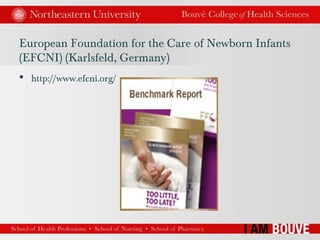
European Foundation for the Care of Newborn Infants
(EFCNI) (Karlsfeld, Germany)
 http://www.efcni.org/
Carole kenner   developmental care final

Carole kenner developmental care final

  • 1.
    Developmental Care: Past,Present, Future Carole Kenner, PhD, RNC-NIC, FAAN Dean/Professor School of Nursing Associate Dean Bouvé College of Health Sciences President, Council of International Neonatal Nurses Boston, MA, USA
  • 4.
    Objectives  Discuss thepast, present, and future of developmental care  Describe the goals of developmental care
  • 5.
    Individualized, Family-Centered DevelopmentalCare (IFDC)  Framework for providing care to support positive neurodevelopment of the infant and emotional support of family
  • 6.
    What is DevelopmentalCare  An awareness of the interaction between the environment and the infant and family  Macroenvironment  Microenvironment  Responsibility of the interdisciplinary team-including the family  Requires a partnership with the family
  • 7.
    No Visitors Please Used to be a common policy  Still is in some countries
  • 8.
  • 9.
    Evolution of DevelopmentalCare  1976 Toward Improving the Outcome of Pregnancy  Planning guidelines for Neonatal Intensive Care Units (NICUs) March of Dimes  1978 Assembly Bill AB 757 for High Risk Infants  Family needs and services  Follow up Care  1979 Kangaroo Care in Bogotá, Columbia Drs. Rey and Martinez  1980’s Newborn Individualized Developmental Care and Assessment Program (NIDCAP) starts
  • 10.
    The Evolution Continues 1987 Graven Conference for Physical and Developmental Environment of the High Risk Newborn  1991 Developmental Care Concepts based on work from Dr. Heidelise Als in Boston, MA  1992 Recommend Standards for Newborn ICU Design  1992 Institute for Patient- And Family-Centered Care  1993 Kenner Comprehensive Neonatal Nursing Text  1998 the Philosophy of Developmental Care introduced at East Tennessee Children’s Hospital
  • 11.
    The Evolution Continues 1999 For Profit Company Children’s medical Ventures started producing Developmental Care Products  2000 Brussels, Belgium reports on impact of NICU environment on Premature Infants  2001 NIDCAP (The Newborn Individualized Developmental Care and Assessment Program) Federation International formed  2004 Littleton Adventist Hospital (Littleton, CO) completes $2.5 Million (US dollar) NICU that supports neurodevelopmental, family-centered, and high tech care
  • 12.
    The Evolution Continues 2005 Journal of Perinatology article discusses decline in mortality among NICU infants-medical residents include developmental care  2008 Cincinnati Children’s Hospital (Cincinnati, Ohio USA) designated at a Training Center for Optimal Developmental Care for Infants  One of 17 worldwide-10 US NIDCAP Centers, 6-Europe, 1-South America  Since then has spread to Australia, New Zealand, Asia, Middle East  http://www.nidcap.org/training_centers.aspx#Europe
  • 13.
    National Association ofNeonatal Nurses (NANN)  2008 Blueprint for Developmental Care Competencies  Council of International Neonatal Nurses (COINN) supported NANN’s efforts  Consider this a “standard” of care  Yet….
  • 14.
    The Universe forDevelopmental Care  New Conceptual Framework  Gibbins, Hoath, Coughlin, Gibbins, & Franck, 2008  Includes Institute of Medicine’s (IOM) emphasis on patient focused care, safety, and quality improvement.
  • 15.
    Developmental Care  2002Declared a useless therapy in a US professional journal  Interdisciplinary support grows – Nurses, Doctors, Occupational Therapists, Physical Therapists
  • 16.
  • 17.
    PREDICTIONS FOR DEVELOPMENTALCARE IN THE 21ST CENTURY  Developmental care will be embraced as the philosophy of newborn, infant, and family-centered care.  Use of a “core curriculum” by health professionals and families will grow and foster its use as a standard of neonatal care.  Developmental care will be a model for interdisciplinary education and healthcare management.  Developmental care will be a part of standard orientation and continued competency evaluation for health professionals who work with newborns, infants, children, and their families
  • 18.
    PREDICTIONS FOR DEVELOPMENTALCARE IN THE 21ST CENTURY  Developmental care will become the framework from which neonatal care is delivered.  Developmental care will be incorporated as an essential part of health professional education—basic and advanced, no matter what the discipline.  Families will be partners in care and not visitors in the NICU any longer.  Developmental care teams will be an expectation in neonatal care delivery.
  • 19.
    PREDICTIONS FOR DEVELOPMENTALCARE IN THE 21ST CENTURY  Evidence will mount to support positive healthy outcomes for newborns, infants, and their families when developmental care is the overarching philosophy of care.  Interdisciplinary research studies will increase to examine various aspects of developmental care.
  • 20.
    European Foundation forthe Care of Newborn Infants (EFCNI) (Karlsfeld, Germany)  http://www.efcni.org/