EVOLUTION OF DEVELOPMENTAL
PATTERNS IN
FLOWERING PLANTS
BY
D.ELANGO
M.Sc-BIOTECHNOLOGY
PERIYARUNIVERSITY.
SALEM.
AN OVERVIEW OF PLANT DEVELOPMENT
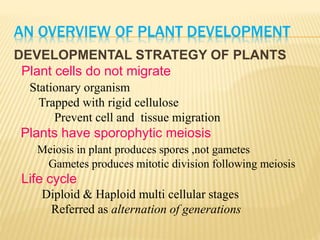
DEVELOPMENTAL STRATEGY OF PLANTS
Plant cells do not migrate
Stationary organism
Trapped with rigid cellulose
Prevent cell and tissue migration
Plants have sporophytic meiosis
Meiosis in plant produces spores ,not gametes
Gametes produces mitotic division following meiosis
Life cycle
Diploid & Haploid multi cellular stages
Referred as alternation of generations
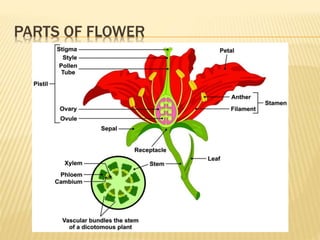
PARTS OF FLOWER
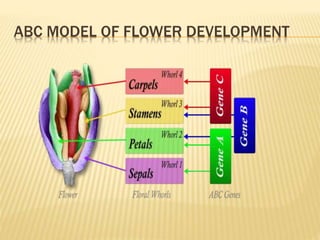
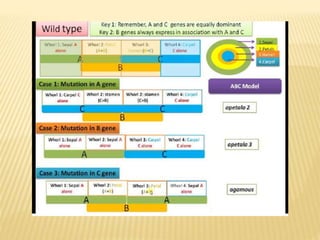
ABC MODEL OF FLOWER DEVELOPMENT
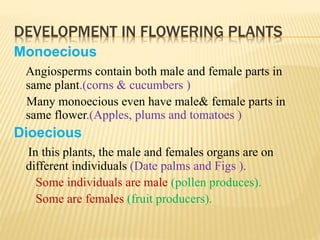
DEVELOPMENT IN FLOWERING PLANTS
Monoecious
Angiosperms contain both male and female parts in
same plant.(corns & cucumbers )
Many monoecious even have male& female parts in
same flower.(Apples, plums and tomatoes )
Dioecious
In this plants, the male and females organs are on
different individuals (Date palms and Figs ).
Some individuals are male (pollen produces).
Some are females (fruit producers).
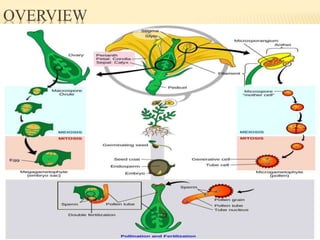
OVERVIEW
GAMETE PRODUCTION IN ANGIOSPERMS
Plants have both multicellular haploid and multicellular diploid
stages in their life cycles.
HAPLODIPLONTIC LIFE CYCLE
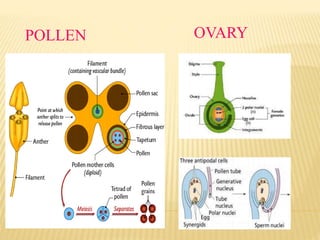
Diploid sporophyte cells undergo meiosis to produce haploid
spores .
Each spores goes to mitotic divisions to yeild haploid
gametopyhte .
Angiosperms contain two type of spores.
Megaspores – Female gametophytes
Microspores - Male gametophytes.
POLLEN OVARY
POLLINATION
 Pollination refers to the landing and subsequent
germination of the pollen on the stigma.
 Hence it involves an interaction between gametophytic
generation of male and sporophytic generation of the
female.
 96 % plants species are produce male and female
gametophytes on the same plant.
 Staminate – lack carpels (female parts absent).
 Carpellate – lack stamens (Male parts absent).
FERTILIZATION
 Growing pollen tubes enters the embryo sac
through the micropyle and grows through one of
the synergic cells .
 Two sperm cells are released and double
fertilization event occurs.
 One sperm cell fuses with egg to produces
zygote (develop sporopyte).
 Second sperm cell fuses with multinucleated cell
(develop endosperm).
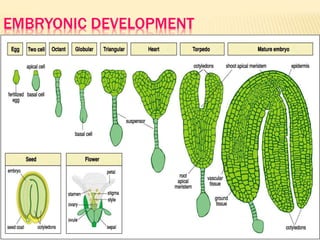
EMBRYONIC DEVELOPMENT
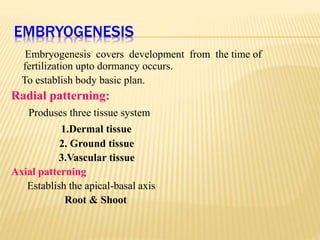
EMBRYOGENESIS
Embryogenesis covers development from the time of
fertilization upto dormancy occurs.
To establish body basic plan.
Radial patterning:
Produses three tissue system
1.Dermal tissue
2. Ground tissue
3.Vascular tissue
Axial patterning
Establish the apical-basal axis
Root & Shoot
DEVELOPMENTAL PATTERNS IN FLOWERING PLANTS

DEVELOPMENTAL PATTERNS IN FLOWERING PLANTS

  • 2.
    EVOLUTION OF DEVELOPMENTAL PATTERNSIN FLOWERING PLANTS BY D.ELANGO M.Sc-BIOTECHNOLOGY PERIYARUNIVERSITY. SALEM.
  • 4.
    AN OVERVIEW OFPLANT DEVELOPMENT DEVELOPMENTAL STRATEGY OF PLANTS Plant cells do not migrate Stationary organism Trapped with rigid cellulose Prevent cell and tissue migration Plants have sporophytic meiosis Meiosis in plant produces spores ,not gametes Gametes produces mitotic division following meiosis Life cycle Diploid & Haploid multi cellular stages Referred as alternation of generations
  • 5.
  • 6.
    ABC MODEL OFFLOWER DEVELOPMENT
  • 8.
    DEVELOPMENT IN FLOWERINGPLANTS Monoecious Angiosperms contain both male and female parts in same plant.(corns & cucumbers ) Many monoecious even have male& female parts in same flower.(Apples, plums and tomatoes ) Dioecious In this plants, the male and females organs are on different individuals (Date palms and Figs ). Some individuals are male (pollen produces). Some are females (fruit producers).
  • 9.
  • 10.
    GAMETE PRODUCTION INANGIOSPERMS Plants have both multicellular haploid and multicellular diploid stages in their life cycles. HAPLODIPLONTIC LIFE CYCLE Diploid sporophyte cells undergo meiosis to produce haploid spores . Each spores goes to mitotic divisions to yeild haploid gametopyhte . Angiosperms contain two type of spores. Megaspores – Female gametophytes Microspores - Male gametophytes.
  • 11.
  • 12.
    POLLINATION  Pollination refersto the landing and subsequent germination of the pollen on the stigma.  Hence it involves an interaction between gametophytic generation of male and sporophytic generation of the female.  96 % plants species are produce male and female gametophytes on the same plant.  Staminate – lack carpels (female parts absent).  Carpellate – lack stamens (Male parts absent).
  • 13.
    FERTILIZATION  Growing pollentubes enters the embryo sac through the micropyle and grows through one of the synergic cells .  Two sperm cells are released and double fertilization event occurs.  One sperm cell fuses with egg to produces zygote (develop sporopyte).  Second sperm cell fuses with multinucleated cell (develop endosperm).
  • 14.
  • 15.
    EMBRYOGENESIS Embryogenesis covers developmentfrom the time of fertilization upto dormancy occurs. To establish body basic plan. Radial patterning: Produses three tissue system 1.Dermal tissue 2. Ground tissue 3.Vascular tissue Axial patterning Establish the apical-basal axis Root & Shoot