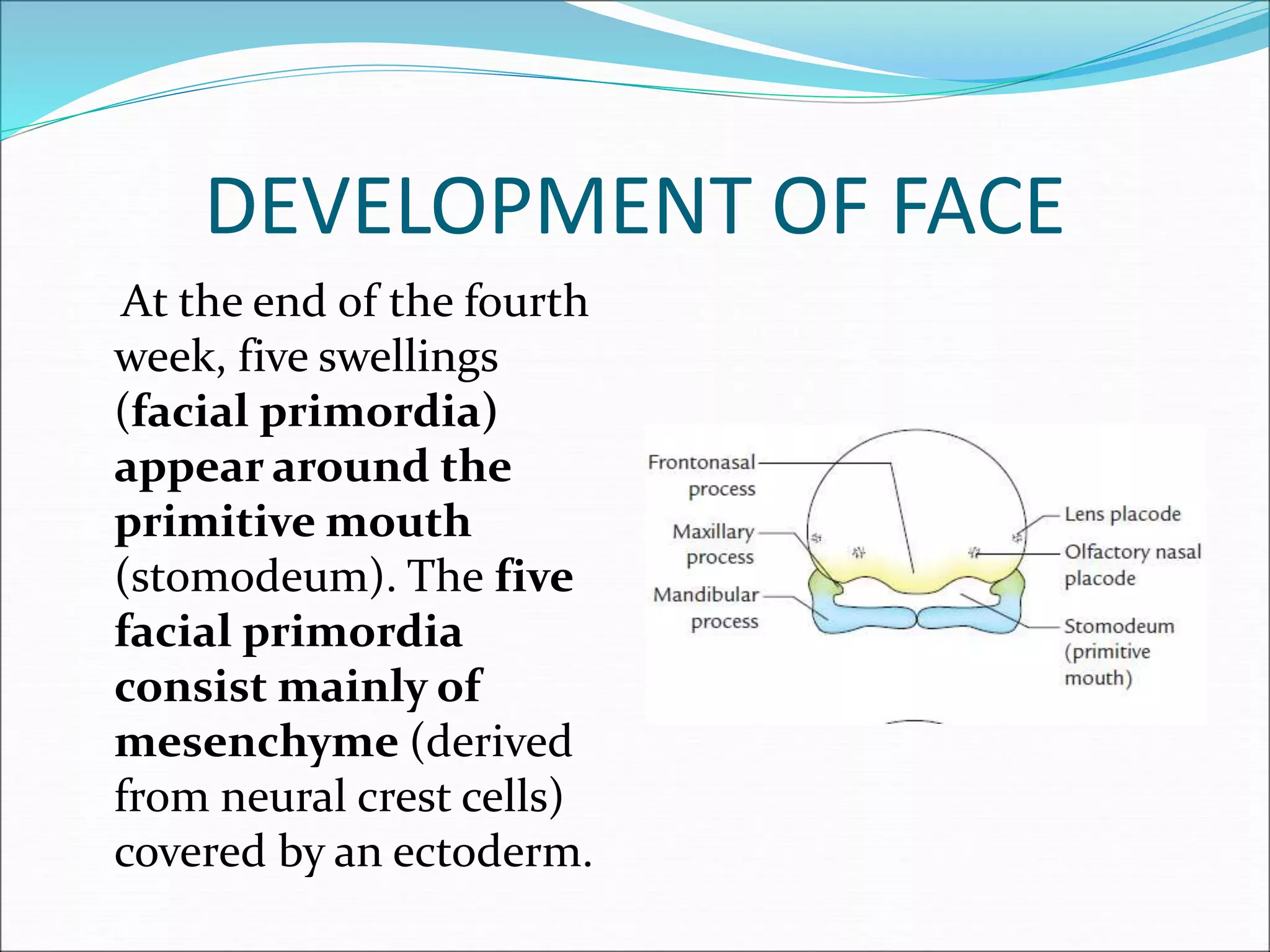
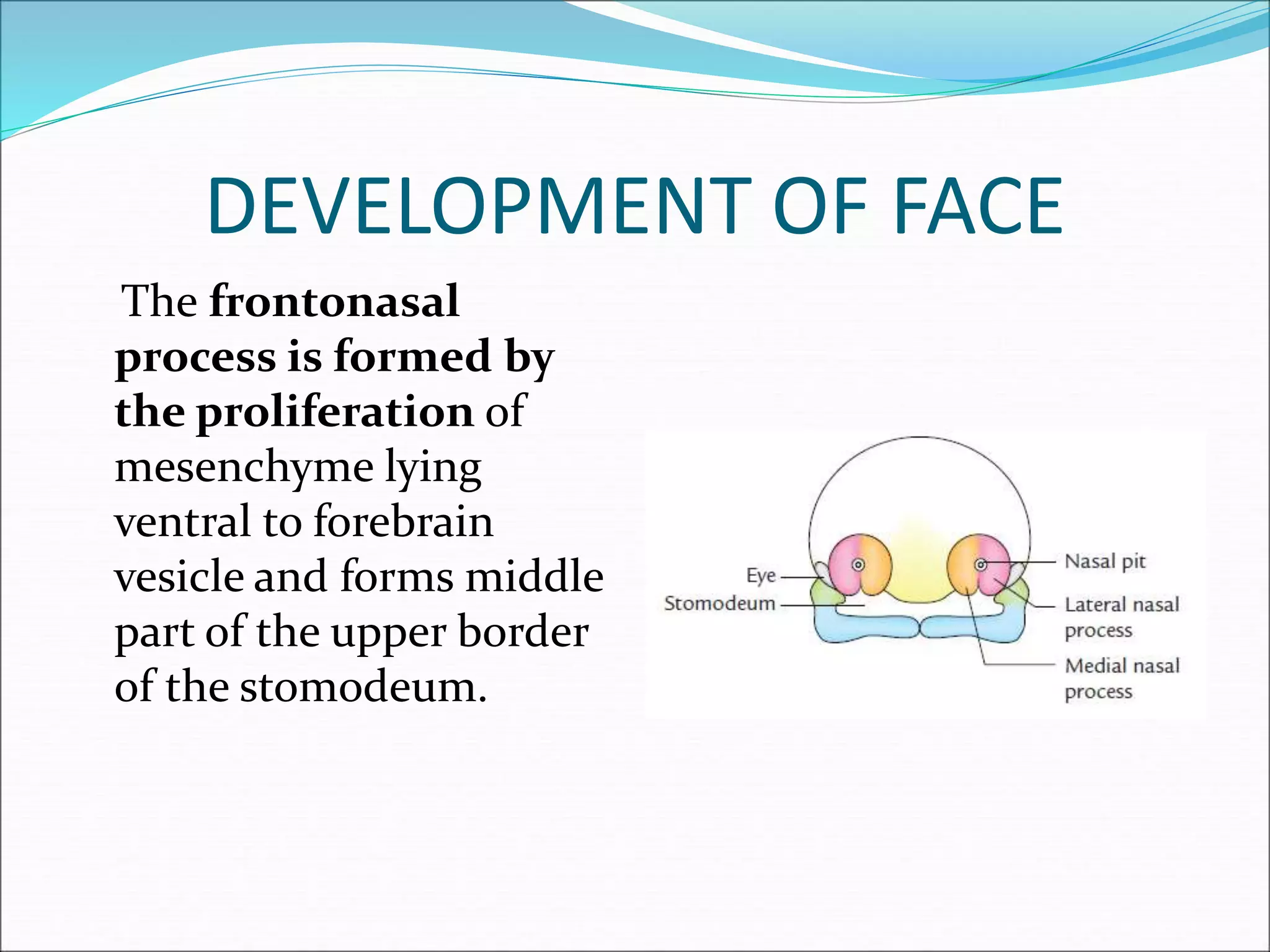
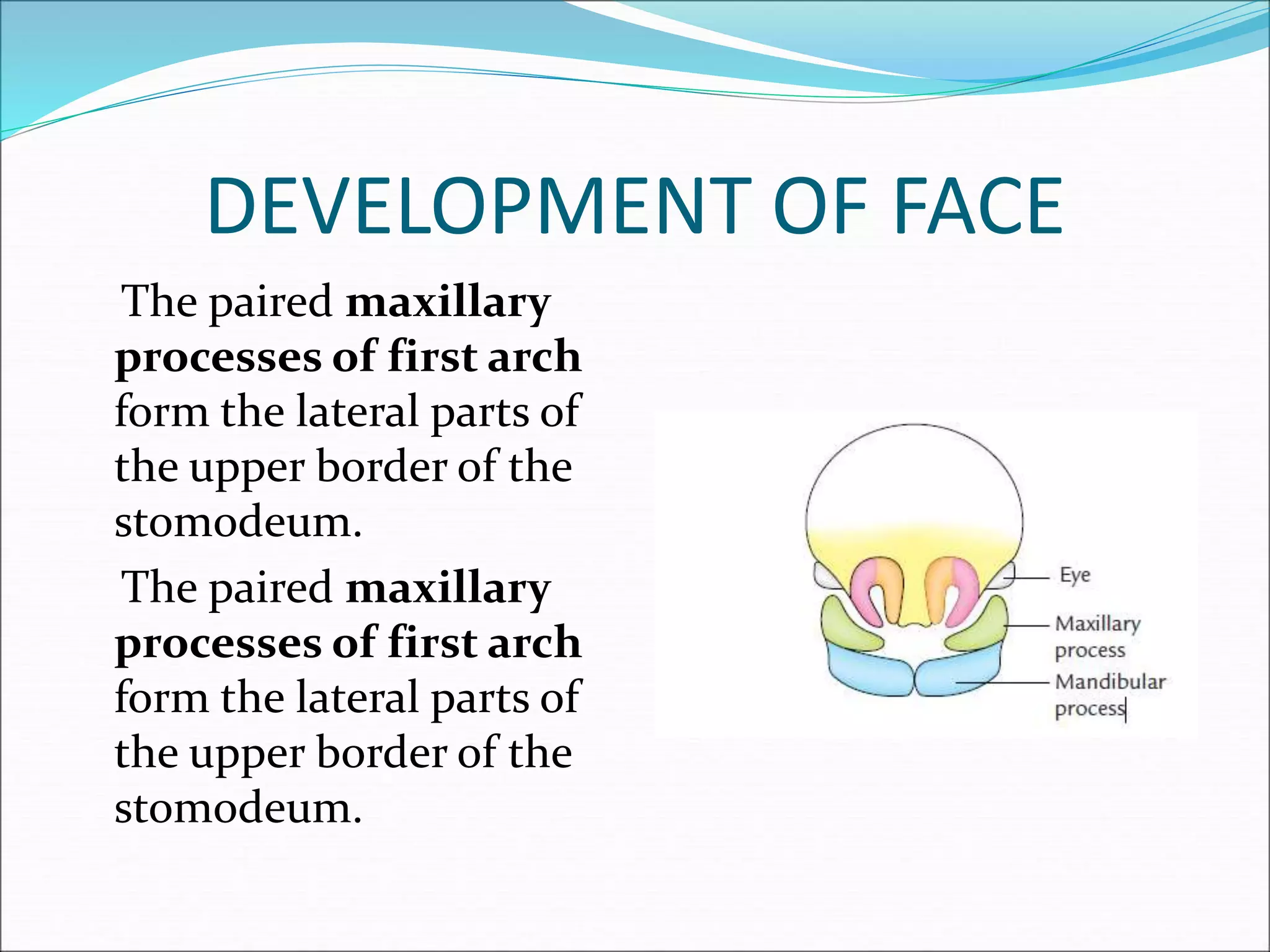
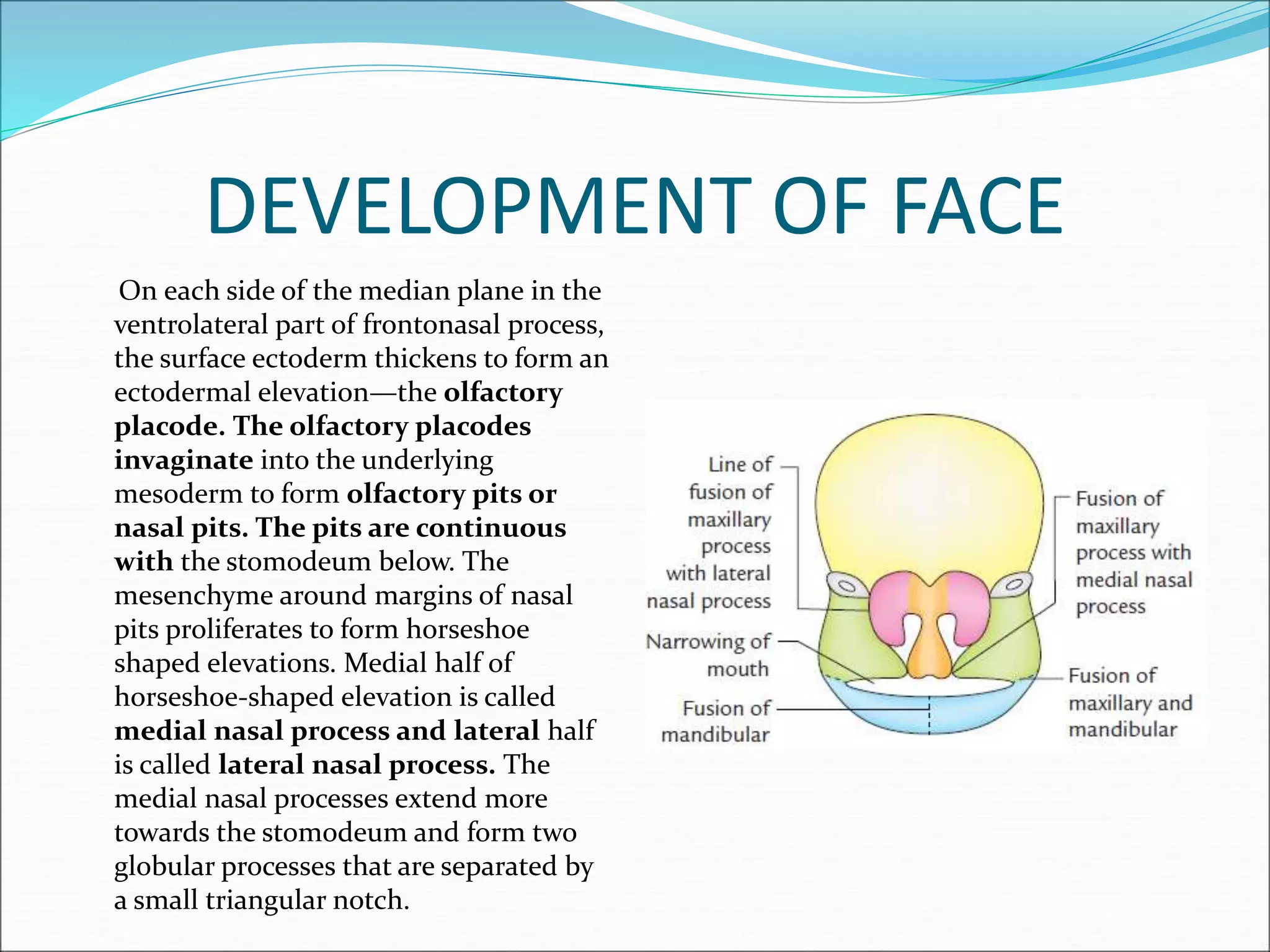
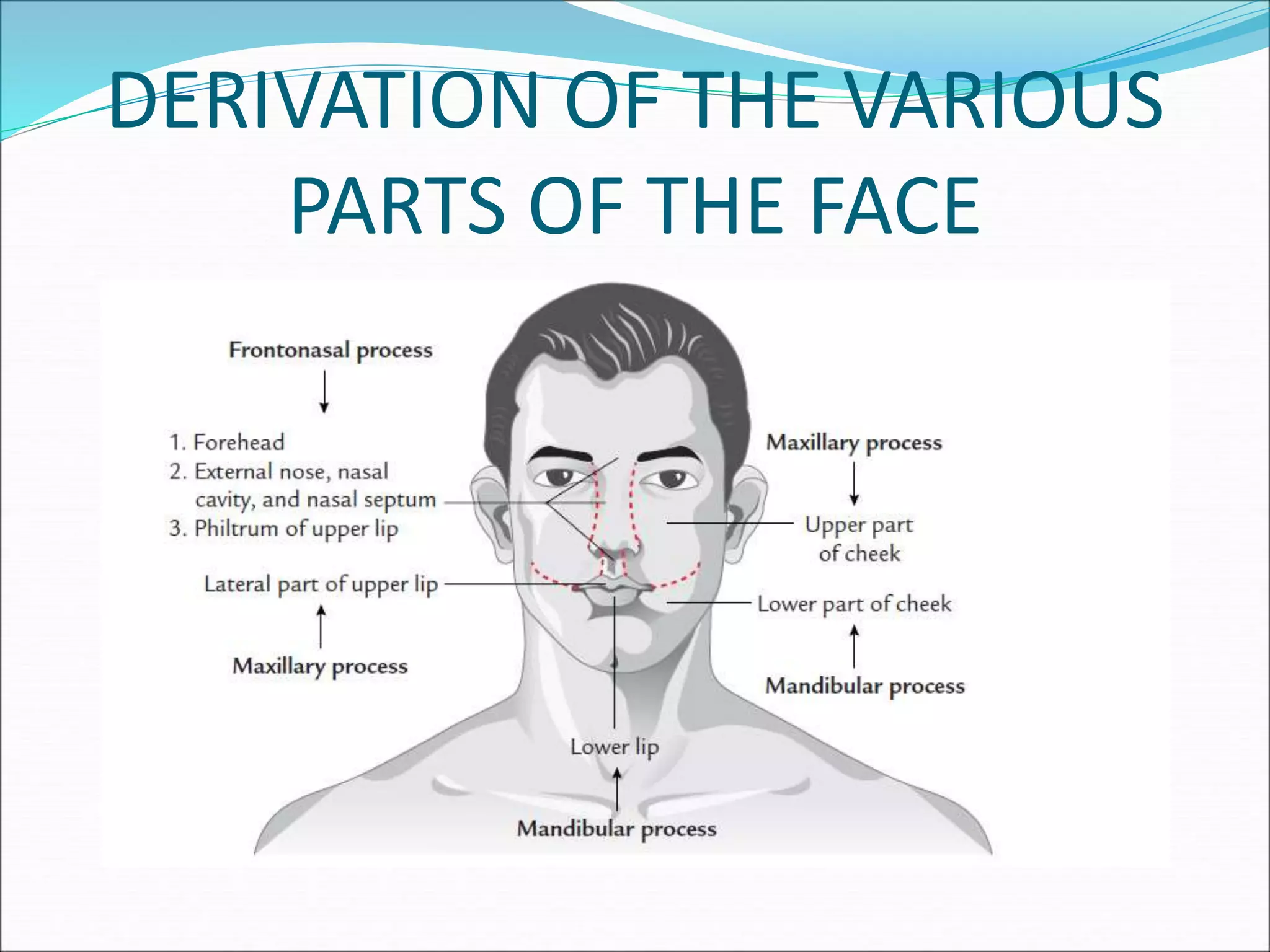
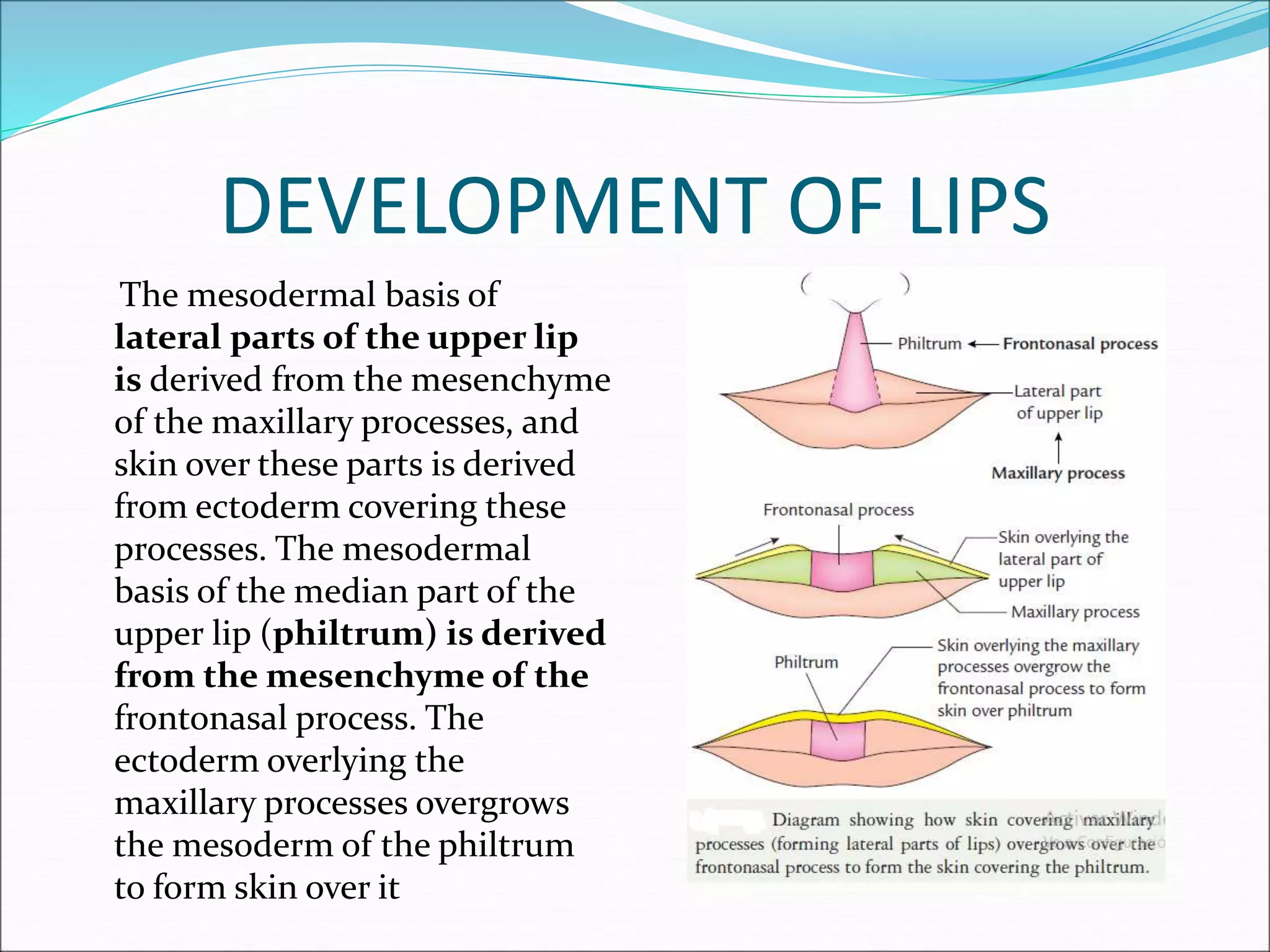
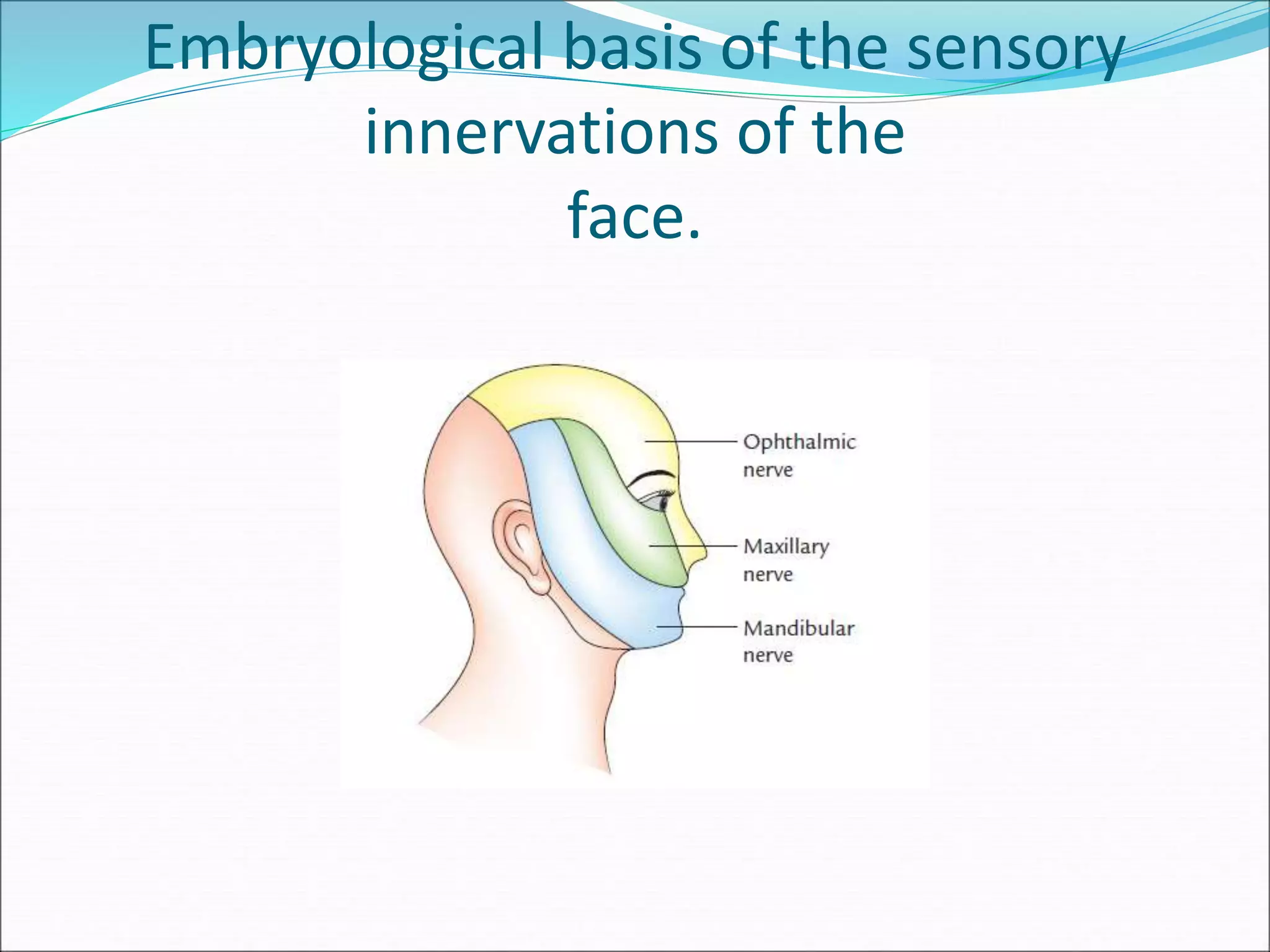
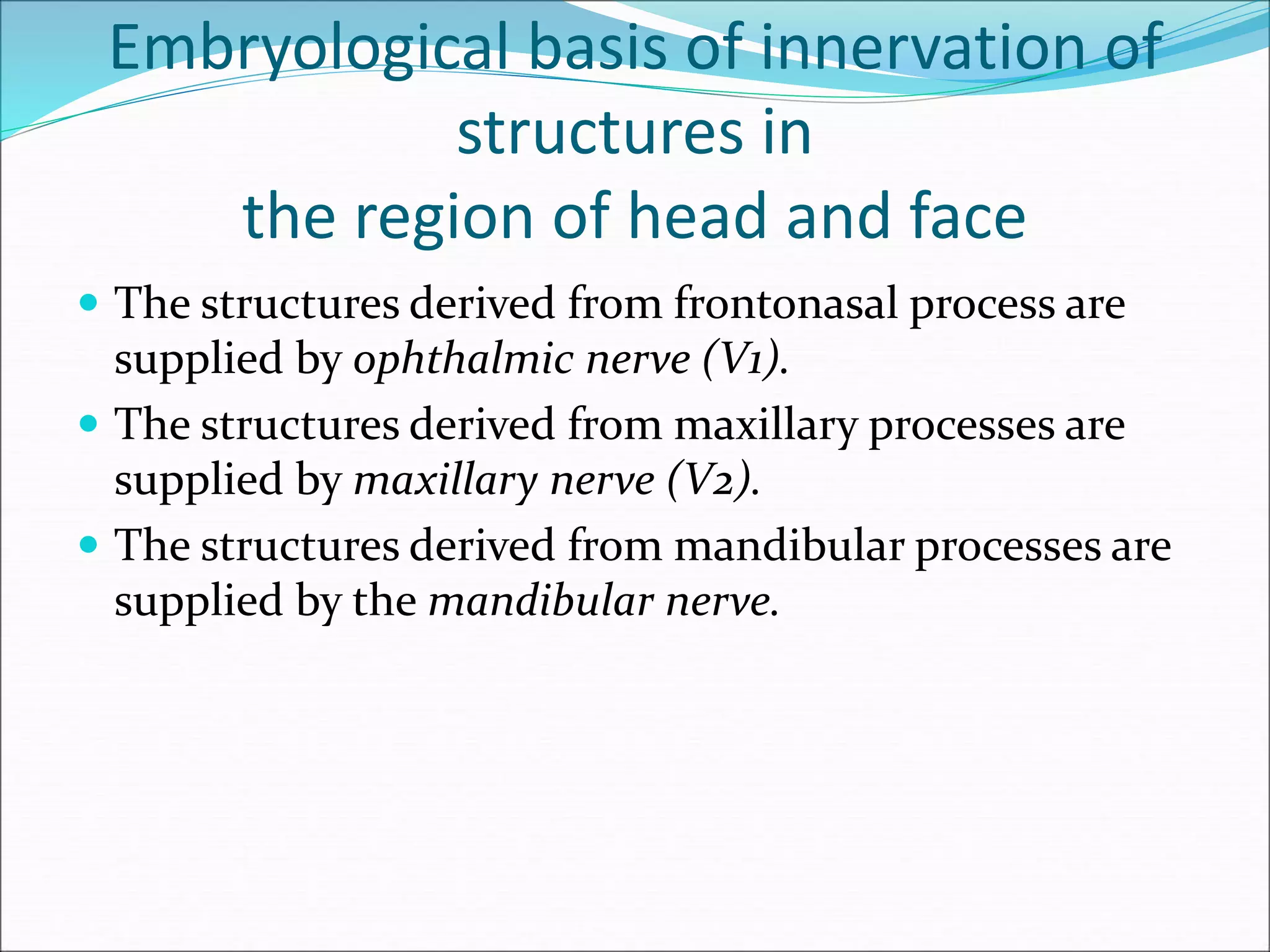
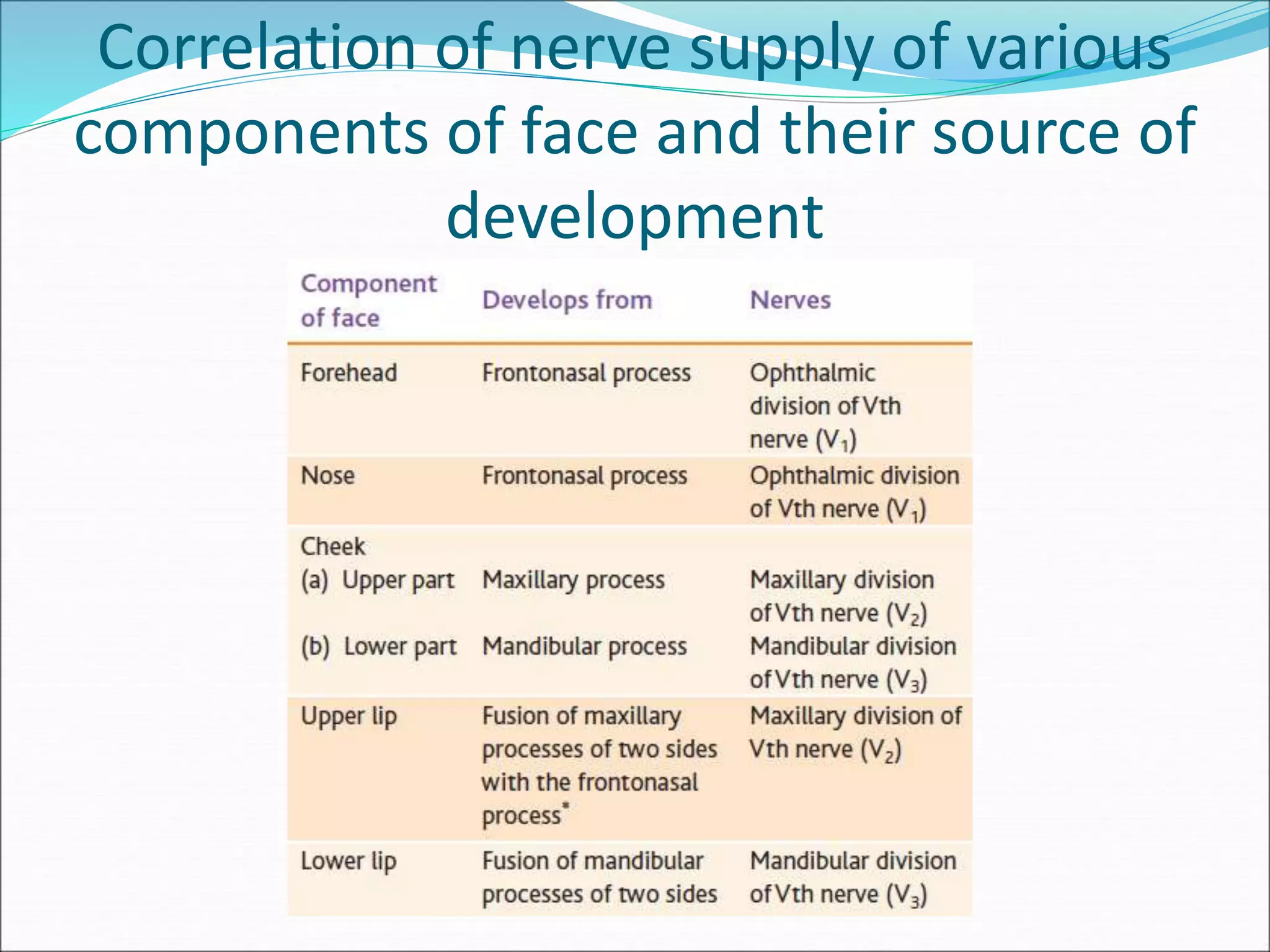
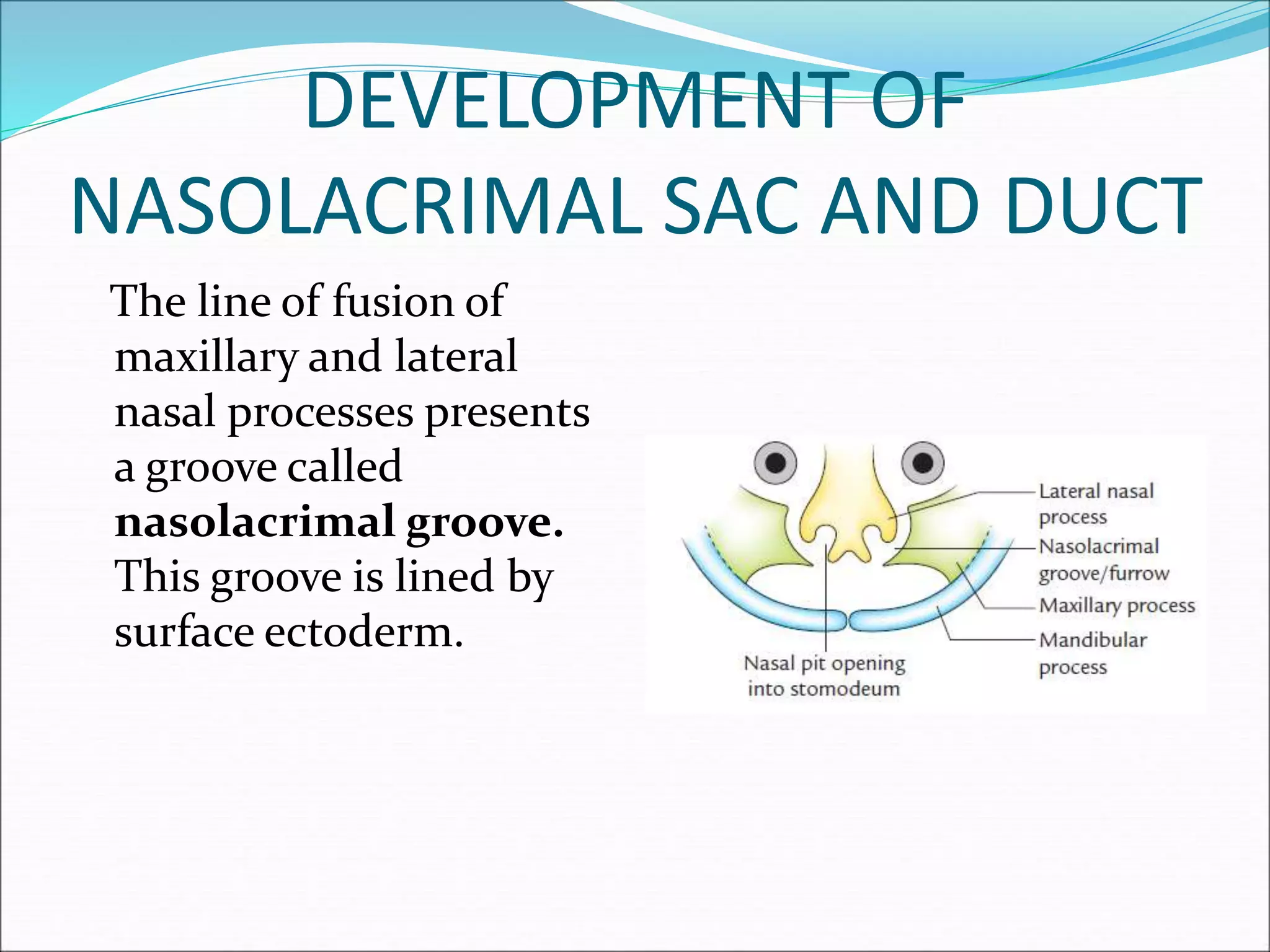
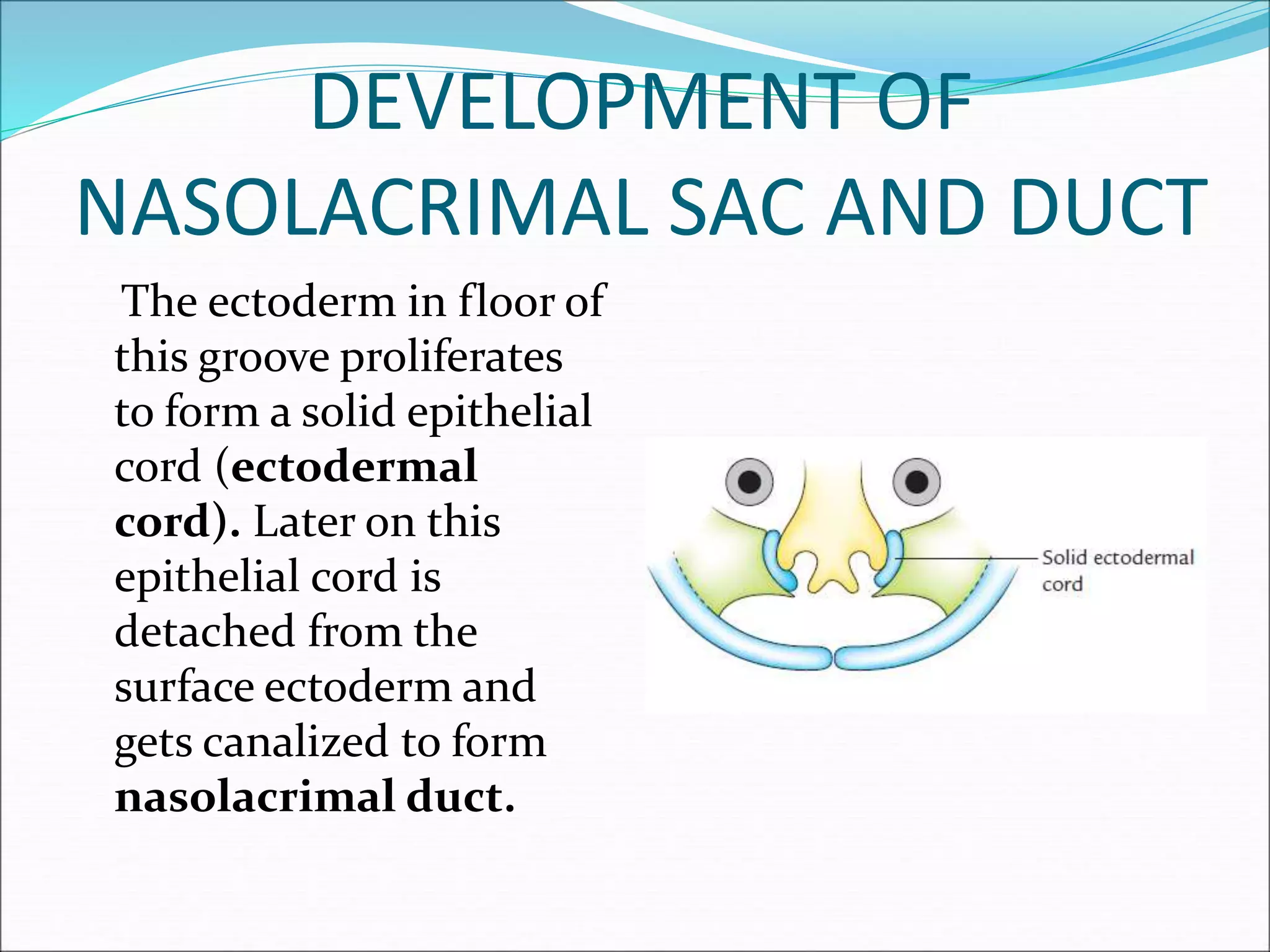
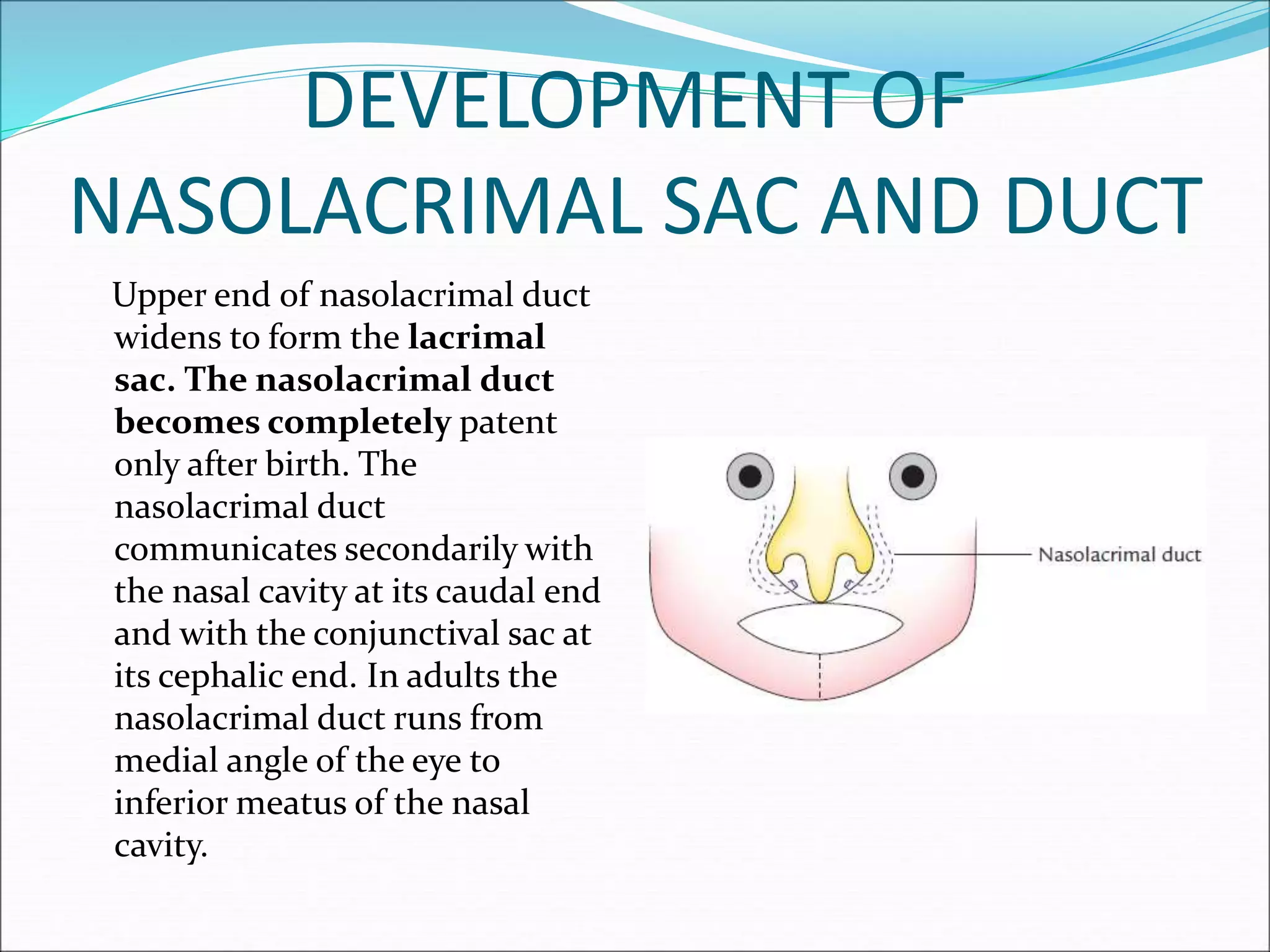
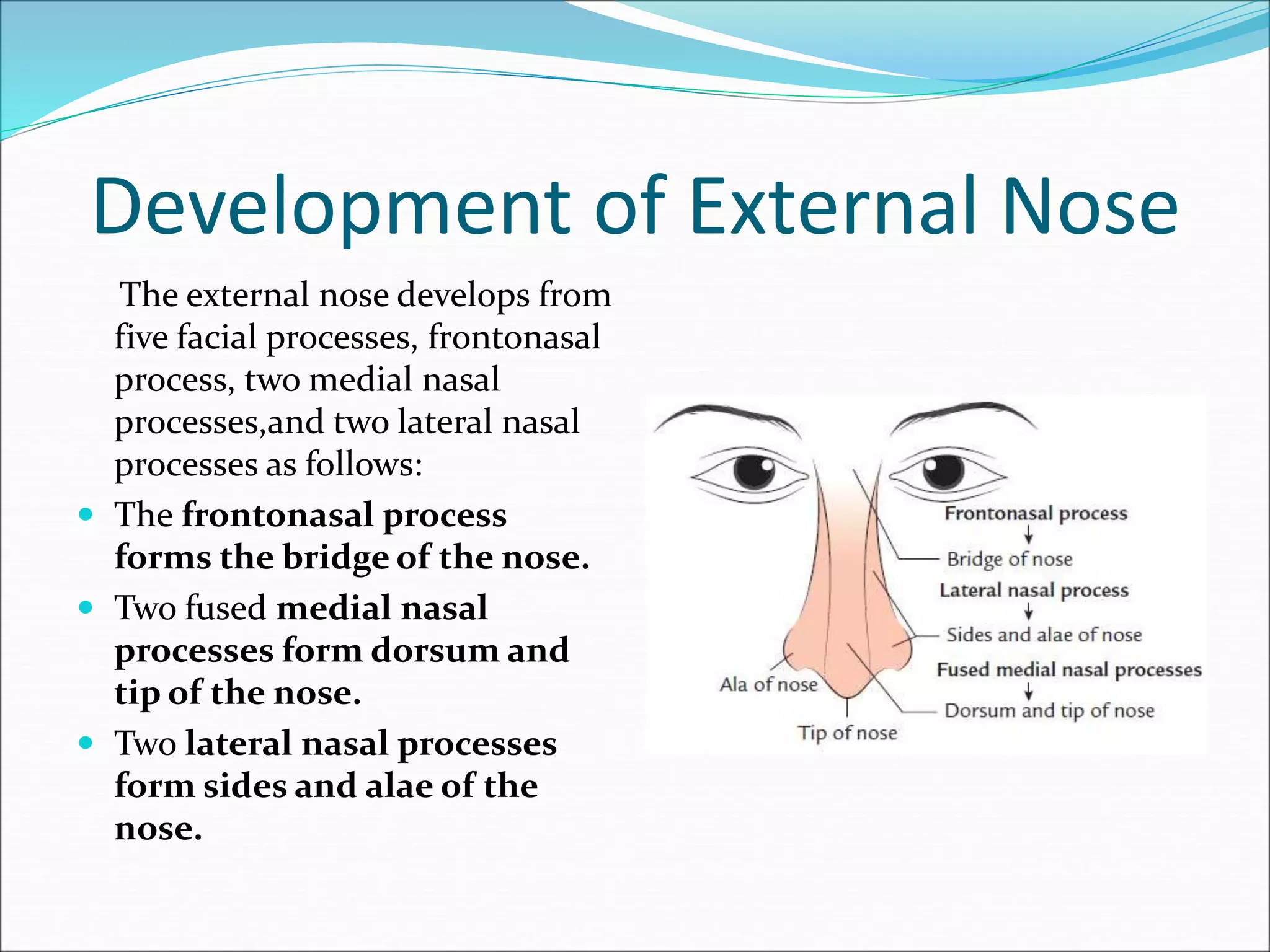
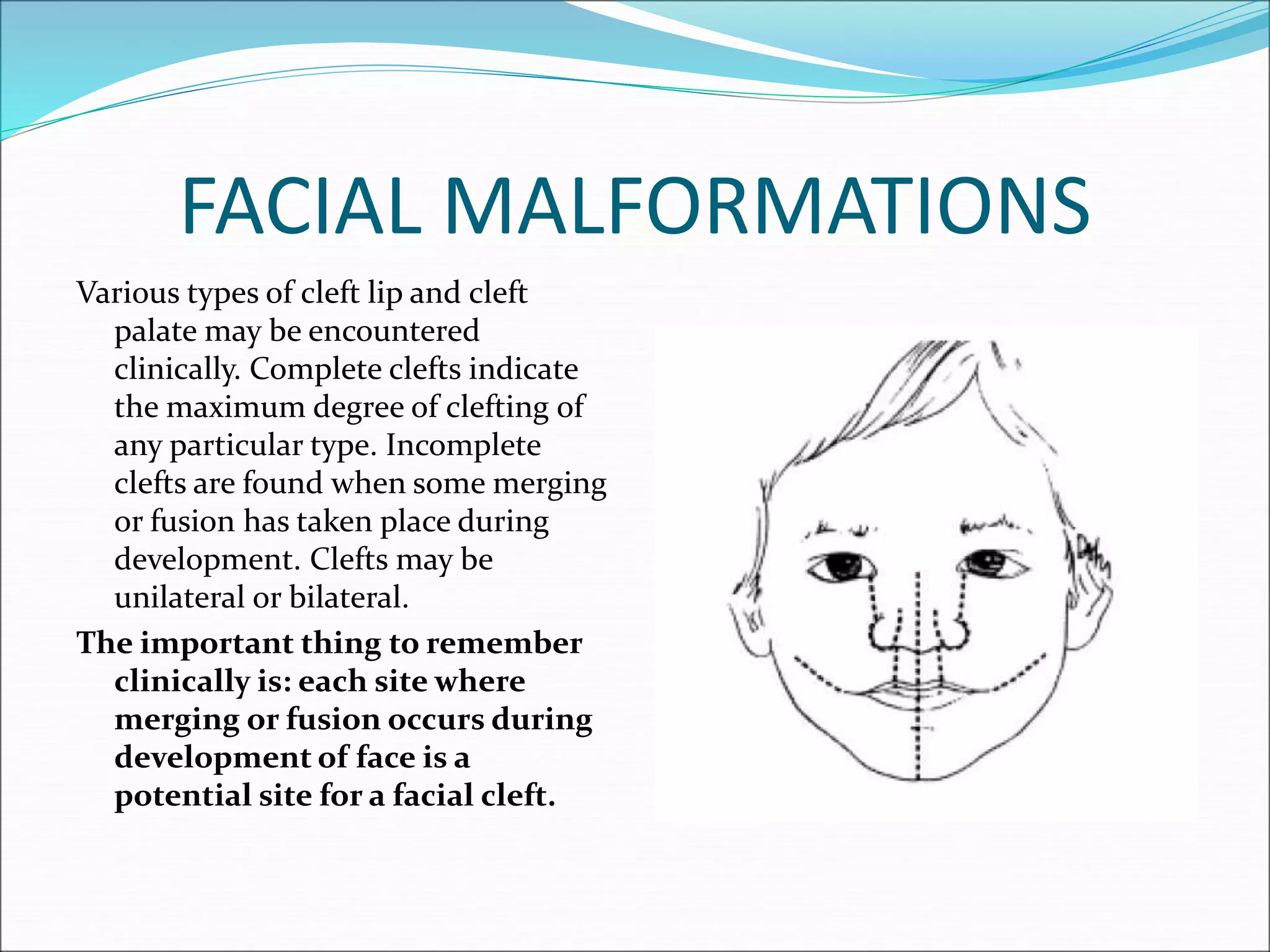
The face develops from five swellings called facial primordia that form around the primitive mouth. These include the frontonasal process, paired maxillary processes, and paired mandibular processes. Each process contributes to specific structures of the face. For example, the frontonasal process forms parts of the nose and upper lip, while the maxillary processes form parts of the upper lip, cheek, and nose. Malformations can occur if the merging or fusion of these processes during development is incomplete, leading to cleft lip and cleft palate.