Development of a Computer-Based Tailored Information Application to Improve HIV-Related Treatment Adherence: Preliminary FindingsRaymond L Ownby, MD, PhDNova Southeastern UniversityFort Lauderdale FL
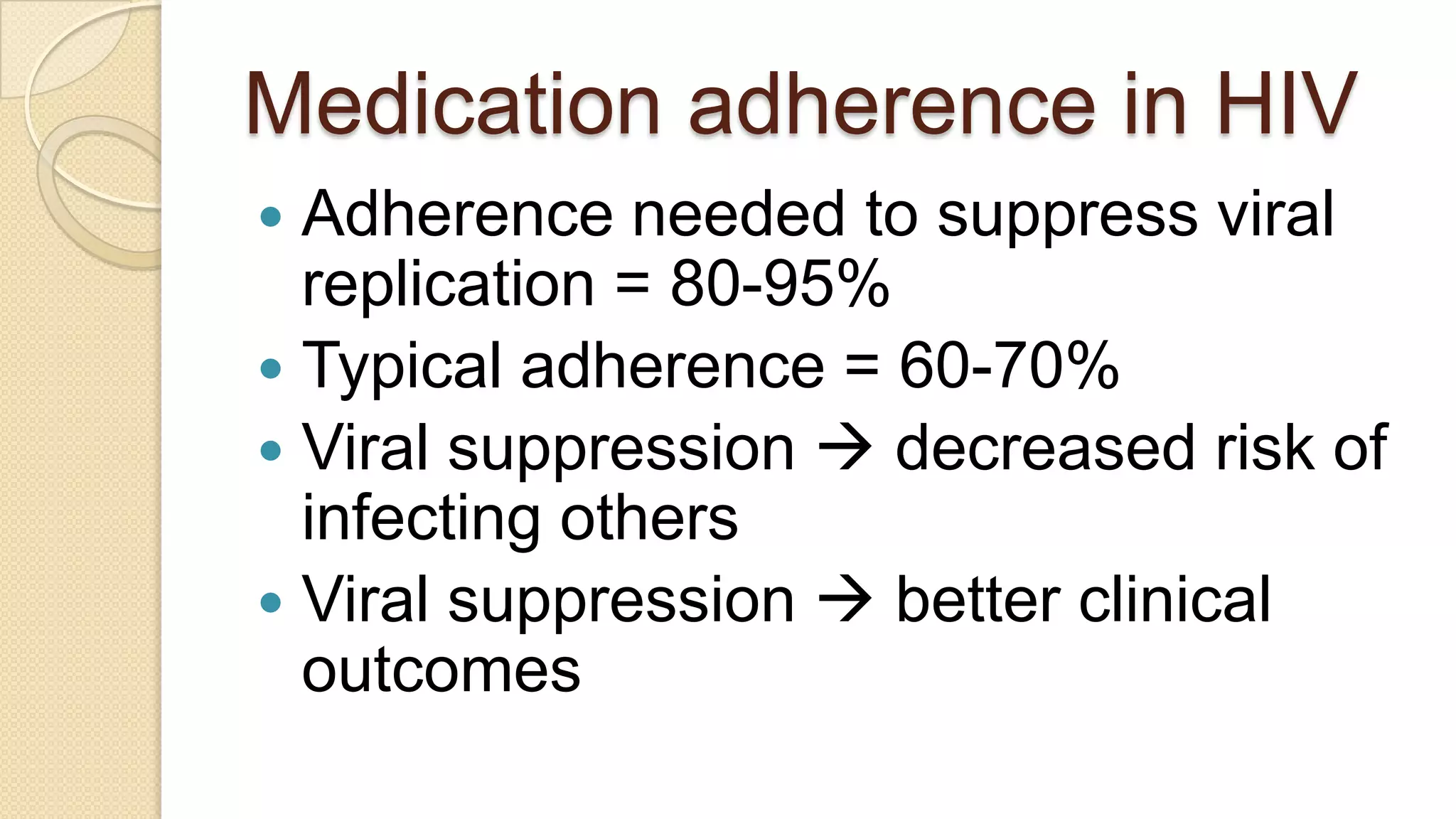
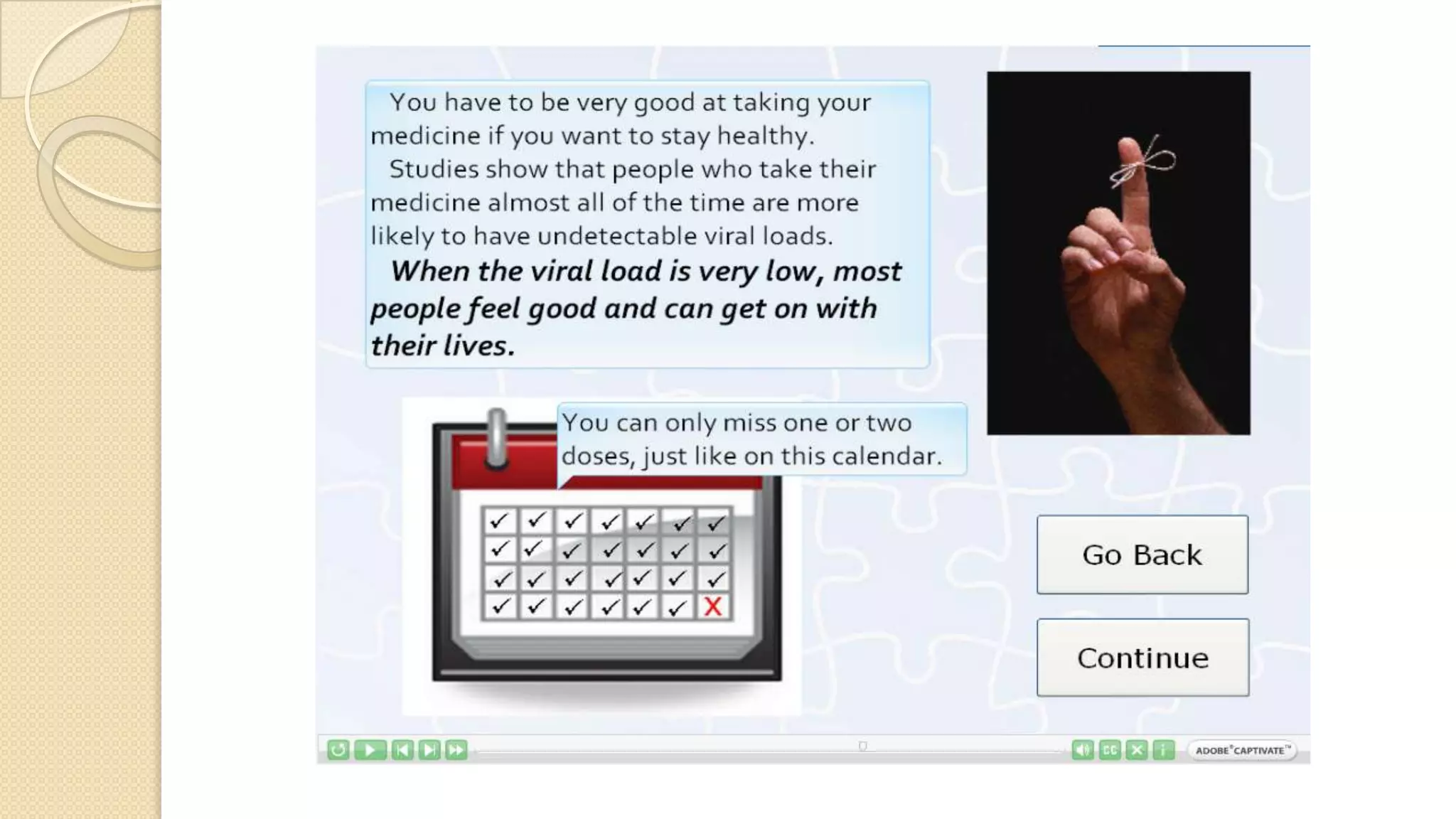
Medication adherence in HIVAdherence needed to suppress viral replication= 80-95%Typical adherence = 60-70%Viral suppression  decreased risk of infecting othersViral suppression  better clinical outcomes
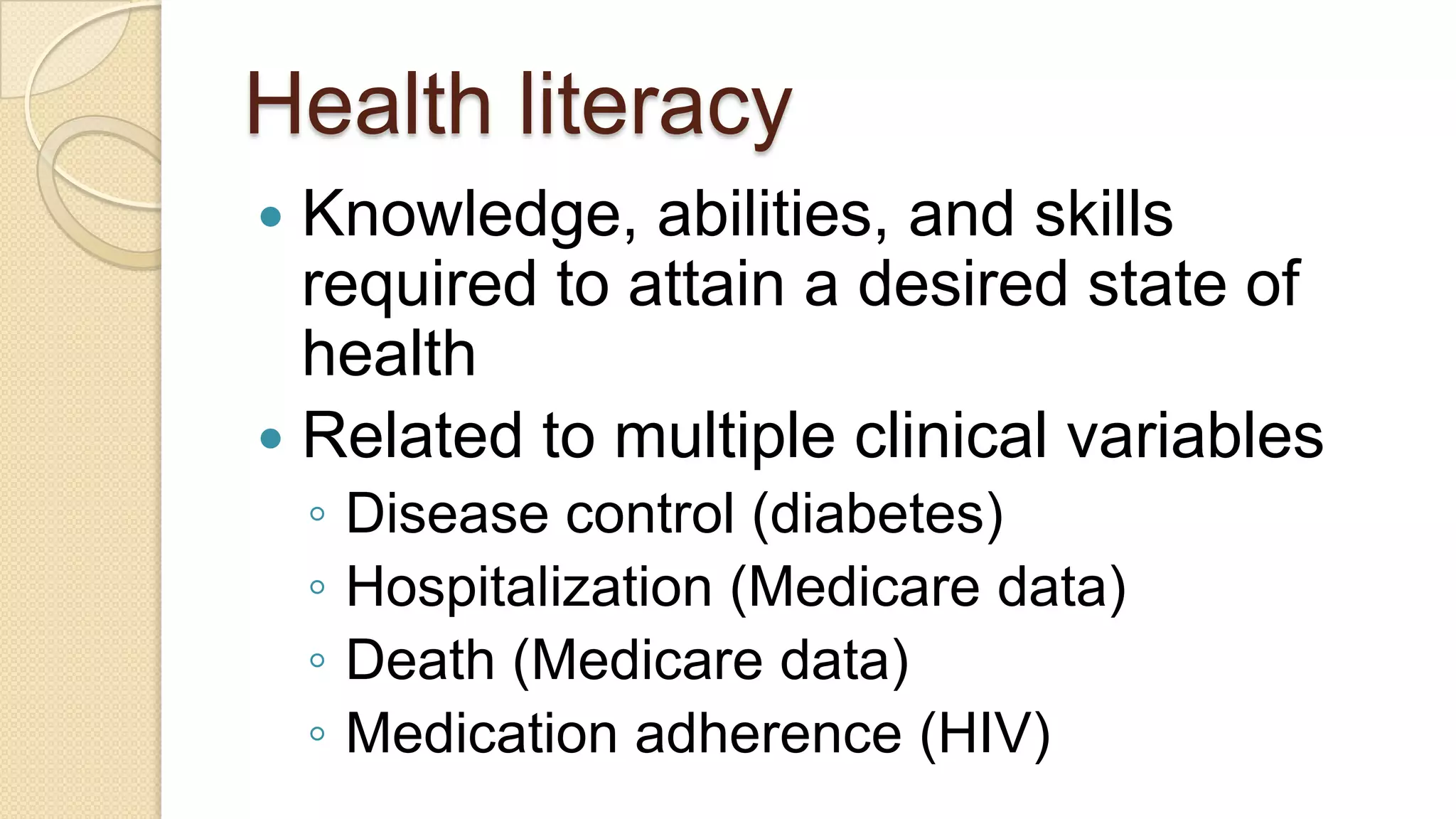
Health literacyKnowledge, abilities, and skills required to attain a desired state of healthRelated to multiple clinical variablesDisease control (diabetes)Hospitalization (Medicare data)Death (Medicare data)Medication adherence (HIV)
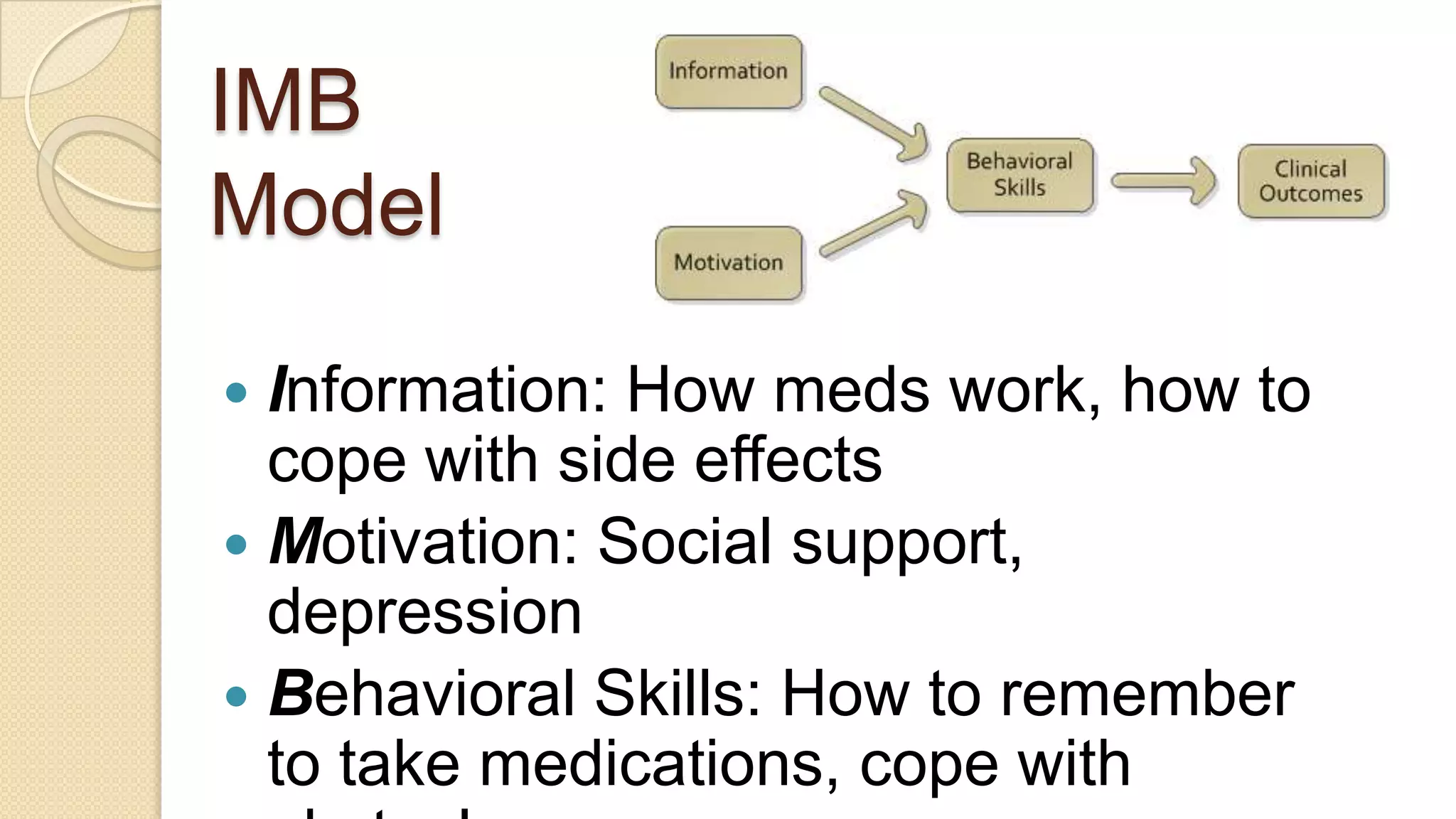
IMB ModelInformation: How meds work, how to cope with side effectsMotivation: Social support, depressionBehavioral Skills: How to remember to take medications, cope with obstacles
Tailored informationPersonalizationIndividualized feedbackEnhancing perceived relevanceIncreases impact on patient behavior 10%+ increase in dietary intake of fruits 10-15% improvement in adherence in older adults treated for memory problems
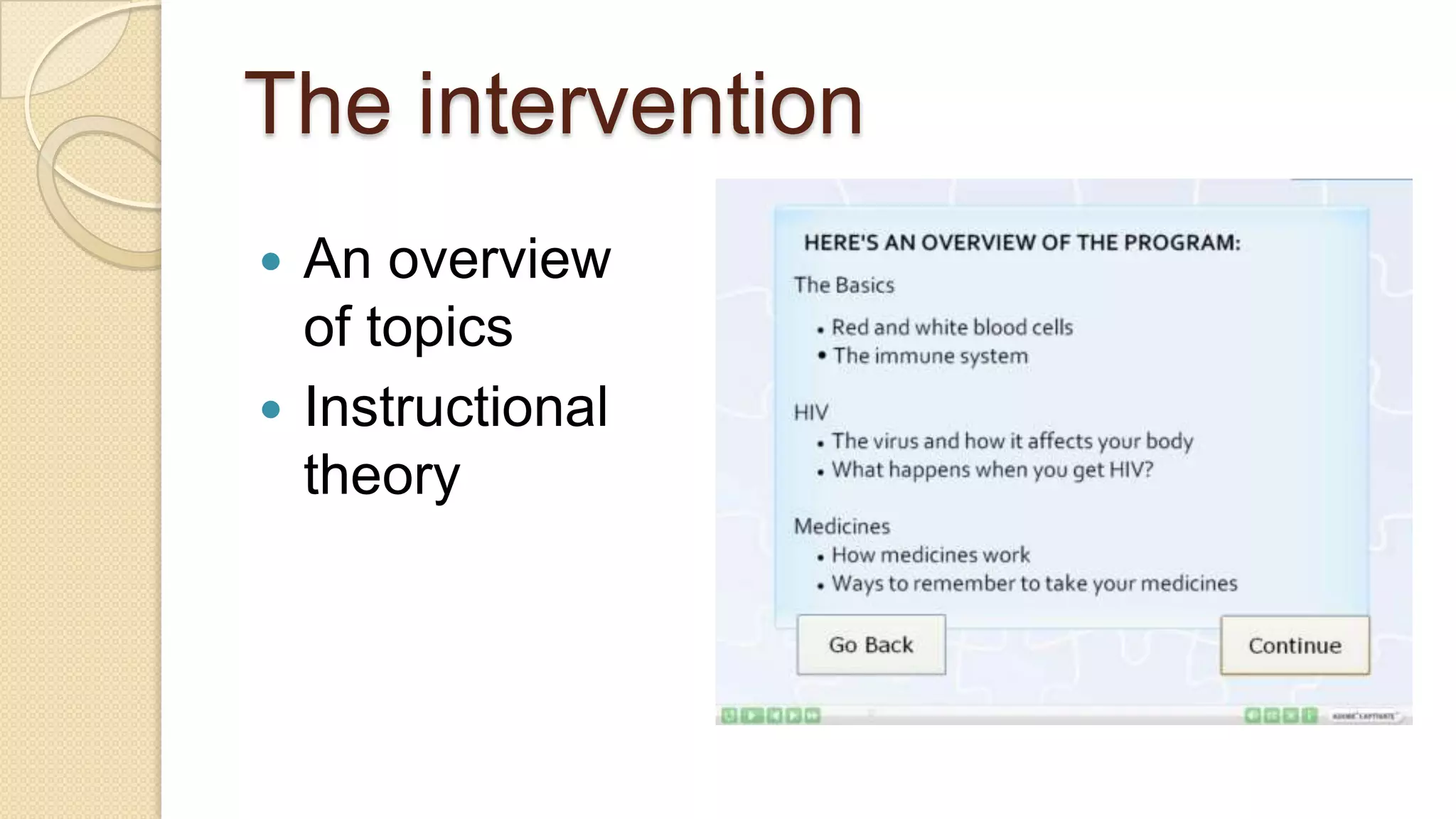
The interventionAn overview of topicsInstructional theory
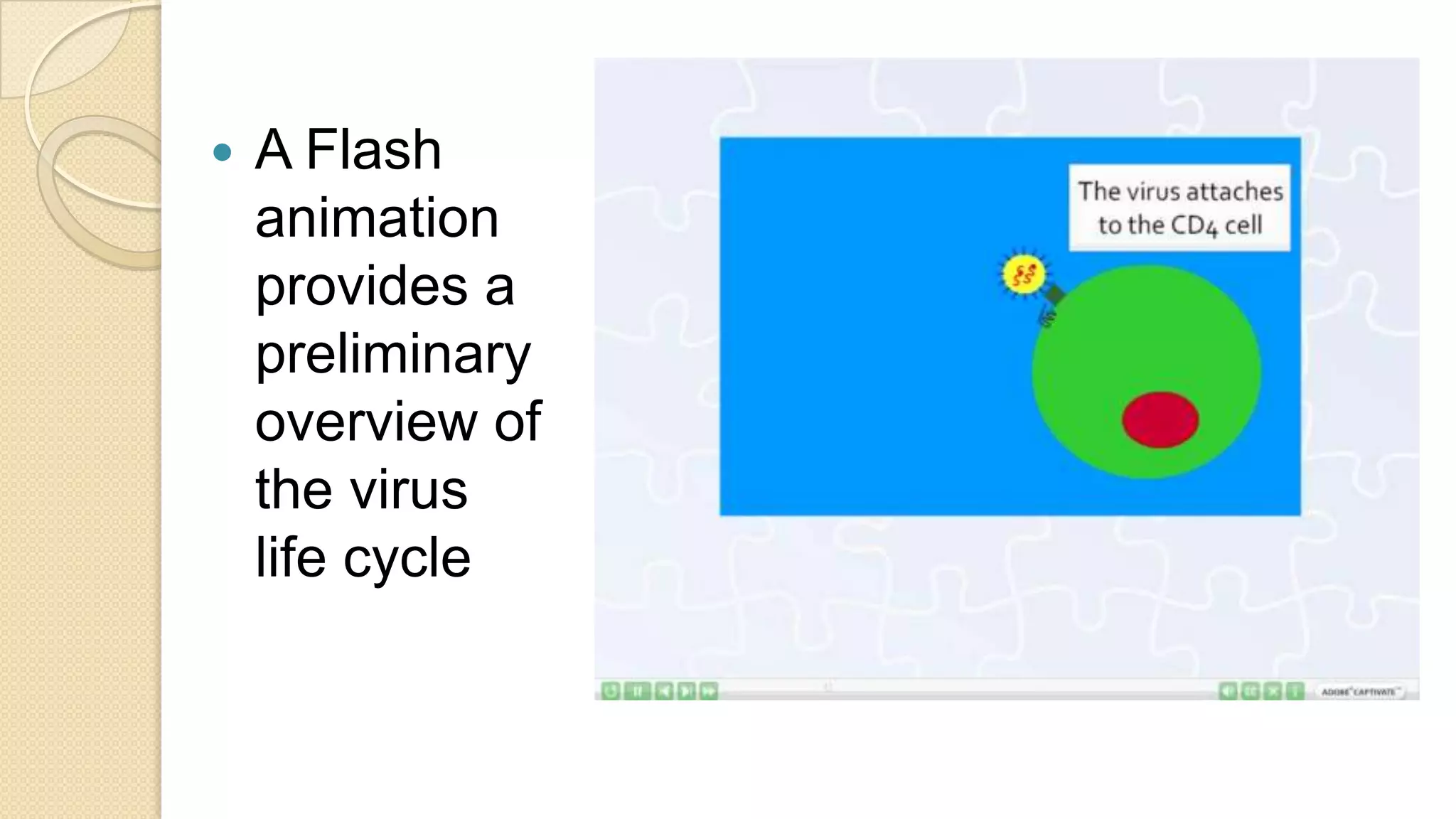
A Flash animation provides a preliminary overview of the virus life cycle
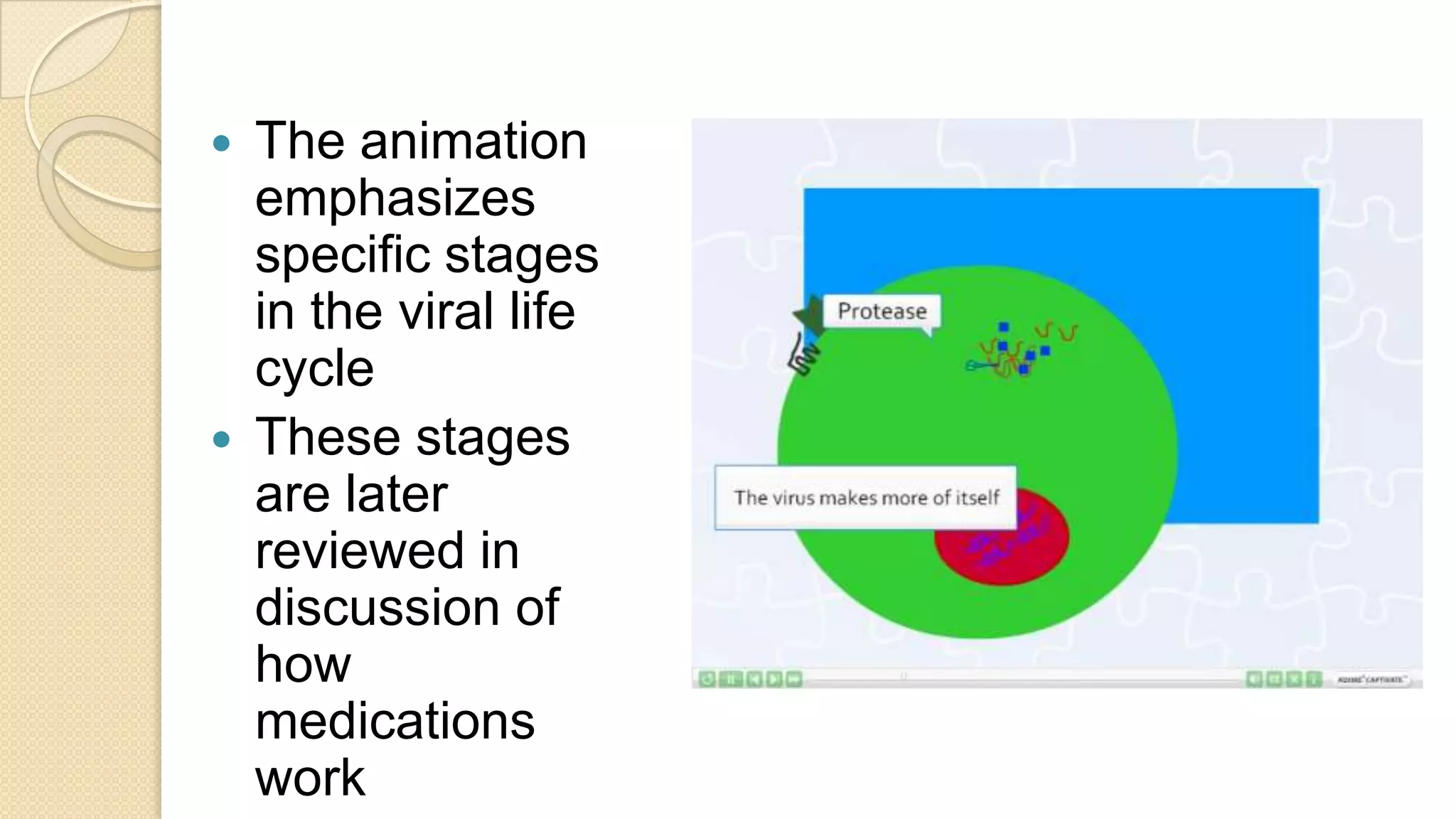
The animation emphasizes specific stages in the viral life cycleThese stages are later reviewed in discussion of how medications work
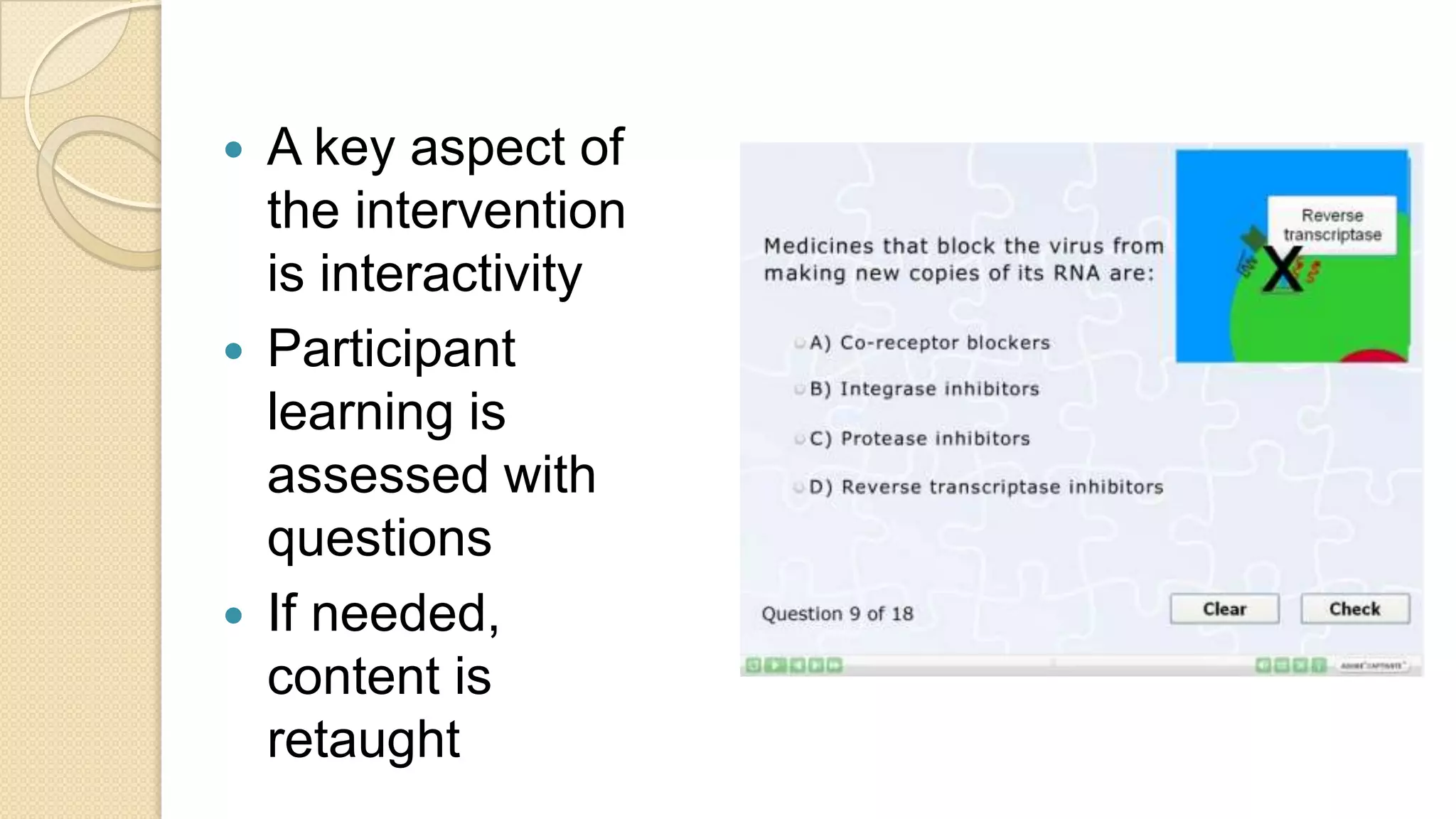
A key aspect of the intervention is interactivityParticipant learning is assessed with questionsIf needed, content is retaught
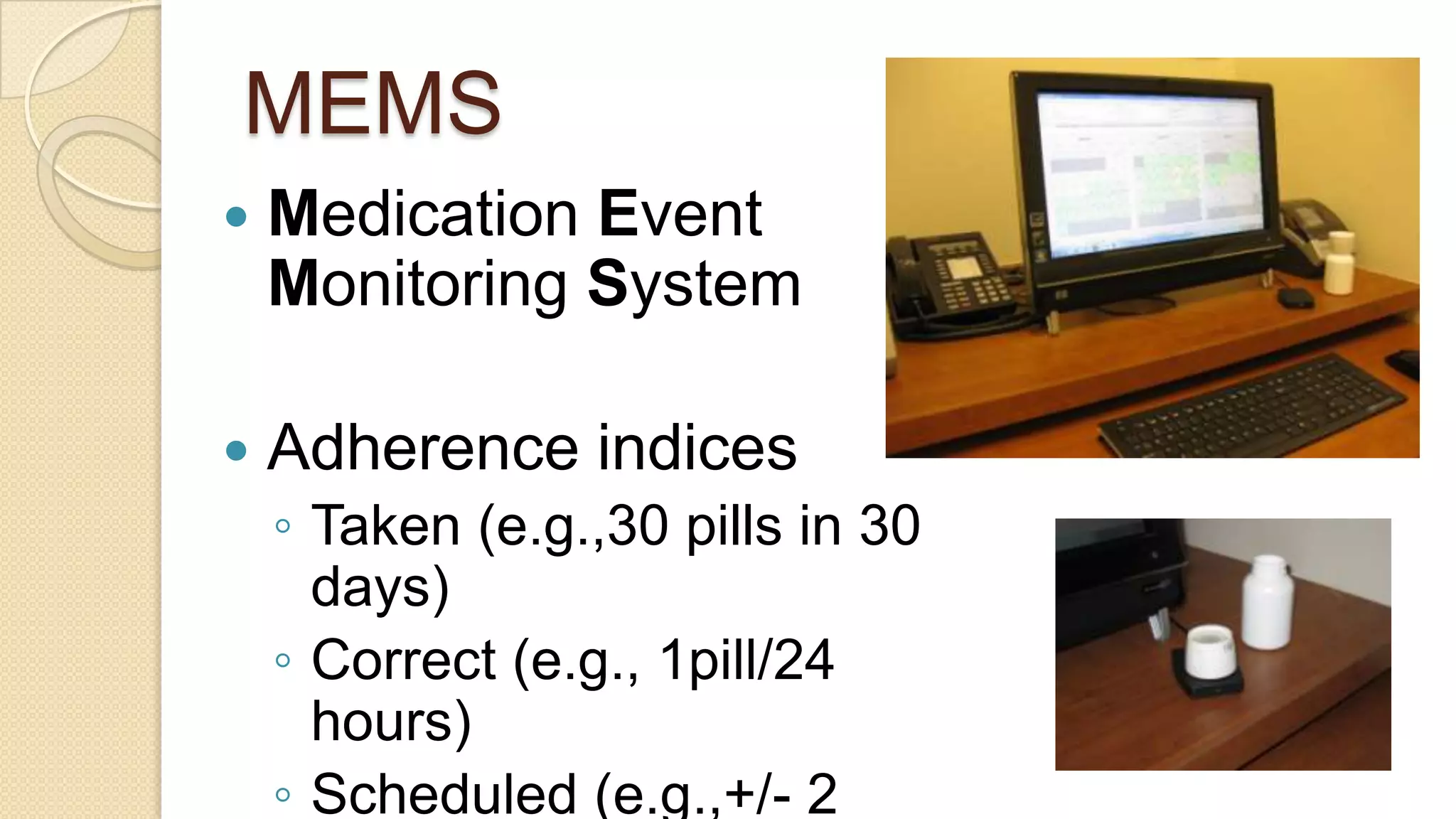
MEMSMedication Event Monitoring SystemAdherence indicesTaken (e.g.,30 pills in 30 days)Correct (e.g., 1pill/24 hours)Scheduled (e.g.,+/- 2 hours)
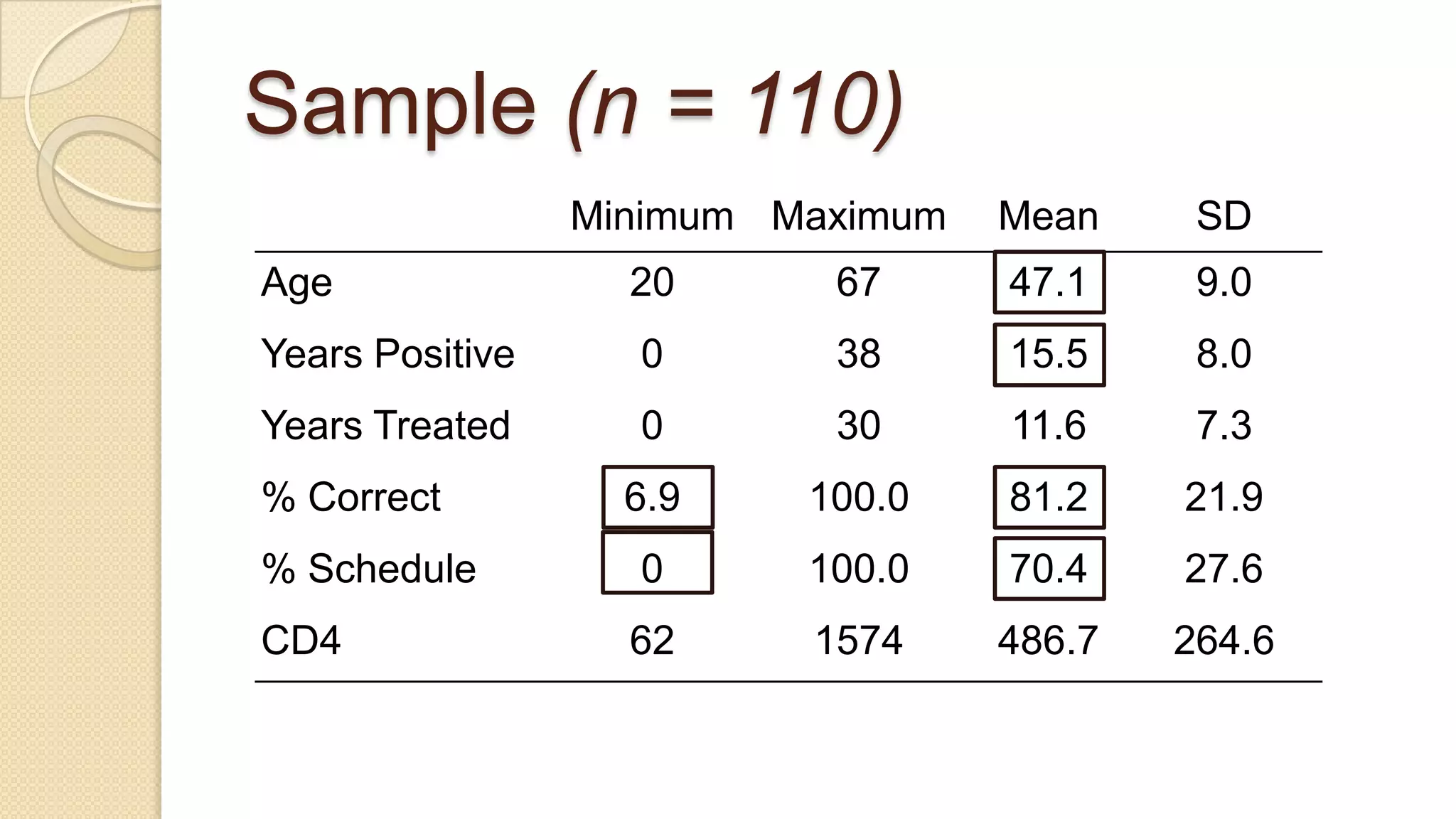
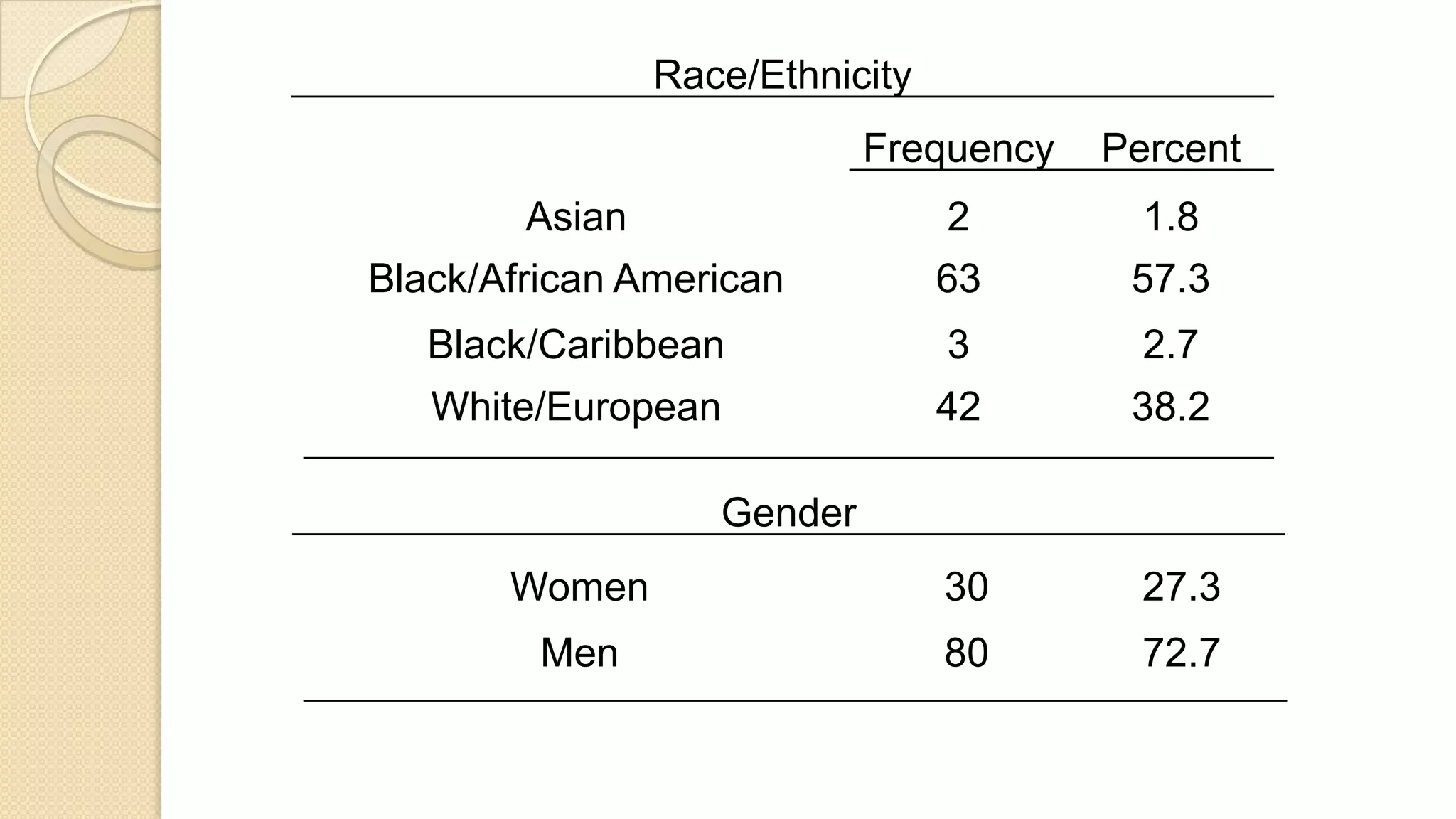
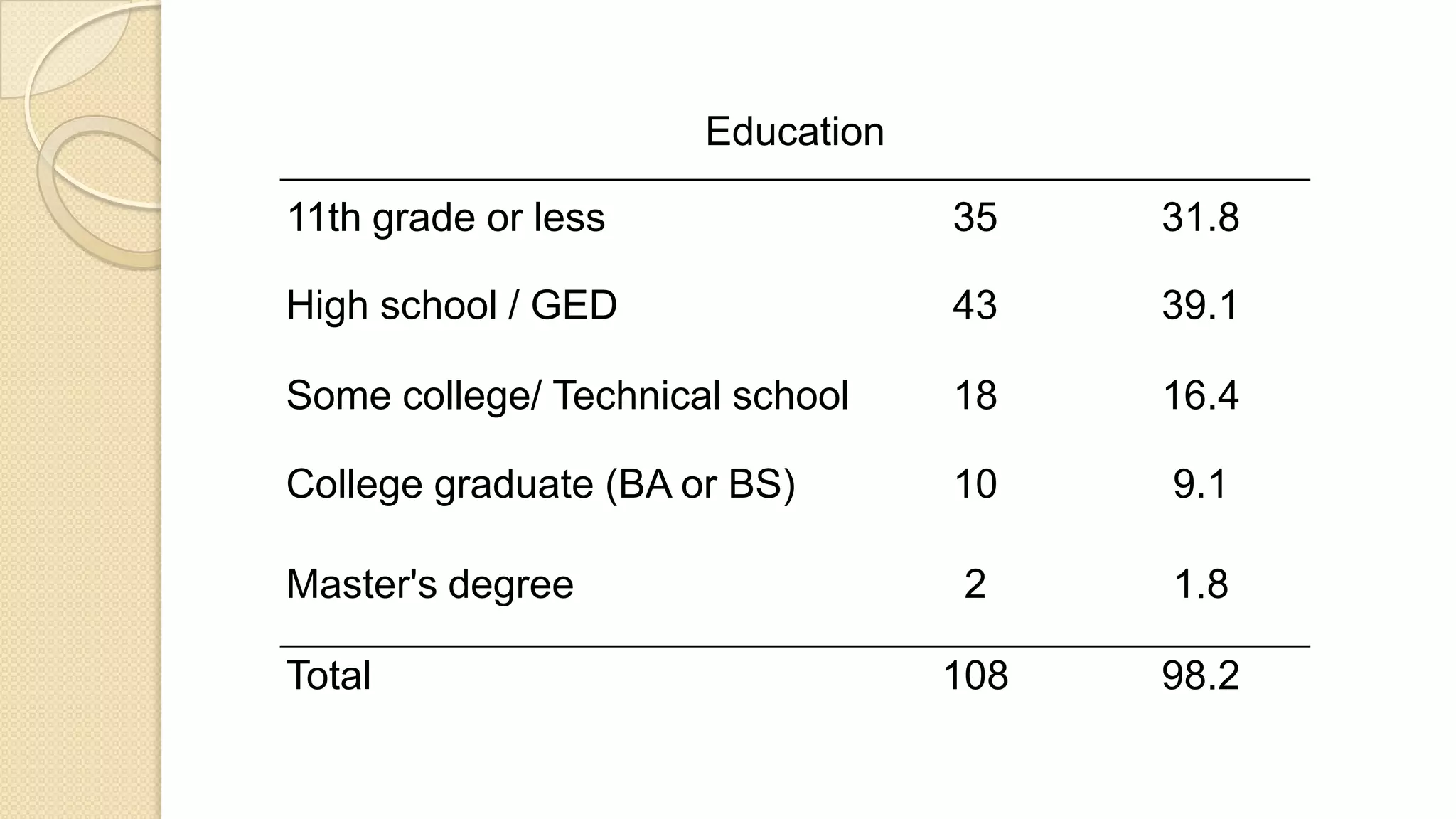
Sample (n = 110)
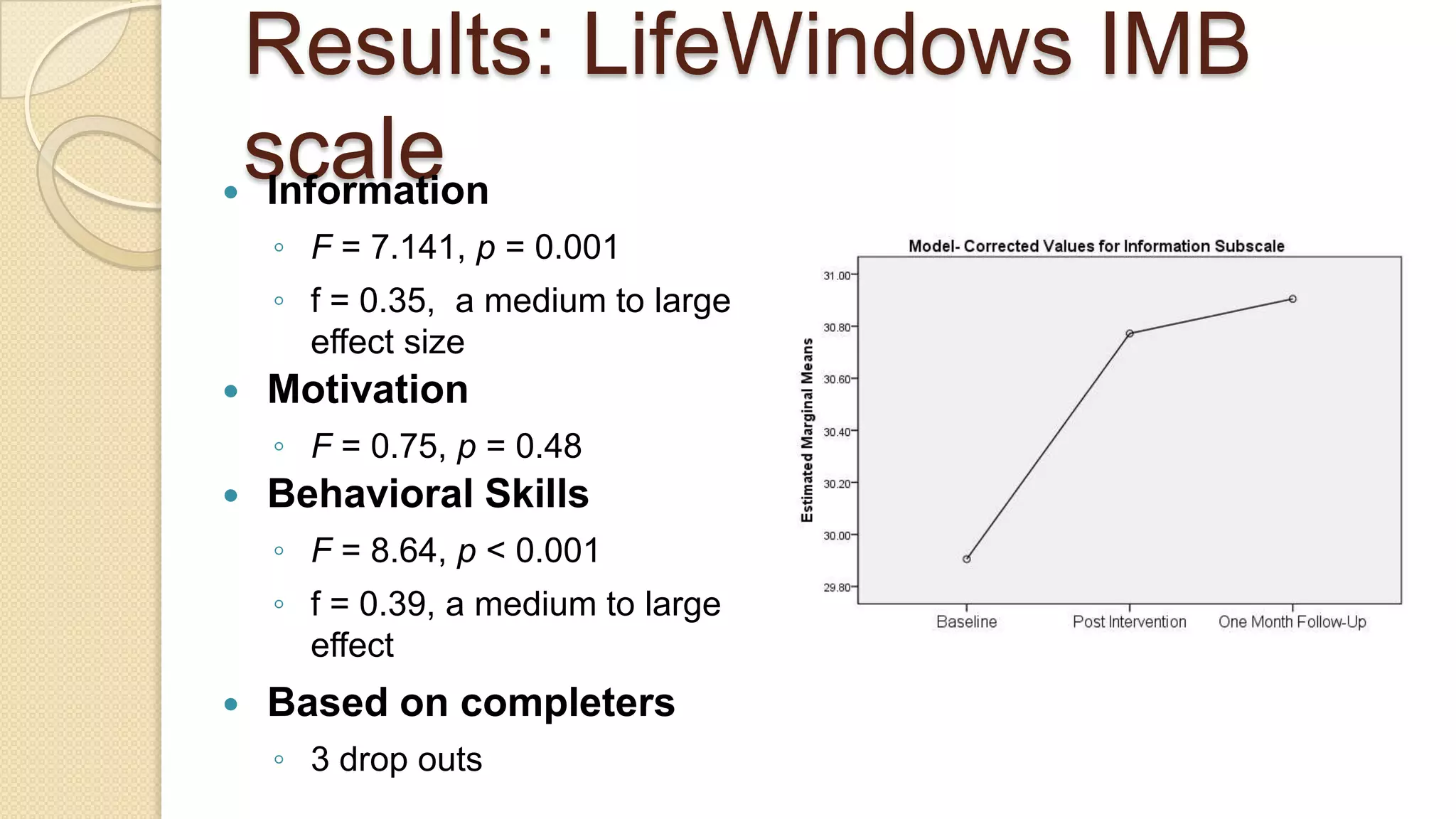
Results: LifeWindows IMB scaleInformationF= 7.141, p = 0.001 f = 0.35,  a medium to large effect sizeMotivationF= 0.75, p = 0.48Behavioral SkillsF= 8.64, p< 0.001 f = 0.39, a medium to large effectBased on completers3 drop outs
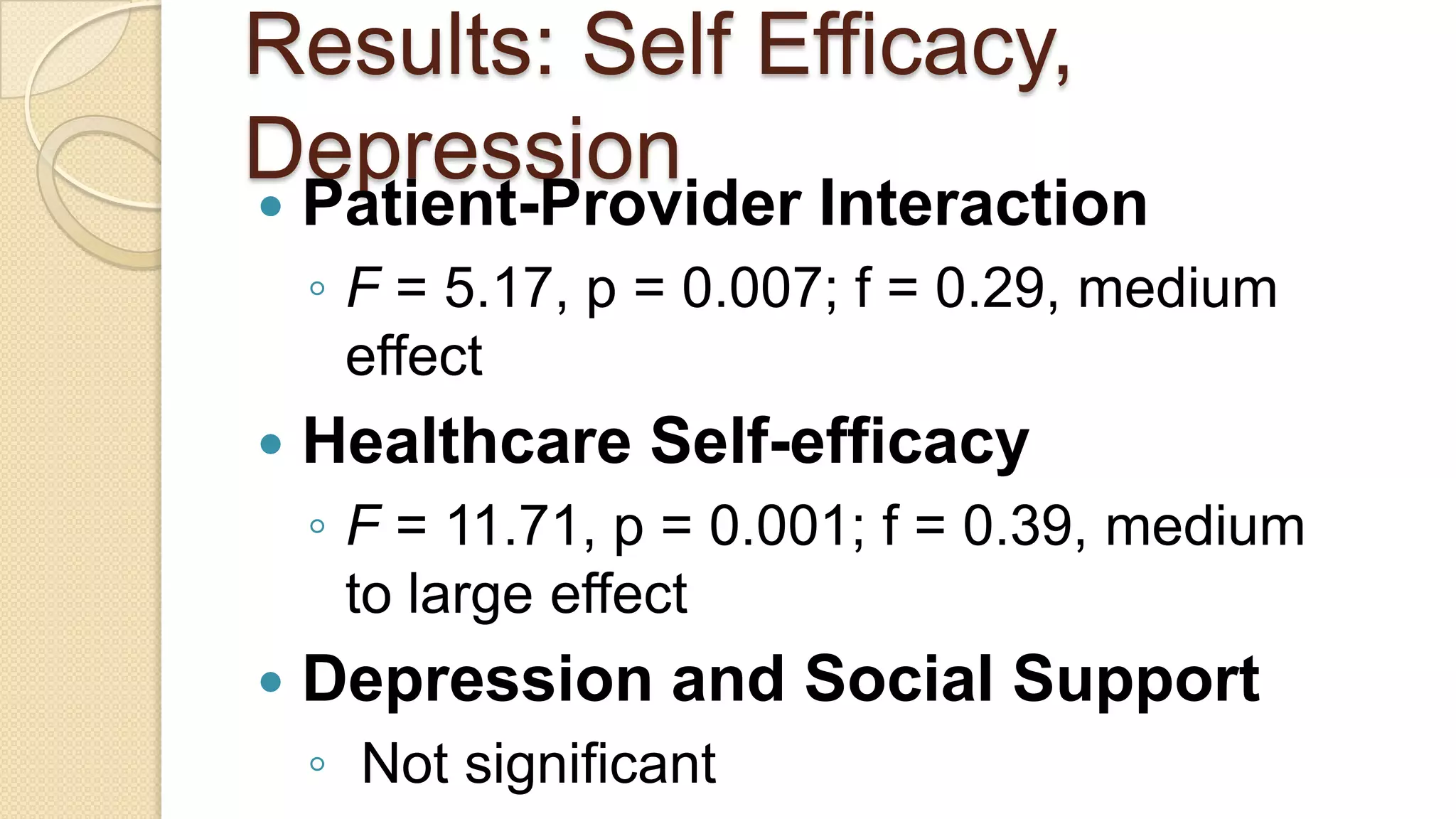
Results: Self Efficacy, DepressionPatient-Provider InteractionF= 5.17, p = 0.007; f = 0.29, medium effectHealthcare Self-efficacy F= 11.71, p = 0.001; f = 0.39, medium to large effectDepression and Social SupportNot significant
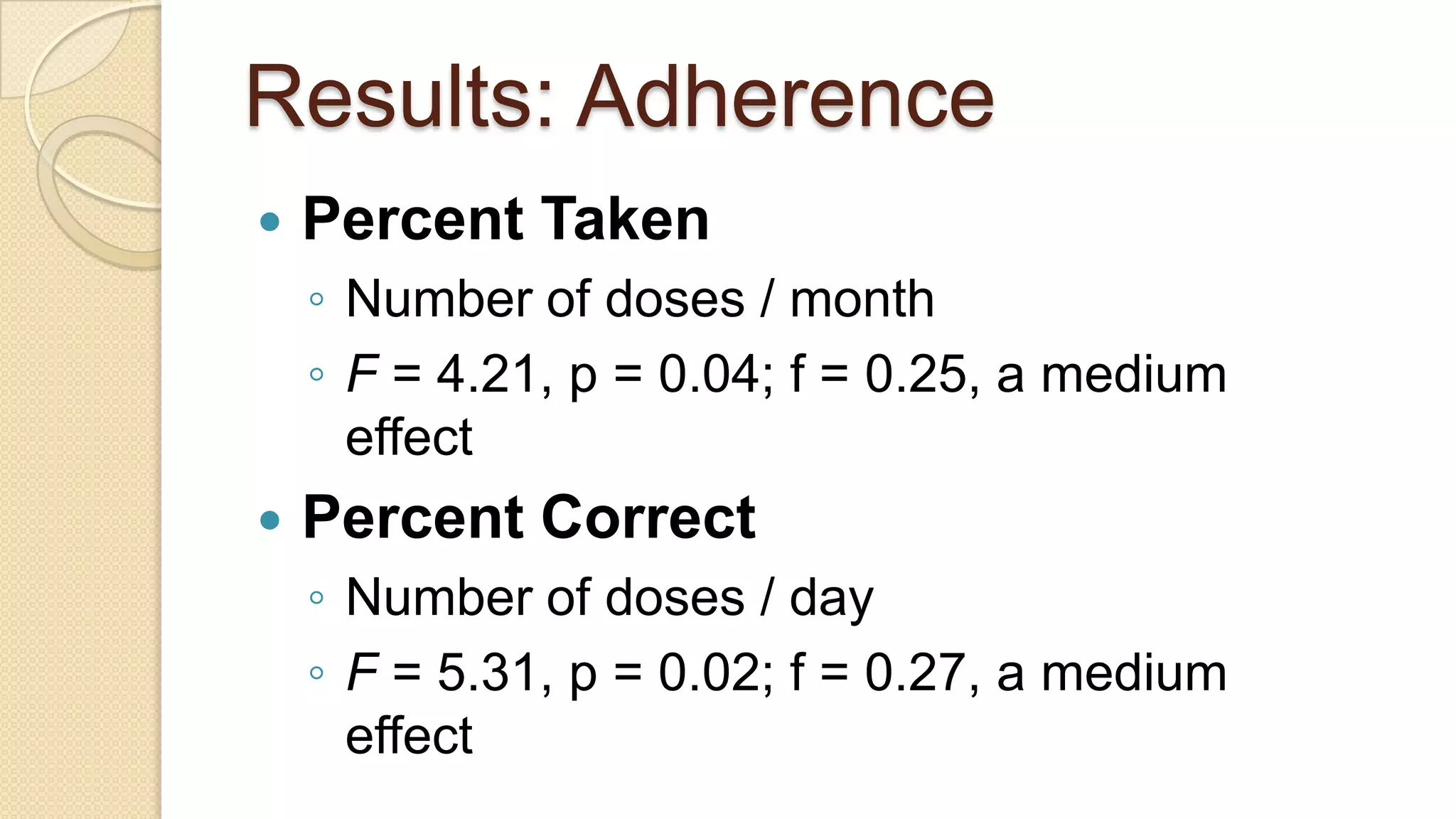
Results: AdherencePercent TakenNumber of doses / monthF= 4.21, p = 0.04; f = 0.25, a medium effectPercent CorrectNumber of doses / dayF= 5.31, p = 0.02; f = 0.27, a medium effect
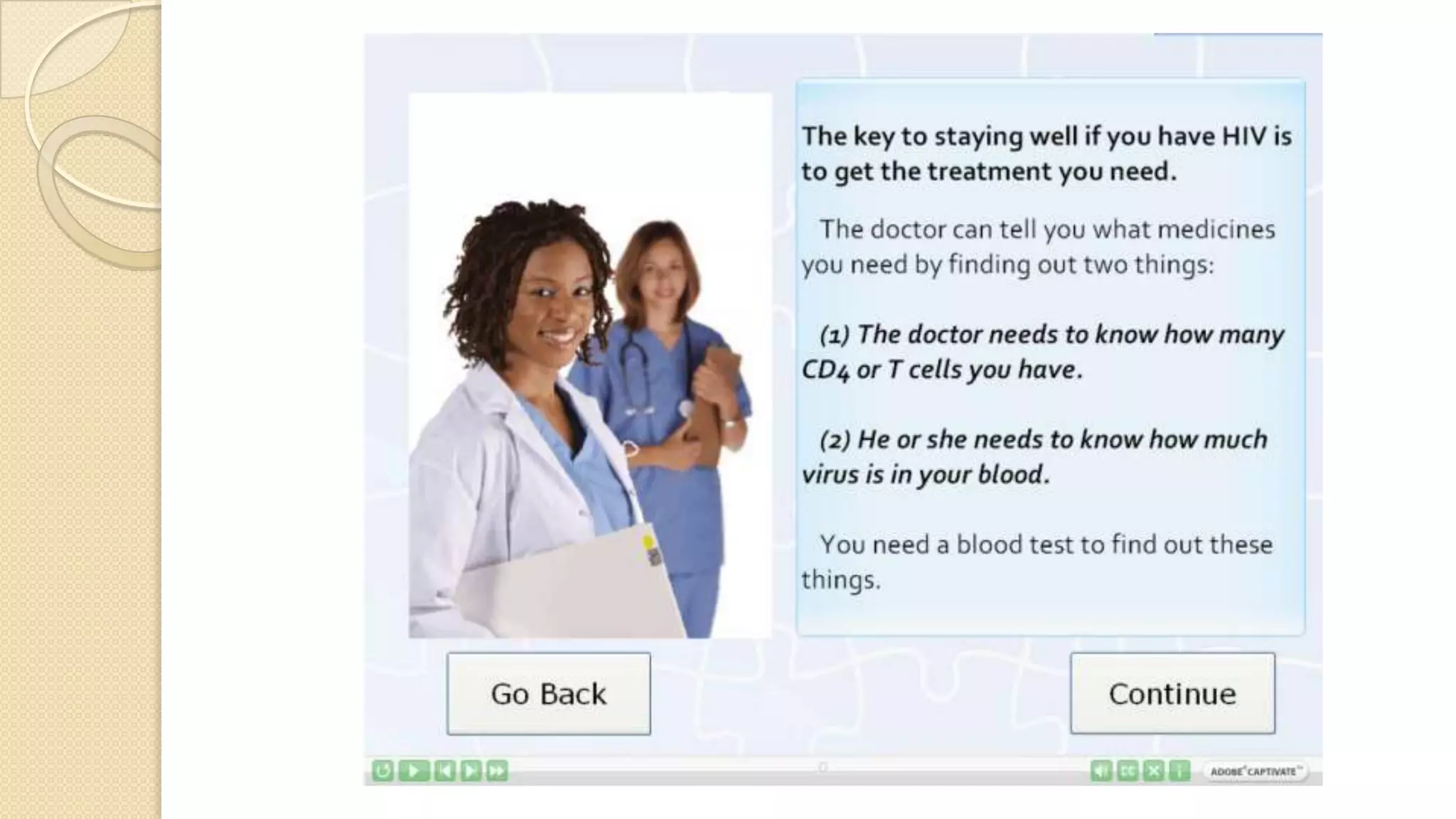
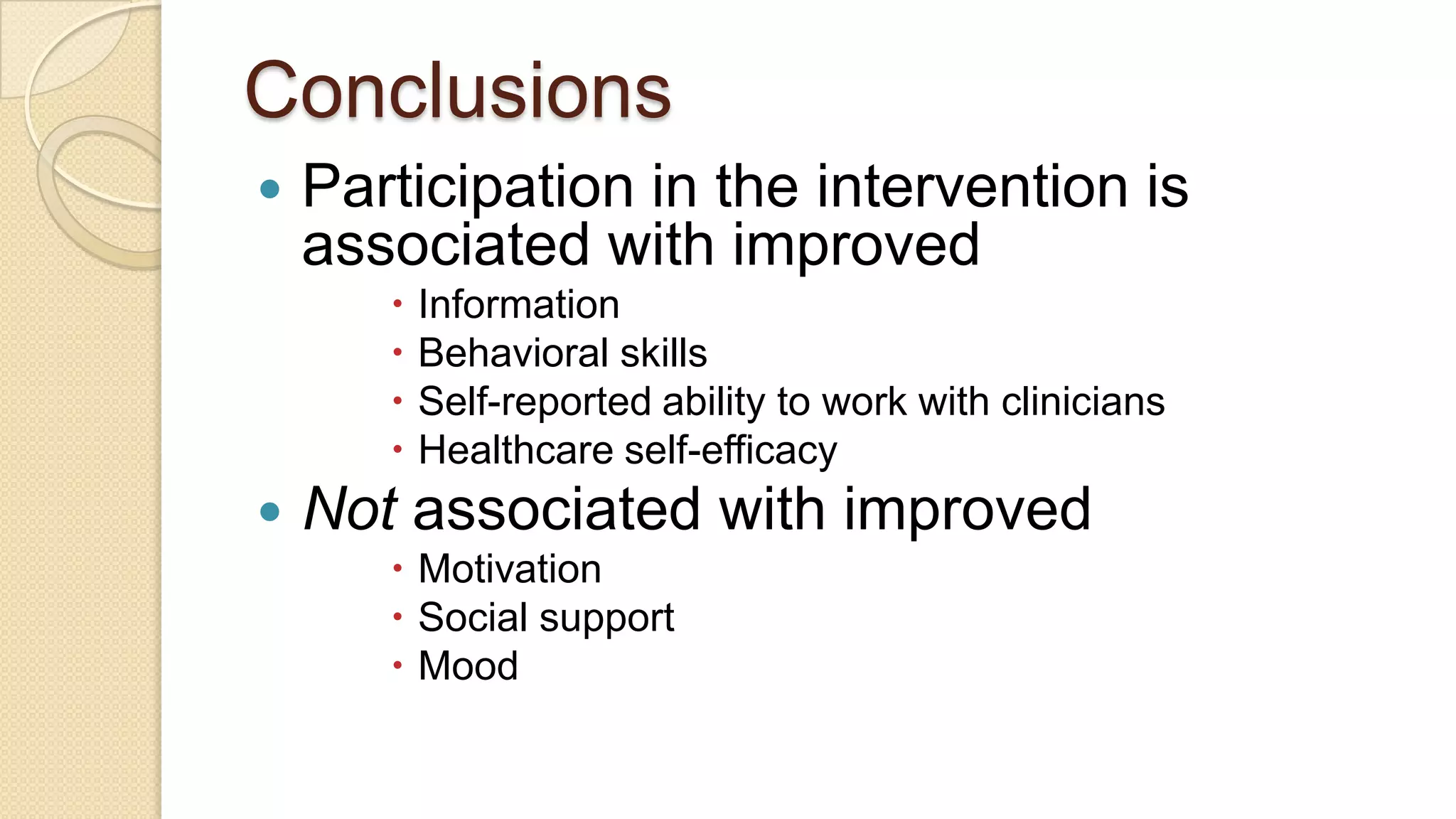
ConclusionsParticipation in the intervention is associated with improvedInformation Behavioral skills Self-reported ability to work with cliniciansHealthcare self-efficacyNot associated with improvedMotivationSocial supportMood
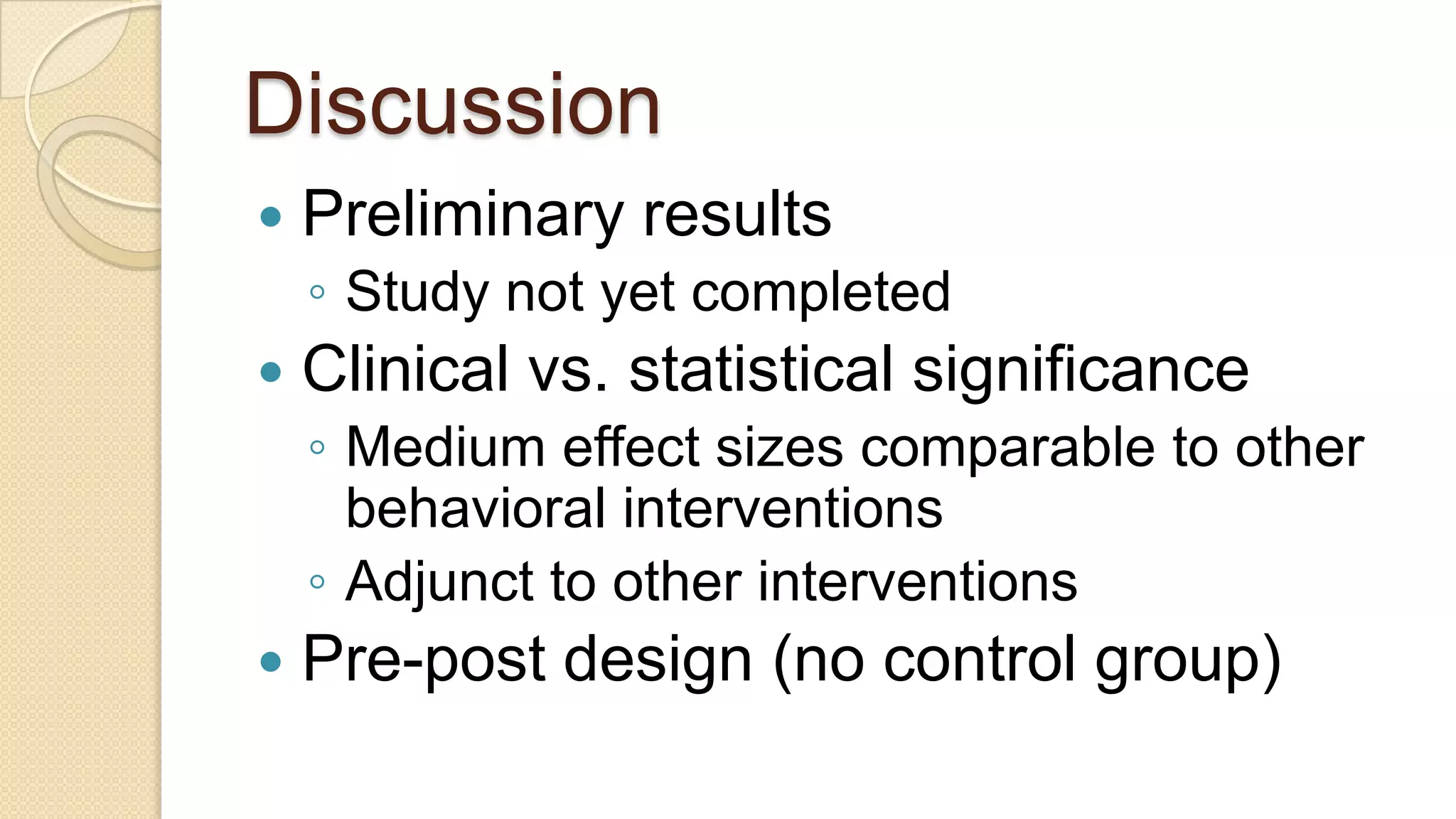
DiscussionPreliminary resultsStudy not yet completedClinical vs. statistical significanceMedium effect sizes comparable to other behavioral interventionsAdjunct to other interventionsPre-post design (no control group)
Future directionsOther languagesOther aspects of treatment adherenceAppointmentsDiet, exerciseOther disordersDiabetesCongestive heart failure
Support:Support for this study was provided by grant R21MH086491 to Dr. Ownby from the National Institute on Mental Health.
CollaboratorsDrenna Waldrop-Valverde, PhDJosh Caballero, PharmDRosemary Davenport, RN, MSN, ARNPRobin Jacobs, PhD

Development of a Computer-Based Tailored Information Application to Improve HIV-Related Treatment Adherence

  • 1.
    Development of aComputer-Based Tailored Information Application to Improve HIV-Related Treatment Adherence: Preliminary FindingsRaymond L Ownby, MD, PhDNova Southeastern UniversityFort Lauderdale FL
  • 2.
    Medication adherence inHIVAdherence needed to suppress viral replication= 80-95%Typical adherence = 60-70%Viral suppression  decreased risk of infecting othersViral suppression  better clinical outcomes
  • 3.
    Health literacyKnowledge, abilities,and skills required to attain a desired state of healthRelated to multiple clinical variablesDisease control (diabetes)Hospitalization (Medicare data)Death (Medicare data)Medication adherence (HIV)
  • 4.
    IMB ModelInformation: Howmeds work, how to cope with side effectsMotivation: Social support, depressionBehavioral Skills: How to remember to take medications, cope with obstacles
  • 5.
    Tailored informationPersonalizationIndividualized feedbackEnhancingperceived relevanceIncreases impact on patient behavior 10%+ increase in dietary intake of fruits 10-15% improvement in adherence in older adults treated for memory problems
  • 6.
    The interventionAn overviewof topicsInstructional theory
  • 7.
    A Flash animationprovides a preliminary overview of the virus life cycle
  • 8.
    The animation emphasizesspecific stages in the viral life cycleThese stages are later reviewed in discussion of how medications work
  • 9.
    A key aspectof the intervention is interactivityParticipant learning is assessed with questionsIf needed, content is retaught
  • 12.
    MEMSMedication Event MonitoringSystemAdherence indicesTaken (e.g.,30 pills in 30 days)Correct (e.g., 1pill/24 hours)Scheduled (e.g.,+/- 2 hours)
  • 13.
  • 16.
    Results: LifeWindows IMBscaleInformationF= 7.141, p = 0.001 f = 0.35, a medium to large effect sizeMotivationF= 0.75, p = 0.48Behavioral SkillsF= 8.64, p< 0.001 f = 0.39, a medium to large effectBased on completers3 drop outs
  • 17.
    Results: Self Efficacy,DepressionPatient-Provider InteractionF= 5.17, p = 0.007; f = 0.29, medium effectHealthcare Self-efficacy F= 11.71, p = 0.001; f = 0.39, medium to large effectDepression and Social SupportNot significant
  • 18.
    Results: AdherencePercent TakenNumberof doses / monthF= 4.21, p = 0.04; f = 0.25, a medium effectPercent CorrectNumber of doses / dayF= 5.31, p = 0.02; f = 0.27, a medium effect
  • 19.
    ConclusionsParticipation in theintervention is associated with improvedInformation Behavioral skills Self-reported ability to work with cliniciansHealthcare self-efficacyNot associated with improvedMotivationSocial supportMood
  • 20.
    DiscussionPreliminary resultsStudy notyet completedClinical vs. statistical significanceMedium effect sizes comparable to other behavioral interventionsAdjunct to other interventionsPre-post design (no control group)
  • 21.
    Future directionsOther languagesOtheraspects of treatment adherenceAppointmentsDiet, exerciseOther disordersDiabetesCongestive heart failure
  • 22.
    Support:Support for thisstudy was provided by grant R21MH086491 to Dr. Ownby from the National Institute on Mental Health.
  • 23.
    CollaboratorsDrenna Waldrop-Valverde, PhDJoshCaballero, PharmDRosemary Davenport, RN, MSN, ARNPRobin Jacobs, PhD