Electronic personal health records for patients on home parenteral 
nutrition: A patient satisfaction survey 
Tim Ambrose1, Rabia Topan2, Mia Small1, Jeremy MD Nightingale1, Simon M Gabe1 
1Lennard-Jones Intestinal Failure Unit, St Mark’s Hospital, London, United Kingdom 2Northwick Park Hospital, London, United Kingdom 
Introduction 
The public demand for flexible access to health information 
& services is growing, encouraged by internet trends & 
policies promoting patient involvement. Patients Know Best® 
(PKB) is an electronic patient centred system providing a 
secure forum for patients to interact with their healthcare 
teams. 
Aim 
To assess satisfaction with PKB amongst our cohort of home 
parenteral nutrition patients. 
Method 
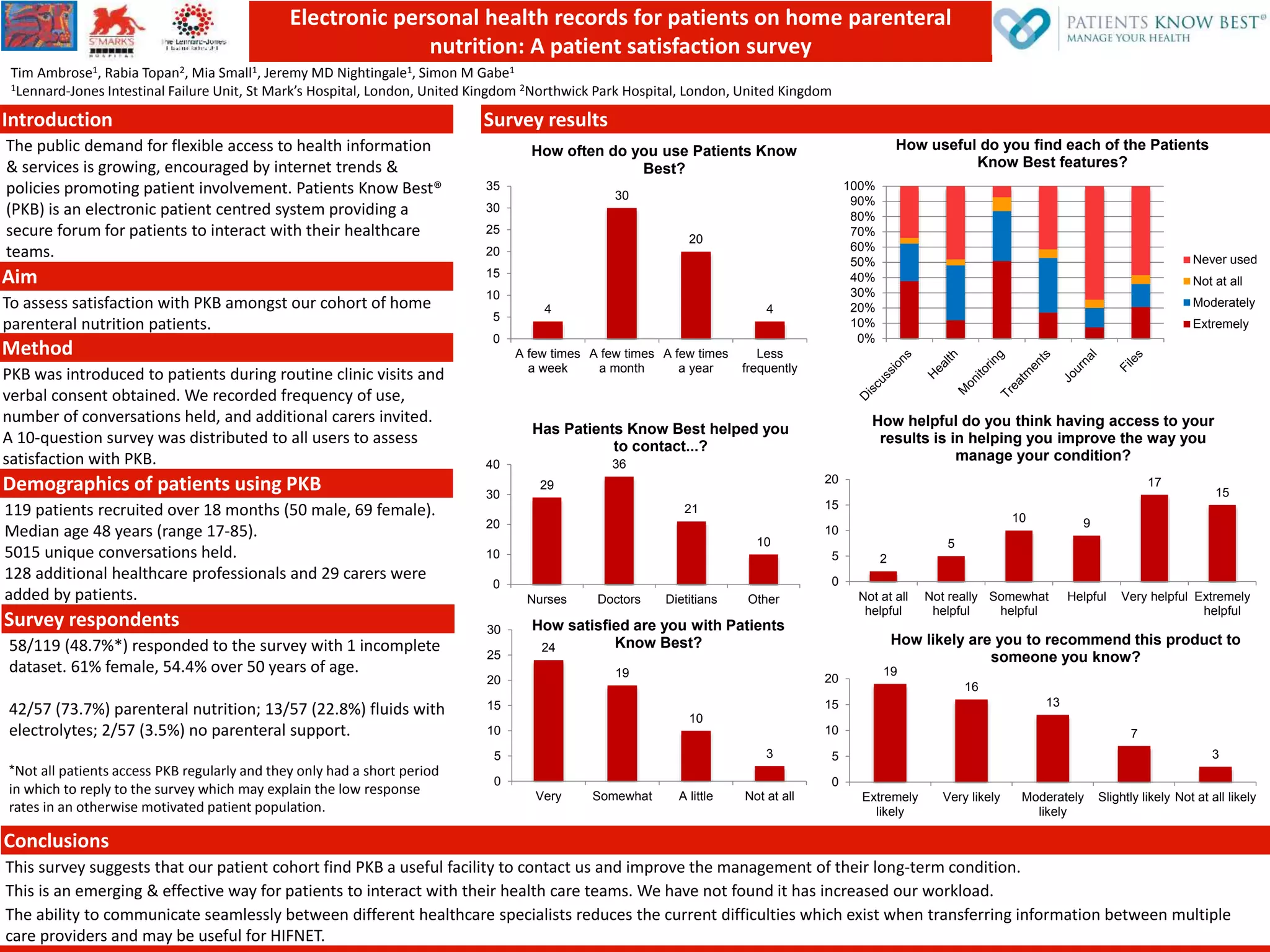
Survey results 
PKB was introduced to patients during routine clinic visits and 
verbal consent obtained. We recorded frequency of use, 
number of conversations held, and additional carers invited. 
A 10-question survey was distributed to all users to assess 
satisfaction with PKB. 
Demographics of patients using PKB 
119 patients recruited over 18 months (50 male, 69 female). 
Median age 48 years (range 17-85). 
5015 unique conversations held. 
128 additional healthcare professionals and 29 carers were 
added by patients. 
Survey respondents 
58/119 (48.7%*) responded to the survey with 1 incomplete 
dataset. 61% female, 54.4% over 50 years of age. 
42/57 (73.7%) parenteral nutrition; 13/57 (22.8%) fluids with 
electrolytes; 2/57 (3.5%) no parenteral support. 
*Not all patients access PKB regularly and they only had a short period 
in which to reply to the survey which may explain the low response 
rates in an otherwise motivated patient population. 
Conclusions 
How often do you use Patients Know 
4 
30 
20 
4 
A few times 
a week 
Best? 
A few times 
a month 
A few times 
a year 
Less 
frequently 
Has Patients Know Best helped you 
29 
to contact...? 
36 
21 
10 
Nurses Doctors Dietitians Other 
How satisfied are you with Patients 
24 
Know Best? 
19 
10 
3 
35 
30 
25 
20 
15 
10 
5 
0 
40 
30 
20 
10 
0 
30 
25 
20 
15 
10 
5 
0 
Very Somewhat A little Not at all 
100% 
90% 
80% 
70% 
60% 
50% 
40% 
30% 
20% 
10% 
0% 
How useful do you find each of the Patients 
Know Best features? 
Never used 
Not at all 
Moderately 
Extremely 
How helpful do you think having access to your 
results is in helping you improve the way you 
5 
manage your condition? 
10 9 
17 
15 
Not at all 
helpful 
Not really 
helpful 
Somewhat 
helpful 
Helpful Very helpful Extremely 
helpful 
How likely are you to recommend this product to 
2 
19 
16 
someone you know? 
13 
7 
3 
20 
15 
10 
5 
0 
20 
15 
10 
5 
0 
Extremely 
likely 
Very likely Moderately 
likely 
Slightly likely Not at all likely 
This survey suggests that our patient cohort find PKB a useful facility to contact us and improve the management of their long-term condition. 
This is an emerging & effective way for patients to interact with their health care teams. We have not found it has increased our workload. 
The ability to communicate seamlessly between different healthcare specialists reduces the current difficulties which exist when transferring information between multiple 
care providers and may be useful for HIFNET.

PKB Satisfaction St. Mark's Study

  • 1.
    Electronic personal healthrecords for patients on home parenteral nutrition: A patient satisfaction survey Tim Ambrose1, Rabia Topan2, Mia Small1, Jeremy MD Nightingale1, Simon M Gabe1 1Lennard-Jones Intestinal Failure Unit, St Mark’s Hospital, London, United Kingdom 2Northwick Park Hospital, London, United Kingdom Introduction The public demand for flexible access to health information & services is growing, encouraged by internet trends & policies promoting patient involvement. Patients Know Best® (PKB) is an electronic patient centred system providing a secure forum for patients to interact with their healthcare teams. Aim To assess satisfaction with PKB amongst our cohort of home parenteral nutrition patients. Method Survey results PKB was introduced to patients during routine clinic visits and verbal consent obtained. We recorded frequency of use, number of conversations held, and additional carers invited. A 10-question survey was distributed to all users to assess satisfaction with PKB. Demographics of patients using PKB 119 patients recruited over 18 months (50 male, 69 female). Median age 48 years (range 17-85). 5015 unique conversations held. 128 additional healthcare professionals and 29 carers were added by patients. Survey respondents 58/119 (48.7%*) responded to the survey with 1 incomplete dataset. 61% female, 54.4% over 50 years of age. 42/57 (73.7%) parenteral nutrition; 13/57 (22.8%) fluids with electrolytes; 2/57 (3.5%) no parenteral support. *Not all patients access PKB regularly and they only had a short period in which to reply to the survey which may explain the low response rates in an otherwise motivated patient population. Conclusions How often do you use Patients Know 4 30 20 4 A few times a week Best? A few times a month A few times a year Less frequently Has Patients Know Best helped you 29 to contact...? 36 21 10 Nurses Doctors Dietitians Other How satisfied are you with Patients 24 Know Best? 19 10 3 35 30 25 20 15 10 5 0 40 30 20 10 0 30 25 20 15 10 5 0 Very Somewhat A little Not at all 100% 90% 80% 70% 60% 50% 40% 30% 20% 10% 0% How useful do you find each of the Patients Know Best features? Never used Not at all Moderately Extremely How helpful do you think having access to your results is in helping you improve the way you 5 manage your condition? 10 9 17 15 Not at all helpful Not really helpful Somewhat helpful Helpful Very helpful Extremely helpful How likely are you to recommend this product to 2 19 16 someone you know? 13 7 3 20 15 10 5 0 20 15 10 5 0 Extremely likely Very likely Moderately likely Slightly likely Not at all likely This survey suggests that our patient cohort find PKB a useful facility to contact us and improve the management of their long-term condition. This is an emerging & effective way for patients to interact with their health care teams. We have not found it has increased our workload. The ability to communicate seamlessly between different healthcare specialists reduces the current difficulties which exist when transferring information between multiple care providers and may be useful for HIFNET.