Developing Infection
Prevention and
Control Policies in
Primary Health Care
Ensuring patient and healthcare worker safety
dr. I Putu Cahya Legawa
Presentation Overview
Importance of Infection Prevention and Control Policies
Infection prevention and control policies are critical to
reducing the spread of infections in primary healthcare
settings and protecting patients and healthcare workers.
Steps for Developing Infection Prevention and Control
Policies
Developing infection prevention and control policies involves
assessing the risks and vulnerabilities in primary healthcare
settings, developing policies and procedures, and training
and educating staff.
Strategies for Implementing and Evaluating Policies
Implementing and evaluating infection prevention and control
policies requires identifying the barriers to implementation,
engaging stakeholders, monitoring compliance, and
continuously evaluating the effectiveness of the policies.
The Importance of
Infection Prevention
and Control Policies
Patient Safety
Infection prevention and control policies are essential
to ensure the safety of patients in primary healthcare
settings. These policies reduce the risk of healthcare-
associated infections and protect vulnerable patients
from harm.
Healthcare Worker Safety
Infection prevention and control policies are also
important for the safety of healthcare workers. These
policies reduce the risk of occupational exposure to
infectious diseases and protect healthcare workers from
harm.
Why Infection
Prevention and
Control
Policies are
Important
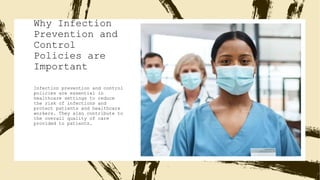
Infection prevention and control
policies are essential in
healthcare settings to reduce
the risk of infections and
protect patients and healthcare
workers. They also contribute to
the overall quality of care
provided to patients.
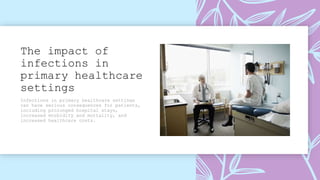
The impact of
infections in
primary healthcare
settings
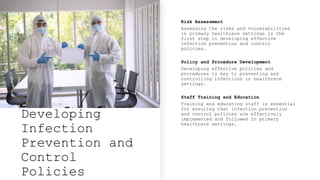
Developing
Infection
Prevention and
Control
Policies
Risk Assessment
Assessing the risks and vulnerabilities
in primary healthcare settings is the
first step in developing effective
infection prevention and control
policies.
Policy and Procedure Development
Developing effective policies and
procedures is key to preventing and
controlling infections in healthcare
settings.
Staff Training and Education
Training and educating staff is essential
for ensuring that infection prevention
and control policies are effectively
implemented and followed in primary
healthcare settings.
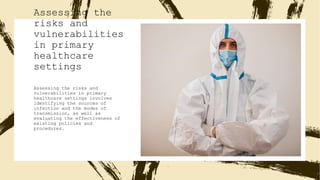
Assessing the
risks and
vulnerabilities
in primary
healthcare
settings
Assessing the risks and
vulnerabilities in primary
healthcare settings involves
identifying the sources of
infection and the modes of
transmission, as well as
evaluating the effectiveness of
existing policies and
procedures.
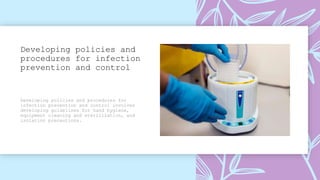
Developing policies and
procedures for infection
prevention and control
Training and
educating staff on
infection
prevention and
control policies
Modes of Transmission of Infections
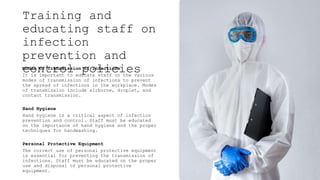
It is important to educate staff on the various
modes of transmission of infections to prevent
the spread of infections in the workplace. Modes
of transmission include airborne, droplet, and
contact transmission.
Hand Hygiene
Hand hygiene is a critical aspect of infection
prevention and control. Staff must be educated
on the importance of hand hygiene and the proper
techniques for handwashing.
Personal Protective Equipment
The correct use of personal protective equipment
is essential for preventing the transmission of
infections. Staff must be educated on the proper
use and disposal of personal protective
equipment.
Implementing
and Evaluating
Infection
Prevention and
Control
Policies
Developing Strategies for Implementation
Developing effective strategies for the
implementation of infection prevention
and control policies is crucial for
improving patient safety and reducing
healthcare-associated infections.
Monitoring Compliance
Monitoring compliance with infection
prevention and control policies is
essential for ensuring that policies are
being followed and for identifying
opportunities for improvement.
Evaluating Effectiveness
Evaluating the effectiveness of infection
prevention and control policies is
critical for identifying areas for
improvement and ensuring that policies
are achieving their intended outcomes.
Strategies for
Implementing
Infection
Prevention and
Control
Policies
Promoting Compliance
Promoting compliance with infection prevention and
control policies is key to preventing the spread
of infections. This can be achieved by educating
staff and patients, providing clear guidelines,
and monitoring compliance.
Providing Feedback and Support
Providing feedback and support to staff is
essential in ensuring that infection prevention
and control policies are implemented effectively.
This can be done by providing regular updates,
addressing concerns and questions, and recognizing
good performance.
Establishing a Culture of Safety
Establishing a culture of safety is crucial in
maintaining effective infection prevention and
control policies. This can be achieved by
promoting open communication, encouraging
reporting of incidents and near misses, and
providing a supportive work environment.
Monitoring and Evaluating
Effectiveness of Infection
Prevention and Control
Policies
Assess Compliance with Policies
Assessing compliance with policies is an important step in monitoring and evaluating the
effectiveness of infection prevention and control policies. This can be done through
regular audits, observations, and staff interviews.
Monitor Infection Rates
Monitoring infection rates is a critical part of monitoring and evaluating the
effectiveness of infection prevention and control policies. This involves tracking the
incidence of healthcare-associated infections over time and across different units of a
healthcare facility.
Evaluate Impact on Patient Outcomes
Evaluating the impact of infection prevention and control policies on patient outcomes is
key to determining their effectiveness. This can be done by comparing infection rates,
patient satisfaction, and other outcome measures before and after the implementation of
policies.
Conclusion
Importance of Infection Prevention and Control Policies
Developing infection prevention and control policies is crucial to ensure the safety of
patients and healthcare workers in primary healthcare settings.
Steps Involved in Developing Infection Prevention and Control Policies
Developing infection prevention and control policies involves several steps that include
conducting a risk assessment, identifying potential infection sources, and developing
policies and procedures to prevent and control infections.
Strategies for Implementing and Evaluating Infection Prevention and Control Policies
Implementing and evaluating infection prevention and control policies requires a
systematic approach that involves training healthcare workers, monitoring compliance, and
regularly evaluating policies and procedures to make necessary improvements.

Developing Infection Prevention and Control Policies in Primary

  • 1.
    Developing Infection Prevention and ControlPolicies in Primary Health Care Ensuring patient and healthcare worker safety dr. I Putu Cahya Legawa
  • 2.
    Presentation Overview Importance ofInfection Prevention and Control Policies Infection prevention and control policies are critical to reducing the spread of infections in primary healthcare settings and protecting patients and healthcare workers. Steps for Developing Infection Prevention and Control Policies Developing infection prevention and control policies involves assessing the risks and vulnerabilities in primary healthcare settings, developing policies and procedures, and training and educating staff. Strategies for Implementing and Evaluating Policies Implementing and evaluating infection prevention and control policies requires identifying the barriers to implementation, engaging stakeholders, monitoring compliance, and continuously evaluating the effectiveness of the policies.
  • 3.
    The Importance of InfectionPrevention and Control Policies Patient Safety Infection prevention and control policies are essential to ensure the safety of patients in primary healthcare settings. These policies reduce the risk of healthcare- associated infections and protect vulnerable patients from harm. Healthcare Worker Safety Infection prevention and control policies are also important for the safety of healthcare workers. These policies reduce the risk of occupational exposure to infectious diseases and protect healthcare workers from harm.
  • 4.
    Why Infection Prevention and Control Policiesare Important Infection prevention and control policies are essential in healthcare settings to reduce the risk of infections and protect patients and healthcare workers. They also contribute to the overall quality of care provided to patients.
  • 5.
    The impact of infectionsin primary healthcare settings
  • 6.
    Developing Infection Prevention and Control Policies Risk Assessment Assessingthe risks and vulnerabilities in primary healthcare settings is the first step in developing effective infection prevention and control policies. Policy and Procedure Development Developing effective policies and procedures is key to preventing and controlling infections in healthcare settings. Staff Training and Education Training and educating staff is essential for ensuring that infection prevention and control policies are effectively implemented and followed in primary healthcare settings.
  • 7.
    Assessing the risks and vulnerabilities inprimary healthcare settings Assessing the risks and vulnerabilities in primary healthcare settings involves identifying the sources of infection and the modes of transmission, as well as evaluating the effectiveness of existing policies and procedures.
  • 8.
    Developing policies and proceduresfor infection prevention and control
  • 9.
    Training and educating staffon infection prevention and control policies Modes of Transmission of Infections It is important to educate staff on the various modes of transmission of infections to prevent the spread of infections in the workplace. Modes of transmission include airborne, droplet, and contact transmission. Hand Hygiene Hand hygiene is a critical aspect of infection prevention and control. Staff must be educated on the importance of hand hygiene and the proper techniques for handwashing. Personal Protective Equipment The correct use of personal protective equipment is essential for preventing the transmission of infections. Staff must be educated on the proper use and disposal of personal protective equipment.
  • 10.
    Implementing and Evaluating Infection Prevention and Control Policies DevelopingStrategies for Implementation Developing effective strategies for the implementation of infection prevention and control policies is crucial for improving patient safety and reducing healthcare-associated infections. Monitoring Compliance Monitoring compliance with infection prevention and control policies is essential for ensuring that policies are being followed and for identifying opportunities for improvement. Evaluating Effectiveness Evaluating the effectiveness of infection prevention and control policies is critical for identifying areas for improvement and ensuring that policies are achieving their intended outcomes.
  • 11.
    Strategies for Implementing Infection Prevention and Control Policies PromotingCompliance Promoting compliance with infection prevention and control policies is key to preventing the spread of infections. This can be achieved by educating staff and patients, providing clear guidelines, and monitoring compliance. Providing Feedback and Support Providing feedback and support to staff is essential in ensuring that infection prevention and control policies are implemented effectively. This can be done by providing regular updates, addressing concerns and questions, and recognizing good performance. Establishing a Culture of Safety Establishing a culture of safety is crucial in maintaining effective infection prevention and control policies. This can be achieved by promoting open communication, encouraging reporting of incidents and near misses, and providing a supportive work environment.
  • 12.
    Monitoring and Evaluating Effectivenessof Infection Prevention and Control Policies Assess Compliance with Policies Assessing compliance with policies is an important step in monitoring and evaluating the effectiveness of infection prevention and control policies. This can be done through regular audits, observations, and staff interviews. Monitor Infection Rates Monitoring infection rates is a critical part of monitoring and evaluating the effectiveness of infection prevention and control policies. This involves tracking the incidence of healthcare-associated infections over time and across different units of a healthcare facility. Evaluate Impact on Patient Outcomes Evaluating the impact of infection prevention and control policies on patient outcomes is key to determining their effectiveness. This can be done by comparing infection rates, patient satisfaction, and other outcome measures before and after the implementation of policies.
  • 13.
    Conclusion Importance of InfectionPrevention and Control Policies Developing infection prevention and control policies is crucial to ensure the safety of patients and healthcare workers in primary healthcare settings. Steps Involved in Developing Infection Prevention and Control Policies Developing infection prevention and control policies involves several steps that include conducting a risk assessment, identifying potential infection sources, and developing policies and procedures to prevent and control infections. Strategies for Implementing and Evaluating Infection Prevention and Control Policies Implementing and evaluating infection prevention and control policies requires a systematic approach that involves training healthcare workers, monitoring compliance, and regularly evaluating policies and procedures to make necessary improvements.

Editor's Notes

  • #2 The prevention and control of infections is crucial in primary healthcare settings to ensure the safety of patients and healthcare workers. In this presentation, we will explore the importance of infection control policies, the steps involved in developing such policies, and the strategies for implementation and evaluation of these policies.
  • #3 We will start by delving into the importance of infection prevention and control policies in primary healthcare settings and the impact of infections on patients and healthcare workers. Then, we will discuss the steps involved in developing such policies, including assessing the risks and vulnerabilities in primary healthcare settings, developing policies and procedures, and training and educating staff. Finally, we will explore the strategies for implementing and evaluating these policies.
  • #4 Infection prevention and control policies are essential to ensure the safety of patients and healthcare workers in primary healthcare settings. We will discuss the reasons why these policies are important and their impact on patients and healthcare workers.
  • #5 Infection prevention and control policies help to reduce the risk of infections in healthcare settings and protect patients and healthcare workers. They also contribute to the quality of care provided to patients.
  • #6 Infections can have serious consequences for patients in primary healthcare settings, including prolonged hospital stays, increased morbidity and mortality, and increased healthcare costs.
  • #7 Developing infection prevention and control policies involves a range of activities, including assessing the risks and vulnerabilities in primary healthcare settings, developing policies and procedures, and training and educating staff. We will explore each of these steps in detail.
  • #8 Assessing the risks and vulnerabilities in primary healthcare settings involves identifying the sources of infection and the modes of transmission, as well as evaluating the effectiveness of existing policies and procedures.
  • #9 Developing policies and procedures for infection prevention and control involves developing guidelines for hand hygiene, equipment cleaning and sterilization, and isolation precautions.
  • #10 Training and educating staff on infection prevention and control policies is essential to ensure that policies are understood and followed. This involves providing education on the modes of transmission of infections, the importance of hand hygiene, and the correct use of personal protective equipment.
  • #11 Implementing and evaluating infection prevention and control policies involves a range of activities, including developing strategies for implementation, monitoring compliance, and evaluating the effectiveness of policies. We will explore these strategies in detail.
  • #12 Strategies for implementing infection prevention and control policies include promoting compliance, providing feedback and support, and establishing a culture of safety.
  • #13 Monitoring and evaluating the effectiveness of infection prevention and control policies involves assessing compliance with policies, monitoring infection rates, and evaluating the impact of policies on patient outcomes.
  • #14 Developing infection prevention and control policies is essential to ensure the safety of patients and healthcare workers in primary healthcare settings. By understanding the importance of these policies, the steps involved in developing them, and the strategies for implementing and evaluating them, we can create safer and more effective healthcare environments.