Understandi
ng Child
Stunting
A guide for parents to
prevent and treat
stunting
dr. I Putu Cahya
Legawa
Stunting: An
Overview
Causes of Stunting
Stunting is caused by a combination of factors,
including poor nutrition, lack of proper
sanitation, and inadequate healthcare. These
factors can lead to chronic malnutrition and
growth failure in children.
Effects of Stunting
Stunting can have serious long-term effects on
physical and cognitive development, as well as
overall health. It can lead to poor academic
performance, lower productivity, and increased
risk of chronic diseases later in life.
Prevention and Treatment of Stunting
Prevention and treatment of stunting require a
multi-sectoral approach that addresses the
underlying causes of malnutrition. This may
involve improving access to nutritious food,
promoting good hygiene practices, and increasing
access to healthcare services.
Causes of Stunting
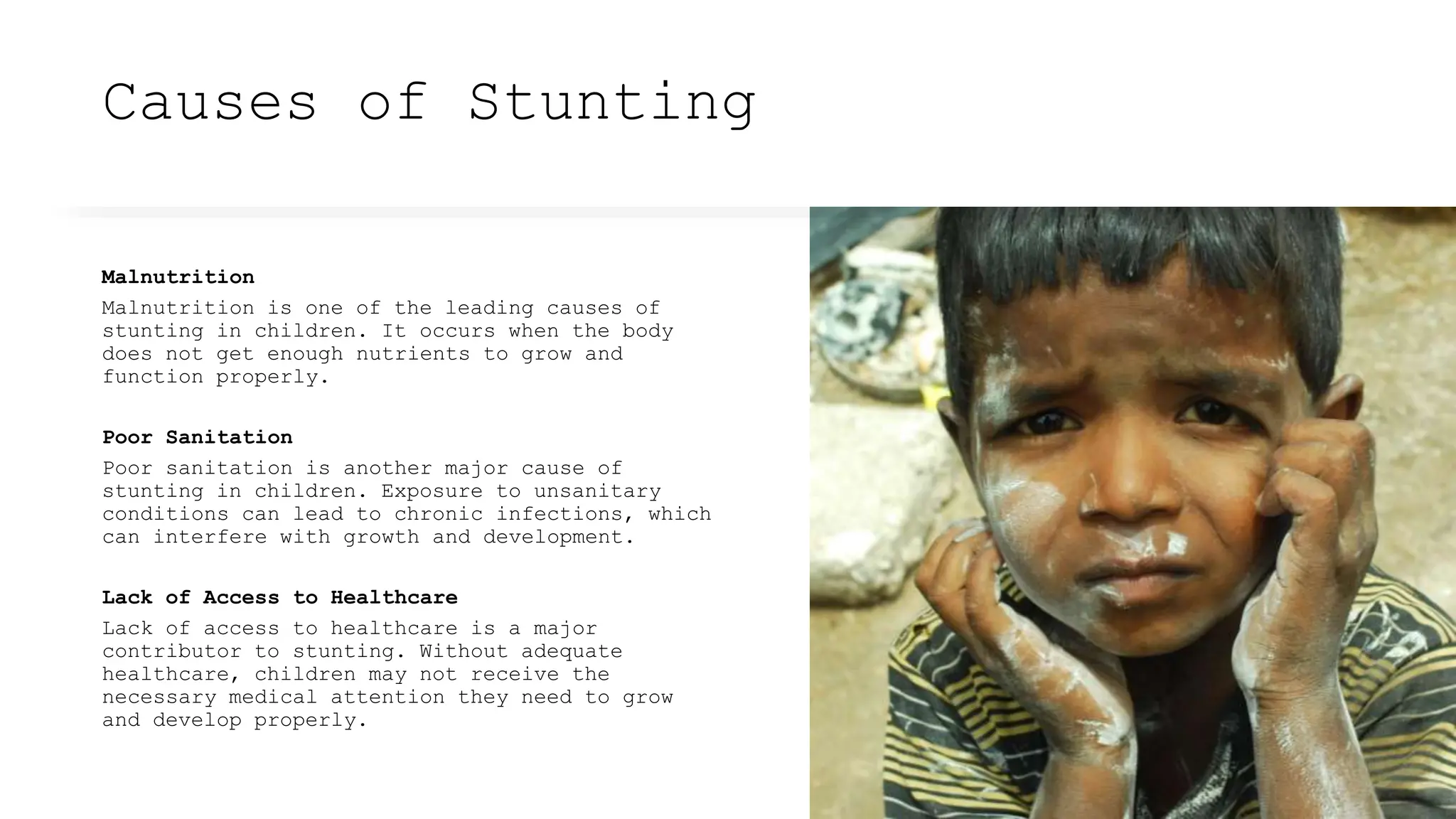
Malnutrition
Malnutrition is one of the leading causes of
stunting in children. It occurs when the body
does not get enough nutrients to grow and
function properly.
Poor Sanitation
Poor sanitation is another major cause of
stunting in children. Exposure to unsanitary
conditions can lead to chronic infections, which
can interfere with growth and development.
Lack of Access to Healthcare
Lack of access to healthcare is a major
contributor to stunting. Without adequate
healthcare, children may not receive the
necessary medical attention they need to grow
and develop properly.
Malnutrition
Malnutrition is a major cause of stunting
in children. When children don't get enough
nutrients, their bodies can't grow
properly, leading to stunting.
Poor
Sanitatio
n
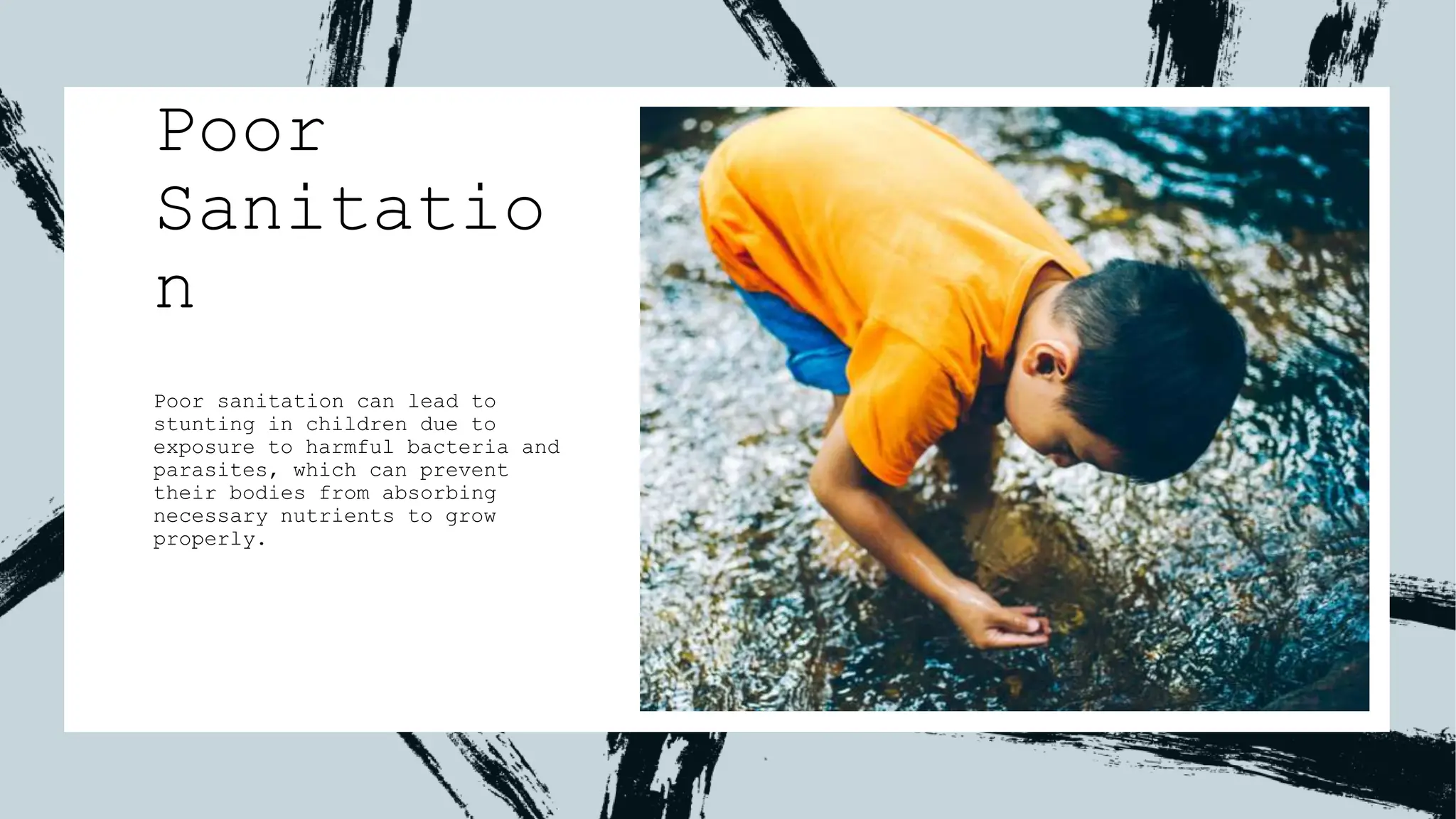
Poor sanitation can lead to
stunting in children due to
exposure to harmful bacteria and
parasites, which can prevent
their bodies from absorbing
necessary nutrients to grow
properly.
Effects of
Stunting
Stunting can have serious physical
effects, such as delayed motor
development, impaired immune function, and
increased risk of chronic diseases. It can
also have cognitive effects, such as
impaired cognitive development, reduced
school performance, and lower intellectual
capacity.
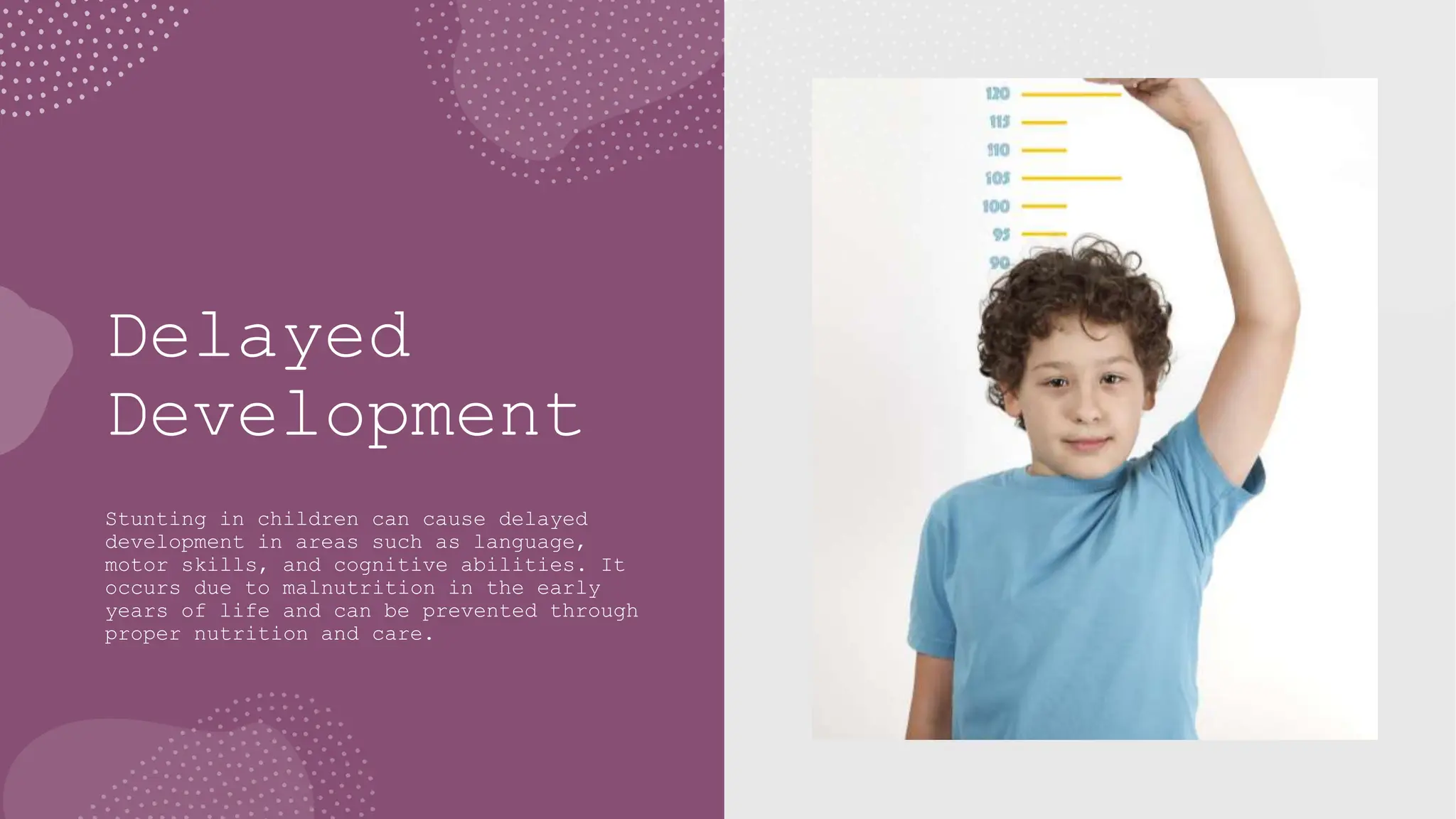
Delayed
Development
Stunting in children can cause delayed
development in areas such as language,
motor skills, and cognitive abilities. It
occurs due to malnutrition in the early
years of life and can be prevented through
proper nutrition and care.
Chronic
Disease
Stunting can also increase a
child's risk of chronic
diseases, such as diabetes and
heart disease, later in life.
Prevention
and
Treatment
Stunting is preventable and
treatable. There are several
ways parents can prevent or
treat stunting in their
children, including providing a
balanced and nutritious diet,
ensuring proper hygiene and
sanitation, and seeking medical
attention when necessary.
Healthy
Diet
A healthy and balanced diet can
help prevent stunting in
children, providing them with the
right nutrients, including
protein, iron, and vitamins,
necessary for proper growth and
development.
Proper
Hygiene
Handwashing
Handwashing is an effective way to
prevent the spread of harmful bacteria
and viruses, promoting good health and
hygiene.
Clean Water
Access to clean water is essential for
maintaining good health and hygiene. It
is important to have clean and safe water
for drinking, cooking, and personal
hygiene.
Preventing Stunting
Proper hygiene practices can help prevent
stunting in children by reducing their
exposure to harmful bacteria and
parasites that can inhibit nutrient
absorption.
Conclusion

Understanding Child Stunting for Parents

  • 1.
    Understandi ng Child Stunting A guidefor parents to prevent and treat stunting dr. I Putu Cahya Legawa
  • 2.
    Stunting: An Overview Causes ofStunting Stunting is caused by a combination of factors, including poor nutrition, lack of proper sanitation, and inadequate healthcare. These factors can lead to chronic malnutrition and growth failure in children. Effects of Stunting Stunting can have serious long-term effects on physical and cognitive development, as well as overall health. It can lead to poor academic performance, lower productivity, and increased risk of chronic diseases later in life. Prevention and Treatment of Stunting Prevention and treatment of stunting require a multi-sectoral approach that addresses the underlying causes of malnutrition. This may involve improving access to nutritious food, promoting good hygiene practices, and increasing access to healthcare services.
  • 3.
    Causes of Stunting Malnutrition Malnutritionis one of the leading causes of stunting in children. It occurs when the body does not get enough nutrients to grow and function properly. Poor Sanitation Poor sanitation is another major cause of stunting in children. Exposure to unsanitary conditions can lead to chronic infections, which can interfere with growth and development. Lack of Access to Healthcare Lack of access to healthcare is a major contributor to stunting. Without adequate healthcare, children may not receive the necessary medical attention they need to grow and develop properly.
  • 4.
    Malnutrition Malnutrition is amajor cause of stunting in children. When children don't get enough nutrients, their bodies can't grow properly, leading to stunting.
  • 5.
    Poor Sanitatio n Poor sanitation canlead to stunting in children due to exposure to harmful bacteria and parasites, which can prevent their bodies from absorbing necessary nutrients to grow properly.
  • 6.
    Effects of Stunting Stunting canhave serious physical effects, such as delayed motor development, impaired immune function, and increased risk of chronic diseases. It can also have cognitive effects, such as impaired cognitive development, reduced school performance, and lower intellectual capacity.
  • 7.
    Delayed Development Stunting in childrencan cause delayed development in areas such as language, motor skills, and cognitive abilities. It occurs due to malnutrition in the early years of life and can be prevented through proper nutrition and care.
  • 8.
    Chronic Disease Stunting can alsoincrease a child's risk of chronic diseases, such as diabetes and heart disease, later in life.
  • 9.
    Prevention and Treatment Stunting is preventableand treatable. There are several ways parents can prevent or treat stunting in their children, including providing a balanced and nutritious diet, ensuring proper hygiene and sanitation, and seeking medical attention when necessary.
  • 10.
    Healthy Diet A healthy andbalanced diet can help prevent stunting in children, providing them with the right nutrients, including protein, iron, and vitamins, necessary for proper growth and development.
  • 11.
    Proper Hygiene Handwashing Handwashing is aneffective way to prevent the spread of harmful bacteria and viruses, promoting good health and hygiene. Clean Water Access to clean water is essential for maintaining good health and hygiene. It is important to have clean and safe water for drinking, cooking, and personal hygiene. Preventing Stunting Proper hygiene practices can help prevent stunting in children by reducing their exposure to harmful bacteria and parasites that can inhibit nutrient absorption.
  • 12.

Editor's Notes

  • #2 This presentation is aimed at parents to help them understand what stunting is, its causes, effects, and how it can be prevented or treated. Let's dive into the world of stunting together.
  • #3 Stunting is a term used to describe a child who is too short for their age. It is caused by a lack of proper nutrition, sanitation, and healthcare. In this presentation, we will explore the causes, effects, and ways to prevent or treat stunting.
  • #4 Stunting can be caused by a variety of factors, including malnutrition, poor sanitation, and lack of access to healthcare. We will explore each of these factors in detail.
  • #5 Malnutrition is a major cause of stunting. When children don't get enough nutrients, their bodies can't grow properly, leading to stunting.
  • #6 Poor sanitation can also contribute to stunting. When children are exposed to harmful bacteria and parasites, their bodies can't absorb the nutrients they need to grow properly.
  • #7 Stunting can have serious effects on a child's health and development. We will explore the physical and cognitive effects of stunting.
  • #8 Children who experience stunting may have delayed development in areas such as language, motor skills, and cognitive abilities.
  • #9 Stunting can also increase a child's risk of chronic diseases, such as diabetes and heart disease, later in life.
  • #10 Stunting is preventable and treatable. We will explore ways parents can prevent or treat stunting in their children.
  • #11 Providing children with a healthy and balanced diet can help prevent stunting. Children need a variety of nutrients, including protein, iron, and vitamins, to grow properly.
  • #12 Proper hygiene practices, such as handwashing and clean water, can also help prevent stunting. When children are exposed to fewer harmful bacteria and parasites, their bodies can absorb more nutrients.
  • #13 Stunting is a serious issue that can have long-lasting effects on a child's health and development. By understanding the causes and effects of stunting, and taking steps to prevent or treat it, parents can help their children grow up healthy and strong.