
DPR STRUCTURE &
SCHEME
PRESENTEDBY,
NAVYAJAYAKUMAR
ROLLNO:20
CONTEN
T•INTRODUCTION:DPR
•STRUCTURE
•SCHEME
•CONCLUSION
INTRODUCTION: DPR
• DPR is a very detailed and elaborate plan for a project indicating overall
programme, different roles and responsibilities, activities and resources
required for the project.
• A DPR is a final, detailed appraisal report on the project and a blue print
for its execution and eventual operation.
• The preparation of the DPR is the final and most important stage of pre-
investment phase of project. It is on the basis of the DPR, the Project
Investments Board and the Cabinet Committee of Economic Affairs give
their clearance for the project.
• A project report is a detailed plan of action and particulars about the
proposed project.
DPR STRUCTURE
1) Particulars of the enterprise
i. Name of the product
ii. Name of the unit and address
iii. Telephone number
iv. Constitution of the firm (Proprietary/Partnership/Pvt. Ltd/Coop.
Society)
v. Qualification of the entrepreneurs
vi. Work experience of the entrepreneurs
vii. Family background
viii. Location/ proposed locations
ix. Name and address of the bank with which you want to deal
2) Economic viability and Marketability
i. Introduction
ii. Scope
iii. Marketability
3) Technical feasibility
i. Manufacturing process (provide process flow chart)
ii. Please indicate the process which will get done from outside
iii. Specifications (whether proposed to adopt ISI specifications or some
other)
iv. Components to be purchased from outside
4) Financial projections
i. Fixed capital (land, building area, value owned/rented or leased)
(Machinery and equipment)
ii. Working capital (per month) (raw materials and other items of
expenditure)
iii. Total investments (both fixed and working capital total)
iv. Cost of production (per year) (recurring expenditures; depreciation on
building, machinery, other office equipments; interest on total
investment charged by the financial institution or by the banks)
v. Total cost of production
vi. Turnover per year
vii. Net profit per year (before taxes)
viii. Financial assessments (net profit ratio, rate of return, BEP, name and
address of suppliers)
DPR SCHEME
1. Assistance to women cooperatives
2. Agricultural credit stabilization fund
3. Special schemes for SC/ST
4. Development of mushroom
5. Bee-keeping
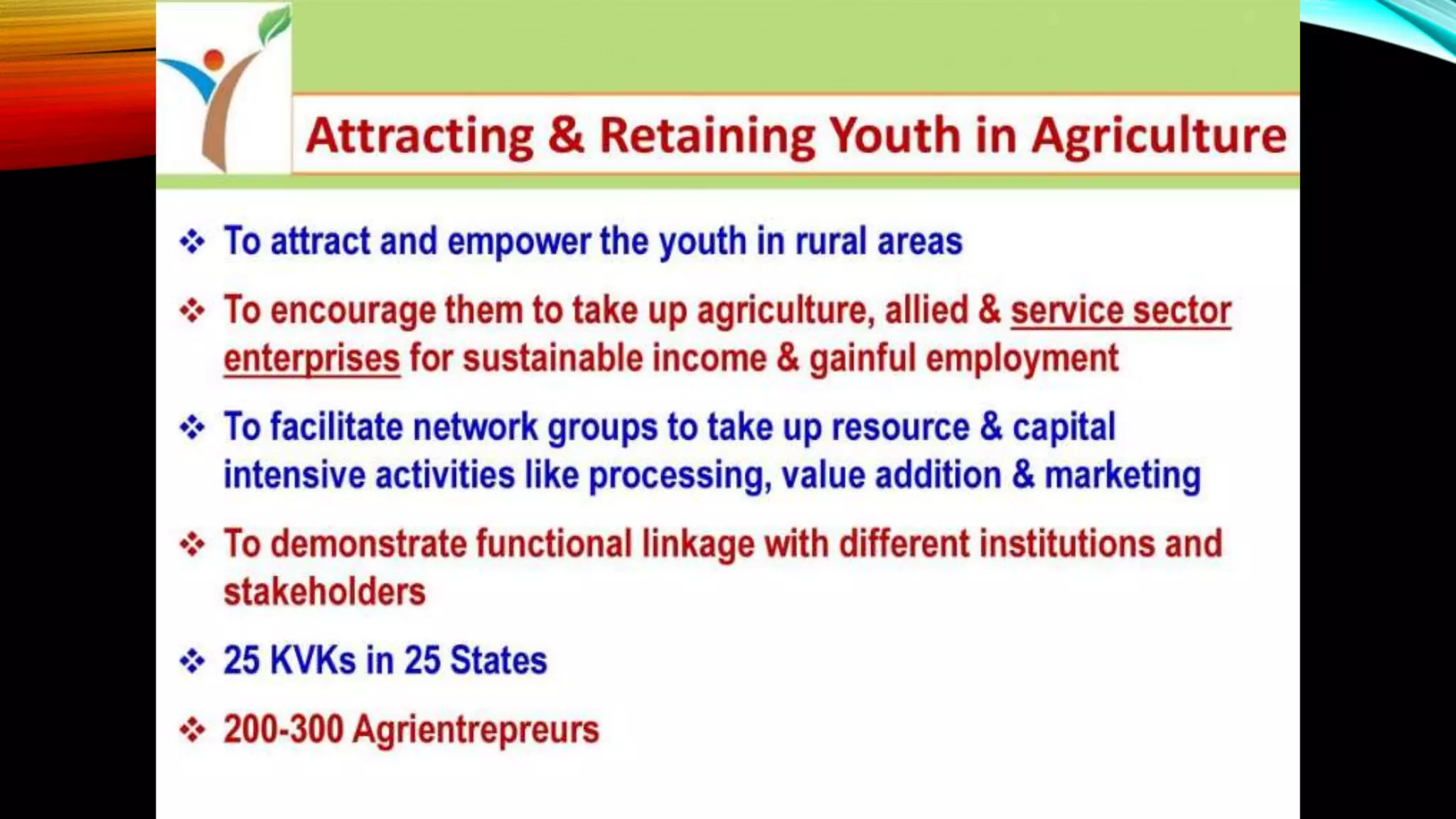
6. ARYA Attracting and retaining youth in agriculture
7. Krishi Dak – seed distribution scheme
8. Development of cocoa and cashew
9. Development of root and tuber crops
10. Special jute development programme
CONCLUSION
• It acts like a road map for the business venture. It helps to obtain loans
from financial institutions and commercial banks. Decisions related with
loans are greatly depends upon the firm’s project report
• The economic viability of the proposal is also keenly and analyzed
through the project report by various other organizations which provide
assistance in the form of work shed, raw materials, seed etc.
• It is essential for documenting and recording the various important
prospects of the proposed business unit thereby act as a record for
future reference also
• Most of all, it is mandatory for receiving permissions and registration of
business from various regulatory authorities and government
DETAILED PROJECT REPORT: STRUCTURE AND SCHEMES

DETAILED PROJECT REPORT: STRUCTURE AND SCHEMES

  • 1.
  • 2.
  • 3.
    INTRODUCTION: DPR • DPRis a very detailed and elaborate plan for a project indicating overall programme, different roles and responsibilities, activities and resources required for the project. • A DPR is a final, detailed appraisal report on the project and a blue print for its execution and eventual operation. • The preparation of the DPR is the final and most important stage of pre- investment phase of project. It is on the basis of the DPR, the Project Investments Board and the Cabinet Committee of Economic Affairs give their clearance for the project. • A project report is a detailed plan of action and particulars about the proposed project.
  • 4.
    DPR STRUCTURE 1) Particularsof the enterprise i. Name of the product ii. Name of the unit and address iii. Telephone number iv. Constitution of the firm (Proprietary/Partnership/Pvt. Ltd/Coop. Society) v. Qualification of the entrepreneurs vi. Work experience of the entrepreneurs vii. Family background viii. Location/ proposed locations ix. Name and address of the bank with which you want to deal
  • 5.
    2) Economic viabilityand Marketability i. Introduction ii. Scope iii. Marketability 3) Technical feasibility i. Manufacturing process (provide process flow chart) ii. Please indicate the process which will get done from outside iii. Specifications (whether proposed to adopt ISI specifications or some other) iv. Components to be purchased from outside
  • 6.
    4) Financial projections i.Fixed capital (land, building area, value owned/rented or leased) (Machinery and equipment) ii. Working capital (per month) (raw materials and other items of expenditure) iii. Total investments (both fixed and working capital total) iv. Cost of production (per year) (recurring expenditures; depreciation on building, machinery, other office equipments; interest on total investment charged by the financial institution or by the banks) v. Total cost of production vi. Turnover per year vii. Net profit per year (before taxes) viii. Financial assessments (net profit ratio, rate of return, BEP, name and address of suppliers)
  • 7.
    DPR SCHEME 1. Assistanceto women cooperatives 2. Agricultural credit stabilization fund 3. Special schemes for SC/ST 4. Development of mushroom 5. Bee-keeping 6. ARYA Attracting and retaining youth in agriculture 7. Krishi Dak – seed distribution scheme 8. Development of cocoa and cashew 9. Development of root and tuber crops 10. Special jute development programme
  • 10.
    CONCLUSION • It actslike a road map for the business venture. It helps to obtain loans from financial institutions and commercial banks. Decisions related with loans are greatly depends upon the firm’s project report • The economic viability of the proposal is also keenly and analyzed through the project report by various other organizations which provide assistance in the form of work shed, raw materials, seed etc. • It is essential for documenting and recording the various important prospects of the proposed business unit thereby act as a record for future reference also • Most of all, it is mandatory for receiving permissions and registration of business from various regulatory authorities and government