COLLEGE OF EDUCATION
MASTER OF ARTS IN INDUSTRIAL EDUCATION-HE
MAED 203-STATISTICAL METHOD OF EDUCATION
Accredited: Accrediting Agency of Chartered Colleges and Universities of the Philippines (AACCUP)
Member: Philippine Association of State Universities and Colleges (PASUC)
Agricultural Colleges Association of the Philippines (ACAP)
1. Common Sampling Techniques
2. Advantages and Disadvantages of Sampling
MARIA S. DETABLAN GEMMA F. AGUSTIN, MAT
Reporter Course Facilitator
Sampling Techniques
Population is the entirety of the group including
all the members that forms a set of data.
Sample contains a few member of the population.
They were taken to represent the characteristics or
traits of the whole population.
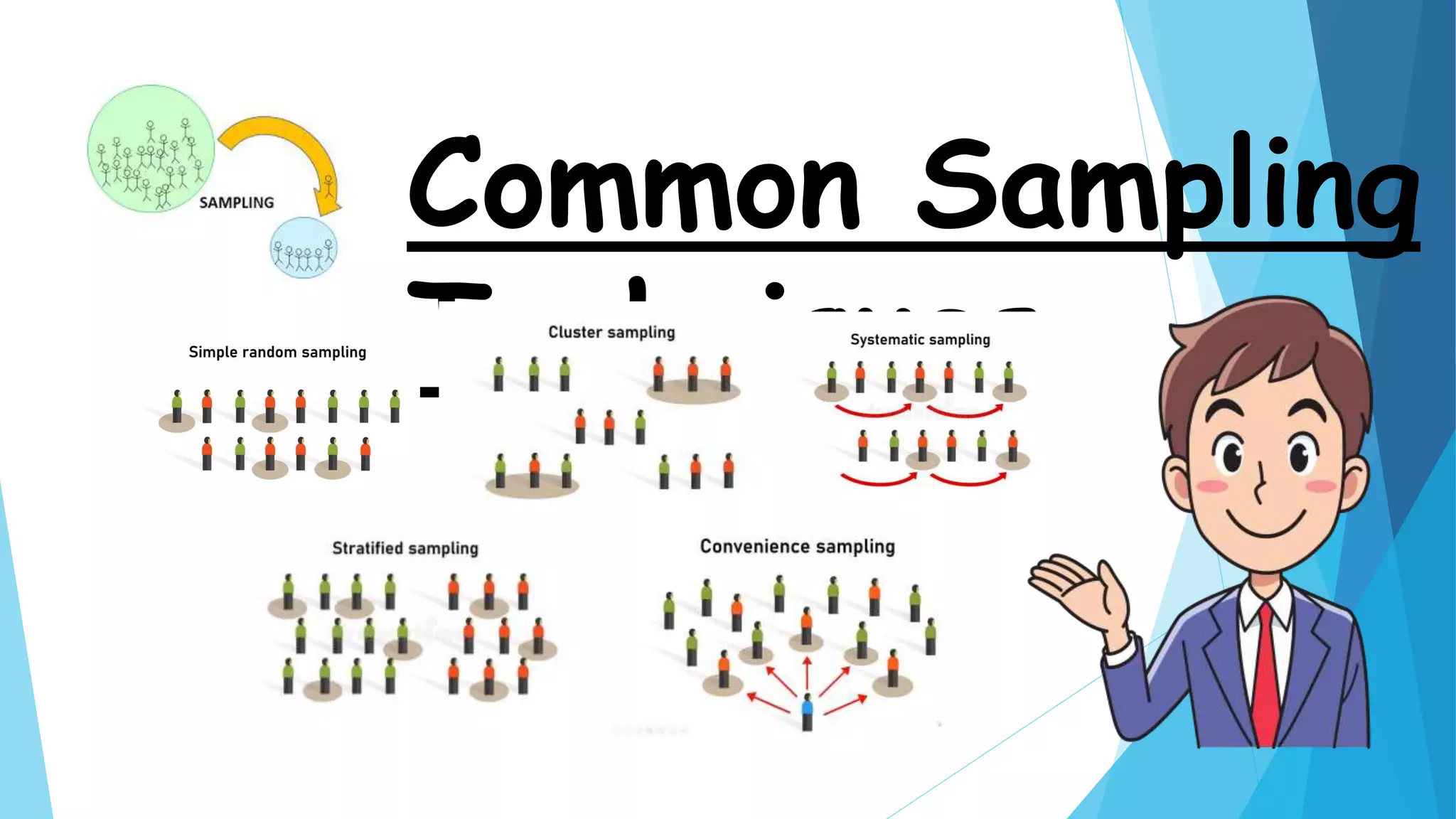
Common Sampling
Techniques
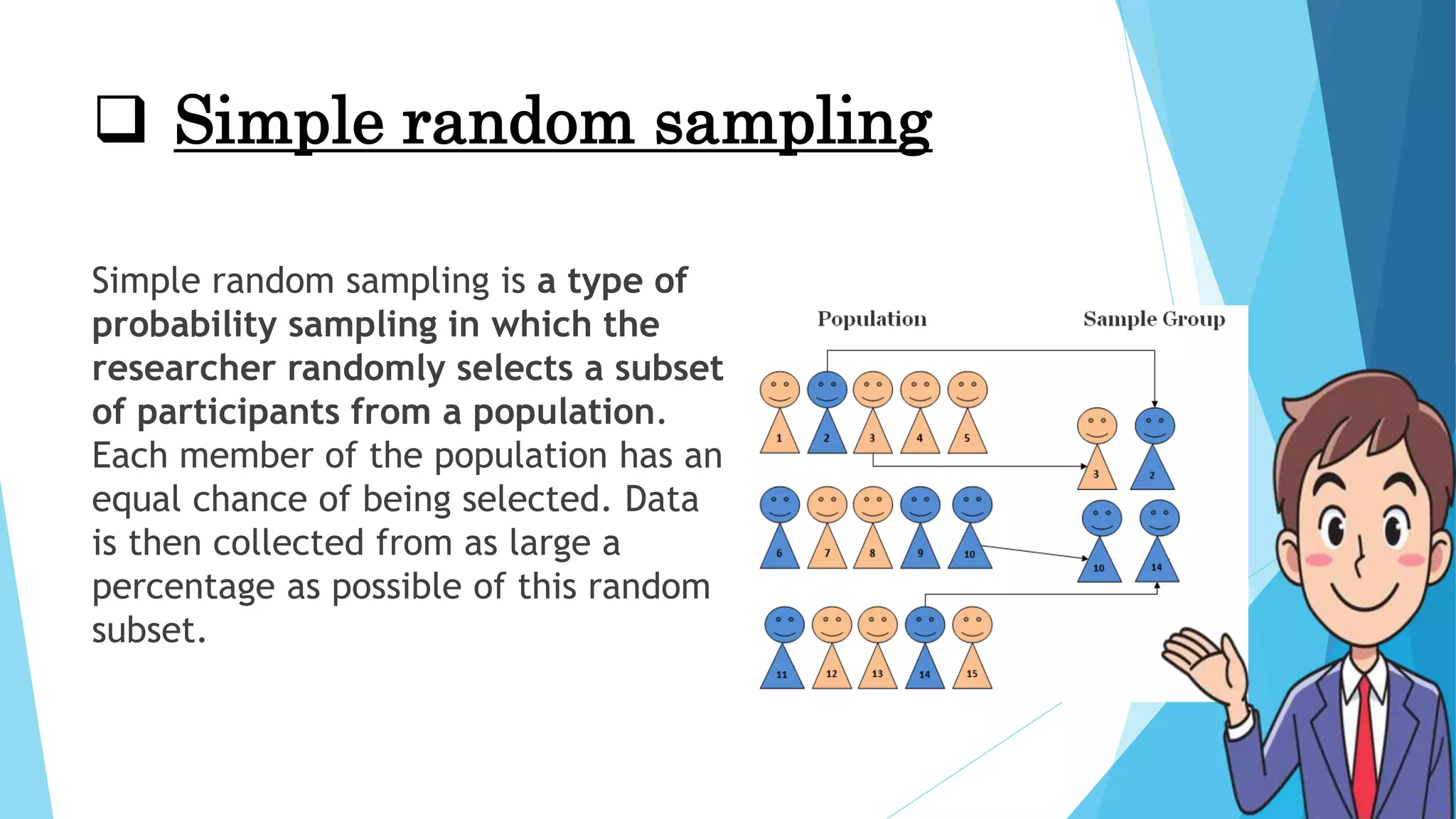
 Simple random sampling
Simple random sampling is a type of
probability sampling in which the
researcher randomly selects a subset
of participants from a population.
Each member of the population has an
equal chance of being selected. Data
is then collected from as large a
percentage as possible of this random
subset.
1. Simple random sampling
 Systematic Sampling
 Systematic sampling is
similar to simple random
sampling, but it is usually
slightly easier to conduct.
Every member of the
population is listed with a
number, but instead of
randomly generating
numbers, individuals are
chosen at regular intervals.
Stratified Sampling
-Stratified sampling
involves dividing the
population into
subpopulations that may
differ in important ways. It
allows you draw more
precise conclusions by
ensuring that every
subgroup is properly
represented in the sample.
 Cluster Sampling
CLUSTER SAMPLING
 -Cluster sampling also involves dividing the population into
subgroups, but each subgroup should have similar
characteristics to the whole sample. Instead of sampling
individuals from each subgroup, you randomly select entire
subgroups.
 -Our entire population is divided into clusters or sections and
then the clusters are randomly selected. All the elements of
the cluster are used for sampling. Clusters are identified using
details such as age, sex, location etc.
 Cluster Sampling
 Convenience Sampling
 This method is used
when the
availability of
sample is rare and
also costly. So based
on the convenience
samples are
selected.
 Puposive Sampling
- Samples are chosen based on the
goals of the study. They may be
chosen based on their knowledge of
te study being conducted or if they
satisfy the traits or conditions set by
the researcher.
 Snowball Sampling
- The participants in the study
were tasked to recruit other
members for the study.
Advantages and Disadvantages of Sampling
Advantages of Sampling
1. Reduced cost and time
2. Reduced resource deployment
3. Accuracy of data is high
4. Intensive and exhaustive data
5. Suitable in limited resources
Disadvantages of sampling
1. Chances of bias
2. In adequate knowledge in the subject
3. Difficulties in selecting a truly
representative sample
4. Changeability of units
5. Impossibility of sampling
Detablan-Maria-CHAPTER-7-SAMPLING.pptx

Detablan-Maria-CHAPTER-7-SAMPLING.pptx

  • 1.
    COLLEGE OF EDUCATION MASTEROF ARTS IN INDUSTRIAL EDUCATION-HE MAED 203-STATISTICAL METHOD OF EDUCATION Accredited: Accrediting Agency of Chartered Colleges and Universities of the Philippines (AACCUP) Member: Philippine Association of State Universities and Colleges (PASUC) Agricultural Colleges Association of the Philippines (ACAP) 1. Common Sampling Techniques 2. Advantages and Disadvantages of Sampling MARIA S. DETABLAN GEMMA F. AGUSTIN, MAT Reporter Course Facilitator
  • 2.
    Sampling Techniques Population isthe entirety of the group including all the members that forms a set of data. Sample contains a few member of the population. They were taken to represent the characteristics or traits of the whole population.
  • 3.
  • 4.
     Simple randomsampling Simple random sampling is a type of probability sampling in which the researcher randomly selects a subset of participants from a population. Each member of the population has an equal chance of being selected. Data is then collected from as large a percentage as possible of this random subset.
  • 5.
  • 6.
     Systematic Sampling Systematic sampling is similar to simple random sampling, but it is usually slightly easier to conduct. Every member of the population is listed with a number, but instead of randomly generating numbers, individuals are chosen at regular intervals.
  • 7.
    Stratified Sampling -Stratified sampling involvesdividing the population into subpopulations that may differ in important ways. It allows you draw more precise conclusions by ensuring that every subgroup is properly represented in the sample.
  • 8.
     Cluster Sampling CLUSTERSAMPLING  -Cluster sampling also involves dividing the population into subgroups, but each subgroup should have similar characteristics to the whole sample. Instead of sampling individuals from each subgroup, you randomly select entire subgroups.  -Our entire population is divided into clusters or sections and then the clusters are randomly selected. All the elements of the cluster are used for sampling. Clusters are identified using details such as age, sex, location etc.
  • 9.
  • 10.
     Convenience Sampling This method is used when the availability of sample is rare and also costly. So based on the convenience samples are selected.
  • 11.
     Puposive Sampling -Samples are chosen based on the goals of the study. They may be chosen based on their knowledge of te study being conducted or if they satisfy the traits or conditions set by the researcher.
  • 12.
     Snowball Sampling -The participants in the study were tasked to recruit other members for the study.
  • 13.
    Advantages and Disadvantagesof Sampling Advantages of Sampling 1. Reduced cost and time 2. Reduced resource deployment 3. Accuracy of data is high 4. Intensive and exhaustive data 5. Suitable in limited resources
  • 14.
    Disadvantages of sampling 1.Chances of bias 2. In adequate knowledge in the subject 3. Difficulties in selecting a truly representative sample 4. Changeability of units 5. Impossibility of sampling