Design Neural Networks with Meta-Learning
Paper Link: https://arxiv.org/pdf/2004.05439.pdf
Based on Paper: Timothy Hospedales, Antreas Antoniou, Paul Micaelli, Amos Storkey, “Meta-Learning in
Neural Networks: A Survey”, 7 Nov 2020, version, v2
Medium Story Link: https://adityatushar-wadnerkar.medium.com/design-neural-networks-with-meta-learning-
9be9a4e12ded
Aditya Tushar Wadnerkar, San Jose State University
Background
Meta Learning: We have seen meta-learning technology emerging in recent times. The meta-learning
approach aims to learn and improve learning algorithm unlike the traditional approach where it a fixed
algorithm is used for solving a task in AI.
Different meta-learning techniques
Fundamental issues of generalization along with contemporary landscape of meta-learning
The functioning of meta-learning techniques and how they differ from other fields like transfer learning,
hyperparameter optimization and multi-task learning
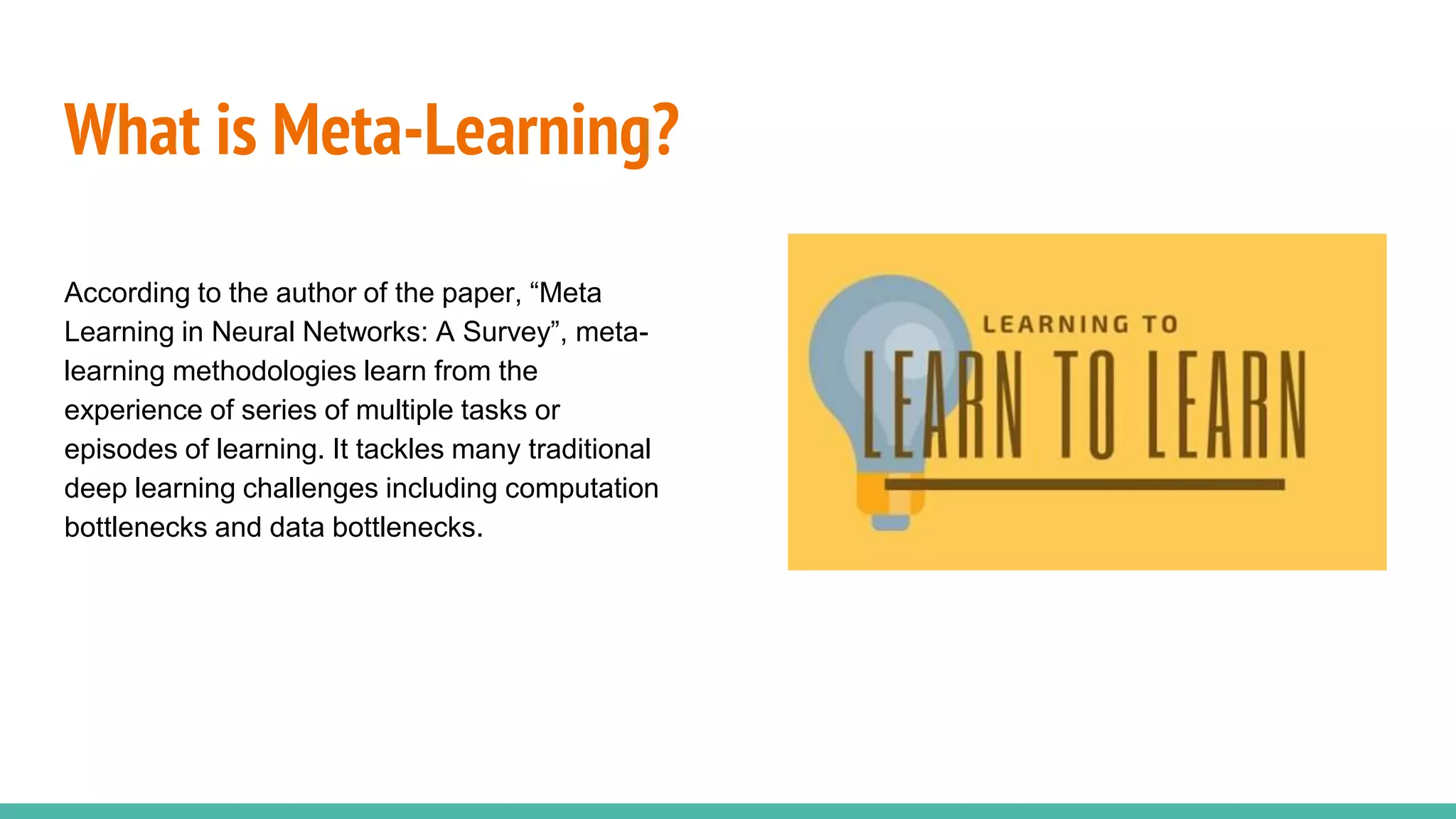
What is Meta-Learning?
According to the author of the paper, “Meta
Learning in Neural Networks: A Survey”, meta-
learning methodologies learn from the
experience of series of multiple tasks or
episodes of learning. It tackles many traditional
deep learning challenges including computation
bottlenecks and data bottlenecks.
Different Fields...
❏ Transfer Learning
❏ Domain Adaptation and Domain Generalisation
❏ Continual Learning
❏ Multi-Task Learning
❏ Hyperparameter Optimization
❏ Hierarchical Bayesian
❏ AutoML
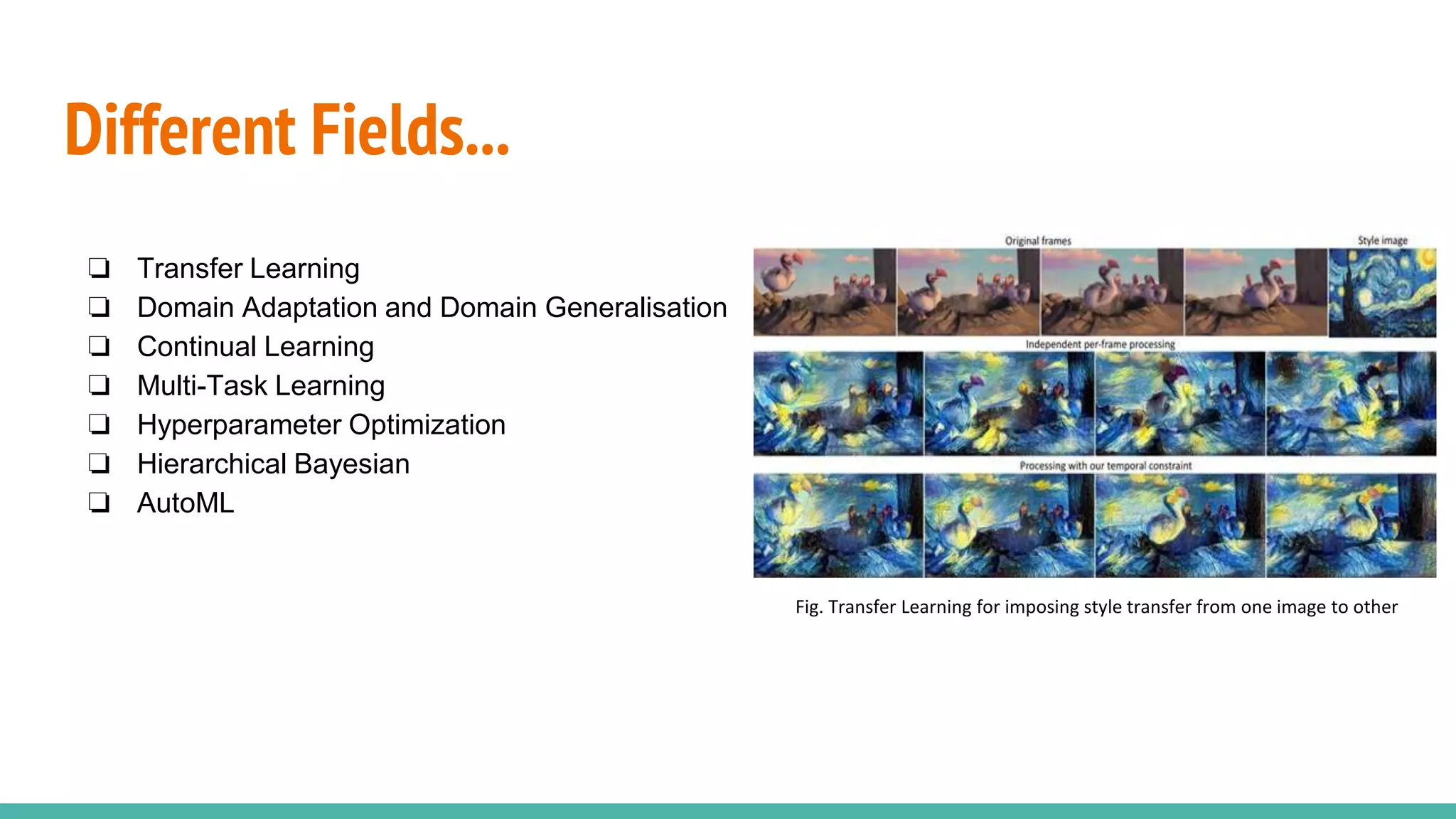
Fig. Transfer Learning for imposing style transfer from one image to other
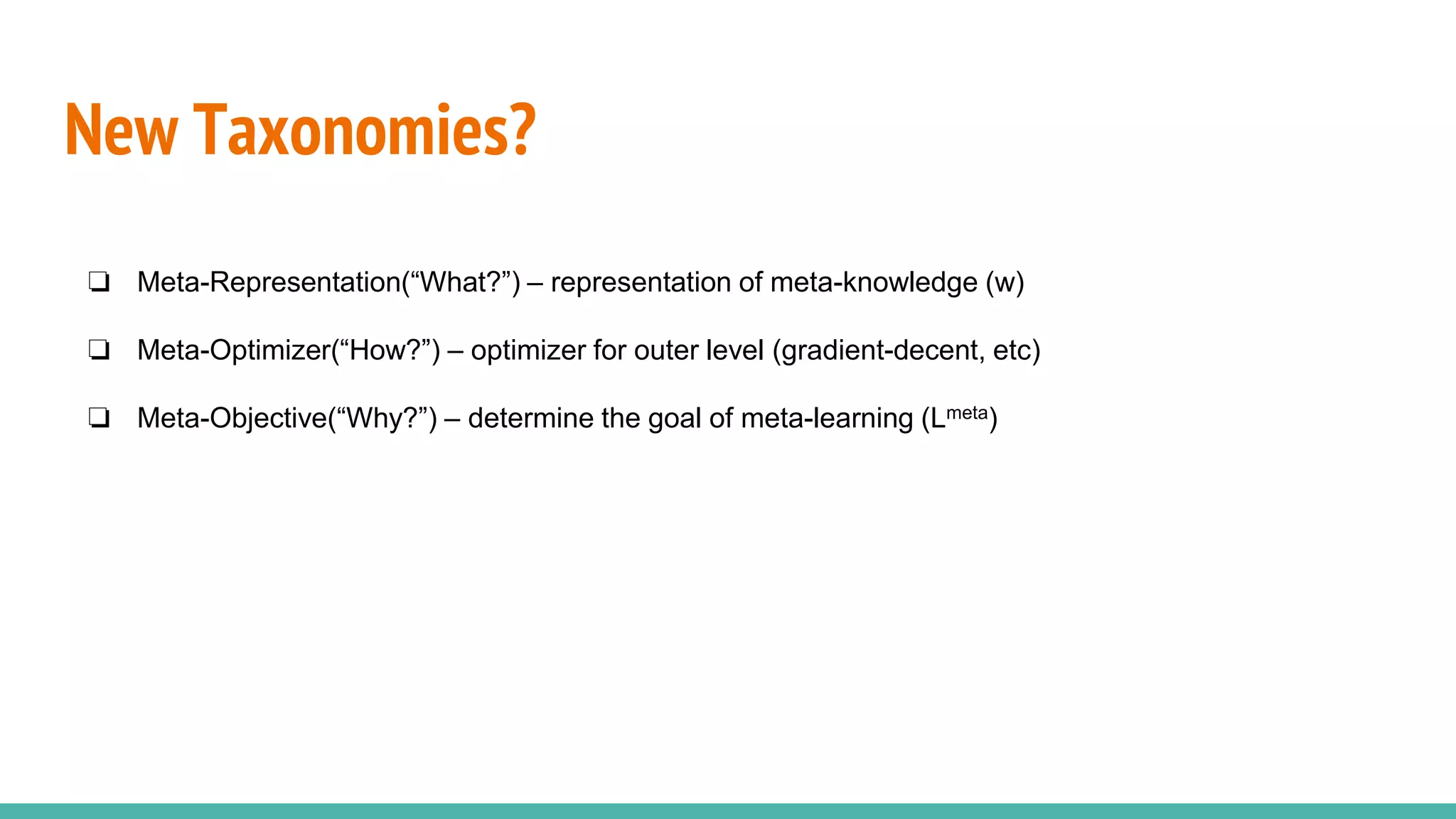
New Taxonomies?
❏ Meta-Representation(“What?”) – representation of meta-knowledge (w)
❏ Meta-Optimizer(“How?”) – optimizer for outer level (gradient-decent, etc)
❏ Meta-Objective(“Why?”) – determine the goal of meta-learning (Lmeta)
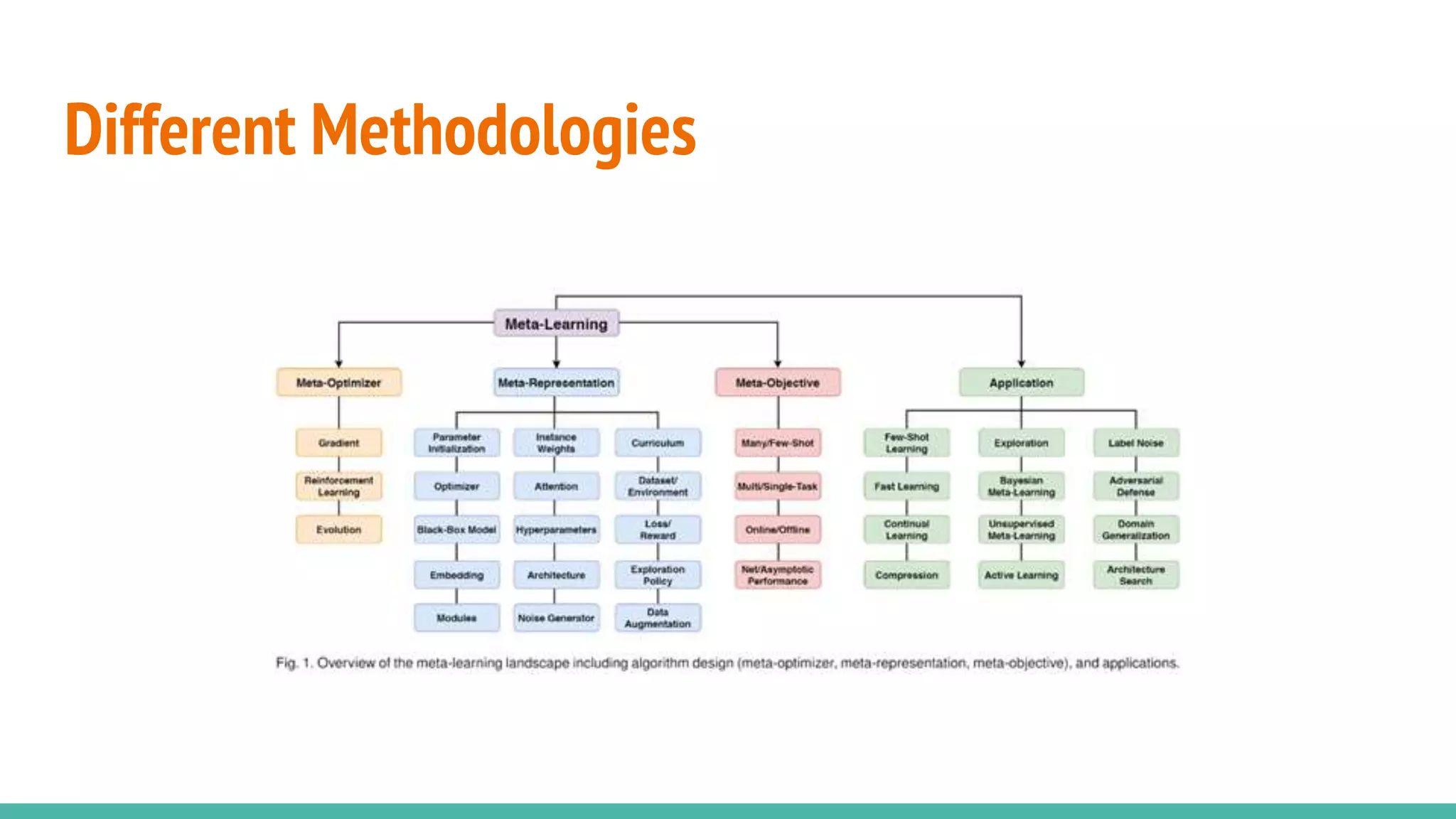
Different Methodologies
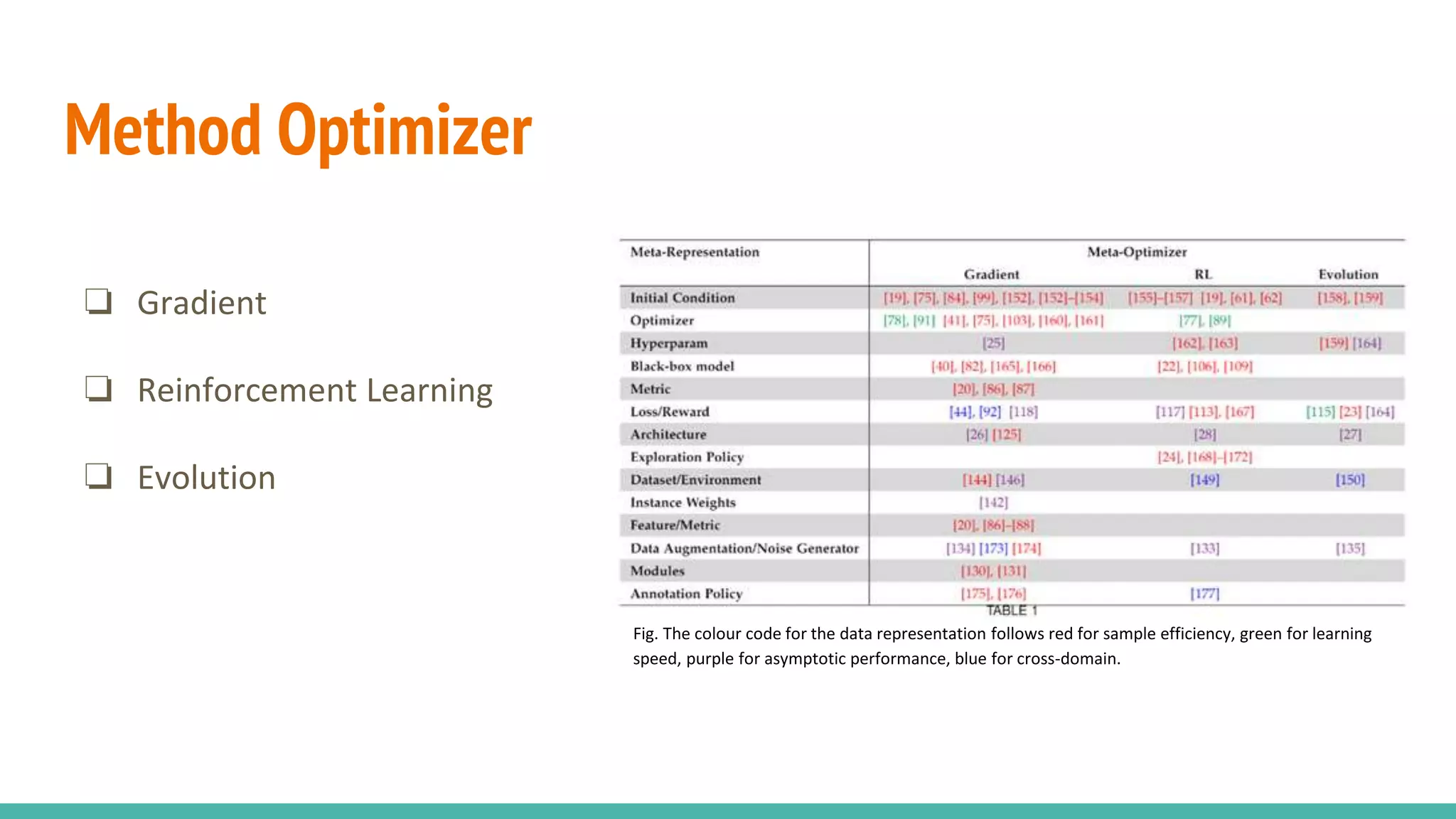
Method Optimizer
❏ Gradient
❏ Reinforcement Learning
❏ Evolution
Fig. The colour code for the data representation follows red for sample efficiency, green for learning
speed, purple for asymptotic performance, blue for cross-domain.
Meta Representation
❏ Parameter Initialization
❏ Optimizer
❏ Black-Box Models
❏ Embedding
Meta Representation
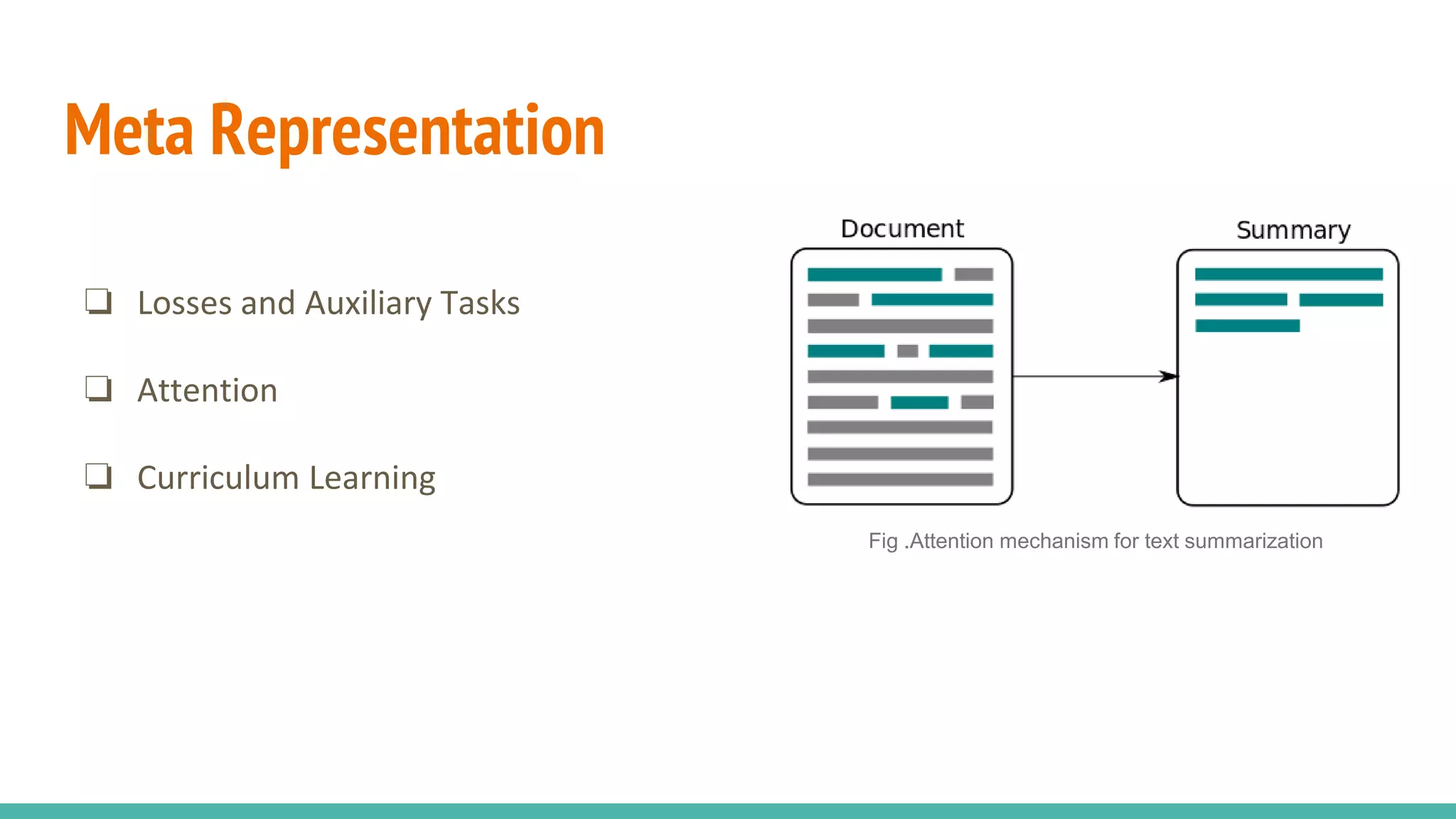
❏ Losses and Auxiliary Tasks
❏ Attention
❏ Curriculum Learning
Fig .Attention mechanism for text summarization
Meta Objective and Episode Design
❏ Many and Few-Shot Episode Design
❏ Multi and Single Task
❏ Online and Offline
❏ Fast Adaptation and Asymptotic Performance
Applications
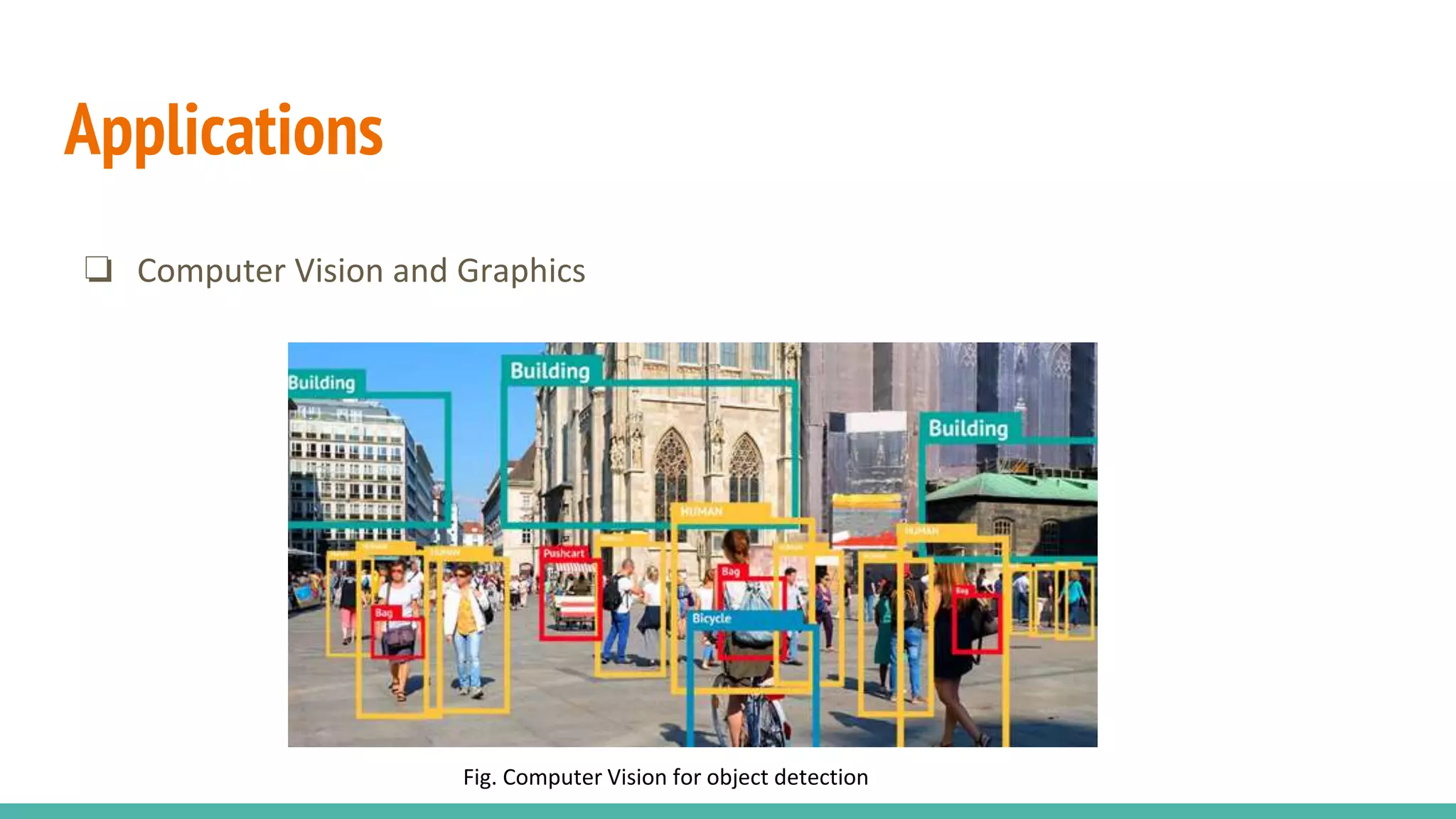
❏ Computer Vision and Graphics
Fig. Computer Vision for object detection
Applications
❏ Meta Reinforcement Learning and Robotics
❏ Environment Learning and Sim2Real
❏ Natural Architecture Search
❏ Language Modeling
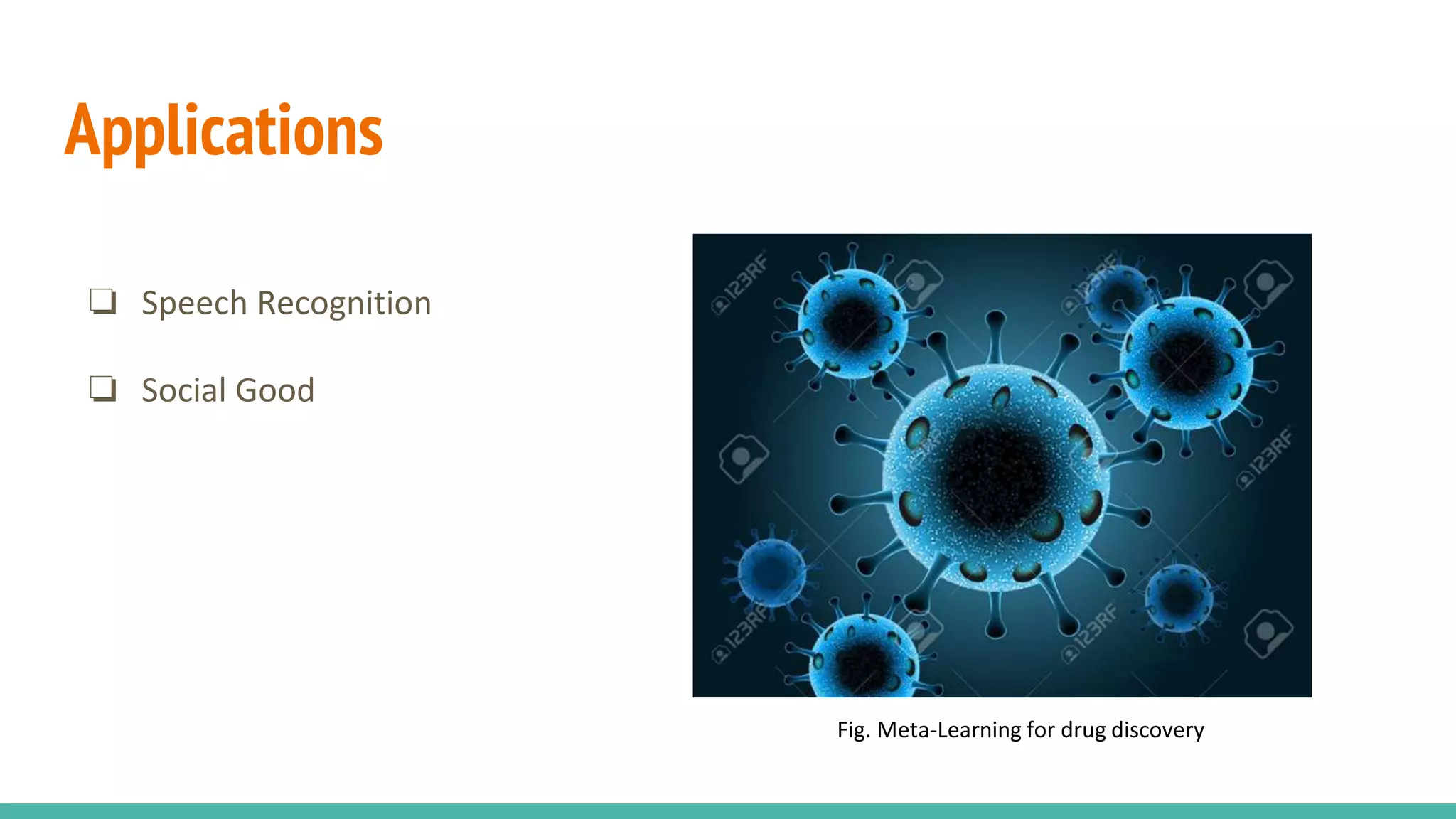
Applications
❏ Speech Recognition
❏ Social Good
Fig. Meta-Learning for drug discovery
Inferences
❏ Conclusions
❏ Comments
❏ Paper Quality
❏ Critique
❏ Improvements
❏ Suggestions
References
❏ Timothy Hospedales, Antreas Antoniou, Paul Micaelli, Amos Storkey, “Meta-Learning in Neural Networks: A Survey”, 7 Nov
2020, version, v2, https://arxiv.org/abs/2004.05439
❏ Isha Salian, “How Deep Learning Can Paint Videos in the Style of Art’s Great Masters”, May 25, 2016,
https://blogs.nvidia.com/blog/2016/05/25/deep-learning-paints-videos/
❏ J. Devlin, M. Chang, K. Lee, and K. Toutanova, “BERT: Pretraining Of Deep Bidirectional Transformers For Language
Understanding,” in ACL, 2019.
❏ Wikipedia, “Meta Learning (computer science)”, https://en.wikipedia.org/wiki/Meta_learning_(computer_science)
THANK YOU

Design neural networks with meta learning

  • 1.
    Design Neural Networkswith Meta-Learning Paper Link: https://arxiv.org/pdf/2004.05439.pdf Based on Paper: Timothy Hospedales, Antreas Antoniou, Paul Micaelli, Amos Storkey, “Meta-Learning in Neural Networks: A Survey”, 7 Nov 2020, version, v2 Medium Story Link: https://adityatushar-wadnerkar.medium.com/design-neural-networks-with-meta-learning- 9be9a4e12ded Aditya Tushar Wadnerkar, San Jose State University
  • 2.
    Background Meta Learning: Wehave seen meta-learning technology emerging in recent times. The meta-learning approach aims to learn and improve learning algorithm unlike the traditional approach where it a fixed algorithm is used for solving a task in AI. Different meta-learning techniques Fundamental issues of generalization along with contemporary landscape of meta-learning The functioning of meta-learning techniques and how they differ from other fields like transfer learning, hyperparameter optimization and multi-task learning
  • 3.
    What is Meta-Learning? Accordingto the author of the paper, “Meta Learning in Neural Networks: A Survey”, meta- learning methodologies learn from the experience of series of multiple tasks or episodes of learning. It tackles many traditional deep learning challenges including computation bottlenecks and data bottlenecks.
  • 4.
    Different Fields... ❏ TransferLearning ❏ Domain Adaptation and Domain Generalisation ❏ Continual Learning ❏ Multi-Task Learning ❏ Hyperparameter Optimization ❏ Hierarchical Bayesian ❏ AutoML Fig. Transfer Learning for imposing style transfer from one image to other
  • 5.
    New Taxonomies? ❏ Meta-Representation(“What?”)– representation of meta-knowledge (w) ❏ Meta-Optimizer(“How?”) – optimizer for outer level (gradient-decent, etc) ❏ Meta-Objective(“Why?”) – determine the goal of meta-learning (Lmeta)
  • 6.
  • 7.
    Method Optimizer ❏ Gradient ❏Reinforcement Learning ❏ Evolution Fig. The colour code for the data representation follows red for sample efficiency, green for learning speed, purple for asymptotic performance, blue for cross-domain.
  • 8.
    Meta Representation ❏ ParameterInitialization ❏ Optimizer ❏ Black-Box Models ❏ Embedding
  • 9.
    Meta Representation ❏ Lossesand Auxiliary Tasks ❏ Attention ❏ Curriculum Learning Fig .Attention mechanism for text summarization
  • 10.
    Meta Objective andEpisode Design ❏ Many and Few-Shot Episode Design ❏ Multi and Single Task ❏ Online and Offline ❏ Fast Adaptation and Asymptotic Performance
  • 11.
    Applications ❏ Computer Visionand Graphics Fig. Computer Vision for object detection
  • 12.
    Applications ❏ Meta ReinforcementLearning and Robotics ❏ Environment Learning and Sim2Real ❏ Natural Architecture Search ❏ Language Modeling
  • 13.
    Applications ❏ Speech Recognition ❏Social Good Fig. Meta-Learning for drug discovery
  • 14.
    Inferences ❏ Conclusions ❏ Comments ❏Paper Quality ❏ Critique ❏ Improvements ❏ Suggestions
  • 15.
    References ❏ Timothy Hospedales,Antreas Antoniou, Paul Micaelli, Amos Storkey, “Meta-Learning in Neural Networks: A Survey”, 7 Nov 2020, version, v2, https://arxiv.org/abs/2004.05439 ❏ Isha Salian, “How Deep Learning Can Paint Videos in the Style of Art’s Great Masters”, May 25, 2016, https://blogs.nvidia.com/blog/2016/05/25/deep-learning-paints-videos/ ❏ J. Devlin, M. Chang, K. Lee, and K. Toutanova, “BERT: Pretraining Of Deep Bidirectional Transformers For Language Understanding,” in ACL, 2019. ❏ Wikipedia, “Meta Learning (computer science)”, https://en.wikipedia.org/wiki/Meta_learning_(computer_science)
  • 16.