Understanding depression
Information for adults

Depression is more than just a low mood – it’s
a serious illness. People with depression find
it hard to function every day. Depression has
serious effects on physical and mental health.
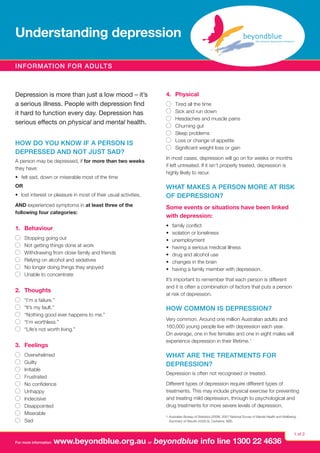
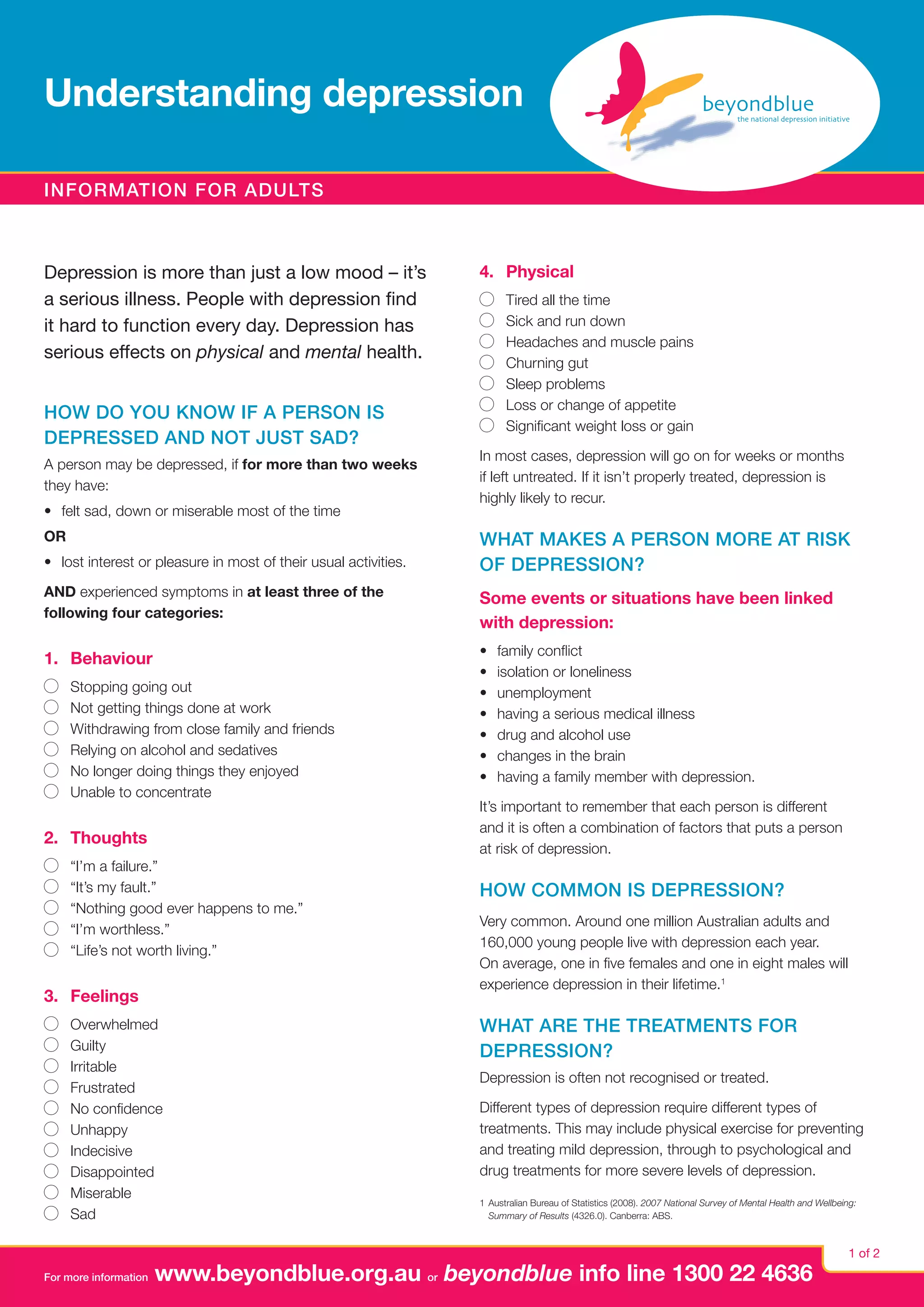
How do you know if a person is
depressed and not just sad?
A person may be depressed, if for more than two weeks
they have:
•	 felt sad, down or miserable most of the time
OR
•	 lost interest or pleasure in most of their usual activities.

4.	 Physical
o	
o	
o	
o	
o	
o	
o	

Tired all the time
Sick and run down
Headaches and muscle pains
Churning gut
Sleep problems
Loss or change of appetite
Significant weight loss or gain

In most cases, depression will go on for weeks or months
if left untreated. If it isn’t properly treated, depression is
highly likely to recur.

What makes a person more at risk
of depression?

AND experienced symptoms in at least three of the
following four categories:

Some events or situations have been linked
with depression:

1.	 Behaviour

•	
•	
•	
•	
•	
•	
•	

o	
o	
o	
o	
o	
o	

Stopping going out
Not getting things done at work
Withdrawing from close family and friends
Relying on alcohol and sedatives
No longer doing things they enjoyed
Unable to concentrate

2.	 Thoughts
o	
o	
o	
o	
o	

“I’m a failure.”
“It’s my fault.”
“Nothing good ever happens to me.”
“I’m worthless.”  
“Life’s not worth living.”

3.	 Feelings
o	
o	
o	
o	
o	
o	
o	
o	
o	
o	

Overwhelmed
Guilty
Irritable
Frustrated
No confidence
Unhappy
Indecisive
Disappointed
Miserable
Sad

For more information

family conflict
isolation or loneliness
unemployment
having a serious medical illness
drug and alcohol use
changes in the brain
having a family member with depression.

It’s important to remember that each person is different
and it is often a combination of factors that puts a person
at risk of depression.

How common is depression?
Very common. Around one million Australian adults and
160,000 young people live with depression each year.
On average, one in five females and one in eight males will
experience depression in their lifetime.1

What are the treatments for
depression?
Depression is often not recognised or treated.
Different types of depression require different types of
treatments. This may include physical exercise for preventing
and treating mild depression, through to psychological and
drug treatments for more severe levels of depression.
1	 Australian Bureau of Statistics (2008). 2007 National Survey of Mental Health and Wellbeing:
Summary of Results (4326.0). Canberra: ABS.

www.beyondblue.org.au or beyondblue info line 1300 22 4636

1 of 2
Understanding depression
Information for adults

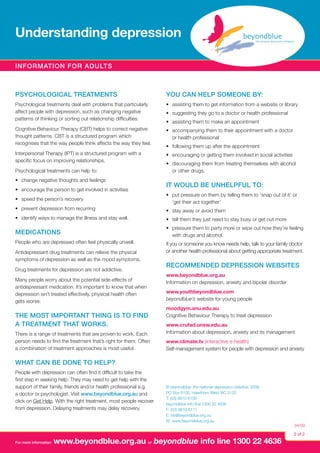
Psychological treatments

You can help someone by:

Psychological treatments deal with problems that particularly
affect people with depression, such as changing negative
patterns of thinking or sorting out relationship difficulties.

•	 assisting them to get information from a website or library

Cognitive Behaviour Therapy (CBT) helps to correct negative
thought patterns. CBT is a structured program which
recognises that the way people think affects the way they feel.

•	 accompanying them to their appointment with a doctor
or health professional

Interpersonal Therapy (IPT) is a structured program with a
specific focus on improving relationships.

•	 encouraging or getting them involved in social activities

Psychological treatments can help to:
•	 change negative thoughts and feelings
•	 encourage the person to get involved in activities

•	 suggesting they go to a doctor or health professional
•	 assisting them to make an appointment

•	 following them up after the appointment
•	 discouraging them from treating themselves with alcohol
or other drugs.

It would be unhelpful to:

•	 speed the person’s recovery

•	 put pressure on them by telling them to ‘snap out of it’ or
‘get their act together’

•	 prevent depression from recurring

•	 stay away or avoid them

•	 identify ways to manage the illness and stay well.

•	 tell them they just need to stay busy or get out more

Medications

•	 pressure them to party more or wipe out how they’re feeling
with drugs and alcohol.

People who are depressed often feel physically unwell.
Antidepressant drug treatments can relieve the physical
symptoms of depression as well as the mood symptoms.
Drug treatments for depression are not addictive.
Many people worry about the potential side-effects of
antidepressant medication. It’s important to know that when
depression isn’t treated effectively, physical health often
gets worse.

The most important thing is to find
a treatment that works.
There is a range of treatments that are proven to work. Each
person needs to find the treatment that’s right for them. Often
a combination of treatment approaches is most useful.

If you or someone you know needs help, talk to your family doctor
or another health professional about getting appropriate treatment.

Recommended depression websites
www.beyondblue.org.au
Information on depression, anxiety and bipolar disorder
www.youthbeyondblue.com
beyondblue’s website for young people
moodgym.anu.edu.au
Cognitive Behaviour Therapy to treat depression
www.crufad.unsw.edu.au
Information about depression, anxiety and its management
www.climate.tv (interactive e-health)
Self-management system for people with depression and anxiety

What can be done to help?
People with depression can often find it difficult to take the
first step in seeking help. They may need to get help with the
support of their family, friends and/or health professional e.g.
a doctor or psychologist. Visit www.beyondblue.org.au and
click on Get Help. With the right treatment, most people recover
from depression. Delaying treatments may delay recovery.

For more information

© beyondblue: the national depression initiative, 2009.
PO Box 6100, Hawthorn West VIC 3122
T: (03) 9810 6100
beyondblue info line 1300 22 4636
F: (03) 9810 6111
E: bb@beyondblue.org.au
W: www.beyondblue.org.au

www.beyondblue.org.au or beyondblue info line 1300 22 4636

04/09

2 of 2

Depression understanding it - information for adults

  • 1.
    Understanding depression Information foradults Depression is more than just a low mood – it’s a serious illness. People with depression find it hard to function every day. Depression has serious effects on physical and mental health. How do you know if a person is depressed and not just sad? A person may be depressed, if for more than two weeks they have: • felt sad, down or miserable most of the time OR • lost interest or pleasure in most of their usual activities. 4. Physical o o o o o o o Tired all the time Sick and run down Headaches and muscle pains Churning gut Sleep problems Loss or change of appetite Significant weight loss or gain In most cases, depression will go on for weeks or months if left untreated. If it isn’t properly treated, depression is highly likely to recur. What makes a person more at risk of depression? AND experienced symptoms in at least three of the following four categories: Some events or situations have been linked with depression: 1. Behaviour • • • • • • • o o o o o o Stopping going out Not getting things done at work Withdrawing from close family and friends Relying on alcohol and sedatives No longer doing things they enjoyed Unable to concentrate 2. Thoughts o o o o o “I’m a failure.” “It’s my fault.” “Nothing good ever happens to me.” “I’m worthless.” “Life’s not worth living.” 3. Feelings o o o o o o o o o o Overwhelmed Guilty Irritable Frustrated No confidence Unhappy Indecisive Disappointed Miserable Sad For more information family conflict isolation or loneliness unemployment having a serious medical illness drug and alcohol use changes in the brain having a family member with depression. It’s important to remember that each person is different and it is often a combination of factors that puts a person at risk of depression. How common is depression? Very common. Around one million Australian adults and 160,000 young people live with depression each year. On average, one in five females and one in eight males will experience depression in their lifetime.1 What are the treatments for depression? Depression is often not recognised or treated. Different types of depression require different types of treatments. This may include physical exercise for preventing and treating mild depression, through to psychological and drug treatments for more severe levels of depression. 1 Australian Bureau of Statistics (2008). 2007 National Survey of Mental Health and Wellbeing: Summary of Results (4326.0). Canberra: ABS. www.beyondblue.org.au or beyondblue info line 1300 22 4636 1 of 2
  • 2.
    Understanding depression Information foradults Psychological treatments You can help someone by: Psychological treatments deal with problems that particularly affect people with depression, such as changing negative patterns of thinking or sorting out relationship difficulties. • assisting them to get information from a website or library Cognitive Behaviour Therapy (CBT) helps to correct negative thought patterns. CBT is a structured program which recognises that the way people think affects the way they feel. • accompanying them to their appointment with a doctor or health professional Interpersonal Therapy (IPT) is a structured program with a specific focus on improving relationships. • encouraging or getting them involved in social activities Psychological treatments can help to: • change negative thoughts and feelings • encourage the person to get involved in activities • suggesting they go to a doctor or health professional • assisting them to make an appointment • following them up after the appointment • discouraging them from treating themselves with alcohol or other drugs. It would be unhelpful to: • speed the person’s recovery • put pressure on them by telling them to ‘snap out of it’ or ‘get their act together’ • prevent depression from recurring • stay away or avoid them • identify ways to manage the illness and stay well. • tell them they just need to stay busy or get out more Medications • pressure them to party more or wipe out how they’re feeling with drugs and alcohol. People who are depressed often feel physically unwell. Antidepressant drug treatments can relieve the physical symptoms of depression as well as the mood symptoms. Drug treatments for depression are not addictive. Many people worry about the potential side-effects of antidepressant medication. It’s important to know that when depression isn’t treated effectively, physical health often gets worse. The most important thing is to find a treatment that works. There is a range of treatments that are proven to work. Each person needs to find the treatment that’s right for them. Often a combination of treatment approaches is most useful. If you or someone you know needs help, talk to your family doctor or another health professional about getting appropriate treatment. Recommended depression websites www.beyondblue.org.au Information on depression, anxiety and bipolar disorder www.youthbeyondblue.com beyondblue’s website for young people moodgym.anu.edu.au Cognitive Behaviour Therapy to treat depression www.crufad.unsw.edu.au Information about depression, anxiety and its management www.climate.tv (interactive e-health) Self-management system for people with depression and anxiety What can be done to help? People with depression can often find it difficult to take the first step in seeking help. They may need to get help with the support of their family, friends and/or health professional e.g. a doctor or psychologist. Visit www.beyondblue.org.au and click on Get Help. With the right treatment, most people recover from depression. Delaying treatments may delay recovery. For more information © beyondblue: the national depression initiative, 2009. PO Box 6100, Hawthorn West VIC 3122 T: (03) 9810 6100 beyondblue info line 1300 22 4636 F: (03) 9810 6111 E: bb@beyondblue.org.au W: www.beyondblue.org.au www.beyondblue.org.au or beyondblue info line 1300 22 4636 04/09 2 of 2