Mental Health and Mental Illness 
BY 
DR / WAFAA OSMAN 
LECTURER OF PSYCHIATRIC MENTAL HEALTH NURSING
Objectives: 
At the end of this lecture, each student 
should be able to: 
Discuss the parameters of mental health and mental 
illness through : 
Define the mental health and mental illness 
Describe the component of mental health 
Identify Factors influencing mental health 
Differentiate between the general characteristic of 
mental health and mental illness
Concept of Mental 
Health 
WHO defines health as “a state of complete physical, mental, 
and social well-being, not merely the absence of disease or 
infirmity”. 
We say that someone is mentally healthy when we observe in the 
person a balance between the integrated body, mind and spirit 
and the environment. 
Mental health; is the adjustment of human beings through his 
interaction with the environment to maintain satisfactory 
equilibrium. Levels of adjustment 
Unadjusted Less → adjusted → Adjusted.
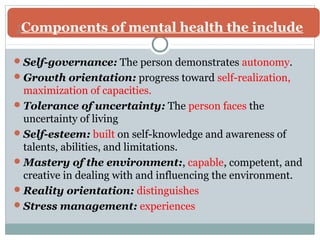
Components : of mental health the include 
Self-governance: The person demonstrates autonomy. 
Growth orientation: progress toward self-realization, 
maximization of capacities. 
Tolerance of uncertainty: The person faces the 
uncertainty of living 
Self-esteem: built on self-knowledge and awareness of 
talents, abilities, and limitations. 
Mastery of the environment:, capable, competent, and 
creative in dealing with and influencing the environment. 
Reality orientation: distinguishes 
Stress management: experiences
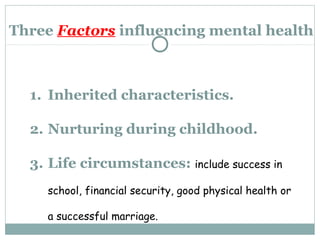
Three Factors influencing mental health 
1. Inherited characteristics. 
2. Nurturing during childhood. 
3. Life circumstances: include success in 
school, financial security, good physical health or 
a successful marriage.
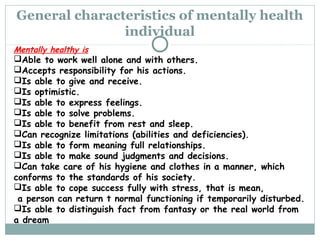
General characteristics of mentally health 
individual 
Mentally healthy is 
Able to work well alone and with others. 
Accepts responsibility for his actions. 
Is able to give and receive. 
Is optimistic. 
Is able to express feelings. 
Is able to solve problems. 
Is able to benefit from rest and sleep. 
Can recognize limitations (abilities and deficiencies). 
Is able to form meaning full relationships. 
Is able to make sound judgments and decisions. 
Can take care of his hygiene and clothes in a manner, which 
conforms to the standards of his society. 
Is able to cope success fully with stress, that is mean, 
a person can return t normal functioning if temporarily disturbed. 
Is able to distinguish fact from fantasy or the real world from 
a dream
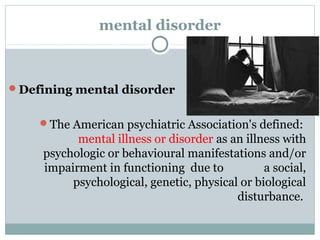
mental disorder 
Defining mental disorder 
The American psychiatric Association's defined: 
mental illness or disorder as an illness with 
psychologic or behavioural manifestations and/or 
impairment in functioning due to a social, 
psychological, genetic, physical or biological 
disturbance.
General criteria for mental Illness include 
Dissatisfaction with one’s characteristics, abilities and 
accomplishments. Dissatisfaction with one’s place in the world 
Ineffective or unsatisfying interpersonal relationships, is unable 
to establish a meaningful relationship . 
Ineffective coping or adaptation to the events in one’s life as well 
as a lack of personal growth. 
Irresponsible or unable to accept responsibility for actions. 
 Doesn't recognize limitations (abilities and deficiencies). 
Exhibits dependency needs because of feelings of inadequacy. 
unable to see reality. 
Is pessimistic. 
Poor self concept. 
Desires or demands immediate gratification.
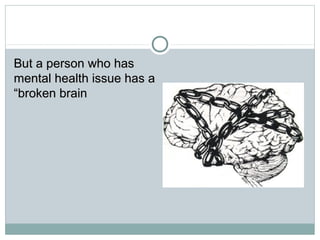
BBuutt aa ppeerrssoonn wwhhoo hhaass 
mmeennttaall hheeaalltthh iissssuuee hhaass aa 
““bbrrookkeenn bbrraaiinn
Conclusion 
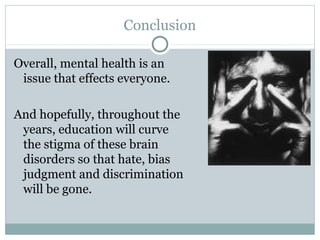
Overall, mental health is an 
issue that effects everyone. 
And hopefully, throughout the 
years, education will curve 
the stigma of these brain 
disorders so that hate, bias 
judgment and discrimination 
will be gone.
Mental health

Mental health

  • 1.
    Mental Health andMental Illness BY DR / WAFAA OSMAN LECTURER OF PSYCHIATRIC MENTAL HEALTH NURSING
  • 2.
    Objectives: At theend of this lecture, each student should be able to: Discuss the parameters of mental health and mental illness through : Define the mental health and mental illness Describe the component of mental health Identify Factors influencing mental health Differentiate between the general characteristic of mental health and mental illness
  • 3.
    Concept of Mental Health WHO defines health as “a state of complete physical, mental, and social well-being, not merely the absence of disease or infirmity”. We say that someone is mentally healthy when we observe in the person a balance between the integrated body, mind and spirit and the environment. Mental health; is the adjustment of human beings through his interaction with the environment to maintain satisfactory equilibrium. Levels of adjustment Unadjusted Less → adjusted → Adjusted.
  • 4.
    Components : ofmental health the include Self-governance: The person demonstrates autonomy. Growth orientation: progress toward self-realization, maximization of capacities. Tolerance of uncertainty: The person faces the uncertainty of living Self-esteem: built on self-knowledge and awareness of talents, abilities, and limitations. Mastery of the environment:, capable, competent, and creative in dealing with and influencing the environment. Reality orientation: distinguishes Stress management: experiences
  • 5.
    Three Factors influencingmental health 1. Inherited characteristics. 2. Nurturing during childhood. 3. Life circumstances: include success in school, financial security, good physical health or a successful marriage.
  • 6.
    General characteristics ofmentally health individual Mentally healthy is Able to work well alone and with others. Accepts responsibility for his actions. Is able to give and receive. Is optimistic. Is able to express feelings. Is able to solve problems. Is able to benefit from rest and sleep. Can recognize limitations (abilities and deficiencies). Is able to form meaning full relationships. Is able to make sound judgments and decisions. Can take care of his hygiene and clothes in a manner, which conforms to the standards of his society. Is able to cope success fully with stress, that is mean, a person can return t normal functioning if temporarily disturbed. Is able to distinguish fact from fantasy or the real world from a dream
  • 7.
    mental disorder Definingmental disorder The American psychiatric Association's defined: mental illness or disorder as an illness with psychologic or behavioural manifestations and/or impairment in functioning due to a social, psychological, genetic, physical or biological disturbance.
  • 8.
    General criteria formental Illness include Dissatisfaction with one’s characteristics, abilities and accomplishments. Dissatisfaction with one’s place in the world Ineffective or unsatisfying interpersonal relationships, is unable to establish a meaningful relationship . Ineffective coping or adaptation to the events in one’s life as well as a lack of personal growth. Irresponsible or unable to accept responsibility for actions.  Doesn't recognize limitations (abilities and deficiencies). Exhibits dependency needs because of feelings of inadequacy. unable to see reality. Is pessimistic. Poor self concept. Desires or demands immediate gratification.
  • 9.
    BBuutt aa ppeerrssoonnwwhhoo hhaass mmeennttaall hheeaalltthh iissssuuee hhaass aa ““bbrrookkeenn bbrraaiinn
  • 10.
    Conclusion Overall, mentalhealth is an issue that effects everyone. And hopefully, throughout the years, education will curve the stigma of these brain disorders so that hate, bias judgment and discrimination will be gone.