Mental Illness
Attention Activity/DiscussionRaise your hand if you know anyone with a mental disorder.What disorder is it?Discuss people we know with disorders and the commonality of them. 10 min
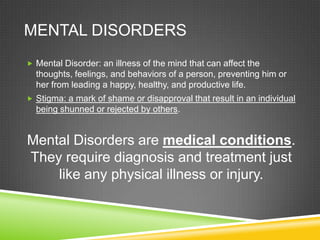
Mental DisordersMental Disorder: an illness of the mind that can affect the thoughts, feelings, and behaviors of a person, preventing him or her from leading a happy, healthy, and productive life. Stigma: a mark of shame or disapproval that result in an individual being shunned or rejected by others.  Mental Disorders are medical conditions.  They require diagnosis and treatment just like any physical illness or injury.
Stigma Worksheet + Discussion10 minutes
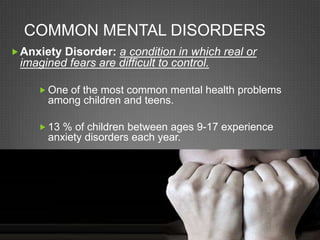
Common Mental DisordersAnxiety Disorder: a condition in which real or imagined fears are difficult to control.One of the most common mental health problems among children and teens.13 % of children between ages 9-17 experience anxiety disorders each year.
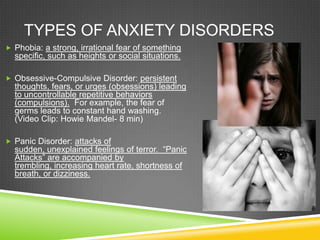
Types of Anxiety disordersPhobia: a strong, irrational fear of something specific, such as heights or social situations.Obsessive-Compulsive Disorder: persistent thoughts, fears, or urges (obsessions) leading to uncontrollable repetitive behaviors  (compulsions).  For example, the fear of germs leads to constant hand washing.           (Video Clip: Howie Mandel- 8 min)  Panic Disorder: attacks of sudden, unexplained feelings of terror.  “Panic Attacks” are accompanied by trembling, increasing heart rate, shortness of breath, or dizziness.
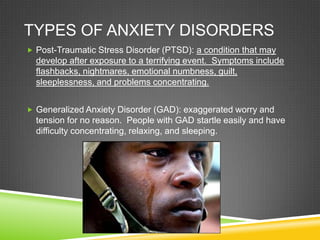
Post-Traumatic Stress Disorder (PTSD): a condition that may develop after exposure to a terrifying event.  Symptoms include flashbacks, nightmares, emotional numbness, guilt, sleeplessness, and problems concentrating.  Generalized Anxiety Disorder (GAD): exaggerated worry and tension for no reason.  People with GAD startle easily and have difficulty concentrating, relaxing, and sleeping.  Types of Anxiety disorders
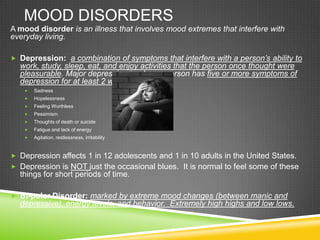
Mood DisordersA mood disorder is an illness that involves mood extremes that interfere with everyday living.Depression:  a combination of symptoms that interfere with a person’s ability to work, study, sleep, eat, and enjoy activities that the person once thought were pleasurable. Major depression is when a person has five or more symptoms of depression for at least 2 weeks: Sadness HopelessnessFeeling WorthlessPessimism Thoughts of death or suicideFatigue and lack of energyAgitation, restlessness, irritabilityDepression affects 1 in 12 adolescents and 1 in 10 adults in the United States.Depression is NOT just the occasional blues.  It is normal to feel some of these things for short periods of time.Bi-polar Disorder: marked by extreme mood changes (between manic and depressive), energy levels, and behavior.  Extremely high highs and low lows.
Video on Depression 5-10 minutes
Other disordersSchizophrenia: a mental disorder in which a person loses contact with reality.  Symptoms Include:DelusionsHallucinationsThought DisordersHypochondria:  an obsession with the idea that you have a serious or life-threatening disease that hasn't been diagnosed yet.   This causes significant anxiety that goes on for months or longer, even though there's no clear medical evidence that you have a serious health problem.
Getting HelpProbably the best way to know if you might have a mental disorder is if you’re not feeling, thinking, or acting like yourself- or if people close to you notice changes in your behavior.MedicationCounselingSupport GroupsSelf-Help and lifestyle changesTalk to Parents or other responsible adultsSchool CounselorsChurch LeadersYour Doctor

Mental illness[1]

  • 1.
  • 2.
    Attention Activity/DiscussionRaise yourhand if you know anyone with a mental disorder.What disorder is it?Discuss people we know with disorders and the commonality of them. 10 min
  • 3.
    Mental DisordersMental Disorder:an illness of the mind that can affect the thoughts, feelings, and behaviors of a person, preventing him or her from leading a happy, healthy, and productive life. Stigma: a mark of shame or disapproval that result in an individual being shunned or rejected by others. Mental Disorders are medical conditions. They require diagnosis and treatment just like any physical illness or injury.
  • 4.
    Stigma Worksheet +Discussion10 minutes
  • 5.
    Common Mental DisordersAnxietyDisorder: a condition in which real or imagined fears are difficult to control.One of the most common mental health problems among children and teens.13 % of children between ages 9-17 experience anxiety disorders each year.
  • 6.
    Types of AnxietydisordersPhobia: a strong, irrational fear of something specific, such as heights or social situations.Obsessive-Compulsive Disorder: persistent thoughts, fears, or urges (obsessions) leading to uncontrollable repetitive behaviors (compulsions). For example, the fear of germs leads to constant hand washing. (Video Clip: Howie Mandel- 8 min) Panic Disorder: attacks of sudden, unexplained feelings of terror. “Panic Attacks” are accompanied by trembling, increasing heart rate, shortness of breath, or dizziness.
  • 7.
    Post-Traumatic Stress Disorder(PTSD): a condition that may develop after exposure to a terrifying event. Symptoms include flashbacks, nightmares, emotional numbness, guilt, sleeplessness, and problems concentrating. Generalized Anxiety Disorder (GAD): exaggerated worry and tension for no reason. People with GAD startle easily and have difficulty concentrating, relaxing, and sleeping. Types of Anxiety disorders
  • 8.
    Mood DisordersA mooddisorder is an illness that involves mood extremes that interfere with everyday living.Depression: a combination of symptoms that interfere with a person’s ability to work, study, sleep, eat, and enjoy activities that the person once thought were pleasurable. Major depression is when a person has five or more symptoms of depression for at least 2 weeks: Sadness HopelessnessFeeling WorthlessPessimism Thoughts of death or suicideFatigue and lack of energyAgitation, restlessness, irritabilityDepression affects 1 in 12 adolescents and 1 in 10 adults in the United States.Depression is NOT just the occasional blues. It is normal to feel some of these things for short periods of time.Bi-polar Disorder: marked by extreme mood changes (between manic and depressive), energy levels, and behavior. Extremely high highs and low lows.
  • 9.
  • 10.
    Other disordersSchizophrenia: amental disorder in which a person loses contact with reality. Symptoms Include:DelusionsHallucinationsThought DisordersHypochondria: an obsession with the idea that you have a serious or life-threatening disease that hasn't been diagnosed yet. This causes significant anxiety that goes on for months or longer, even though there's no clear medical evidence that you have a serious health problem.
  • 11.
    Getting HelpProbably thebest way to know if you might have a mental disorder is if you’re not feeling, thinking, or acting like yourself- or if people close to you notice changes in your behavior.MedicationCounselingSupport GroupsSelf-Help and lifestyle changesTalk to Parents or other responsible adultsSchool CounselorsChurch LeadersYour Doctor