Mental Wellbeing
Rachel Weiss
@Rowan_Rachel
Rachel.weiss@rowan-consultancy.co.uk
www.facebook.com/RowanConsultancy
Workshop purpose:
After this training, you will
• Appreciate the difference between mental
health and mental wellbeing
• Be familiar with the concept of Wellbeing
Champions
• Know of the HSE Management Standards
• Distinguish between Depression, Anxiety &
Stress and know ways to mitigate them.
CIPD definition of well-being
Creating an environment
to promote a state of contentment
which allows an employee to flourish and
achieve their full potential
for the benefit of themselves and their
organisation
5 components:
Physical, Mental, Social, Spiritual, Intellectual
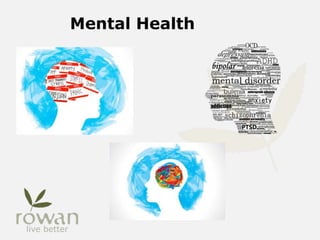
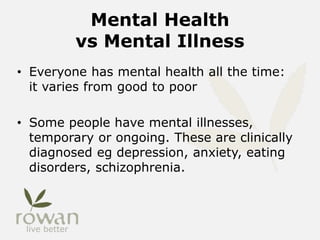
Mental Health
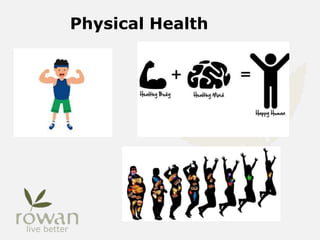
Physical Health
Mental Health
vs Mental Illness
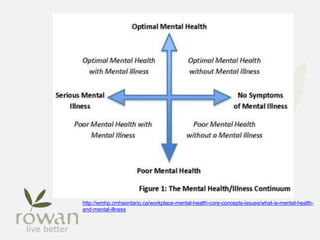
• Everyone has mental health all the time:
it varies from good to poor
• Some people have mental illnesses,
temporary or ongoing. These are clinically
diagnosed eg depression, anxiety, eating
disorders, schizophrenia.
http://wmhp.cmhaontario.ca/workplace-mental-health-core-concepts-issues/what-is-mental-health-
and-mental-illness
In Scotland:
• 1 in 4 people experiences a mental health
problem at some point in their lifetime.
• at any one time 1 in 6 people has a
mental health problem.
Mental Health Foundation 2016
Legal, business and moral cases
Depression
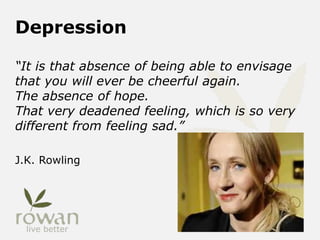
“It is that absence of being able to envisage
that you will ever be cheerful again.
The absence of hope.
That very deadened feeling, which is so very
different from feeling sad.”
J.K. Rowling
Depression
Thoughts:
• I am no good
• Life is no good
• Nothing will ever get better
Feelings
Hopeless, helpless, no pleasure in anything
Tired and withdrawn
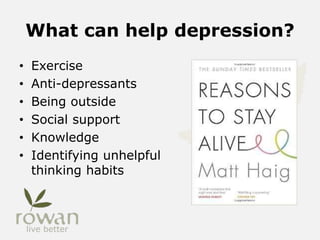
What can help depression?
• Exercise
• Anti-depressants
• Being outside
• Social support
• Knowledge
• Identifying unhelpful
thinking habits
Anxiety
“You know that feeling when you’re rocking on the
back legs of your chair and suddenly for just a
split second you think you’re about to fall?
Imagine that feeling being frozen in time and
lodged in your chest for hours or days, and
imagine with it a sense of doom and dread sticking
around too, but sometimes you don’t even know
why.”
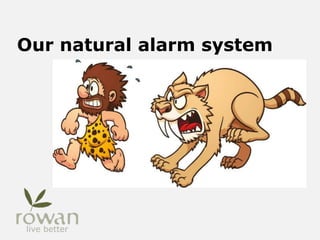
Our natural alarm system
Anxiety
Thoughts
• Something bad’s going to happen
• I’m going to pass out
Feelings
Fear or panic On edge
Worry dizzy, nausea
Behaviour: Talking fast, restless
What can help anxiety?
• Breathing
• Relaxation
• Medication
• Reality checks
• Identifying unhelpful thinking habits
STOP
What is Stress?
Stress occurs….
….when the perceived demands on us
exceed our perceived resources
Stress and Burnout
• Perfectionist, conscientious people
• People who live to serve others
What helps?
• Learning to look after yourself
• Exercise, relaxing, friends, walks, solitude
• Recover, then learn new habits
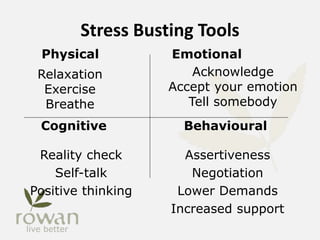
Stress Busting Tools
Physical Emotional
Cognitive Behavioural
Relaxation
Exercise
Breathe
Acknowledge
Accept your emotion
Tell somebody
Reality check
Self-talk
Positive thinking
Assertiveness
Negotiation
Lower Demands
Increased support
Supporting colleagues
• Ask once, ask twice
• Take it seriously
• Listen and reflect
• Ask questions
• Don't try and fix it
• Build your knowledge
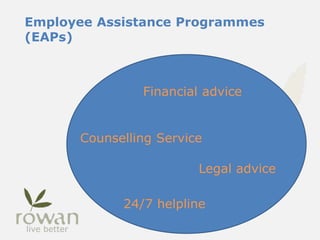
Employee Assistance Programmes
(EAPs)
Counselling Service
Financial advice
Legal advice
24/7 helpline
Healthy working lives
0800 019 221
Advice line on
workplace health
issues
www.healthyworkinglives.com
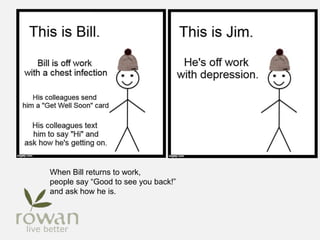
When Bill returns to work,
people say “Good to see you back!”
and ask how he is.
Ways to promote mental
health and wellbeing at
work
• Good employment practice
• Effective return-to-work and
rehabilitation strategies
• A line manager who cares
• Proactive employee well-being
support
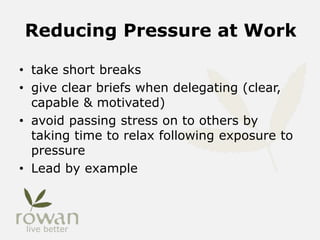
Reducing Pressure at Work
• take short breaks
• give clear briefs when delegating (clear,
capable & motivated)
• avoid passing stress on to others by
taking time to relax following exposure to
pressure
• Lead by example
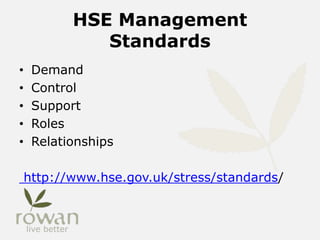
HSE Management
Standards
• Demand
• Control
• Support
• Roles
• Relationships
http://www.hse.gov.uk/stress/standards/
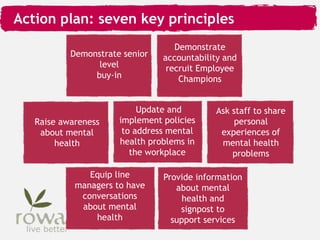
Demonstrate senior
level
buy-in
Raise awareness
about mental
health
Update and
implement policies
to address mental
health problems in
the workplace
Ask staff to share
personal
experiences of
mental health
problems
Equip line
managers to have
conversations
about mental
health
Provide information
about mental
health and
signpost to
support services
Demonstrate
accountability and
recruit Employee
Champions
Action plan: seven key principles
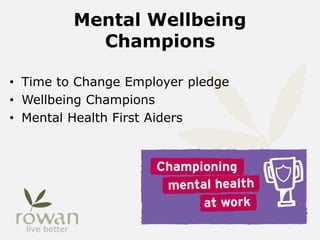
Mental Wellbeing
Champions
• Time to Change Employer pledge
• Wellbeing Champions
• Mental Health First Aiders
Shared responsibility for
our health
Our employer has some responsibility and so do
we.
To work well we need to:
• Take responsibility for own wellbeing
• Monitor our own mental and physical health
• Seek support when needed
Caring for my
mental
wellbeing
How do you look after
your mental health?
Rowan courses
Manager as Coach
Perth, March 25th
Managing Mental Health
Perth, May 13th or online June 11th
2 hours
Mediation Skills
Perth, Sept 24 and 25
Join the Rowan conversations
www.facebook.com/RowanConsultancy
@Rowan_Rachel

Mental Wellbeing

  • 1.
  • 2.
    Workshop purpose: After thistraining, you will • Appreciate the difference between mental health and mental wellbeing • Be familiar with the concept of Wellbeing Champions • Know of the HSE Management Standards • Distinguish between Depression, Anxiety & Stress and know ways to mitigate them.
  • 3.
    CIPD definition ofwell-being Creating an environment to promote a state of contentment which allows an employee to flourish and achieve their full potential for the benefit of themselves and their organisation 5 components: Physical, Mental, Social, Spiritual, Intellectual
  • 4.
  • 5.
  • 6.
    Mental Health vs MentalIllness • Everyone has mental health all the time: it varies from good to poor • Some people have mental illnesses, temporary or ongoing. These are clinically diagnosed eg depression, anxiety, eating disorders, schizophrenia.
  • 7.
  • 8.
    In Scotland: • 1in 4 people experiences a mental health problem at some point in their lifetime. • at any one time 1 in 6 people has a mental health problem. Mental Health Foundation 2016
  • 10.
  • 11.
    Depression “It is thatabsence of being able to envisage that you will ever be cheerful again. The absence of hope. That very deadened feeling, which is so very different from feeling sad.” J.K. Rowling
  • 12.
    Depression Thoughts: • I amno good • Life is no good • Nothing will ever get better Feelings Hopeless, helpless, no pleasure in anything Tired and withdrawn
  • 13.
    What can helpdepression? • Exercise • Anti-depressants • Being outside • Social support • Knowledge • Identifying unhelpful thinking habits
  • 14.
    Anxiety “You know thatfeeling when you’re rocking on the back legs of your chair and suddenly for just a split second you think you’re about to fall? Imagine that feeling being frozen in time and lodged in your chest for hours or days, and imagine with it a sense of doom and dread sticking around too, but sometimes you don’t even know why.”
  • 15.
  • 16.
    Anxiety Thoughts • Something bad’sgoing to happen • I’m going to pass out Feelings Fear or panic On edge Worry dizzy, nausea Behaviour: Talking fast, restless
  • 17.
    What can helpanxiety? • Breathing • Relaxation • Medication • Reality checks • Identifying unhelpful thinking habits
  • 18.
  • 19.
    What is Stress? Stressoccurs…. ….when the perceived demands on us exceed our perceived resources
  • 20.
    Stress and Burnout •Perfectionist, conscientious people • People who live to serve others What helps? • Learning to look after yourself • Exercise, relaxing, friends, walks, solitude • Recover, then learn new habits
  • 21.
    Stress Busting Tools PhysicalEmotional Cognitive Behavioural Relaxation Exercise Breathe Acknowledge Accept your emotion Tell somebody Reality check Self-talk Positive thinking Assertiveness Negotiation Lower Demands Increased support
  • 22.
    Supporting colleagues • Askonce, ask twice • Take it seriously • Listen and reflect • Ask questions • Don't try and fix it • Build your knowledge
  • 24.
    Employee Assistance Programmes (EAPs) CounsellingService Financial advice Legal advice 24/7 helpline
  • 25.
    Healthy working lives 0800019 221 Advice line on workplace health issues www.healthyworkinglives.com
  • 26.
    When Bill returnsto work, people say “Good to see you back!” and ask how he is.
  • 27.
    Ways to promotemental health and wellbeing at work • Good employment practice • Effective return-to-work and rehabilitation strategies • A line manager who cares • Proactive employee well-being support
  • 28.
    Reducing Pressure atWork • take short breaks • give clear briefs when delegating (clear, capable & motivated) • avoid passing stress on to others by taking time to relax following exposure to pressure • Lead by example
  • 29.
    HSE Management Standards • Demand •Control • Support • Roles • Relationships http://www.hse.gov.uk/stress/standards/
  • 30.
    Demonstrate senior level buy-in Raise awareness aboutmental health Update and implement policies to address mental health problems in the workplace Ask staff to share personal experiences of mental health problems Equip line managers to have conversations about mental health Provide information about mental health and signpost to support services Demonstrate accountability and recruit Employee Champions Action plan: seven key principles
  • 31.
    Mental Wellbeing Champions • Timeto Change Employer pledge • Wellbeing Champions • Mental Health First Aiders
  • 32.
    Shared responsibility for ourhealth Our employer has some responsibility and so do we. To work well we need to: • Take responsibility for own wellbeing • Monitor our own mental and physical health • Seek support when needed
  • 33.
  • 34.
    How do youlook after your mental health?
  • 35.
    Rowan courses Manager asCoach Perth, March 25th Managing Mental Health Perth, May 13th or online June 11th 2 hours Mediation Skills Perth, Sept 24 and 25
  • 36.
    Join the Rowanconversations www.facebook.com/RowanConsultancy @Rowan_Rachel

Editor's Notes

  • #9 My physical symptoms and Garrys
  • #11 Management of Health and Safety at Work Regulations 1999
  • #29 How much, of what, by when?
  • #32 As a Champion you will raise awareness of mental health and help to break down stigma in the workplacChampions have a leading role in ending stigma and the culture of silence