DEPRESSION AND
MANIA
BY
A.PAVITHRA
DEPRESSION
• DEFINITION: It is a group of conditions associated with the
elevation or lowering of a persons mood.
• Depression is the most common mood disorder affecting
approximately 20 million people each year.
Factors causing depression
• Generally there is no particular evidence or cause for depression.
• But some factors that may contribute to its development are:
• Psychological
• Biological
• Environment
• Some evidences also shows that some people with a genetic predisposition to
major depression vulnerable to the disorder.
• But however not everyone with a family history develops depression.
• Some life events that may trigger episodes of depression:
• Death of a loved one
• Major loss or change
• Chronic stress
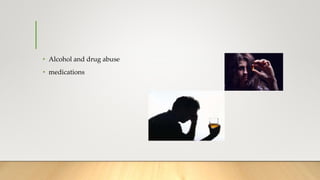
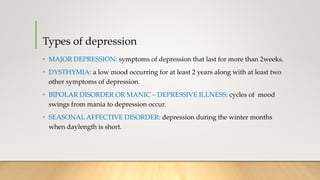
• Alcohol and drug abuse
• medications
Types of depression
• MAJOR DEPRESSION: symptoms of depression that last for more than 2weeks.
• DYSTHYMIA: a low mood occurring for at least 2 years along with at least two
other symptoms of depression.
• BIPOLAR DISORDER OR MANIC – DEPRESSIVE ILLNESS: cycles of mood
swings from mania to depression occur.
• SEASONAL AFFECTIVE DISORDER: depression during the winter months
when daylength is short.
• POST PARTUM DEPRESSION: Can occur soon after child birth .
• Hormonal and life style changes.
• A TYPICAL DEPRESSION: Improved mood when exposed to pleasurable
positive events
• Increased weight, oversleeping, anxiety, rejection sensitivity.
EPIDEMIOLOGY
• Globally more than 350 million people of all ages suffer from depression. (WHO)
• For the age group 15-44 major depression is the leading cause of disability in the
U.S.
• Women are nearly twice as likely to suffer from a major depressive disorder than
men .
• With age the symptoms of depression become even more severe.
• About thirty percent of people with depressive illness attempt suicide.
ETIOLOGY
• Genetic cause
• • Environmental factors
• • Biochemical factors : Biochemical theory of depression postulates a deficiency
of neurotransmitters in certain areas of the brain (noradrenaline, serotonin, and
dopamine).
• • Dopaminergic activity : reduced in case of depression, over activity in mania.
• • Endocrine factors
• - hypothyroidism, cushing’s syndrome etc
• Abuse of Drugs or Alcohol
• • Hormone Level Changes
• • Physical illness and side effects of medications
PATHOPHYSIOLOGY
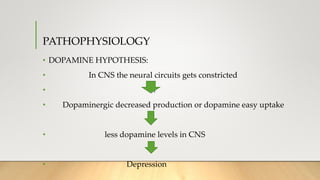
• DOPAMINE HYPOTHESIS:
• In CNS the neural circuits gets constricted
• |
• Dopaminergic decreased production or dopamine easy uptake
• less dopamine levels in CNS
• Depression
• The Serotonin-only Hypothesis - emphasizes the role
of serotonin in depression and downplays noradrenaline.
• - But the serotonin-only theory has shortcomings:
• - it does not explain why there is a delay in onset of clinical
relief
• - it does not explain the role of NA in depression
• PERMISSIVE HYPOTHESIS:
• It suggest that low levels of serotonin [5-HT] have a permissive role in the
development of affective disorder.
• The causative neurotransmitter is nor-adrenaline deficit of which causes
depression and functional excess causes mania.
• Increasing 5-HT level in brain corrects the affective disorders by removing the
permissive effect of low 5-HT.
• NEUROENDOCRINE HYPOTHESIS:
• Their mechanism of action focus on the monoamine hypothesis for depression
which centers on the disruption of serotonergic, noradrenergic, and
dopaminergic neurotransmission in the brain.
• It includes changes in the hypothalamic – pituitary-adrenal and thyroid axes in
growth hormone and prolactin secrection.
RISK FACTORS
• Thyroid diseases
• Diabetes
• Carcinoma
• Pernicious anaemia
• Neurological disorders
• Viral illness
• Heart diseases
TREATMENT
• MAO INHIBITORS: Isocarboxazid , phenelzine , tranylcypromine
• TCAs [ Tricyclic antidepressants]:
• Selective serotonin reuptake inhibitors
• A typical antidepressants : venlafaxine , duloxetine
• NON PHARMACOLOGICAL THERAPY:
• Stress reduction
• Social support
• Sufficient sleep
• psycotherapy
MANIA
MANIA
• DEFINITION: A mental illness marked by periods of great
excitement or euphoria , delusions, and overactivity.
SIGNS AND SYMPTOMS
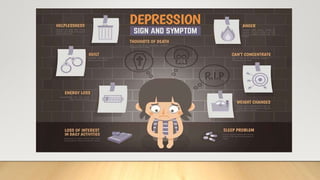
• Increased activity, energy, or agitation
• Decreased need for sleep
• Unusual talkativeness
• Racing thoughts
• Agressiveness
• Flight of ideas
• Weight loss
TREATMENT
• MOOD STABILIZERS: lithium , carbamazepine
• ANTICONVULSANTS; gabapentine , lamotrigine
• BENZODIAZEPINES: lorazepam , clonazepam
Depression and mania

Depression and mania

  • 1.
  • 2.
    DEPRESSION • DEFINITION: Itis a group of conditions associated with the elevation or lowering of a persons mood. • Depression is the most common mood disorder affecting approximately 20 million people each year.
  • 3.
    Factors causing depression •Generally there is no particular evidence or cause for depression. • But some factors that may contribute to its development are: • Psychological • Biological • Environment
  • 4.
    • Some evidencesalso shows that some people with a genetic predisposition to major depression vulnerable to the disorder. • But however not everyone with a family history develops depression. • Some life events that may trigger episodes of depression: • Death of a loved one • Major loss or change • Chronic stress
  • 5.
    • Alcohol anddrug abuse • medications
  • 6.
    Types of depression •MAJOR DEPRESSION: symptoms of depression that last for more than 2weeks. • DYSTHYMIA: a low mood occurring for at least 2 years along with at least two other symptoms of depression. • BIPOLAR DISORDER OR MANIC – DEPRESSIVE ILLNESS: cycles of mood swings from mania to depression occur. • SEASONAL AFFECTIVE DISORDER: depression during the winter months when daylength is short.
  • 7.
    • POST PARTUMDEPRESSION: Can occur soon after child birth . • Hormonal and life style changes. • A TYPICAL DEPRESSION: Improved mood when exposed to pleasurable positive events • Increased weight, oversleeping, anxiety, rejection sensitivity.
  • 8.
    EPIDEMIOLOGY • Globally morethan 350 million people of all ages suffer from depression. (WHO) • For the age group 15-44 major depression is the leading cause of disability in the U.S. • Women are nearly twice as likely to suffer from a major depressive disorder than men . • With age the symptoms of depression become even more severe. • About thirty percent of people with depressive illness attempt suicide.
  • 9.
    ETIOLOGY • Genetic cause •• Environmental factors • • Biochemical factors : Biochemical theory of depression postulates a deficiency of neurotransmitters in certain areas of the brain (noradrenaline, serotonin, and dopamine). • • Dopaminergic activity : reduced in case of depression, over activity in mania. • • Endocrine factors
  • 10.
    • - hypothyroidism,cushing’s syndrome etc • Abuse of Drugs or Alcohol • • Hormone Level Changes • • Physical illness and side effects of medications
  • 12.
    PATHOPHYSIOLOGY • DOPAMINE HYPOTHESIS: •In CNS the neural circuits gets constricted • | • Dopaminergic decreased production or dopamine easy uptake • less dopamine levels in CNS • Depression
  • 13.
    • The Serotonin-onlyHypothesis - emphasizes the role of serotonin in depression and downplays noradrenaline. • - But the serotonin-only theory has shortcomings: • - it does not explain why there is a delay in onset of clinical relief • - it does not explain the role of NA in depression
  • 14.
    • PERMISSIVE HYPOTHESIS: •It suggest that low levels of serotonin [5-HT] have a permissive role in the development of affective disorder. • The causative neurotransmitter is nor-adrenaline deficit of which causes depression and functional excess causes mania. • Increasing 5-HT level in brain corrects the affective disorders by removing the permissive effect of low 5-HT.
  • 15.
    • NEUROENDOCRINE HYPOTHESIS: •Their mechanism of action focus on the monoamine hypothesis for depression which centers on the disruption of serotonergic, noradrenergic, and dopaminergic neurotransmission in the brain. • It includes changes in the hypothalamic – pituitary-adrenal and thyroid axes in growth hormone and prolactin secrection.
  • 16.
    RISK FACTORS • Thyroiddiseases • Diabetes • Carcinoma • Pernicious anaemia • Neurological disorders • Viral illness • Heart diseases
  • 17.
    TREATMENT • MAO INHIBITORS:Isocarboxazid , phenelzine , tranylcypromine • TCAs [ Tricyclic antidepressants]: • Selective serotonin reuptake inhibitors • A typical antidepressants : venlafaxine , duloxetine • NON PHARMACOLOGICAL THERAPY: • Stress reduction • Social support
  • 18.
  • 19.
  • 20.
    MANIA • DEFINITION: Amental illness marked by periods of great excitement or euphoria , delusions, and overactivity.
  • 21.
    SIGNS AND SYMPTOMS •Increased activity, energy, or agitation • Decreased need for sleep • Unusual talkativeness • Racing thoughts • Agressiveness • Flight of ideas • Weight loss
  • 22.
    TREATMENT • MOOD STABILIZERS:lithium , carbamazepine • ANTICONVULSANTS; gabapentine , lamotrigine • BENZODIAZEPINES: lorazepam , clonazepam