DEPOLARIZING
NEUROMUSCULAR BLOCKERS


               Prepared by:
           Dr. Sara Khalid Memon
               3rd year, MBBS
Background :
Generally, when an impulse reaches to the muscle, it
causes it to contract when it is excited. This occurs
in various stages and the main player in this whole
sequence is the NEUROTRANSMITTER that is
released from the nerve ending onto the motor end
plate !

This neurotransmitter works when binds to the
receptors on the motor end plate. If it binds and
causes intrinsic activity of the receptor then it
would b called as Agonist , and if a substance just
binds to receptors without causing intrinsic activity
then it is said to b Antagonist.
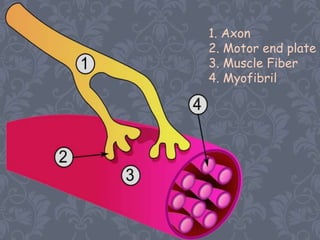
1. Axon
2. Motor end plate
3. Muscle Fiber
4. Myofibril
Receptor blockers can be depolarizing or Non
depolarizing depending upon the activity they
cause in the motor end plate (muscle).

Blockers are said to be non depolarizing when they
do not elicit any action potential or any activity in
the effector and block the action of endogenous
ligand by just binding to the receptors. On the
other hand, Depolarizing blockers are those which
do elicit the action potentials in the effector but
make effector site desensitized and hence
endogenous ligand (epinephrine and norepinephrine
here) is unable to produce response.
Depolarizing Neuromuscular Blockers
include:

>> Succinyl-Choline
>> Decamethonium


Note: These are not the antagonists in actual
sense, infact there action is of
agonist, therefore acetylcholine itself
pharmacologically be used as a depolarizing NMB
!
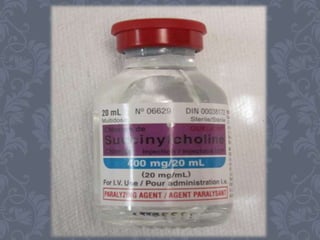
Succinylcholine:
>Other names: Suxamethonium Chloride
(suxamthonium).
-Sold under trade names: Anectine, Quelicine, Scoline
>Works on the nicotinic receptors (as acetylcholine
does)
> Onset of action is very rapid (within few seconds)
and its duration of action doesn’t last for more then
few minutes.
> Degraded by pseudocholine esterase
(butyrylcholine esterase in plasma) into
succinylmonocholine and choline and is excreted in
Urine.
Mechanism Of Action:

Succinylcholine acts on the nicotinic receptors of the
muscles, stimulates them and then ultimately cause
their relaxation.

> This process occurs in 2 steps;

> Phase I: During phase I (depolarizing phase), they
cause muscular fasciculations (muscle twitches) while
they are depolarizing the muscle fibers.
> Phase II: After sufficient depolarization has
occurred, phase II (desensitizing phase) sets in and
the muscle is no longer responsive to acetylcholine
released by the nerve endings.
Explanation:
> In normal skeletal muscle, acetylcholine dissociates
from the receptor following depolarization and is
rapidly hydrolyzed by acetylcholinesterase.

> Suxamethonium has a longer duration of effect than
acetylcholine, and is not hydrolyzed by
acetylcholinesterase. By maintaining the membrane
potential above threshold, it does not allow the muscle
cell to repolarize. When acetylcholine binds to an
already depolarized receptor, it cannot cause further
depolarization.

>This later leads to Paralysis of the affected muscles!!!!
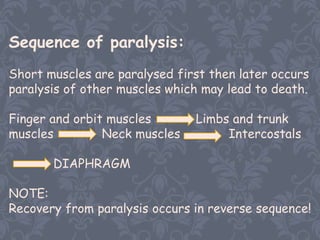
Sequence of paralysis:
Short muscles are paralysed first then later occurs
paralysis of other muscles which may lead to death.

Finger and orbit muscles       Limbs and trunk
muscles         Neck muscles        Intercostals

       DIAPHRAGM

NOTE:
Recovery from paralysis occurs in reverse sequence!
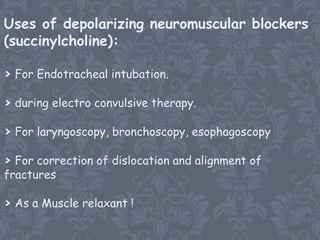
Uses of depolarizing neuromuscular blockers
(succinylcholine):

> For Endotracheal intubation.

> during electro convulsive therapy.

> For laryngoscopy, bronchoscopy, esophagoscopy

> For correction of dislocation and alignment of
fractures

> As a Muscle relaxant !
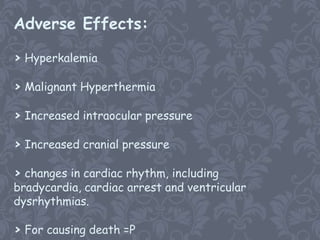
Adverse Effects:

> Hyperkalemia

> Malignant Hyperthermia

> Increased intraocular pressure

> Increased cranial pressure

> changes in cardiac rhythm, including
bradycardia, cardiac arrest and ventricular
dysrhythmias.

> For causing death =P
The End .. !


        THANK YOU !!! =)

Depolarizing Neuromuscular Blockers

  • 1.
    DEPOLARIZING NEUROMUSCULAR BLOCKERS Prepared by: Dr. Sara Khalid Memon 3rd year, MBBS
  • 2.
    Background : Generally, whenan impulse reaches to the muscle, it causes it to contract when it is excited. This occurs in various stages and the main player in this whole sequence is the NEUROTRANSMITTER that is released from the nerve ending onto the motor end plate ! This neurotransmitter works when binds to the receptors on the motor end plate. If it binds and causes intrinsic activity of the receptor then it would b called as Agonist , and if a substance just binds to receptors without causing intrinsic activity then it is said to b Antagonist.
  • 3.
    1. Axon 2. Motorend plate 3. Muscle Fiber 4. Myofibril
  • 4.
    Receptor blockers canbe depolarizing or Non depolarizing depending upon the activity they cause in the motor end plate (muscle). Blockers are said to be non depolarizing when they do not elicit any action potential or any activity in the effector and block the action of endogenous ligand by just binding to the receptors. On the other hand, Depolarizing blockers are those which do elicit the action potentials in the effector but make effector site desensitized and hence endogenous ligand (epinephrine and norepinephrine here) is unable to produce response.
  • 5.
    Depolarizing Neuromuscular Blockers include: >>Succinyl-Choline >> Decamethonium Note: These are not the antagonists in actual sense, infact there action is of agonist, therefore acetylcholine itself pharmacologically be used as a depolarizing NMB !
  • 6.
    Succinylcholine: >Other names: SuxamethoniumChloride (suxamthonium). -Sold under trade names: Anectine, Quelicine, Scoline >Works on the nicotinic receptors (as acetylcholine does) > Onset of action is very rapid (within few seconds) and its duration of action doesn’t last for more then few minutes. > Degraded by pseudocholine esterase (butyrylcholine esterase in plasma) into succinylmonocholine and choline and is excreted in Urine.
  • 7.
    Mechanism Of Action: Succinylcholineacts on the nicotinic receptors of the muscles, stimulates them and then ultimately cause their relaxation. > This process occurs in 2 steps; > Phase I: During phase I (depolarizing phase), they cause muscular fasciculations (muscle twitches) while they are depolarizing the muscle fibers. > Phase II: After sufficient depolarization has occurred, phase II (desensitizing phase) sets in and the muscle is no longer responsive to acetylcholine released by the nerve endings.
  • 8.
    Explanation: > In normalskeletal muscle, acetylcholine dissociates from the receptor following depolarization and is rapidly hydrolyzed by acetylcholinesterase. > Suxamethonium has a longer duration of effect than acetylcholine, and is not hydrolyzed by acetylcholinesterase. By maintaining the membrane potential above threshold, it does not allow the muscle cell to repolarize. When acetylcholine binds to an already depolarized receptor, it cannot cause further depolarization. >This later leads to Paralysis of the affected muscles!!!!
  • 9.
    Sequence of paralysis: Shortmuscles are paralysed first then later occurs paralysis of other muscles which may lead to death. Finger and orbit muscles Limbs and trunk muscles Neck muscles Intercostals DIAPHRAGM NOTE: Recovery from paralysis occurs in reverse sequence!
  • 10.
    Uses of depolarizingneuromuscular blockers (succinylcholine): > For Endotracheal intubation. > during electro convulsive therapy. > For laryngoscopy, bronchoscopy, esophagoscopy > For correction of dislocation and alignment of fractures > As a Muscle relaxant !
  • 11.
    Adverse Effects: > Hyperkalemia >Malignant Hyperthermia > Increased intraocular pressure > Increased cranial pressure > changes in cardiac rhythm, including bradycardia, cardiac arrest and ventricular dysrhythmias. > For causing death =P
  • 13.
    The End ..! THANK YOU !!! =)