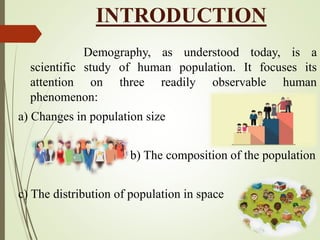
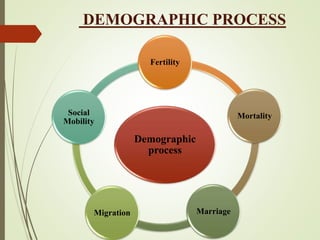
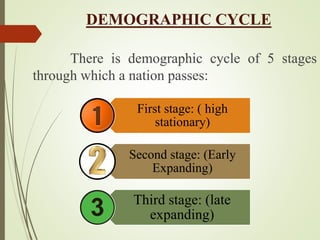
This document presents information about demography and the demographic cycle. It defines demography as the scientific study of human population, focusing on changes in population size, composition, and distribution. It describes the five stages of the demographic cycle that a nation passes through: high stationary, early expanding, late expanding, low stationary, and decline. The conclusion states that community medicine is concerned with population because health depends on the dynamic relationship between population numbers, space occupied, and skills for meeting needs. Demographic statistics in India come from censuses, surveys, and registration of vital events.





![Census[1].pdf](https://cdn.slidesharecdn.com/ss_thumbnails/census1-230628052618-f0875710-thumbnail.jpg?width=640&height=640&fit=bounds)


