FASNA K.P
MBA
B-BATCH
ROLL NO : 19
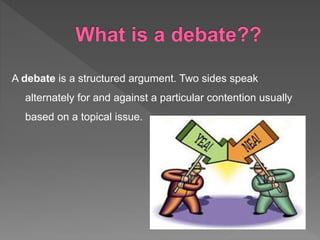
A debate is a structured argument. Two sides speak
alternately for and against a particular contention usually
based on a topical issue.
 Proposition : Also called the resolution, is the subject for debate. It
is presented by the moderator in the form of a statement.
 Affirmative : The affirmative side of the debate takes the position that
the statement made is true.
 Negative : The negative side would take the opposite position.
 Audience : In academic debate neither side is allowed to interrupt the
other. The debate moderator alternates between one side and the other,
gives them specific blocks of time and holds them to those times. The
audience evaluates the arguments of the two sides. Whether it is by the
audience itself or by selected judges, each side is rated based on its
arguments.
 Introduce the topic
 Assign the Affirmative and the Negative
 Give Time for Research
 Keep Track of Time
 Make a Judgment
 Style
The manner in which you communicate your arguments. This is the most
basic part of debating to master. Content and strategy are worth little
unless you deliver your material in a confident and persuasive way.
 Speed
It is vital to talk at a pace which is fast enough to sound intelligent and allow
you time to say what you want, but slow enough to be easily
understood.
 Tone
Varying tone is what makes you sound interesting. Listening to one tone for
an entire presentation is boring.
 Volume
Speaking quite loudly is sometimes a necessity. Speaking too
quietly is clearly disastrous since no one will be able to hear
you.
 Clarity
It is also important to keep it simple.
 Use of notes and eye contact
Notes are essential, and there is absolutely no point in trying
to speak without notes. Eye contact with the audience is
very important, but keep shifting your gaze. No one likes to
be stared at.
 Content
Content is what you actually say in the debate.
 Case (argument)- the whole
Introduction - The case your group is making must be outlined
in the introduction. This involves stating your main
arguments and explaining the general thrust of your case.
Conclusion - At the end, once everyone has spoken, it is useful
to briefly summarize what your group has said and why.
 Debate Research
For a Debater, knowledge is power. No matter how eloquent or passionate a
speech may be, it will ultimately be toothless with key information and
evidence to support the argumentation. Thus, debaters will have to be well-
read and well-researched if they are to improve
 Constructing a speech
Arguments and rebuttals (disproving). No doubt these two elements will form
the backbone of speech.
 The Psychological Dimension of Debate
Debaters are no doubt aware of the physical aspects of debate (listening and
speaking) as well as its mental aspects (thinking of arguments and rebuttals).
 Practical Advice
Unless gifted with a perfect, photographic memory, speakers will need to use a
notebook or palm cards to write down the components of the speeches to
be delivered.
 Training Tips
Before the start of each training session, each debater should decide on a
particular area to focus on and pay it particular attention. For instance, a
debater could choose to pay more attention to controlling hand gestures,
giving better points of information or rebutting stronger.
 You must be recognized.
 During debate, no member can attack or question the motives of
another member.
 Speaker time limits
 If the member interrupts the speaker, the time consumed will be
taken out of the speaker's allotted time.
 The topic to be debated should be announced.
 The participants should be aware of the topic
 Participants should be aware of the procedures to be followed.
 Select participants to take part in the debate and divide debaters into
two teams . One team in support of the resolution (pro) and one team in
opposition to the resolution (con). The most common number of
members per team is two, but more than two may be used.
 Select a chairperson and a timekeeper.
 Allow sufficient time for participants in the debate to prepare
"constructive arguments." Constructive arguments should be based
upon three to five major points which are logically developed
 The way you present it verbally will have an effect on your audience.
 Maintain eye contact with the people around the room, especially the
participants.
 Start by taking a deep breath, look up at the mediator and audience
and greet them.
"good evening/morning adjudicator, fellow debaters, audience. My name is Sam.”
 Speak slowly , carefully, and somewhat convincingly.
 Be relaxed
Do not worry about what you have just said, concentrate on what you are about to
say.
 Don't give up
 Use hand gestures that illustrate your argument.
 http://senate.gcsu.edu/content/rules-
conducting-debate
 http://www2.maxwell.syr.edu/plegal/crit3/a
5.html
 http://busyteacher.org/7245-conducting-
class-debate-essential-tips.html
 http://debateable.org/debate-strategies
 http://www.ehow.com/info_8489935_eleme
nts-debate.html

Debate

  • 1.
  • 2.
    A debate isa structured argument. Two sides speak alternately for and against a particular contention usually based on a topical issue.
  • 3.
     Proposition :Also called the resolution, is the subject for debate. It is presented by the moderator in the form of a statement.  Affirmative : The affirmative side of the debate takes the position that the statement made is true.  Negative : The negative side would take the opposite position.  Audience : In academic debate neither side is allowed to interrupt the other. The debate moderator alternates between one side and the other, gives them specific blocks of time and holds them to those times. The audience evaluates the arguments of the two sides. Whether it is by the audience itself or by selected judges, each side is rated based on its arguments.
  • 4.
     Introduce thetopic  Assign the Affirmative and the Negative  Give Time for Research  Keep Track of Time  Make a Judgment
  • 5.
     Style The mannerin which you communicate your arguments. This is the most basic part of debating to master. Content and strategy are worth little unless you deliver your material in a confident and persuasive way.  Speed It is vital to talk at a pace which is fast enough to sound intelligent and allow you time to say what you want, but slow enough to be easily understood.  Tone Varying tone is what makes you sound interesting. Listening to one tone for an entire presentation is boring.
  • 6.
     Volume Speaking quiteloudly is sometimes a necessity. Speaking too quietly is clearly disastrous since no one will be able to hear you.  Clarity It is also important to keep it simple.  Use of notes and eye contact Notes are essential, and there is absolutely no point in trying to speak without notes. Eye contact with the audience is very important, but keep shifting your gaze. No one likes to be stared at.
  • 7.
     Content Content iswhat you actually say in the debate.  Case (argument)- the whole Introduction - The case your group is making must be outlined in the introduction. This involves stating your main arguments and explaining the general thrust of your case. Conclusion - At the end, once everyone has spoken, it is useful to briefly summarize what your group has said and why.
  • 8.
     Debate Research Fora Debater, knowledge is power. No matter how eloquent or passionate a speech may be, it will ultimately be toothless with key information and evidence to support the argumentation. Thus, debaters will have to be well- read and well-researched if they are to improve  Constructing a speech Arguments and rebuttals (disproving). No doubt these two elements will form the backbone of speech.  The Psychological Dimension of Debate Debaters are no doubt aware of the physical aspects of debate (listening and
  • 9.
    speaking) as wellas its mental aspects (thinking of arguments and rebuttals).  Practical Advice Unless gifted with a perfect, photographic memory, speakers will need to use a notebook or palm cards to write down the components of the speeches to be delivered.  Training Tips Before the start of each training session, each debater should decide on a particular area to focus on and pay it particular attention. For instance, a debater could choose to pay more attention to controlling hand gestures, giving better points of information or rebutting stronger.
  • 10.
     You mustbe recognized.  During debate, no member can attack or question the motives of another member.  Speaker time limits  If the member interrupts the speaker, the time consumed will be taken out of the speaker's allotted time.
  • 11.
     The topicto be debated should be announced.  The participants should be aware of the topic  Participants should be aware of the procedures to be followed.  Select participants to take part in the debate and divide debaters into two teams . One team in support of the resolution (pro) and one team in opposition to the resolution (con). The most common number of members per team is two, but more than two may be used.  Select a chairperson and a timekeeper.  Allow sufficient time for participants in the debate to prepare "constructive arguments." Constructive arguments should be based upon three to five major points which are logically developed
  • 12.
     The wayyou present it verbally will have an effect on your audience.  Maintain eye contact with the people around the room, especially the participants.  Start by taking a deep breath, look up at the mediator and audience and greet them. "good evening/morning adjudicator, fellow debaters, audience. My name is Sam.”  Speak slowly , carefully, and somewhat convincingly.  Be relaxed Do not worry about what you have just said, concentrate on what you are about to say.  Don't give up  Use hand gestures that illustrate your argument.
  • 13.
     http://senate.gcsu.edu/content/rules- conducting-debate  http://www2.maxwell.syr.edu/plegal/crit3/a 5.html http://busyteacher.org/7245-conducting- class-debate-essential-tips.html  http://debateable.org/debate-strategies  http://www.ehow.com/info_8489935_eleme nts-debate.html