• • • Deadly Nutrition • • •
Annalie Houston – Dietetian
Tanya Saldanha – Nutrition
Promotion
Inala Indigenous Health
Ph: 3101 4222
Introduction
 Dietitian: Annalie
 Nutrition Promotion: Tanya
 Inala Indigenous Health Service
 “Deadly”
What is eating healthy and why bother?
 Eating a wide variety of nutritious foods
(from the five food groups).
 Enjoying food.
 Healthy foods contain all the
energy, minerals, vitamins and fibre you need.
 Healthy eating is a key factor to prevent or control
chronic diseases (cardiovascular disease, diabetes, chronic
kidney disease, chronic respiratory disease, cancer) .
 Improves behaviour and reduces fatigue.
Background
 Eating healthy foods is really important
through out the life cycle.
 Nutrients are parts of food that are important
to help our bodies function.
 Eating vegetable and fruit everyday keeps
bodies healthy.
Background
 Lifestyle related chronic diseases (eg. type 2
diabetes and cardiovascular disease) contribute to the
poorer health experienced in Aboriginal and
Torres Strait Islander populations in
Australia.
Statistics
 The current gap in life expectancy is estimated at
11.5 years for males and 9.7 years for females.
 Chronic diseases are the major causes of
mortality, and 70% of the gap in health outcomes
is due to chronic disease.
 Healthy eating helps prevent and manage these.
Statistics- fruit and vegetable intake
 5% of Aboriginal and Torres Strait Islander people
aged 15 years and over reported eating an adequate
amount of vegetables daily. (59%)
 66% of Aboriginal and Torres Strait Islander people
aged 15 years and over were overweight or obese.
(62.8%)
Australian Bureau of Statistics. 2013. Australian Aboriginal and Torres Strait Islander Health Survey: First Results, Australia, 2012-13
Statistics
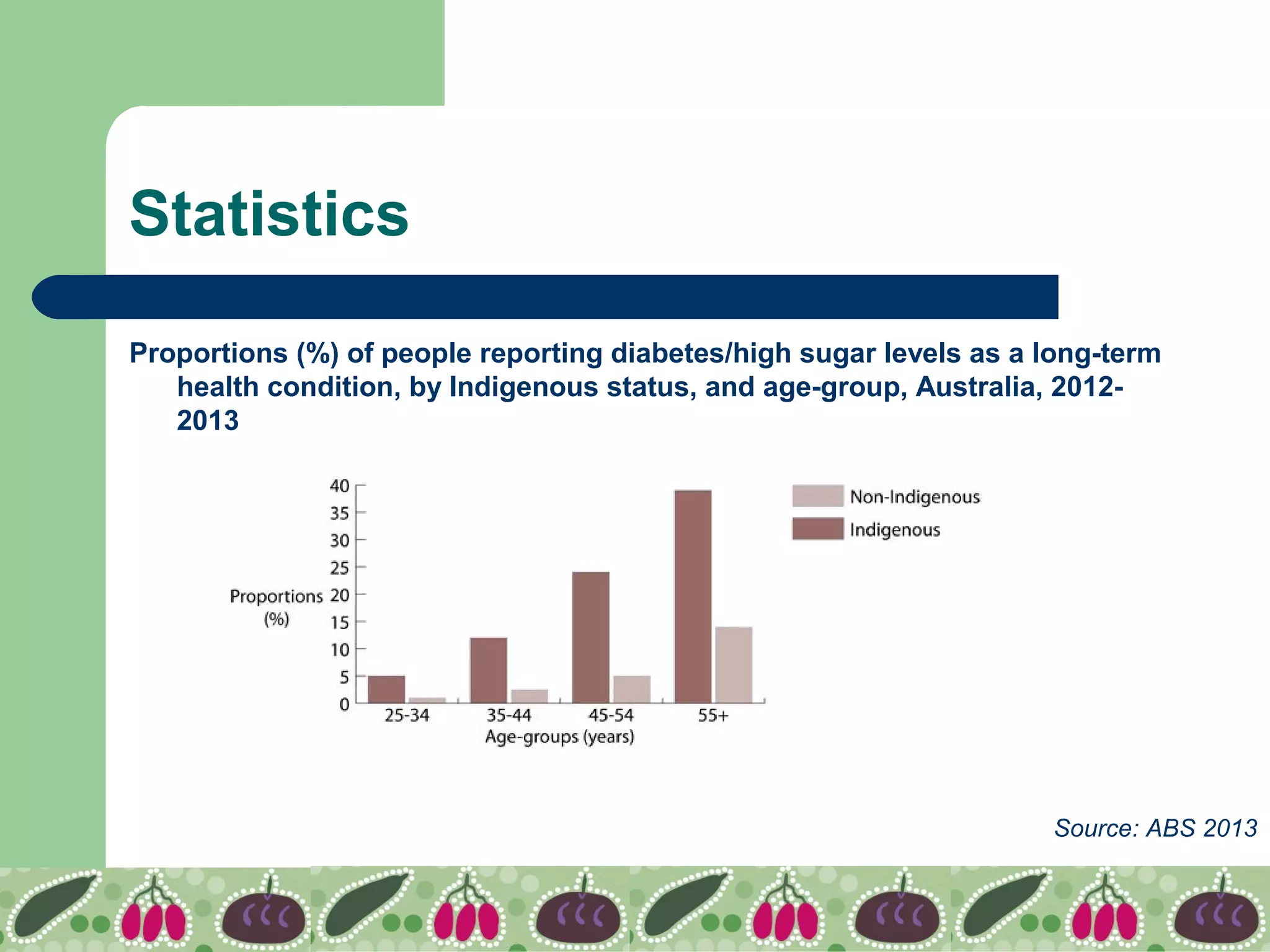
Proportions (%) of people reporting diabetes/high sugar levels as a long-term
health condition, by Indigenous status, and age-group, Australia, 2012-
2013
Source: ABS 2013
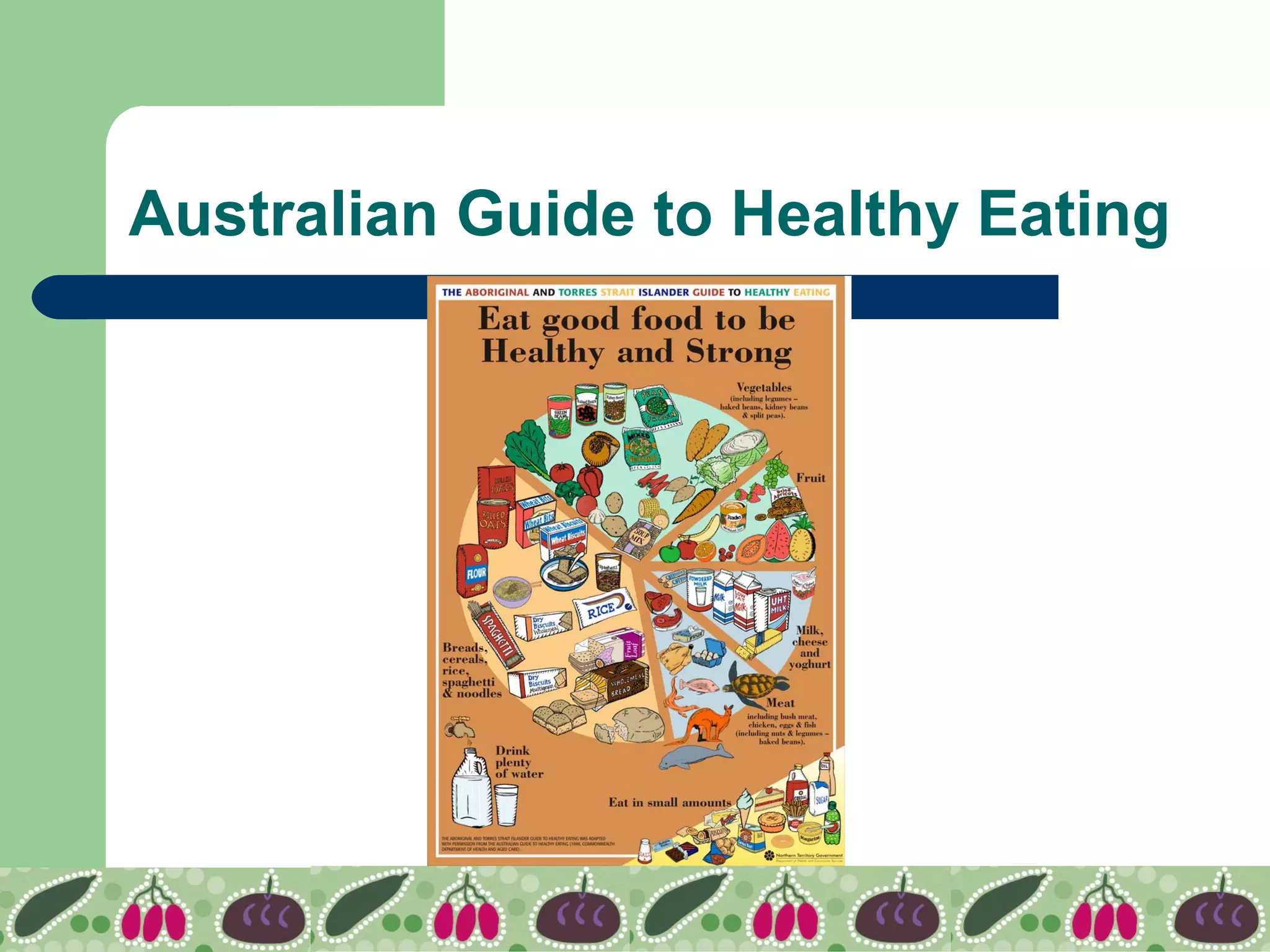
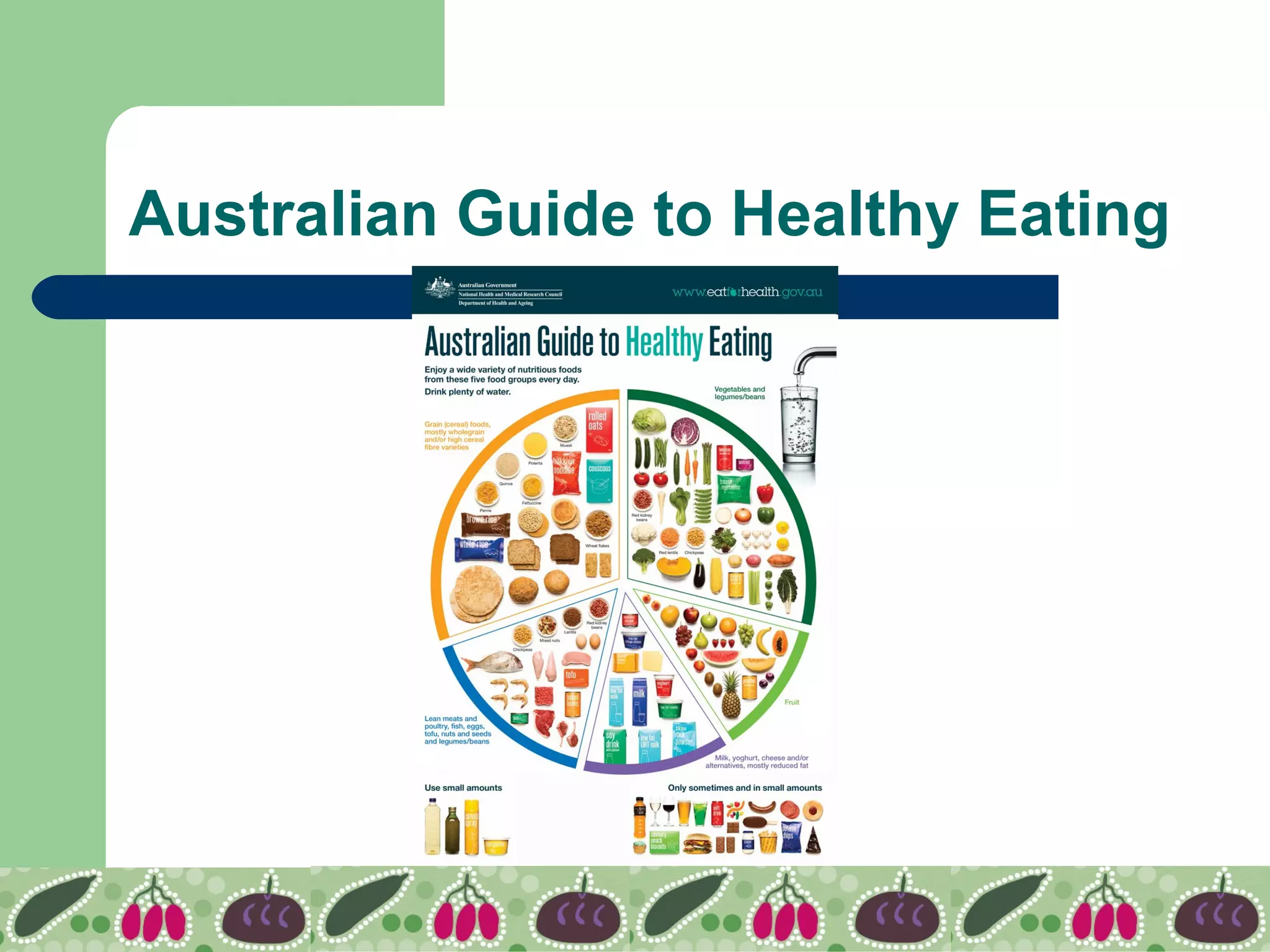
Australian Guide to Healthy Eating
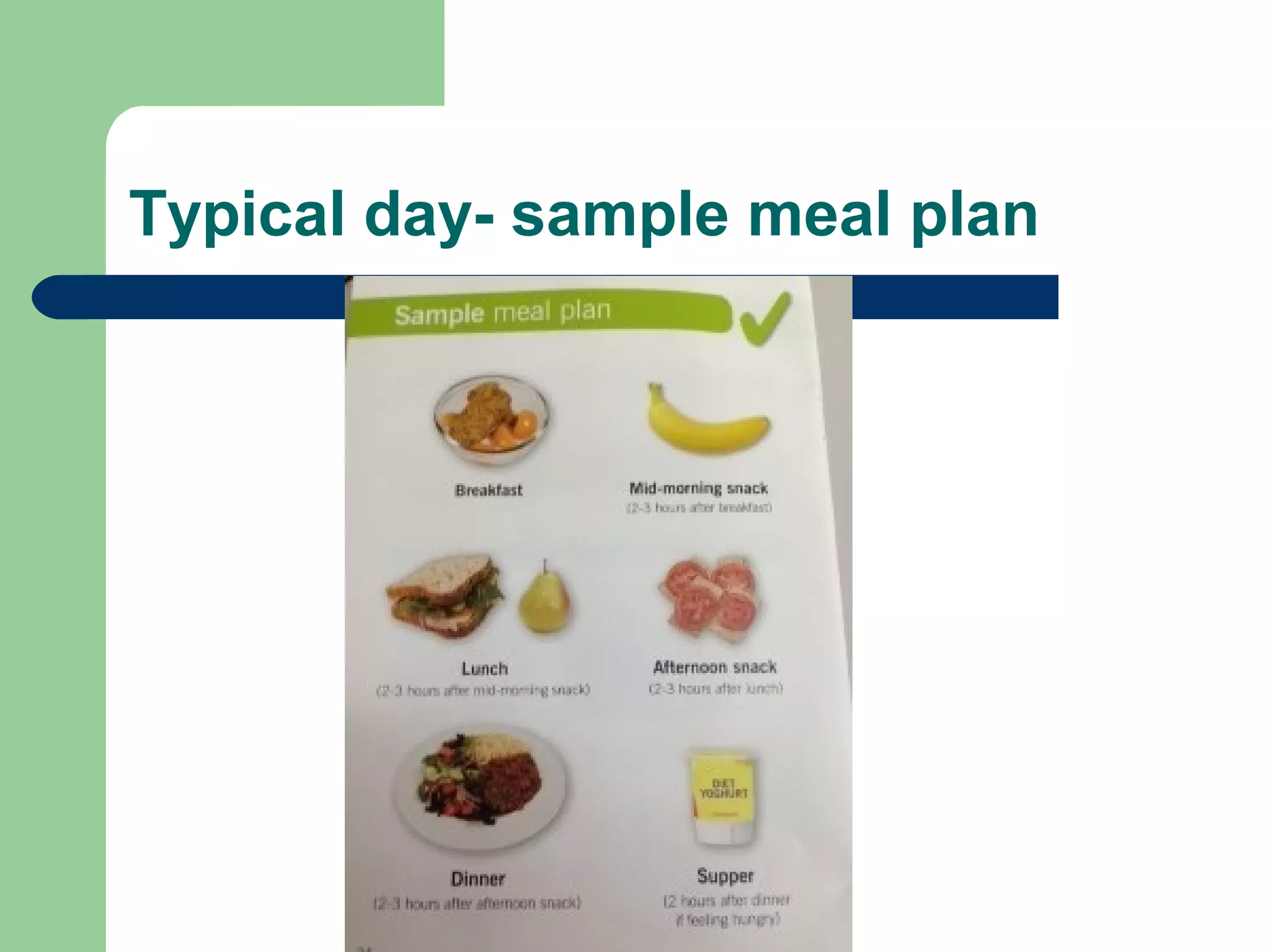
Typical day- sample meal plan
Tips for providing and encouraging
healthy meals.
 Modify familiar recipes to make them
healthier.
Example:
- add grated carrot and zucchini or a can of
lentils to spaghetti bolognaise;
- home made pizzas with fresh toppings.
 See every meal as an opportunity to include
vegetables.
Modifying recipes:
To include more vegetables,
reduce fat & maintain TASTE
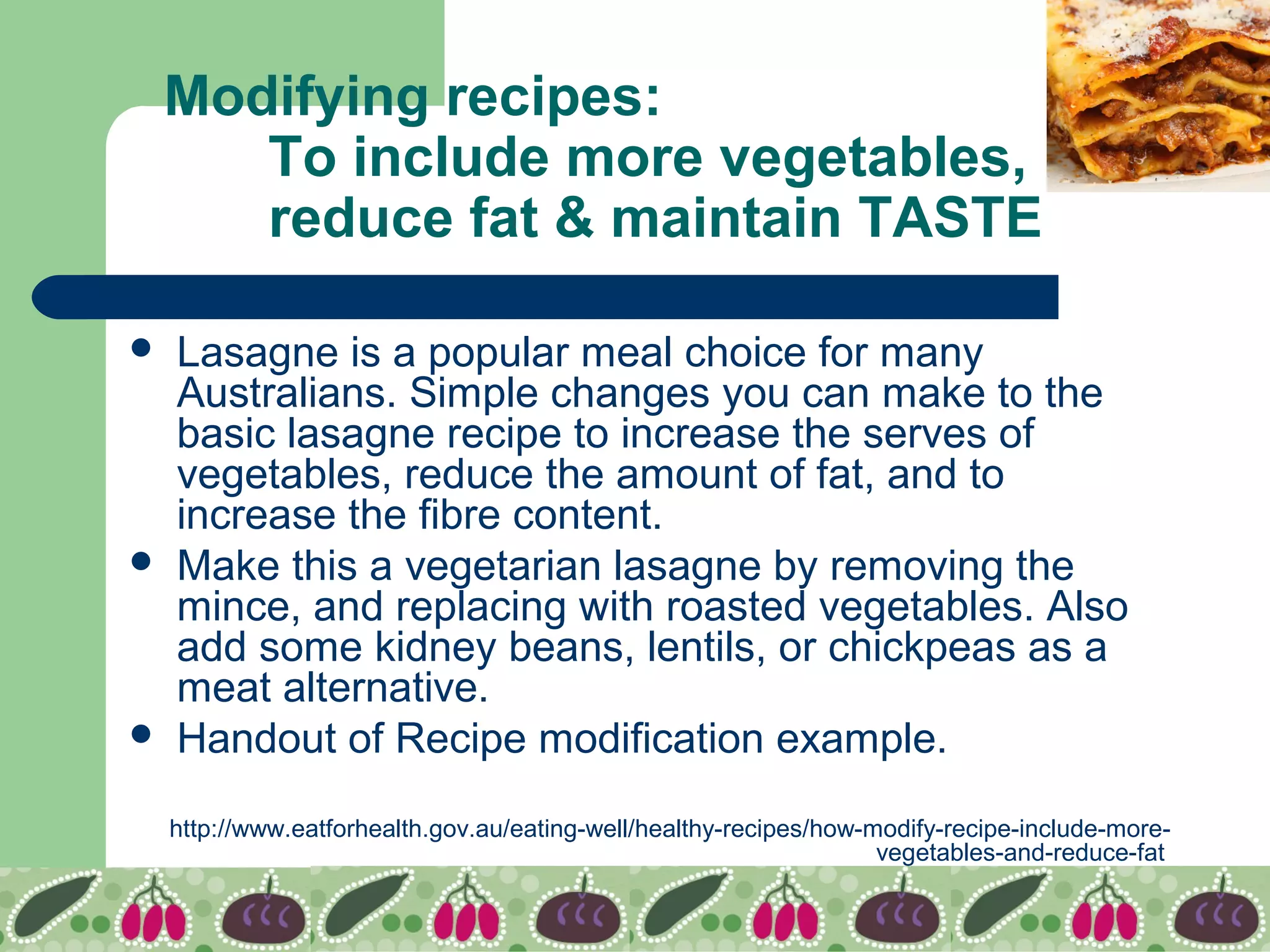
 Lasagne is a popular meal choice for many
Australians. Simple changes you can make to the
basic lasagne recipe to increase the serves of
vegetables, reduce the amount of fat, and to
increase the fibre content.
 Make this a vegetarian lasagne by removing the
mince, and replacing with roasted vegetables. Also
add some kidney beans, lentils, or chickpeas as a
meat alternative.
 Handout of Recipe modification example.
http://www.eatforhealth.gov.au/eating-well/healthy-recipes/how-modify-recipe-include-more-
vegetables-and-reduce-fat
Tips for providing and encouraging
healthy eating and meals.
 Involving children and adolescents in
food choices and preparation.
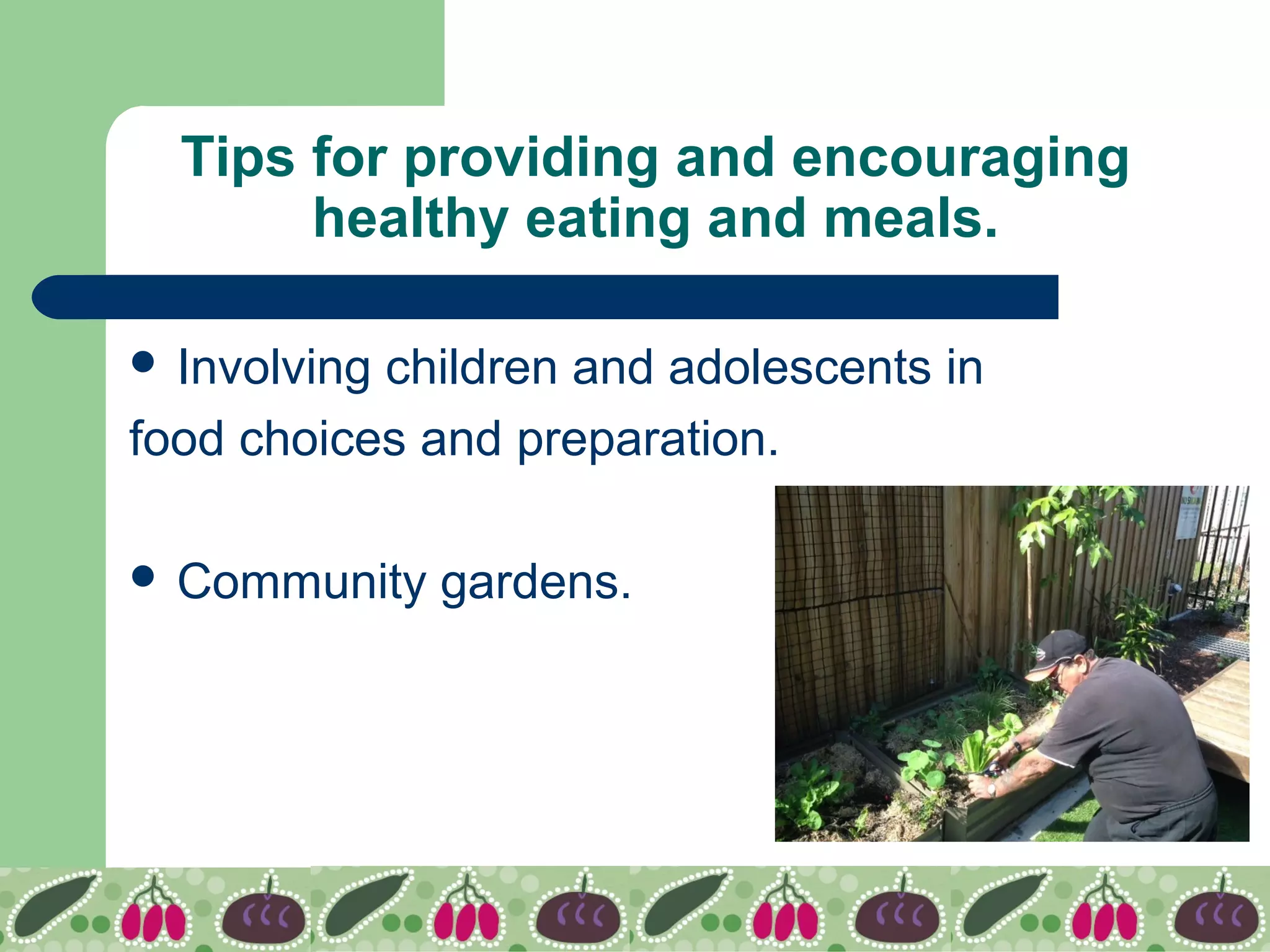
 Community gardens.
Tips for providing and encouraging
healthy meals.
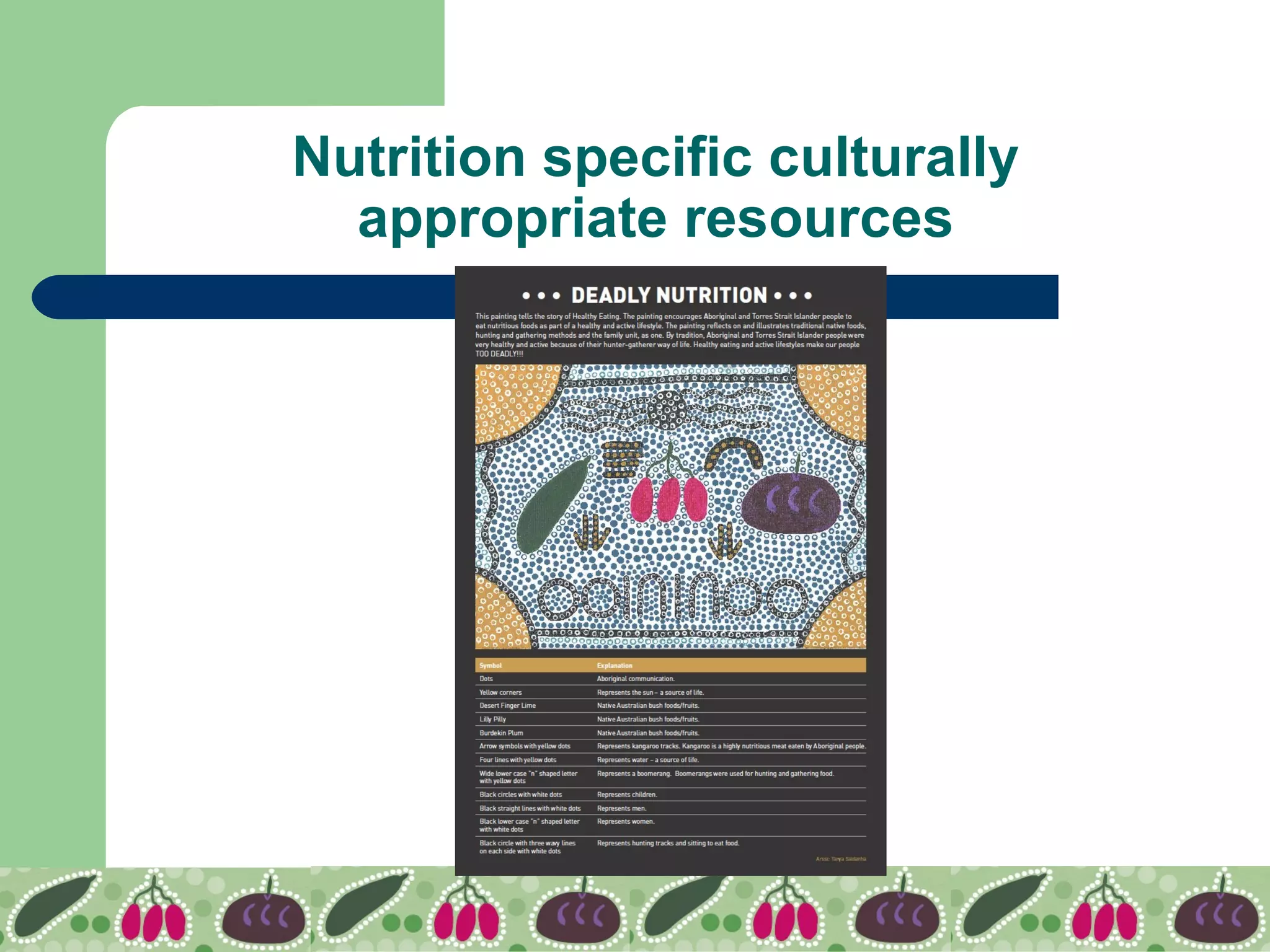
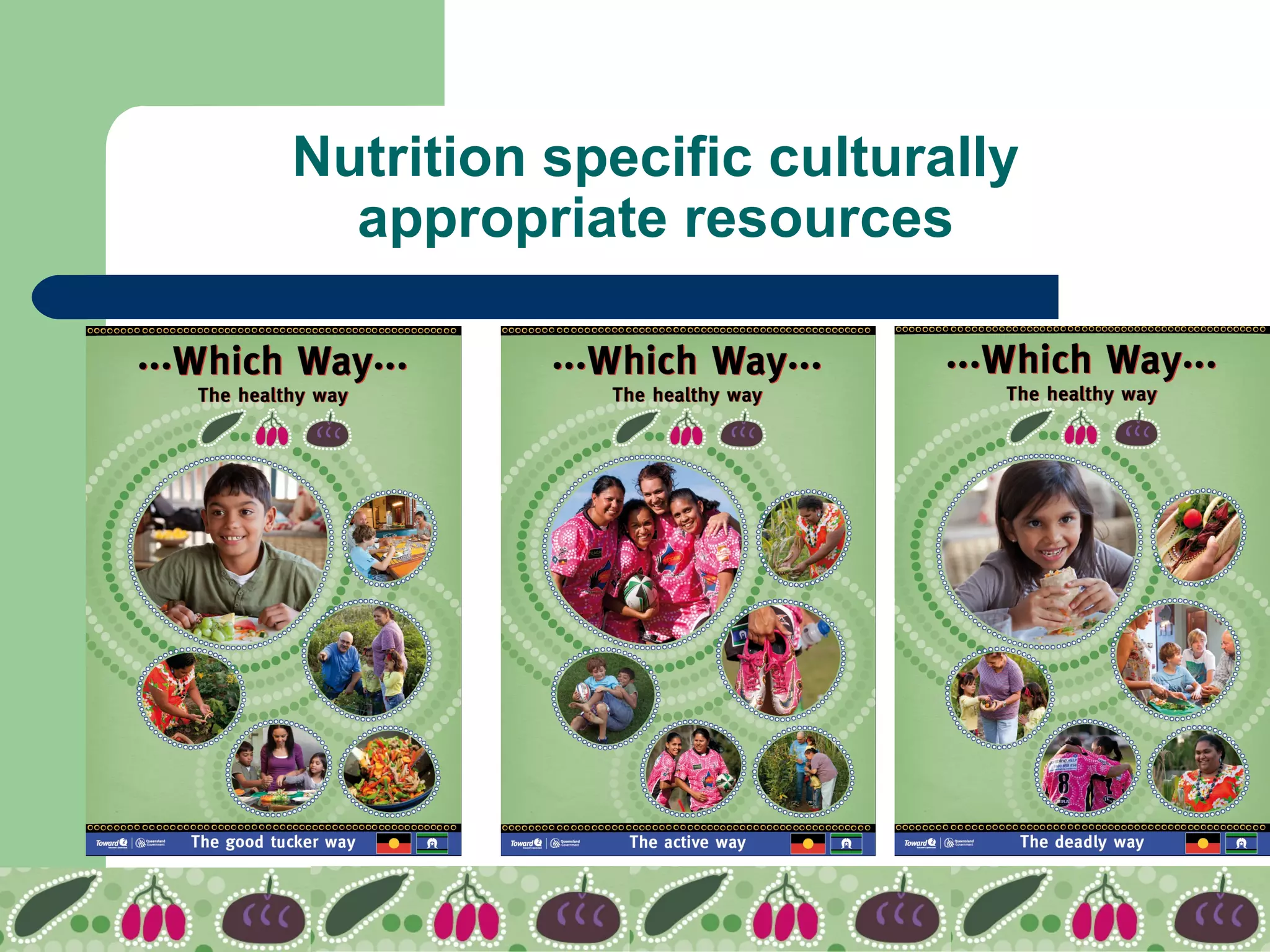
 Use culturally appropriate resources. Eg
posters, Aboriginal and Torres Strait Islander
Guide to Healthy Eating, recipe books.
 This will provide an inclusive and
participatory environment.
Nutrition specific culturally
appropriate resources
Nutrition specific culturally
appropriate resources
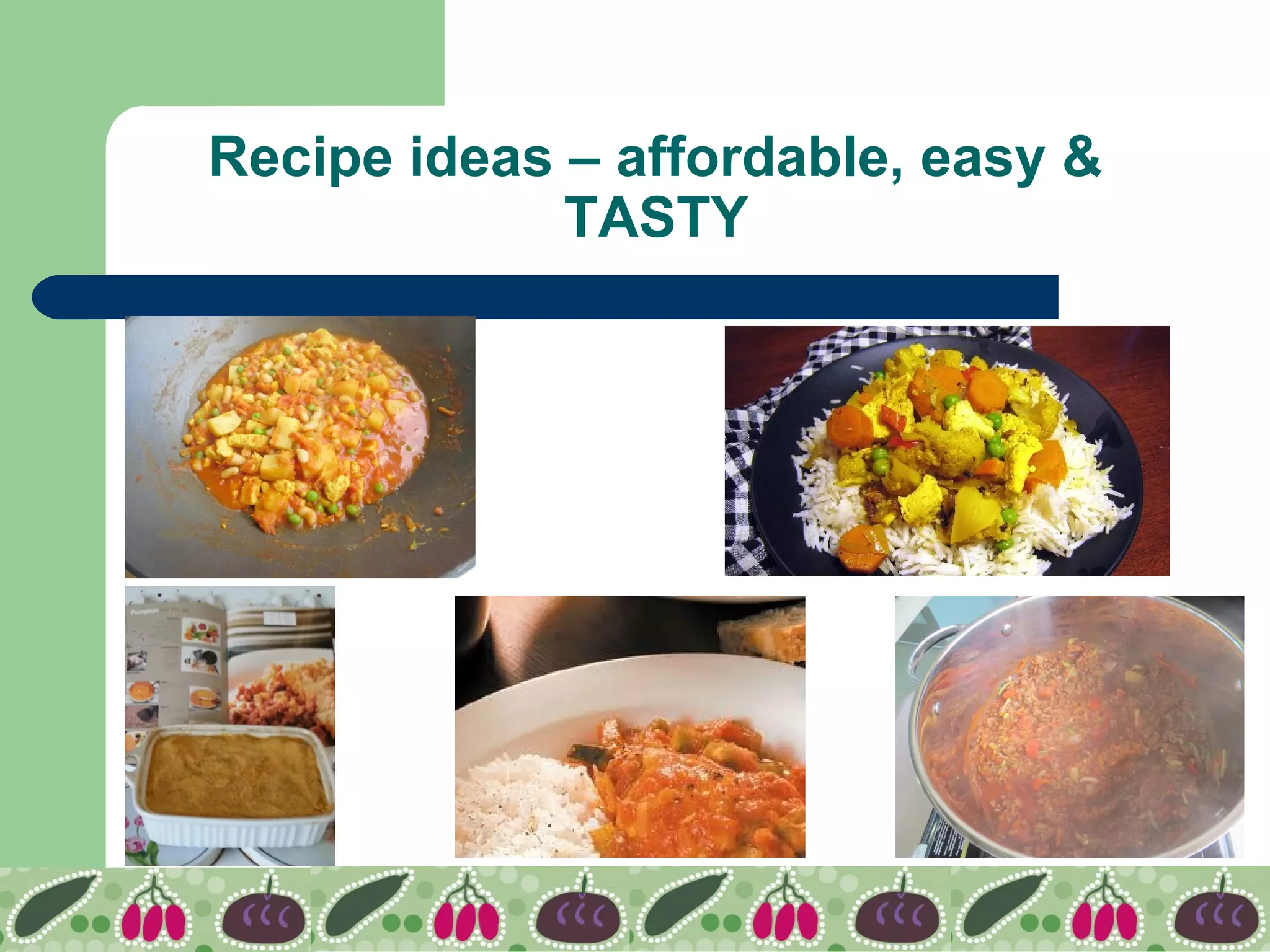
Recipe ideas – affordable, easy &
TASTY
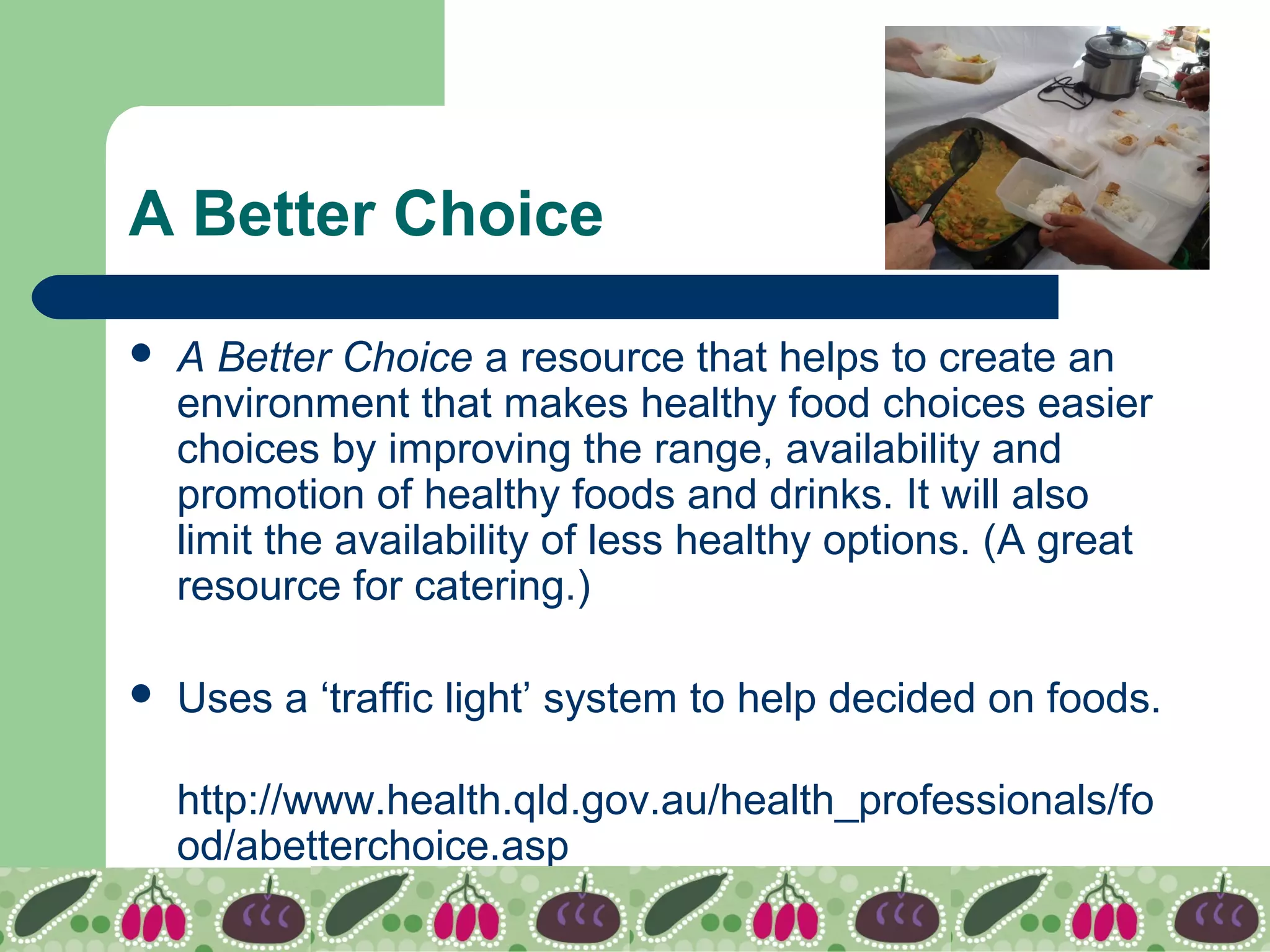
A Better Choice
 A Better Choice a resource that helps to create an
environment that makes healthy food choices easier
choices by improving the range, availability and
promotion of healthy foods and drinks. It will also
limit the availability of less healthy options. (A great
resource for catering.)
 Uses a ‘traffic light’ system to help decided on foods.
http://www.health.qld.gov.au/health_professionals/fo
od/abetterchoice.asp
Resources
 IIHS catering guidelines (printed copies available today)
 Recipe cards and books (printed copies available today)
 Which Way Posters
 www.eatforhealth.gov.au
 Nutrition Australia: www.naqld.org
 Health Infonet – great resource on Aboriginal and Torres Strait
Islander nutrition. http://www.healthinfonet.ecu.edu.au/health-
risks/nutrition
 Qld Education healthy food strategy:
http://education.qld.gov.au/schools/healthy/food-drink-
strategy.html
Thank you for your time
 Questions?
 Feedback?
 Comments?

Deadly nutrition presentation ts and_ah

  • 1.
    • • •Deadly Nutrition • • • Annalie Houston – Dietetian Tanya Saldanha – Nutrition Promotion Inala Indigenous Health Ph: 3101 4222
  • 2.
    Introduction  Dietitian: Annalie Nutrition Promotion: Tanya  Inala Indigenous Health Service  “Deadly”
  • 3.
    What is eatinghealthy and why bother?  Eating a wide variety of nutritious foods (from the five food groups).  Enjoying food.  Healthy foods contain all the energy, minerals, vitamins and fibre you need.  Healthy eating is a key factor to prevent or control chronic diseases (cardiovascular disease, diabetes, chronic kidney disease, chronic respiratory disease, cancer) .  Improves behaviour and reduces fatigue.
  • 4.
    Background  Eating healthyfoods is really important through out the life cycle.  Nutrients are parts of food that are important to help our bodies function.  Eating vegetable and fruit everyday keeps bodies healthy.
  • 5.
    Background  Lifestyle relatedchronic diseases (eg. type 2 diabetes and cardiovascular disease) contribute to the poorer health experienced in Aboriginal and Torres Strait Islander populations in Australia.
  • 6.
    Statistics  The currentgap in life expectancy is estimated at 11.5 years for males and 9.7 years for females.  Chronic diseases are the major causes of mortality, and 70% of the gap in health outcomes is due to chronic disease.  Healthy eating helps prevent and manage these.
  • 7.
    Statistics- fruit andvegetable intake  5% of Aboriginal and Torres Strait Islander people aged 15 years and over reported eating an adequate amount of vegetables daily. (59%)  66% of Aboriginal and Torres Strait Islander people aged 15 years and over were overweight or obese. (62.8%) Australian Bureau of Statistics. 2013. Australian Aboriginal and Torres Strait Islander Health Survey: First Results, Australia, 2012-13
  • 8.
    Statistics Proportions (%) ofpeople reporting diabetes/high sugar levels as a long-term health condition, by Indigenous status, and age-group, Australia, 2012- 2013 Source: ABS 2013
  • 9.
    Australian Guide toHealthy Eating
  • 10.
    Australian Guide toHealthy Eating
  • 11.
  • 12.
    Tips for providingand encouraging healthy meals.  Modify familiar recipes to make them healthier. Example: - add grated carrot and zucchini or a can of lentils to spaghetti bolognaise; - home made pizzas with fresh toppings.  See every meal as an opportunity to include vegetables.
  • 13.
    Modifying recipes: To includemore vegetables, reduce fat & maintain TASTE  Lasagne is a popular meal choice for many Australians. Simple changes you can make to the basic lasagne recipe to increase the serves of vegetables, reduce the amount of fat, and to increase the fibre content.  Make this a vegetarian lasagne by removing the mince, and replacing with roasted vegetables. Also add some kidney beans, lentils, or chickpeas as a meat alternative.  Handout of Recipe modification example. http://www.eatforhealth.gov.au/eating-well/healthy-recipes/how-modify-recipe-include-more- vegetables-and-reduce-fat
  • 14.
    Tips for providingand encouraging healthy eating and meals.  Involving children and adolescents in food choices and preparation.  Community gardens.
  • 15.
    Tips for providingand encouraging healthy meals.  Use culturally appropriate resources. Eg posters, Aboriginal and Torres Strait Islander Guide to Healthy Eating, recipe books.  This will provide an inclusive and participatory environment.
  • 16.
  • 17.
  • 18.
    Recipe ideas –affordable, easy & TASTY
  • 19.
    A Better Choice A Better Choice a resource that helps to create an environment that makes healthy food choices easier choices by improving the range, availability and promotion of healthy foods and drinks. It will also limit the availability of less healthy options. (A great resource for catering.)  Uses a ‘traffic light’ system to help decided on foods. http://www.health.qld.gov.au/health_professionals/fo od/abetterchoice.asp
  • 20.
    Resources  IIHS cateringguidelines (printed copies available today)  Recipe cards and books (printed copies available today)  Which Way Posters  www.eatforhealth.gov.au  Nutrition Australia: www.naqld.org  Health Infonet – great resource on Aboriginal and Torres Strait Islander nutrition. http://www.healthinfonet.ecu.edu.au/health- risks/nutrition  Qld Education healthy food strategy: http://education.qld.gov.au/schools/healthy/food-drink- strategy.html
  • 21.
    Thank you foryour time  Questions?  Feedback?  Comments?

Editor's Notes

  • #3 The word when used by Aboriginal and Torres Strait Islander people means good, great, something positive, the best, I love it, impressive, creates a positive sense of pride, etc. Eg: The Queensland Nutrition Workforce is deadly. The word deadly is used far and wide across Australian Aboriginal and Torres Strait Islander people, families, and communities. Can be used when engaging with the Aboriginal and Torres Strait Islander populations to deliver pinted health messages
  • #7 Budgeting Community garden Misconceptions about prices and also ‘how to cook’ vegetables
  • #8 Mainstream stats are
  • #10 Tanya to speak to this slide. Adapted from the previous AGHE and modified for the Aboriginal and Torres Strait Islander population. Shows different food which are…..
  • #11 Break down the plate: Visual guide of food groups. Recommended to enjoy a variety of foods from the groups on the plate everyday for good health. Size of plate indicates portoption of including the food group. Foods outside the plate at the bottom should be eaten occasionally. Promote health and wellbeing; Reduce the risk of diet-related conditions like cholesterol, high blood pressure and obesity; and Reduce the risk of chronic diseases such as type 2 diabetes, cardiovascular disease and some types of cancers. Drink plenty of water everyday. Foods on the plate are grouped in their food groups, recommended to enjoy a variety of foods from the groups on the plate everyday. Foods outside the plate on the bottom are foods that should be consumed occasionally. There are many things that affect food choices, for example, personal preferences, cultural backgrounds or philosophical choices such as vegetarian dietary patterns. The AGHE is a guide only BUT from evidence based practise.