DO Now

• Are we currently in a recession in the United States?
  How do you know? Use your notes and identify your
  indicators as lagging, coincident, or leading.
Agenda

1. Do Now

2. Review

3. Notes- Unemployment
Objectives

• Distinguish among 4 types of employment.

• Discuss the unemployment rate and describe how it
  differs over time and across groups.

• Explain who is eligible for unemployment benefits in
  the United States.
Unemployment
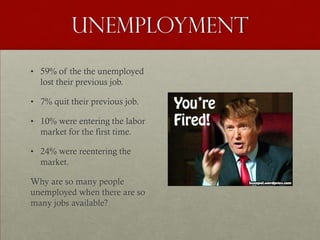
• 59% of the the unemployed
  lost their previous job.

• 7% quit their previous job.

• 10% were entering the labor
  market for the first time.

• 24% were reentering the
  market.

Why are so many people
unemployed when there are so
many jobs available?
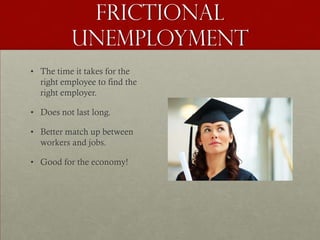
Frictional
          Unemployment
• The time it takes for the
  right employee to find the
  right employer.

• Does not last long.

• Better match up between
  workers and jobs.

• Good for the economy!
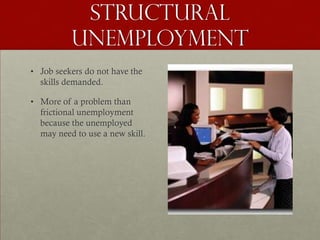
Structural
          Unemployment
• Job seekers do not have the
  skills demanded.

• More of a problem than
  frictional unemployment
  because the unemployed
  may need to use a new skill.
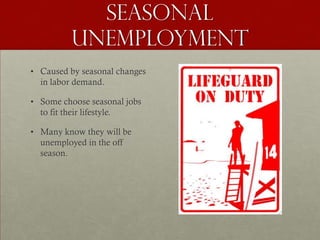
Seasonal
         unemployment
• Caused by seasonal changes
  in labor demand.

• Some choose seasonal jobs
  to fit their lifestyle.

• Many know they will be
  unemployed in the off
  season.
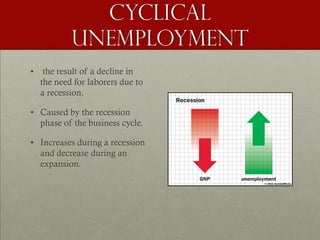
Cyclical
            unemployment
•    the result of a decline in
    the need for laborers due to
    a recession.

• Caused by the recession
  phase of the business cycle.

• Increases during a recession
  and decrease during an
  expansion.
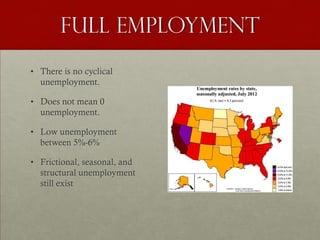
Full employment
• There is no cyclical
  unemployment.

• Does not mean 0
  unemployment.

• Low unemployment
  between 5%-6%

• Frictional, seasonal, and
  structural unemployment
  still exist
Problems with
             estimates
• Discouraged workers- those
  who have stopped looking
  for jobs.

• Underemployment- those
  who work part-time jobs or
  jobs they are overqualified
  for.

• Counting those not looking
  for work as unemployed.

• Count people working in the
  underground economy as
  unemployed.
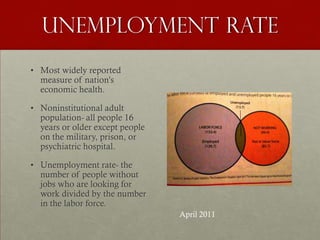
Unemployment Rate
• Most widely reported
  measure of nation’s
  economic health.

• Noninstitutional adult
  population- all people 16
  years or older except people
  on the military, prison, or
  psychiatric hospital.

• Unemployment rate- the
  number of people without
  jobs who are looking for
  work divided by the number
  in the labor force.
                                 April 2011
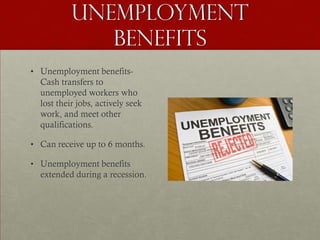
Unemployment
              benefits
• Unemployment benefits-
  Cash transfers to
  unemployed workers who
  lost their jobs, actively seek
  work, and meet other
  qualifications.

• Can receive up to 6 months.

• Unemployment benefits
  extended during a recession.
Think

• What are the risks of providing unemployment
  benefits for people who have lost their jobs? What are
  the benefits?
Assignment

Task: Imagine you are in control of who receives
unemployment benefits in the country. What three
requirements would you make for people to be eligible?
Fully explain your requirements (3 sentences each).

Provide an example of a person who you think should
receive benefits. Provide an example of a person who
you think should not be provided benefits. (One juicy
hamburger with both examples in it.)

Day 34

  • 1.
    DO Now • Arewe currently in a recession in the United States? How do you know? Use your notes and identify your indicators as lagging, coincident, or leading.
  • 2.
    Agenda 1. Do Now 2.Review 3. Notes- Unemployment
  • 3.
    Objectives • Distinguish among4 types of employment. • Discuss the unemployment rate and describe how it differs over time and across groups. • Explain who is eligible for unemployment benefits in the United States.
  • 4.
    Unemployment • 59% ofthe the unemployed lost their previous job. • 7% quit their previous job. • 10% were entering the labor market for the first time. • 24% were reentering the market. Why are so many people unemployed when there are so many jobs available?
  • 5.
    Frictional Unemployment • The time it takes for the right employee to find the right employer. • Does not last long. • Better match up between workers and jobs. • Good for the economy!
  • 6.
    Structural Unemployment • Job seekers do not have the skills demanded. • More of a problem than frictional unemployment because the unemployed may need to use a new skill.
  • 7.
    Seasonal unemployment • Caused by seasonal changes in labor demand. • Some choose seasonal jobs to fit their lifestyle. • Many know they will be unemployed in the off season.
  • 8.
    Cyclical unemployment • the result of a decline in the need for laborers due to a recession. • Caused by the recession phase of the business cycle. • Increases during a recession and decrease during an expansion.
  • 9.
    Full employment • Thereis no cyclical unemployment. • Does not mean 0 unemployment. • Low unemployment between 5%-6% • Frictional, seasonal, and structural unemployment still exist
  • 10.
    Problems with estimates • Discouraged workers- those who have stopped looking for jobs. • Underemployment- those who work part-time jobs or jobs they are overqualified for. • Counting those not looking for work as unemployed. • Count people working in the underground economy as unemployed.
  • 11.
    Unemployment Rate • Mostwidely reported measure of nation’s economic health. • Noninstitutional adult population- all people 16 years or older except people on the military, prison, or psychiatric hospital. • Unemployment rate- the number of people without jobs who are looking for work divided by the number in the labor force. April 2011
  • 12.
    Unemployment benefits • Unemployment benefits- Cash transfers to unemployed workers who lost their jobs, actively seek work, and meet other qualifications. • Can receive up to 6 months. • Unemployment benefits extended during a recession.
  • 13.
    Think • What arethe risks of providing unemployment benefits for people who have lost their jobs? What are the benefits?
  • 14.
    Assignment Task: Imagine youare in control of who receives unemployment benefits in the country. What three requirements would you make for people to be eligible? Fully explain your requirements (3 sentences each). Provide an example of a person who you think should receive benefits. Provide an example of a person who you think should not be provided benefits. (One juicy hamburger with both examples in it.)